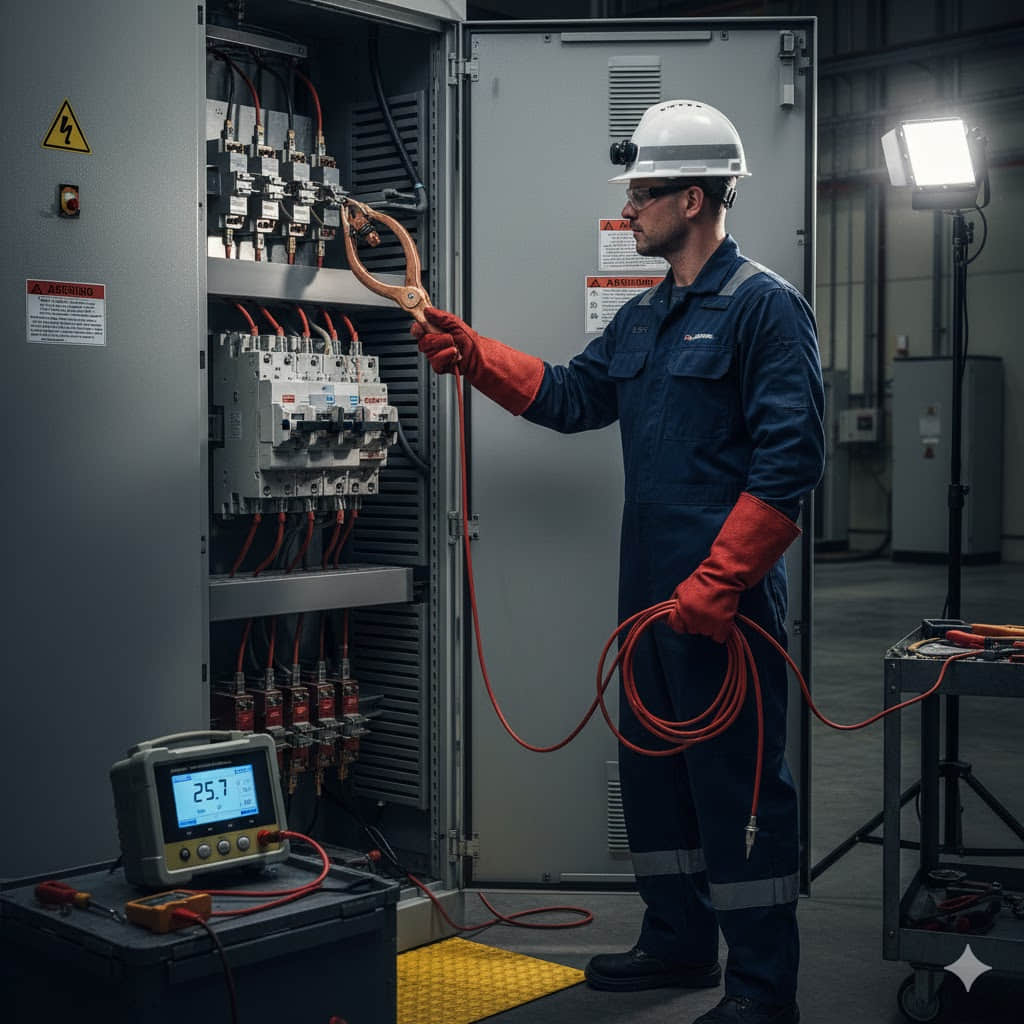
Vacuum contactors serve as critical switching devices within medium and high-voltage distribution systems. Their reliable performance is directly linked to overall power system safety and stability.
The traditional binary approach of "running or failed" no longer satisfies the demanding requirements for high reliability and Predictive Maintenance (PdM) in modern industry. As professional electrical engineers, we are required to adopt systematic, high-precision testing methods. Our focus must shift from reactive troubleshooting to proactive status monitoring and life expectancy prediction.
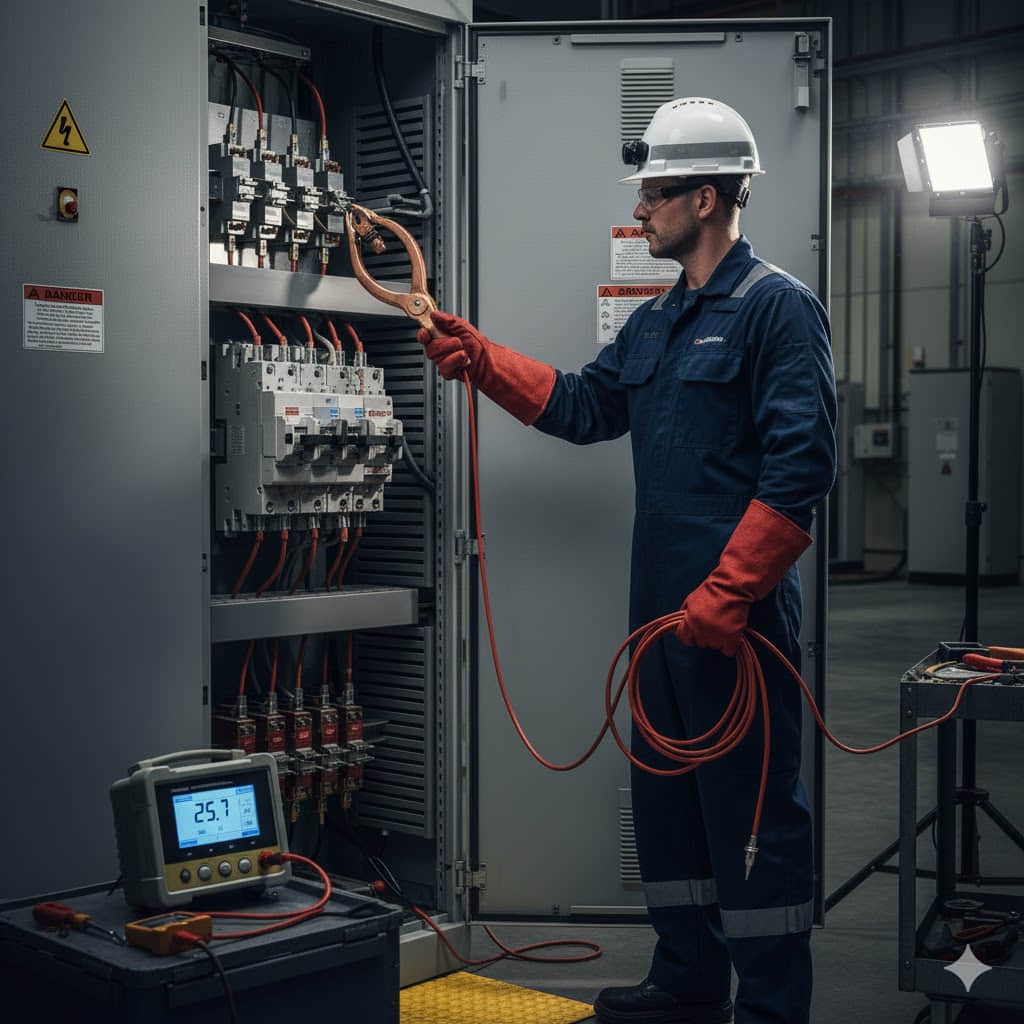
The core steps for testing a vacuum contactor involve, under strictly isolated and safe conditions, measuring the coil resistance with a multimeter and comparing it against specifications. Furthermore, essential electrical performance checks include continuity tests (open/closed state) and contact resistance measurements using a micro-ohmmeter.
Simultaneously, you must inspect the critical mechanical overtravel gap to assess contact wear and remaining lifespan. Finally, the contactor's operating times (closing and opening) should be verified against the manufacturer's data.
Any test result that fails to meet manufacturer specifications, especially low insulation resistance or insufficient overtravel, strongly suggests the contactor requires immediate maintenance or replacement.
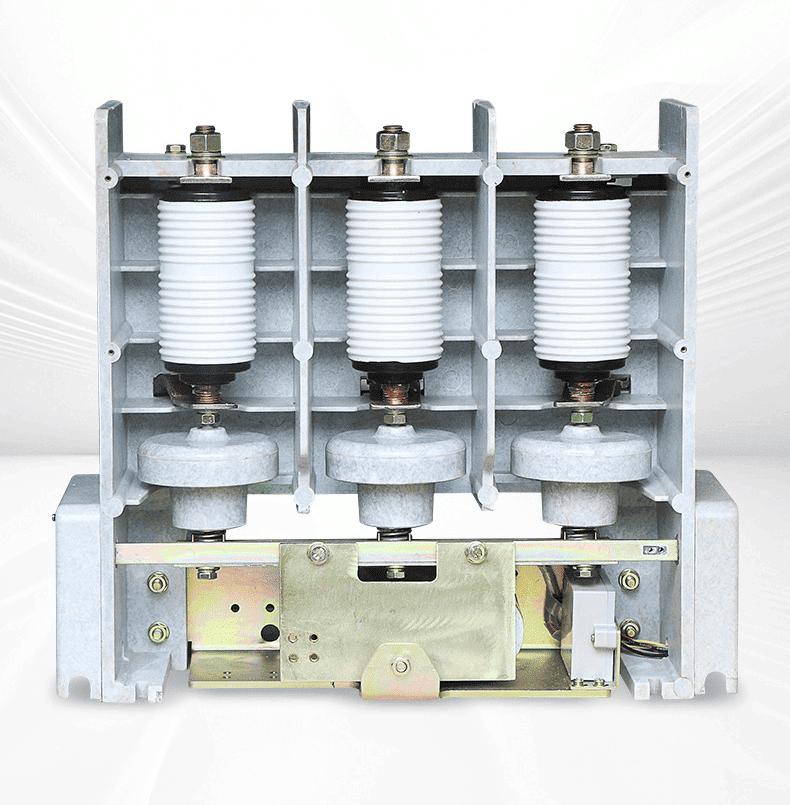
Key Takeaways (Core Insights)
Safety First: Before commencing any test, the Lockout/Tagout (LOTO) procedure must be strictly executed and zero-energy verified.
Crucial Instrument: Main contact resistance must be measured using a high-current micro-ohmmeter (10A or 100A) to obtain authentic data.
Diagnostic Foundation: Insulation Resistance Testing (Megger) is a non-negotiable step in the safety assessment of medium-to-high voltage equipment.
Life Prediction: Trend analysis of contact resistance is significantly more accurate for predicting residual lifespan than relying on a single measurement.
Mechanical Proof: The contact overtravel gap is the most direct mechanical indicator for evaluating contact erosion and the lifespan of the vacuum interrupter.
Phase I: Safety Protocol and Preparation
The foundation of professional testing is absolute safety. Any procedure involving high-voltage equipment must adhere to the highest safety standards, which remains the engineer's primary responsibility.
Rigorous Safety Protocol: LOTO Procedure and Isolation Verification
You must execute the following steps to ensure the contactor is completely isolated from all energy sources before proceeding with any testing. This comprehensive approach safeguards personnel and prevents equipment damage during diagnosis.
Disengage all power sources. This includes both the main power circuit (e.g., busbars) and the low-voltage control circuit (coil power).
Perform discharge procedures on the contactor and surrounding equipment. This is necessary to eliminate any residual capacitive charges.
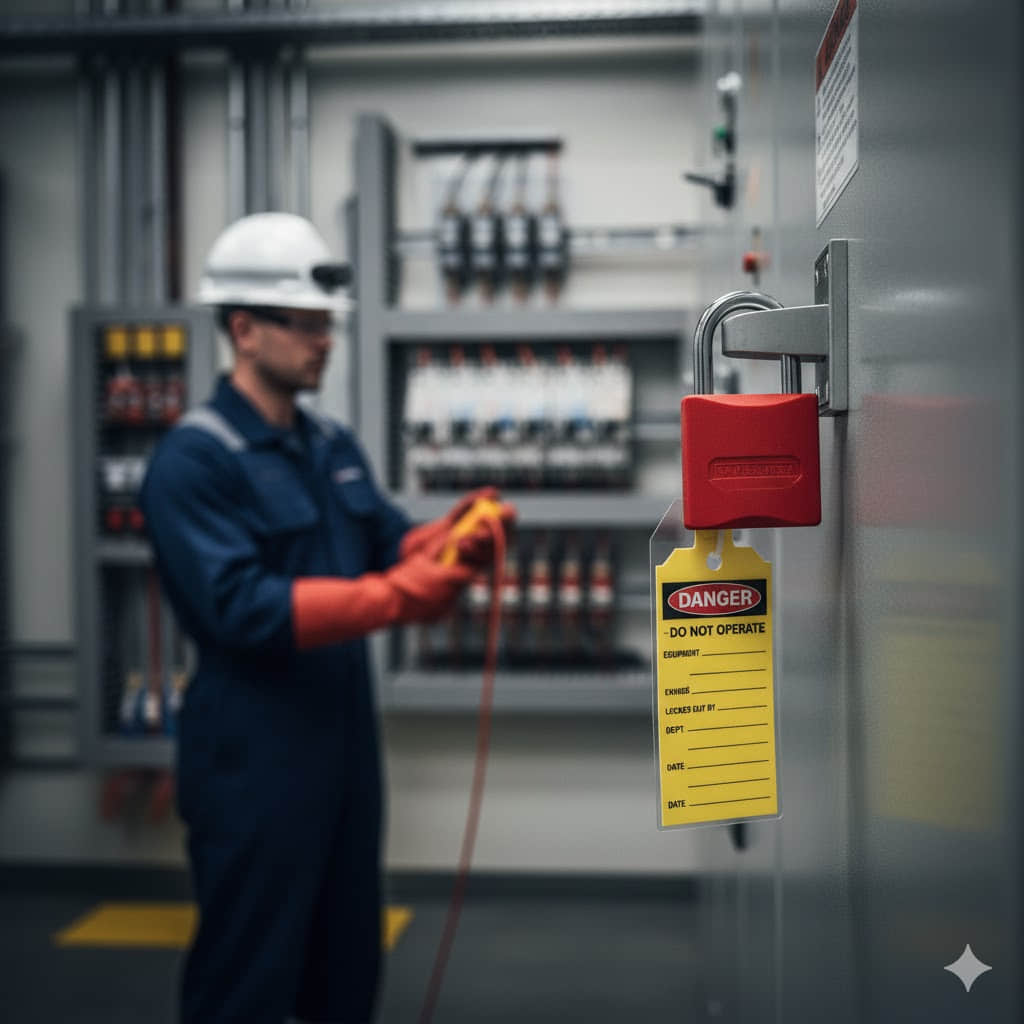
Implement the Lockout/Tagout (LOTO) procedure by applying mechanical locks and warning tags at all disconnection points. This prevents accidental re-energization.
Conduct a secondary verification using a calibrated voltmeter across all poles and terminals to confirm a zero-energy state.
Note: Never rely on control panel indicator lights or the contactor’s own mechanical position indicator to confirm power isolation. A physical, zero-energy verification must always be performed.
Professional Tool Selection and Preparation
Testing a vacuum contactor requires a specific set of specialized tools. As an engineer, you must understand the purpose and required precision of each instrument.
| Test Item | Common Tool | Professional Requirement / Standard (Reference) |
| Safety Isolation | High-precision Voltmeter | Verification of zero potential on the three-phase main circuit. |
| Main Contact | Micro-Ohmmeter | Must have the capability to inject 10A or 100A+ current to break down the oxide layer and obtain true contact resistance. |
| Insulation Status | Insulation Resistance Tester (Megger) | Must have at least 1000V DC output capability, and potentially higher (e.g., 5kV) for medium-voltage equipment. |
| Mechanical Wear | Feeler Gauge / Vernier Caliper | Precise measurement of the contact overtravel gap. |
| Operating Time | Contactor Timing Test Set | Used for millisecond-level measurement of closing and opening action sequences, offering greater accuracy than a stopwatch. |
Tip: When selecting a micro-ohmmeter, ensure the device supports the four-wire Kelvin method. This eliminates measurement interference from the test leads, guaranteeing high precision.
Phase II: Basic Electrical Health Check
Coil Resistance Testing and Diagnostic Guidelines
The coil is the core driving component of the contactor’s mechanical operation. Its condition directly affects the magnetic pull-in force and holding force, which determine whether the contactor can operate reliably.
1. Measurement Method
Use the resistance (Ω) mode on a multimeter.
Measure the resistance between the coil control terminals A1 and A2.
2. Professional Evaluation Standard
The measured resistance must be compared with the manufacturer’s nominal coil resistance at standard ambient temperature (typically 20°C).
This comparison allows an accurate assessment of coil health.
3. Abnormal Measurement Indicators
(1) Resistance Too Low (Near Zero)
Indicates a turn-to-turn short circuit. Consequences include:
Excessive coil heating
Reduced magnetic pull-in force
Risk of insufficient operation or coil burnout
(2) Open Circuit Reading (OL / Infinite Resistance)
Indicates the coil is open or broken. Result:
The contactor will not operate at all
(3) Slight Deviation From Nominal Value
Must be corrected using the appropriate temperature coefficient to account for ambient temperature differences.
Critical Note
The slight deviation of coil resistance may be caused by ambient temperature changes.
However, if the deviation exceeds ±10% and cannot be explained by temperature variation, it should be considered a potential fault indicator.
Main Circuit: High-Precision Contact Resistance Measurement
Contact resistance is the most critical indicator for evaluating the degree of contact erosion, wear, and surface oxidation.
The underlying principle is that any current flowing through closed contacts produces a voltage drop. Excessively high contact resistance results in additional Joule heating . This accelerates contact wear, promotes further oxidation, and may eventually lead to insulation degradation.
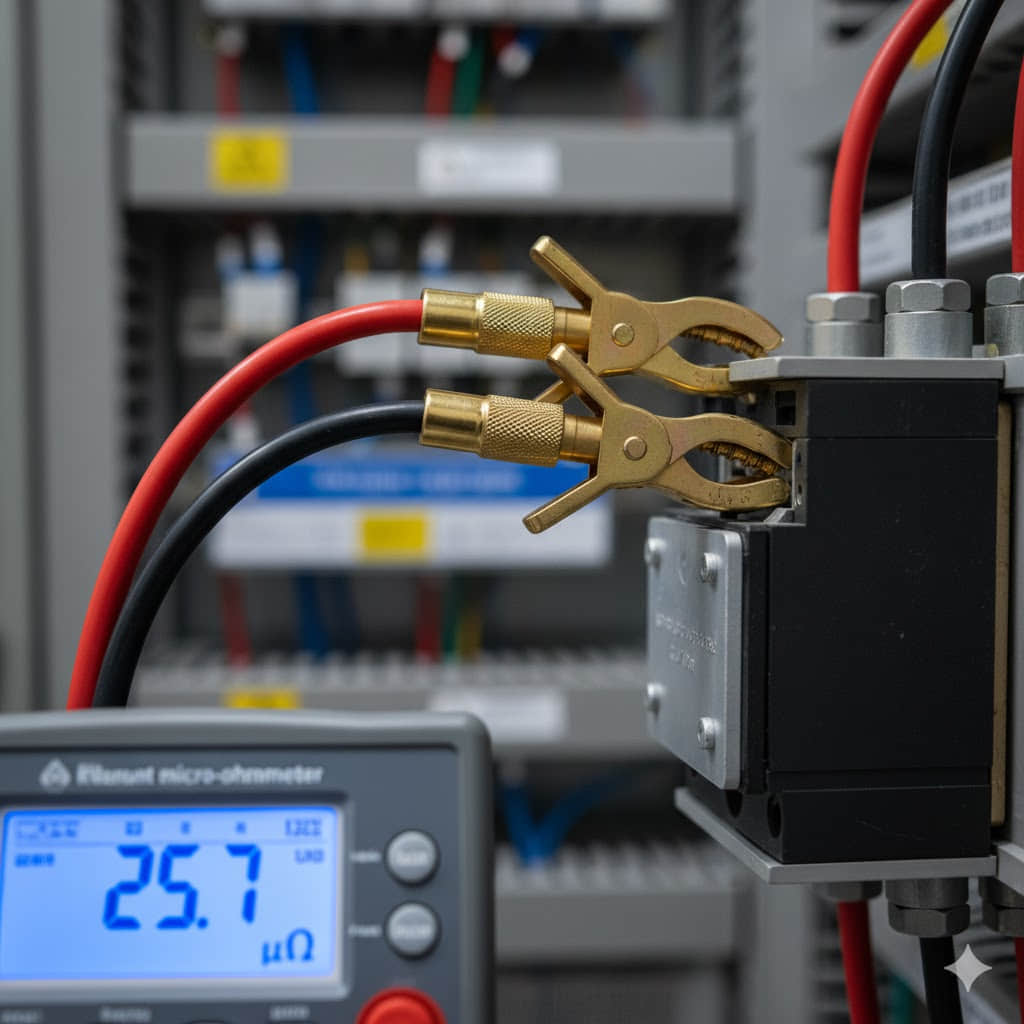
Accurate measurement is essential. A high-current micro-ohmmeter (100 A is highly recommended) using the four-wire Kelvin method must be used. Low-current measurements (such as those from a standard multimeter) cannot break through the oxide layer on the contact surface, leading to falsely elevated and unreliable readings.
For new contacts, the typical requirement is that the contact resistance should be below 100 micro-ohms (μΩ). While specific limits vary depending on the model, the resistance should never exceed 200 μΩ.
A significantly elevated contact resistance value indicates severe surface oxidation or substantial arcing damage. This condition will seriously impair the contactor’s ability to carry its rated current and should be treated as a critical maintenance concern.
Visual Aid: Watch this video to understand the practical operational details of high-voltage vacuum equipment contact resistance testing
Phase III: Crucial Insulation Status and Environmental Assessment
Insulation Integrity: Main and Control Circuit Megger Testing
Insulation resistance testing is essential for ensuring safety and extending the lifespan of medium-to-high voltage equipment. It evaluates the contactor’s ability to resist leakage current at operating voltage.
The testing scope involves both the insulation of the main circuit to ground/between phases and the control circuit to ground/main circuit.
Testing of the main circuit to ground (each phase to ground) requires applying a DC voltage higher than the rated operating voltage. For instance, a 6kV system typically uses 2.5kV or 5kV DC.
The insulation resistance value must minimally comply with the manufacturer's specifications or local regulations (e.g., IEC standards). A common rule of thumb is that the minimum insulation resistance should be 1 MΩ per 1000V of rated voltage.
A drop in insulation resistance often signals moisture, contamination, or material aging. This serves as a clear warning sign preceding a potential flashover incident.
Environmental Factors and Test Result Compensation
Electrical engineers must consider the influence of the testing environment on the data. This is necessary to prevent misdiagnosis.
Both insulation resistance and coil resistance are sensitive to temperature changes. Higher temperatures lead to decreased insulation resistance but increased coil resistance.
During testing, the ambient temperature must be recorded, and the measured value corrected using the temperature correction curve provided by the manufacturer.
High humidity and surface contamination significantly reduce insulation resistance, particularly on the high-voltage side. Low readings obtained in humid conditions may require cleaning the external surface of the interrupter chamber before retesting to confirm the root cause of the fault.
Tip: When performing insulation testing, especially in high humidity, it is advisable to convert the measured resistance to a standard reference temperature (e.g., 20°C) to enable accurate trend analysis.
Phase IV: Mechanical Performance and Vacuum Assessment
The electrical life of a vacuum contactor is ultimately limited by mechanical wear and erosion.
Precise Measurement of Contact Overtravel
Overtravel is defined as the distance the moving contact continues to travel after making initial contact with the stationary contact. This extra distance directly determines the contact pressure.
This measurement is crucial because, as contacts erode and burn during arc interruption, the overtravel gap progressively diminishes.
Reduced overtravel directly leads to a decrease in contact pressure and a corresponding rise in contact resistance. It also shortens the final contact separation distance, impairing arc-extinguishing capability.
The measurement must adhere strictly to the manufacturer's instructions. Use a feeler gauge or caliper to measure the mechanical position when the contactor is closed.
If the measured value falls below the manufacturer's specified minimum overtravel limit, the contact has reached its end of life and must be replaced.
Indirect Methods for Vacuum Integrity Check
Assessing the vacuum level within the vacuum interrupter is intrinsically challenging. Engineers often rely on indirect methods for evaluation.
One method is the power frequency withstand voltage test. High AC voltage is applied across the open contacts of the vacuum interrupter.
Failure occurs if the vacuum is insufficient, leading to breakdown and discharge.
Another method, specified by some manufacturers, is the mechanical pull test on specific components (like "bottle nuts"). This involves measuring the displacement or compression under a defined pulling force. This indirectly assesses the vacuum interrupter's health and lifespan.
Phase V: Advanced Diagnostics—Timing and Trend Analysis (PdM)
Dynamic Operating Time Testing
Testing the operating times (closing and opening) is essential for evaluating the performance of the driving mechanism. This includes the coil, buffers, and mechanical linkages.
Testing involves measuring the time from when the coil is energized until the main contacts are fully closed (closing time). It also measures the time from when the coil is de-energized until the main contacts are fully open (opening time).
Professional analysis reveals that extended timing may indicate increased mechanical friction, linkage jamming, or buffer failure.
Conversely, unusually short timing or contact bounce might signal overtravel of the operating mechanism or abnormal spring tension.
A dedicated contactor timing test set, capable of millisecond-level precision, must be used for accurate dynamic measurement.
Differentiating Focus: Contact Resistance Trend Analysis for Life Prediction
This technique is essential for advancing maintenance practices from preventive to predictive.
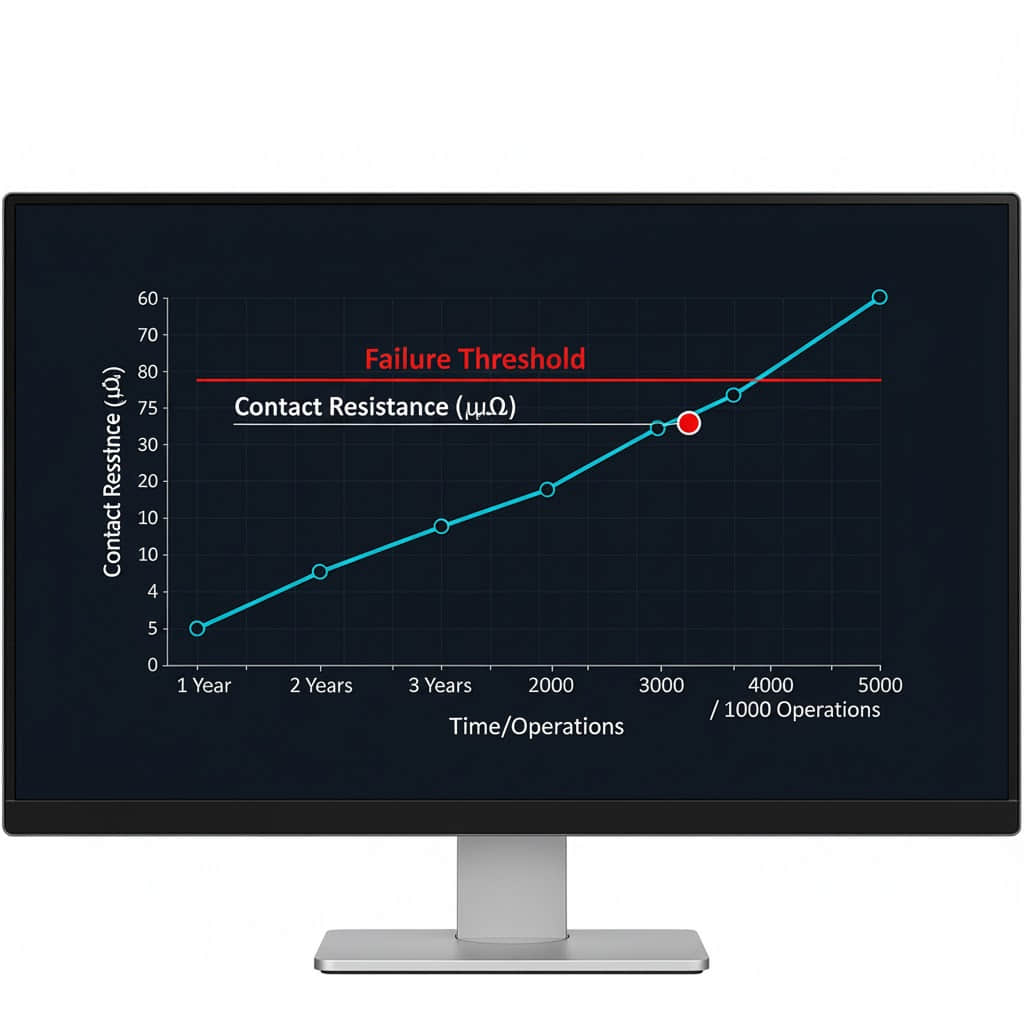
Establish a healthy baseline by measuring and recording the contact resistance immediately when the contactor is first commissioned or after a major overhaul.
During every subsequent routine maintenance period, track the contact resistance using the same measurement equipment and method. Plotting a time-series graph is recommended to visualize trends.
The principle for prediction is that contact life is determined not by a single resistance value but by the rate of change over time.
A common engineering guideline suggests planning replacement when the resistance value reaches 150% to 200% of its baseline (i.e., a 50% increase up to double the original value). Replacement should also be considered if the resistance growth curve shows a steep, accelerating trend.
Note: Trend analysis requires measurement consistency. Every reading must be taken at the same ambient temperature, using the same test current, and at the same test points to ensure reliable comparisons.
Phase VI: Troubleshooting and Maintenance Recommendations
Common Failure Phenomena and Test Data Correlation
| Abnormal Test Result | Possible Cause of Failure | Severity Level | Recommended Action |
| Contact resistance > 200% of baseline | Severe contact erosion/oxidation | High | Immediate planning for interrupter/contactor replacement. |
| Insulation resistance below standard | Insulation dampness/contamination or aging | High | Clean and dry before retesting; mandatory replacement if failure persists. |
| Overtravel gap below the minimum limit | Contacts severely worn, end of life | High | Mandatory interrupter/contactor replacement. |
| Coil resistance open or short circuit | Coil body failure | High | Replacement of the coil. |
| Operating time is significantly prolonged | Increased mechanical friction/buffer failure | Medium to High | Inspect mechanical linkages, lubricate, or replace the buffer. |
The Engineer's Maintenance Decision
For minor faults, such as slightly elevated contact resistance caused by loose connections or minor contamination, corrective procedures like tightening fasteners and cleaning contact surfaces can be performed.
However, when clear end-of-life indicators are present—such as insufficient overtravel, failing insulation resistance, or a contact resistance trend showing irreversible deterioration—replacement must be prioritized without delay. This decisive action is essential to prevent catastrophic failure and ensure safe, reliable operation of the contactor.
Phase VII: (FAQ)
Q1: Why does my standard multimeter show very high contact resistance, even though the contactor appears to operate normally?
A: Because the test current of a multimeter is too low—typically only a few milliamperes—this current cannot penetrate the oxide film on the contact surface.
To obtain an accurate reading, you must use a high-current micro-ohmmeter (10 A or 100 A), which can break through the oxide layer and measure the true contact resistance, reflecting actual contact wear.
Q2: What DC voltage should be used for the insulation test of a vacuum contactor?
A: The insulation test voltage must be higher than the contactor’s rated operating voltage.
According to common standards such as IEC:
For 3 kV or 6 kV medium-voltage contactors: typically 2500 V DC
For higher-voltage models: 5000 V DC may be required
Always follow the manufacturer’s documentation for the exact value.
Q3: How can I determine whether the contact resistance trend is beginning to "deteriorate"?
A: A slow increase in resistance is normal and reflects natural surface wear.
Deterioration is indicated when:
The curve becomes steep, or
The resistance exceeds 150% of the baseline value
This signals accelerated wear and that more frequent inspections are necessary.
Q4: What is the difference between contact overtravel and contact gap (opening distance)?
A:
The contact gap is the final open distance between moving and fixed contacts. It determines insulation strength and arc-extinguishing capability.
Overtravel is the additional distance the moving contact travels after the contacts touch, determining the contact pressure.
Overtravel is used to assess wear condition, while contact gap reflects insulation safety and arc-extinguishing performance.
Q5: If the vacuum level inside the interrupter decreases, what is the most direct consequence?
A: The vacuum level is fundamental to arc-extinguishing performance. A reduced vacuum significantly weakens the interrupter’s ability to extinguish the arc.
This may result in:
Failure to interrupt the current
Severe overheating
Risk of interrupter rupture or explosion
Contactor failure, possibly leading to fire or equipment damage
Conclusion: Mastering Core Diagnostic Techniques for Reliable High-Voltage Systems
Systematic and comprehensive testing of vacuum contactors is the cornerstone of ensuring the safe and reliable operation of high-voltage electrical equipment. Our role as electrical engineers is not just to identify failures.
We must utilize specialized tools—the high-current micro-ohmmeter, high-voltage insulation tester, and data trend analysis—to elevate maintenance to the level of asset health management.
Mastering these core diagnostic techniques and strictly implementing the integrated "Overtravel-Resistance-Insulation" evaluation system allows for the accurate prediction of a contactor's end-of-life. This enables timely replacement of failing components, thereby minimizing unexpected downtime and mitigating potential safety risks.
This data-driven, predictive maintenance approach is essential for guaranteeing the long-term stability of industrial power systems.