High Voltage Enclosure Basics for Safe Selection
High voltage enclosures are not just “bigger boxes.” They are safety systems that stand between high-energy equipment and people, property, and uptime. If we get the enclosure wrong, nothing else in the design really matters.
What Is a High Voltage Enclosure?
In most US industrial and utility projects, high voltage enclosures typically cover:
| Voltage Class | Typical Range (Phase-to-Phase) | Common Use Cases |
|---|---|---|
| Medium Voltage | ~1 kV to 38 kV | Switchgear, transformers, MV drives |
| High Voltage | 38 kV to ~245 kV+ | Substations, transmission, grid-tie gear |
A high-voltage enclosure is a purpose-built protective housing that:
Contains and isolates energized components
Manages arc flash energy and fault currents
Keeps out dust, water, rodents, and contaminants
Controls temperature and moisture to protect insulation
Provides safe, controlled access for qualified personnel
Core Functions: More Than Just a Box
A proper HV enclosure must do three things exceptionally well:
Arc Resistance
Channel or withstand internal arc faults
Minimize blast pressure, shrapnel, and fire risk
Direct gases away fthe rom operator standing areas
Comply with arc-resistant test standards where required (e.g., IEEE C37.20.7 for switchgear)
Insulation Integrity
Maintain creepage and clearance distances for the design voltage
Use insulation materials rated for the actual operating environment
Prevent tracking, partial discharge, and surface flashover
Support stable performance over decades, not just at commissioning
Thermal Management
Keep components within their temperature class
Handle real-world load profiles, not just nameplate load
Use natural convection, forced air, or active cooling as needed
Avoid hot spots that accelerate insulation aging and failures
How High Voltage Enclosures Differ from Standard Cabinets
High-voltage housings are engineered to a different risk level than typical low-voltage cabinets.
| Feature / Aspect | Standard Electrical Cabinet (LV) | High Voltage Enclosure |
|---|---|---|
| Voltage Range | Up to ~600–1000 V | ~1 kV to 245 kV+ |
| Design Priority | Protection from shock, dust, and moisture | Arc energy control, insulation geometry, and clearances |
| Creepage / Clearance Focus | Important, but more forgiving | Critical; must follow strict HV geometry rules |
| Internal Arc Consideration | Often not arc-resistant | May require tested arc-resistant construction |
| Thermal Load | Lower power density, smaller heat sources | High power density, transformers, MV drives, reactors |
| EMI / RFI Concerns | Moderate | High; needs careful shielding and grounding |
| Installation Environment | Often conditioned indoor areas | Outdoor yards, substations, and harsh industrial sites |
Treating a high-voltage application like a scaled-up low-voltage panel is one of the fastest paths to failure.
Why Correct Enclosure Selection Matters
The right high voltage enclosure is a direct lever on:
Safety
Lower risk of arc-flash injury or fatality
Reduced the chance of shock or touch potential issues
Better containment of fires and explosions
Reliability
Fewer trip events from contamination or moisture
Longer insulation life and stable dielectric performance
Less partial discharge activity and tracking
Uptime and Lifecycle Cost
Less unplanned downtime from insulation or thermal failures
Easier, safer maintenance and inspections
Lower replacement costs and fewer retrofit projects
For US facilities, it also ties directly into NEC compliance, OSHA risk exposure, and insurance impacts.
Common Pitfalls and Real-World Failure Patterns
Here are mistakes we repeatedly see when teams select or specify high-voltage enclosures:
Treating 15 kV Like 480 V
Reusing low-voltage cabinet designs for medium-voltage feeders
Ignoring required creepage and clearance distances
Result: flashover inside the cabinet during humidity spikes or switching transients
Underestimating the Environment
Choosing an indoor-style enclosure for a coastal, chemical, or mining site
Ignoring corrosive gases or conductive dust (cement, carbon, metal)
Result: door seals fail, rust and contamination cause tracking and phase-to-ground faults
Weak Thermal Design
Sizing the enclosure only for nameplate power, not real load profiles
No allowance for solar gain on outdoor cabinets or ambient temperature swings
Result: overheated busbars, cable terminations, and MV drives, leading to nuisance trips or insulation breakdown
No Provision for Arc Events
No arc-resistant construction where operators routinely work near live gear
No pressure relief ducts or panels, especially in compact indoor rooms
Result: a single internal fault turns into a serious arc-flash incident, damaging both people and infrastructure
Mixing HV and LV Poorly
HV and LV in one enclosure without adequate separation or shielding
Control wiring routed too close to HV conductors
Result: nuisance control failures, unexpected equipment behavior, and risk during troubleshooting
Quick Risk Checklist Before You Choose
Before you lock in a high-voltage enclosure, confirm:
Voltage class and BIL rating you’re truly designing for
The maximum short-circuit current and arc energy you must contain
Indoor vs. outdoor, and what “outdoor” really means (coastal, desert, refinery, substation yard)
Contaminants: dust, salt, chemicals, rodents, insects
Thermal profile: continuous kW losses, solar load, peak ambient temperatures
Access pattern: who opens it, how often, and under what operating conditions
If any of these answers are fuzzy, the enclosure choice is at risk. This is usually where we step in with application engineering support and custom configurations tuned to US codes and environments.
Choosing a high voltage enclosure is not a catalog-only decision; it’s a safety and reliability design choice that has to be made with real operating conditions in mind.
How to Select Enclosures for High Voltage (Step by Step)
When you’re dealing with high voltage in the U.S. market, the enclosure is not just a metal box. It’s a safety device, a reliability layer, and a big part of your uptime strategy. Here’s how I walk through high‑voltage enclosure selection, step by step.
1. Assess Your Application, Load, and Voltage
Start with the basics before you touch the catalog pages.
Key questions:
What’s your voltage range?
Medium voltage (MV): ~1 kV–38 kV
High / extra‑high voltage (EHV): >38 kV
What’s the load profile?
Continuous, intermittent, or heavy cycling?
High inrush (motors, transformers, large circuit breakers)?
What’s the fault current level and protection scheme?
Any critical loads where downtime is expensive (data centers, renewables, process plants)?
This sizing directly affects creepage/clearance, enclosure size, cooling, and safety features.
2. Differentiate MV vs. Extra‑High Voltage Needs
Medium voltage and extra‑high voltage don’t live in the same world.
Medium voltage enclosures:
Often, metal‑clad switchgear, protective housings, or transformer cabinets
Focus on safe access, solid insulation, and clear segregation between compartments
Extra‑high voltage enclosures:
Larger clearances and creepage distances
Stricter insulation systems, more robust arc‑resistance
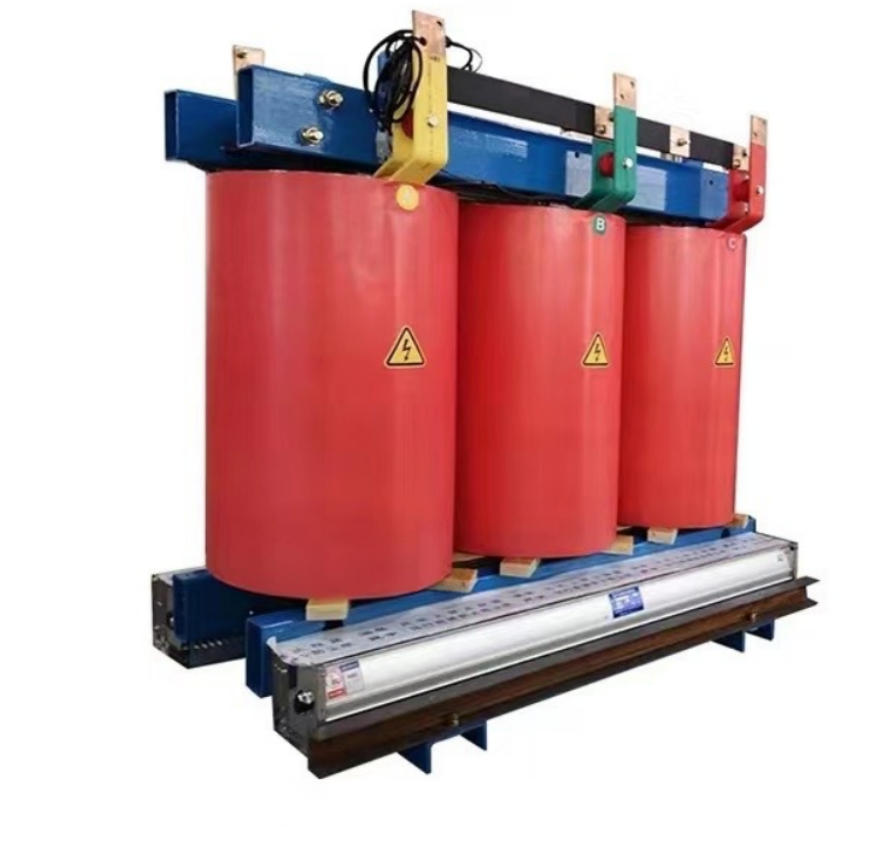
Often integrated systems (like a box‑type substation or photovoltaic box transformer)
Pick the enclosure architecture that actually matches your voltage class, not just the nameplate voltage.
3. Indoor vs. Outdoor and Contamination Levels
The environment is where many U.S. projects go wrong.
Indoor:
Typically cleaner, but watch for:
Dust from manufacturing
Conductive particles (welding, machining)
Process vapors
Outdoor:
UV, rain, snow, salt fog (coastal), road salt (Midwest/Northeast), agricultural dust
Wind‑blown sand/dirt in the Southwest and oil/gas fields
Contamination level matters because dust, moisture, and pollution quickly reduce creepage distance and promote tracking and partial discharge.
4. Temperature, Humidity, and Corrosive Atmospheres
Check both ambient and inside‑cabinet conditions.
Temperature:
Typical design: –25 °C to +40 °C (–13 °F to +104 °F)
Desert sites or rooftop PV: expect much higher internal temps
Humidity:
High humidity + temperature swings = condensation risk
Corrosive atmospheres:
Coastal, chemical plants, wastewater, fertilizer handling, refineries
If you have extremes, start thinking stainless, special coatings, or climate‑controlled/hybrid enclosures.
5. Choose NEMA and IP Ratings for High Voltage
For the U.S., NEMA is usually the first filter, with IP as a cross‑check.
Common high‑voltage choices:
| Use Case | Typical NEMA | Approx. IP |
|---|---|---|
| Clean indoor, limited dust | 1, 12 | IP20–IP54 |
| Indoor industrial (dust/oil) | 12, 13 | IP54–IP55 |
| Outdoor general weather | 3R, 3 | IP24–IP54 |
| Harsh outdoor / washdown / coastal | 4, 4X | IP65–IP66 |
Match rating to environment, not just “higher is better.” Over‑spec can be wasteful and complicate heat dissipation.
6. Balance Over‑Specification, Cost, and Safety Margins
You don’t want to cheap out, but you also don’t need a bunker for a light‑duty site.
Do add a safety margin for:
Voltage creepage/clearance
Short‑circuit withstand
Thermal capacity
Avoid overspecifying:
NEMA 4X, where NEMA 3R is enough
Fully climate‑controlled, when passive cooling would work
Think TCO: an enclosure that is slightly more expensive but avoids a single outage in a high‑cost facility usually pays for itself.
7. Select Enclosure Materials and EMI Shielding
For high voltage, the enclosure material is more than aesthetics.
Common choices:
| Material | Pros | Cons |
|---|---|---|
| Carbon steel | Strong, cost‑effective, good EMI shielding | Needs coating, can corrode |
| Stainless steel | Corrosion-resistant, durable, and good shielding | Higher cost, heavier |
| Aluminum | Light, corrosion-resistant | Weaker EMI shield, needs arc design care |
| Fiberglass/GRP | Non‑conductive, corrosion‑proof | Lower mechanical strength, no EMI shield |
For sensitive control or mixed HV/LV sections, make sure you have adequate EMI shielding (metal enclosure or shielded compartments).
8. Use Coatings, Insulation, and Grounding Correctly
At high voltage, these details prevent shocks and tracking.
Non‑conductive coatings on bus bars, terminations, and interior metal where needed
Insulation systems rated at or above your operating voltage and pollution level
Grounding:
Solid PE system with clearly marked grounding points
Bond all doors, panels, and removable sections
Meet NEC and local codes for grounding electrode systems
Good grounding is non‑negotiable for fault clearing and arc‑flash mitigation.
9. Prioritize Creepage and Clearance Distances
Creepage and clearance keep your HV from jumping where it shouldn’t.
Follow IEC/UL tables for:
System voltage
Overvoltage category
Pollution degree
Increase distances in:
Polluted or coastal areas
High‑humidity environments
Pay special attention to:
Terminations
Junctions between HV and LV sections
Around CTs/PTs and breakers
Design in margin; field contamination always makes things worse, not better.
10. Interlocks, Hardware, and Safe Access
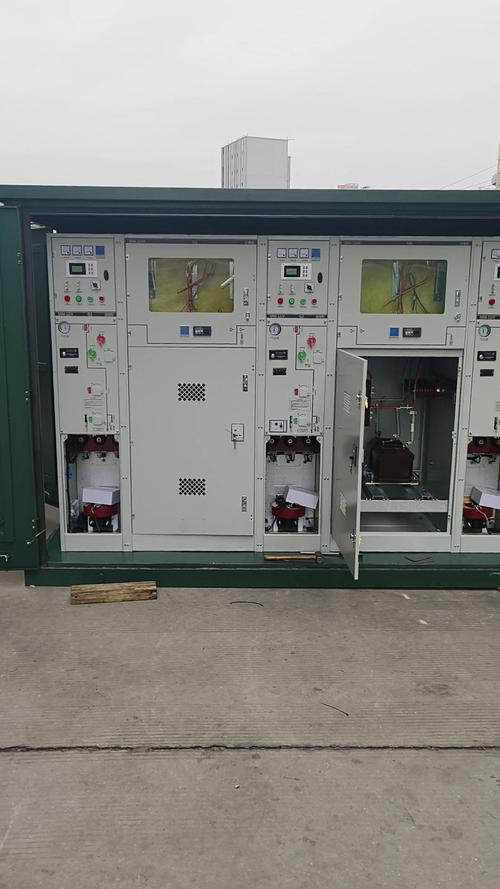
Safe access is critical for U.S. maintenance crews and OSHA compliance.
Door interlocks tied to:
Disconnects/breakers
Grounding switches
Key interlock systems for sequence control
Robust door hardware and hinges (doors must close and seal reliably)
Viewing windows and test ports for inspection without opening live compartments
Aim so no one is ever tempted to “crack the door” on energized gear.
11. Size, Layout, and Cable Routing
Cramped enclosures run hotter and are harder to service.
Allow space for:
Correct cable bending radius
Safe access to terminals and breakers
Heat dissipation around transformers and bus bars
Separate:
HV vs. LV compartments
Power vs. control wiring
Make room for future expansion where realistic
A clean layout reduces mistakes and speeds up maintenance.
12. Cooling Strategies for High Power Density
High voltage + high current = serious heat.
Options:
Passive:
Larger surface area
Convection vents with filters
Forced air:
Fans, filtered louvers
Internal airflow paths to avoid hot spots
Active cooling:
Air conditioners for sealed/NEMA 4X enclosures
Heat exchangers in dirty environments
Use thermal modeling or at least a conservative heat‑load calculation for MW‑scale systems.
13. Mounting and Installation Logistics
How and where you mount the enclosure matters for both safety and cost.
Mounting types:
Wall‑mount (smaller MV controls)
Floor‑standing (switchgear, large HV panels)
Rack or skid‑mounted (modular, prefabricated systems)
Consider:
Lift points and weight handling
Site access (door sizes, crane availability)
Seismic requirements in certain U.S. regions
Plan installation early so you don’t design something that’s a nightmare to move.
14. Lifecycle Cost, Maintenance, and Downtime
Think beyond day one.
How often will it be opened?
What’s the cost of a 1‑hour outage?
Is the enclosure designed for:
Easy filter changes
Simple breaker replacement
Safe cleaning in contaminated sites?
A slightly higher upfront spend can cut annual maintenance and outage risk dramatically.
15. NEC, IEC, UL, and Local Compliance
For U.S. projects, compliance is a must, not a bonus.
NEC (NFPA 70) for wiring, grounding, and working space
UL / ANSI / IEEE standards for:
Switchgear and controlgear
Enclosure construction and flammability
IEC references where required by spec or for global projects
Local AHJ (Authority Having Jurisdiction) requirements
Make sure the enclosure and internal gear carry the appropriate listings or certifications.
16. Use Vendor Engineering and WEISHO Customization
You don’t have to solve every high‑voltage enclosure detail alone.
Share:
Single line diagrams
Load profiles
Environmental data
Ask for:
Thermal studies
Creepage/clearance verification
Material and coating recommendations
With WEISHO, we can tailor enclosure size, layout, materials, cooling, and protection ratings around your exact voltage class, environment, and code requirements—so you get a safe, compliant, and practical solution instead of a generic box.
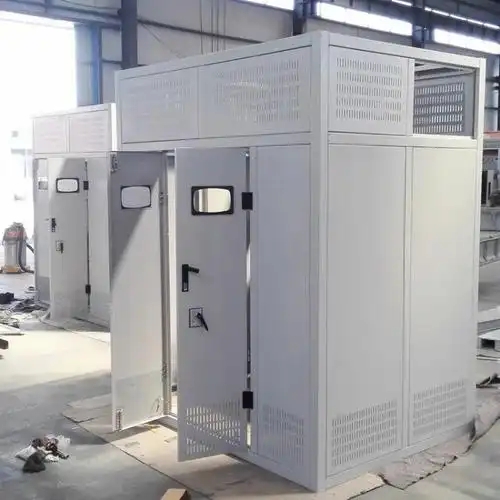
Advanced high voltage enclosure considerations
When you’re working with high voltage, “good enough” enclosures aren’t good enough. At higher power and voltage levels, small details in cooling, monitoring, and layout make the difference between a stable system and a constant shutdown risk.
Hybrid and climate‑controlled high voltage enclosures
For harsh or fast‑changing environments (coastal, desert, high altitude, or heavy industrial), I strongly recommend hybrid and climate‑controlled high voltage enclosures:
Hybrid cooling
Passive ventilation plus active AC or heat exchangers
Ideal for MW‑scale inverters, medium‑voltage switchgear, and outdoor substations
Climate control options
Enclosure AC units for hot, humid regions
Heaters for cold climates to prevent condensation on busbars and insulators
Intelligent fan control tied to internal temperature and load
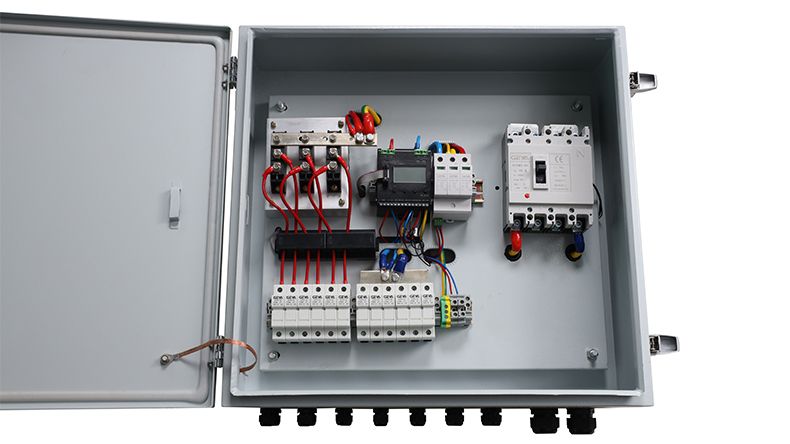
For large PV and grid‑tie systems, we typically combine switchgear and protection in a single engineered package, similar to a photovoltaic grid‑connected cabinet with optimized internal airflow and thermal management.
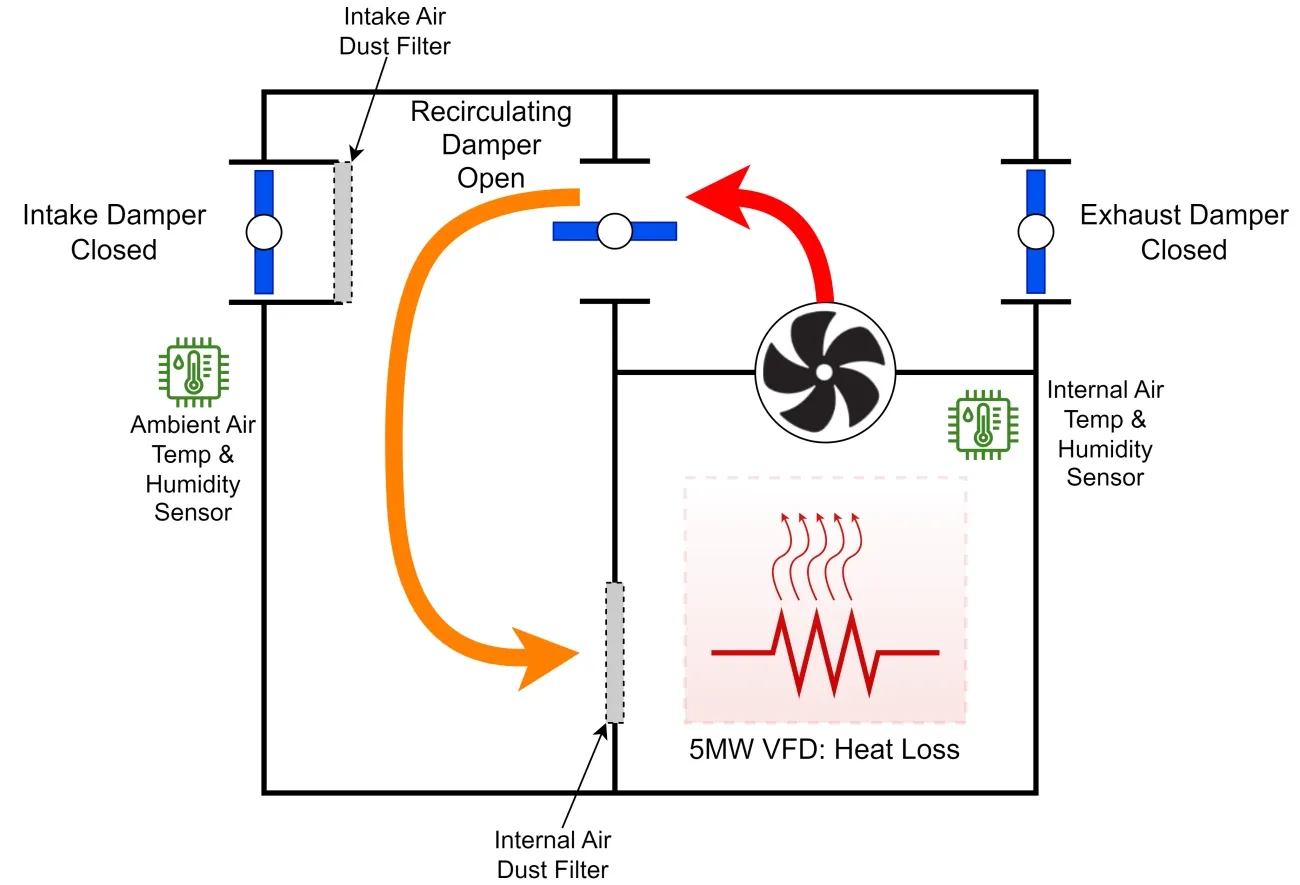
Ventilation, filters, and air mixing
High‑voltage gear hates dust and moisture. Both drive partial discharge, surface tracking, and corrosion.
Design your ventilation around three basics:
Filtered intake and exhaust
Use washable or replaceable filters sized for your airflow
Choose filter media based on environment (fine dust vs. fibers vs. salt mist)
Controlled air paths
Direct airflow across known hot spots (transformers, busbars, power electronics)
Avoid dead zones where heat and humidity build up
Air mixing and condensation control
Internal fans to keep temperatures uniform
Low‑watt heaters or dehumidifiers in coastal or humid regions
Smart monitoring, IoT sensors, and remote alarms
On high‑value systems, real‑time visibility is non‑negotiable. I build in:
Temperature sensors
Multiple points: top, bottom, cable terminations, busbars, electronics
Humidity and dew point sensors
Early warning for condensation and insulation breakdown risk
Voltage, current, and partial discharge monitoring
Spot insulation stress and abnormal load conditions early
Remote alarms and integration
Alarms via SCADA, cloud dashboards, email/SMS
Trending data for predictive maintenance and derating decisions
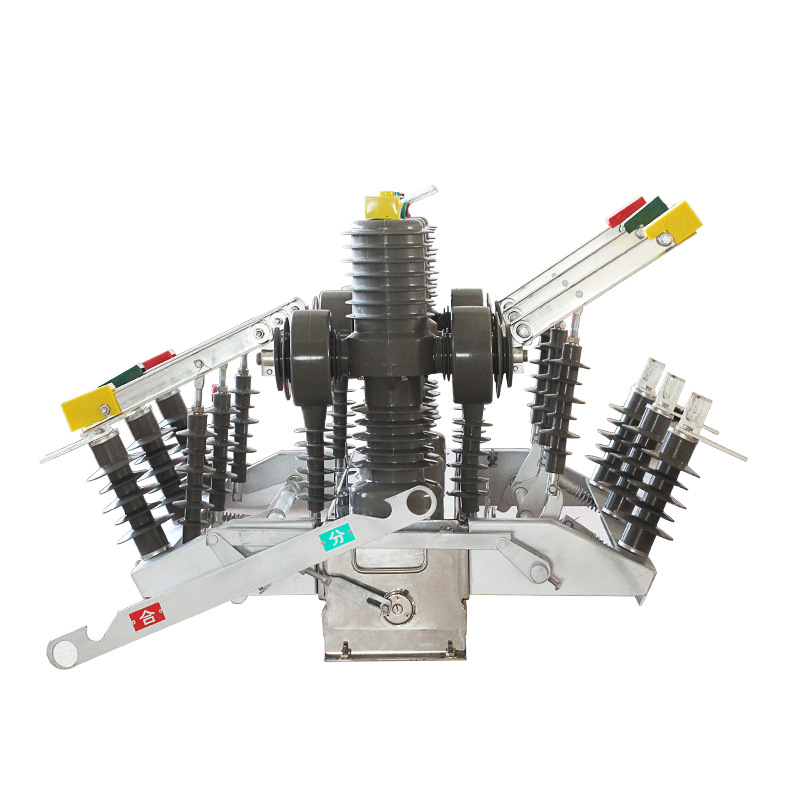
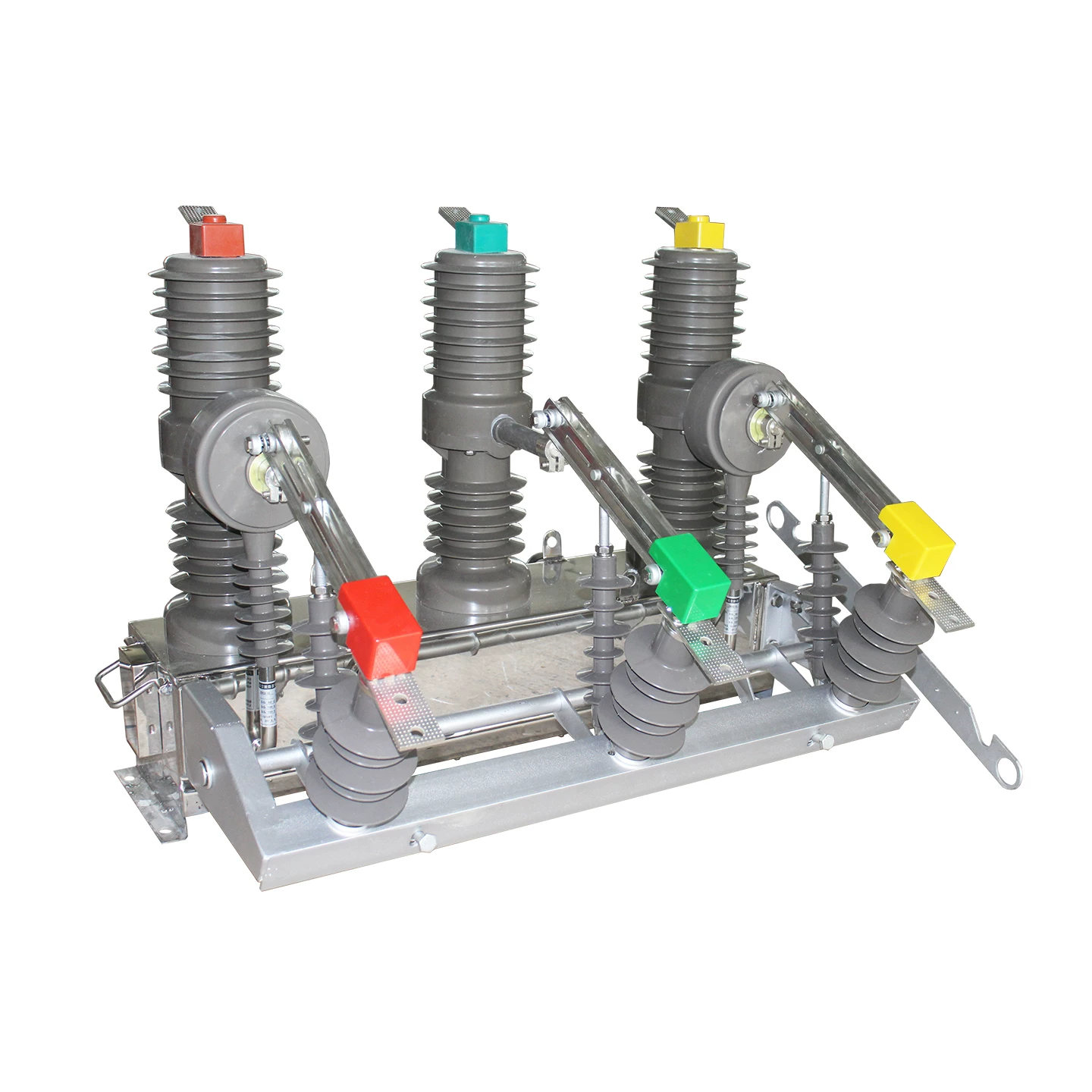
Pairing smart monitoring with outdoor high‑voltage gear, like a floor‑standing outdoor high-voltage circuit breaker, lets you catch overloads, hot spots, and nuisance trips before they shut down a feeder or plant.
Designing for modular expansion and upgrades
High‑voltage systems rarely stay the same. Plan your enclosures so you can grow without ripping everything out:
Modular sections
Plug‑in or bolt‑on bays for future feeders, breakers, or metering
Spare bus capacity and pre‑terminated connection points
Space and routing for future cables
Extra gland plates and cable tray knockouts
Clear separation for future LV control and communication wiring
Standardized footprints and ratings
Consistent NEMA/IP, short‑circuit, and insulation levels across all sections
Makes future add‑ons much faster to approve and install
Case studies: renewables and industrial automation
In the U.S., I see the biggest gains from optimized high voltage enclosure design in:
Utility‑scale renewables (solar, wind, BESS):
Consolidated MV switchgear and protection into climate‑controlled skids
Reduced weather‑related trips and insulation failures
Faster commissioning thanks to pre‑engineered, tested cabinets
Industrial automation and process plants:
Upgraded from generic cabinets to arc‑resistant, ventilated MV enclosures
Significant drop in nuisance trips, breaker failures, and hot‑spot events
Better uptime for critical lines and safer maintenance windows
Reliability and performance improvements
When we tighten up enclosure design at high voltage, the metrics usually move in the same direction:
Lower internal temperatures → longer life for breakers, contactors, and electronics
Fewer insulation issues → fewer flashovers, less downtime
Cleaner internal environment → reduced maintenance and washing cycles
Better monitoring → earlier interventions, planned shutdowns instead of emergencies
If you’re running high‑value equipment or 24/7 operations, dialing in these advanced enclosure details is one of the most cost‑effective reliability upgrades you can make.
High voltage enclosure mistakes and troubleshooting
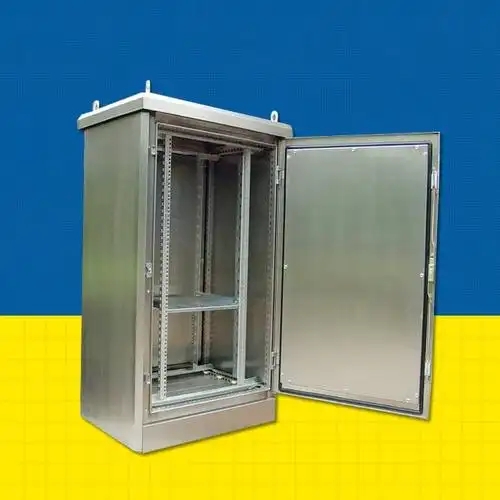
When we get called in after a high-voltage failure, it’s rarely “mystery physics.” It’s usually basic enclosure selection mistakes that snowball into downtime, burned gear, or safety incidents. Here’s what I see most often and how I troubleshoot it.
Typical high-voltage enclosure mistakes
Misjudging creepage, clearance, and insulation levels
Using low-voltage rules of thumb for medium-voltage protective housings
Forgetting that higher altitude, pollution, or condensation requires a longer creepage distance and larger air clearance
Mixing parts (insulators, wall bushings, supports) that don’t match the actual high-voltage enclosure ratings
Relying only on physical spacing and ignoring the insulation system class and partial discharge performance
Underestimating thermal loads and hot spots
Calculating heat only from nameplate current instead of real load profiles and duty cycles
Packing drives, transformers, and busbars too tightly, with no airflow paths for thermal management in HV enclosures
Ignoring extra heat from harmonics and inrush on large motors or renewable inverters
Adding more devices later without re-checking the temperature rise inside the cabinet
Ignoring high-voltage/low-voltage interactions
Running low-voltage control wiring in the same compartment as medium-voltage conductors
Forgetting EMI shielding needs and grounding systems for HV equipment, causing nuisance trips and bad sensor data
Sharing raceways and cable trays without regard for induced voltage and insulation ratings
Mounting low-voltage PLCs or relays too close to high-voltage terminations and arc sources
Practical troubleshooting checks in the field
When a high-voltage cabinet runs hot, smells “burned,” or trips unexpectedly, I work through a quick, repeatable checklist:
Thermal imaging
Scan bus connections, terminations, cable lugs, and breaker stabs under real load
Flag anything significantly hotter than similar joints or above manufacturer limits
Use images to prove hotspots caused by poor airflow, overloaded sections, or loose hardware
Visual and mechanical inspections
Look for tracking marks, chalky or brown insulation, and any carbon paths along insulators or around wall bushings
Check for dust, salt, insects, or moisture that shortens the creepage distance
Physically tug test major connections, verify torque where safe and allowed
Partial discharge and corona clues
Listen for faint hissing or crackling and look for light flicker in darkened conditions
Pay attention to ozone or “electric” smell near high-voltage terminations
If you see repeated marks around feedthroughs, moving to higher creepage, arc-resistant components such as quality composite dry-type wall bushings can dramatically cut risk; we use units similar to these in our retrofits: composite dry-type wall bushings.
Maintenance logs and trend checks
Compare recent temperature or trip events against historical data
Look for patterns: same feeder, same weather, same time of day
Tie events back to upgrades or new loads that may have pushed the enclosure beyond its original design
Retrofit and upgrade strategies for problem enclosures
When an enclosure is undersized or under-rated, I treat it like a project, not a patch:
Improve insulation and spacing
Replace aged insulators, supports, and bushings with parts that meet current creepage distance guidelines for your actual operating voltage and environment
Re-route or re-terminate conductors to restore proper clearance requirements inside the cabinet
Upgrade thermal management
Add ducting, fans, or filtered ventilation for better air mixing
In harsh outdoor sites, consider hybrid climate control enclosures with active cooling and sealed compartments
Relay high-loss components to avoid concentrating heat in one corner
Separate and protect LV controls
Move low-voltage controls into their own section or sub-enclosure
Add EMI shielding and better grounding paths to keep noise out of sensitive electronics
Fix environmental and compliance gaps
Verify the installed box actually matches the needed NEMA standard for electrical cabinets (e.g., NEMA 3R vs 4X) or comparable IP-rated boxes for high power
Check NEC compliance for voltage protection, clearances, and working space
Upgrade corroded or leaking housings with medium-voltage cable branch equipment designed for outdoor duty, such as sealed DW F-12 type cable branch boxes when appropriate
Use digital enclosure selector tools
Plug in voltage, current, environmental class, and mounting style to get a short list of suitable high-voltage enclosure ratings
Compare materials (stainless vs fiberglass vs coated steel) and sizes before you order
Lock in creepage, clearance, and thermal margins on the screen instead of discovering the mistake in the field
If you treat “mistakes and troubleshooting” as a single loop—find the root cause, fix the enclosure design, and lock in better ratings with digital tools—you’ll massively cut failures, truck rolls, and downtime in US high-voltage installations.
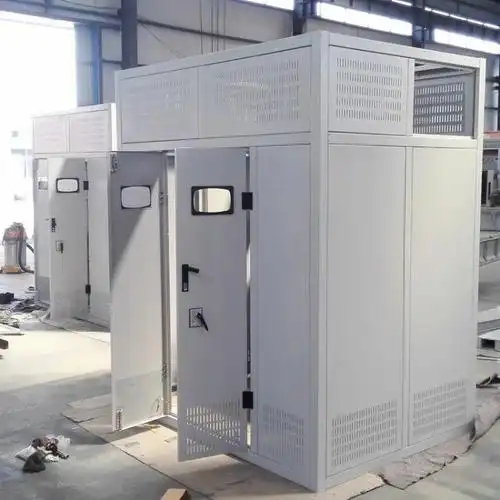
High voltage enclosure selection FAQs
What are the minimum creepage and clearance distances?
For medium-voltage protective housings, I always size creepage and clearance with a margin over code:
3–7.2 kV (medium voltage)
Clearance in air: 1–1.5 in (25–40 mm)
Creepage on insulating surfaces: 1.6–2.5 in (40–63 mm)
7.2–15 kV
Clearance in air: 2–4 in (50–100 mm)
Creepage: 3–6 in (75–150 mm)
15–35 kV
Clearance in air: 4–10 in (100–250 mm)
Creepage: 6–20 in (150–500 mm)
These are ballpark creepage distance guidelines, not design rules. In the U.S., I always cross-check with:
NEC, IEEE/ANSI C37, and IEC 60664
OEM instructions for equipment like medium‑voltage switchgear or 6–22 kV oil‑immersed transformers (for example, our 6–22 kV oil‑immersed transformers follow tested insulation clearances)
When in doubt, add spacing instead of cutting it close—especially in humid or polluted environments.
Can aluminum enclosures handle high-voltage arcing safely?
Yes, aluminum high-voltage enclosures can be safe, but only if the design is right:
Aluminum is conductive, so you must have solid grounding systems for HV equipment.
For arc-risk areas, I prefer arc-resistant electrical panels and bus compartments regardless of material.
Use proper internal insulation barriers and non-conductive supports so a fault can’t jump to the enclosure wall.
In coastal U.S. sites make sure you use marine-grade aluminum with coatings to fight corrosion.
Bottom line: aluminum can work for high-voltage but arc safety depends more on internal design insulation and grounding than the metal itself.
How does NEMA 4X compare to IP66 for outdoor high voltage?
For outdoor high-voltage enclosure ratings here’s how I look at NEMA standards for electrical cabinets versus IP:
NEMA 4X
Watertight against hose-directed water and rain
Corrosion-resistant (important for coastal or chemical plants)
Covers some dust and ice formation
IP66
Dust tight
Protected against powerful water jets
For U.S. outdoor high-voltage sites:
If you deal with salt fog chemicals or washdown I typically pick NEMA 4X.
If an EU-driven spec lists only IP66 I match it with at least NEMA 4X or higher in corrosive environments.
For lightning-prone yards or where we install HV lightning arresters (like our 10 kV detachable lightning arresters) I pair NEMA 4X / IP66 with good bonding and surge protection.
Stainless steel vs. fiberglass in corrosive high-voltage sites?
Both work but I pick based on the exact environment:
Stainless steel (304/316)
Best for heavy industrial and coastal sites
Excellent mechanical strength , impact resistance and security
Higher cost and weight but ideal for high power density gear
Fiberglass (FRP)
Great corrosion resistance and non-conductive
Lighter and easier to modify in the field
Can age under UV and impact; reinforce where workers may step or bump
In U.S. chemical plants and offshore sites I usually specify 316 stainless for main high-voltage cabinets and use fiberglass for smaller junction boxes and auxiliary panels.
What certifications should high-voltage enclosures carry?
For the U.S. market, I always confirm these when we ship high-voltage cabinets:
UL 50 / UL 50E – Enclosure construction and environmental rating
UL 508A – Industrial control panels (common for HV control and protection)
UL 347 / UL 1558 / ANSI C37.x – For medium-voltage switchgear and assemblies
NEMA – Rating for type (3R 4 4X etc.)
CSA – If the project covers U.S. and Canada
IEC 62271 IEC 61439 – For international or utility-grade projects
I also look for a recognizable NRTL mark (UL ETL CSA) on the label. If it’s not listed or labeled I treat that as a red flag.
What should I ask when specifying custom high-voltage enclosures?
When we engineer a custom electrical enclosure design here are the questions I push customers to answer clearly:
What max voltage BIL and fault current does the enclosure need to withstand?
Is it indoor or outdoor? Any chemicals salt dust or explosive atmospheres?
What’s the ambient temperature range and solar load? Any derating needed?
Required NEMA/IP rating short-circuit rating and arc-flash category?
Space for future expansion breakers and cable additions?
How often will you open doors for maintenance and do you need interlocks or key systems?
Any utility data center or OEM standards (Eversource PG&E IEEE NFPA) that must be met?
The clearer these answers are the faster we can lock in a reliable code-compliant design.
What are typical lead times and configuration options for engineered HV enclosures?
For engineered high-voltage enclosures in the U.S. , here’s what I see most often:
Standard or lightly customized designs:
Lead time: 6–10 weeks
Options: size changes gland plates simple cutouts paint color mounting changes
Fully engineered HV enclosures (MV switchgear housings outdoor skid cabinets):
Wall floor or skid-mounted bases
Stainless aluminum or fiberglass construction
NEMA 3R 4 or 4X / IP-rated boxes for high power
Integrated HVAC heaters and hybrid climate control enclosures
Busbars CT/VT sections cable chambers and internal segregation
Lead time: 12–20+ weeks depending on complexity and certification
Options:
When schedule matters, I usually recommend starting from a proven platform and customizing only what’s critical (rating layout environment) to keep both lead time and cost under control.
" post draft 2025/11/24 10:25 How to Select enclosures for high voltage "High-voltage enclosure ratings NEMA standards for electrical cabinets Creepage distance guidelines Medium-voltage protective housings Electrical enclosure materials comparison Thermal management in HV enclosures IP-rated boxes for high power Arc-resistant electrical panels Hybrid climate control enclosures Clearance requirements for HV PCBs Stainless steel vs. fiberglass enclosures NEC compliance for voltage protection EMI shielding in high-voltage setups Custom electrical enclosure design Grounding systems for HV equipment "