
🎯 Introduction: Why This Upgrade is Non-Negotiable
This project, the transition from antiquated Oil Circuit Breakers (OCBs) to modern Vacuum Circuit Breakers (VCBs), stands as a critical and highly complex endeavor within specialized electrical engineering. It is unequivocally not a task for general electricians or any do-it-yourself enthusiasts; the high-voltage nature demands certified expertise.
The core of this engineering process is far more involved than simply removing an old unit and installing a new one; it requires precise electrical design validation, intricate mechanical adaptation, strict adherence to global safety protocols, and a comprehensive recalibration of the protective relay systems. The essential steps mandate a professional team to execute a total system de-energization and isolation process, followed by the safe removal of the old breaker and the meticulous, compliant disposal of its hazardous insulating oil.
The next critical phase involves the installation of the new VCB Retrofit Module, ensuring perfect mechanical and electrical alignment with the aging switchgear cabinet. Finally, the project concludes with rigorous post-installation checks, which include comprehensive electrical testing, mechanism validation, and the meticulous functional tuning of the protective relays; these steps are mandatory for guaranteeing long-term safety, reliability, and upgraded system performance.
🔑 Key Takeaways: Project Success at a Glance
Extreme Professionalism is Required: OCB-to-VCB replacement is a specialized, high-voltage overhaul that must be executed exclusively by certified and highly experienced electrical engineering teams.
The Go-To Solution: The most common and economically prudent strategy involves utilizing a custom-designed Vacuum Circuit Breaker Retrofit Module.
Safety Above All: All procedures must strictly adhere to Lock-Out/Tag-Out (LOTO) procedures and incorporate robust, verifiable grounding practices to ensure a zero-energy working environment.
Primary Technical Hurdles: The two most significant technical challenges in this retrofit are achieving flawless mechanical dimensional compatibility and the complex task of re-engineering the secondary control circuits and protective relay settings.
Compliance is Mandatory: The removed insulating oil is classified as hazardous waste and its disposal is legally mandated; specialized, licensed environmental contractors must be engaged for its compliant recycling and documentation.
II. Decisional Basis: The Unavoidable Case for VCB Technology
An upgrade of core electrical infrastructure must never be based on fleeting industry trends; instead, it must be rooted in rigorous techno-economic analysis and professional engineering assessment. From the perspective of a seasoned electrical engineer, the advantages offered by VCB technology are overwhelming, particularly concerning long-term performance, intrinsic safety, and operational maintenance costs.
2.1 Performance Showdown: OCB vs. VCB (A Technical Comparison)
The reason the Vacuum Circuit Breaker is effectively making the Oil Circuit Breaker obsolete lies in its superior arc-quenching principle. VCBs employ a high-vacuum environment (approximately $10^{-4} \text{ Pa}$) as the arc interruption medium; this medium offers exceptionally fast dielectric recovery and high insulating strength, extinguishing the arc rapidly, often within just a half-cycle of the power frequency. This process stands in stark contrast to the sluggish method of the OCB, which relies on cooling and arc-blowing via the decomposition gases of its oil medium.
Feature-by-Feature Technical Comparison Table
| Feature | Legacy Oil Circuit Breaker (OCB) | Modern Vacuum Circuit Breaker (VCB) | Engineering Impact and Core Benefit |
| Arc Quenching Medium | Insulating oil (often mineral-based) | High Vacuum ($10^{-4} \text{ Pa}$) | Eliminates fire/explosion risk; provides extremely rapid arc interruption. |
| Total Interruption Time | Relatively long (approx. 5 - 8 cycles) | Extremely fast (approx. 2 - 3 cycles) | Ensures rapid fault clearing, significantly minimizing collateral damage from short-circuit currents. |
| Operational Lifespan | Low cycle count (requires oil replacement after major fault interruptions) | Very high cycle count (capable of tens of thousands of operations) | Offers superior longevity; perfectly suited for frequent switching operations and demanding environments. |
| Maintenance Cycle | Frequent (mandates periodic oil level checks, quality testing, and filtration) | Extremely low (fundamentally maintenance-free technology) | Drastically reduces long-term operational costs and equipment downtime. |
| Environmental Safety | High risk of leakage, potential contamination, and fire/explosion hazards | Inherently clean and environmentally friendly; zero fire or explosion risk. | |
| Mechanism Design | Often complex, typically using spring or hydraulic operating mechanisms | Features a simplified, highly reliable spring-based operating mechanism | Ensures a lower rate of mechanical failure and enhanced reliability. |
2.2 The Selection Mandate: Critical Electrical Parameter Verification (The Engineer’s View)
In any primary electrical equipment replacement project, meticulous parameter matching is the foundational prerequisite for project success. Focusing solely on voltage class is insufficient and dangerous. Electrical engineers must rigorously verify the following critical parameters during the selection phase:
Primary Parameter Checks
Rating Compatibility (Voltage and Current): This is the baseline check. The new VCB’s rated voltage and its rated current—crucially including both the interrupting current capacity and the making current capacity—must precisely match the design specifications of the existing switchgear system.
Dynamic and Thermal Withstand Verification (Short-Circuit Capacity): The new VCB’s rated short-circuit interrupting current must be certified to safely handle the maximum anticipated short-circuit current the system can produce under the most severe fault conditions. Furthermore, the engineer must confirm the VCB’s rated peak withstand current and its rated short-time withstand current (thermal rating); this guarantees that the new mechanical structure and primary conductors can physically withstand the extreme electromagnetic forces and thermal stress generated during a system short-circuit fault.
Mechanical Interlocks and Draw-out Interchangeability: This specific requirement constitutes the single biggest challenge in any retrofit project. It is absolutely mandatory to confirm that the new VCB or its retrofit module is dimensionally and mechanically compatible with the original OCB regarding: contact center-to-center spacing, mounting hole patterns, and the precise alignment of the racking/draw-out mechanism and its locking features. For draw-out switchgear, the new VCB must safely and reliably insert into the legacy breaker compartment, achieving secure primary contact connection and full functionality of the mandatory mechanical interlocks with the isolation contacts/primary conductors.
Crucial Engineering Note: Both Mechanical Compatibility and Short-Circuit Capacity Matching serve as dual-veto criteria in the retrofit selection process. A mismatch in either parameter inherently guarantees project failure or introduces a critical, unacceptable long-term safety hazard.
III. Retrofit Technical Execution: Design Details and Differentiation
The implementation of the retrofit solution faces a core technical problem: how to achieve a seamless fusion between the old and new equipment across mechanical, electrical, and control logic domains without resorting to the costly and disruptive replacement of the entire medium-voltage switchgear lineup.
3.1 Retrofit Strategy: The Full Replacement vs. The Retrofit Kit
In a situation demanding the upgrade of an OCB to a VCB, two primary technical pathways are made available. Each path carries unique trade-offs concerning cost, outage duration, and technical risk exposure.
Path 1: Full Switchgear Replacement
This approach is reserved for situations where the existing switchgear is nearing its end-of-life or its structural design fails to meet contemporary standards. It necessitates replacing the entire switchgear cell and lineup; while this choice minimizes long-term technical risk, it is high-cost and requires a significantly extended outage period.
Path 2: The Retrofit Module (Retrofit Kit)
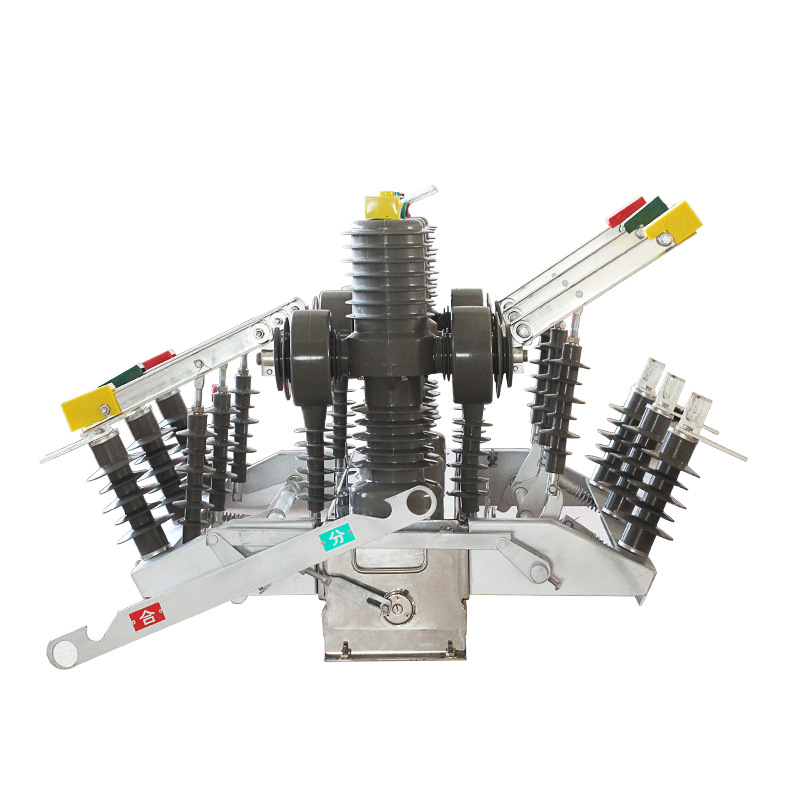
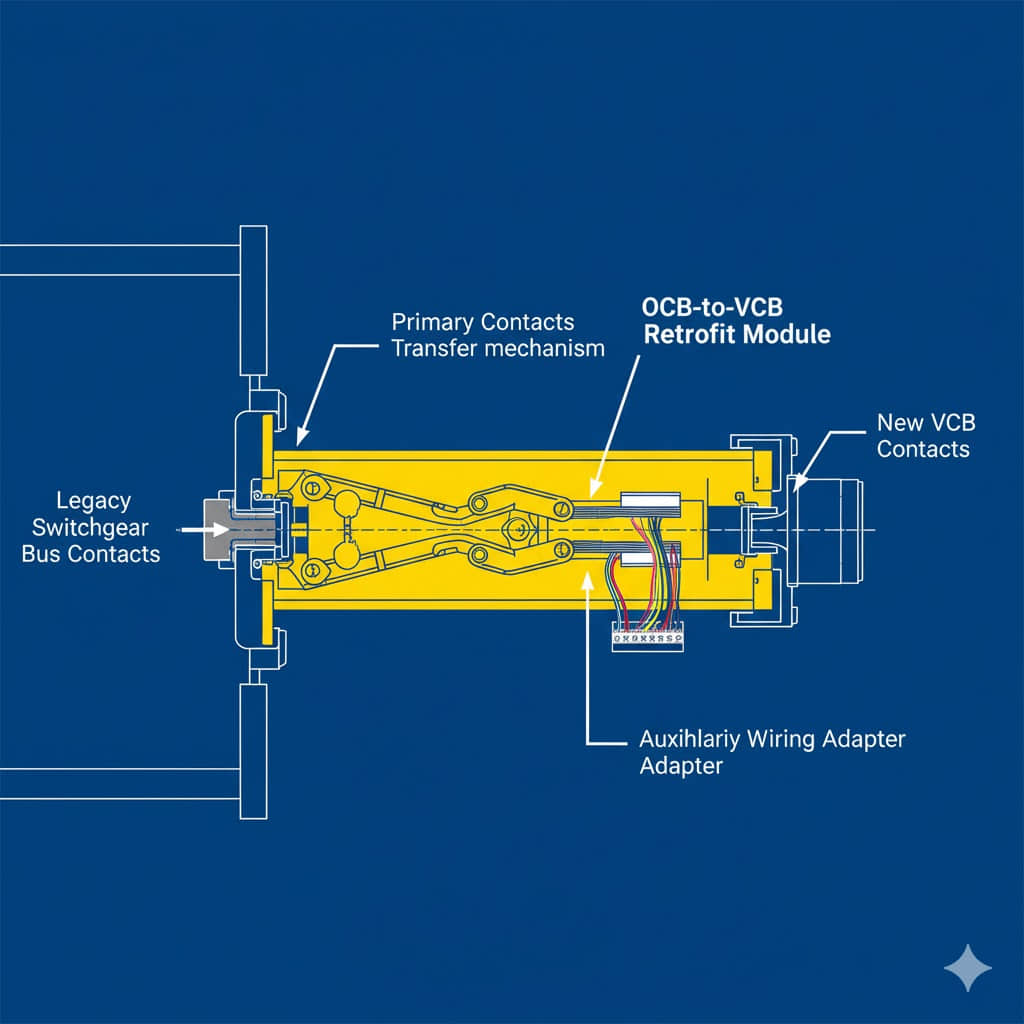
This is the industry-standard and most cost-effective solution. Manufacturers design and supply a specialized "transition" or "adapter module" specifically engineered to interface a modern VCB with a particular legacy OCB switchgear model.
The Core Value of the Retrofit Module
The Retrofit Kit is essentially the engineered bridge that overcomes the inherent size and structural incompatibility between the old infrastructure and the new technology. The module integrates the modern VCB and features highly customized components:
Primary Contact Transition Mechanism: This component solves the challenge of differing contact center distances and contact finger structures between the OCB and VCB. It ensures that when the VCB is racked into the compartment, its primary contacts achieve a precise, reliable, and high-conductivity connection with the switchgear’s stationary contacts.
Auxiliary Circuit Adapter: This system routes the new VCB’s low-voltage control elements—such as auxiliary contacts, status indicators, and heating elements—via quick-connect plugs/sockets. This ensures the new control signals are perfectly mapped and connected to the terminals of the original switchgear’s auxiliary wiring panel.
Mechanical Interlock Alignment: This critical feature guarantees that the new VCB’s racking, test/service positioning, and operational sequence fully align with and engage the legacy switchgear’s physical interlock mechanisms, thus preventing dangerous operational errors.
🎥 Visual Aid for Retrofit Strategy (Section 3.1)
To visually reinforce the concept of mechanical and electrical adaptation, the following video is recommended:
3.2 The Secondary Circuit Challenge: Control Logic and Relay Adaptation
For the electrical engineer, the connection of the primary power conductors is often straightforward, but the adaptation of the secondary control circuits is consistently the most error-prone phase, demanding the highest level of technical proficiency.
The Hidden Complexities of Secondary Wiring
Coil Voltage Compatibility: Legacy OCB trip/close coils commonly operated on DC 110V or 220V. While new VCBs are often designed for wider voltage tolerance, a meticulous cross-check with the site's existing DC system output is required to confirm the operating voltage range. In cases of incompatibility, a DC-to-DC power conversion module may need to be integrated into the control scheme.
Auxiliary Contact Logic and Quantity: The auxiliary contact configuration on older OCBs was often rudimentary. Modern VCBs generate far more comprehensive control and status signals, including states like: spring-charged complete, spring discharged, or gas pressure low (if applicable). The engineer must perform a deep review of both the old and new schematics to guarantee that the VCB's auxiliary contact signals are accurately mapped into the site’s remote control, signaling circuits, and protective relaying panels. In certain circumstances, additional interposing relays must be incorporated to translate the new VCB signals into the complex logic required by the legacy switchgear control scheme.
Trip-Free Circuit Re-Engineering (Anti-Pump): The circuit breaker’s anti-pump or trip-free functionality is mission-critical. While a new VCB’s anti-pump logic may be integrated directly within its operating mechanism, this often differs from the external relay-based anti-pump logic used by the original OCB. The engineer must ensure the new VCB’s trip-free logic effectively and reliably prevents the breaker from engaging in continuous "close-open" cycling while the "close circuit" remains asserted.
Engineering Tip: During secondary circuit modifications, it is essential to implement a “triple-check” verification protocol on the wiring diagrams—design review, field verification, and peer review. This is the only guaranteed safeguard against wiring errors and must include verification of all control cable numbering, color codes, and terminal lug markings.
IV. VCB Replacement Protocol: The Field Engineering Guide
The replacement of high-voltage equipment must adhere to the most stringent industry safety standards and operational norms. The following stages represent the mandatory steps for any competent engineering team:
4.1 Stage I: System De-Energization and Safety Isolation (The Absolute Lifeline)
This phase is the absolute cornerstone of the entire project; any deviation or compromise can result in catastrophic failure or loss of life.
The Mandatory Safety Steps
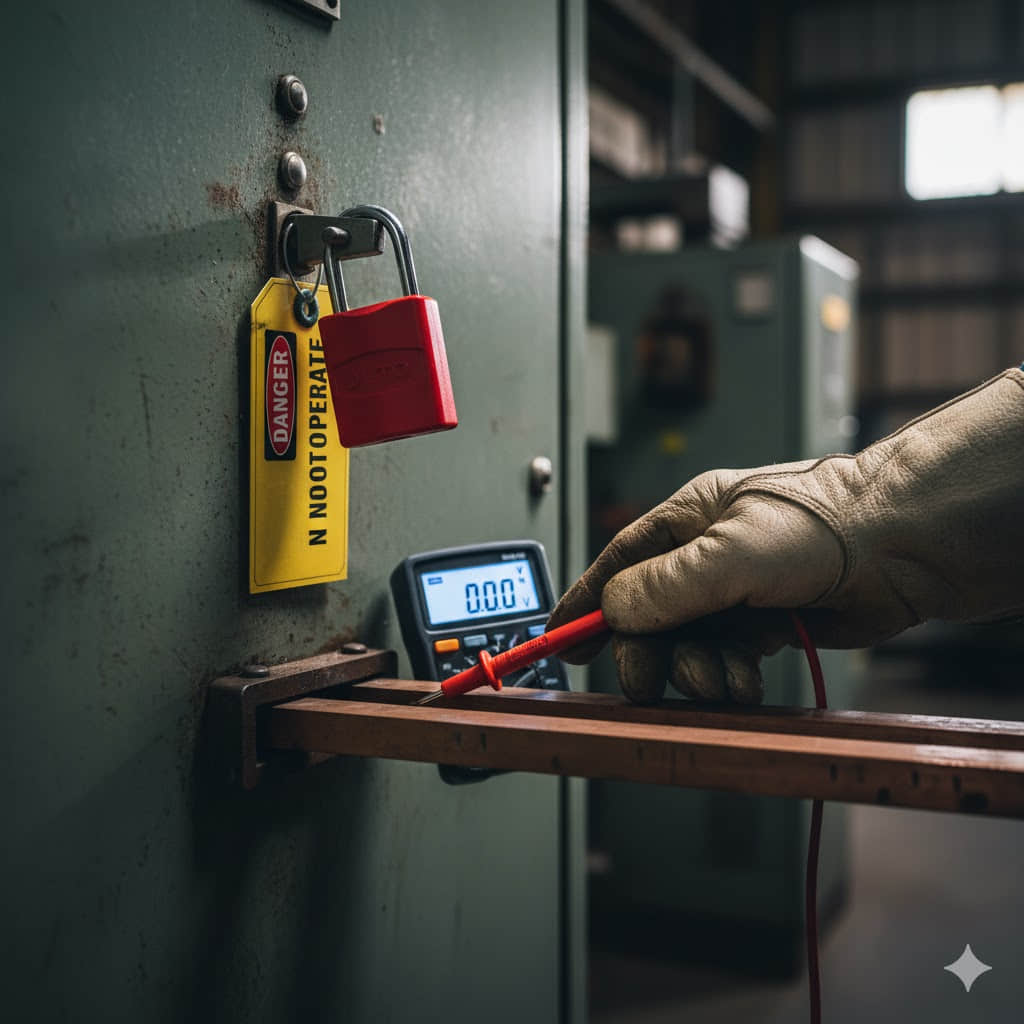
Step 1: Execute LOTO Procedures: The team must rigorously enforce the Lock-out/Tag-out (LOTO) protocol. After the circuit breaker is opened, physical isolation must be achieved at all upstream and downstream disconnecting switches. All isolating points must then be secured with lockout devices and tagged with mandatory “DO NOT OPERATE” signage.
Step 2: Zero Voltage Verification (Dual Confirmation): Before any physical contact work begins, all primary conductors must be confirmed de-energized using a qualified, recently calibrated voltage detector (hot stick). Immediately following, a high-impedance voltage meter must be used to perform detailed voltage checks—phase-to-phase and phase-to-ground—to confirm all possible induced voltages or residual capacitive charges have been completely dissipated.
Step 3: Establish Reliable Working Grounds: Once isolation is confirmed, the team must deploy dedicated, high-voltage grounding equipment. These ground sets must be securely installed on the primary bus or contacts within the work zone, providing a redundant safety path. This step is crucial not only to prevent accidental re-energization but also to safely dissipate any electrostatic or electromagnetic induced charges, thereby ensuring the absolute safety of the operating personnel.
4.2 Stage II: Safe Removal and Environmental Compliance
Step 4: Wiring Disconnection and Archiving: All primary and secondary wiring must be disconnected. Critically, the electrical engineer must first perform detailed photo/video documentation and physical labeling of all secondary control wiring. A detailed, verified wiring schedule log must be created; this log is the only guaranteed safeguard against incorrect wiring during the new equipment installation phase.
Step 5: Physical Hardware Removal: The team proceeds with the physical dismantling and removal of the old Oil Circuit Breaker, including its draw-out carriage or fixed base.
Step 6: Professional Disposal of Insulating Oil (Legal Compliance): The insulating oil contained in the old OCB may contain hazardous contaminants, such as Polychlorinated Biphenyls (PCBs). It is therefore legally classified as hazardous waste. The engineering team must adhere to the following strict requirements:
All waste insulating oil must be completely drained and stored in approved, sealed, secondary-containment vessels.
The dismantled OCB casing must be prepared for non-hazardous disposal after oil removal.
A licensed, certified environmental recycling contractor must be engaged for the transportation and disposal of the waste. The team must retain all mandatory Waste Transfer Manifests and Disposal Certifications to ensure the project meets all national and local environmental regulations.
Legal Compliance Note: The compliant disposal of insulating oil is a non-negotiable legal requirement in high-voltage retrofit projects. Any attempt to improperly dump or non-compliantly dispose of this material will result in severe legal penalties and substantial environmental fines.
4.3 Stage III: New VCB Installation and Precise Wiring
Step 7: Retrofit Module Installation: The newly adapted VCB Retrofit Module/Draw-out Carriage is carefully positioned and securely installed within the switchgear compartment. Primary attention must be paid to verifying the mechanical positioning and clearances between the module and the existing switchgear cell structure.
Step 8: Primary Electrical Connection: The primary bus connections must be made. The connections must be secured using a calibrated torque wrench to ensure the manufacturer's specified torque values are met. This step is vital to prevent loose connections, which are the leading cause of excessive local heating and eventual failure or catastrophic burnout during operation.
Step 9: Secondary Wiring Precision: Using the previously archived wiring log and schematics, the VCB’s auxiliary circuits must be precisely connected to the switchgear’s terminal blocks. Upon completion of all wiring, a final, comprehensive continuity test is mandatory to rule out any potential wiring errors or unintended short circuits in the control system.
🎥 Visual Aid for VCB Installation (Section 4.3)
To visually demonstrate the critical mechanical operation of placing the new breaker into service:
V. Post-Installation Protocol: Rigorous Commissioning and Testing (The EEAT Differentiator)
Upon completion of the physical installation, immediate re-energization is strictly prohibited. A mandatory series of stringent acceptance tests and functional verifications must be performed. This commissioning phase is the most important stage for demonstrating the project’s quality, professionalism, and commitment to long-term reliability.
5.1 Primary Circuit Electrical Performance Tests (The Hard Data)
Insulation Integrity Testing: A Power Frequency Withstand Voltage Test or DC Hi-Pot Test must be performed to verify the insulation integrity of the VCB and the primary conductors within the switchgear cell post-retrofit.
Conductive Path Verification: A High-Precision Contact Resistance Tester must be used to measure the main circuit resistance. Industry standards typically mandate a resistance value in the micro-Ohm ($\mu\Omega$) range (e.g., $\le 200 \mu\Omega$); any value exceeding the manufacturer’s specification is a direct indication of a poor primary contact connection, leading to catastrophic overheating during operation.
5.2 Mechanism and Operational Characteristic Tests
Timing Measurement: A specialized Circuit Breaker Timing Test Set must be utilized to accurately measure the VCB’s closing time, opening time, and synchronicity across all three phases. These timing characteristics must strictly comply with the manufacturer's specifications, particularly the opening time, which directly affects the speed at which the protective relays can clear a fault.
Mechanical Verification: The operational reliability of the VCB’s key mechanical functions—spring charging, closing, opening, and tripping—must be verified, along with a functional check of the anti-pump (trip-free) feature to ensure it operates correctly.
5.3 Protective Relay Recalibration and Trip Coordination (The Core EEAT Requirement)
Because the inherent characteristics of OCBs and VCBs differ (most notably the faster opening time of VCBs), and because the retrofit process may have affected the wiring to the current transformers (CTs), the recalibration and comprehensive testing of the protective relay system is an absolute, non-negotiable requirement.
Key Steps for Relay Verification
Setting Calculation and Validation: The electrical engineer must re-evaluate or recalculate the current pickup settings and time delays for all related feeder protection and bus protection relays. For example, since the VCB interrupts faster than the legacy OCB, the protection time delays may require adjustment to ensure that the vital coordination and selectivity with upstream and downstream protection devices remain intact, thus preventing unwanted trip cascading.
Protection System End-to-End Functional Test (Secondary Injection): This constitutes the final, critical system test. By injecting simulated fault currents into the CT circuits (known as secondary injection testing), the engineer verifies the entire protection chain:
The protective relay accurately detects the fault and issues the correct trip command within the designated time delay.
The trip command is transmitted without failure to the new VCB’s trip coil.
The new VCB successfully opens within its specified interruption time.
This end-to-end coordinated functional test is the ultimate proof that the new equipment is seamlessly integrated and compatible with the legacy protection scheme.
Professional Tip: Following a VCB retrofit, a mandatory secondary injection and coordination test must be performed. This test is crucial not just for verifying the new breaker, but primarily for validating that the integrated protective relay system logic and time coordination are precise and accurate—a vital step for establishing operational trust and safety.
🎥 Visual Aid for Commissioning and Testing (Section 5)
This video provides an excellent demonstration of the mechanical inspection, safety interlock verification, contact resistance measurement, and insulation withstand testing protocols required after medium-voltage switchgear installation, perfectly aligning with the professional demands of this section:
VI. Conclusion: The Value of Professional Execution
The replacement of a legacy Oil Circuit Breaker with a modern Vacuum Circuit Breaker is far more than a simple equipment swap; it represents a comprehensive overhaul of the entire medium-voltage distribution system. This upgrade delivers significant and measurable improvements in intrinsic safety, system reliability, and maintenance economics. The execution of this complex project involves intricate mechanical adaptation, conversion of secondary control logic, mandatory compliant handling of hazardous waste, and the critically important step of protective relay recalibration and integrated functional testing.
These tasks demand that the engineering team possess a comprehensive and deep foundation in electrical design, protective relaying principles, and high-voltage testing protocols.
Therefore, clients are strongly advised to always consult and contract with a professional electrical service provider that possesses the necessary certifications, a proven EEAT track record, and extensive hands-on experience in executing such critical retrofit upgrades. Selecting an expert engineering team is the singular best way to guarantee a safe, highly efficient, and long-term compliant electrical power system.

❓ Frequently Asked Professional Questions (FAQ)
💡 Real-World, Trustworthy, and Helpful Q&A
Q1: After installing a Retrofit Module, can I freely interchange VCBs made by different manufacturers?
A: Absolutely not. The Retrofit Module is a custom-engineered device specifically designed to match a particular model of switchgear and a specific VCB model series. Its mechanical dimensions, interlock placement, and electrical interfaces are precisely fixed.
Once a manufacturer's module is installed, you are generally restricted to using that manufacturer’s VCBs or authorized, fully compatible equivalents. Arbitrary swapping can lead to mechanical binding, poor primary contact integrity (causing overheating and burnout), or, most dangerously, interlock failures that result in severe safety incidents.
Q2: Why is protective relay recalibration necessary after replacing the OCB with a VCB? Do I need to replace the relay devices themselves?
A: The relay devices themselves may not need replacement, but the protection settings must be meticulously revalidated. The fundamental reason is that a VCB’s interruption time (typically 2-3 cycles) is significantly faster than an OCB’s (5-8 cycles). The total fault-clearing time = relay time delay + breaker opening time.
The VCB’s inherent speed may necessitate that the engineer adjust the relay's time delay settings. This adjustment is crucial to ensure that the vital coordination and selectivity with other protection devices (upstream and downstream) are maintained, preventing hazardous nuisance tripping or unnecessary system outages.
Q3: What is the typical duration of the required power outage for a retrofit project, and how can I minimize production impact?
A: The outage duration is highly dependent on the project’s scale and the number of switchgear compartments being modified, as well as the expertise of the installation team. A single breaker compartment's outage for conversion and commissioning typically requires 3 to 5 full days of sustained access.
Professional engineering teams employ specific strategies to minimize impact:
Pre-Assembly and Pre-Commissioning: The retrofit module and new VCB are fully assembled and factory tested off-site before the outage begins.
Phased Implementation: The project is sequenced in a phased, compartmentalized manner, starting with non-critical loads or compartments that possess full operational redundancy.
Off-Hours Scheduling: The work is strategically scheduled during low-production periods, such as weekends, holidays, or overnight shifts, to avoid disrupting core manufacturing operations.
Q4: Should I opt for a full switchgear replacement or a VCB Retrofit Module? What are the main economic considerations?
A: The primary economic consideration revolves around the remaining life expectancy and physical condition of the switchgear structure and buswork.
Choose the Retrofit Module: If the main switchgear enclosure, busbars, and secondary wiring infrastructure are in sound condition and estimated to have another 15–20 years of safe operational life, the retrofit module is the most economically sound choice. The cost is typically only 30%–50% of a complete replacement.
Choose Full Replacement: If the switchgear structure shows severe signs of deterioration (such as cabinet corrosion or degraded busbar insulation), or if the system requires an upgrade in voltage class, then a full replacement must be chosen. Replacing only the breaker cannot eliminate the systemic risks posed by an aging enclosure and bus system.
Q5: How strict are the compliance requirements for disposing of the insulating oil during the OCB replacement?
A: The requirements are extremely strict and legally mandated. Waste insulating oil is classified as hazardous waste and must comply with comprehensive national and local environmental protection acts. You must:
1. Contract with a licensed, certified environmental disposal company for collection and recycling.
2. Execute a formal Hazardous Waste Disposal Contract.
3. Obtain and meticulously retain a Waste Transfer Manifest and the Final Disposal Certification.
Any non-compliant disposal or illegal dumping of this material will result in substantial fines and criminal liability under environmental law.