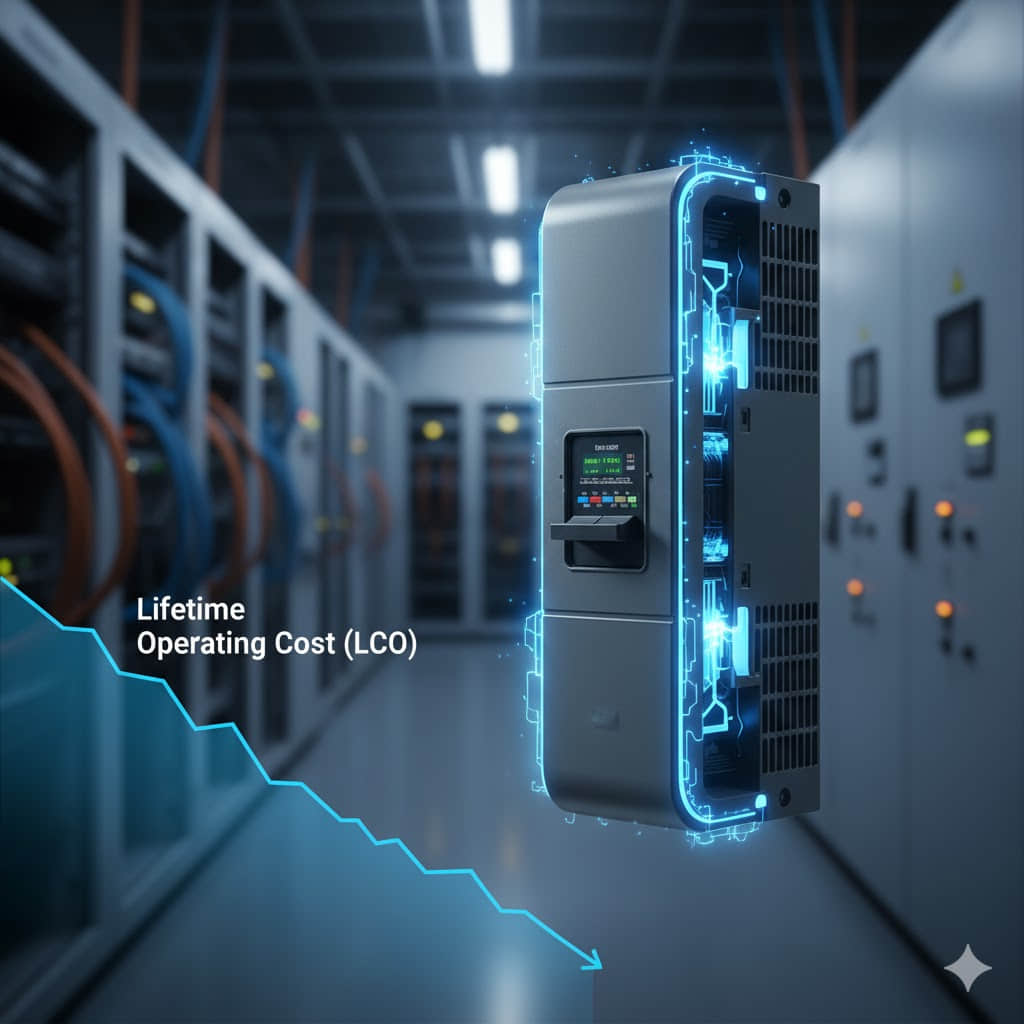
I. Introduction
A. Core Thesis Statement
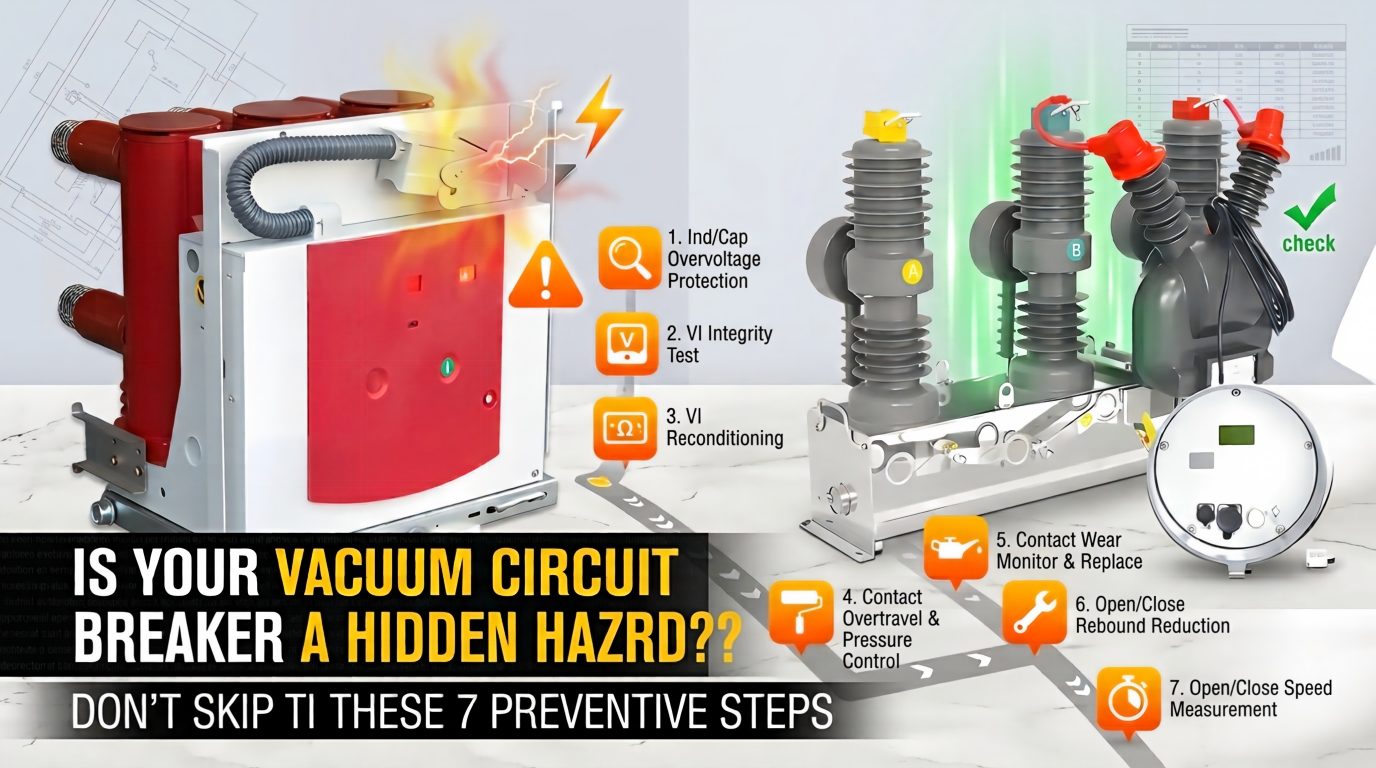
Vacuum Circuit Breakers (VCBs) are the ultimate long-term cost-savers in power systems. They leverage extremely low maintenance needs, exceptionally long service life, superior reliability, and a unique low running loss advantage to drastically reduce downtime and repair expenditures.
This synergy of benefits achieves massive reductions in Lifetime Operating Costs (LCO). A VCB is far more than just a protective device; it stands as a highly efficient investment engineered to optimize total cost of ownership (TCO) for electrical assets.
B. Background and Context
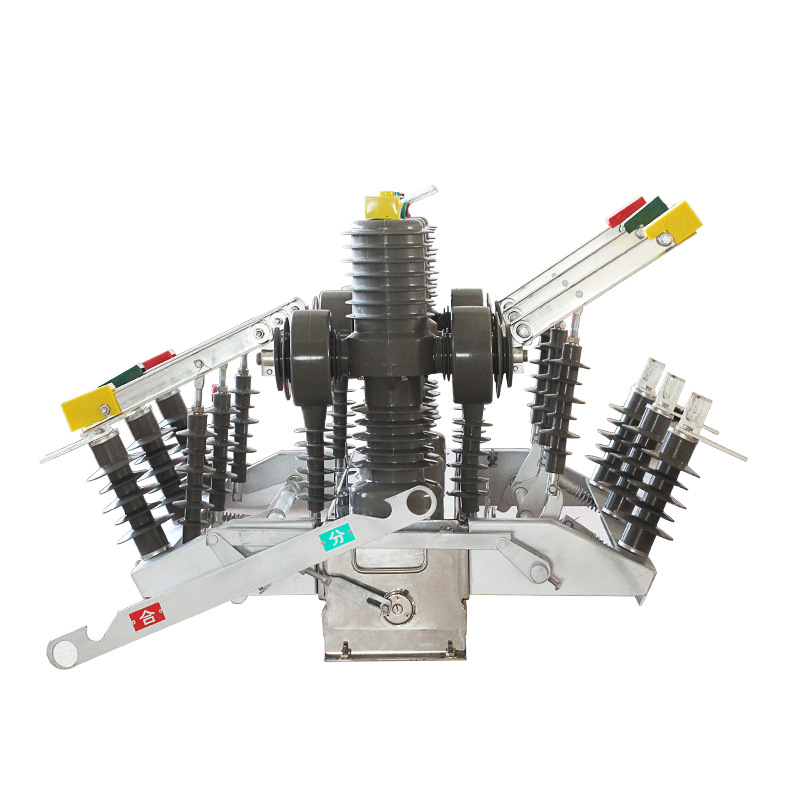
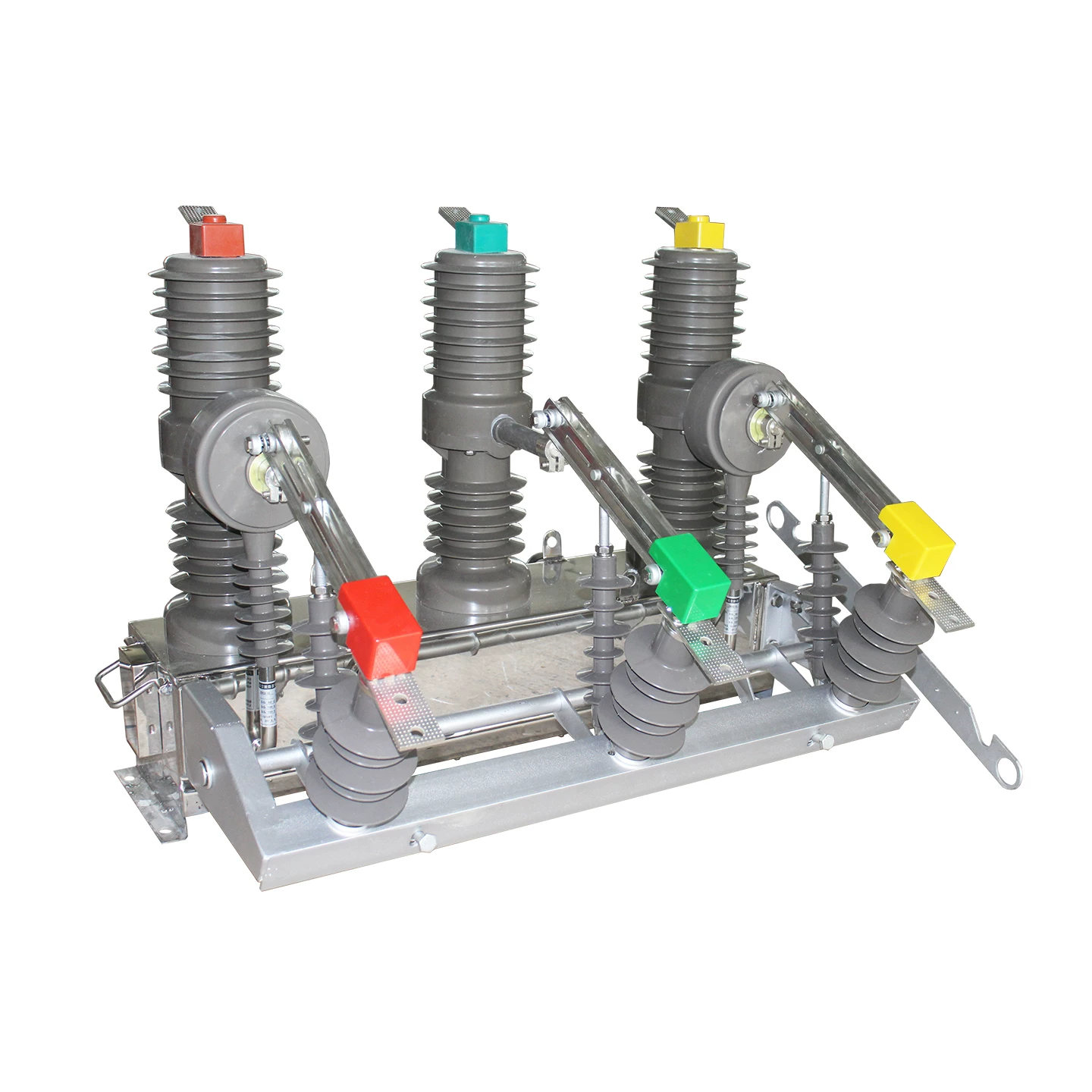
The Vacuum Circuit Breaker (VCB) is the most widely adopted and crucial protective and control component across medium-voltage (MV) distribution systems. These systems typically span 1kV to 38kV. Its core function relies on using a high vacuum as both the insulating and arc-quenching medium, centralized within a highly efficient, environmentally friendly, and rugged vacuum interrupter.
In modern infrastructure—including industrial plants, commercial complexes, critical data centers, and essential grid nodes—VCBs are indispensable. They guarantee both system safety and operational continuity, whether under normal conditions or during fault events.
For electrical asset managers, however, the initial capital expenditure (CAPEX) represents merely the tip of the iceberg. The authentic financial challenge lies in managing the Lifetime Operating Cost (LCO). This is a comprehensive figure encompassing maintenance, energy consumption, costs from unexpected downtime, and eventual disposal expenses.
Traditional circuit breaker technologies, such as Oil Circuit Breakers (OCBs) and SF6 (Sulfur Hexafluoride) Breakers, have consistently exposed significant LCO pain points. OCBs demand frequent oil changes and filtering, carrying inherent risks of fire and environmental contamination. SF6 breakers require less frequent servicing, but they incur substantial costs for gas recovery and treatment.
These costs are compounded by SF6’s nature as a potent greenhouse gas subject to increasingly stringent environmental regulations. These cumulative, often hidden costs frequently push management into a reactive cycle of financial strain.
The introduction of VCB technology fundamentally reshaped this cost narrative. Through this detailed analysis, an electrical engineer’s perspective will dissect how VCBs deliver comprehensive LCO optimization. This is achieved across four distinct dimensions: Maintenance Cost Minimization, Asset Life Maximization, Operational Energy Efficiency, and Risk Cost Reduction.
Key Takeaways: Core Article Insights
LCO Core Pillars: VCBs drastically lower Total Cost of Ownership (TCO) through four key advantages. These are minimal maintenance, extended longevity, low running losses, and superior reliability.
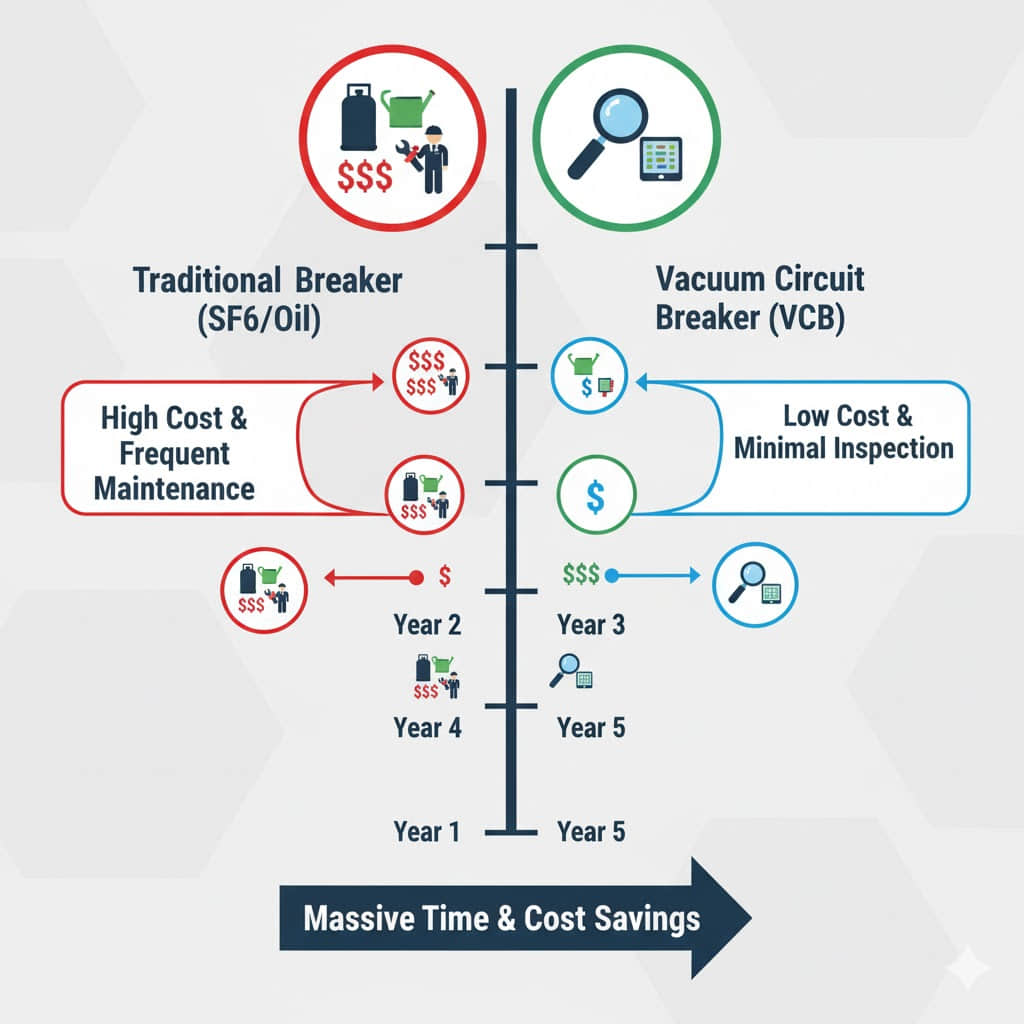
Maintenance Breakthrough: The VCB’s sealed vacuum structure eliminates the need for oil and SF6. This allows maintenance intervals to extend to 3–5 years or more, achieving true maintenance cost minimization.
Pro-Level Differentiation: A specialized low-contact-resistance design in VCBs actively mitigates continuous $I^2R$ heat losses. This results in sustained, significant electricity savings over decades.
Risk Management: Integration with Smart Condition Monitoring enables VCBs to accurately predict remaining useful life (RUL). This shifts costly "emergency repairs" to low-cost "predictive maintenance."
Environmental Benefit: Zero SF6 emissions ensure compliance with strict environmental mandates. This eliminates future regulatory fines and disposal fees.
VCB Value Foundation: The Highly Efficient Arc Quenching Principle
The low LCO offered by VCBs is not an accident of design but is fundamentally rooted in their stable and highly efficient arc-quenching mechanism. The vacuum interrupter serves as the VCB’s core. It utilizes the superior dielectric strength and rapid medium recovery characteristics of a high vacuum to interrupt current flow.
The moment the contacts separate, the current forms an arc within the metallic vapor created from the contact material. Because the vacuum chamber completely lacks free air molecules and the metallic vapor disperses extremely fast, the arc is swiftly and completely extinguished. This happens at the alternating current’s next zero-crossing point (approximately in the reference video).
This swift, decisive arc-quenching process, often completed within milliseconds, ensures minimal contact erosion. This minimal erosion, in turn, guarantees extended longevity and facilitates extremely low maintenance requirements for the entire asset lifecycle.
II. Savings Dimension One: Maintenance Cost Minimization – Driven by Sealed Design and Long Intervals
Maintenance expenses—covering labor, materials, and lost downtime—constitute a substantial, often controllable, component of the total Lifetime Operating Cost. The fundamental design philosophy of the VCB ensures that this category of expense experiences a structural, permanent reduction.
A. Zero Consumables and Labor Cost Reduction
The paramount advantage of the VCB stems from its arc-quenching medium, high vacuum, which is hermetically sealed within the interrupter chamber. This creates a system entirely isolated from the external environment, eliminating the need for periodic medium replacement.
This design immediately translates to the elimination of consumable expenditures. Unlike OCBs, which require regular oil filtering and replacement, VCBs require none of these insulating materials. This also removes costly zero-sum environmental liabilities, as VCBs bypass the need for expensive disposal of large volumes of insulating oil.
The maintenance labor requirements are also substantially reduced. VCB servicing primarily involves the lubrication and minor adjustment of the operating mechanism. It also includes basic electrical circuit checks. Since complex media handling and invasive contact inspections are unnecessary, the total technician hours required for scheduled maintenance drop dramatically. The simplified, standardized VCB maintenance procedure also lowers the necessary operator skill threshold, indirectly reducing high-skilled labor costs.
B. Significant Extension of Maintenance Intervals
The fundamental principle of vacuum arc-quenching dictates a revolutionary advantage in maintenance scheduling.
Under normal operating conditions—assuming moderate duty cycles and benign environments—a VCB typically requires only a visual inspection and simple functional testing every 3 to 5 years. This cycle contrasts sharply with the annual or even bi-annual heavy maintenance often demanded by OCBs. Note: This drastic extension means that the number of scheduled outages over the asset’s lifespan is often reduced by over 50%, yielding massive savings in indirect costs.
Moreover, reducing the frequency of planned outages directly cuts the costly penalties of scheduled downtime. For continuous process industries, such as data center operations, losses from even one hour of downtime can run into the hundreds of thousands of dollars. VCB maintenance cycle extension minimizes the necessity for scheduled power interruptions, thereby guaranteeing significantly higher overall system availability and minimizing production loss.
Tip: Shift your maintenance budget from a "fixed expenditure" to a "flexible, needs-based expense." The extended VCB maintenance window provides financial and operational agility. This allows businesses greater control over resource allocation and scheduling.
III. Savings Dimension Two: Asset Life Maximization – High Durability and Indirect Protection
The rugged, inherently durable design of the VCB not only reduces service costs but also dramatically extends the asset’s useful life. This subsequently minimizes future capital expenditure (CAPEX) for equipment replacement.
A. Enhanced Contact and Mechanical Endurance
Minimal contact erosion is a hallmark of the vacuum interrupter. The ultra-fast and efficient arc interruption in the vacuum chamber substantially reduces the burning and oxidation of the contacts. This preservation ensures that contact performance remains nearly optimal even after a high number of operations.
VCBs are engineered for superior endurance. They utilize simpler, more compact operating mechanisms, often with fewer moving parts. This results in significantly higher mechanical and electrical duty cycle ratings than older technologies.
Under rated current conditions, high-performance VCBs often achieve an electrical life exceeding 10,000 operations and a mechanical life of 30,000 operations. This offers immense cost benefits in high-duty applications like arc furnace or capacitor bank switching.
B. Reduction in Lifecycle Replacement CAPEX
This exceptional longevity translates directly into a reduction in the frequency of equipment replacement. The devices can reliably remain in service for periods often exceeding 25 to 30 years, or even longer.
For asset portfolio managers, this benefit is equivalent to amortizing a major CAPEX investment over a much longer timeframe. This significantly eases annual depreciation pressures.
The VCB’s ability to protect downstream equipment offers an indirect, but substantial, cost benefit. The extremely fast opening time and rapid fault isolation capability of the VCB minimize the duration and thermal impact of fault currents. This quick response shields expensive downstream assets—such as transformers, cables, and motors—from severe damage. It ultimately extends the life of the entire electrical system and prevents the expensive, cascading failures that necessitate costly subsequent replacements.
IV. Savings Dimension Three: Operational Energy Efficiency – Analyzing (I²R) Losses (The Differentiator)
In a world increasingly focused on energy cost management, the continuous, often overlooked, energy consumed by a circuit breaker while it is closed (running loss) can accumulate into substantial LCO over decades. VCB technology is engineered to minimize this specific, continuous operational expense.
A. The Cost of Contact Resistance: (I²R) Losses
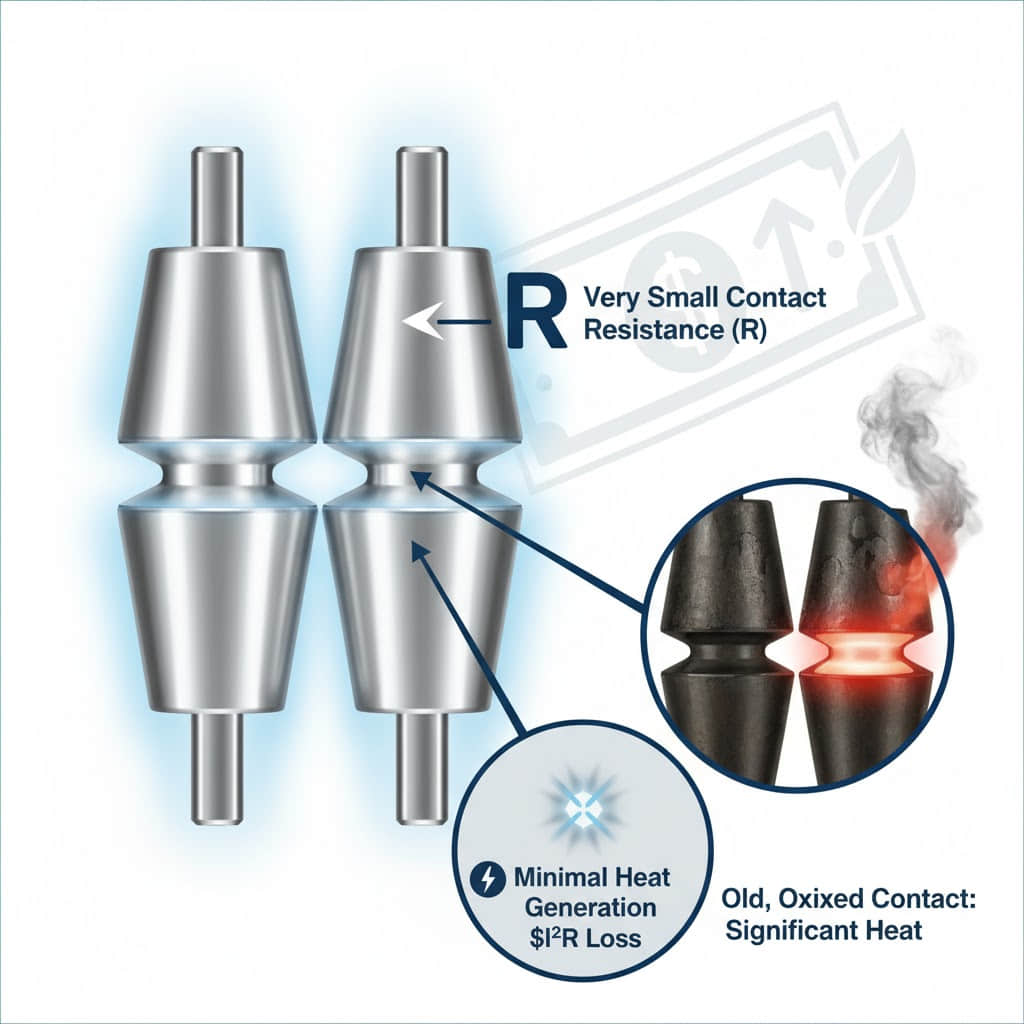
Electrical energy is converted to wasted heat whenever current (I) flows through a resistance (R), a phenomenon governed by Joule’s Law: $P_{\text{loss}} = I^2 \times R_{\text{contact}}$. This is known as (I²R) loss.
In medium-voltage equipment, this resistance primarily occurs at the contact points (main contacts, cluster contacts, and terminal connections). While the resistance is low, the current (I) is high. Since the loss is proportional to the square of the current, even a small resistance increase can lead to a disproportionately high heat loss and energy waste.
B. VCB’s Low-Resistance Design Advantage
Modern VCBs are specifically designed to minimize contact resistance ($R_{\text{contact}}$). Key design features include:
1. Superior Contact Materials: Utilizing high-conductivity, low-resistance materials like Copper-Bismuth (Cu-Bi) or Copper-Chromium (Cu-Cr).
2. Optimal Contact Pressure: The VCB operating mechanism ensures high, consistent contact pressure over the life of the breaker. This maintains a large, efficient contact area, which inherently reduces resistance.
3. Sealed, Clean Environment: The vacuum interrupter's sealed environment prevents oxidation, pitting, and contamination of the contacts. Oxidation is the primary cause of resistance creep in air-insulated or oil-insulated contacts. By maintaining a pristine contact surface, the VCB ensures the $R_{\text{contact}}$ remains low and stable for decades.
C. Long-Term Financial Impact
The difference between a VCB and an older technology breaker with slightly higher contact resistance (e.g., $100 \mu\Omega$ vs. $150 \mu\Omega$) can be financially significant. Across a substation with multiple feeders operating at high continuous current (e.g., 1250 A) for 8,760 hours per year, this marginal difference in (I²R) loss accumulates into thousands of dollars in wasted electricity and associated cooling costs annually.
VCBs provide a perpetual, passive reduction in energy costs that heavily tilts the LCO calculation in their favor.
V. Savings Dimension Four: Risk Cost Minimization – From Reliability to Smart Operations
Risk costs arising from unscheduled outages are often the largest single financial "black swan" event in a system's LCO calculation. VCBs minimize this risk through inherent reliability and the integration of smart technology.
A. Enhanced Intrinsic Reliability
The VCB’s core component—the vacuum interrupter—is a completely sealed system. This isolation means the critical arc-quenching and insulation properties are impervious to external environmental factors. This includes high humidity, salt spray, dust, high altitude, and corrosive gases. This inherent isolation eliminates many common failure modes of traditional breakers.
Crucially, VCBs eliminate the risk of media leakage. A primary failure point for SF6 breakers is gas leakage, which compromises insulation and operating pressure. VCBs are immune to this threat, ensuring long-term, stable dielectric strength.
B. Optimization via Smart Monitoring and CBM (Condition-Based Maintenance)
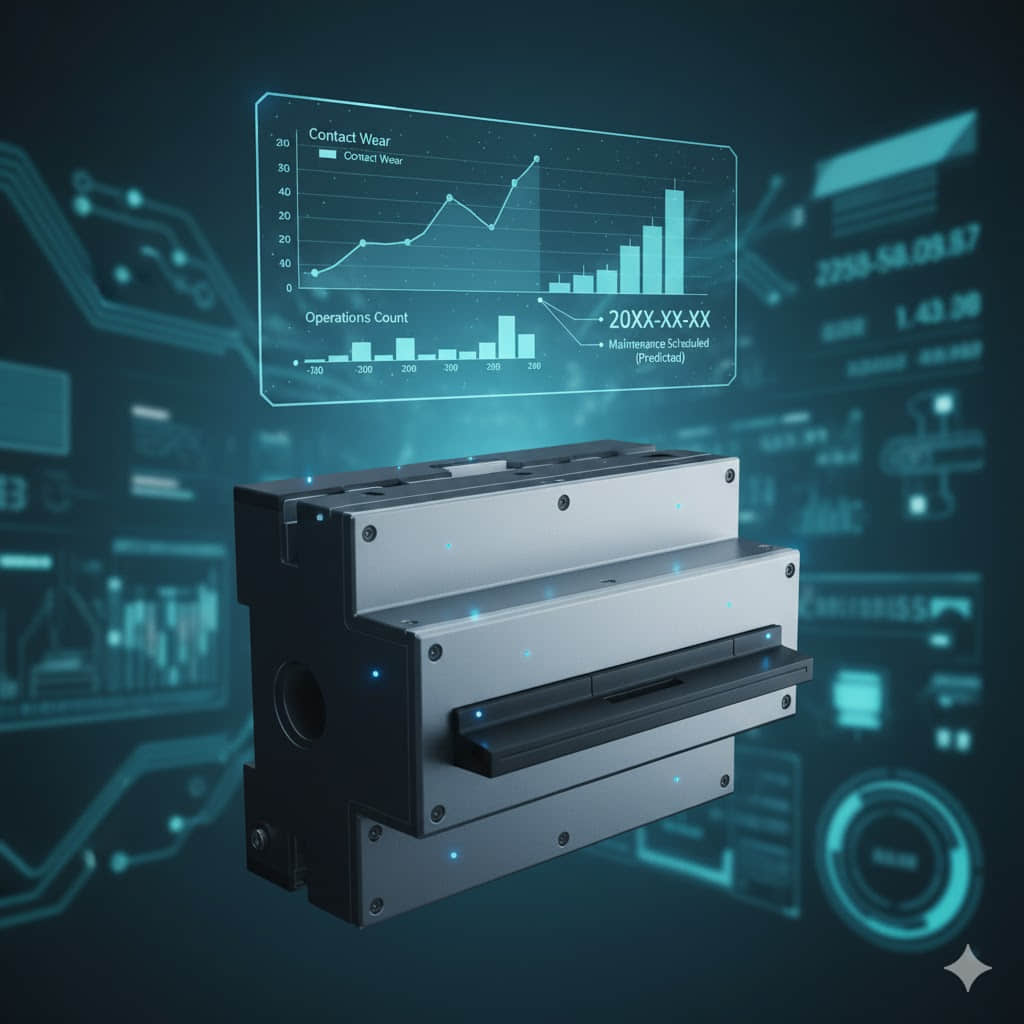
Modern VCBs can be equipped with advanced sensors and communication modules. This enables a critical shift from preventive maintenance (time-based) to Condition-Based Maintenance (CBM).
Accurate Remaining Useful Life (RUL) Prediction:
Professional Analysis: Sensors integrated into the mechanism monitor key operational metrics. These include operation count, spring charge status, trip/close timing, and contact travel.
Application Value: This data feeds into asset management systems and utilizes manufacturer-specific algorithms to precisely predict the Remaining Useful Life (RUL) of the contacts and operating mechanism.
Cost Impact: This enables "maintenance on demand," where outages and repairs are scheduled only when condition metrics reach critical thresholds. This completely avoids wasteful, unnecessary shutdowns of equipment that still has plenty of life left.
Early Fault Warning and Diagnosis:
Professional Analysis: Online monitoring tracks operating current waveforms and auxiliary circuit status. This capability allows technicians to identify nascent defects, such as minor mechanism sticking, coil anomalies, or poor auxiliary contact performance.
Cost Impact: By addressing defects before they escalate into major faults, the system converts expensive, reactive "emergency repairs" into low-cost, planned "predictive maintenance." This drastically drives unscheduled downtime to near-zero.
Note: Smart CBM is the largest value-add for VCB LCO reduction. It elevates reliability from "passive assurance" to "active management," which is key to achieving "zero unscheduled downtime."
VI. Quantifying Total Cost of Ownership (TCO) and Return on Investment (ROI)
Effective financial decision-making requires quantifying the VCB's value. The TCO model is the definitive tool for assessing the VCB's Return on Investment (ROI).
A. TCO Model Comparison (Visualized in Table Format)
Using a scenario based on a typical medium-voltage substation with a 25-year operational lifecycle, we can clearly contrast the major TCO components of a VCB versus a traditional SF6 breaker:
| Cost Component | Vacuum Circuit Breaker (VCB) | Traditional SF6 Breaker | TCO Cost Savings/Benefit |
| Initial Purchase Cost (CAPEX) | Medium-High | Medium-Low | VCB is often slightly higher, but its long-term savings quickly offset this. |
| Annual Maintenance Cost | Extremely Low (Visual Inspection) | Medium-High (Annual pressure checks, gas handling every 5-10 years) | Significant Reduction: Savings in labor, materials, and scheduled downtime. |
| Operational Energy Cost ($I^2R$) | Lowest (Stable Contact Resistance) | Higher (Resistance increases over time due to oxidation/contamination) | Continuous Savings: Professional, daily reduction in electricity consumption. |
| Unscheduled Downtime Loss | Lowest (High Reliability / CBM Pre-warning) | Higher (Risk of gas leaks and mechanism failures) | Massive Benefit: Production continuity secured; expensive emergency repair costs averted. |
| Environmental/Disposal Cost | Extremely Low/None (No SF6) | High (Cost of SF6 recovery, processing, and potential future carbon taxes) | Eliminates future compliance and handling fees. |
B. Calculating the Return on Investment (ROI)
The ROI for VCB adoption can be clearly quantified:
The ROI is calculated as: (Total Savings minus Initial Premium Investment) divided by Initial Premium Investment, multiplied by 100%.
The total savings accrue from various factors. This includes saved maintenance fees, saved energy costs, and the economic value of avoided downtime.
Total Savings are the cumulative sum over the asset life (e.g., 25 years) of Maintenance Savings, Energy Savings, and Avoided Downtime Loss.
Industry data confirms that in high-load, high-duty, or continuous-operation environments, the premium initial cost of a VCB is often fully recovered within 3 to 5 years. This is achieved solely through maintenance and energy savings, realizing a rapid Payback Period.
Tip: TCO is the gold standard for decision-making. Focusing solely on initial price is short-sighted; only the 25-year TCO assessment reveals the VCB's true economic value.
VII. Conclusion
A. Summary of Core Value
The Vacuum Circuit Breaker represents the superior choice for reducing Lifetime Operating Costs. This is because it achieves a comprehensive "quadruple optimization" of asset management.
First, Maintenance Cost Minimization is achieved through the sealed design. This eliminates fluid/gas needs and massively extends service intervals.
Second, Asset Life Maximization is driven by low-erosion contacts and robust mechanisms. This, in turn, reduces major replacement CAPEX.
Third, Operational Energy Efficiency is delivered via low-contact-resistance. This guarantees sustained $I^2R$ power loss savings.
Finally, Risk Cost Minimization is ensured by high intrinsic reliability coupled with active, intelligent CBM.
B. Call to Action (CTA)
For any enterprise seeking to optimize electrical asset management, enhance production efficiency, and ensure long-term sustainability, the choice is clear. The strategic shift to high-performance Vacuum Circuit Breakers, integrated with modern CBM technology, is an intelligent, far-sighted, and financially sound decision for fundamental cost reduction.
Frequently Asked Questions (FAQ)
Q1: Is the initial purchase cost of a VCB significantly higher than that of an SF6 breaker?A1: The cost gap has significantly narrowed in recent years. This is due to VCB technology maturity and market penetration, especially in medium-voltage tiers. Even if the VCB has a slight premium, the LCO analysis shows the savings will typically offset this difference within 3-5 years. You must always evaluate the Total Cost of Ownership (TCO), not just the initial CAPEX.
Q2: How is VCB vacuum integrity monitored? Does it pose a similar leak risk to SF6?A2: The VCB's vacuum interrupter relies on a highly robust metal-to-metal seal with exceptionally low leak rates. It virtually guarantees integrity over the designed service life. Unlike the pressure monitoring necessary for SF6, the VCB vacuum status is often checked indirectly. This can be done by monitoring contact opening characteristics or by using specialized sensors, which are far more reliable than gas pressure monitoring.
Q3: Is the VCB suitable for high-frequency operation applications, like those used in arc furnaces?A3: Absolutely; the VCB is, in fact, the ideal choice for high-frequency applications. Because the vacuum arc causes minimal contact erosion, the VCB’s rated electrical endurance is often far superior to other breaker types. This drastically reduces the maintenance and replacement frequency in these demanding environments.
Q4: If my system uses older OCBs, how difficult is it to retrofit or upgrade to VCBs?A4: The market offers mature "Oil-to-Vacuum" retrofit solutions. These kits are frequently engineered for draw-out replacement or designed to be cabinet-compatible. This allows organizations to maximize the use of existing switchgear, minimize civil engineering requirements, and safely enhance the reliability of the entire electrical room.
Q5: Is Smart Condition-Based Maintenance (CBM) only feasible for newly purchased VCBs?A5: No, that is a common misconception. Existing VCBs can often be upgraded with "aftermarket CBM." This is done by installing external sensors, such as wireless temperature probes or mechanism travel sensors, paired with intelligent monitoring units. This approach is a high-return, low-cost asset upgrade that immediately boosts maintenance efficiency and reliability.