Why VCB Contact Resistance Testing Matters
When I’m looking at the health of a vacuum circuit breaker (VCB), contact resistance is one of the first numbers I care about. It tells me how well the current is flowing through the main path of the breaker — and whether that breaker is going to run cool and reliable, or hot and dangerous.
Role of Contact Resistance in Vacuum Interrupter Performance
Inside a vacuum interrupter, the current passes through
Acceptable Contact Resistance Values for Vacuum Circuit Breakers
When I’m checking vacuum circuit breaker contact resistance in the field, I care about two things: is it safely low, and is it stable compared to past tests. Here’s the practical range I use as a benchmark.
Typical Micro-Ohm Ranges for New VCBs (Per Pole)
These are ballpark values for modern medium-voltage VCBs tested with 50–100 A DC using the four‑wire Kelvin method:
| VCB Rating (kV Class) | Typical New Contact Resistance (per pole) |
|---|---|
| 5 kV – 15 kV | 15 – 70 µΩ |
| 27 kV – 38 kV | 30 – 120 µΩ |
If a brand-new breaker comes in higher than this, I usually double-check:
Test current (is it at least 50 A, ideally 100 A?)
Lead connections (good, tight, true Kelvin?)
Terminal cleanliness (no oxide, paint, or grease in the current path)
In-Service Limits vs. Factory Reference
For breakers already in service, I don’t just look at an absolute number—I compare to the factory data and my own trend log.
As a rule of thumb for in-service VCBs:
Pass (Normal):
Resistance within 2× the factory value and
Phase-to-phase difference less than 30–40%
Watch (Borderline):
Resistance between 2× – 3× factory value
OR phase difference >40% but no obvious mechanical or thermal issues
Fail (Critical):
Resistance >3× factory value
OR clear phase imbalance plus signs of heating (discoloration, smell, loose joints)
If you don’t have factory data, use a healthy phase as your baseline. A pole that’s 50–100% higher than the other two is a red flag, even if the absolute value still looks “low.”
How Manufacturers Specify Contact Resistance Limits
Major OEMs (ABB, Siemens, Schneider, Eaton, etc.) usually specify:
Max resistance per pole, often in the 30–150 µΩ range, depending
Principle of VCB contact resistance measurement
How the four‑wire (Kelvin) method works
For vacuum circuit breaker contact resistance, I always use a four‑wire (Kelvin) method. It’s the only reliable way to measure in the micro‑ohm range.
Here’s how it works in practice:
Two “current” leads (C1, C2): Inject a known DC through the VCB main path (from line terminal to load terminal).
Two “potential” leads (P1, P2): Sense the voltage drop directly across the contacts, using separate thin wires that carry almost no current.
Because the potential leads don’t carry current, lead and clamp resistance are effectively canceled, so the meter only “sees” the actual vacuum interrupter and contact resistance.
Use proper Kelvin clamps or separate current and potential connections on each terminal. Bad clamping is one of the biggest causes of false high readings in field work.
This is exactly the approach used by modern digital low-resistance ohmmeters (DLROs) and dedicated VCB micro‑ohmmeter test sets.
Why do we use DC injection, not AC
For VCB contact resistance, DC injection is the standard for a reason:
No inductive reactance: AC introduces reactance in busbars and leads, which distorts the reading and makes the measured “impedance” higher than the true DC resistance.
Stable reading: DC gives a steady voltage drop across the contacts, so the instrument can average and filter for a rock‑solid micro‑ohm value.
Cleaner results for trend analysis: All the factory and maintenance data (IEC/IEEE type tests, OEM specs) are based on DC, so your field values match the reference numbers.
This is why every serious DLRO test on a vacuum breaker is DC-based instead of AC.
Recommended test current range for VCB contacts
If you want numbers you can trust, don’t skimp on test current:
Typical field range: 50 A–200 A DC for most medium‑voltage vacuum circuit breakers.
For larger frame or high‑current VCBs, up to 300 A DC is common when the micro‑ohmmeter can handle it.
As a rule of thumb:
Use at least 10% of the rated continuous current when practical.
Go higher if the contact resistance is very low (you need enough voltage drop to measure accurately).
Good practice with a DLRO:
Inject the target current.
Let the reading stabilize for a few seconds (especially at 100–200 A).
Record the value in micro‑ohms (µΩ) for each pole.
Choosing a solid, high‑current DLRO and maintaining clean contact surfaces (see this switchgear cleaning and maintenance guide) will do more for accurate VCB contact resistance measurement than any “clever” correction after the fact.
Test Equipment for VCB Contact Resistance
When we measure vacuum circuit breaker contact resistance, the test gear matters more than anything else. If the micro-ohmmeter is weak or the Kelvin connections are sloppy, your numbers are junk.
Micro-ohmmeter / DLRO specs you actually need
For vacuum circuit breaker contact resistance measurement, I always look for these minimum specs:
Test current:
100 A DC continuous is my baseline for medium-voltage VCBs
200–600 A DC is better for higher‑duty or heavily loaded breakers
Measurement range & resolution:
Range: down to 0.1 μΩ or better
Resolution: at least 0.1 μΩ in the micro‑ohm range
Accuracy:
Typical: ±0.5% of reading ± a few counts in the low range
Duty cycle:
Able to hold high current long enough for readings to stabilize (3–10 seconds)
Data handling:
Onboard storage, USB/Bluetooth export, and phase labeling help a lot for fleet maintenance
Safety & ruggedness:
CAT-rated, short-circuit protected, and tough enough for substation work
If you’re evaluating different test tools versus full primary injection, micro-ohmmeters are the more practical option for routine VCB checks in most U.S. facilities and utilities. For broader medium-voltage gear insight, I also recommend checking practical guides that compare vacuum vs SF₆ switchgear like this VCB vs SF6 medium voltage comparison.
Recommended micro-ohmmeter models for VCB testing
For U.S. field work, I’d shortlist gear like:
Megger DLRO series (100 A class) – well-known for breaker and bus joint testing
WEISHO WESR-100 digital low resistance ohmmeter – solid value if you want a dedicated VCB micro‑ohmmeter test unit with 100 A injection
Any DLRO-rated 100–200 A unit from a reputable manufacturer with proper safety ratings and traceable calibration
The key is simple: if it can’t reliably push 100 A through the closed pole of a medium-voltage vacuum breaker, it’s not the right tool.
Using four-wire Kelvin clamps the right way
The four‑wire (Kelvin) method is non‑negotiable for vacuum circuit breaker contact resistance:
Separate current and potential leads
Two heavy current leads carry the test current
Two lighter sense leads measure the voltage drop directly across the connection
Clamp placement
Attach both current and sense clamps as close as possible to the breaker terminals
Avoid clamping onto painted, corroded, or oxidized surfaces
Tight, stable connections
Make sure clamps don’t move during the test
Clean contact pads or studs before clamping
Avoid loops and noise
Keep leads short, untangled, and away from high‑EMI sources
Zeroing/compensation
Run the instrument’s lead zero / compensation function before you start
Never “measure” across bolted joints with the clamps on different pieces of hardware unless that’s exactly what you want to test (you’ll pick up joint resistance, not just the interrupter)
If your numbers jump around, 90% of the time the problem is either weak current injection, poor Kelvin clamp placement, or dirty surfaces—not the breaker itself.
Safety checks before VCB contact resistance testing
Before I put a micro-ohmmeter on any vacuum circuit breaker (VCB), I treat it like I’m about to work on an energized line—because if the safety steps are wrong, the rest doesn’t matter.
Isolate, lockout, and ground the VCB
For any VCB contact resistance measurement or DLRO test:
Open and rack out the breaker to the test or disconnected position per the switchgear design. With metal-clad gear like many indoor vacuum circuit breakers, I always verify the position mechanically and on the mimic panel.
Apply full LOTO (lockout/tagout) on:
Incoming and outgoing feeders
Control power (DC supply to trip/close circuits)
Any remote or automatic close signals (SCADA, auto-reclosers, sync schemes, etc.)
Ground the primary circuits using approved grounding switches or portable grounding sets on the bus/feeder side so there’s zero chance of induced or backfeed voltage during the VCB micro-ohmmeter test.
Test for the absence of voltage with a properly rated meter before touching any current-carrying parts.
Verify the interrupter and mechanism condition
Before you worry about micro-ohms, make sure the VCB itself is healthy:
Check vacuum interrupter bottles for:
Damage, cracks, or contamination on the ceramic
Discoloration or tracking marks around terminals
Use manufacturer’s tools (if provided) to verify contact erosion or stroke is within spec.
Manually operate the mechanism (trip/close) a few times:
No binding, unusual noise, or delayed movement
Position indicator matches actual contact position
For older or heavily loaded units, confirm that terminal joints and bus connections are tight before any loop resistance measurement.
PPE and arc-flash risk
Even though VCB contact resistance measurement uses low DC, I still treat it as live-work risk:
Wear arc-rated PPE appropriate to the arc-flash label for that lineup (face shield/hood, balaclava, gloves, FR clothing).
Use insulated tools and leads rated for the switchgear voltage class.
Keep anyone not involved in the test outside the arc-flash boundary, and never stand in front of the cubicle doors while operating the breaker.
Environment and substation checks
Good measurements start with a controlled environment:
Confirm the area is dry, clean, and well-lit—no standing water, oil, or conductive dust around the gear.
Keep test leads and DLRO positioned so nobody trips over them or pulls them loose mid-test.
Verify there are no parallel work activities (hot work, switching, crane operation) that could affect safety or inject interference into your VCB contact resistance measurement.
Make sure you have a clear escape path, and the substation access gate is secured against public entry.
Once these safety boxes are checked, you can connect your four-wire Kelvin leads with confidence and get contact resistance numbers you can actually trust.
Step-by-step VCB contact resistance measurement

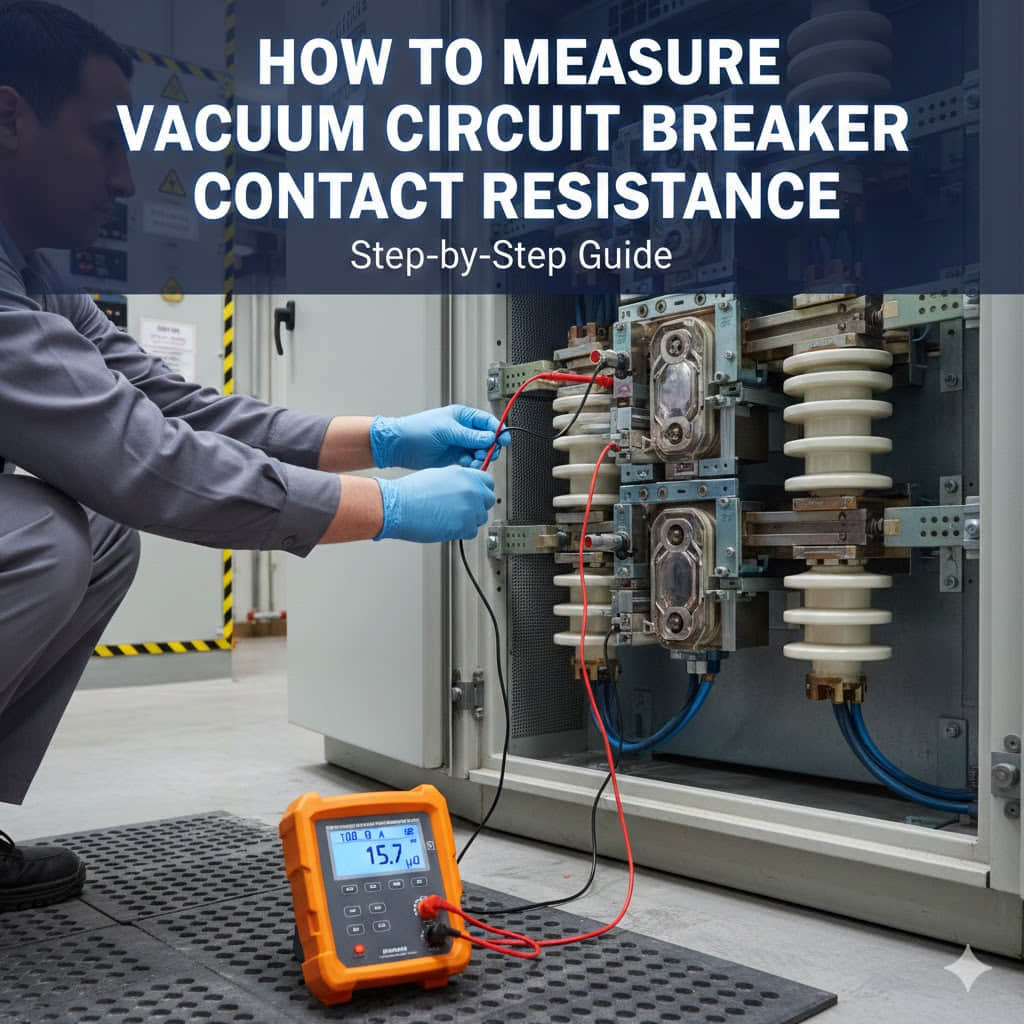
Here’s a simple, field-ready way I’d measure vacuum circuit breaker (VCB) contact resistance using a micro-ohmmeter (DLRO) and the four-wire Kelvin method.
1. Prepare the vacuum circuit breaker for testing
Rack the VCB fully in the test/disconnected position or as per the switchgear design, and make sure it’s open-circuit from the system.
Open and close the breaker a couple of times so the mechanism is seated properly, and the main contacts are fully engaged in the “closed” position for the test.
Visually check for mechanical damage, loose hardware, or contamination around the primary terminals.
If you work with integrated switchgear and vacuum breakers similar to our medium-voltage vacuum circuit breaker lineup, this setup will feel very familiar.
2. Clean terminals and contact surfaces
Wipe primary terminals and pads with a clean, dry, lint-free cloth.
If there’s oxidation or light corrosion, use an approved contact cleaner or a fine non-woven abrasive pad—nothing that will gouge the copper.
Make sure contact surfaces and bus joints are tight and free from grease, dust, or moisture where the test clamps will land.
Clean metal-to-metal contact is the difference between a true micro-ohm reading and a fake “high resistance” caused by dirt.
3. Connect current and potential leads (four-wire Kelvin)
To run a proper VCB contact resistance measurement, you need four separate leads:
Current leads (C1, C2):
Connect from the DLRO/micro-ohmmeter to opposite sides of the breaker pole (line to load).
Use heavy-gauge cables or Kelvin clamps right on the main terminals.
Potential leads (P1, P2):
Clamp as close as possible to the actual contact path, ideally on the same pads as the current leads but inside of the current clamp connection point.
Make sure they’re not loose or sitting on paint or oxide.
This four-wire setup cancels out lead and clamp resistance, so you only measure the true vacuum interrupter + primary joint resistance.
4. Inject DC test current and stabilize the reading
Close the VCB. Confirm it’s in the closed position on the mechanism and status indicators.
Set your micro-ohmmeter to a suitable DC test current (commonly 50–100 A for smaller breakers, 100–200 A for larger MV units, depending on your instrument rating).
Start the test and wait for the reading to stabilize—a few seconds for most DLROs.
Avoid bumping the cables or breaker during measurement; movement can cause noisy readings.
If your instrument allows, use an average or continuous mode to watch how stable the resistance is under constant current.
5. Measure and record each phase separately
Test phase A, phase B, and phase C one by one, using the same lead placement and current each time.
Record for each pole:
Test current
Resistance value (in μΩ)
Breaker ID, location, date, and operator
I always keep results in a digital log or maintenance software so you can track trend changes over time instead of just a one-off pass/fail.
6. Account for ambient temperature (20°C reference)
Copper resistance changes with temperature, so if you’re testing in a hot or cold substation, note:
Ambient temperature near the breaker during the test.
If your standard or manufacturer requires it, apply a temperature correction to 20°C using the copper temperature coefficient (roughly 0.39% per °C).
At a minimum, always log the temperature so future tests can be compared on equal footing.
For most field work, if the temperature is within a normal range (say 15–30°C), just document it clearly and use it for trending.
7. Repeat and confirm consistent readings
Run at least two tests per phase to confirm repeatability.
Results should be very close (within a few percent) for each repeat on the same pole.
If a pole jumps around or you see a sudden high reading, re-check:
Lead tightness
Clamp placement
Cleanliness of terminals
Don’t accept a suspicious reading without re-running the test with carefully reset connections.
Once you have stable, repeatable values on all three phases, you’ve got a solid VCB contact resistance measurement that you can confidently compare against manufacturer specs and your historical trend data.
How to Interpret VCB Contact Resistance Results
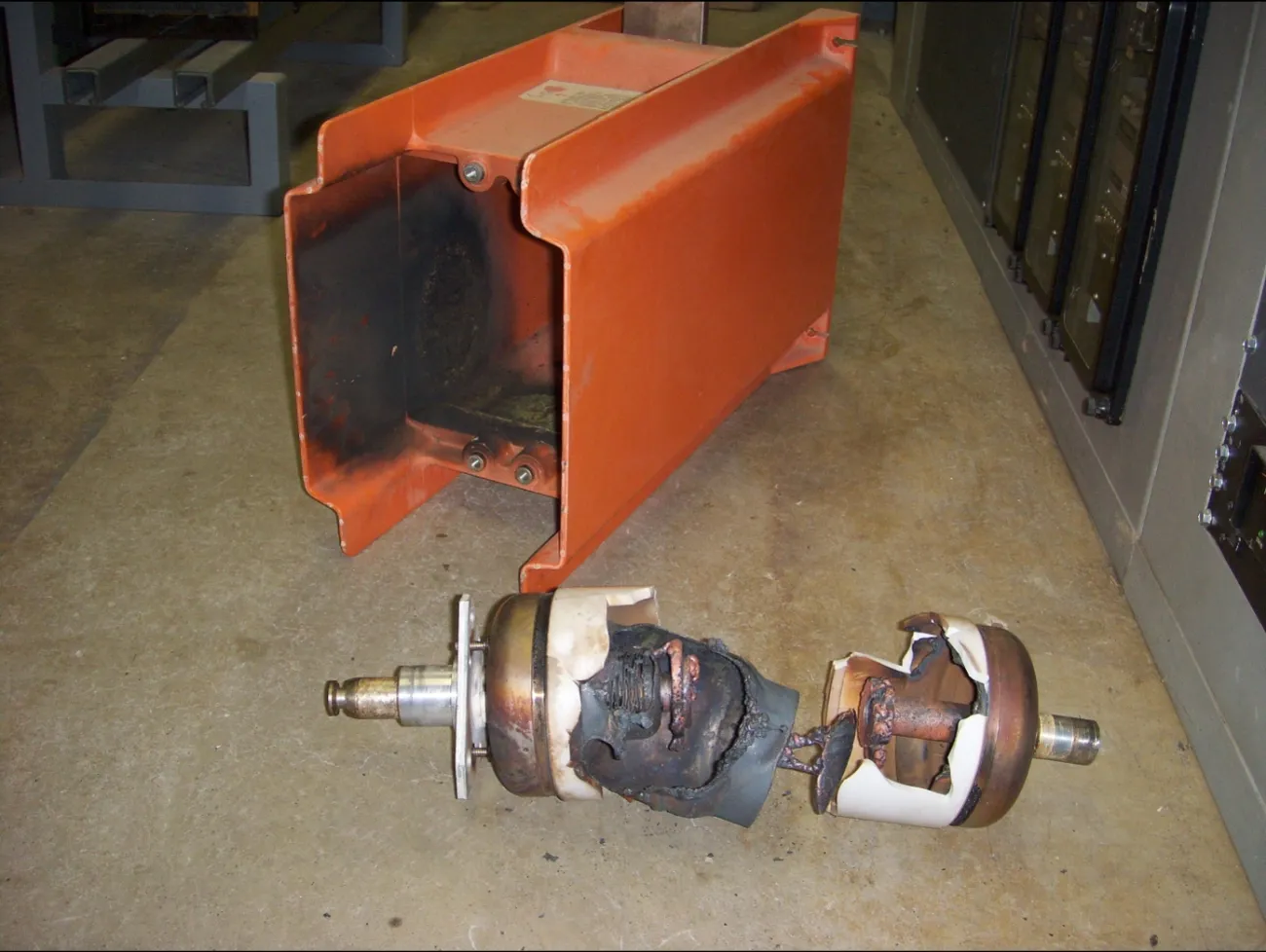
When I measure vacuum circuit breaker contact resistance, I’m looking for three things: absolute value, trend over time, and balance between poles. All three matter if you want your VCB to run cool, carry full load, and operate safely.
Typical Pass/Fail Thresholds for VCB Contacts
Most medium-voltage vacuum circuit breakers will fall into a tight micro-ohm range when they’re healthy.
General field guidelines (unless the OEM says otherwise):
New / just-commissioned VCBs (up to 17.5 kV):
Typically 20–80 μΩ per pole
In-service VCBs:
Often acceptable up to 100–150 μΩ per pole
Common “red flag” limits in practice:
>150–200 μΩ or
>50% higher than factory or first-test value
Always default to the breaker manufacturer’s data first (ABB, Siemens, Schneider, etc.). If their limit is tighter than your internal rule, use the tighter value.
Compare Readings to Nameplate and Previous Records
I never look at a contact resistance reading in isolation. I always compare it to:
Manufacturer/nameplate/test report
Factory or type test micro-ohm values are your baseline.
If you don’t have exact numbers, check the technical manual for “maximum contact resistance” or “primary circuit resistance.”
Previous maintenance records
Slow, steady increase over several years = normal aging.
Sharp jump between two tests = something changed (loose joint, contamination, contact wear).
Look for a trend, not just one reading:
A simple rule I use in the field:
If resistance increases by more than 30–50% versus the last good test, I investigate—even if it’s still below the “max” limit.
Diagnosing High or Abnormal Resistance Readings
If I see high or abnormal VCB contact resistance, I think in terms of heat and risk:
Possible causes of high resistance:
Loose/dirty primary connections or terminals
Worn or pitted vacuum contacts
Misalignment of moving/fixed contacts
Oxidation, corrosion, or paint/grease at bolted joints
Poorly crimped or damaged bus/stab connections
What high resistance does:
Causes localized heating during load current
Speeds up contact wear and can damage the vacuum interrupter
In extreme cases, it leads to thermal runaway, nuisance trips, or internal faults
If one pole is way off, I’ll typically:
1. Re-test that pole with fresh Kelvin connections.
2. Inspect and clean the terminals and joints.
3. If still high, schedule corrective maintenance or interrupter replacement, depending on OEM guidelines.
Evaluate Resistance Imbalance Between Phases
Even if absolute numbers look fine, an imbalance between phases can signal a problem.
Common practical criteria:
Good balance:
All three poles are within ±10–20% of each other.
Borderline:
One phase is 20–30% higher than the others — schedule closer monitoring or maintenance.
Critical:
One phase >30–40% higher, or clearly out of pattern versus previous tests — treat as a defect and investigate.
Example:
Phase A: 45 μΩ
Phase B: 48 μΩ
Phase C: 82 μΩ
Even though 82 μΩ may “pass” a generic limit, I’d flag Phase C as abnormal because it’s ~80% higher than A and B and likely to run hotter.
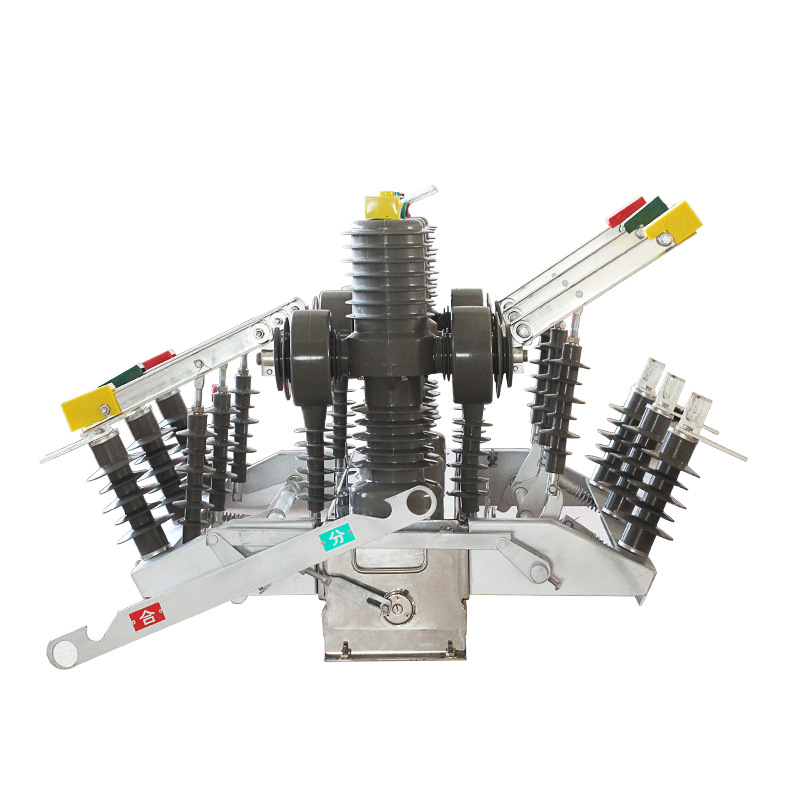
If you’re working with outdoor vacuum switchgear like a ZW32-12MF outdoor vacuum circuit breaker, pay even more attention to phase imbalance, since weather, pollution, and mechanical vibration can affect one pole more than others.
Bottom line: for VCB contact resistance, small numbers and stable trends are what you want. Any sharp increase or big phase imbalance is a warning that you’ve got a mechanical, connection, or contact-wear problem that needs attention before it turns into heat damage or an outage.
Common VCB Contact Resistance Testing Mistakes
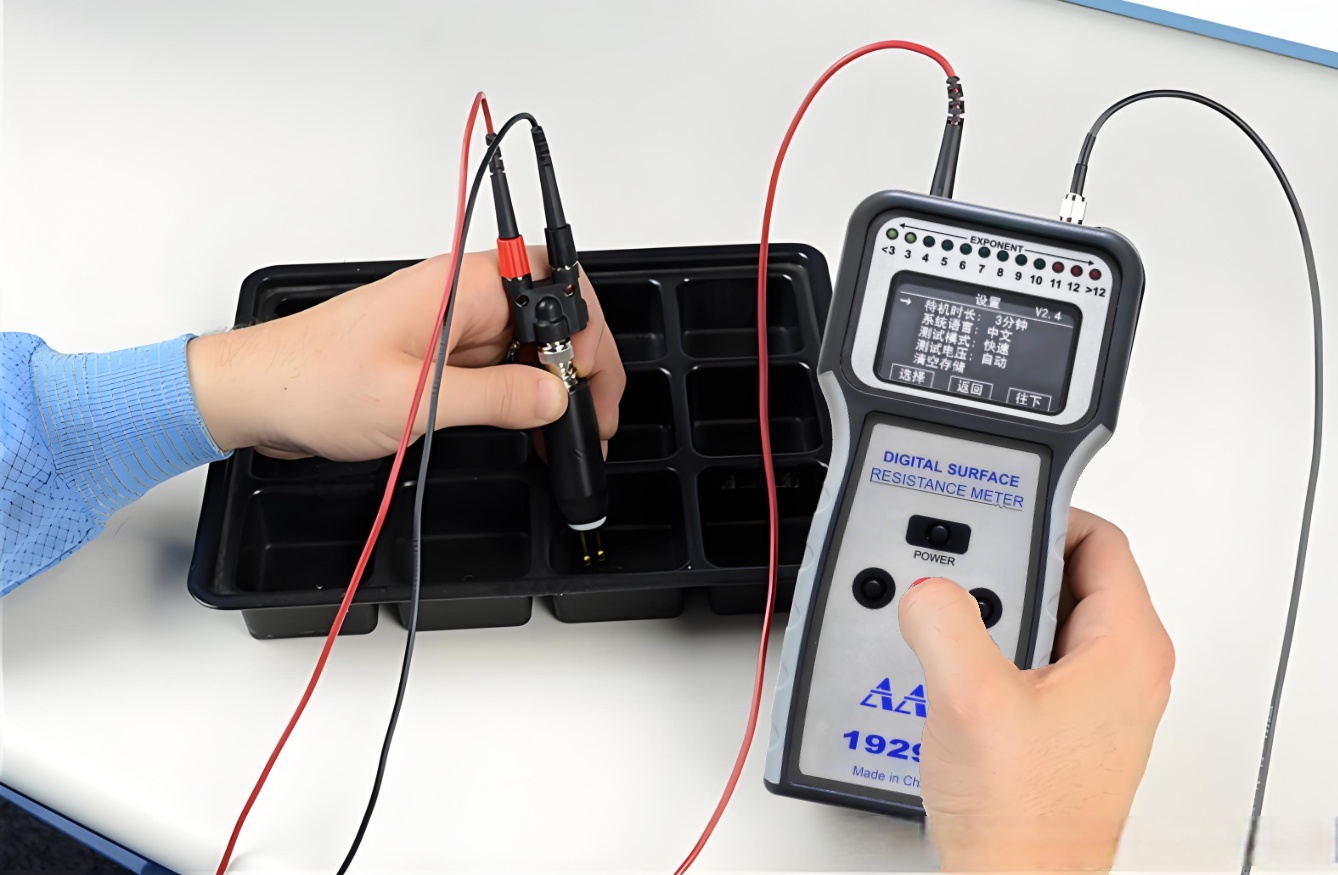
When you’re measuring vacuum circuit breaker contact resistance, a few simple mistakes can ruin the test and push you toward bad decisions. Here’s what I see most often in the field and how to avoid it.
Lead connection errors = fake high readings
Most “high” vacuum circuit breaker contact resistance readings are actually bad test setups, not bad breakers. Common issues:
Current and potential leads on the same point (not in a true four‑wire Kelvin configuration)
Kelvin clips on painted, corroded, or dirty surfaces instead of bright metal
Loose clamps that move during testing
Both sense leads on the same side of the contact (you’re just measuring bus/joint resistance)
Best practice:
Clean terminals to bright metal and clamp firmly.
Make sure current leads are on the outer studs and potential leads are inside those points so you’re measuring only the VCB contact path.
Before trusting a “bad” result, re-terminate and re-test.
Using too low a test current or unstable injection
Vacuum breaker contact resistance is in the micro‑ohm range. If the test current is too low, your numbers will jump around and mean nothing.
Too low current (e.g., <10 A) often produces noisy, unstable readings.
Battery‑weak or undersized micro‑ohmmeters may pulse or sag, causing fluctuating values.
What to do:
For medium-voltage VCBs, use a digital low resistance ohmmeter (DLRO) rated 100 A or higher and let the current stabilize before recording the reading.
Watch the display: only record values that are stable for a few seconds.
Ignoring lead resistance and zeroing
If you don’t zero the instrument and leads, you can easily add tens of micro‑ohms that look like a bad contact.
Not doing a “zero” or “compensation” with the leads shortened
Changing lead length or type after zeroing
Damaged or corroded leads add their own resistance
Best practice:
Short the current and potential leads together at the clamp end and perform the instrument zero before the test.
Don’t swap leads or change setup after zeroing.
Replace stiff, oxidized, or damaged test leads; they’re cheap compared to wrong breaker decisions.
Wrong breaker position or poor setup
You must know exactly how the vacuum circuit breaker is positioned and isolated.
Common setup mistakes:
Testing in the wrong position (e.g., test position instead of fully closed/connected)
Contacts are not fully closed because the mechanism isn’t latched or is partly charged
Parallel paths left connected (grounding switches, bypass links, auxiliary shunts)
How to avoid it:
Verify the VCB is fully isolated, racked in the correct position, and mechanically closed per the manufacturer.
Confirm no parallel metallic paths are influencing the measurement.
In metal-clad switchgear, follow the same safety
Alternative VCB Contact Resistance Test Methods
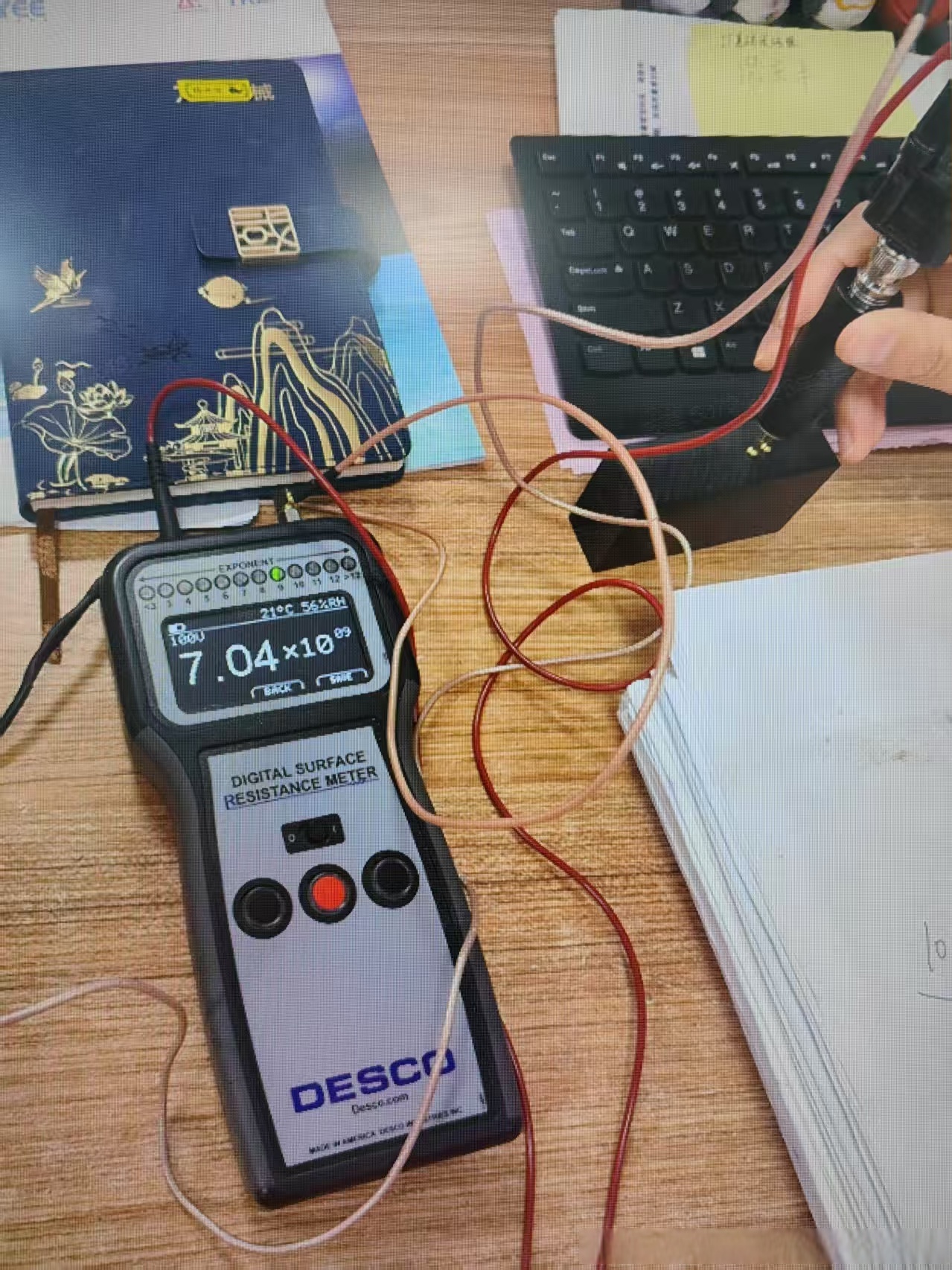
Voltage drop test at rated current
For some medium-voltage yards in the U.S., crews still like to verify vacuum circuit breaker (VCB) contact health with a voltage drop test at or near rated current, especially on critical feeders or transformer breakers.
The idea is simple:
Energize the VCB with primary injection (or actual load in special cases).
Measure phase-to-phase voltage drop across the closed breaker terminals.
Use V = I × R to back-calc the effective contact resistance.
This method gives a very “real-world” picture of how the breaker behaves at service currents and can complement a standard VCB micro-ohmmeter test or DLRO test.
Practical limitations and safety concerns
A voltage drop test on a vacuum breaker is not something to treat casually. In most U.S. substations, these are the main drawbacks:
High current source required
You need a primary injection set capable of kA-level current, which is heavier, costlier, and slower to set up than a simple DLRO.
Arc-flash and shock risk
The breaker must be in a live test setup. That means full arc-flash PPE, strict boundaries, and a clear test plan.
System disturbance
If you do it energized, you’re stressing the system and the breaker. Even with a test set, you’re loading the bus/bar and cables.
Limited precision vs micro-ohmmeter
For very low contact resistance in the micro-ohm range, it’s harder to get the same resolution as a 100 A–300 A digital low resistance ohmmeter (DLRO).
In most day-to-day maintenance for medium-voltage vacuum switchgear like that discussed in this medium voltage vacuum circuit breaker guide, a DC Kelvin micro-ohm test is safer, faster, and more repeatable.
When a voltage drop method makes sense
Even with the downsides, a voltage drop test still has a place in the field if you use it selectively:
Commissioning of critical feeders or transformers
When you want to see the breaker and connected bus operate under near-real load with a primary injection test set.Suspected heating issues
If thermography shows a hot pole or joint, a voltage drop test at a higher current can confirm whether the problem appears only under load.Correlation check with micro-ohm results
Use it to validate borderline VCB contact resistance measurement values from a DLRO. If the ohms are high and you also see a measurable voltage drop at load current, the breaker is a strong candidate for repair or replacement.Factory or lab testing
In a controlled shop environment, manufacturers and test labs often run voltage drop tests as part of type testing and verification against standards like IEC 62271-100 and IEEE C37.09.
In practice, for most U.S. utilities, industrial plants, and data centers, we lean on a four-wire Kelvin micro-ohm test as the main tool, and reserve voltage drop at rated current for special cases where we need real-load confirmation of contact behavior.
Maintenance Tips To Keep VCB Contact Resistance Low
Keeping vacuum circuit breaker (VCB) contact resistance low is all about consistent, simple maintenance. If you stay ahead of it, you avoid hot spots, nuisance trips, and expensive failures.
Routine inspection and mechanism exercise
I always recommend building a fixed schedule and sticking to it:
Operate (open/close) the VCB regularly to keep the mechanism free, especially for indoor switchgear in climate-controlled rooms and outdoor gear in harsher environments.
Check mechanical alignment and stroke so the vacuum interrupter contacts fully close with proper pressure.
Look for signs of overheating at terminals: discoloration smell or insulation damage.
Verify hardware and enclosures for rust loose hardware or moisture ingress; if you’re using outdoor gear match it with proper high‑voltage enclosures to keep conditions stable.
Cleaning tightening and treating joints
Most high contact resistance issues come from bad connections not the interrupter itself:
De-energize lockout/tagout and verify zero energy before touching anything.
Clean busbar and terminal surfaces with approved non-abrasive cleaners; remove oxidation and dust.
Torque all current-carrying joints (bus connections line/load terminals straps) to manufacturer specs using a calibrated torque wrench.
Use proper contact grease or joint compound where specified (typically on aluminum or mixed-metal joints) to reduce oxidation over time.
Refurbishing or replacing worn parts
When contact resistance readings start creeping up don’t ignore it:
Inspect vacuum interrupters for mechanical wear erosion limits contact wipe and operating counts.
Replace worn or out-of-tolerance interrupters instead of trying to “repair” what the manufacturer says is non-serviceable.
Check moving arms flexible shunts and contact fingers for pitting overheating or mechanical damage and replace as needed.
Upgrade or refurbish older VCBs when parts are near end-of-life especially in critical U.S. industrial plants and utility substations where downtime is costly.
Documenting results and building a trend log
If you don’t log your data you can’t really manage your breakers:
Record every contact resistance test (per phase per pole) with date test current and temperature.
Store readings in a simple digital log or CMMS so you can compare against past test results.
Watch for trends not just pass/fail:
Slow steady increase = aging or loosening joints
Sudden jump on one phase = localized problem or recent work issue
Use trends to set maintenance intervals rather than waiting for a failure or relying only on time-based schedules.
These simple habits will keep VCB contact resistance low improve reliability and reduce unplanned outages—exactly what U.S. facilities need for stable safe medium-voltage distribution.