A Practical Guide for Electrical Engineers
Hello, fellow electrical professionals! I'm Thor, an Electrical Engineer at Weishoelec, a Chinese manufacturer serving clients across Europe, the Americas, and other overseas markets.
In power system operation, high-voltage switchgear acts as an unyielding fortress. It ensures reliable power transmission and precise distribution. But are you truly familiar with its intricate technical design?
Today, I'll dive deep into five core technical aspects of high-voltage switchgear. This guide will help you solidify the professional skills needed for your job.
I. Key Components of High-Voltage Switchgear
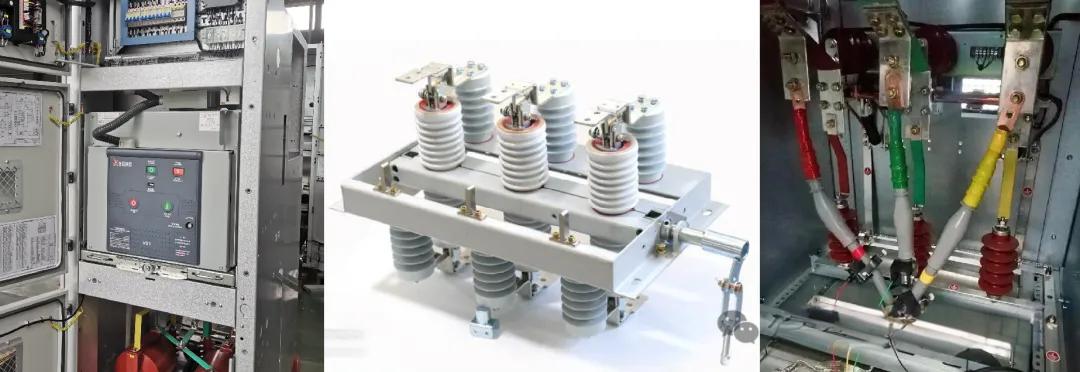
High-voltage switchgear relies on three main "pillars": the circuit breaker, disconnector (isolating switch), and earthing switch (grounding switch). Each has vital responsibilities.
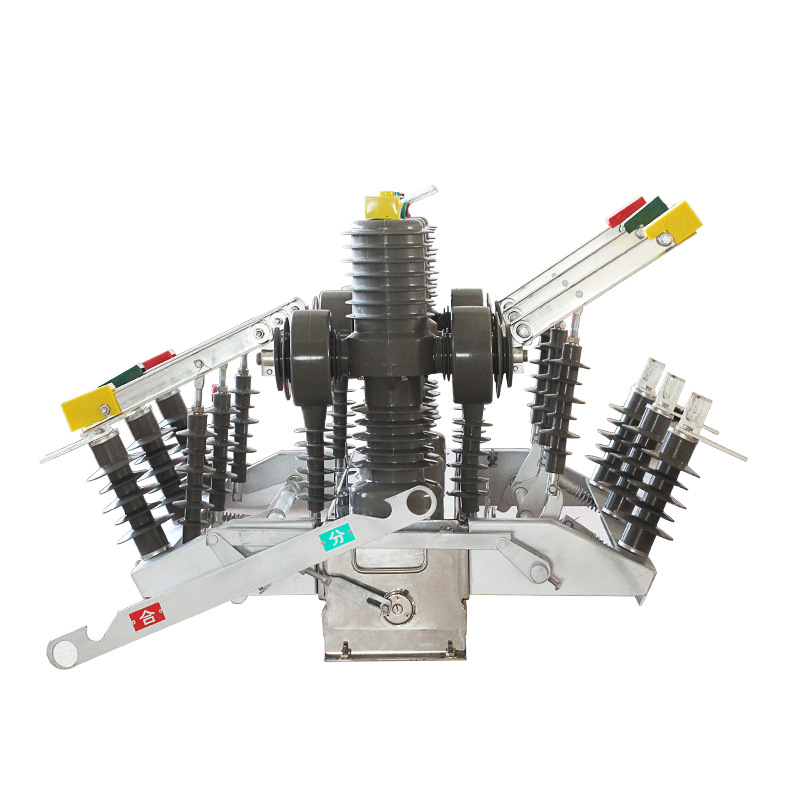
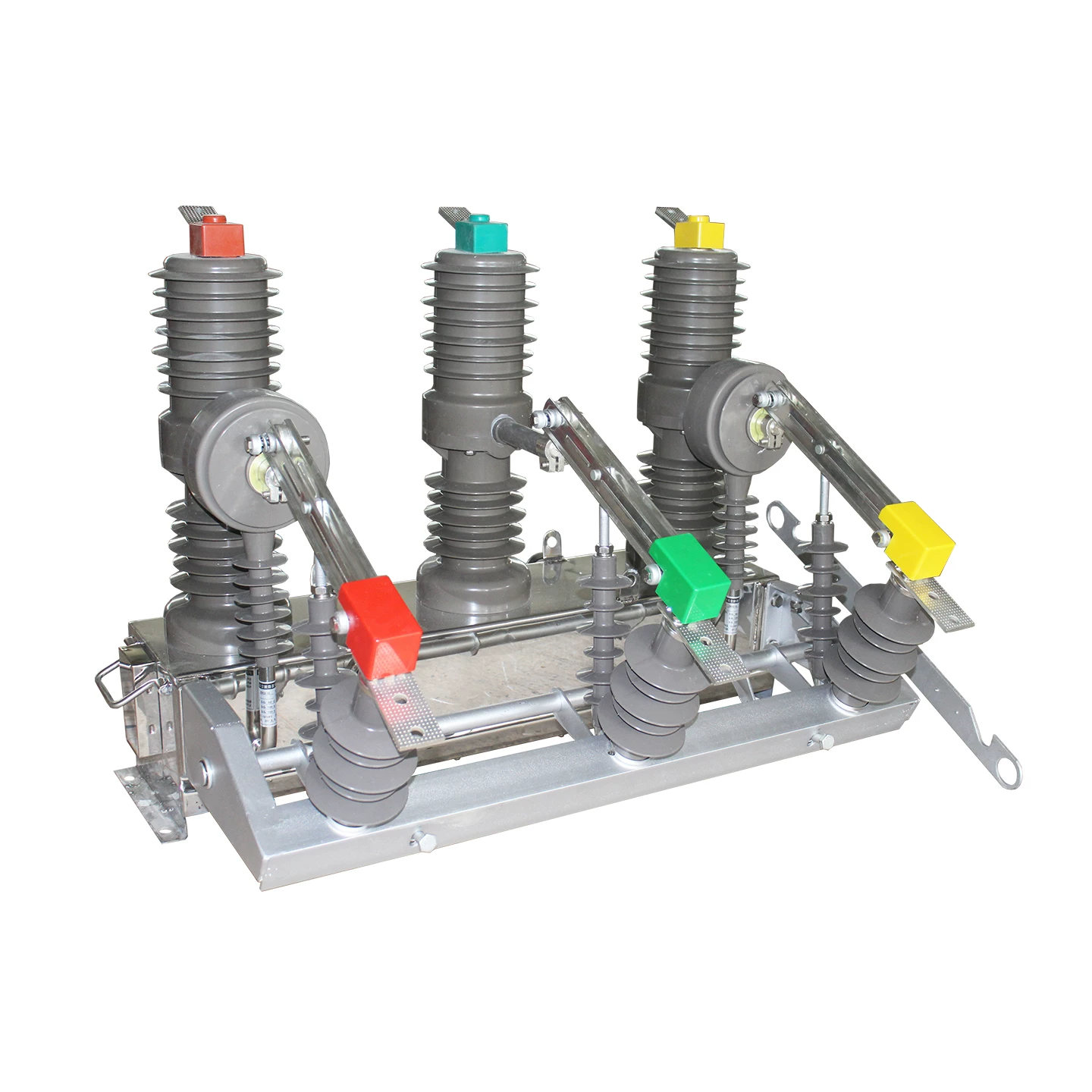
Let's start with the circuit breaker. It's the circuit's "all-around guardian." It controls circuit opening and closing and quickly disconnects faulty sections to protect the system. Its complex design includes a conductive circuit, an arc extinguishing chamber, and an outer casing. The breaking elements are its "core brain," handling all control and protection tasks.
Circuit breakers vary by installation (indoor/outdoor) and arc extinguishing medium (oil, SF6). Different types suit different scenarios.
Next is the disconnector, also called an isolating switch. It's like a "safety gate" for the circuit. It isolates high-voltage power, creating a visible gap for maintenance safety. However, it lacks arc extinguishing devices. So, it can't make or break the load current. It only handles small-current switching, like for voltage transformers and surge arresters. Disconnectors come in many types based on placement, voltage, or construction.
Finally, the earthing switch, or grounding switch, is the circuit's "safety ground wire." It discharges static electricity from equipment under maintenance, ensuring personnel safety. In abnormal conditions, it withstands current for a set period, acting as a "guardian." Essentially, it's a special disconnector. Its main purpose is grounding circuits, sometimes even creating deliberate ground faults for control.
II. High-Voltage Switchgear Enclosure and Protection Ratings
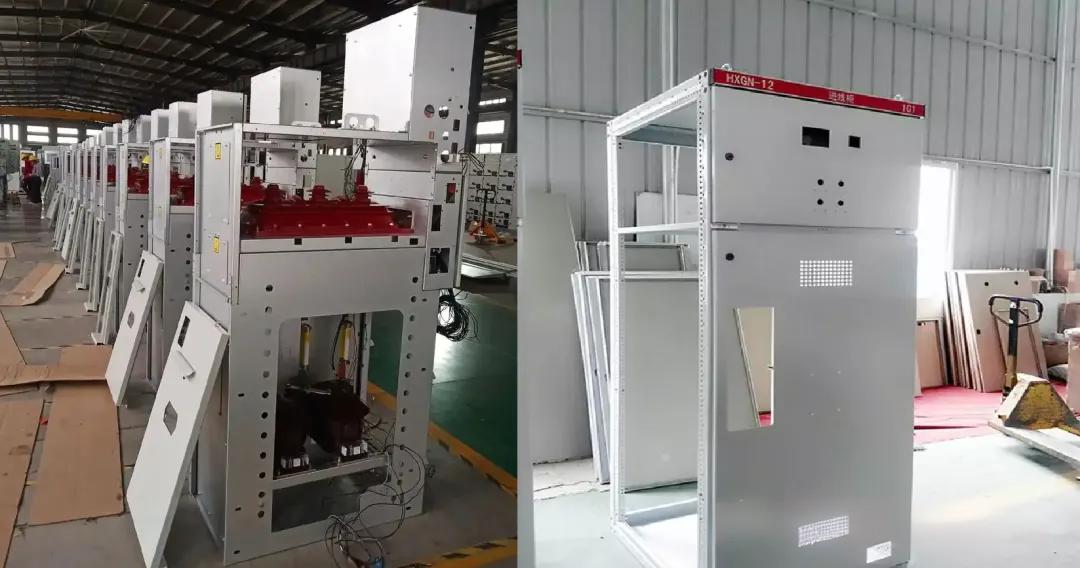
The metal enclosure of high-voltage switchgear is its "protective suit." It must be robust and durable, withstanding pressure during operations or faults without deforming. We commonly use aluminum-zinc-coated or high-quality cold-rolled steel plates, at least 2 mm thick. These steel plates are specially treated. Like being sprayed with anti-rust paint, they become corrosion and impact-resistant.
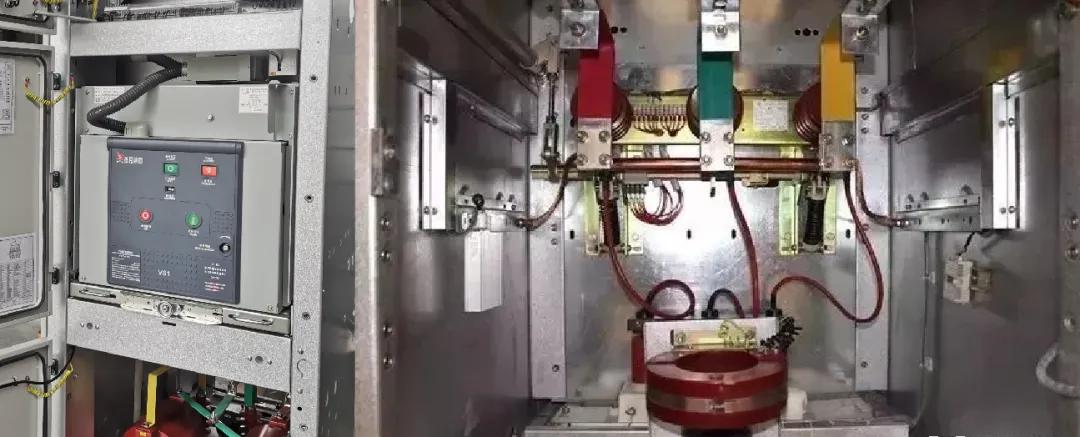
After CNC processing, the steel plates are assembled into a tightly sealed cabinet using welding or bolts. The cabinet has several partitioned compartments. These include the circuit breaker compartment (withdrawable unit compartment), the busbar compartment, and the cable termination compartment. Each "room" has a dedicated purpose.
What are protection ratings?
Protection ratings are the "security password" for switchgear, indicated by IP followed by two digits. The first digit shows protection against contact and foreign objects; the second is for water resistance. For example, IP3X prevents solid objects over 2.5mm from entering, often required for some 10kV and 35kV switchgear. IP4X is even stronger, protecting against objects over 1mm, common for withdrawable JYN and KYN series switchgear.
How do we manage heat inside?
When large currents pass through the switchgear, significant electromagnetic forces are generated between busbars. Support insulators are crucial here, holding busbars firmly to prevent displacement. Also, heat builds up in sealed compartments. During manufacturing, we apply petroleum jelly or conductive paste to electrical connections. This "cools them down" and helps control temperature rise.
III. High-Voltage Switchgear Compartment Division and Function Analysis
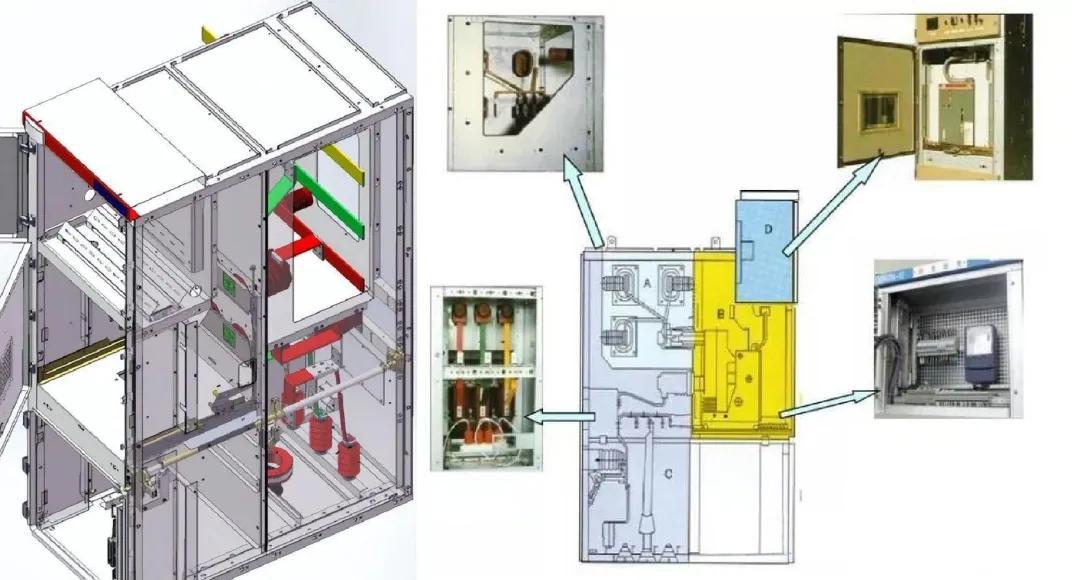
High-voltage switchgear resembles a fully functional "small community." It's divided into distinct compartments, each with an "exclusive mission."
The busbar compartment is the "power main road" of this "community." Main and branch busbars act as "traffic hubs," handling power transmission. It connects busbars to breakers and disconnectors. Busbars are typically made of highly conductive copper or aluminum. They're connected to feeder circuits via supports and secured with insulators and clamps. This ensures safe and stable power transmission.
The circuit breaker compartment is the "exclusive room" for installing circuit breakers. Here, the breaker "stands guard," controlling circuits and protecting safety. It also provides operating mechanisms and maintenance space.
The cable compartment is the "main gate" to the outside. Cable terminations connect to internal components, enabling power input and output. It holds cables firmly with clamps and brackets. Grounding devices and surge arresters provide comprehensive "safety protection" for cables.
The instrument compartment is the switchgear's "smart brain." It houses meters and relays—secondary components acting as "small eyes" and "small ears." They constantly monitor operation, measuring voltage, current, and power.
Finally, the pressure relief compartment acts like a "safety valve." If a short circuit occurs, electric arcs and hot gases rapidly increase internal pressure. This compartment releases pressure, preventing deformation or explosion, ensuring overall safety.
What are the benefits of this division?
Compartment division offers numerous benefits. It isolates high from low voltage and live from non-live parts, reducing electric shock. It also prevents fault spread, making system operation more reliable. Plus, it simplifies maintenance: troubleshoot one part without affecting others. It's incredibly convenient!
IV. High-Voltage Grounding and Insulation Analysis
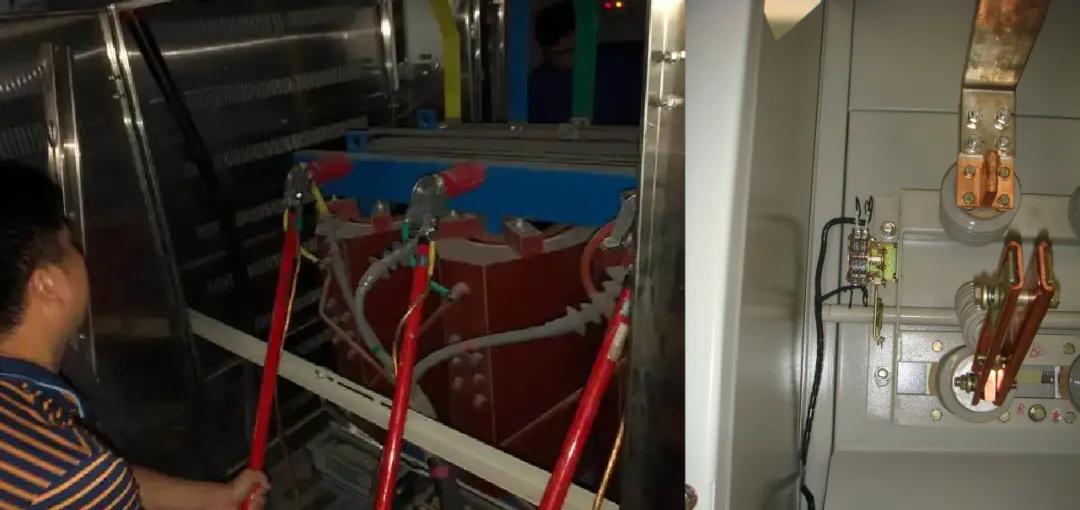
In high-voltage switchgear, grounding is like securing the system with a "safety rope"—it's extremely important! Grounding conductors must be copper, with a large enough cross-sectional area. This ensures thermal stability and mechanical strength, preventing melting or damage from fault currents.
Grounding resistance has strict regulations, generally not over 4Ω. In high soil resistivity areas, special measures must reduce resistance.
All metal components, like the outer casing and frame, must be securely connected to the grounding conductor. Connections must be reliable, ensuring good contact when bolted. All touchable main circuit components must be grounded.
Withdrawable components also need grounding at all positions. This ensures the grounding circuit withstands rated peak and short-time withstand currents during insertion and withdrawal. For three-phase short-circuit grounding, the maximum short-time withstand current must match the main circuit's rating.
Grounding wires should run along the switchgear perimeter, with sides no more than 1.5 meters apart. End points must be firmly welded. The grounding wire should also have a "protective sleeve" to prevent external damage.
What about insulation standards?
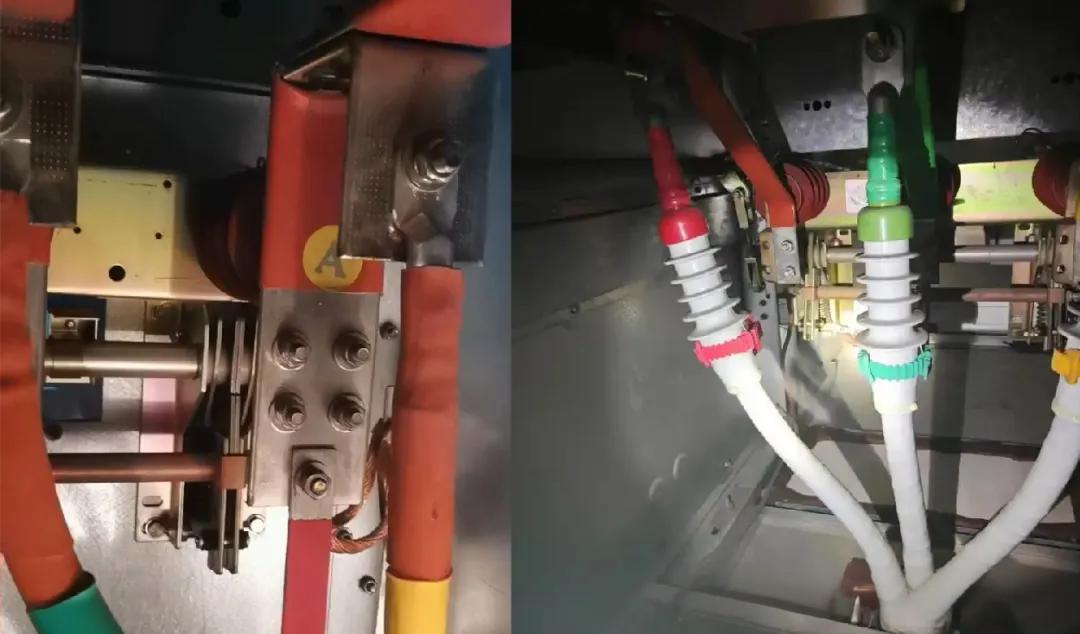
Let's talk about insulation. For air-insulated switchgear, there are clear requirements for net distances between conductors of each phase and from conductors to ground. For 10kV switchgear, phase-to-phase and phase-to-ground distances shouldn't be less than 125mm. If insulation partitions reduce this, the air net distance must still be at least 60mm.
Insulation materials must be "skilled performers." They need mechanical strength to withstand the specified power frequency test voltages. They also need excellent anti-aging and flame-retardant properties for long-term stable operation. If leakage current flows to accessible surfaces of insulation partitions and shutters, it must not exceed 0.5mA under specified test conditions.
V. The "ID Card" of Switching Equipment
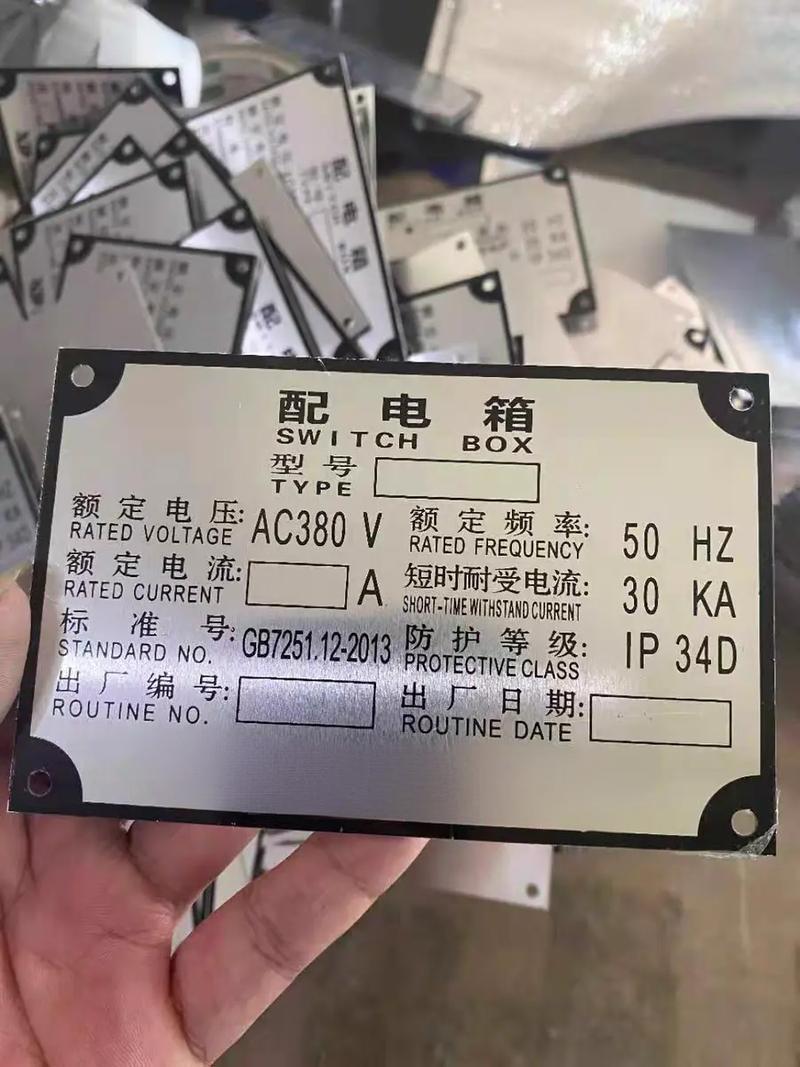
Every piece of switching equipment has an exclusive "ID card"—the nameplate. It records basic information, technical parameters, and operating conditions. This is crucial for selection, installation, commissioning, and maintenance. The nameplate is usually fixed conspicuously.
It displays core information like the manufacturer's details, equipment model, serial number, and manufacturing date. With the nameplate, you can quickly and accurately identify each piece of equipment.
The technical parameters are like the equipment's "capability description." They tell you it's maximum voltage and current, helping you select and operate it correctly. Operating conditions are like its "lifestyle habits."
They specify the applicable environment, such as protection rating and temperature range. Using the equipment according to these conditions prevents improper operation and ensures safe, stable performance.
I hope today's sharing of these five technical points for high-voltage switchgear is helpful for your work and studies! If you have any questions about practical applications or wish to delve deeper into any technical detail, please feel free to reach out!
I'm Thor, an Electrical Engineer at Weishoelec, and I look forward to connecting with you.
Weishoelec Contact Information:
Phone: +86 0577-62788197
WhatsApp: +86 159 5777 0984
Email: [email protected]