Most medium-voltage PT failures do not start with the wrong voltage ratio. They start with the wrong insulation system for the real site environment: damp switchgear rooms, cement dust, salty air, poor enclosure ventilation, rushed cleaning schedules, and maintenance teams that are already overloaded.
In actual projects, the painful surprise is simple: a unit that looks acceptable on a datasheet can become unreliable once humidity, contamination, operator access, and outage cost are added to the equation. That is why insulation selection often matters more than voltage class alone.
Why Insulation Choice Fails More Projects Than Voltage Class
Engineers usually catch obvious nameplate mismatches during review. What slips through is the insulation-environment mismatch.
From my own experience reviewing MV PT applications in indoor switchgear rooms and dusty industrial electrical houses, the problem shows up long before catastrophic failure. I have personally seen open-type units that tested fine at commissioning start showing visible surface contamination, nuisance accuracy concerns, and operator hesitation within one wet season because the room was “indoor” only on paper. That field pattern is far more common than a basic ratio-selection mistake.
Across field discussions on maintenance forums, Reddit-style practitioner threads, and Quora-style electrical Q&A communities, the repeated complaint is not “we bought the wrong ratio.” It is “the unit was fine in the catalog, but our room is never really dry,” or “dust built up faster than the maintenance plan assumed.”
This is especially relevant in medium voltage instrument transformer selection, where PTs often operate inside switchgear compartments, retrofit panels, industrial rooms, and remote substations with very different contamination profiles.
Humidity raises surface tracking risk.
Dust traps moisture and conductive particles.
Salt and chemicals accelerate insulation degradation.
Limited maintenance access turns a manageable design into a chronic failure point.
What Is the Difference Between Cast Resin and Open Type Potential Transformers?
The simplest answer in a dry type voltage transformer comparison is this: both are dry-insulated designs, but they manage dielectric protection very differently.
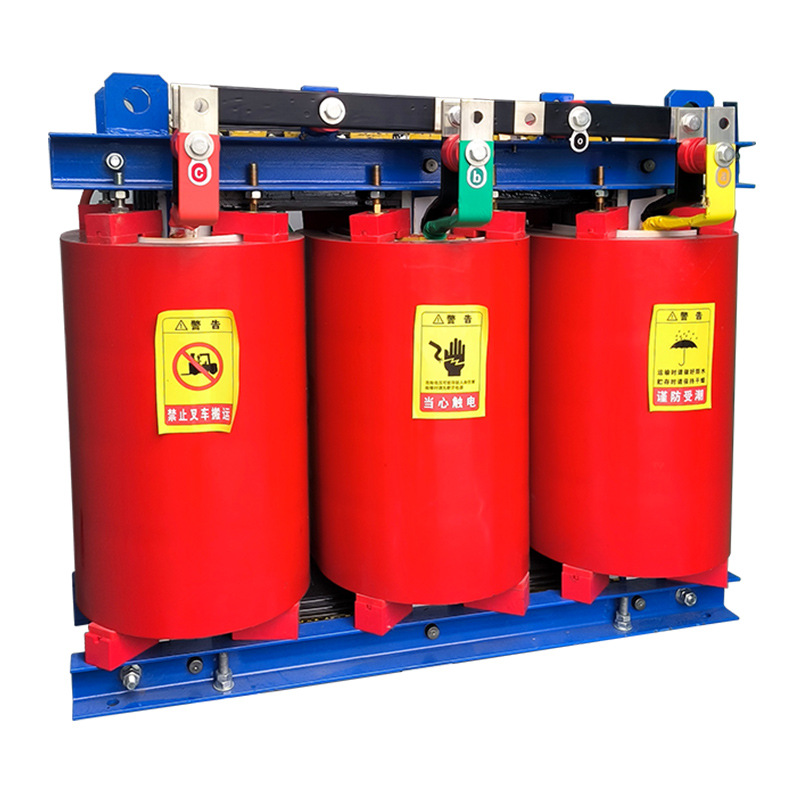
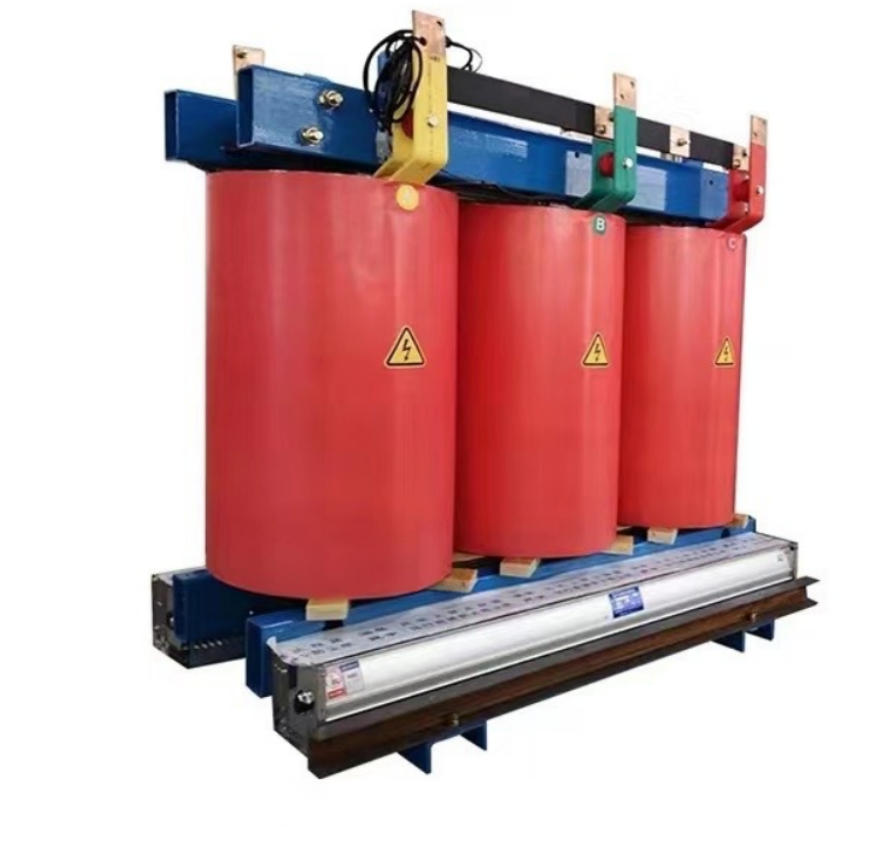
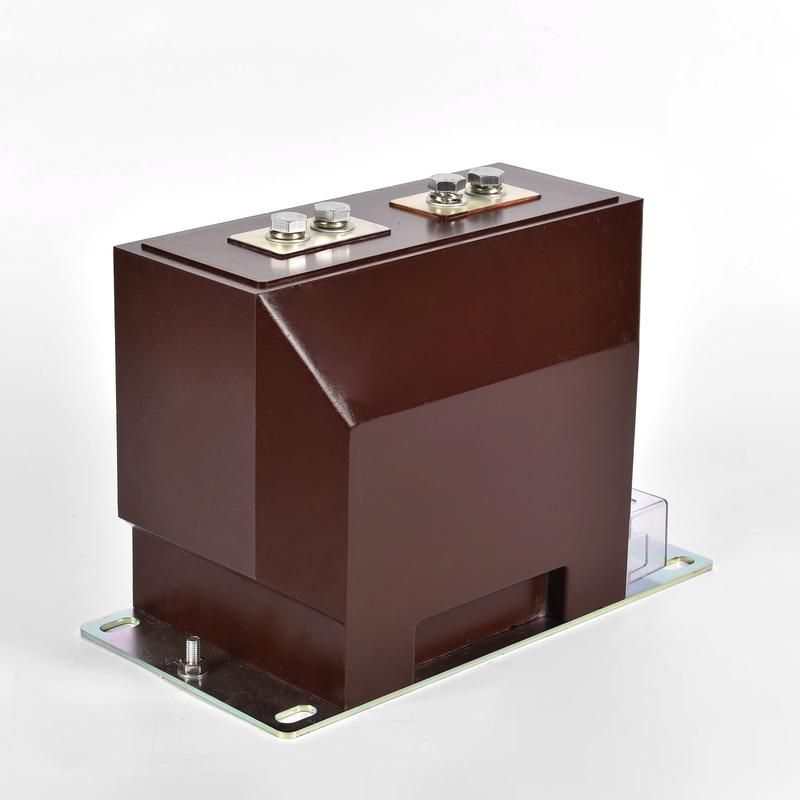
Cast resin potential transformers enclose the active parts in epoxy or similar solid insulation. Open type potential transformers leave more of the core-and-coil structure exposed, relying more heavily on controlled surroundings and external clearances.
What is a cast resin potential transformer?

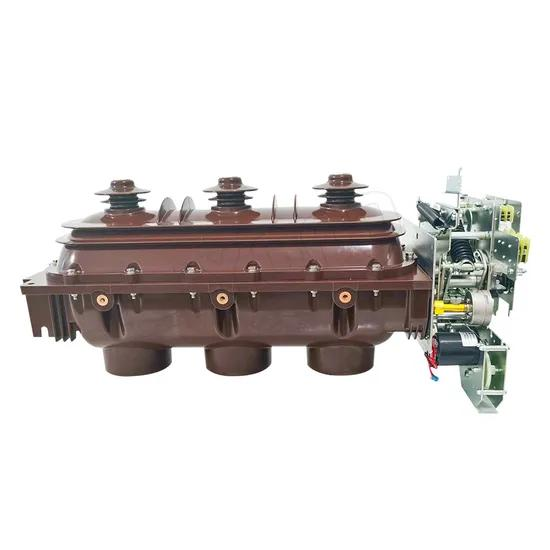
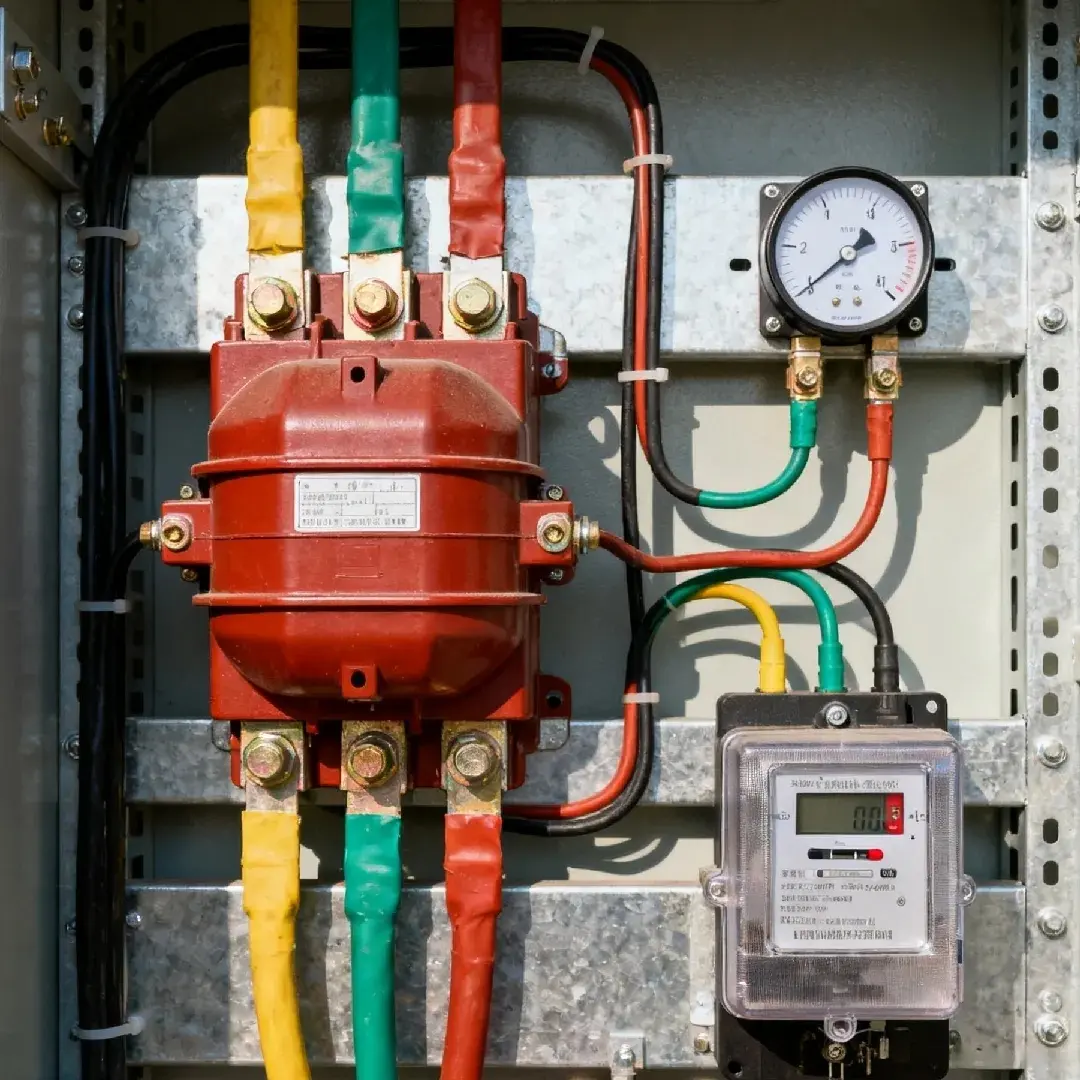
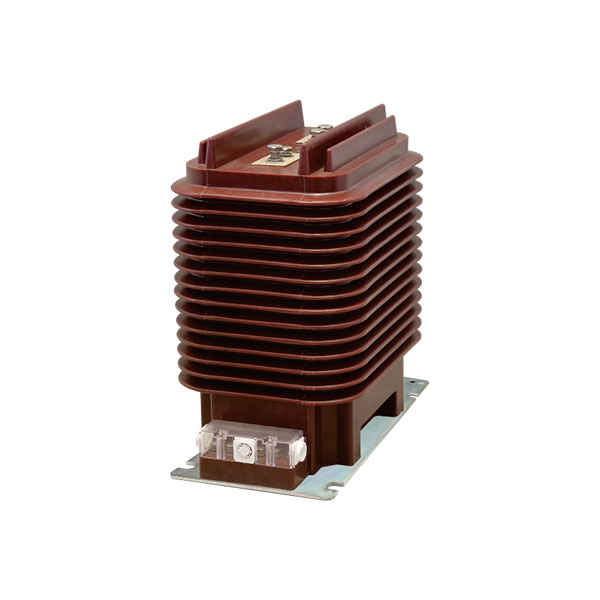
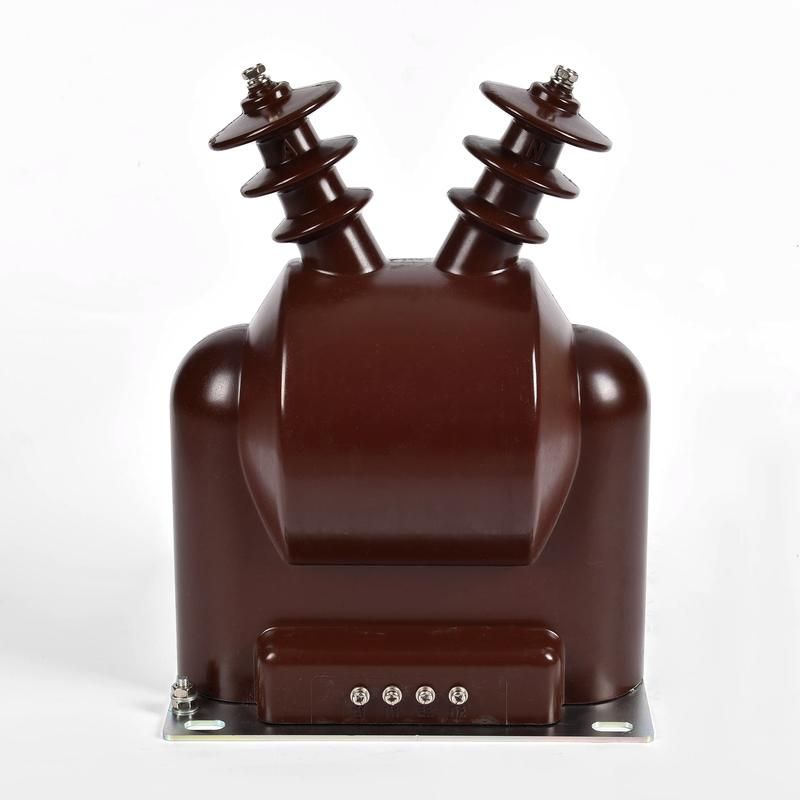
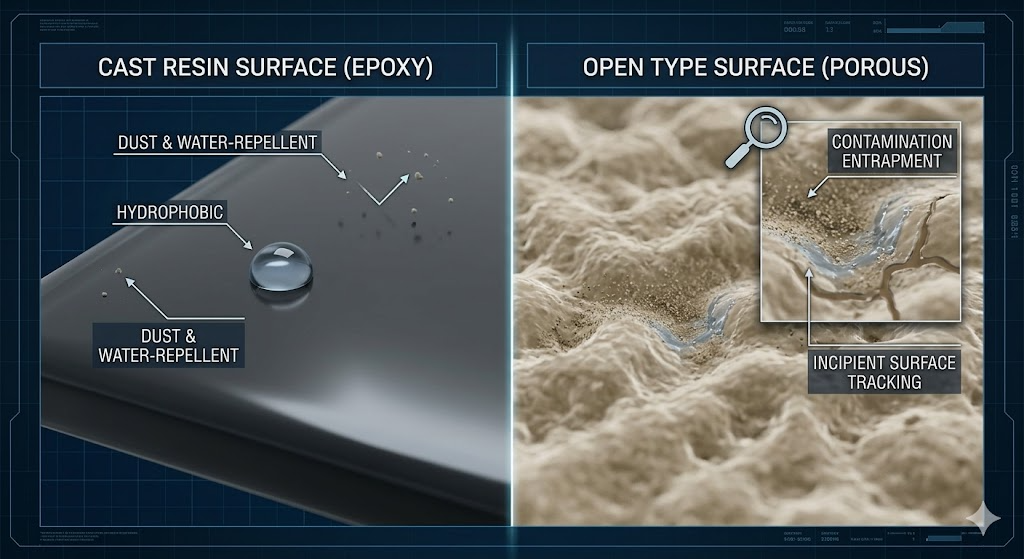
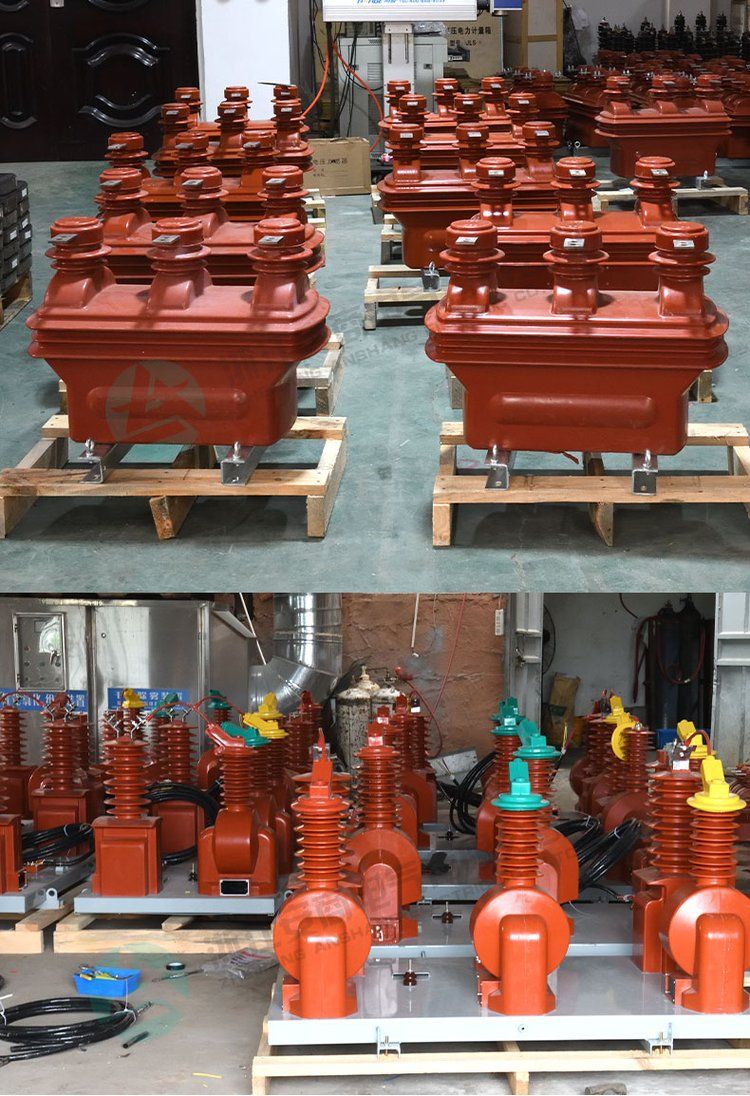
A cast resin PT is a dry-type voltage transformer whose windings and critical live parts are encapsulated in epoxy resin or a similar cast dielectric system. This sealed construction improves resistance to moisture, airborne contamination, and accidental contact.
In practice, cast resin potential transformer insulation is commonly used in indoor metal-clad switchgear, commercial power distribution, data centers, industrial plants, renewable energy skids, and locations where routine cleaning access is limited.
What is an open type potential transformer?
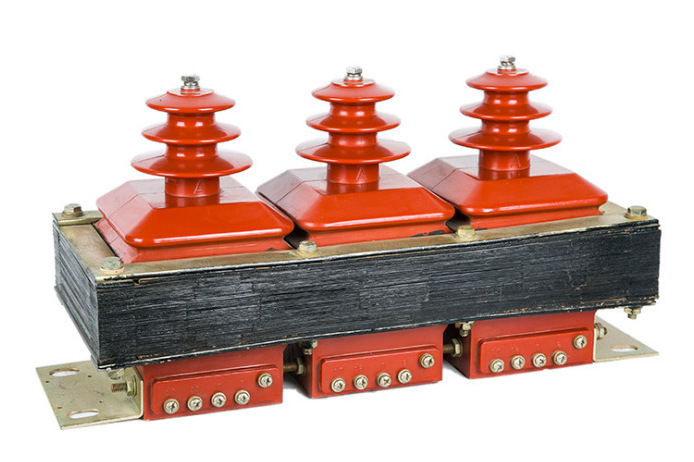
An open type PT uses a more exposed winding and core arrangement, often mounted where air clearances and visible inspection are part of the design logic. The insulation system depends more on ambient cleanliness, installation quality, and maintenance discipline.
Open type potential transformer design still has a valid place in clean indoor electrical rooms, cost-sensitive retrofits, and applications where operators want quick visual access to condition changes.
Cast Resin vs. Open Type Potential Transformer: Quick Comparison Table
| Factor | Cast Resin PT | Open Type PT |
|---|---|---|
| Insulation system | Sealed cast dielectric around active parts | More exposed insulation surfaces and live structure |
| Contamination resistance | High in humid, dusty, polluted indoor environments | Moderate to low unless environment is clean and controlled |
| Serviceability | Lower deep repairability after internal damage | Often easier to inspect visually and sometimes easier to replace component-style |
| Heat dissipation | Good when properly designed, but enclosure and loading matter | Often benefits from direct air exposure in clean rooms |
| Operator touch safety | Generally better due to encapsulation | Requires stricter exposure control and guarding |
| Initial cost | Usually higher | Usually lower |
| Lifecycle cost in dirty/humid sites | Often lower | Often higher due to cleaning, inspection, and failure risk |
| Typical applications | Switchgear, data centers, heavy industry, remote sites | Clean indoor rooms, budget retrofits, inspection-friendly installations |
How to Choose Insulation for Medium Voltage Instrument Transformers
The best procurement decisions use a site-driven framework, not a catalog-driven one. This is the core of good medium voltage instrument transformer selection.
Focus on four filters: environment, maintenance model, safety expectations, and lifecycle economics. If one of these is ignored, the PT may still pass bid review and still fail in service.
Choose by installation environment
Environment should be the first screening variable in any potential transformer dielectric insulation guide. “Indoor” is not a sufficient description.
Indoor metal-clad switchgear: Cast resin is usually preferred.
Humid electrical rooms: Cast resin usually wins due to condensation resilience.
Dusty plants: Cast resin is often safer and lower maintenance.
Coastal sites: Cast resin performs better against salt contamination.
Clean, temperature-controlled rooms: Open type can be practical and economical.
Choose by maintenance strategy
If the site has a disciplined inspection-and-cleaning team, open type units may remain viable. If maintenance access is limited, delayed, or labor-constrained, cast resin typically delivers better real-world reliability.
This tradeoff appears repeatedly in user feedback: many teams do not lack procedures, they lack time windows. That is where sealed insulation starts to pay back.
Choose by safety and arc-containment expectations
Where operator proximity is high, compartment space is tight, and accidental contact risk must be minimized, cast resin has a strong advantage. The encapsulated structure reduces exposure of energized parts.
In enclosed switchgear and commercial installations, safety reviewers often favor designs that reduce handling and touch exposure during routine checks.
Choose by budget and total cost of ownership
Open type PTs often look attractive on purchase price. But cleaning labor, inspection frequency, unplanned outage exposure, and contamination-driven replacement can erase that saving quickly.
A low first cost is not a low operating cost. That is one of the most frequent specification mistakes in PT buying.
Cast Resin Potential Transformer Insulation: Best Use Cases
Sealed dielectric systems outperform open assemblies where contamination, moisture, safety exposure, or maintenance limitations dominate the risk profile. That is why cast resin potential transformer insulation has become the default in many modern indoor MV installations.
Indoor metal-clad switchgear
Metal-clad compartments are compact, thermally variable, and not always as clean as procurement documents suggest. Dust from cable work, condensation near louvers, and restricted cleaning access all favor cast resin.
In practice, switchgear technicians often report that “closed” compartments are not actually contamination-free. They are simply harder to inspect and clean.
High humidity and condensation-prone sites
Moisture tracking is a classic hidden failure mode. It often appears after seasonal temperature swings, overnight shutdowns, or poor room ventilation.
Cast resin insulation handles these conditions better because critical surfaces are sealed rather than openly exposed to humid air and condensate films.
Chemical, cement, mining, and dusty process industries
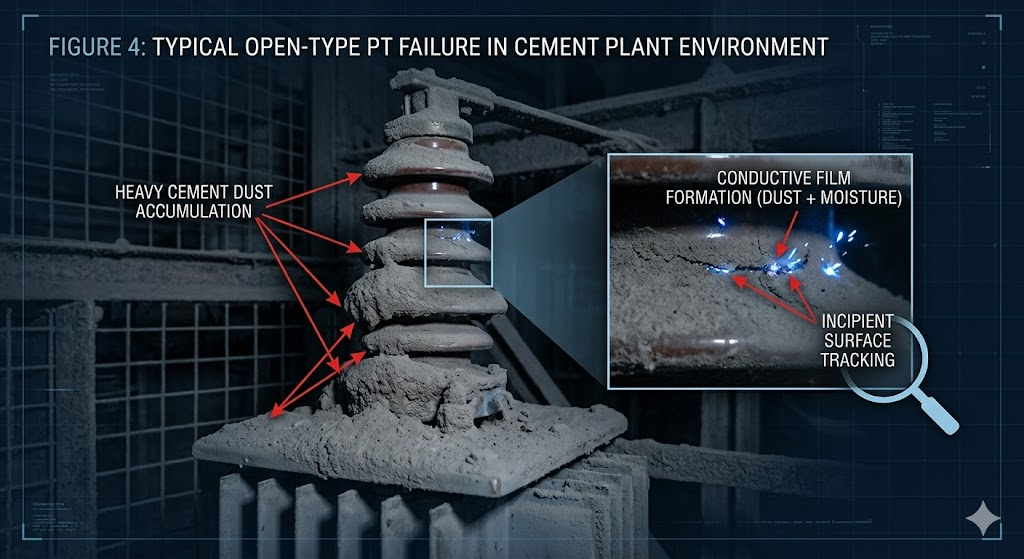
These sites generate the exact mixture that damages open insulation fastest: fine dust, vibration, moisture, and irregular cleaning intervals. Cement and mining operators regularly describe dust accumulation as “never fully gone,” even right after shutdown cleaning.
In one cement-related indoor distribution room I evaluated, the shelves looked clean at eye level, but a wipe test on the PT support frame came back with a fine alkaline film in seconds. That kind of residue is exactly why I generally do not trust “monthly cleaning” as a sufficient risk control for open-type PTs in process industries unless the room is genuinely isolated and filtered.
In such environments, resin-sealed PTs usually reduce routine intervention and lower contamination-related dielectric incidents.
Open Type Potential Transformer Design: When It Still Makes Sense
A balanced guide should be honest: open type PTs are not obsolete. In the right environment, they are practical, economical, and easy to work with.
Clean, controlled indoor electrical rooms
If the room is dry, filtered, accessible, and well-managed, open type units can perform reliably for long periods. This is still common in legacy substations, controlled industrial utility rooms, and some retrofit boards.
When airborne contamination is truly low, the open insulation disadvantage shrinks significantly.
Cost-sensitive retrofit projects
In retrofit work, dimensions, mounting points, lead arrangements, and procurement budget often dominate decisions. Open type designs can be easier to source and simpler to fit into existing arrangements.
For projects under tight capital pressure, this can be the deciding factor.
Applications needing easier visual inspection
Some maintenance teams prefer exposed geometry because they can visually check dust buildup, discoloration, loosened hardware, and insulation surface condition without disassembly. That preference is common in facilities with strong routine inspection culture.
The tradeoff is obvious: easier to see often also means more exposed to contamination.
Real-World Failure Patterns Engineers Report in the Field
Across practitioner communities, three failure themes appear again and again. These are not abstract lab issues. They are site-reality issues.
Dust plus humidity is a silent insulation killer
Dust alone is bad. Humidity alone is bad. Together, they become much worse because settled dust holds moisture, creates conductive films, and supports surface tracking.
Technicians in cement, ceramics, mining, and coastal industrial sites repeatedly describe this as the “looks dry but still leaks” problem.
Operators underestimate cleaning intervals
Open insulation surfaces rarely fail the day they get dirty. They fail after contamination exceeds what the maintenance interval assumed.
That is why planners often underestimate risk. The asset appears stable until accuracy drift, partial discharge symptoms, or flashover appears during a bad weather period.
Resin units reduce routine handling but complicate deep repair
Users frequently note the main cast resin tradeoff: fewer contamination headaches, but less practical deep repair once internal damage occurs. If a resin unit suffers internal dielectric failure, replacement is often the realistic path.
By contrast, open type units can be more inspection-friendly, though not necessarily more reliable in harsh environments.
Original Research Angle: Environmental Stress vs. Insulation Preference
To make the selection process more operational, I use a simple field scoring approach during pre-bid reviews: contamination level, maintenance access, outage cost, and safety exposure. This is not a pure academic model; it comes from repeated project comparisons where the technically acceptable option was not always the operationally durable one.
Based on field patterns, procurement reviews, and user-reported maintenance issues, the following weighted model works well for pre-bid screening:
Contamination level: 35%
Maintenance access and labor availability: 25%
Outage cost: 25%
Operator safety exposure: 15%
When contamination and maintenance constraints both score high, cast resin usually becomes the safer selection even when its initial cost is higher. When all four variables are low to moderate, open type remains competitive.
Cast Resin vs. Open Type PT Selection Matrix
| Selection Factor | Cast Resin PT Score | Open Type PT Score | Preferred Option |
|---|---|---|---|
| High humidity | 9/10 | 4/10 | Cast resin |
| Heavy dust | 9/10 | 3/10 | Cast resin |
| High altitude with clean air | 7/10 | 7/10 | Case-dependent |
| Low maintenance labor | 9/10 | 4/10 | Cast resin |
| Switchgear integration | 9/10 | 6/10 | Cast resin |
| Easy visual inspection | 6/10 | 9/10 | Open type |
| Lowest upfront budget | 5/10 | 8/10 | Open type |
| Lifecycle risk in polluted indoor sites | 9/10 | 3/10 | Cast resin |
Performance Data Table: Field-Oriented Comparison by Operating Condition
The table below reflects a practical, field-oriented benchmark model built from common operating patterns seen in industrial installations and discussed by practitioners. It is not a universal laboratory standard, but a useful planning reference.
| Operating Condition | PT Type | Dielectric Reliability | Typical Cleaning Frequency | Relative Outage Risk | Expected Service Behavior |
|---|---|---|---|---|---|
| Clean indoor room | Cast resin | High | Annual visual check | Low | Stable, low-touch performance |
| Clean indoor room | Open type | High | Quarterly to annual dust inspection | Low | Good performance if housekeeping is strong |
| Humid switchgear room | Cast resin | High | Semiannual inspection | Low to moderate | Usually stable under condensation cycles |
| Humid switchgear room | Open type | Moderate | Monthly to quarterly cleaning | Moderate to high | Tracking risk rises quickly if cleaning slips |
| Dusty cement plant | Cast resin | Moderate to high | Quarterly external inspection | Moderate | Generally resilient if enclosure heat is managed |
| Dusty cement plant | Open type | Low to moderate | Frequent cleaning required | High | Surface contamination often drives reliability loss |
| Coastal indoor substation | Cast resin | High | Quarterly inspection | Low to moderate | Better resistance to salt-laden moisture |
| Coastal indoor substation | Open type | Moderate | Frequent cleaning and monitoring | Moderate to high | Salt film raises flashover concern |
Dry Type Voltage Transformer Comparison by Industry
A good dry type voltage transformer comparison should not stop at product type. It should end with industry-specific fit.
Utility substations
Utility buyers often balance reliability, metering accuracy, maintenance access, and environmental exposure. In clean indoor relay rooms, open type PTs may be acceptable.
In compact indoor switchgear or salt-affected locations, cast resin usually provides a stronger reliability margin.
Commercial buildings and data centers
These sites prioritize safety, compact installation, predictable maintenance, and low disruption. Cast resin is usually the better fit because shutdown windows are expensive and operator exposure rules are stricter.
For premium uptime environments, reduced contamination sensitivity matters more than small capital savings.
Mining, cement, and heavy industry
This is where field reality punishes optimistic specifications. Fine dust, vibration, humidity swings, and deferred cleaning all push selection toward cast resin.
In these industries, open type often becomes viable only when housed in truly clean electrical rooms with disciplined maintenance.
Renewable energy and distributed energy sites
Remote solar, wind, BESS, and distributed power sites usually have constrained maintenance access. Even when cabinets are indoor-rated, they may experience condensation and dust intrusion.
That makes cast resin attractive for lower intervention frequency and more stable dielectric behavior over time.
Common Specification Mistakes in Potential Transformer Dielectric Insulation Selection
Many PT problems are created during tendering, not during operation. A weak potential transformer dielectric insulation guide at the bid stage leads directly to poor field fit.
Selecting by purchase price only
This is the most common mistake. It ignores cleaning labor, forced outages, contamination-related drift, emergency replacement logistics, and the real cost of maintenance windows.
Procurement teams save on line item cost, then operations pays the difference for years.
Ignoring enclosure ventilation and hotspot behavior
Some buyers assume cast resin always runs hotter or open type always cools better. The truth is more nuanced.
Thermal behavior depends on loading, compartment airflow, mounting arrangement, and nearby heat sources. Poor ventilation can distort the expected advantage of either design.
Misreading “indoor use” as “clean environment”
Indoor rooms can still be humid, dusty, salty, chemical-laden, or poorly ventilated. One of the biggest field disconnects is the assumption that indoor equals benign.
It does not. Many of the worst contamination stories happen indoors.
How to Specify the Right Potential Transformer in RFQs and Tenders
If you want fewer surprises after commissioning, your RFQ must describe the site honestly. Generic wording leads to generic equipment.
Required environmental inputs
Relative humidity range
Condensation likelihood
Dust level and dust type
Pollution severity or contamination class
Coastal or chemical exposure
Altitude
Enclosure type and ventilation details
Indoor room cleanliness standard
Required electrical inputs
System voltage and frequency
Voltage ratio
Accuracy class
Burden
Insulation level
Short-time thermal requirements
Grounding method
Metering versus protection duty
Required maintenance and safety inputs
Inspection frequency
Available cleaning windows
Operator proximity during service
Compartment accessibility
Failure consequence and outage cost
Preference for visual inspection versus low-touch operation
For stronger technical backing, I recommend aligning RFQ language with internationally recognized standards rather than vague internal terminology. In practice, that means checking insulation level, temperature rise, accuracy, and routine test expectations against applicable IEC 61869 instrument transformer requirements, reviewing insulation coordination concepts under IEC 60071, and confirming any relevant utility or project-side acceptance criteria that reference IEEE practices for instrument transformer application and testing. Standards do not replace engineering judgment, but they do prevent many avoidable specification gaps.
Cast Resin vs. Open Type Potential Transformer: Pros and Cons Table
| Type | Pros | Cons |
|---|---|---|
| Cast Resin PT | Excellent contamination resistance, better touch safety, ideal for switchgear, lower routine maintenance, stronger fit for humid and dusty sites | Higher upfront cost, less repairable after internal failure, requires correct thermal integration |
| Open Type PT | Lower purchase price, easy visual inspection, practical for clean indoor rooms, useful in some retrofits | More exposed to dust and moisture, higher cleaning demand, greater surface tracking risk, less suited to harsh enclosed conditions |
Recommended Selection Scenarios
Best choice for humid indoor switchgear
Cast resin PT. The sealed insulation system handles condensation and contamination better, while also improving operator safety in compact compartments.
Best choice for clean electrical rooms with tight budgets
Open type PT. If the room is genuinely clean and maintenance is reliable, open type can deliver good service at lower initial cost.
Best choice for low-maintenance remote sites
Cast resin PT. Remote assets benefit from lower cleaning dependence and greater resilience against environmental variation.
Best choice for serviceable indoor retrofit applications
Open type PT. Where access, visibility, mounting compatibility, and quick inspection are the top priorities, open type may be the better fit.
FAQ
What is the main difference between cast resin and open type potential transformers?
The main difference is the insulation structure. Cast resin PTs encapsulate active parts in solid dielectric material, while open type PTs have more exposed insulation and depend more on clean surroundings and maintenance quality.
Which potential transformer is better for medium-voltage indoor switchgear?
Cast resin is usually better for medium-voltage indoor switchgear because it offers stronger contamination resistance, improved touch safety, and better suitability for enclosed compartments with limited cleaning access.
Is cast resin insulation safer than open type insulation?
In most indoor applications, yes. Cast resin reduces exposure of live parts and better contains the insulation system, which can improve operator safety and reduce accidental contact risk during routine work.
Are open type potential transformers cheaper than cast resin models?
Usually yes on initial purchase price. However, lifecycle cost can be higher in dirty or humid sites because open type units often need more cleaning, more inspection, and may face greater contamination-related outage risk.
How does humidity affect potential transformer insulation choice?
Humidity increases the risk of condensation, surface leakage, and tracking. In humid environments, cast resin generally provides more stable dielectric reliability because the critical insulation surfaces are sealed.
Which design needs more maintenance?
Open type PTs usually need more maintenance because exposed insulation surfaces must be inspected and cleaned more often, especially where dust, moisture, or salt contamination is present.
Can open type potential transformers be used in dusty industrial plants?
They can, but only with caution. If the installation is inside a genuinely clean, controlled room and maintenance is frequent, open type may work. In most dusty industrial areas, cast resin is the safer long-term choice.
Do cast resin potential transformers run hotter than open type designs?
Not always. Thermal behavior depends on transformer design, enclosure ventilation, load, and ambient conditions. Open type may dissipate heat more directly in clean air, but poor enclosure airflow can affect either type.
Which option lasts longer in high-pollution environments?
Cast resin generally lasts longer in high-pollution environments because it resists moisture, dust, and conductive surface contamination better than open exposed insulation systems.
What should be included in a potential transformer insulation selection checklist?
The checklist should include humidity, dust level, pollution severity, altitude, enclosure details, voltage ratio, burden, accuracy class, insulation level, grounding method, maintenance access, cleaning intervals, operator proximity, and outage consequence. Where possible, these requirements should also be tied to IEC and IEEE-based test and application criteria so procurement and operations are working from the same technical baseline.
Conclusion: Match Insulation to Site Reality, Not Just Spec Sheets
The right PT is not the one with the most familiar drawing or the lowest quote. It is the one whose insulation system matches the actual site: the humidity, the dust, the safety expectations, the maintenance culture, and the cost of being wrong.
After comparing installations across cleaner utility rooms, damp indoor switchgear lineups, and dust-heavy industrial sites, my own view is straightforward: open type PTs are often chosen because they look simpler and cheaper, but cast resin PTs are more often the option people wish they had specified once the site starts behaving like a real plant instead of a tender document. That is not marketing language; it is the recurring lesson from field conditions that are never as controlled as the original drawings imply.
If the environment is polluted, enclosed, humid, remote, or safety-sensitive, cast resin usually provides the better operational answer. If the room is truly clean, accessible, and cost pressure is high, open type can still be a smart and economical choice.
For buyers who need stronger technical justification, the safest path is to combine site reality with compliance logic: assess the actual contamination and maintenance profile, then verify the chosen PT against relevant IEC and IEEE requirements for insulation level, accuracy, testing, and installation suitability. That combination is what creates a defendable specification.
That is the real logic behind a strong cast resin potential transformer insulation decision, an effective open type potential transformer design review, and a reliable medium voltage instrument transformer selection process.
Need Help Selecting the Right PT Insulation System?
Share your project conditions including voltage level, room type, humidity, dust exposure, maintenance access, and outage sensitivity. We can help you compare cast resin and open type options, review your specification, and build a shortlist that fits your real operating environment instead of just the catalog description.
Send your RFQ, single-line diagram, or site details now for a tailored recommendation on the best potential transformer insulation system for your application.