
The core process of transformer sizing involves accurately determining the total electrical load—including running power, power factor, and starting current—and then using specific electrical formulas to convert that demand into the required kilovolt-ampere (kVA) rating. This calculation is more than just simple arithmetic; it requires a comprehensive consideration of equipment operating characteristics, inrush current, and essential allowances for future expansion to ensure safety and efficiency. A precise calculation is mandatory for every electrical designer and engineer, as it is the critical first step in selecting the "heart" of the entire power system.
1. Fundamental Concepts: Understanding the Power Triad
Before diving into the actual calculations, it’s crucial to clarify the power units that are frequently confused, as these concepts form the foundation of transformer sizing logic. For those unfamiliar with the field, these terms often blur together, but in the electrical world, they are distinctly separate, representing different physical realities.
Active Power (kW): This is the power in an electrical system that actually performs useful work, meaning the energy that is truly consumed. Whether you’re driving a motor, lighting a bulb, or heating an element, this is the power truly paid for. Active power directly reflects how efficiently electrical energy is converted into mechanical work, heat, or light, and you can simply think of it as the beer you can actually drink.
Reactive Power (kVar): Although this power does no useful work, it is far from useless. It is essential for establishing and maintaining the magnetic fields required by inductive loads, such as motor windings and transformer coils. Reactive power constantly sloshes back and forth across the grid, occupying transmission capacity and causing conductor heating without being consumed. You can accurately conceptualize this as the foam in your beer mug.
Apparent Power (kVA): This is the rated unit for transformer capacity, representing the total power the transformer is capable of delivering. It is mathematically the product of voltage and current and includes both active and reactive power. A transformer's heating and overall losses are primarily determined by the current flowing through its windings, making apparent power the most accurate measure of its current-carrying capability. Manufacturers use kVA to rate their products because it provides a reliable metric regardless of the specific load type (inductive, resistive, or capacitive) connected by the user.
Power Factor (cosφ): Defined as the ratio of active power to apparent power, this value always falls between 0 and 1 and represents the overall efficiency of the electrical system. A power factor closer to 1 indicates a higher percentage of useful active power, leading to greater energy utilization efficiency. While purely resistive loads typically have a power factor near 1, inductive loads introduce significant reactive power, leading to a lower power factor that can often be improved by installing power factor correction equipment.
Understanding the relationship between these three is often simplified using the "beer analogy": Apparent Power (kVA, the total volume) consists of Reactive Power (the foam) and Active Power (kW, the liquid). What we truly need and use is the liquid portion, but the total current draw is dictated by the entire volume. Therefore, the power factor is simply the ratio of useful liquid to the total volume.
Note: Transformer heating and losses are predominantly current-dependent. Consequently, transformer capacity must be rated in kVA (Apparent Power) to accurately reflect its current-handling capability, not kW (Active Power).
2. Core Steps: The Systematic Approach to Sizing
Calculating transformer capacity is a systematic process, and following the correct steps ensures both accuracy and reliability. It is essential to understand that this is far more complex than a simple summation of nameplate ratings; it requires thorough analysis of load characteristics.
Step 1: Inventory and Classify All Connected Loads
This initial stage is the foundation of the entire calculation, and any errors here will inevitably propagate through the final result. You must compile a detailed, comprehensive equipment list, carefully noting the power information for every device.
In professional engineering practice, we avoid a simple summing of all device power and instead categorize loads based on their electrical characteristics:
Resistive Loads: These are the simplest loads, characterized by converting nearly all electrical energy into heat or light. Examples include electric heaters, water heaters, and incandescent bulbs; their power factor can typically be estimated as 1.0.
Inductive Loads: This category is critical for transformer sizing, as these loads generate magnetic fields that consume reactive power, significantly lowering the system's power factor. Common examples are various types of motors, transformers themselves, induction cookers, and fluorescent lamp ballasts.
Non-Linear Loads: Increasingly common with modern electronics, these loads draw current in non-sinusoidal pulses, creating harmonic currents that contaminate the grid. This also adds extra heating and losses to the transformer. Devices like computers, servers, LED drivers, UPS systems, and variable frequency drives fall into this category, requiring specific consideration for harmonic mitigation in precise calculations.
Step 2: Determine Total Load Demand
Method A: Based on Active Power (Recommended)
This is universally considered the most reliable and commonly used calculation method.
1. Calculate Total Active Power (∑kW): Sum the nameplate active power ratings (kW) of all connected devices.
2. Determine Power Factor: Establish an average Power Factor based on the mixture of load types. Factories dominated by inductive loads (motors) typically use a PF of 0.8 to 0.85, while commercial buildings focused on lighting may use 0.9 or higher.
3. Apply Safety Margin: A disciplined electrical design must always incorporate an allowance for future growth and safety. It is standard practice to multiply the total active power by a Safety Margin Factor (commonly 1.2 to 1.3). This margin covers potential load growth, measurement uncertainties, and ensures stable long-term transformer operation.
The Definitive Formula:
Method B: Based on Current and Voltage (Use with Caution)
This method may be attempted if kW ratings are unavailable, using the device's rated current (A) and system voltage (V). However, simple arithmetic summing of currents is highly inaccurate in three-phase systems because it fails to account for phase differences, leading to potentially critical errors. This method should be avoided unless load types and phasing are perfectly uniform.
Tip: Professional engineering design often defaults to a Safety Margin of 1.25. This specific margin is chosen to provide sufficient redundancy, aiming for the transformer to operate optimally within the 60% to 70% load factor range, significantly extending its service life.
Step 3: Conversion Tables for Capacity & Current
For practical application and immediate on-site reference, the following table clearly outlines the essential conversion relationships between power units in different systems. These are the tools engineers rely on daily for quick, accurate unit conversions.
| System Type | Calculate Current (I) from kVA | Calculate kVA from Voltage (V) and Current (I) |
| Single-Phase | I=VkVA×1000 | kVA=1000V×I |
| Three-Phase | I=3×VkVA×1000 | kVA=10003×V×I |
3. Practical Engineering Experience and Verification
Theoretical calculations are necessary, but they must be tempered with practical experience to arrive at the most reliable decision. A truly skilled engineer doesn't just calculate; they anticipate and verify.
Engineering Rule: Accounting for Motor Starting Current
Motors, as powerful inductive loads, generate a massive inrush current during startup, typically spiking to 5 to 7 times their normal running current. If the transformer capacity is calculated only on normal running power, it will be unable to withstand this momentary shock. To ensure the transformer can handle the instantaneous peak during startup, two primary methods are employed:
1. Using a Starting Coefficient: For the single largest motor in the system, its power rating should be multiplied by a Starting Coefficient (typically 1.25). This adjusted figure is then used as the base for the total capacity calculation—a fast, simplified estimation.
2. The Superposition Method: This is more precise. Calculate the sum of all equipment's normal running power, and separately, determine the starting power of the single largest motor. The total required capacity should be based on the maximum of these two sums. For instance, if a plant's total running power is 500 kW, but its largest motor's starting draw is 200 kVA, the minimum capacity should be considered closer to 700 kVA. This is crucial for applications involving frequent motor starts.
Note: Although motor inrush current is brief, the transformer must be sized to endure it. In heavy-duty industrial environments or places with frequent motor cycling, the Superposition Method must be used for precise capacity validation.
Reverse Verification: Estimating Existing Capacity
This reflects a crucial engineering mindset: how do you quickly assess how much more load an existing transformer can handle? This simple formula allows for rapid, on-site capacity assessment:
The Formula:
Example: A 1000 kVA transformer, operating at a recommended 80% load factor and a 0.8 power factor, can sustain a maximum load of:1000 kVA×0.8×0.8=640 kW.
This reverse verification allows for swift evaluation of a transformer’s spare capacity, providing reliable data for future equipment expansion. It is especially vital in renovation projects or equipment upgrades within existing facilities.
Advanced Engineering Consideration: Introducing the Diversity Factor
A seasoned electrical engineer always incorporates the Diversity Factor (DF) into capacity calculations, a more sophisticated approach. This factor is predicated on the reality that the probability of all equipment operating simultaneously at full load is extremely low within any power system. For example, occupants rarely use all their kitchen, laundry, and air conditioning appliances at the same time.
Diversity Factor (DF): Defined as the ratio ofMaximum Demand LoadTotal Installed Load, its value is invariably greater than 1.0.
Calculation Advantage: Incorporating the DF allows for a calculated, safe reduction in the required capacity, thus preventing oversizing the transformer and significantly improving project economics.
To gain a deeper visual understanding of how engineers integrate both the Load Factor and the Diversity Factor to calculate the practical Ampere value for precise transformer sizing, you can refer to the following tutorial:
Visual Reference: Watch the video
to see a practical demonstration of using the Diversity Factor to determine the minimum required capacity for complex, mixed loads. Transformer Size Calculation | Step by Step and Easy way
Tip: The Diversity Factor is the hallmark of advanced capacity sizing. In large-scale projects (like residential complexes or major commercial hubs), accurately estimating the DF can lead to savings of 15% to 25% on the initial transformer investment cost.
4. Selection and Economic Analysis: Moving Beyond Price Tag
Once the required capacity has been rigorously calculated, the final selection process still demands professional consideration. This section helps you understand the broader economic implications of your transformer choice.
Loss Consideration: Transformers inevitably generate two types of losses during operation: No-Load Loss (independent of load, stemming mainly from core excitation) and Load Loss (proportional to the square of the load, mainly from winding resistance). Selecting High-Efficiency Transformers (such as amorphous core types) often involves a higher initial capital investment but drastically reduces both loss types. Over the multi-decade lifespan of a transformer, the energy savings often far exceed the higher purchase price.
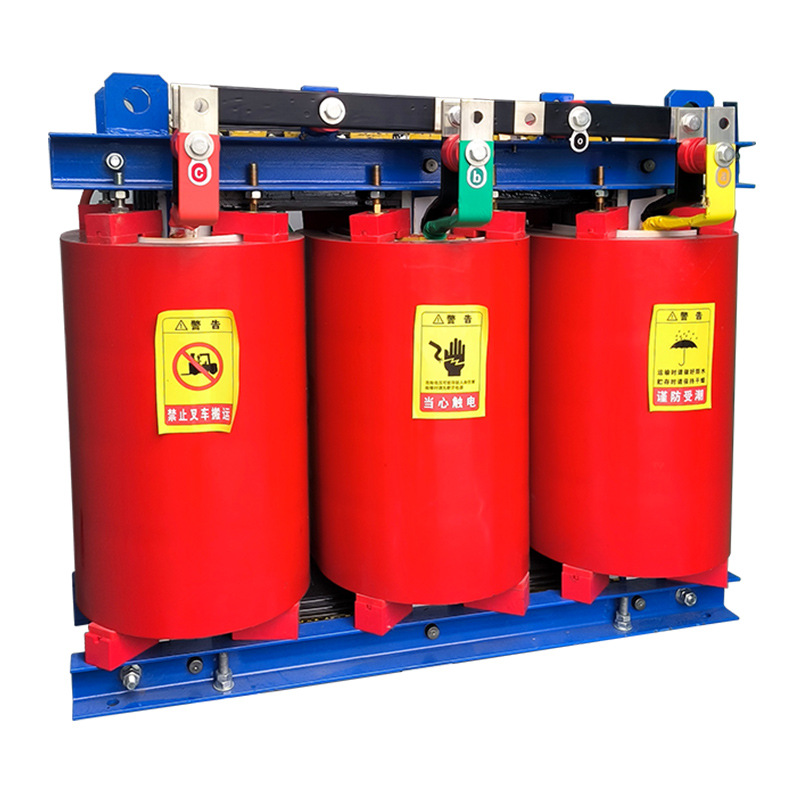
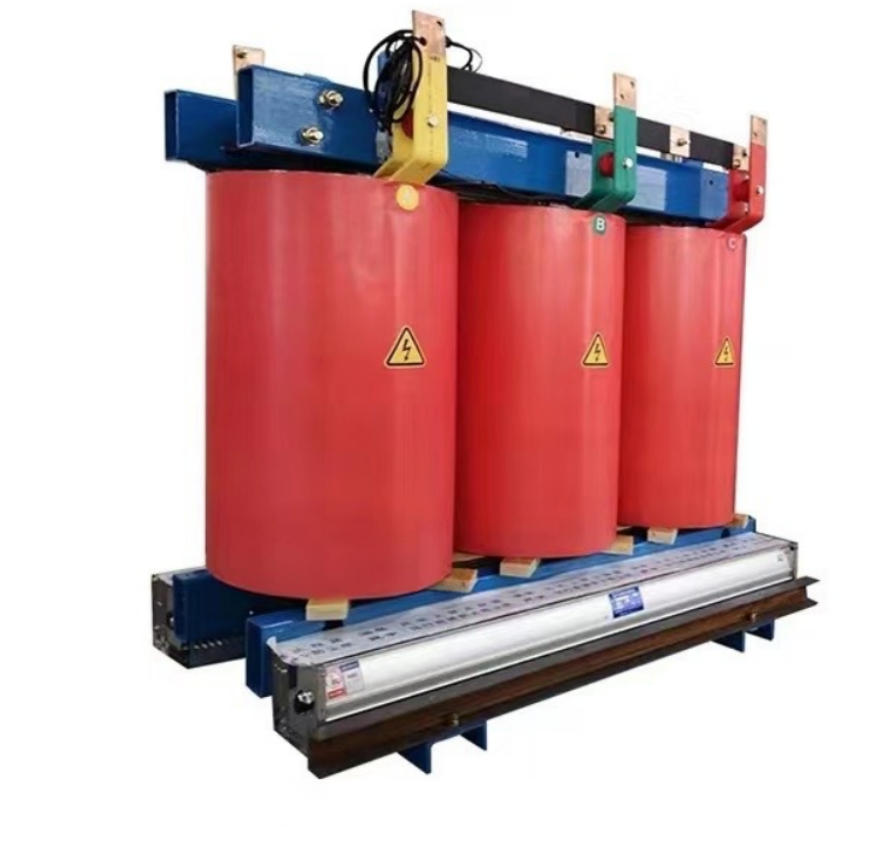
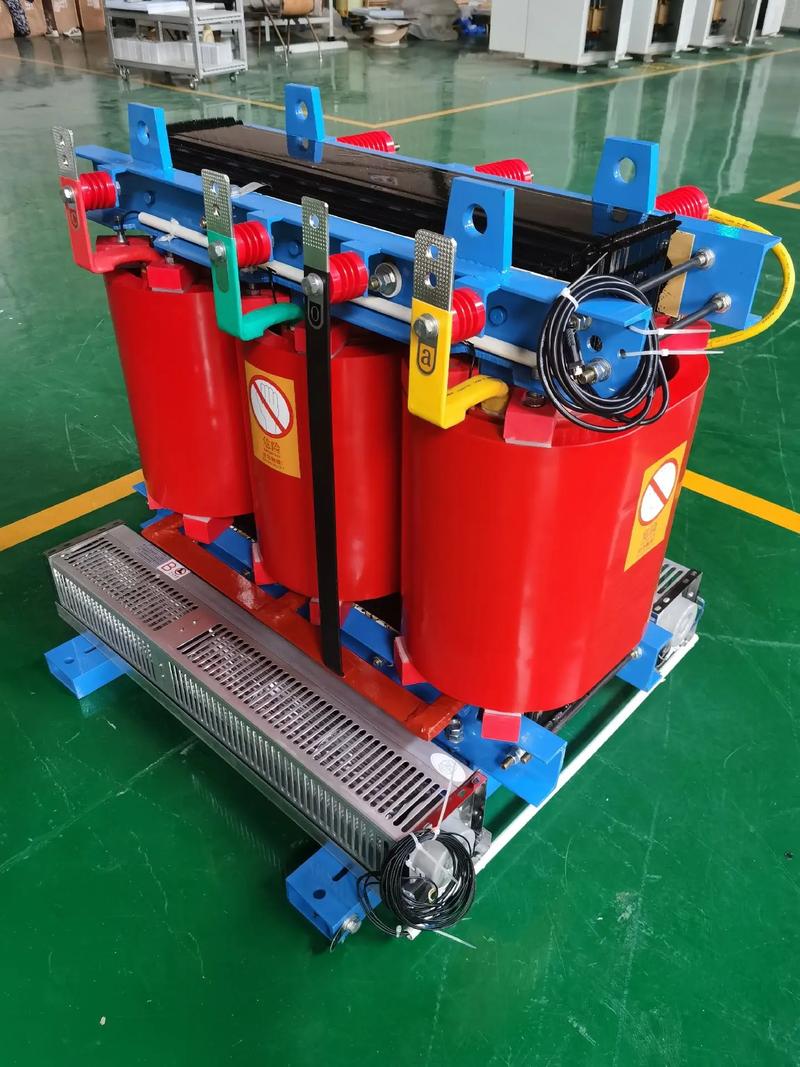
Selection Standard: The final selected transformer's nameplate capacity must be slightly larger than the calculated required capacity. This must also correspond to readily available standard market ratings (e.g., 50 kVA, 80 kVA, 100 kVA). Furthermore, the appropriate transformer type must be chosen based on application: Dry-type transformers for indoor, fire-sensitive environments, and Oil-immersed transformers for noisier, outdoor installations.
Economic Comparison Table: This unique feature visually demonstrates the long-term cost differences resulting from varying transformer efficiencies. The example below uses a standard 1000 kVA transformer for comparison.
| Transformer Type | No-Load Loss (kW) | Full Load Loss (kW) | Annual Savings Estimate |
| Traditional Silicon Steel | Approx. 2.1 | Approx. 10 | |
| High-Efficiency Amorphous Core | Approx. 0.8 | Approx. 5 |
Assumptions: 8760 operating hours per year, 70% average load factor, and electricity cost of 0.15 USD/kWh.
Traditional Transformer Annual Loss: (2.1+10×0.72)×8760=59,376 kWh
High-Efficiency Transformer Annual Loss: (0.8+5×0.72)×8760=24,653 kWh
Annual Electricity Cost Savings: (59,376−24,653)×0.15≈$5,208.45
This calculation powerfully advocates for the "Higher Upfront Investment, Greater Long-Term Return" philosophy, guiding clients toward smarter financial and environmental decisions.
Tip: When selecting a transformer, always look beyond the initial price tag. High-efficiency models (like amorphous core) may cost more initially, but viewing the Life Cycle Cost (LCC) reveals massive savings over time due to reduced energy consumption.
5. Frequently Asked Questions (FAQ)
This section addresses the most common practical and theoretical questions encountered in transformer specification.
1. Q: Why is transformer capacity rated in kVA and not kW?
A: Transformer losses, especially winding heat generation, are directly determined by the current flowing through them. The kVA rating is standardized based on the maximum safe voltage and current the unit can handle. Since manufacturers cannot predict the end-user's load type—and thus cannot know the Power Factor—rating in kVA accurately reflects the transformer's current capacity, ensuring safety regardless of whether the load is primarily inductive or resistive.
2. Q: What is the optimal load factor for a running transformer?
A: The sweet spot for a transformer’s best economic efficiency and longevity is typically a load factor between 60% and 70%. Operating continuously above 80% load significantly increases heat, lowers efficiency, and drastically shortens the equipment's lifespan. Conversely, running consistently below 30% suggests the unit is oversized, leading to poor economic performance due to higher fixed no-load losses.
3. Q: How do I calculate transformer size for a small home or commercial unit?
A: The same fundamental method applies: create a list of all major consumption items—A/C units, refrigerators, water heaters, lighting. Calculate the total Active Power, then apply a safety margin (e.g., 1.2) and divide by the assumed power factor (for residential, you can often assume 0.95; commercial varies by equipment). This calculation yields the required kVA.
4. Q: Are there downsides to simply oversizing the transformer capacity?
A: Yes, there are several negative consequences. First, the initial procurement cost is unnecessarily higher; second, the transformer’s fixed no-load losses increase proportionally with capacity, leading to higher long-term operational costs; finally, large transformers operate at lower efficiency when lightly loaded, wasting energy and resources.
5. Q: What are the risks of non-linear loads, and how should I size for them?
A: Non-linear loads (like data servers and UPS) generate harmonic currents that cause excessive heating and additional losses in the transformer, potentially leading to premature insulation failure or noticeable humming. For systems with a high density of non-linear loads (such as data centers), specialized K-factor transformers designed to withstand harmonics are recommended, and you should consider a calculated capacity increase to compensate for harmonic heating.
6. Q: If I only have the rated current, how can I quickly estimate the power?
A: If only the current is known, a rough estimate can be made using a simplified version of the three-phase formula: kW≈1.732×V×I×Power Factor. You must estimate the Power Factor based on the equipment type. For example, a 50A, 380V three-phase motor might be estimated as: 1.732×380×50×0.8≈26.3kW. This should only be used as a preliminary estimate; always rely on the equipment nameplate for the final design.
7. Q: How do Power Factor Correction (PFC) and transformer sizing relate?
A: Power Factor Correction is a critical tool for optimizing transformer sizing. By installing capacitor banks to offset the reactive power consumed by inductive loads, the system's overall power factor is raised. A higher power factor means the required Apparent Power (kVA) is lower for the same Active Power (kW) demand. This allows the selection of a smaller, more cost-effective transformer, reducing both equipment and long-term operating costs—a significant energy-saving measure.
Conclusion
Precise transformer capacity calculation is the undisputed cornerstone of safe and efficient electrical system design. It is not just a technical requirement but a fundamentally sound economic decision.
By grasping the core concepts, meticulously following the systematic calculation steps, and integrating advanced considerations like load characteristics, safety margins, and long-term economics, you position yourself to make the most professional and cost-effective choice. The right calculation and selection ensure that your power system operates reliably, sustainably, and securely for decades to come.