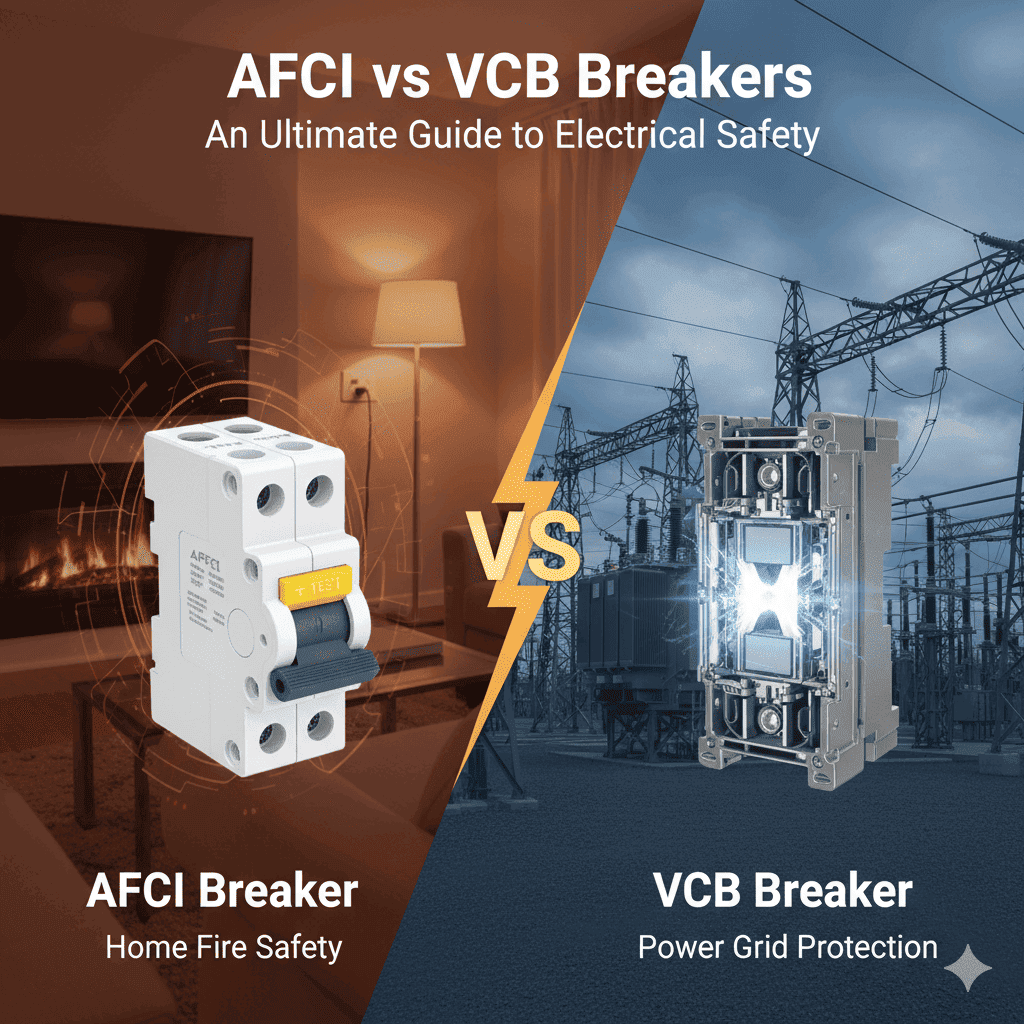
Electrical safety is paramount in both our homes and our industries. Circuit breakers play a vital role as our systems' guardians.
Yet, not all breakers are created equal. A simple name can hide a completely different purpose.
When we discuss an AFCI breaker versus a Vacuum Circuit Breaker (VCB), we're comparing two devices built for vastly different jobs. They use distinct technologies to get the job done.
One is a meticulous detective safeguarding our homes from insidious fire threats. The other is a robust, high-power switch that acts as a fortress for the electrical grid.
The fundamental difference lies in their core function. An AFCI is an advanced fire-prevention device for residential use, while a VCB is a heavy-duty mechanical switch used in industrial and utility-scale power systems.
Simply put, an AFCI is your home's smart fire alarm for electrical issues. A VCB is the power plant's emergency stop button, designed to shut down massive currents in a fraction of a second.
Part 1: The AFCI Breaker—Your Home’s Fire Detective
The invention of the AFCI breaker was a direct response to a significant electrical safety challenge. Conventional breakers, whether thermal-magnetic or others, simply couldn't detect and interrupt a dangerous condition known as an arc fault.
The current produced by an arc fault is often too low to trip a standard breaker's overload protection. But it's more than hot enough to ignite insulation or dust, leading to a catastrophic fire.
Based on official statistics, these types of electrical fires account for thousands of yearly incidents in the United States. It was against this backdrop that the AFCI breaker was born.
It was hailed as a major leap forward in residential electrical safety after the introduction of the GFCI.
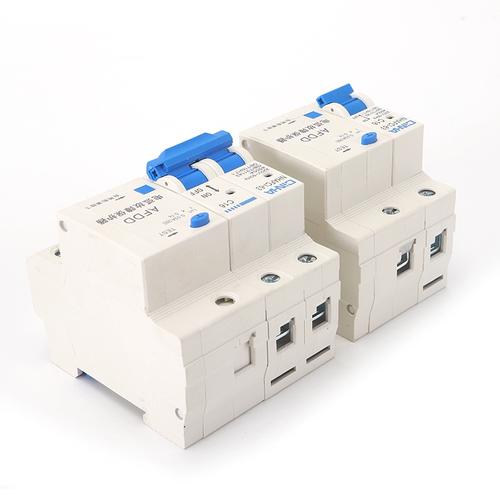
1.1 Function and Principle: From “Stethoscope” to “Fire Prevention”
The core function of an AFCI breaker is arc fault detection and protection. It operates with a level of sophistication far beyond a traditional breaker.
Instead of just monitoring current magnitude, the AFCI acts like a highly sensitive "stethoscope." It uses an internal digital signal processor (DSP) and a microprocessor to constantly "listen" to the electromagnetic noise of the electrical circuit.
During normal operation, appliances like a vacuum cleaner or blender will generate predictable electromagnetic noise. This noise is harmless and the AFCI is programmed to ignore it.
However, when a dangerous arc fault occurs—caused by frayed wires, loose connections, or broken insulation—it creates a unique, high-frequency, and irregular electrical signature. The AFCI's microprocessor is precisely engineered to distinguish this hazardous "signature" from normal noise.
Once it detects a dangerous signature, it sends an immediate command to the breaker’s mechanical mechanism. The breaker then trips in an extremely short amount of time, often within just a few milliseconds.
This action effectively eliminates the fire hazard before it even has a chance to ignite anything. Arc faults primarily come in two types: series arcs, which occur when a wire breaks but the two ends remain in contact, and parallel arcs, which happen when current jumps between a hot wire and a neutral or ground wire through damaged insulation.
An AFCI breaker is designed to provide comprehensive protection against both types of faults.
Note: The AFCI breaker’s most crucial function is its ability to identify and trip on low-current arc faults. These would be completely missed by a standard circuit breaker.
Want a more visual understanding of how an AFCI breaker works? This video uses clear animations and examples to vividly demonstrate its internal principles and protection mechanisms.
1.2 Primary Applications: A Mandatory Guardian in the Home
AFCI breakers are used almost exclusively in residential and light commercial buildings. The National Electrical Code (NEC) has mandated their installation in many indoor areas for new construction and significant renovations.
This includes bedrooms, living rooms, dining rooms, family rooms, dens, closets, hallways, kitchens, and laundry areas. The widespread adoption of these regulations underscores their vital role in fire prevention.
AFCI protection covers the entire circuit, from the breaker all the way to the outlets, switches, and connected appliances. This means it protects the hidden wiring inside your walls.
It also protects any plugged-in appliances like space heaters, lamps, or TVs. This comprehensive coverage gives homeowners and residents an unprecedented level of safety.
Tip: If you are undergoing a home renovation or electrical system upgrade, it's a worthwhile investment to consult a professional electrician. They will ensure all required areas are equipped with AFCI breakers, which is an indispensable step toward safeguarding your home.
1.3 Maintenance and Advantages: A Long-Lasting and Simple Investment
AFCI breakers are designed to be essentially maintenance-free. Their solid-state electronic components are built for long-term reliability and stable operation.
The only recommended maintenance is a periodic test, which is performed by simply pressing the "TEST" button located on the breaker itself. If the breaker immediately trips after you press the button, it indicates that its internal detection and tripping mechanisms are working correctly.
Compared to a standard breaker, the AFCI’s primary advantage is its unique fire-prevention capability. It fills a critical gap in electrical safety protection, complementing both standard breakers and GFCIs.
Its development has dramatically reduced the risk of electrical-related home fires. It has become a standard for modern construction.
Part 2: The Vacuum Circuit Breaker (VCB)—The Power Grid’s High-Speed Switch
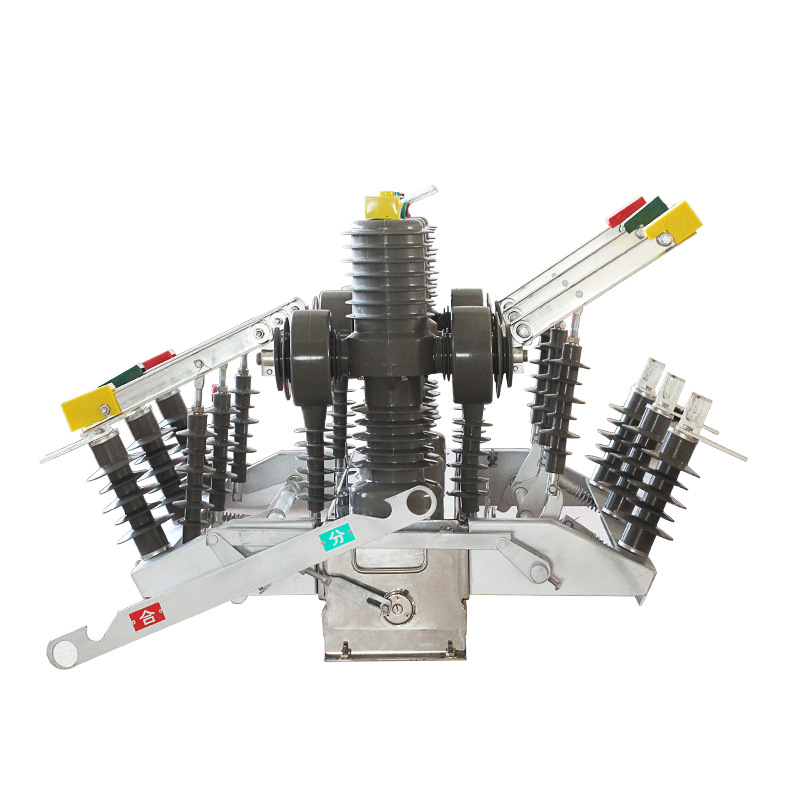
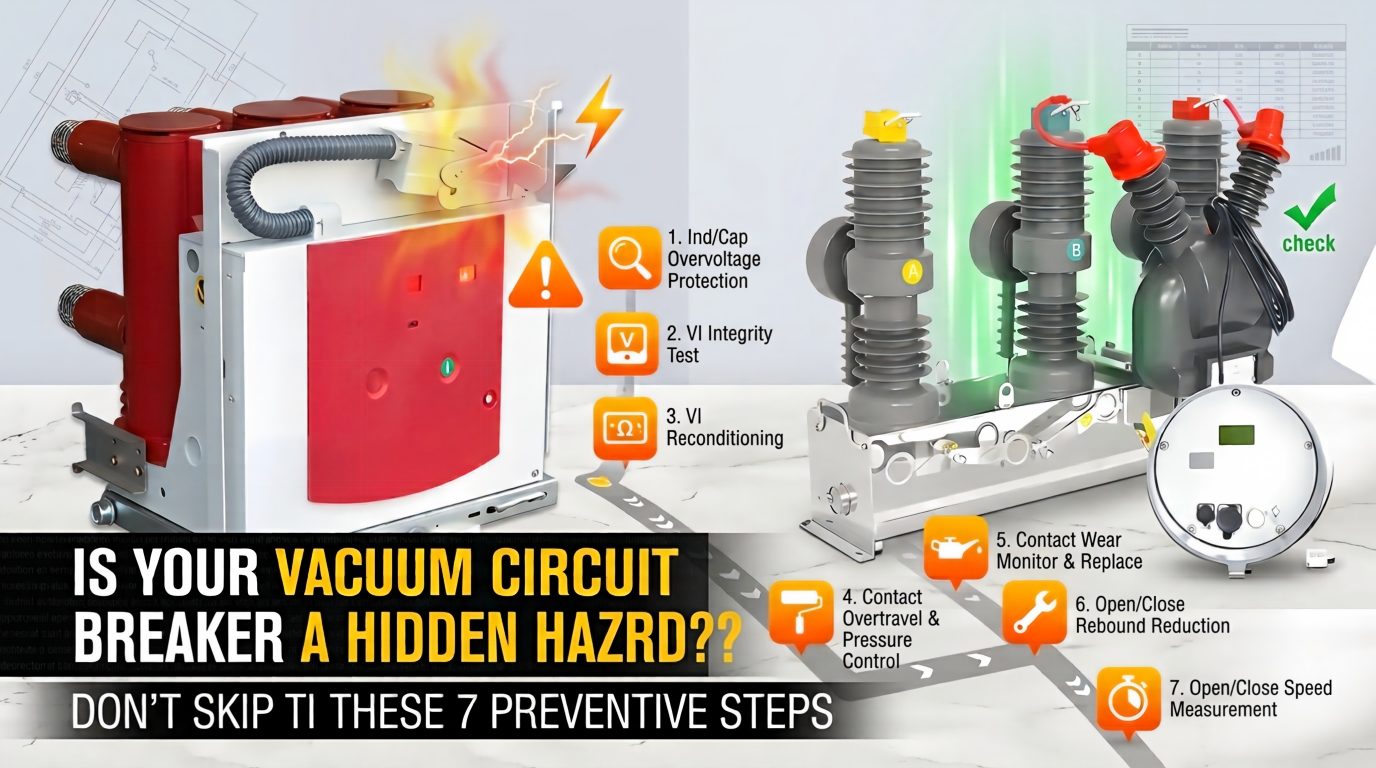
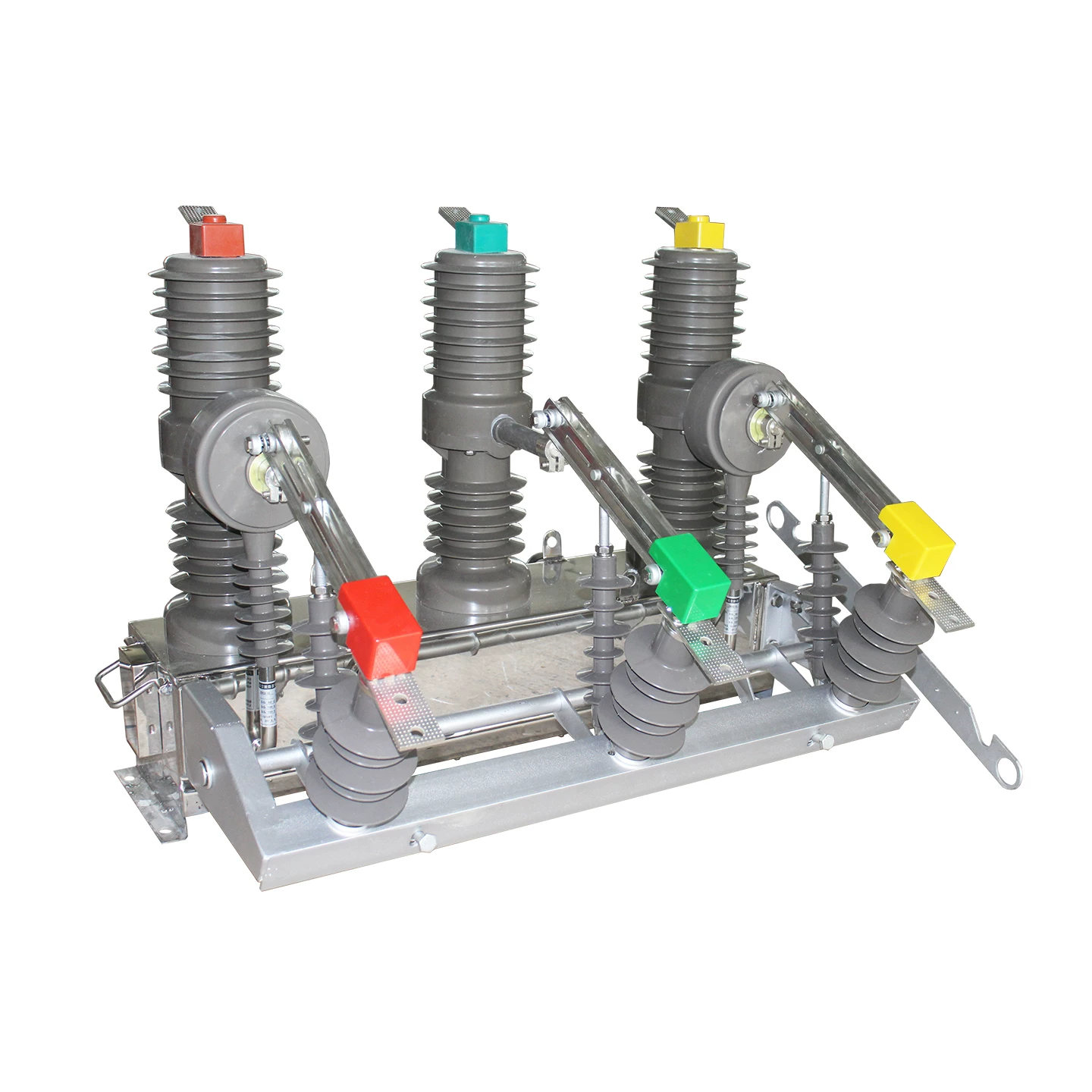
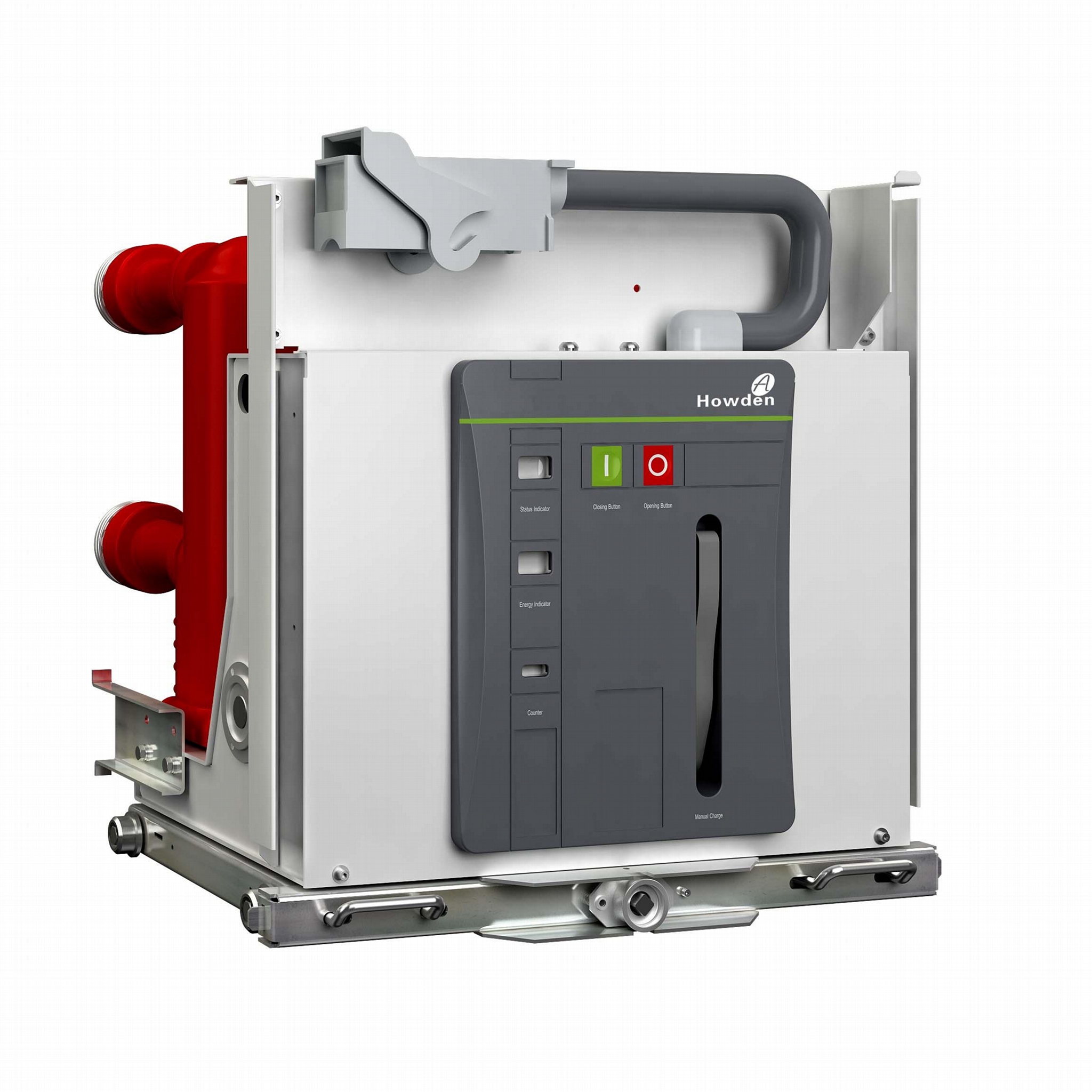
In stark contrast to the AFCI's role as a household safety device, a Vacuum Circuit Breaker (VCB) is a behemoth of a machine. It's designed for high-voltage, high-current environments.
VCBs are typically found in industrial facilities and public utility power systems. Their core mission is not to prevent fires, but rather to safely and reliably interrupt massive fault currents.
This happens in the event of a short circuit or overload. It prevents the grid from collapsing and protects expensive equipment from catastrophic damage.
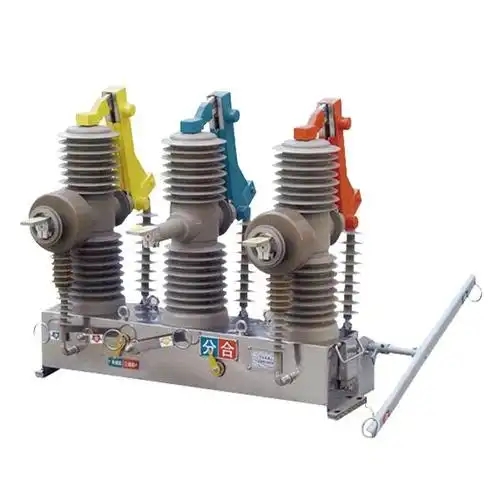
2.1 Function and Principle: Quenching Lightning in a Perfect Vacuum
The central component of a VCB is its vacuum interrupter. This is a hermetically sealed ceramic or glass container that has been evacuated to an almost perfect vacuum.
Inside the vacuum interrupter are a pair of contacts—one movable, one stationary. When the breaker is activated, a robust mechanical system rapidly pulls the movable contact away from the stationary one, instantly creating a circuit break.
In the moment the contacts separate, an extremely powerful electrical arc forms between them due to the immense voltage difference. However, this arc exists within a vacuum.
In a vacuum, there are no air or gas molecules to sustain the arc. Its conductive path is instantly and irreversibly extinguished.
The vacuum also boasts exceptional dielectric strength. This allows the gap between the contacts to recover its insulating properties almost immediately, preventing the arc from reigniting.
This incredibly fast arc-quenching capability allows a VCB to safely interrupt massive fault currents. This often happens in a fraction of a second.
Note: VCBs leverage the non-conductive properties of a vacuum to achieve swift and highly efficient arc interruption. This is a critical factor for their reliable operation in high-power environments.
Want to know how a vacuum breaker completes arc quenching in an instant? This professional animation video will give you an in-depth look at its internal structure and amazing working principles.
2.2 Primary Applications: The “Emergency Brake” for the Power Grid
The applications for VCBs are extensive. They are concentrated in the mid- to high-voltage sectors of power systems.
They serve as primary switches in substations and distribution networks. This allows them to control power flow and isolate fault areas.
They are also used at the output of power generators to protect the generating units themselves. Additionally, you'll find VCBs in large industrial facilities.
This includes places like metallurgy, chemical, and mining industries. Here, they are used to control and protect large motors and transformers.
Because of their outstanding performance and reliability, VCBs have become the dominant switching technology in medium-voltage distribution systems. These systems typically range from 10kV to 35kV.
Tip: VCBs primarily serve the power grid and industrial production. Their core function is to ensure the stability and safety of the entire power system, not to protect individual end-user devices.
2.3 Maintenance and Advantages: Durability and Low Upkeep
The vacuum interrupter at the core of a VCB is fully sealed, meaning it requires virtually no maintenance. Unlike older oil-filled breakers that needed regular fluid changes or SF6 breakers that posed a leakage risk, VCBs are clean and environmentally friendly.
Their mechanical systems are incredibly durable. They can withstand tens of thousands of open-close operations over their lifespan.
VCBs are therefore prized for their exceptional longevity, low maintenance costs, and environmental friendliness. They don't contain any toxic or harmful gases.
This makes them the preferred choice for modern grid infrastructure.
Part 3: Key Technical Parameter Comparison: An Engineer’s Perspective
From an electrical engineer's standpoint, the differences between an AFCI and a VCB go far beyond appearance and use. The core distinction lies in their strict technical parameters and design philosophies.
3.1 Key Technical Indicators for an AFCI
The design focus for an AFCI is on its ability to detect and respond to even the smallest arc fault signals. An AFCI’s tripping characteristics, for example, are vastly different from those of a standard breaker.
It doesn’t just respond to a current-time relationship. It is engineered to respond specifically to the unique signature of an arc.
When an arc is detected, the tripping time is typically in the millisecond range. This is much faster than the seconds or even minutes it might take for an overload fault to trip a standard breaker.
In the U.S., AFCI breakers must meet the requirements of the UL 1699 standard. This standard specifically outlines the types of arc faults the breaker must be able to detect and respond to.
The NEC also dictates where AFCI protection is mandatory. This ensures its widespread application and effectiveness.
3.2 Key Technical Indicators for a VCB
In contrast, the design focus for a VCB is on its capacity to handle and interrupt massive fault currents with absolute reliability. The Rated Voltage is the maximum voltage at which a VCB can operate safely. This typically ranges from 10kV to 40.5kV.
The Rated Current is the maximum current that the VCB can continuously carry under normal operating conditions. This value generally falls between 630A and 4000A.
The Rated Breaking Current is one of the most critical parameters for a VCB. It specifies the maximum current it can safely interrupt during a short-circuit fault. This often reaches 25kA or even 50kA.
This value defines the breaker’s life-saving capability during a major fault. Additionally, a VCB has two distinct lifespans: Mechanical Life is the total number of operations it can perform without a fault interruption, while Electrical Life refers to the number of times it can safely interrupt a rated fault current before its contacts wear out.
Note: The VCB’s mechanical and electrical lifespans are crucial metrics for assessing its long-term reliability in a demanding power system environment.
Part 4: Core Differences and Market Positioning
To provide a clearer understanding, we’ve put together this table that outlines the distinct characteristics of an AFCI and a VCB.
Note: The distinction between AFCI and VCB is not merely a matter of size; it is a fundamental difference in their underlying technology and the specific safety goals they were designed to achieve.
Part 5: A Broader Look at the Circuit Breaker Family
In the world of electrical safety, breakers are more diverse than just AFCIs and VCBs. To truly grasp their roles, we need to place them within the broader family of circuit breakers. This will help you understand how each one plays a different and crucial role in protecting electrical systems.
Standard Thermal-Magnetic Breaker:
This is the most common type of breaker we encounter in our homes. It protects circuits from both overloads and short circuits.
The thermal protection element responds to a prolonged overload current by bending a bimetallic strip. The magnetic protection uses an electromagnetic coil to respond to an instantaneous short-circuit current.
This type of breaker is effective for its intended purpose. But it is completely blind to the subtle, low-current arc faults that lead to most electrical fires.
Ground Fault Circuit Interrupter (GFCI):
The GFCI’s primary job is to protect people from fatal electric shocks. It works by constantly comparing the current flowing through the hot wire with the current returning through the neutral wire.
If it detects a small imbalance—typically as little as 5 milliamps—it assumes the current is leaking to the ground, likely through a person's body. The GFCI then instantly cuts power to the circuit.
While it's a lifesaver against ground faults, it is powerless against arc faults.
The Family's Division of Labor:
The standard breaker acts as the basic "gatekeeper." It blocks the major, "visible" threats of overloads and short circuits.
The GFCI is the dedicated "personal bodyguard." It is focused on preventing electrocution.
The AFCI is the meticulous "fire detective." It is responsible for sniffing out and stopping the "invisible fires" that a standard breaker would miss.
The VCB is the "grid SWAT team." It's an elite unit trained to handle extreme faults in high-voltage environments.
Each device performs a specialized function. They work together to create a multi-layered electrical protection system that extends from our homes to the entire power grid.
Conclusion: Application Dictates Choice
Important Disclaimer: All content in this article is for informational purposes and general knowledge. Electrical work is highly specialized and dangerous.
Do not attempt to install, repair, or replace any electrical equipment yourself. Always consult and hire a licensed professional electrician for any work related to electrical systems to ensure your safety and the proper functioning of your equipment.
AFCI breakers and vacuum circuit breakers belong to the same family of devices, but they are designed to solve completely different electrical safety problems. One is built to protect our most valuable assets—our homes and our lives. The other is a guardian of our industrial production and public power grid.
Ultimately, the choice of which breaker to use depends entirely on the specific application and the type of protection required. An AFCI is the ideal choice for residential fire prevention, and it is an essential safety feature for modern buildings. A VCB, in contrast, is the cornerstone of high-voltage power system safety, and it is an indispensable guardian for industry and public utilities.
Each device fulfills an irreplaceable role in its respective field. Together, they create the safe and reliable electrical environment we depend on every day.
Part 6: An In-Depth FAQ
Q1: Since both AFCI and VCB are circuit breakers, can they be used interchangeably?
A: Absolutely not. This would be an extremely dangerous and potentially life-threatening mistake.
An AFCI breaker is engineered for low-voltage residential circuits, with very low voltage and current ratings. Using it in a high-voltage industrial system would cause it to instantly fail, likely resulting in a severe explosion or fire.
Similarly, a VCB is an immense and costly piece of equipment designed for high-voltage environments. It would be impossible to install or use in a home electrical panel.
Q2: I already have a GFCI breaker in my home. Do I also need to install an AFCI?
A: Yes, if your local electrical codes require it, you usually need both. GFCIs and AFCIs protect against two completely different types of faults.
A GFCI's primary purpose is to protect people from electric shock by detecting current leaking to the ground. An AFCI, on the other hand, is designed for fire prevention. It detects dangerous arc faults that can occur even without a ground fault.
In areas where both types of protection are required, it’s necessary to install both devices.
Q3: Are Vacuum Circuit Breakers (VCBs) expensive to maintain?
A: Compared to older technologies like oil or SF6 breakers, VCBs have very low maintenance costs.
The core of the device, the vacuum interrupter, is a completely sealed unit and is nearly unaffected by environmental factors. This means it doesn't require complex maintenance or periodic fluid replacement.
VCBs are built with exceptional mechanical and electrical lifespans and typically only require simple, routine mechanical inspections.
Q4: Can an AFCI breaker experience a "nuisance trip"? What causes this?
A: In some cases, AFCI breakers can indeed trip on a nuisance. Early AFCI products were not perfect and could occasionally misidentify the harmless electromagnetic noise from older appliances, like a vacuum cleaner with a carbon brush motor, as a dangerous arc fault.
However, with advancements in technology, modern AFCI algorithms have become much smarter and more precise, significantly reducing the likelihood of nuisance trips. If your AFCI is tripping frequently, it could be a sign of an actual underlying electrical issue that you should have a professional electrician inspect.
Q5: Why does the vacuum level inside a vacuum interrupter decrease over time? How is it detected?
A: The integrity of the vacuum inside a vacuum interrupter is critical to its performance. Even though they are hermetically sealed, a minute amount of gas can be released from the contacts after many interruptions of large currents.
The vacuum level can also slowly decrease due to aging seals. When the vacuum level falls below a critical threshold, its arc-quenching capability can be severely compromised, potentially leading to failure.
Trained professionals use specialized vacuum testers, such as a magnetron gauge, to periodically check the vacuum level of the interrupter.
Part 7: Future Development and Trends
Electrical technology is constantly evolving toward more intelligent, efficient, and environmentally friendly solutions. AFCIs and VCBs are no exception to this trend. Both are poised for further innovation.
AFCI: Future AFCI breakers will become even more integrated into smart home ecosystems. They will likely incorporate Wi-Fi or Bluetooth modules, allowing users to remotely monitor their circuit status via a mobile app.
This will allow them to receive instant alerts and perform basic remote diagnostics.
More advanced AI algorithms will enable them to precisely identify arc types, which will further reduce the chance of nuisance trips.
VCB: With the rise of the Smart Grid and decentralized renewable energy sources like solar and wind power, VCBs will play an even more crucial role. They will require faster response times and more robust automation capabilities to handle the complex, fluctuating loads and transient faults inherent in a modern power grid.
A shift toward more compact, modular VCB designs is also expected.
This will accommodate the growing demand for smaller, more efficient equipment in increasingly urbanized areas.