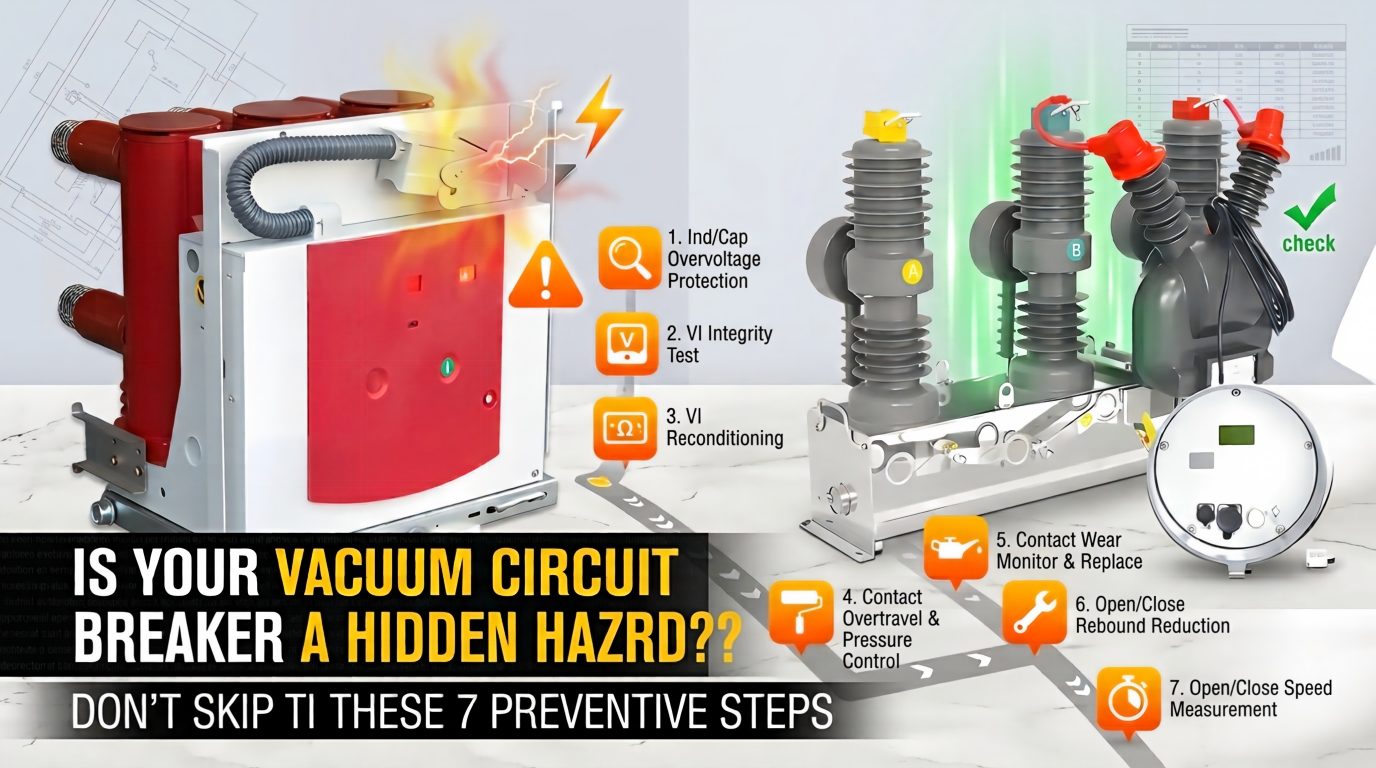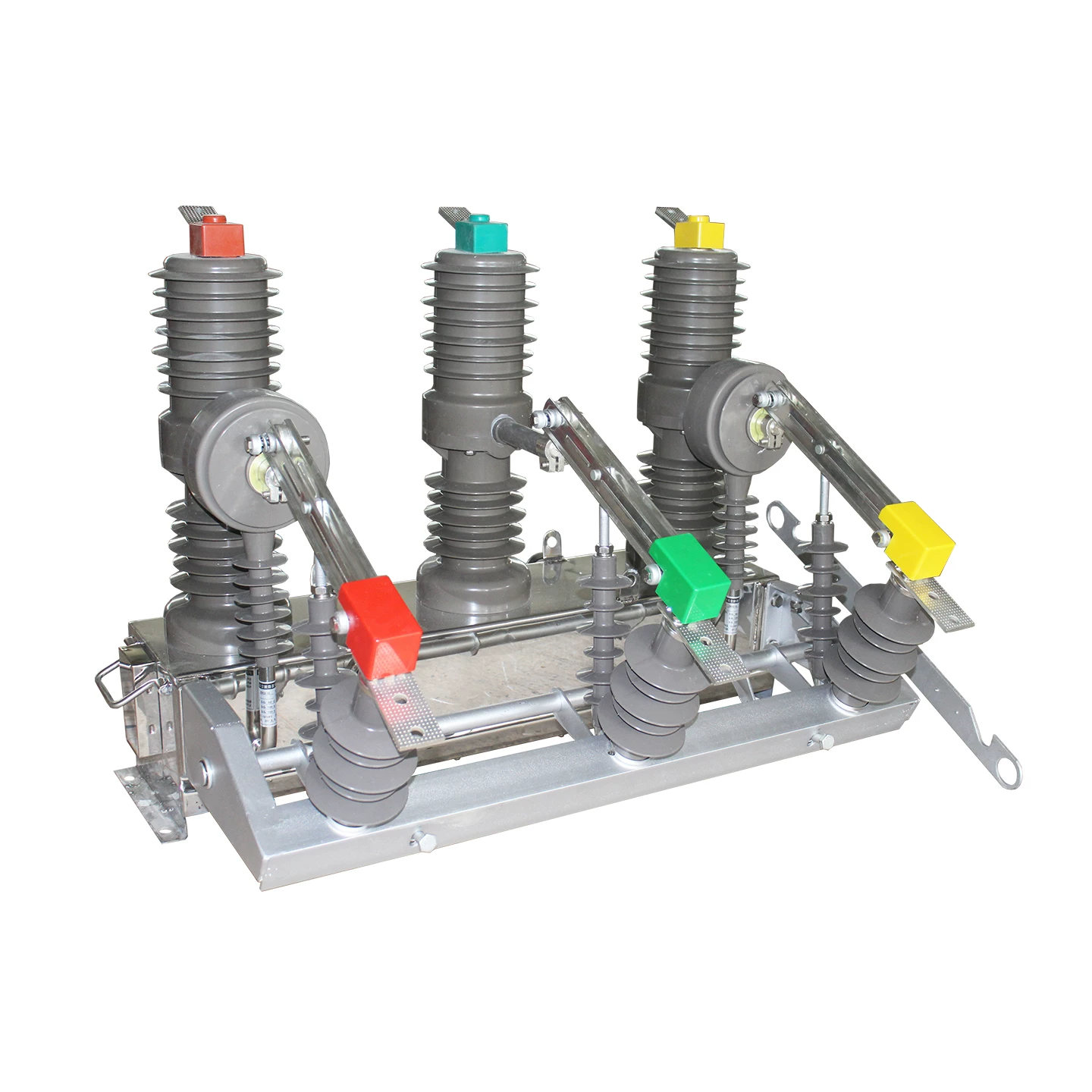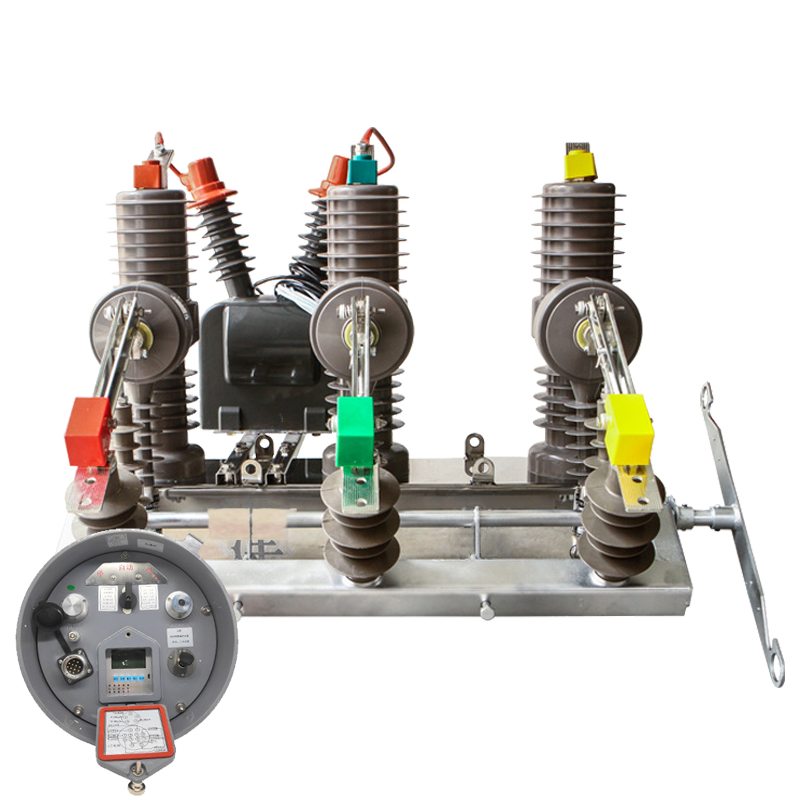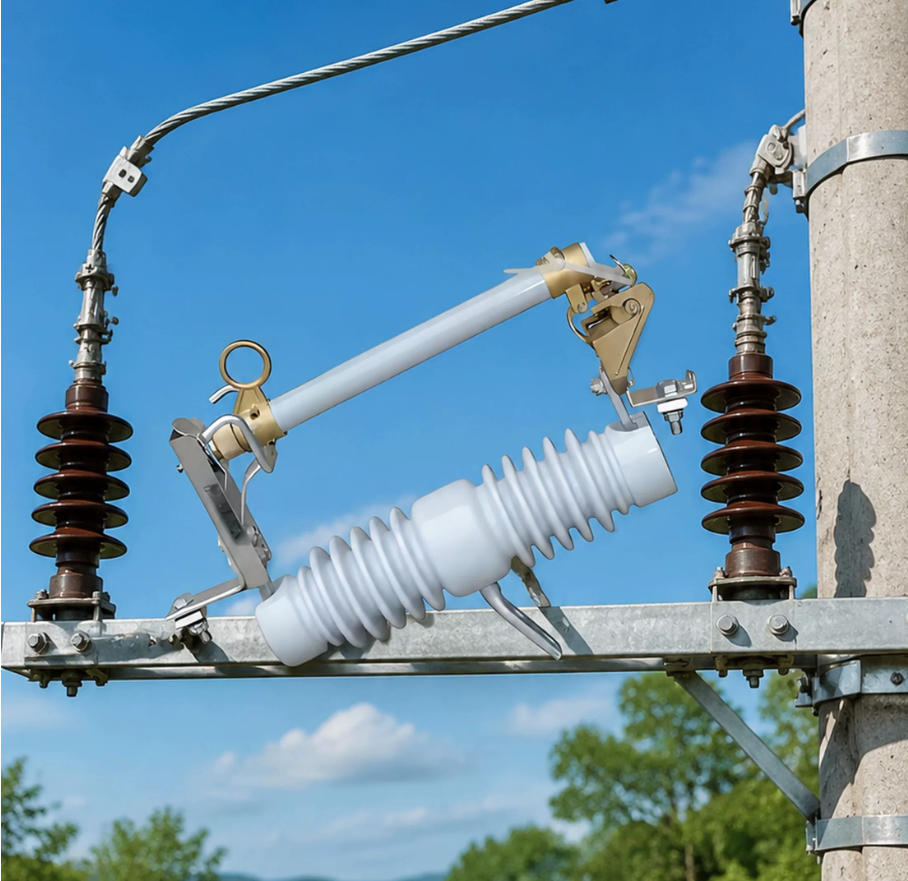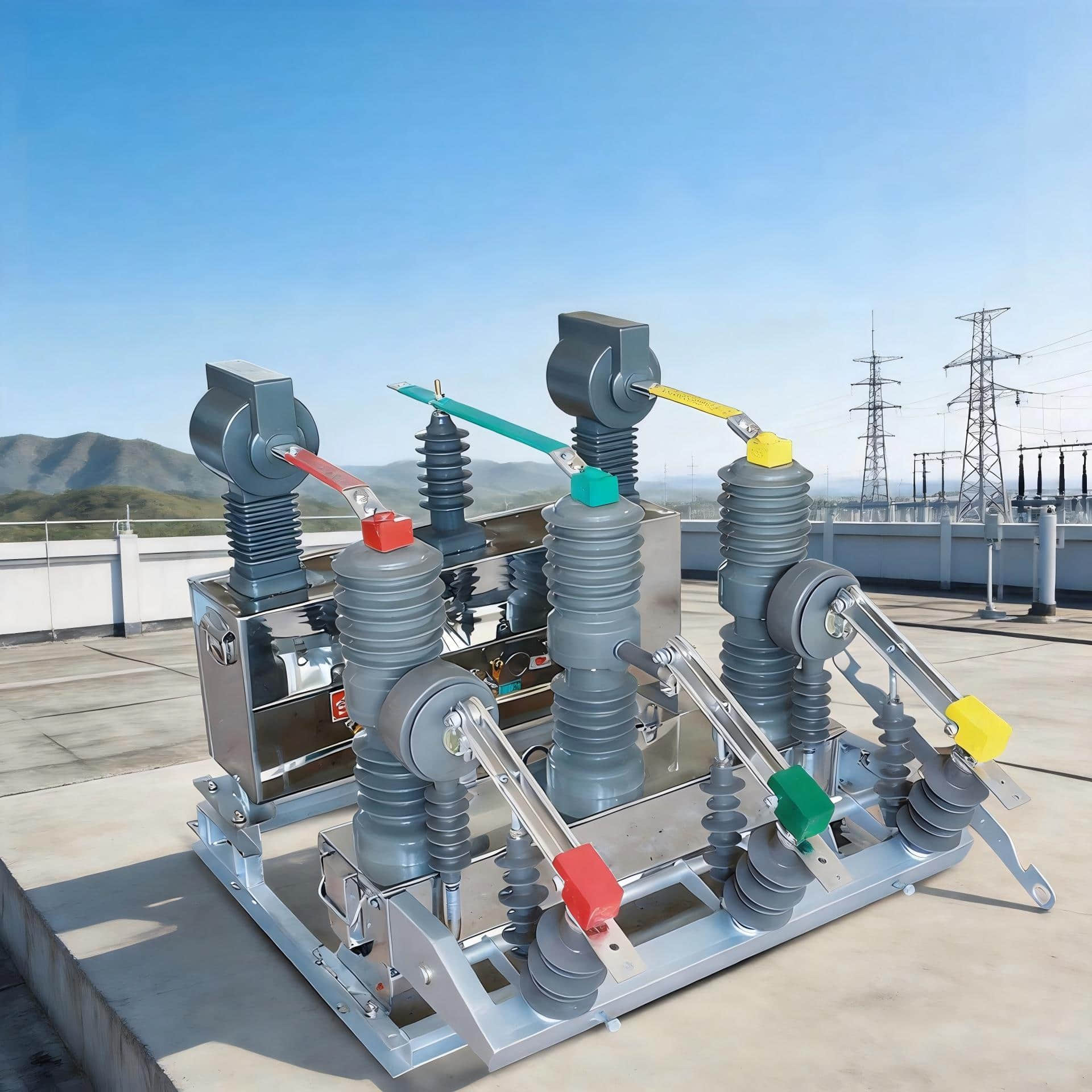
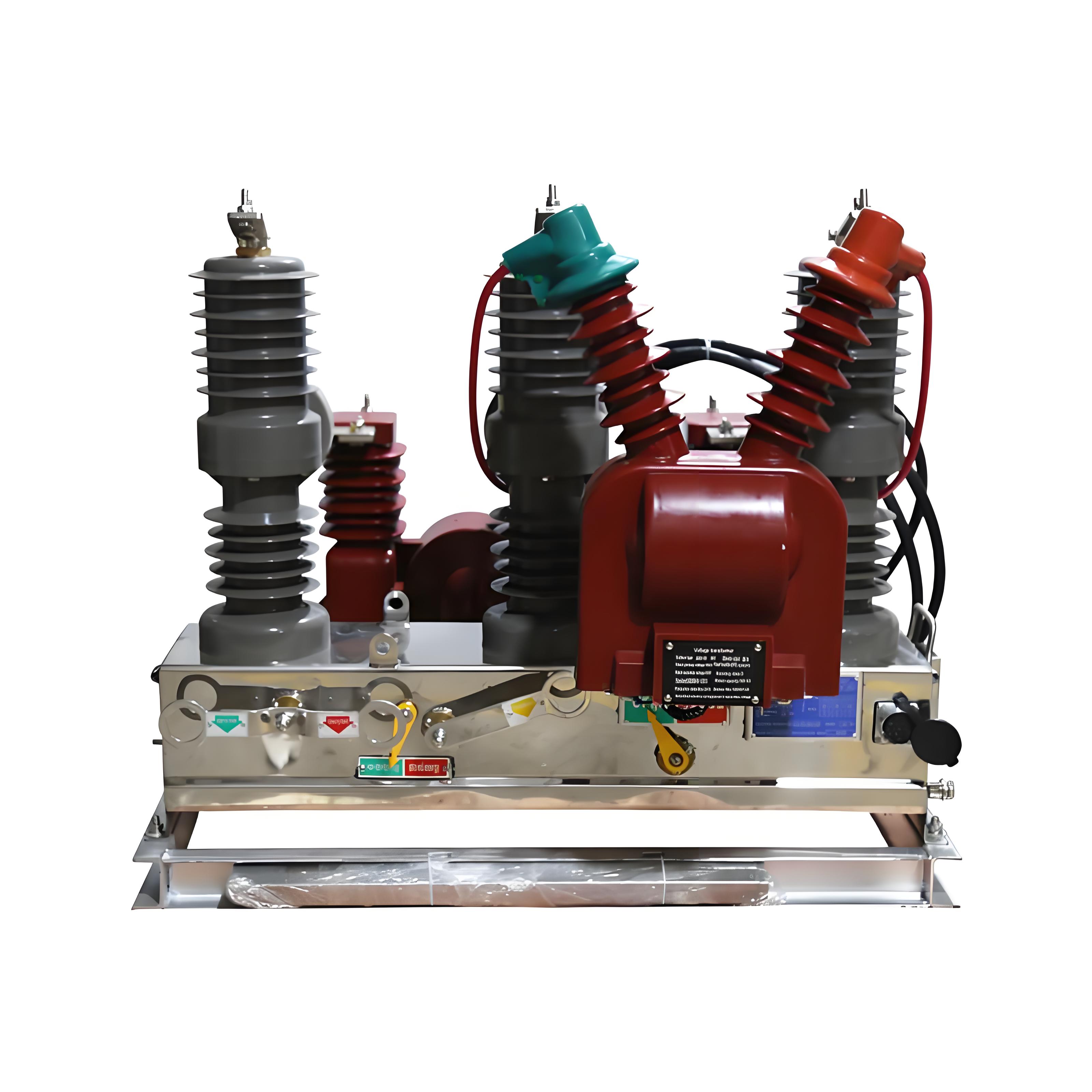
In real distribution networks, a smart pole-mounted vacuum circuit breaker such as a ZW32 or ZW8 is not just a switch on a pole. It is a field automation node.
It must detect faults, report alarms, support remote switching, judge whether a line is energized, and in many projects, coordinate with feeder automation logic. None of that works reliably without voltage information and, in many cases, without a stable local power source.
That is why adding a PT/VT to a smart pole-mounted vacuum circuit breaker is not a cosmetic option. It is a functional necessity.
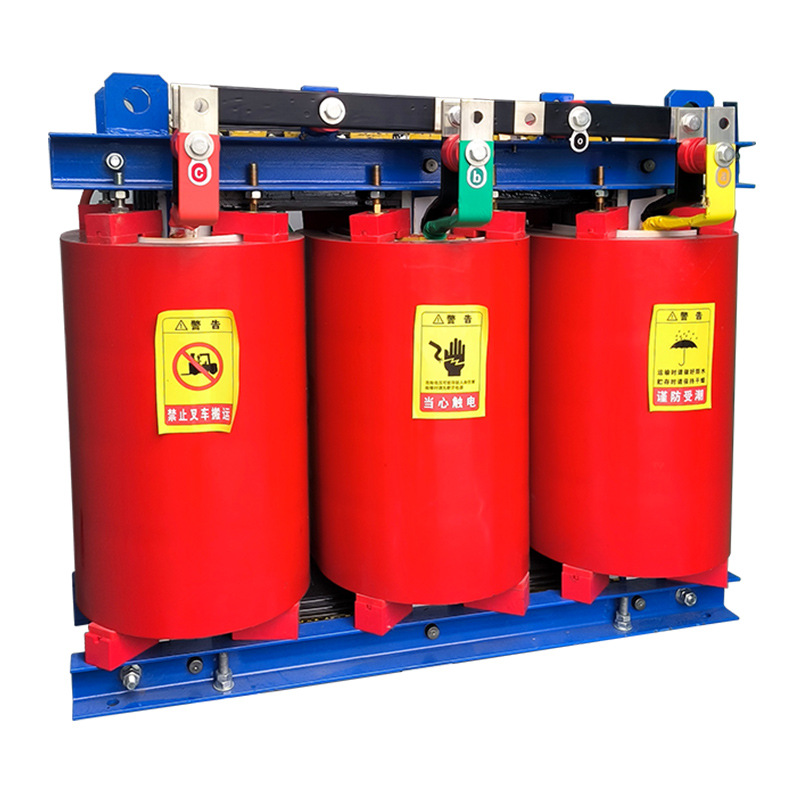
In practical terms, the voltage transformer is connected in parallel on the medium-voltage side, typically on a 10 kV class line. It steps high voltage down to a measurable signal, such as a 100 V secondary, and depending on the design, it can also provide AC 220 V auxiliary output for the FTU, controller, communication module, indication circuits, and auxiliary operating loads.
If you work with boundary switches, feeder sectionalizers, tie switches, or so-called watchdog switches, you already know the field reality: CTs alone are never enough. Current tells you part of the story. Voltage tells you whether the story makes sense.
This article explains the four core reasons smart pole-mounted vacuum breakers need voltage transformers, and why utilities increasingly treat VT integration for feeder monitoring and fault detection as standard practice rather than optional enhancement.
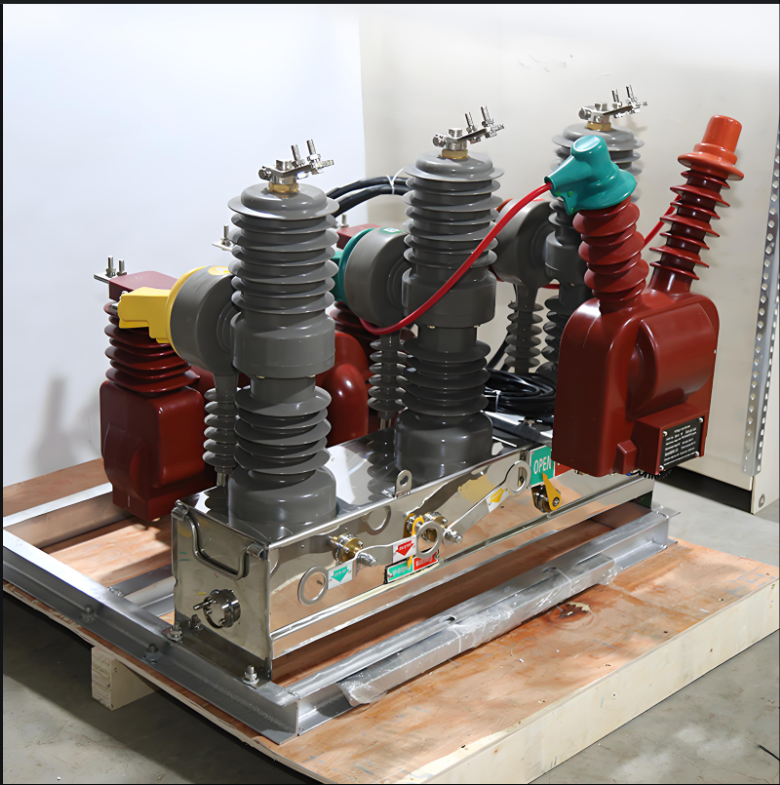
Why a PT/VT Is Essential on a Smart Pole-Mounted Vacuum Circuit Breaker
A voltage transformer reduces 10 kV-class primary voltage to a safe, usable secondary signal for measurement, protection logic, and telemetry.
In many smart outdoor breaker systems, it also serves a second role: supplying low-voltage auxiliary power to the FTU, watchdog controller, remote terminal functions, and communication hardware.
That dual role is exactly why the smart pole-mounted vacuum circuit breaker voltage transformer function is so important. One device supports both the intelligence and the electrical awareness of the switch.
Without a PT/VT, the controller may not know whether the line is live, whether there is undervoltage, whether backfeed exists, or whether the line on both sides of a tie switch is synchronized. In many installations, it may not even stay powered in normal service.
The Core Problem: Smart Pole-Mounted Breakers Sit on Utility Poles Without External AC Power
Indoor switchgear often has station service power. Pole-mounted equipment usually does not.
A ZW32 or ZW8 installed on a utility pole is exposed to sun, rain, lightning, vibration, and temperature swings. Yet the FTU and communications hardware are expected to remain available continuously.
This creates a basic engineering problem: where does the intelligence get its power?
In many field deployments, there is no dependable external mains supply at the pole. Running a separate low-voltage cable for each pole-top automation point is expensive, vulnerable, and usually unrealistic.
That is the first reason the PT is so valuable. It allows the breaker system to draw energy directly from the energized medium-voltage line.
More importantly, the PT does not just energize electronics. It gives the FTU the voltage reference it needs to support the voltage transformer role in smart distribution automation, including live/dead line judgment, event recording, alarm reporting, and feeder logic.
Core Reason 1 — Provide Operating Power for the FTU, Controller, and Communications Module
For most smart ZW32/ZW8 applications, this is the number one reason to add a PT.
The PT is often the primary source of working power for the FTU, controller, watchdog logic, 4G/5G communication terminal, RTU functions, status indicators, and auxiliary control circuits. In some designs, it also supports charging of batteries or capacitors used for trip/close energy storage.
When people ask why a boundary switch almost always includes a PT, the answer is simple: without power, the intelligence is blind and silent.
A conventional manual pole-top breaker can survive without a PT because it does not need to think. A smart breaker does.
Why This Is the Most Important Function
If the primary line is energized, the controller can stay alive. That single condition unlocks all higher-level functions.
The FTU can detect faults, process voltage and current logic, execute remote commands, upload telemetry, send event reports, and support outage awareness. Without continuous control power, those functions become intermittent or unavailable.
In a practical distribution automation scheme, availability matters as much as raw protection performance. A controller that loses power during normal feeder operation cannot provide dependable remote visibility.
Utilities know this from experience. In many retrofit projects, the biggest service complaint is not breaker failure but communication dropout caused by poor auxiliary power design.
That is why serious projects evaluate PT output capacity early. The engineer must consider FTU load, communication module consumption, indication lamps, heater load if installed, and the charging demand of auxiliary storage components.
Real-World Example: User Boundary “Watchdog” Switches Commonly Require a PT
In user boundary applications, often called watchdog switches, the PT is almost standard.
Why? Because the purpose of the boundary switch is not merely to interrupt fault current. Its purpose is to identify whether a fault is on the utility side or customer side, prevent unnecessary upstream outages, and report the event to the utility or industrial operator.
That requires an energized, informed controller.
In a typical 10 kV customer branch line feeding an industrial plant, the smart boundary switch may need to:
monitor source-side voltage presence,
detect customer-side fault conditions,
trip under defined logic,
block reclosing in unsafe situations,
communicate event records back to the control center.
Older manual-only pole-top vacuum breakers often omitted PTs because there was no FTU, no telemetry, and no remote logic. They were simply local interruption devices.
That distinction remains important in procurement. Not every pole-mounted breaker needs a PT, but every truly smart automated one usually does.
Core Reason 2 — Supply Voltage Signals for Protection Logic and Fault Judgement
The second core reason is protection intelligence.
A PT/VT provides the voltage signals required for the control system to make correct decisions. This includes basic presence detection, undervoltage and overvoltage logic, loss-of-voltage detection, anti-backfeed interlocking, and in more advanced applications, directional fault and synchronism decisions.
This is where utility pole vacuum circuit breaker voltage sensing applications become operationally critical. Measuring voltage is not a passive convenience. It directly affects whether the switch closes, trips, blocks, or reports alarms.
Voltage Presence Detection for Safe Closing Logic
One of the most practical uses of PT input is live-line detection.
The controller can determine whether the primary side is energized before allowing a close command. This is essential for no-voltage interlocking, non-synchronous closing prevention, and reverse energization risk control.
Consider a line section that appears de-energized from the operator’s point of view. If backfeed exists from downstream generation, a blind close or maintenance operation becomes dangerous.
With PT-based voltage sensing, the FTU can apply a dead-line check or live-line block depending on system philosophy. This reduces unsafe operations and improves switching discipline.
In field practice, engineers often underestimate how many abnormal events are avoided by simple voltage presence logic. It may not be as visible as short-circuit interruption, but it prevents a surprising number of operating errors.
Zero-Sequence Voltage Detection for Single-Phase Earth Fault Analysis
On 10 kV distribution systems, single-phase earth faults are common enough that voltage-based fault analysis becomes highly valuable.
With appropriate PT wiring, the control unit can derive or detect zero-sequence voltage. This helps determine whether a ground fault is on the source side or customer side.
That function is especially important in boundary switch applications. The utility wants to avoid tripping the main feeder for a fault that belongs to a downstream customer installation.
For example, if a factory branch develops a single-phase earth fault, the boundary switch should ideally identify the fault condition and isolate the customer side while preserving supply to the upstream public feeder and other customers.
In practice, this logic usually combines CT and VT inputs. CTs indicate abnormal current flow. PTs indicate the voltage condition and zero-sequence behavior. Together they produce much better fault judgement than current-only logic.
This is a major aspect of medium voltage pole-mounted recloser metering and protection design, even when the device is marketed locally as a vacuum breaker or boundary switch rather than a recloser.
Dual-Side PT Configuration for Tie Switch Synchronism Checks
Sectionalizing switches and tie switches often need a more advanced arrangement: PTs on both sides.
Why? Because an automatic transfer or tie close should not occur blindly. The control unit must compare source-side and load-side voltage conditions before operation.
In a typical feeder tie scheme, the controller may compare:
voltage magnitude,
phase relationship,
frequency compatibility,
presence or absence of supply on each side.
If both sides are not suitable for synchronism, the tie switch should block the operation.
This is why a sectionalizing or tie-switch project often uses two PTs, not one. The requirement is no longer just power extraction and basic monitoring. It is source comparison.
For utilities implementing self-healing feeder automation, dual-side VT logic is often the difference between a reliable automatic transfer and an unacceptable switching risk.
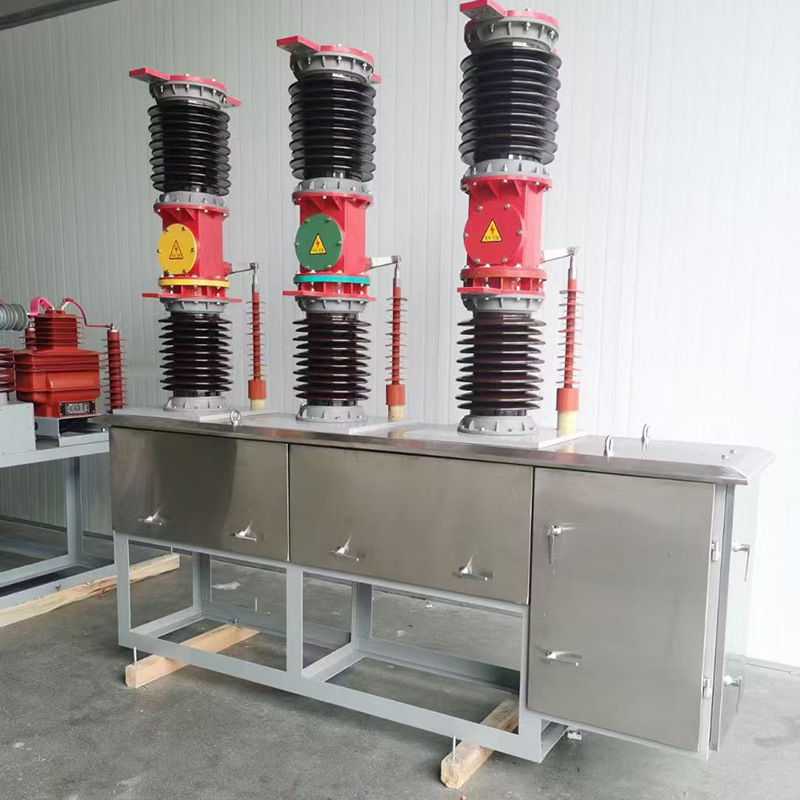
Core Reason 3 — Enable Voltage Measurement, Telemetry Upload, and Power Calculations
The third reason is measurement and system visibility.
Three-phase voltage data collected through the PT can be sent to SCADA or the distribution automation master station. That allows operators to see feeder conditions remotely, analyze disturbances, and support restoration decisions.
This is a direct example of the voltage transformer role in smart distribution automation. The VT turns a remote pole-top switch into a measurable grid asset.
Without VT-fed telemetry, the control center may know that a device is online, but not whether the feeder at that point is healthy, undervoltage, backfed, or dead.
Remote SCADA/Distribution Automation Visibility
Utilities increasingly expect near real-time visibility from field devices.
At a minimum, they want to know whether a feeder section is energized and what the local voltage level is. In more mature networks, they also trend phase imbalance, outage boundaries, restoration progress, and power quality indicators.
A PT-equipped breaker can provide:
phase voltage values,
line voltage values,
loss-of-voltage alarms,
voltage recovery events,
source-side versus load-side status in dual-source applications.
That data is useful during both normal operation and fault response.
For example, after a storm, the control center may use distributed voltage status from multiple FTUs to identify where the feeder is dead and where supply still exists. This shortens patrol time and speeds isolation decisions.
Combined with CTs for Power, Energy, and Line Loss Calculations
CTs measure current. PTs measure voltage. Together they enable power calculations.
That seems obvious, but it matters in practice because many smart breaker buyers overfocus on protection and underfocus on measurement architecture.
When CT and PT data are combined, the system can estimate or calculate:
active power,
reactive power,
apparent power,
power factor,
energy flow,
line loss trends.
If a metering-grade PT is used together with appropriate CTs, the installation may also support more formal energy metering functions.
This is one reason why medium voltage pole-mounted recloser metering and protection is increasingly integrated rather than split into separate hardware islands. Operators want protection, measurement, and communications from one coordinated platform.
Core Reason 4 — Support Safety Interlocking and Accurate Live/Dead Status Judgement
The fourth reason is operational safety.
The FTU relies on voltage signals from the PT to determine whether the primary circuit is live or dead. That judgement is essential for electrical interlocking and misoperation prevention.
In field switching, mistakes often happen not because the breaker fails mechanically, but because the control logic lacks enough awareness to block an unsafe command.
Prevent Energized Misoperation
With PT-based sensing, the controller can reject or delay operations that would be unsafe under energized conditions.
This includes closing into an out-of-sync section, attempting transfer without confirmed dead line status, or operating when unexpected backfeed is present.
The practical benefit is straightforward: better voltage sensing reduces preventable switching errors.
Engineers who have handled feeder automation commissioning know that “status” is not just an indicator lamp issue. It is the foundation of logic integrity.
If the controller does not know whether the line is energized, every higher-level automation function becomes suspect.
Typical Scenario: Distributed Generation Backfeeding From the User Side
This scenario is no longer theoretical.
Customer-side solar PV, small wind generation, diesel generators, gas engines, and hybrid microgrids can all create backfeed conditions. On many industrial and commercial feeders, downstream generation is now common.
Imagine a 10 kV branch supplying a manufacturing site with rooftop solar and standby generation. The upstream utility source trips, but local generation continues energizing part of the customer network.
If the boundary switch or sectionalizer lacks VT-based voltage detection, the controller may incorrectly assume the downstream side is dead. That can create dangerous operating conditions.
With proper PT input, the FTU can identify that voltage is still present and enforce interlocking logic to prevent unsafe reclosing or reverse energization into the utility side.
This is one of the clearest real-world examples of VT integration for feeder monitoring and fault detection providing direct safety value.
PT vs CT in Smart Pole-Mounted Vacuum Circuit Breakers
Some purchasing conversations still confuse the two, so it's worth stating the distinction clearly.
CT (Current Transformer): connected in series with the circuit, used to measure current and support overcurrent, short-circuit, and fault current protection.
PT/VT (Potential or Voltage Transformer): connected in parallel with the circuit, used to measure voltage and often provide auxiliary power for the FTU and control system.
CTs cannot replace PTs because current sensing alone does not tell the controller whether the line is live, undervoltage, overvoltage, synchronized, or backfed.
Likewise, PTs cannot replace CTs because voltage does not measure fault current magnitude.
In a well-designed smart pole-mounted breaker, the two work together.
Common PT/VT Configurations by Application
The number and arrangement of PTs varies by application.
This is where field experience matters. Over-configuring wastes cost. Under-configuring removes functions you may need later.
Boundary Switch: Typically 1 PT on the Source Side
A boundary switch often uses one PT on the source side.
That is usually enough for basic power takeoff, source-side voltage monitoring, live-line detection, and support for customer fault discrimination logic depending on scheme design.
For many watchdog applications, this is the standard baseline configuration.
Sectionalizing or Tie Switch: Often 2 PTs for AB/BC Voltage and Synchronism Logic
Sectionalizing switches and tie switches commonly use two PTs.
This supports dual-side voltage comparison, AB/BC line voltage acquisition, synchronism checks, and more complete three-phase monitoring for transfer logic.
In feeder automation projects, this configuration is common where automatic source transfer or normally open tie operation is required.
Electronic Voltage Sensors (EVT) vs Electromagnetic PTs
Electronic voltage transformers or electronic voltage sensors can provide low-level sensing signals, and in some applications they are attractive because of size or integration advantages.
However, they usually do not provide meaningful auxiliary power for the FTU, communication module, or operating circuits.
That means if you choose EVT-based sensing, you may still need a battery, supercapacitor, or another auxiliary power strategy.
This is why EVT and electromagnetic PT are not interchangeable in all projects. One is primarily a sensing element. The other is often both a sensing element and a practical field power source.
Typical Voltage Transformer Roles in Smart Distribution Automation
| Application | Typical PT Quantity | Main Function | Powers FTU? | Supports Synchronism Check? | Supports Fault Direction / Boundary Judgement? |
|---|---|---|---|---|---|
| Manual pole-mounted vacuum breaker | 0 | Local interruption only | No | No | No |
| Smart boundary “watchdog” switch | 1 | Auxiliary power + source-side voltage monitoring | Usually yes | No | Yes, depending on CT/VT logic scheme |
| Feeder sectionalizer with FTU | 1 or 2 | Voltage sensing, telemetry, automation logic | Usually yes | Sometimes | Yes |
| Normally open tie switch | 2 | Dual-side voltage comparison for transfer logic | Yes | Yes | Limited, scheme-dependent |
| Distribution automation recloser point | 1 or 2 | Metering, protection, SCADA visibility | Yes | Optional | Yes |
| DG-connected customer boundary point | 1 or 2 | Backfeed detection and interlocking | Yes | Sometimes | Yes |
In actual procurement, the best configuration depends less on breaker nameplate and more on system logic.
A ZW32 with no automation can be simple. A ZW32 in a feeder self-healing scheme is an entirely different product in terms of control architecture.
Typical PT/VT Parameters for 10 kV Pole-Mounted Breaker Systems
| Parameter | Typical Value / Example | Engineering Note |
|---|---|---|
| Primary rated voltage | 10 kV, 11 kV, 12 kV class | Selected to match local distribution system voltage |
| Secondary measurement voltage | 100 V | Common for voltage input to controller or metering circuits |
| Auxiliary output | AC 220 V in some designs | Used for FTU power or auxiliary control supply depending on architecture |
| Accuracy class | 0.5, 1.0, 3P, 6P | Depends on whether use is metering, indication, or protection oriented |
| Rated burden | 10 VA, 20 VA, 30 VA, 50 VA or more | Must cover controller, interface relays, sensing circuits, and margin |
| Frequency | 50 Hz or 60 Hz | Must match the grid standard of the project region |
| Insulation level | According to system class and outdoor application | Critical for lightning and overvoltage withstand in pole-top service |
| Installation type | Integrated in breaker assembly or externally mounted | Mechanical arrangement affects maintenance and transport |
| Typical application | ZW32/ZW8 + FTU boundary switch | Power supply + voltage detection + telemetry |
| Typical advanced application | Tie switch or sectionalizer automation | Dual-side comparison, synchronism, feeder restoration logic |
These values are representative rather than universal. Actual ratings vary by utility specification, FTU load profile, and whether the PT is expected only to sense voltage or also to support meaningful auxiliary power demand.
What Happens With and Without a Voltage Transformer
| Function | With PT/VT | Without PT/VT |
|---|---|---|
| FTU/controller operating power | Available from line-side voltage in many designs | Requires separate external power or an alternative energy source |
| Remote monitoring | Controller stays active and can report status continuously | Limited or unavailable if no stable auxiliary power |
| Live/dead line judgment | Reliable voltage-based status determination | No direct voltage awareness |
| Undervoltage / loss-of-voltage alarms | Supported | Not available or inferred poorly |
| Fault isolation logic | Improved using voltage + current coordination | Current-only logic, less selective in some cases |
| Telemetry upload to SCADA | Voltage data and related events available | Current-only or no meaningful electrical telemetry |
| Anti-backfeed interlocking | Supported through voltage presence detection | Weak or impossible to implement accurately |
| Synchronism check for tie switch | Possible with dual PT arrangement | Not possible |
This table reflects what utility engineers see in practice. The gap is not minor.
Without a PT, a pole-mounted breaker may still interrupt faults mechanically. But it cannot deliver the full intelligence expected from a modern automated distribution device.
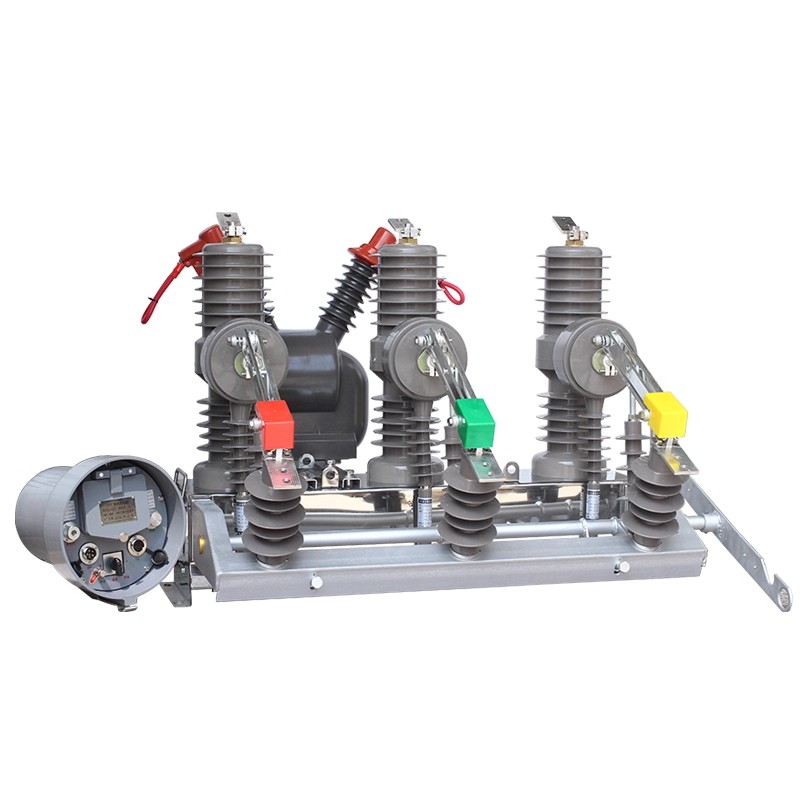
Proof in Practice: Why Utilities Prefer VT Integration for Feeder Monitoring and Fault Detection
Utilities do not add components to pole-top equipment casually. Outdoor distribution assets are cost-sensitive and maintenance-sensitive.
So when utilities repeatedly specify VT integration for feeder monitoring and fault detection, it is because field results justify it.
Across distribution automation programs, voltage-informed devices improve:
outage awareness,
fault section identification,
remote switching confidence,
restoration logic reliability,
backfeed risk control.
One reason is simple: voltage collapses and voltage recovery are some of the clearest indicators of network state during disturbances.
Current tells you a fault happened. Voltage often tells you where the system went dead and whether supply has been restored.
Example: Loss of Voltage Alarm and Remote Fault Isolation
Consider a radial feeder with several smart pole-mounted breakers and FTUs.
A permanent fault occurs downstream of one sectionalizing point. The upstream device sees overcurrent and trips. PT-equipped FTUs on the line also detect loss of voltage at their locations and report status to the control center.
From these voltage states, operators can quickly determine which section is dead and which upstream sections remain energized. That speeds dispatch decisions and supports faster isolation.
In more advanced schemes, automatic sectionalizing logic uses the combination of current and voltage to isolate the faulted section and restore non-faulted sections.
This is the practical value of VT integration for feeder monitoring and fault detection. It is not theoretical protection language. It affects restoration time.
Example: Automatic Transfer on a Tie Switch Requires Voltage Comparison
Now consider a normally open tie switch connecting two feeders.
If one source is lost, the automation system may transfer load to the healthy source. But the tie switch should close only after verifying voltage conditions on both sides.
Dual-side PT measurement allows the controller to confirm:
which side is alive,
which side is dead,
whether voltage magnitude is acceptable,
whether synchronism conditions are met if required by the scheme.
Without these measurements, automatic transfer is either unsafe or disabled.
Utilities that run mature feeder automation programs understand this well. That is why tie switches almost always receive more robust VT arrangements than simple single-source boundary switches.
Selection Tips: How to Choose the Right Voltage Transformer for a Smart Pole-Mounted Vacuum Circuit Breaker
Choosing the right PT is not just about matching the primary voltage rating.
You need to match the PT to the actual duty of the smart breaker assembly: power supply, sensing, protection logic, telemetry, synchronism, and environmental reliability.
Prioritize Auxiliary Power Demand First
Start with power demand.
If the PT is expected to supply the FTU, communication terminal, indicators, interface relays, or charging circuits, calculate the total load with safety margin. Too many projects underestimate auxiliary demand and end up with unstable field performance.
Ask practical questions:
What is the steady-state FTU power consumption?
How much does the wireless module draw during transmission bursts?
Are there heaters, anti-condensation devices, or lamps?
How is trip/close energy stored and replenished?
What minimum voltage performance is required during line fluctuation?
Good PT sizing starts with these answers.
Match Protection and Measurement Accuracy to the Use Case
Not all applications need the same accuracy class.
If the VT is mainly for indication and control logic, one set of requirements applies. If it is also used for more accurate metering or power calculations, the accuracy requirement may be tighter.
Likewise, protection-oriented circuits may care more about dependable behavior during abnormal conditions than metering precision under nominal load.
Be explicit in the specification. “PT included” is not enough detail for a real project.
Confirm Whether Synchronism Check or Zero-Sequence Voltage Is Needed
Advanced functions usually need additional channels or specific wiring arrangements.
If the breaker must support synchronism checks, dual-source comparison, or single-phase earth fault discrimination using zero-sequence voltage, confirm that the PT configuration and controller inputs are designed for it from the start.
Retrofits become more expensive when these requirements are discovered late.
This is also the stage where experienced manufacturers matter. A supplier familiar with boundary switches, sectionalizers, and tie automation can recommend a practical architecture instead of just selling a generic breaker shell.
For buyers comparing project solutions, this is where companies like Weisho Electric can add value: not only in the breaker itself, but in matching PT configuration, FTU integration, and application-specific wiring logic to the field use case.
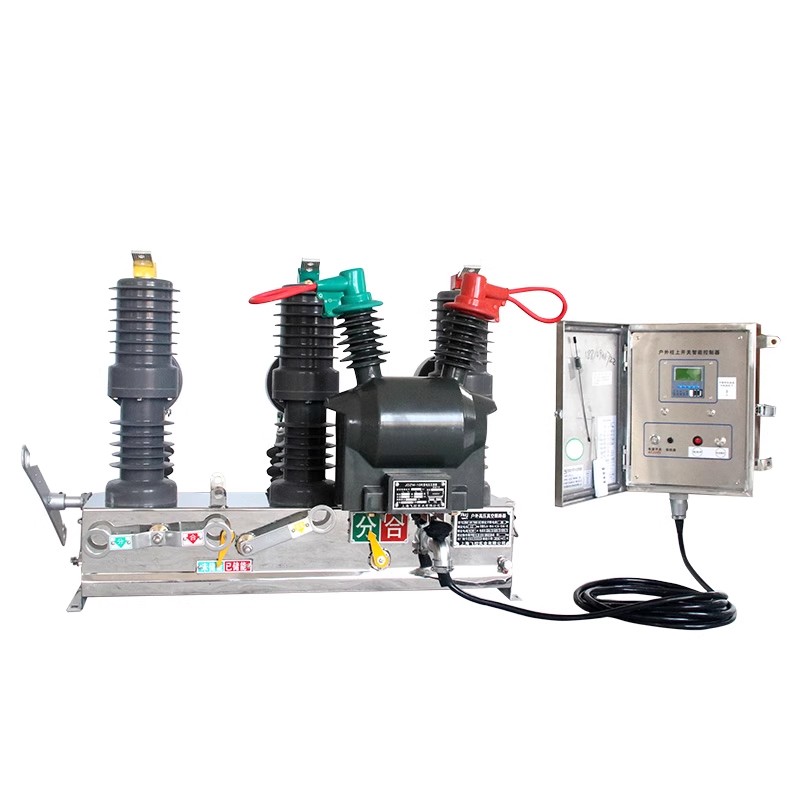
FAQ
Why does a smart pole-mounted vacuum circuit breaker need a voltage transformer if it already has CTs?
CTs measure current, but they do not provide direct voltage information. A smart breaker needs voltage sensing for live-line detection, undervoltage logic, loss-of-voltage alarms, synchronism checks, anti-backfeed interlocking, and in many designs, auxiliary power for the FTU and communication hardware. CTs and PTs serve different roles and are not interchangeable.
Can an electronic voltage sensor replace a traditional PT in all smart breaker applications?
No. An electronic voltage sensor can often provide a low-level voltage signal for measurement, but it usually cannot supply meaningful operating power for the FTU, controller, or communication module. In those cases, batteries or supercapacitors may still be required. That is why EVTs and electromagnetic PTs are not functionally identical in all smart breaker projects.
Does every ZW32 or ZW8 pole-mounted vacuum circuit breaker need a PT?
No. A manual, non-intelligent pole-mounted vacuum breaker may not need a PT. But a smart automated ZW32 or ZW8 with FTU, remote communication, telemetry, protection logic, or boundary switch functions usually does need one. The more intelligent the application, the more necessary the PT becomes.
How many PTs are typically used on a pole-mounted boundary switch or tie switch?
A boundary switch commonly uses one PT on the source side for power takeoff and single-side voltage monitoring. A sectionalizing switch or tie switch often uses two PTs so the controller can compare both sides, perform synchronism-related logic, and support more complete three-phase monitoring.
Can a PT help prevent backfeed from customer-side generators or solar PV?
Yes. VT-based voltage detection helps the controller identify whether the customer side remains energized due to solar PV, standby generators, or other distributed generation. That information supports interlocking and prevents unsafe operation, including reverse energization toward the utility side.
What secondary voltage does a medium-voltage PT usually provide in these systems?
A common measurement secondary is 100 V. In some smart breaker designs, the PT may also provide an auxiliary AC 220 V output for the FTU or related control circuits. The exact secondary arrangement depends on the product design and project requirements.
Conclusion: The Voltage Transformer Is Not Optional Intelligence—It Is the Enabler
If you reduce the issue to engineering essentials, the answer is clear.
A smart pole-mounted vacuum circuit breaker needs a PT/VT for four core reasons:
1. to power the FTU, controller, and communications equipment,
2. to supply voltage signals for protection logic and fault judgment,
3. to enable telemetry, measurement, and power calculations,
4. to support safe interlocking and accurate live/dead line status determination.
That is why in real ZW32/ZW8 + FTU deployments, especially boundary switches and automated feeder devices, the voltage transformer is not just an accessory. It is the foundation of intelligence.
It converts a pole-top interrupter into an automation-capable grid node.
It allows the system to see, decide, report, and protect with context rather than guesswork.
And as distributed generation, remote automation, and outage performance expectations continue to grow, the importance of the smart pole-mounted vacuum circuit breaker voltage transformer function will only increase.
For project teams that want dependable results, the right question is no longer “Do we really need a PT?” The right question is “Which PT configuration best supports the field logic we need?”
That is also why experienced solution providers such as Weisho Electric focus on the complete application match: breaker type, PT arrangement, FTU integration, protection logic, and communication architecture together, not as isolated parts.
CTA — Need Help Choosing the Right PT Configuration for a ZW32/ZW8 Smart Pole-Mounted Breaker?
If you are specifying a boundary switch, sectionalizer, or tie-switch automation project, do not leave the PT decision to guesswork.
Get a configuration review based on your real feeder logic, auxiliary power demand, voltage sensing requirements, and communication architecture.
Contact us now for expert help with PT quantity selection, wiring recommendations, FTU power matching, synchronism-check schemes, and product pairing for ZW32/ZW8 smart pole-mounted vacuum circuit breaker systems.
The right VT/PT configuration will determine whether your automation works reliably in the field. Start with the correct design.