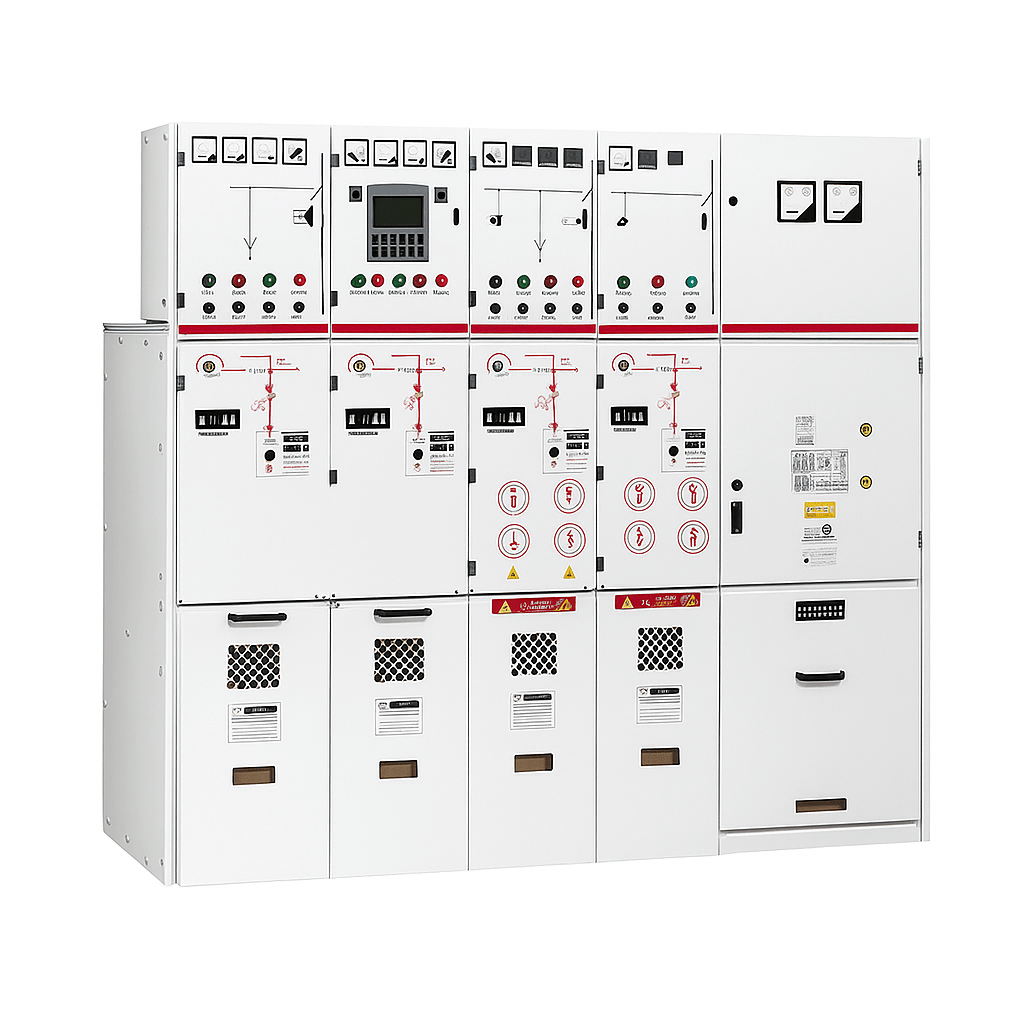
A Ring Main Unit (RMU) is a key device in electrical networks. It's a compact, factory-built unit for controlling and protecting electrical gear. You'll find RMUs rated from 7.2 kV to 38 kV. They're perfect for tight spaces in cities because of their small size.
The RMU does three main things. It switches circuits on and off, protects against faults, and distributes power. This ensures the network keeps running smoothly.
An RMU is built with metal to keep it safe and easy to work on. It has special compartments for connections. This design makes it simple to install and fix, reducing downtime.
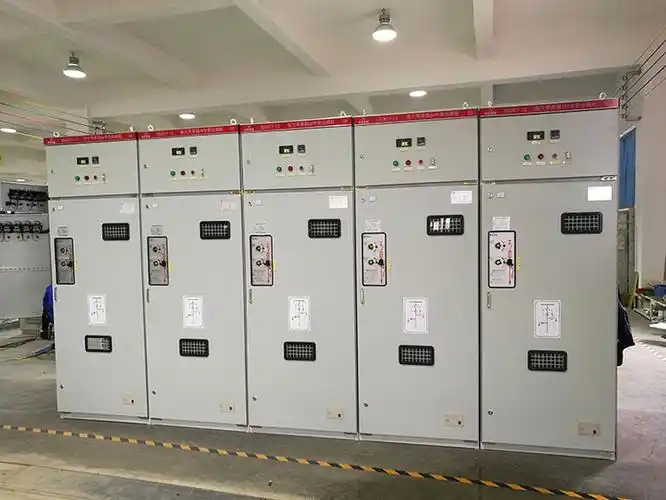
Key Takeaways
RMU definition: a compact, factory-built medium-voltage switchgear unit for control and protection.
Primary ring main unit function: switching, protection, and distribution in ring or radial networks.
RMU purpose: maintain supply continuity while isolating faults quickly and safely.
Typical ratings span roughly 7.2 kV to 38 kV for medium-voltage RMU applications.
Compact, metal-clad modules make RMUs suitable for urban and space-constrained sites.
Introduction to RMU and its role in power distribution
This introduction to RMU explains its basics. RMU stands for Ring Main Unit. It's a compact, metal-enclosed switchgear for secondary networks. It supports continuous supply and fast isolation in looped configurations.
What RMU stands for and its basic definition
RMU stands for Ring Main Unit. It combines switches, fuses, or circuit breakers in a small cabinet. This design supports ring or radial feeder layouts. Using components from Siemens, Schneider Electric, or ABB ensures reliable switching in a small space.
Why understanding RMU matters for your electrical system
Knowing why to use RMUs is key to uptime and safety. RMUs let you sectionalize feeders to limit outage size. This way, you can maintain one segment while keeping others energized.
This protects downstream equipment and reduces disruption. It's good for utilities, campuses, and industrial plants.
Typical environments where RMUs are used
RMUs are used in many places. From dense urban substations to suburban residential kiosks. You'll find them in underground distribution systems, commercial campuses, and shopping centers.
They're also in light rail substations. RMUs are common in municipal distribution networks, renewable sites, and microgrids across the United States.
Key components that make up an RMU
Looking at a ring main unit, you see a small but powerful assembly. It controls and protects the distribution feeders. The RMU combines mechanical parts with electronic protection to keep your network safe and reliable. Here's a breakdown of the main RMU parts and their roles.
Main switchgear and breakers
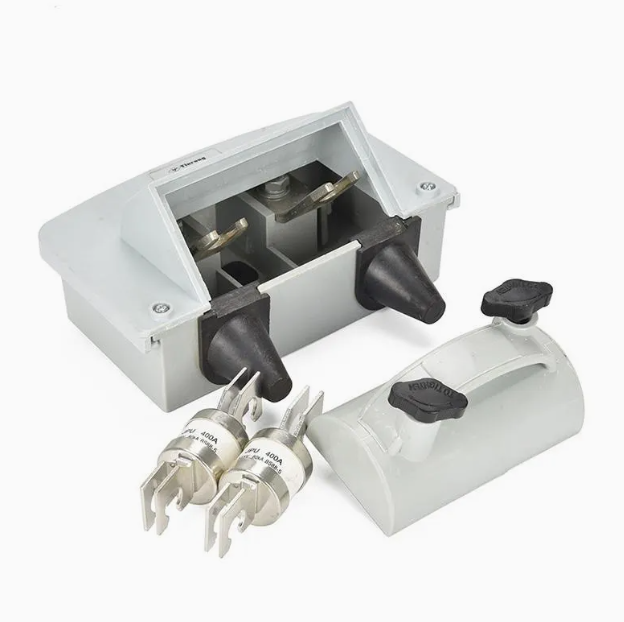
Load break switches handle switching under load. Circuit breakers, like vacuum or SF6 types, stop fault currents and protect your equipment. Sectionalizing switches allows you to isolate parts for maintenance. Earthing switches provide a safe ground path when working inside.
These switchgear breakers work together. They make and break circuits and give clear isolation points.
Protective relays and fuses
Protection relays detect abnormal conditions like overcurrent, earth-fault, or directional faults. You'll find both electromechanical and digital relays from brands like ABB, Siemens, and Schneider Electric. These relays trip breakers to clear faults. Expulsion or cartridge fuses act as backup protection for simple, cost-effective designs.
Busbars, enclosures, and insulation systems
RMU busbars, made from copper or aluminum, carry current between feeders. Metal enclosures protect the unit and provide a grounding path. Insulation systems, like solid dielectric, SF6 gas, or epoxy resin, ensure safety and compactness.
You'll also see door interlocks, safety shutters, and rating plates. These features prevent access during unsafe conditions and document ratings for operators.
How an RMU improves safety in distribution networks
Managing a distribution network means safety must be both practical and measurable. Ring main units offer features that cut down on risks. They protect equipment and make maintenance safer for crews in busy or industrial areas.
Fast fault detection and isolation are key. Protective relays spot abnormal currents and switch off the affected feeder. This limits damage to transformers and other equipment, keeping the network running smoothly.
Quick disconnection also prevents more failures from happening. By isolating the faulty section, repair teams can work on one area at a time. This makes repairs faster and safer for everyone involved.
Enclosed, insulated compartments play a big role in reducing arc flash risks. Using vacuum interrupters or gas-insulated modules cuts down the energy released during an arc. Remote-operated switching keeps operators away from live parts, reducing exposure during operations.
Choosing the right equipment is crucial for arc severity and cleanup time. SF6-insulated or vacuum-interrupting technologies can significantly reduce arc flash compared to open-air switching. This supports safer work practices and lowers injury risks.
Design elements also protect people during normal work and maintenance. Interlocked doors block access to live parts unless the unit is grounded. Dedicated earthing switches provide a clear, tested ground path before opening a compartment.
Weatherproof enclosures and strong mechanical ratings are key for ongoing safety. IP and IK classifications protect against water and mechanical impact, ensuring insulation reliability. This reliability adds to RMU safety in both outdoor and indoor settings.
Following NFPA 70E safe work practices is essential. Clear labeling, lockout-tagout points, and documented switching sequences guide your team. These practices make a personnel protection RMU a valuable asset, not just hardware.
Use the table below to compare key safety features and their benefits when you select an RMU for a distribution site.
| Safety Feature | How It Works | Primary Benefit |
|---|---|---|
| Protective relays | Detect faults and trigger isolation within milliseconds | Limits fault spread and equipment damage |
| Vacuum interrupters/gas insulation | Suppress arc energy inside sealed compartments | Arc flash reduction and cleaner fault interruption |
| Interlocked doors | Prevent access to live parts until safe conditions are verified | Reduces accidental contact injuries |
| Earthing switches | Provide a visible, tested ground for maintenance | Ensures safe work conditions for crews |
| IP / IK rated enclosures | Protect against moisture and mechanical impact | Maintains insulation integrity and long-term safety |
| Remote operation capability | Allows switching from a safe distance | Improves RMU safety by reducing operator exposure |
RMU functionality for reliability and uptime

Uptime is key when designing a distribution system. An RMU boosts performance by making switching faster and more reliable. It offers clearer fault isolation, quicker restoration, and better reliability across feeders.
Automatic switching and load transfer
Automatic transfer switching RMU setups pair protection relays with switchgear. They detect a faulted feeder and move the load to an alternate path. This automatic source transfer can restore power in ring configurations without manual field crews.
Redundancy features and parallel feeds
Redundancy RMU topologies use ring feeds and dual feeders for alternate supply paths. Sectionalizing switches and parallel lines reduces single-point failures. When one section goes down, RMUs reroute power to keep critical loads running.
Minimizing outage duration for customers
Remote control, fast fault location, and sectionalization cut outage time. Utilities with SCADA integration and automatic reclose schemes see significant service restoration time drops. These gains help reduce outages and improve SAIDI and SAIFI metrics.
| Feature | What it does | Impact on uptime |
|---|---|---|
| Automatic transfer switching RMU | Detects faults, isolates the affected feeder, and transfers load to an alternate source | Restores power in seconds to minutes, cuts manual response time |
| Redundancy RMU | Implements ring topology or parallel feeds to avoid single-point failures | Maintains supply during component faults, improves availability |
| Remote SCADA integration | Allows remote switching, status monitoring, and automated reclosing | Speeds restoration, reduces truck rolls, and helps reduce outages |
| Sectionalizing & fault location | Pinpoints faulted segments and isolates them quickly | Lowers customer interruption time, improves RMU reliability |
Types of RMU technologies and designs
When planning a distribution network, you have several RMU technology choices. Each option has its own size, maintenance, cost, and environmental impact. This guide helps you compare gas, vacuum, and solid alternatives for your site.
Gas-insulated options
Gas-insulated units use SF6 for its strong dielectric strength and compact size. ABB, Schneider Electric, and Siemens offer SF6 RMU designs for tight urban substations and complex secondary networks. It's important to track SF6 leak rates because it's a potent greenhouse gas.
Vacuum interruption solutions
Vacuum circuit interrupters stop arcs without using greenhouse gases. Vacuum RMU models from Eaton and GE are great for commercial and light-industrial use. They help avoid SF6-related emissions while keeping switchgear reliable.
Solid-insulation and eco alternatives
Solid-dielectric RMU choices use epoxy resin or compressed solid insulation, eliminating gas handling needs. These units reduce lifecycle emissions tied to gas management. Eco-friendly RMU designs use CO2-based or clean-air insulation. Expect differences in enclosure size and cost compared to gas and vacuum options.
| Characteristic | SF6 RMU | vacuum RMU | solid dielectric RMU / eco-friendly RMU |
|---|---|---|---|
| Dielectric medium | SF6 gas | Vacuum interrupter | Epoxy resin, CO2, or clean air |
| Footprint | Very compact | Compact to moderate | Moderate to larger |
| Maintenance | Requires gas monitoring and leak control | Lower contact maintenance, no gas handling | Minimal gas work, occasional insulation checks |
| Environmental impact | High if leaked; regulated | Low; no GHG emissions from interrupting medium | Low; designed as eco-friendly RMU options |
| Manufacturers | ABB, Schneider Electric, Siemens | Eaton, GE | Multiple vendors offering solid and CO2-based designs |
| Best use cases | Dense urban sites where size matters | Sites seeking low-emission switching | Projects focused on lifecycle emissions and safety |
Installation contexts: where you’d typically find an RMU
Ring main units are used in many parts of today's grid. They save space, make switching faster, and protect feeders. Here are some common places where you might use an RMU for your project.

Urban distribution substations and compact sites
In busy city areas, you need reliable and compact gear. RMU urban substations fit well in kiosks, underground vaults, and small substations. They serve downtown feeders.
Transit systems and mixed-use blocks use these small setups. They keep power flowing without big transformer yards.
Commercial and industrial facilities
For malls, hospitals, data centers, and manufacturing plants, you need fast, safe switching near the load. A commercial RMU offers modular medium-voltage switching and feeder protection. It's close to critical equipment.
This setup reduces cable runs, makes maintenance easier, and helps meet uptime targets for sensitive operations.
Renewable and microgrid applications
Distributed generation needs clear, flexible interconnection points. You can place an RMU microgrid interface to connect wind or solar arrays and inverters to local feeders.
These units support islanding, feeder switching, and integration with energy management systems. This way, you can control flows and protect distributed resources.
RMU maintenance and lifecycle considerations
Keeping your ring main unit reliable starts with a clear plan for RMU maintenance. Regular checks extend the RMU lifecycle and cut unplanned outages. You will want a mix of hands-on inspections, electrical tests, and remote condition monitoring RMU tools to keep systems healthy.
Routine inspection and testing practices
Perform visual inspections at least annually. Look for corrosion, damaged seals, loose connections, and oil or SF6 leaks. Carry out contact resistance testing and insulation resistance (megger) tests per manufacturer guidance.
Include mechanical operation checks and thermal imaging to spot hot spots. Schedule SF6 gas monitoring if your unit uses gas insulation. Use RMU testing records to compare trends over time.
Common wear points and replacement timelines
Moving parts wear faster than static parts. Breakers, operating mechanisms, contacts, gaskets, and seals commonly need attention. Relay batteries and control components degrade on a different timeline.
Expect service or part replacement roughly every 10–20 years for heavily used moving items. Fixed components often last longer, but periodic checks keep the RMU lifecycle predictable.
Predictive maintenance and condition monitoring
Shift from calendar-based tasks to condition-based plans when possible. Partial discharge detection and vibration analysis catch faults early. For paired transformers, dissolved gas analysis adds insight.
Integrate remote monitoring through IEC 61850 or SCADA to gather live data. Use that data to schedule RMU testing only when indicators suggest need, reducing downtime and extending service life.
Protection schemes enabled by an RMU
RMU protection schemes offer a set of functions to protect feeders and transformers. Modern ring main unit relays have time-overcurrent, instantaneous trip, and ground-fault elements. These work together to quickly clear faults and reduce damage.
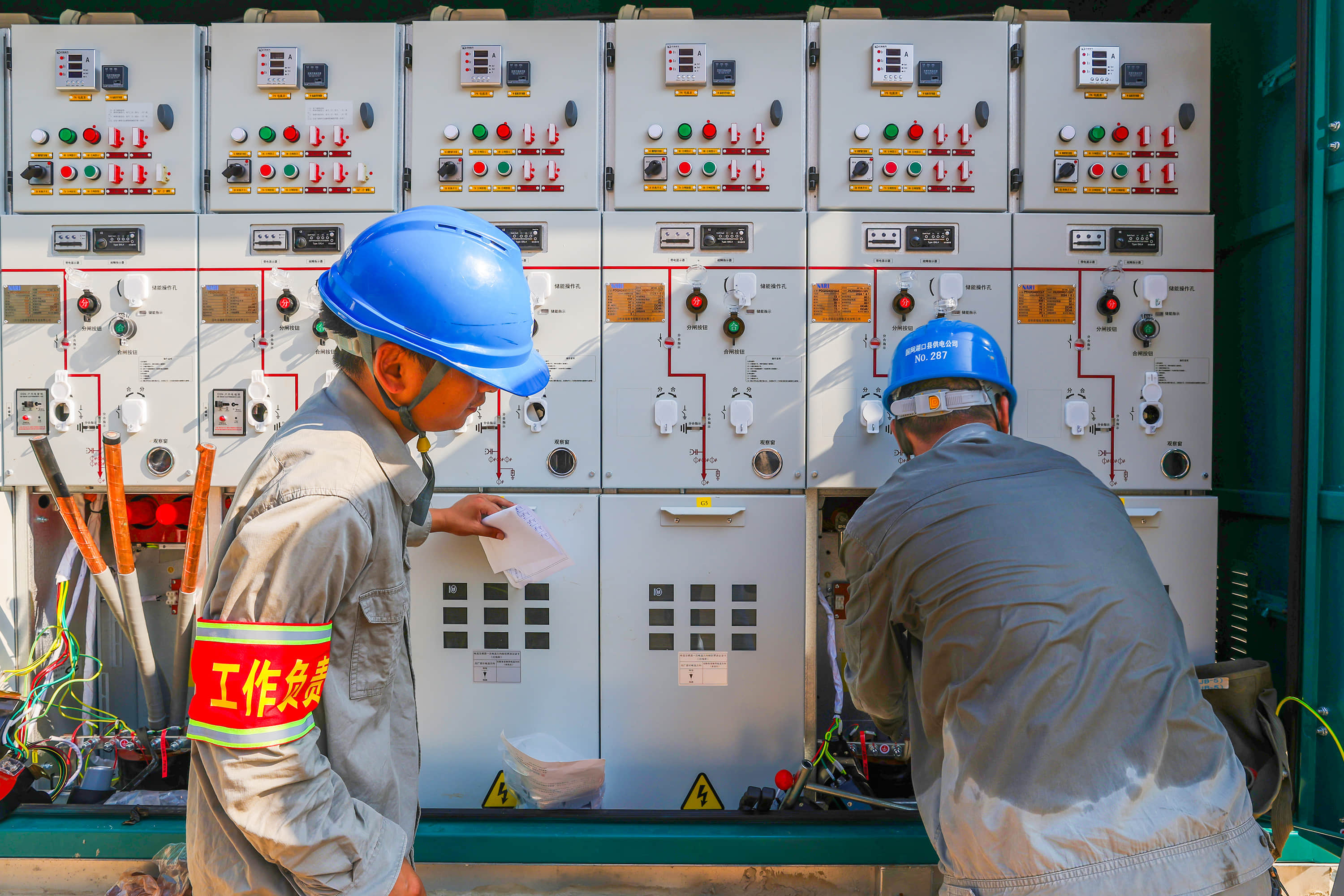
Overcurrent and earth-fault protection
Your overcurrent RMU includes staged time-overcurrent curves for coordination. It also has an instantaneous trip for high-magnitude faults. An earth-fault element senses ground return current and isolates the faulted circuit.
These functions protect downstream customers and the transformer bank. You can set pickup levels and time delays to match utility protection philosophy. This minimizes unnecessary outages.
Directional protection and selective tripping
Directional protection RMU relays have directional earth-fault and phase directional elements. These are needed when multiple sources feed a network or when distributed generation sits on the same feeders.
Directional logic lets you trip only the faulted section. This selective tripping preserves supply to healthy feeders. It reduces customer impact during faults.
Integration with SCADA and remote monitoring
RMU SCADA integration links your protection devices to a central control system. Protocols like IEC 61850, DNP3, and Modbus carry alarms, event logs, and remote control commands. This connects the RMU to your distribution management system.
Remote visibility speeds fault location and allows automated recloser sequences. It also supports scheduled maintenance without site visits.
Below is a concise comparison to help you evaluate protection features for your project.
| Feature | Typical Function | Benefit |
|---|---|---|
| Time-overcurrent | Delayed trip based on current magnitude | Coordination with upstream devices to avoid nuisance tripping |
| Instantaneous trip | Immediate disconnection for very high fault currents | Limits equipment stress and fire risk |
| Ground-fault | Detects and isolates earth faults | Protects personnel and reduces hidden damage |
| Directional earth-fault | Determines fault direction relative to the relay | Enables selective tripping in meshed systems |
| Phase directional | Phase angle-based directional decisions | Improves selectivity with multiple power sources |
| SCADA/DMS link | IEC 61850, DNP3, Modbus communication | Remote control, alarm reporting, and faster fault response |
| Event logging | Records trips and waveform captures | Speeds post-fault analysis and maintenance planning |
How RMU sizing and selection affect performance
Choosing the right RMU is key to a system's performance. It ensures the right balance between voltage, current, and fault capacity. Your selection should also consider future growth, environmental factors, and safety under fault conditions.
Determining voltage and current ratings
First, match the RMU's rated voltage to your system's voltage, like 12 kV or 24 kV. Then, size the continuous current ratings to meet current needs and future growth. Use conductor ratings and load forecasts to avoid overheating or nuisance trips.
Short-circuit withstand and breaking capacity
Check the RMU's short-circuit rating against the highest fault current at your site. Choose switchgear with enough kA interrupting capacity for all expected currents. Also, verify the BIL ratings and breaking capacity to ensure reliable fault interruption.
Environmental and space constraints
Consider ambient temperature and altitude derating when selecting an RMU. Cold areas might need heaters or insulated enclosures. High-altitude sites require special adjustments to dielectric and thermal limits.
Choose between indoor or outdoor enclosures based on exposure and maintenance needs. For exposed areas, consider seismic and wind loads. Coastal or industrial sites may need stainless-steel or coated housings and special ventilation. Remember to consider footprint limits and aisle access for compact substations in urban areas.
Cost factors and economic benefits of RMU adoption
When looking at medium-voltage distribution options, cost and long-term value are key. This section explains what affects RMU cost, where you can save, and how to compare RMU ROI and TCO. This helps you make a smart choice for your site.
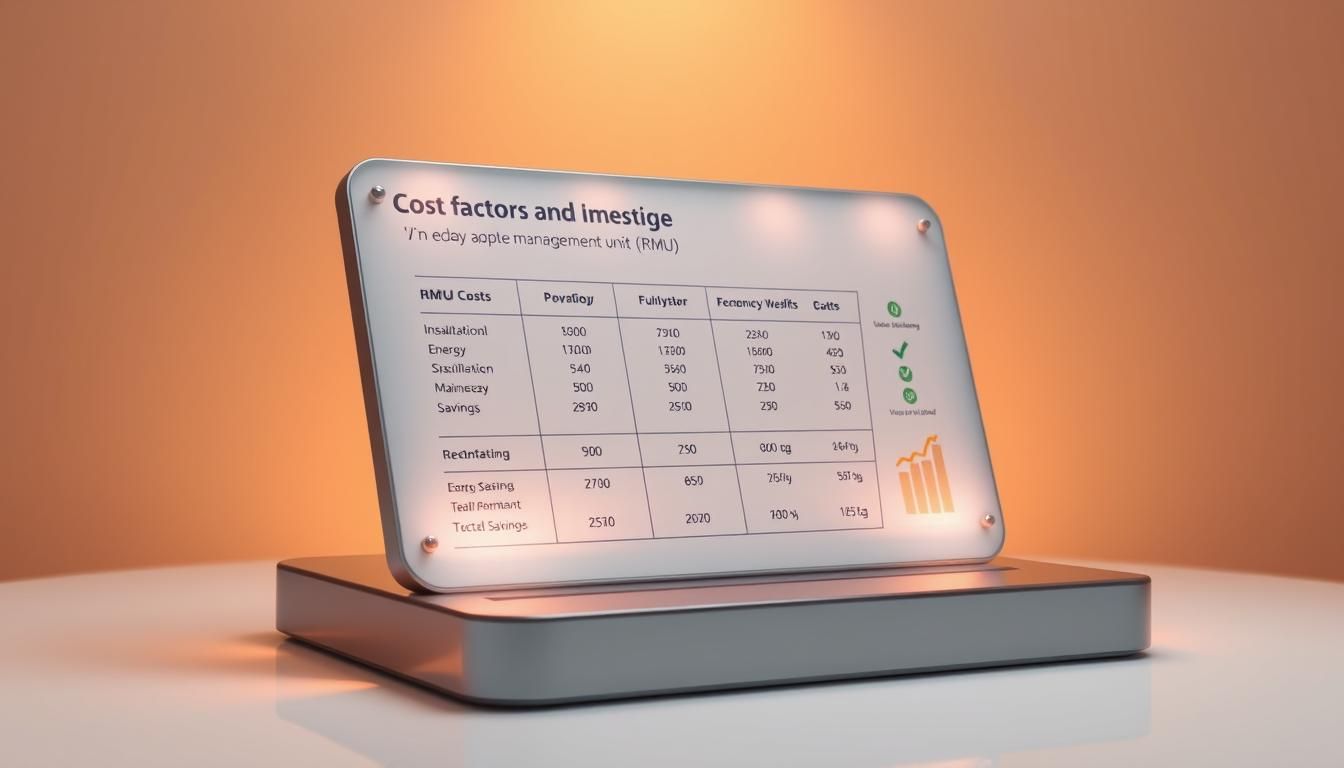
The initial cost includes the switchgear price, foundation work, installation, wiring, and setup. Prices differ based on technology: SF6-filled, vacuum, or solid-dielectric RMUs have unique costs. The choice of manufacturers like ABB, Schneider Electric, and Siemens also impacts the price and delivery time. Adding SCADA and protection systems increases electrical and control labor costs.
Operational savings from reduced outages
Sealed, compact RMUs need less maintenance and have fewer failures. This means fewer service calls and less need for replacement parts. They also allow for quicker fault isolation and automatic transfer, reducing downtime. For utilities and businesses facing penalties or lost production, these savings can be more valuable than the initial cost.
Long-term ROI and total cost of ownership
To compare RMU ROI, model the lifetime costs: maintenance, replacements, energy losses, SF6 handling, and compliance. RMU TCO looks at more than just the purchase price, including avoided outage costs and productivity gains. Investing in quality gear upfront can lead to better RMU ROI over its life, considering all savings and reduced risk.
Practical evaluation checklist
List purchase, civil, and commissioning expenses to get the true RMU cost.
Estimate annual savings from fewer outages and lower maintenance.
Include environmental compliance and end-of-life handling in RMU TCO.
Calculate the payback period to clarify RMU ROI for stakeholders.
By focusing on lifecycle costing, you find options that offer reliable performance and significant savings from RMU over its life.
Regulatory and safety standards for RMUs in the United States
When working with ring main units, you must follow many rules. These include national standards, environmental laws, and local codes. Meeting these standards is key to keeping everyone safe and ensuring projects get the green light.
First, you need to look at electrical standards. These cover how RMUs are built, tested, and rated. Important documents include IEEE switchgear guidelines, ANSI equipment rules, and the National Electrical Safety Code. These are the basics for checking if RMUs meet ANSI and IEEE standards.
National standards and workplace safety
IEEE C37 series outlines how switchgear should perform and be tested. ANSI sets rules for accepting electrical gear and labeling. The National Electrical Safety Code ensures safe distances and grounding for outdoor units. NFPA 70 and OSHA rules also guide how to install RMUs safely.
Environmental rules and SF6 management
The EPA and states have rules for SF6 emissions and leak reporting. You must keep track of SF6, do regular leak checks, and handle it safely when it's no longer needed. Following these rules helps reduce risks and encourages using greener alternatives when possible.
Local utility codes and permitting
Utility and local building codes have specific rules for RMU installations. You'll need to get permits, which might require detailed drawings and plans. It's also important to check with your utility early to make sure everything meets their standards.
| Area | Key references | Your practical actions |
|---|---|---|
| Design and testing | IEEE C37 series, ANSI equipment standards | Specify rated breaking capacity, short‑circuit withstand, and factory tests per IEEE |
| Installation safety | NESC, NFPA 70, OSHA regulations | Validate clearances, lockout/tagout procedures, and worker PPE plans |
| Environmental compliance | EPA guidance, state SF6 rules | Implement SF6 leak detection, recordkeeping, and end‑of‑life recovery |
| Local permitting | Utility interconnection standards, municipal codes | Submit permit packages early and align relay settings with utility requirements |
| Best practices | Industry guidelines, manufacturer manuals (e.g., ABB, Eaton, Siemens) | Adopt predictive maintenance, consider low‑GWP alternatives, and document compliance |
Common challenges and troubleshooting RMU issues
Managing ring main units comes with its share of common problems. Spotting these issues early can cut down on downtime and keep everyone safe. Here's a quick guide to help you identify, diagnose, and fix the most common faults.
Diagnosing switching failures and contact wear
Look out for signs like intermittent operation, visible arcing, or contact heating. Start by logging operations and checking event registers. Then, test contact resistance and inspect the mechanism.
To fix it, replace worn contacts, clean surfaces, and adjust the mechanism. Use a micro-ohm meter for resistance tests. Keep manuals from Siemens, ABB, or Schneider Electric for guidance on torque and alignment.
Addressing gas leaks and insulation degradation
A drop in SF6 pressure or a positive sniff test indicates a gas leak. This weakens the insulation, posing a risk to maintenance workers.
First, check the pressure and analyze the gas. If you find a leak, fix the seals and gaskets. Then, recover and refill the SF6 according to EPA and local regulations. Consider upgrading to vacuum or solid-dielectric solutions for future leaks or tighter environmental rules.
Resolving control and communication faults
Control issues might show as failed remote operations or stale telemetry. Check the power supplies, connectors, and cable terminations. Run loopback tests on serial and Ethernet links.
Update relay firmware from SEL or Schneider when needed. Verify relay settings and event records with vendor support. Replace faulty cables, repair glands, and check network settings to ensure reliable communication.
| Problem | Key Symptoms | Diagnostic Steps | Immediate Fix | Long-term Action |
|---|---|---|---|---|
| Switching failures/contact wear | Intermittent operation, arcing, high contact resistance | Operation logs, contact resistance test, and mechanism inspection | Replace contacts, clean surfaces, and adjust the mechanism | Scheduled inspections and contact lifecycle tracking |
| Gas leaks/insulation degradation | SF6 pressure drop, alarm, sniff test positive | Pressure check, gas analysis, and visual seal inspection | Repair seals, recover, and refill gas | Consider non-gaseous retrofit or enhanced monitoring |
| Control & communications faults | Lost telemetry, failed remote commands, stale events | Power checks, cable continuity, loopback, and network tests | Restore power, repair cables, reboot devices | Firmware updates, vendor relay setting review, network redundancy |
Upgrading existing networks with modern RMU solutions
When you plan an RMU upgrade, start by surveying your switchgear and protection schemes. Look for options that fit your buswork, grounding, and clearance without increasing risk. A retrofit RMU can replace old units directly or use adapter cubicles for different bus alignments.
Before ordering, check if the new gear fits mechanically and coordinates with protection. Make sure relay settings and CT ratios match. Skipping these steps can delay and increase the project's cost.
Retrofit options and compatibility checks
You can choose full replacement, modular swap-outs, or adapter cubicles to keep existing buswork. Modular swap-outs allow you to work one bay at a time. Adapter cubicles connect old bus geometry to a modern RMU without cutting major rails.
Always review grounding and anti-islanding protection. Confirm short-circuit ratings and insulation clearances with the vendor. These steps help avoid surprises during commissioning.
Phasing approaches to minimize downtime
Plan staged replacements during low-demand times. Use temporary bypasses and prefabricated assemblies to reduce field labor. Prefab skids come ready to mount, leaving only connections and testing on site.
Sequence work to keep critical feeders live. Schedule unavoidable outages with your utility and stakeholders. This approach reduces customer impact and speeds up restoration.
Benefits of digital RMUs and smart features
Digital RMU solutions offer intelligent electronic devices for remote monitoring and fault recording. They include IEC 61850 communications, analytics, and integration with distribution management systems. These features improve automation and shorten troubleshooting times.
Smart RMU benefits include faster fault isolation, clear diagnostics, and better outage response. A digital RMU enables condition-based maintenance and supports cloud-based analytics for long-term asset health.
Real-world applications and case studies of RMU use
RMU case studies are found in cities, factories, and microgrids. They show how compact switchgear simplifies systems while keeping power steady. Below are examples of how RMUs improve real-world networks.

Urban distribution improvements and space savings
In busy city centers, old switchgear was replaced with RMUs. This freed up space and reduced the need for underground cables. It also made fixing power issues faster, lessening disruptions to traffic and businesses.
Industrial plant reliability enhancements
Car factories and other industrial sites used RMUs to manage power lines. This quickened fault repairs and kept production going. RMUs also made maintenance safer and improved plant uptime for ongoing operations.
Microgrid and renewable integration examples
RMUs were utilized in renewable energy projects featuring solar panels and batteries. They helped manage power shifts between the grid and local generation. In campus microgrids, RMUs ensured smooth transitions and protected against power issues.
| Use Case | Primary Benefit | Typical Outcome |
|---|---|---|
| Downtown feeder consolidation | Space saved, less ducting | Faster restorations for transit and retail |
| Manufacturing plant feeder sectionalizing | Higher uptime, safer maintenance | Reduced production losses and incident risk |
| Campus microgrid with PV and BESS | Seamless islanding and reconnection | Stable mixed-source operation and protection |
Conclusion
In this RMU summary, we see that ring main units do three main things. They switch, protect, and control distribution in medium-voltage networks. These roles make RMUs key to delivering power safely and reliably.
They quickly isolate faults, support automatic switching, and make maintenance easier. This is why RMUs are so important.
Looking at RMU benefits, they help keep systems running smoothly. They reduce the impact of outages and keep people safe. Their small size is great for cities and tight spaces.
Choosing the right RMU means looking at a few things. Check your system's voltage, fault current, and space needs. Also, think about how it will work with SCADA or IEDs.
It's smart to talk to companies like ABB, Siemens, Schneider Electric, or Eaton. Make sure your choice meets local utility standards. This way, you get a system that works now and in the future.
FAQ
What is the function of an RMU?
An RMU, or Ring Main Unit, is a compact device used in medium-voltage systems. It controls, protects, and isolates electrical equipment. Rated between 7.2 kV and 38 kV, it performs three main functions: switching, protection, and distribution. It acts as a node in ring-main systems. This lets you manage feeders, isolate faults, and maintain supply continuity in a small footprint.
What does RMU stand for, and why does it matter for my electrical system?
RMU stands for Ring Main Unit. It's important because RMUs enable sectionalizing and reconfiguration of feeders. This reduces outage impact and allows maintenance without shutting down entire circuits. It protects downstream equipment and improves reliability for utilities, commercial campuses, industrial plants, and critical facilities like hospitals and data centers.
Where are RMUs commonly installed?
RMUs are found in urban substations, underground distribution systems, commercial and industrial facilities, residential substations, renewable energy sites, and microgrids. In the United States, they're common in municipal distribution networks, college and corporate campuses, shopping centers, and light rail substations where space is limited and reliability is essential.
What are the main components inside an RMU?
Inside an RMU, you'll find load-break switches and circuit breakers for switching. Protective relays and fuses clear faults. Busbars distribute current, and metal enclosures provide grounding and mechanical protection. You'll also see earthing switches, door interlocks, rating plates, and insulation systems like solid dielectric, SF6 gas, or epoxy/resin.
How do protective relays and fuses work in an RMU?
Protective relays monitor current and fault conditions, triggering breakers or switches to isolate faults. They provide overcurrent, earth-fault, and directional protection. Fuses offer simple backup protection in some designs. Manufacturers like ABB, Siemens, Schneider Electric, Eaton, and GE supply relays and coordinated protection schemes tailored to RMU applications.
How does an RMU improve safety on the distribution network?
RMUs improve safety by quickly isolating faulted sections via protective relays and switches. This prevents fault propagation and equipment damage. Enclosed, insulated compartments, remote operation, and technologies like vacuum interrupters or gas insulation reduce arc flash risk. Safety features such as interlocked doors, earthing switches, and IP/IK-rated enclosures support safe maintenance in line with NFPA 70E and OSHA guidelines.
Can RMUs help increase system reliability and uptime?
Yes. RMUs support automatic switching, load transfer, and sectionalizing in ring topologies to restore power via alternate paths. Redundancy features like parallel feeds and sectionalizing reduce single-point failures. With SCADA integration and remote control, RMUs shorten restoration times and improve reliability metrics such as SAIDI and SAIFI.
What RMU technologies are available, and how do they differ?
Common types include SF6 gas-insulated RMUs, vacuum-interrupting RMUs, and solid-dielectric (epoxy/resin) or eco-friendly alternatives. SF6 units offer compact size and high dielectric strength, but carry greenhouse gas concerns. Vacuum breakers eliminate SF6 emissions and often require less maintenance. Solid-dielectric and clean-air solutions reduce environmental impact but may involve trade-offs in size or cost.
How do environmental regulations affect RMU selection?
EPA guidance and state rules address SF6 emissions, leak detection, and end-of-life handling. Utilities and site owners often favor SF6 management practices or alternatives to meet greenhouse gas reduction goals. Regulatory compliance can influence technology choice, lifecycle costs, and maintenance procedures.
What installation contexts favor RMUs?
RMUs are ideal for compact urban substations, kiosks, underground vaults, commercial buildings, industrial plants, and renewable or microgrid sites. They excel where footprint is constrained, where feeders must be close to loads, and where modular, safe medium-voltage switching is needed for distributed generation or islanding schemes.
What routine maintenance does an RMU require?
Routine practices include visual inspections, contact resistance testing, insulation resistance (megger) tests, SF6 gas monitoring where applicable, mechanical operation checks, and thermal imaging for hot spots. Inspection intervals vary by manufacturer but commonly range from annual checks to multi-year tests depending on usage and environment.
Which components wear out first, and when should they be replaced?
Moving parts such as breakers, operating mechanisms, contacts, seals, gaskets, and relay batteries are common wear points. Lifetimes vary with duty cycle, but mechanical components often require service or replacement within 10–20 years. Regular condition assessment will indicate the right replacement timing.
What predictive maintenance and monitoring options exist for RMUs?
Predictive approaches include partial discharge detection, dissolved gas analysis for paired transformers, vibration analysis, and thermal trend monitoring. Digital RMUs with IEC 61850-compliant IEDs and SCADA connectivity enable remote condition monitoring and analytics to schedule interventions before failures occur.
What protection schemes can an RMU implement?
RMUs implement overcurrent and earth-fault protection, directional and selective tripping for complex source arrangements, and integrated schemes for coordination with upstream and downstream devices. They also support remote monitoring and control over SCADA using protocols like IEC 61850, DNP3, or Modbus.
How do you size an RMU for voltage, current, and short-circuit capacity?
Choose nominal voltage (e.g., 12 kV, 24 kV) and continuous current ratings based on conductor and load forecasts. Verify short-circuit withstand and breaking capacities against expected prospective fault currents, including asymmetrical components and BIL ratings. Account for ambient temperature, altitude derating, and site constraints when finalizing selection.
What environmental or space factors influence RMU selection?
Consider indoor vs. outdoor rating, ambient temperature range, altitude, seismic and wind loads, corrosive or coastal conditions, and required footprint. Special enclosures, ventilation, or heating may be necessary in extreme climates. Kiosk or vault installations require coordination with local utility and permitting rules.
What are the main cost factors when adopting an RMU?
Initial costs include equipment purchase, foundations or kiosks, installation and commissioning, and integration with control systems. Technology choice (SF6, vacuum, solid-dielectric) and manufacturer affect price. Operational savings come from reduced outage time, lower maintenance, and avoided penalties—factors that drive long-term ROI.
How should you evaluate the total cost of ownership for an RMU?
Assess lifetime maintenance costs, energy losses, environmental compliance (SF6 handling), spare parts, and expected downtime costs. Compare lifecycle costing rather than the lowest upfront price to reflect long-term reliability and regulatory impacts.
Which standards and codes apply to RMU installations in the U.S.?
Relevant standards include IEEE C37 series, ANSI equipment standards, the National Electrical Safety Code (NESC), NFPA 70 (NEC), and OSHA workplace safety rules. Local utility interconnection standards and permitting authorities also set requirements for siting and installation.
How are SF6 emissions and handling regulated?
EPA guidance and many states require SF6 leak detection, reporting, proper handling during maintenance, and end-of-life reclamation or destruction. Utilities and vendors follow best practices and increasingly offer SF6-free alternatives to meet regulatory and sustainability targets.
What common troubleshooting steps address RMU switching failures?
For switching failures, check mechanical operation and interlocks, measure contact resistance, inspect for arcing or pitting, and verify actuator power and springs. Replace worn contacts or rebuild mechanisms as needed, and analyze event records from relays to determine the root cause.
How do you detect and remediate gas leaks or insulation degradation?
Detect SF6 leaks with pressure monitoring, gas analyzers, or sniffers. Reduced pressure or abnormal gas composition signals leakage. Remediation includes repairing seals, reclaiming and purifying SF6, or retrofitting with non-gaseous insulation solutions when feasible.
How are control and communication faults resolved in RMUs?
Test power supplies, PLC and relay firmware, and communication links (fiber, copper, wireless). Verify settings, replace faulty interface modules, and consult vendor technical support for relay event record analysis. Restoring SCADA connectivity often reduces restoration time significantly.
What are my options when upgrading older switchgear to modern RMUs?
Retrofit options include modular swap-outs, adapter cubicles to interface with existing buswork, or full replacements. Check mechanical clearances, grounding, and protection coordination. Use staged phasing, temporary bypasses, and prefabricated assemblies to minimize downtime during upgrades.
What benefits do digital or smart RMUs provide?
Digital RMUs with intelligent electronic devices (IEDs) enable remote monitoring, fault recording, IEC 61850 communications, and analytics. These features improve diagnostics, automation, and restoration speed, and support predictive maintenance strategies that reduce lifecycle costs.
Can you give real-world examples of RMU benefits?
In urban deployments, RMUs replace bulky switchgear to save space and simplify underground ducting, improving reliability for downtown feeders and transit systems. In industrial plants, RMUs enable fast sectionalizing and coordinated protection, reducing production losses. In microgrids and renewable projects, RMUs facilitate PV, battery, and inverter connections with reliable islanding and protection coordination.