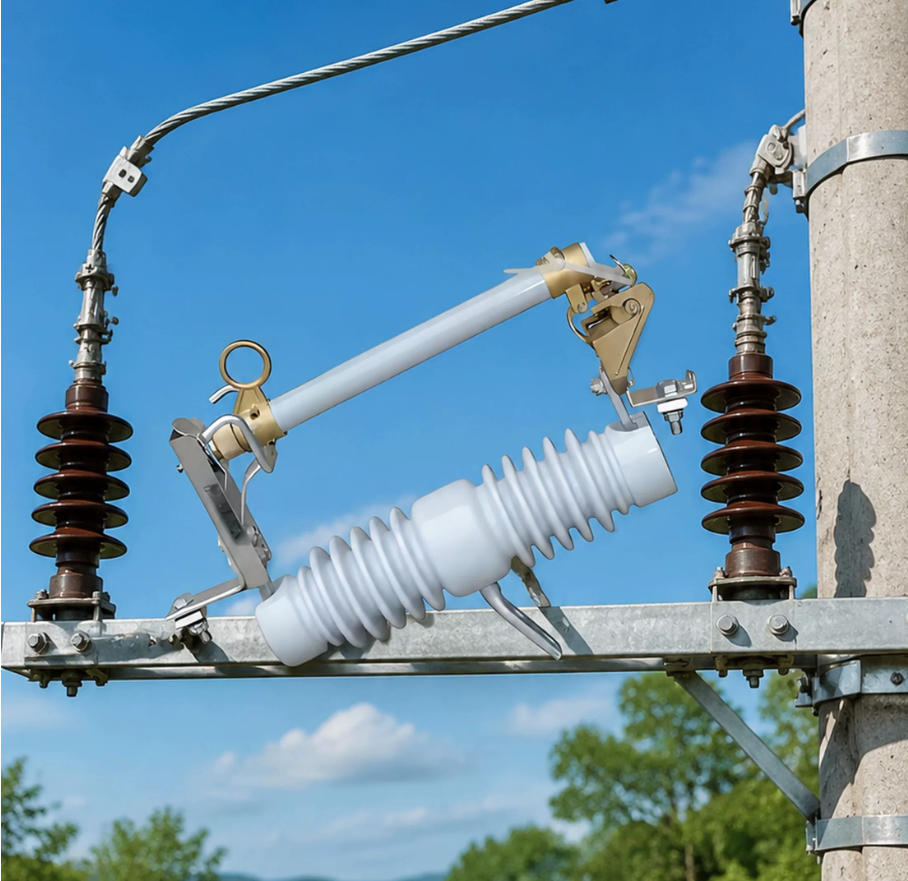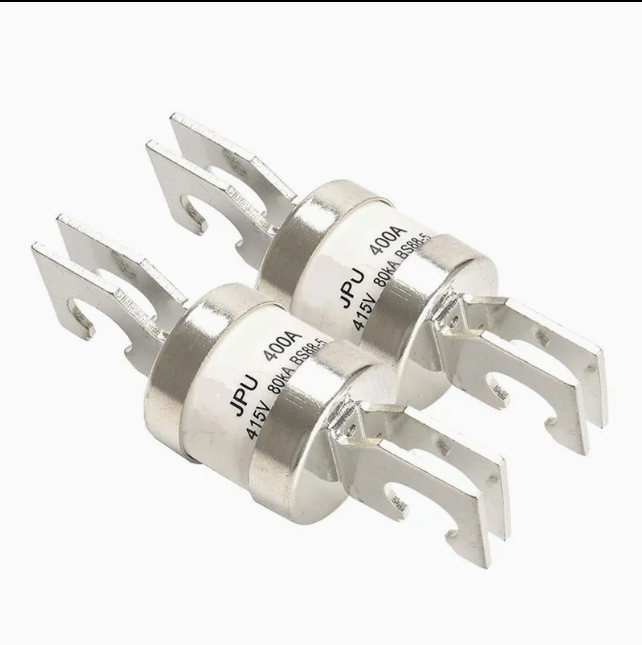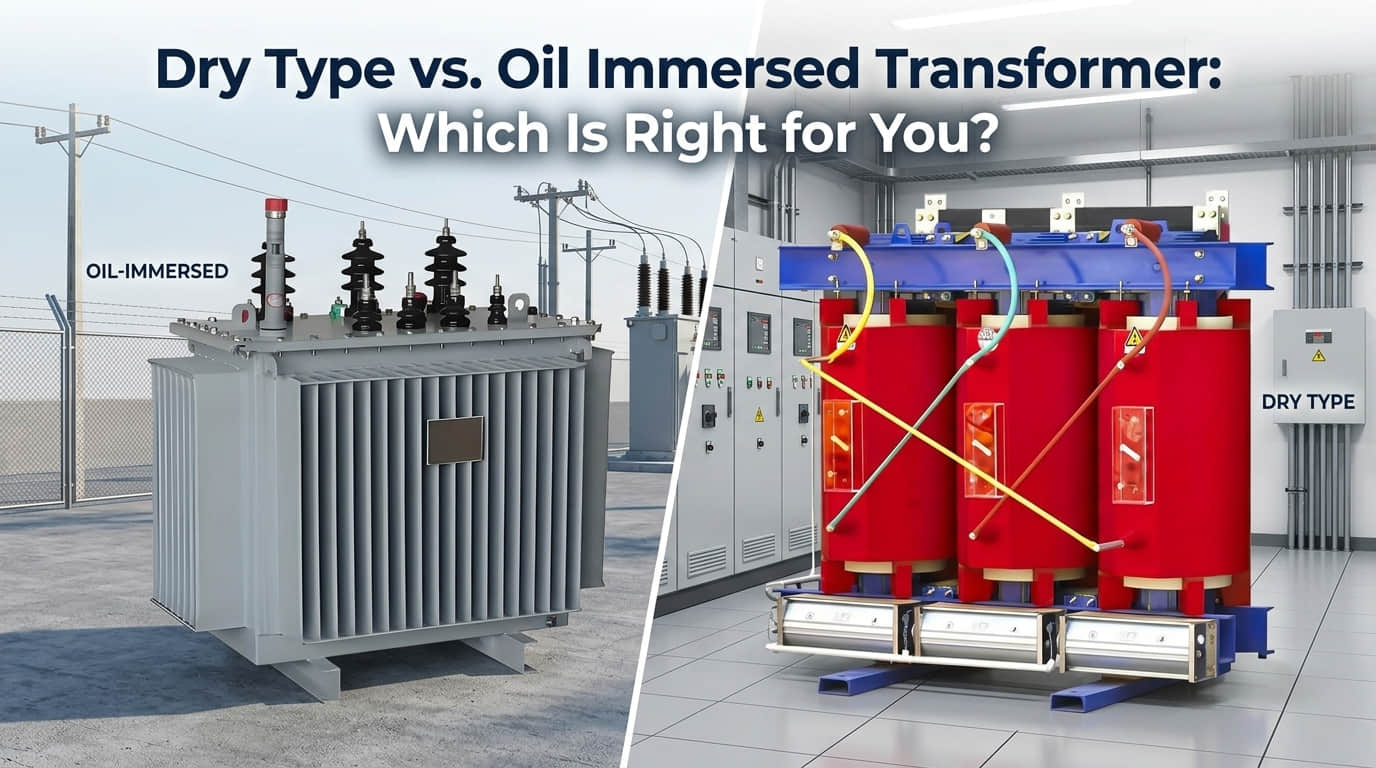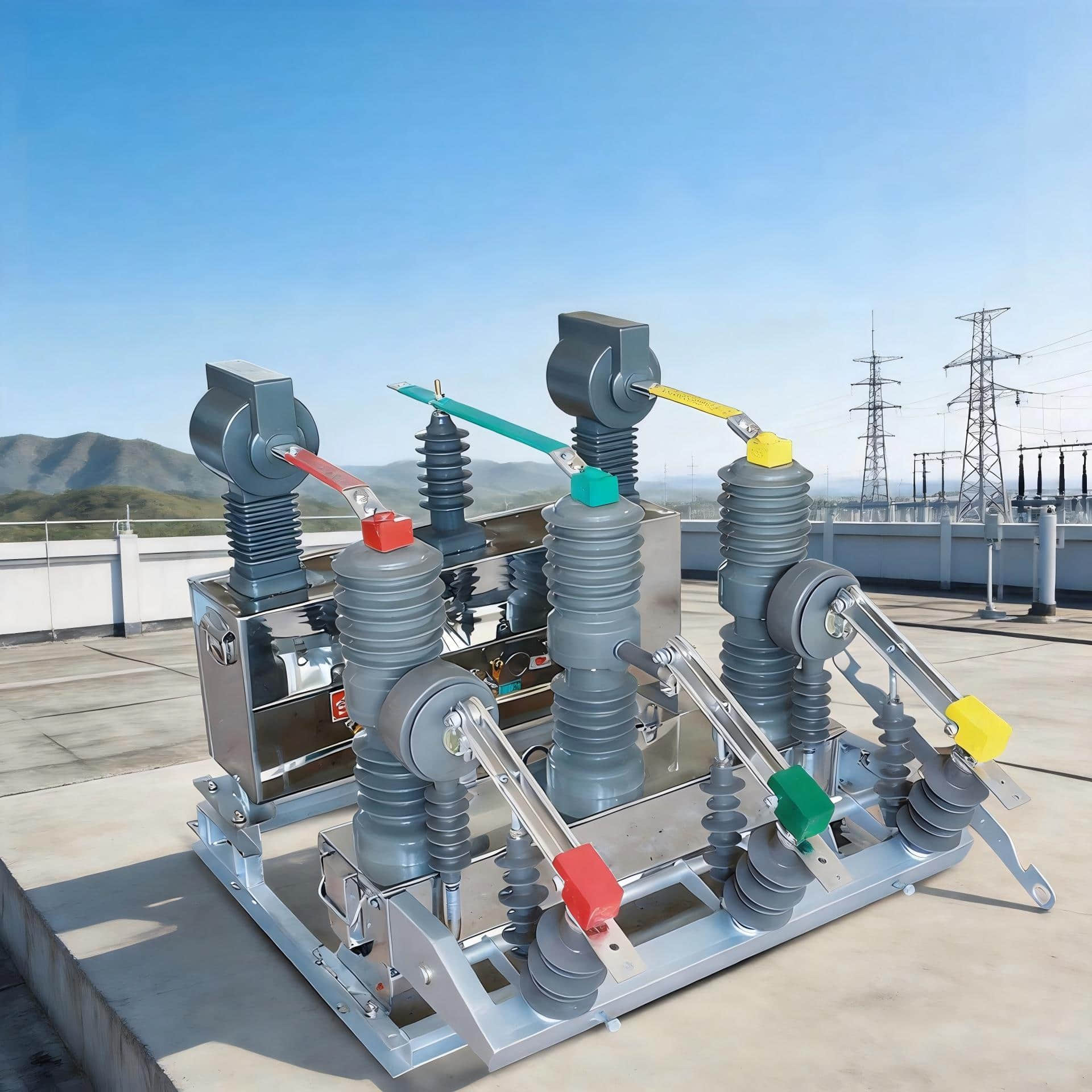
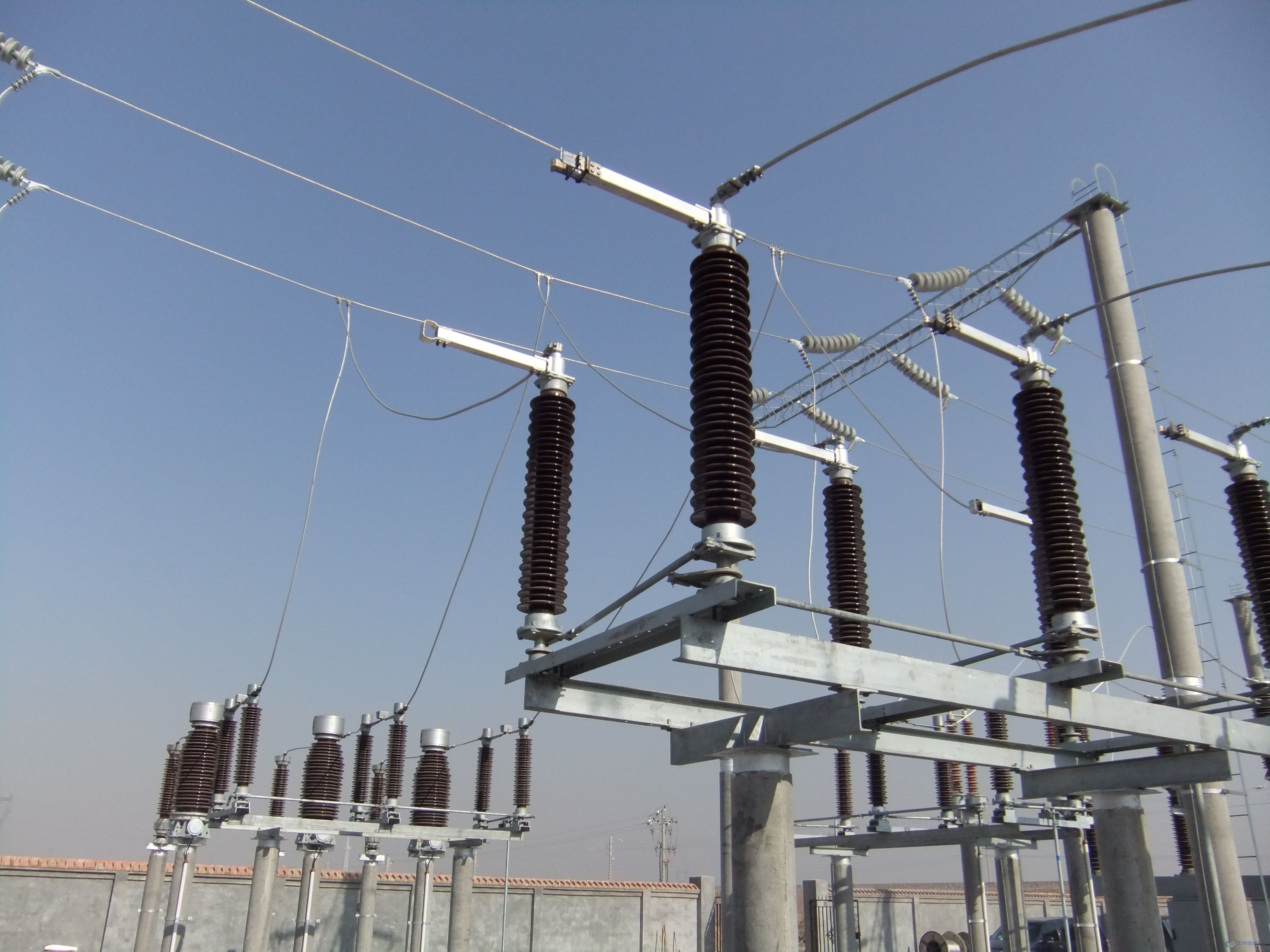
A single lightning strike lasts less than a millisecond. A switching transient can spike and collapse in microseconds. Yet either event can destroy a power transformer worth $5 million to $15 million — and leave your facility dark for months while a replacement is manufactured and shipped.
Between that transient overvoltage event and catastrophic asset loss stands one critical device: the station class surge arrester. This guide equips enterprise decision makers with the technical, financial, and operational knowledge to evaluate, specify, and procure these devices with confidence.
What Is a Station Class Surge Arrester — Direct Answer
A station class surge arrester is the highest-rated overvoltage protection device in the IEEE/IEC classification hierarchy. It is engineered specifically for high-voltage substations operating from 3 kV through 765 kV and above, using metal-oxide varistor (MOV) technology to clamp lightning and switching transients to safe voltage levels.
It represents the premium tier of surge protection — designed for the highest energy handling capability, widest protective margins, and greatest pressure-relief capacity among all arrester classes. Think of it as the last line of defense between a transient event and millions in substation equipment damage.
This article covers operating principles, the business case, design considerations, selection criteria, maintenance strategies, and procurement guidance — everything a decision maker needs to make informed investments in overvoltage protection.
How Station Class Surge Arresters Work — Operating Principles & Classification
IEEE/IEC Classification Hierarchy
Two international standards define the classification: IEEE C62.11 (North America) and IEC 60099-4 (international). Both establish a tiered system — station class, intermediate class, and distribution class — based on energy capability, voltage range, and application environment.
Station class occupies the top tier. It is designed for substations rated 3 kV through 765 kV and above, handling the most severe duty cycles in any power system. The key distinctions that separate it from lower classes include the duty-cycle voltage rating, the maximum continuous operating voltage (MCOV), and the pressure-relief capacity under fault conditions.
The intermediate class covers sub-transmission applications where energy duties are moderate. The distribution class serves lower-voltage feeders with proportionally less demanding requirements.
How Metal Oxide Varistor Technology Works
Modern station class arresters use gapless zinc oxide (ZnO) varistor disc stacks. These discs exhibit highly nonlinear voltage-current characteristics — they present near-infinite resistance at normal operating voltage and transition to a low-resistance state within nanoseconds when voltage exceeds a threshold.
Unlike older silicon carbide designs that required spark gaps, gapless MOV technology offers faster response times and lower residual voltage. The arrester clamps the overvoltage, absorbs the transient energy thermally within the disc stack, and self-restores to its normal high-impedance state once the event passes.
This self-restoring behavior means the high voltage arrester is immediately ready for subsequent events without manual intervention — a critical advantage for unmanned substations and remote installations.
Key Performance Parameters
| Parameter | Station Class | Intermediate Class | Distribution Class |
|---|---|---|---|
| Voltage Range | 3–765+ kV | 3–120 kV | 1–36 kV |
| Energy Capability | Highest (kJ/kV MCOV) | Medium | Lower |
| Pressure Relief Rating | ≥65 kA symmetrical | 40–65 kA | 16–40 kA |
| Typical Application | HV/EHV Substations | Sub-transmission | Distribution feeders |
| Protective Margin | Widest | Moderate | Narrowest |
| Cost Tier | Premium | Mid-range | Economy |
Why Station Class Arresters Matter — The Business Case for Enterprise Decision Makers
Financial Risk of Inadequate Overvoltage Protection
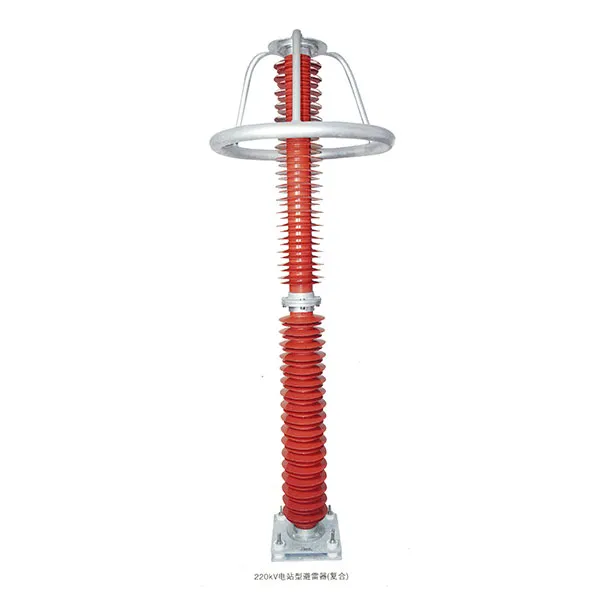
A 100 MVA power transformer carries a replacement cost between $3 million and $8 million, with lead times extending 12 to 18 months. The station class arrester protecting it costs $15,000 to $80,000 — a ratio of roughly 50:1 to 500:1 in favor of the protection investment.
Insurance underwriters increasingly penalize substations lacking adequate surge protection devices. Risk scoring models from major industrial insurers factor arrester class, age, and monitoring capability directly into premium calculations. A facility without proper protection may face 15–25% higher premiums on transformer and substation equipment coverage.
Regulatory exposure adds another dimension. NERC reliability standards and national grid codes in many jurisdictions mandate overvoltage protection coordination studies. Non-compliance carries financial penalties and reputational risk that compound well beyond equipment costs.
Operational Continuity & Revenue Protectionhttps://www.weishoelec.com/product/lightning-arrester/220kv-ceramic-lightning-arrester/
Downtime costs vary dramatically by sector, but they are universally significant. Data centers face losses of $300,000 to $500,000 per hour. Mining operations lose $150,000 to $400,000 per hour of unplanned outage. Manufacturing facilities report $50,000 to $250,000 per hour, depending on production value.
When a power transformer fails due to inadequate transient protection, the damage rarely stays contained. Cascade failure scenarios propagate through adjacent equipment — bushings, instrument transformers, bus sections — multiplying both repair cost and restoration time.
The arithmetic is straightforward: one avoided failure event pays for an entire fleet of station-class arresters many times over.
Total Cost of Ownership Comparison
| Cost Factor | With Station Class Arrester | Without / Underrated Arrester |
|---|---|---|
| Upfront Equipment Cost | $15K–$80K per unit | $0 / lower-tier savings |
| Average Annual Maintenance | $500–$2,000 | N/A |
| Risk of Major Failure (10-year) | <2% | 12–18% |
| Average Cost per Failure Event | — | $2M–$15M+ |
| Expected 20-year TCO | Lowest net cost | 5–10× higher risk-adjusted cost |
Design & Construction — What Sets Station Class Apart
Polymer-Housed vs. Porcelain-Housed Designs
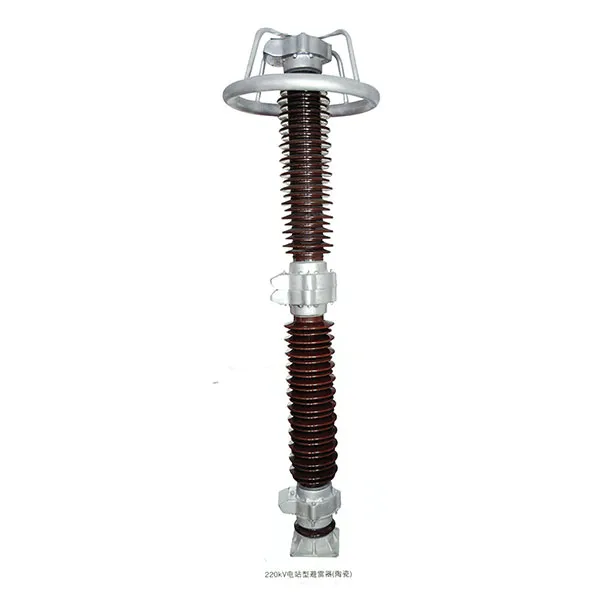
Porcelain-housed arresters have a proven track record spanning decades. They offer excellent dielectric performance and long-term stability. However, they are heavier, more fragile during seismic events, and present shrapnel risk if pressure relief fails during a fault.
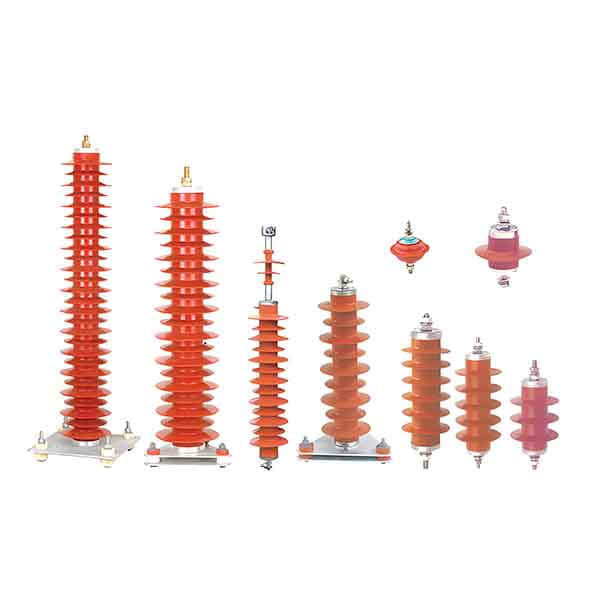
Polymer-housed designs (silicone rubber) have gained significant market share due to lighter weight, superior seismic performance, and hydrophobic surfaces that resist contamination buildup. They eliminate the shrapnel concern and reduce installation costs due to lower structural requirements.
The decision framework is site-specific. Choose porcelain for clean, low-seismic environments where proven longevity is paramount. Choose a polymer for coastal, industrial, or seismically active sites where contamination resistance and mechanical resilience are priorities.
Internal Construction & Energy Dissipation
Inside the housing, stacked metal oxide varistor disc columns form the active element. Grading rings ensure uniform voltage distribution across the disc stack, preventing localized stress that could trigger premature degradation.
Thermal stability design prevents thermal runaway — a condition where resistive leakage current generates heat faster than the arrester can dissipate it. Manufacturers engineer thermal margins to ensure stable operation even at maximum continuous operating voltage under worst-case ambient temperatures.
Advanced sealing systems protect the MOV stack from moisture ingress over service lives exceeding 30 years. Even minor moisture intrusion can degrade varistor performance, making seal integrity a critical long-term reliability factor.
Mechanical & Environmental Ratings
Seismic qualification per IEEE 693 is mandatory for substations in earthquake-prone regions. Station class arresters must demonstrate structural integrity under moderate (0.5g) or high (1.0g) qualification levels, depending on site hazard classification.
Cantilever strength ratings address wind loading, ice accumulation, and dynamic line pull forces. For tall EHV arresters (345 kV and above), these mechanical loads become a significant design driver.
Environmental considerations include UV resistance for outdoor installations, pollution class ratings (IEC 60815) for contaminated environments, and altitude derating above 1,000 meters where reduced air density affects external flashover voltage.
Application Scenarios & Selection Criteria for Substation Equipment
Typical Installation Points
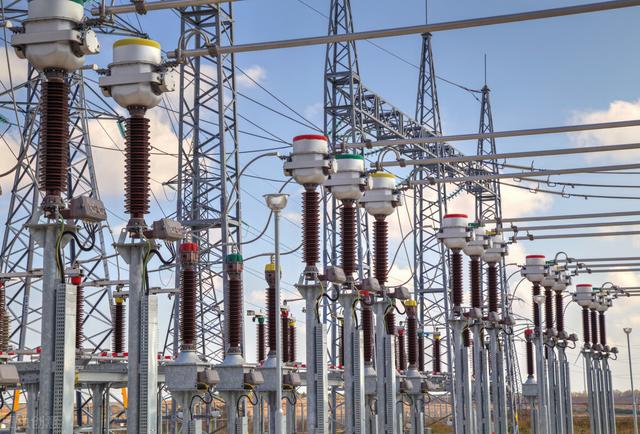
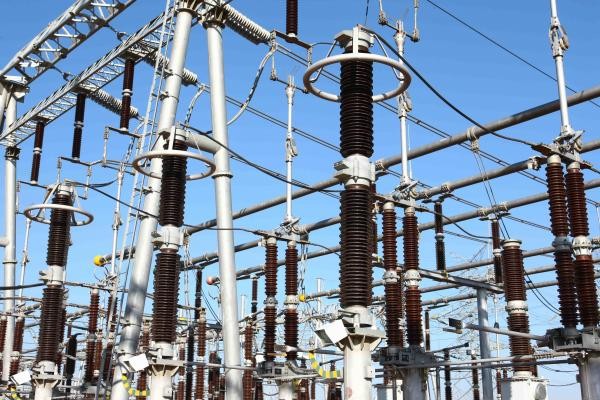
Station class arresters are deployed at every critical entry point where transient overvoltages can threaten expensive equipment. Primary locations include transformer terminals (both primary and secondary windings), bus sections, and line entrances where lightning impulses first arrive.
Cable terminations present unique protection challenges due to voltage-doubling effects at open-ended cables. Shunt reactor and capacitor bank protection requires arresters sized for the specific switching transient profiles these devices generate.
HVDC converter stations represent an increasingly important application where arresters must handle complex transient waveforms combining AC and DC components — a demanding duty that only station-class devices can satisfy.
Selection Decision Framework for Engineers & Procurement Teams
Step 1: Determine system voltage and calculate MCOV requirements. The arrester's MCOV must equal or exceed the maximum sustained line-to-ground voltage under all operating conditions, including contingency scenarios.
Step 2: Assess protective levels needed by coordinating with equipment BIL (Basic Insulation Level). The arrester's protective level must provide an adequate margin below the insulation withstand capability of all protected equipment.
Step 3: Evaluate energy duty. Calculate switching surge energy requirements and temporary overvoltage (TOV) duration capability. This determines the arrester's energy class rating.
Step 4: Define environmental and mechanical requirements — seismic zone, pollution severity, altitude, wind loading, and ambient temperature extremes.
Step 5: Specify monitoring and diagnostics integration. Modern substations increasingly require arresters compatible with online condition monitoring systems and SCADA connectivity.
Coordination with Other Substation Equipment
Insulation coordination per IEC 60071 establishes the relationship between arrester protective levels and equipment withstand voltages. The protective margin — typically 15–25% for lightning impulse and 15% for switching impulse — provides the safety buffer that accounts for distance effects, lead lengths, and arrester tolerance.
Coordination with circuit breakers considers transient recovery voltages and restrike scenarios. Instrument transformers, bushings, and buswork each have specific BIL values that must be protected within the arrester's zone of coverage.
Installation, Monitoring & Maintenance Best Practices
Installation Guidelines
Grounding resistance and lead length are critical performance factors. Every meter of ground lead adds approximately 1 kV per kA of discharge current to the effective protective level. Minimize total lead length from the arrester terminals to the protected equipment and to the ground grid.
Mount arresters as close as practical to protected equipment. Clearances to live parts must comply with minimum approach distances for the voltage class. Connect surge counters and leakage current monitors at commissioning to establish baseline readings.
Condition Monitoring Technologies
Leakage current measurement — specifically resistive component analysis using third-harmonic techniques — provides the most reliable indicator of varistor degradation. Rising resistive current signals moisture ingress or disc deterioration well before failure occurs.
Thermal imaging during routine inspections can detect localized heating from degraded disc segments or poor internal connections. This non-invasive technique adds value during scheduled substation inspections.
Online monitoring systems with IoT and SCADA integration represent the current trajectory toward predictive maintenance. These systems continuously trend leakage current, discharge events, and temperature data — alerting operators to developing problems months or years before critical failure.
Maintenance Strategy & Lifecycle Management
IEEE and IEC guidelines recommend visual inspection annually and electrical testing (watt-loss measurement, leakage current check) every 3–5 years. Environmental factors may justify more frequent intervals in harsh conditions.
Replacement triggers include elevated third-harmonic resistive leakage current exceeding manufacturer thresholds, watt-loss test results showing a significant increase from baseline, and visible damage to housing or seals.
Under normal operating conditions, station class arresters deliver 25 to 30+ years of service life — making them among the longest-lived protection devices in any substation.
Market Landscape & Procurement Considerations
Leading Global Manufacturers
The station class arrester market is served by established power equipment manufacturers, including Siemens Energy, Hitachi Energy (formerly ABB Power Grids), GE Vernova, Toshiba Energy Systems, and several regional specialists. Each brings distinct strengths in voltage class coverage, housing technology, and monitoring integration.
Lead times for standard ratings typically range from 8 to 16 weeks. Custom or ultra-high-voltage ratings may extend to 6 months or longer. Procurement planning should account for these timelines, especially during periods of high grid investment activity.
Require complete type-test documentation per IEC 60099-4 or IEEE C62.11 as part of any bid evaluation. Third-party witnessed testing adds confidence for critical applications.
Specification & Procurement Checklist
| Specification Item | What to Verify | Why It Matters |
|---|---|---|
| Duty-cycle voltage rating | Matches the system voltage class | Basic adequacy of protection |
| MCOV | ≥ system max line-to-ground voltage | Prevents thermal runaway |
| Energy class | Meets switching surge duty calculations | Survives worst-case events |
| Pressure relief rating | ≥ system available fault current | Personnel safety |
| Seismic qualification | IEEE 693 moderate or high as required | Structural integrity in seismic zones |
| Type test reports | IEC 60099-4 or IEEE C62.11 compliance | Verified performance claims |
| Warranty & support | Minimum 5-year coverage | Long-term value assurance |
Emerging Trends in Surge Protection Devices
Compact arrester designs optimized for gas-insulated substations (GIS) address the growing demand for smaller substation footprints in urban and offshore environments. These units integrate directly into GIS bus sections, eliminating external installation space requirements.
Smart arresters with embedded sensors represent the next generation. These devices provide real-time health analytics — discharge event counting, energy quantification, and continuous degradation trending — directly from within the arrester housing.
Sustainability considerations are influencing design evolution. Manufacturers are developing fully recyclable polymer housings and reducing dependency on SF₆ in adjacent switching equipment, aligning with broader utility decarbonization and environmental commitments.
FAQ — Station Class Surge Arrester Questions Answered
What is the difference between a station class and a distribution class surge arrester?
Station class arresters cover voltage ranges from 3 kV to 765 kV and above, offer the highest energy absorption capability (measured in kJ/kV of MCOV), provide the widest protective margins, and carry pressure relief ratings at or above 65 kA. Distribution class arresters serve 1–36 kV systems with lower energy capability, narrower margins, and pressure relief ratings of 16–40 kA. The cost difference reflects this performance gap — station class represents a premium investment justified by the value of assets being protected.
How long does a station class surge arrester last?
Typical service life is 25 to 30 years under normal operating conditions with proper installation and periodic monitoring. Factors that shorten life include excessive switching surge events beyond design energy rating, moisture ingress from seal degradation, sustained operation above rated MCOV, and extreme environmental exposure without appropriate housing selection.
Can a station class arrester protect against both lightning and switching surges?
Yes. Station class arresters provide dual-duty protection. Their energy class ratings are sized to handle the high-energy, longer-duration switching surges, while their fast response characteristics (sub-nanosecond conduction onset) effectively clamp short-duration lightning impulses. The arrester's protective level specifications address both impulse types — lightning impulse protective level (LIPL) and switching impulse protective level (SIPL).
What happens when a station class arrester fails?
The predominant failure mode is a short-circuit condition within the varistor stack. When this occurs, the pressure relief system activates — venting internal arc gases safely to atmosphere and preventing explosive housing failure. This is why pressure relief ratings must equal or exceed the available fault current at the installation point. Personnel safety depends directly on this design feature functioning as intended.
How do I know when to replace a station class arrester?
Key diagnostic indicators include watt-loss test results showing a significant increase from commissioning baseline, rising third-harmonic resistive leakage current trending beyond manufacturer thresholds, visible housing damage (cracks, erosion, or seal deterioration), and surge counter data indicating the arrester has absorbed cumulative energy approaching its design limit. Continuous online monitoring provides the most proactive replacement triggers.
Are polymer-housed arresters as reliable as porcelain?
Field performance data accumulated over the past two decades demonstrates equivalent or superior reliability for polymer-housed designs. Industry surveys by CIGRÉ show lower failure rates for polymer units, primarily because they eliminate the moisture ingress pathways associated with porcelain cement joints and offer inherent resistance to seismic and vandalism damage. Their hydrophobic surfaces also maintain higher flashover voltage in contaminated conditions over time.
Conclusion & Your Next Step
Station class surge arresters are not a cost center — they are an insurance policy protecting substation assets valued at 50 to 500 times the arrester's own cost. The decision is not whether to invest in premium overvoltage protection. The decision is whether to make that investment proactively or reactively after a catastrophic and preventable failure.
Proper specification and procurement decisions made today prevent catastrophic financial exposure tomorrow. The technology is proven. The standards are clear. The return on investment is compelling by any measure.
Take action now: Request a site-specific arrester coordination study from your engineering partners to verify that your existing protection is adequate for current system conditions. If you are specifying new substation equipment, ensure your procurement documents incorporate the checklist above and demand full type-test compliance documentation.
Need expert support? Contact our technical advisory team for procurement guidance, specification review, or a comprehensive overvoltage protection assessment tailored to your facility's risk profile and operational requirements.