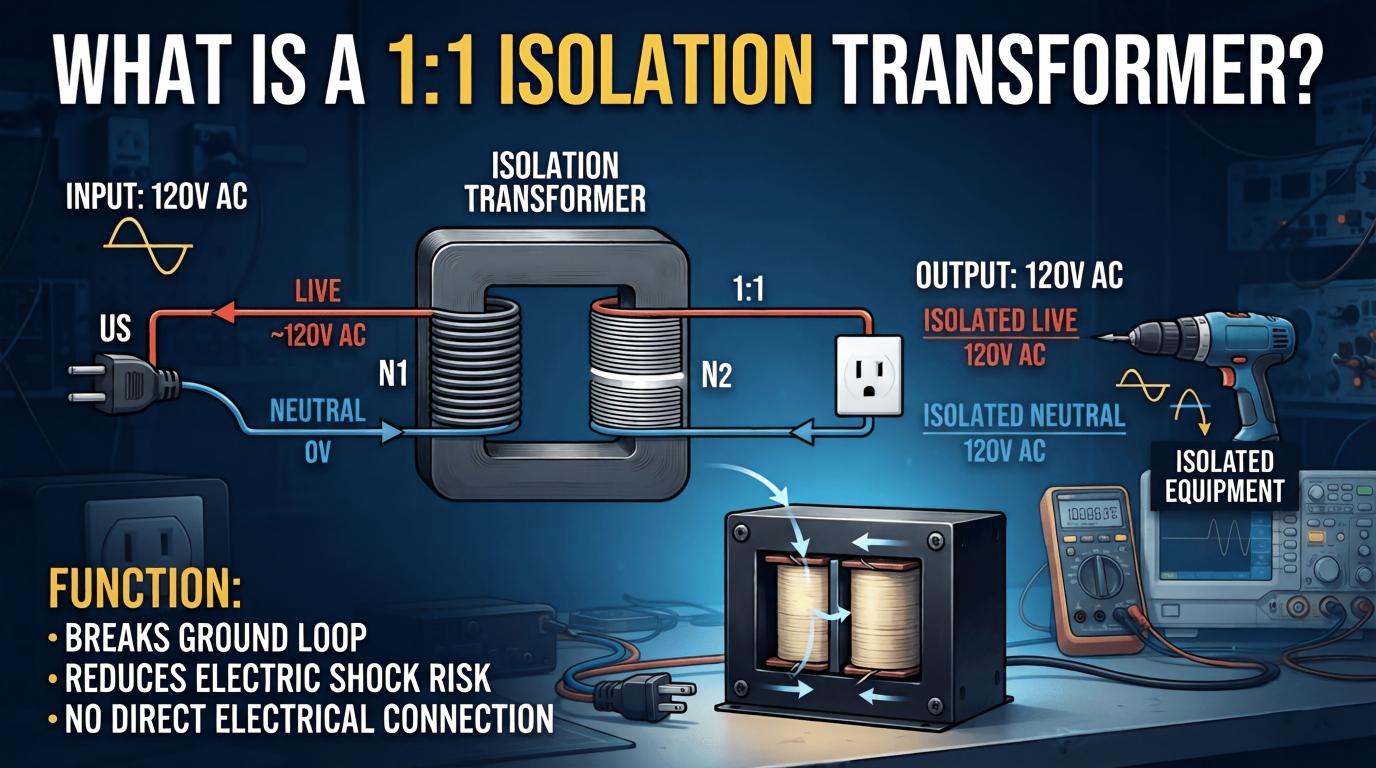
If you have ever stopped and wondered, “Why would anyone buy a 120V-to-120V or 240V-to-240V transformer if the voltage does not change?” the answer is simple and important: the transformer is not there to change voltage. It is there to create galvanic isolation, improve electrical safety, reduce noise, break ground loops, and protect sensitive equipment while keeping the same nominal output voltage.
That is exactly why products such as an isolation transformer 120V to 120V, an isolation transformer 240V to 240V, or an isolation transformer 277V to 277V are widely used in hospitals, industrial cabinets, studios, laboratories, and commercial buildings.
Why a 120V-to-120V or 240V-to-240V Transformer Can Be More Important Than a Voltage Changer
Some of the most valuable transformers in modern power systems do not boost voltage or reduce it at all.
They protect people, preserve signal integrity, reduce nuisance failures, and give engineers a safer electrical boundary. In real facilities, that often matters more than changing 120V into 24V or 480V into 240V.
Think about a hospital imaging room, a PLC cabinet next to a noisy motor drive, or a recording studio fighting stubborn hum. In all of those places, the problem is not “wrong voltage.” The problem is electrical coupling, interference, fault transfer, or unsafe reference paths.
The Core Problem: Electrical Systems Need More Than Voltage Conversion
Voltage conversion solves only one class of electrical problem. Many of the failures technicians see in the field come from something else entirely.
Shock risk from conductive fault paths
Ground loops that create hum or unstable signals
Common-mode noise that disrupts electronics
Transient coupling from upstream disturbances
Sensitive equipment malfunction in noisy electrical environments
In maintenance work, it is common to find equipment with the correct voltage but poor reliability because the supply is electrically “dirty.” A same-voltage isolation transformer addresses that kind of problem directly.
This is why engineers searching for a single-phase isolation transformer applications guide are usually not trying to change voltage. They are trying to build a cleaner and safer power interface.
What Is a 1:1 Isolation Transformer?
A 1:1 isolation transformer is a transformer whose primary winding and secondary winding have an equal turns ratio, so the output voltage remains approximately the same as the input voltage.
The key difference is that the input and output are electrically separated. Power is transferred magnetically rather than through a direct conductive connection.
So, a 120V input can produce about 120V output, a 240V input can produce about 240V output, and a 277V input can produce about 277V output. Yet the output side is isolated from the line side.
That isolation is the real value.
How Does a 1:1 Isolation Transformer Work?
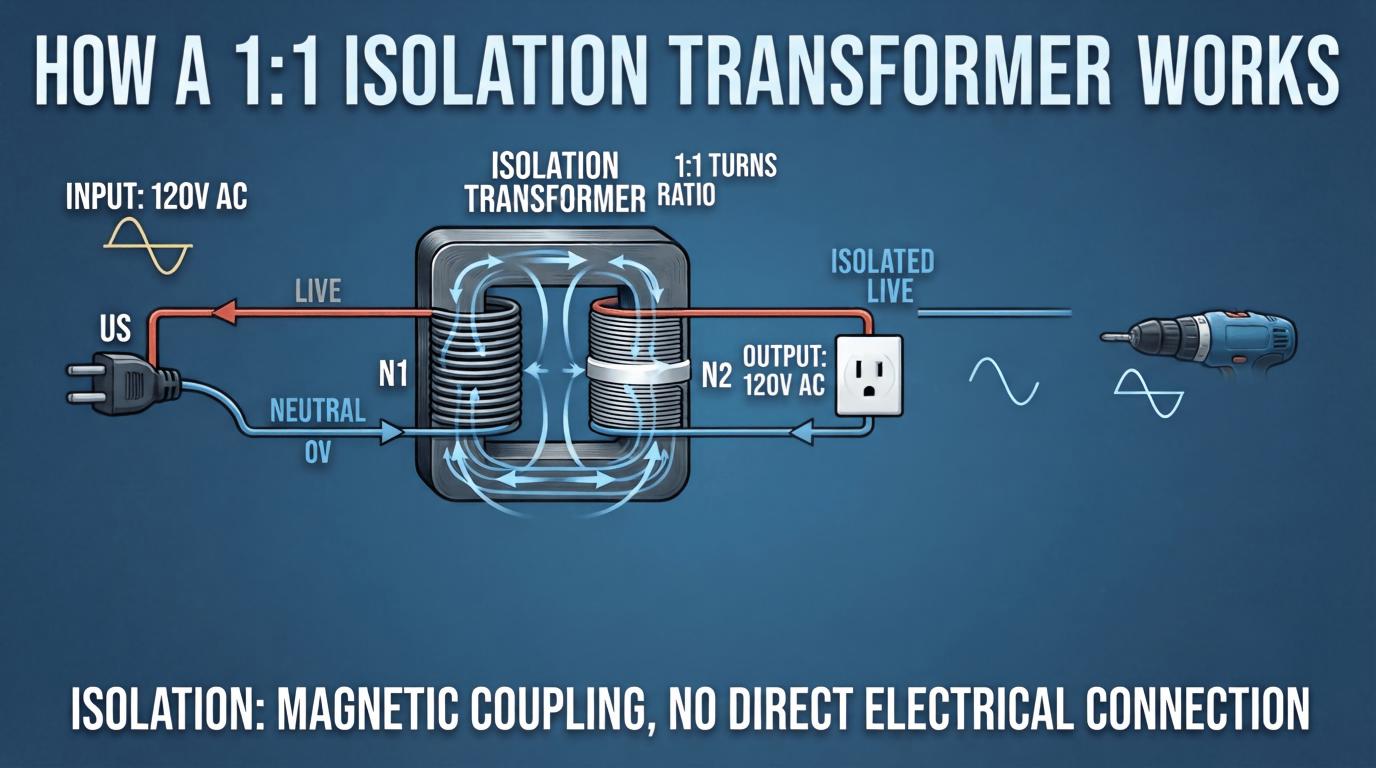
The 1:1 isolation transformer working principle is straightforward: alternating current in the primary winding creates a changing magnetic field in the core, and that magnetic field induces voltage in the secondary winding.
Because the windings are separate, there is no direct electrical continuity between input and output. AC power crosses the isolation barrier magnetically.
Primary and Secondary Windings
A 1:1 isolation transformer contains at least two separate windings: the primary connected to the source and the secondary connected to the load.
These windings are insulated from each other. That separation is what creates the safety and noise-control advantages that engineers want.
Magnetic Induction Instead of Direct Connection
Unlike a hard-wired circuit, the transformer transfers energy through magnetic induction. The changing magnetic flux in the core links the two windings without a metallic path between them.
This matters because unwanted fault current, ground reference issues, and some forms of electrical noise do not pass through the system in the same way they would with a direct conductive link.
Why the Output Voltage Stays the Same
When the turns ratio is 1:1, the induced secondary voltage is approximately equal to the primary voltage.
In the real world, the output is not mathematically perfect. There are small losses caused by winding resistance, core losses, regulation, and load conditions. That is why the output is usually described as nominally the same, not absolutely identical at every instant.
What Does Galvanic Isolation Mean?
Galvanic isolation means there is no direct conductive path between two circuits. They can exchange energy or information, but not through a continuous metal connection.
In a transformer, that means the source side and load side are separated by insulation and magnetic coupling.
The practical result is powerful. The galvanic isolation transformer benefits include reduced fault transfer, improved control of grounding strategy, lower common-mode noise coupling, and safer servicing conditions in many applications.
It is important to be precise here: isolation does not make every circuit harmless. If someone touches both secondary conductors, dangerous current can still flow. Good grounding, overcurrent protection, and code-compliant installation remain essential.
Key Benefits of a Galvanic Isolation Transformer
A 1:1 isolation transformer is often chosen because it improves the electrical relationship between the source and the load, not because it changes the voltage value.
Shock Protection
One of the biggest benefits is that isolation can reduce the path for dangerous current flow under certain fault conditions.
For example, on an unisolated supply, a person touching a live conductor while referenced to building ground may complete a dangerous circuit. On an isolated secondary, the fault path behaves differently because the output is not inherently tied to the input reference.
That is one reason service benches often use an isolation transformer 120V to 120V when troubleshooting line-powered devices.
Still, safety training matters. Isolation lowers risk in many scenarios, but it is not a substitute for lockout/tagout, proper PPE, correct fusing, or insulated tools.
Noise Reduction and Cleaner Power
Isolation transformers are commonly used to reduce common-mode noise. In sensitive electronics, that can mean fewer communication errors, less unstable behavior, and cleaner analog performance.
Designs that include an electrostatic shield between primary and secondary can improve attenuation of line-borne noise even further. In practice, this is especially useful in instrumentation, control systems, broadcast gear, and test equipment.
Manufacturers often specify common-mode attenuation rather than promising a universal “noise elimination” figure, because the result depends on frequency, grounding, wiring, shielding, and installation layout.
Ground Loop Prevention
Ground loops are notorious in audio, lab instrumentation, and mixed-signal industrial systems.
When multiple pieces of equipment share more than one ground return path, small voltage differences can circulate current through shields or references. The result can be hum, distorted signals, unstable measurements, or hard-to-trace interference.
An isolation transformer can help by breaking the direct conductive relationship that contributes to these loops. This is one of the most practical and measurable benefits in the field.
Equipment Protection
Isolation also helps shield loads from some upstream disturbances. It does not replace surge protection, filters, or UPS systems, but it can reduce direct coupling of certain faults and noise sources.
In industrial environments, that often translates to fewer nuisance trips and more stable control behavior. In electronics service work, it helps create a more controlled troubleshooting setup.
Isolation Transformer vs Autotransformer: What Is the Difference?
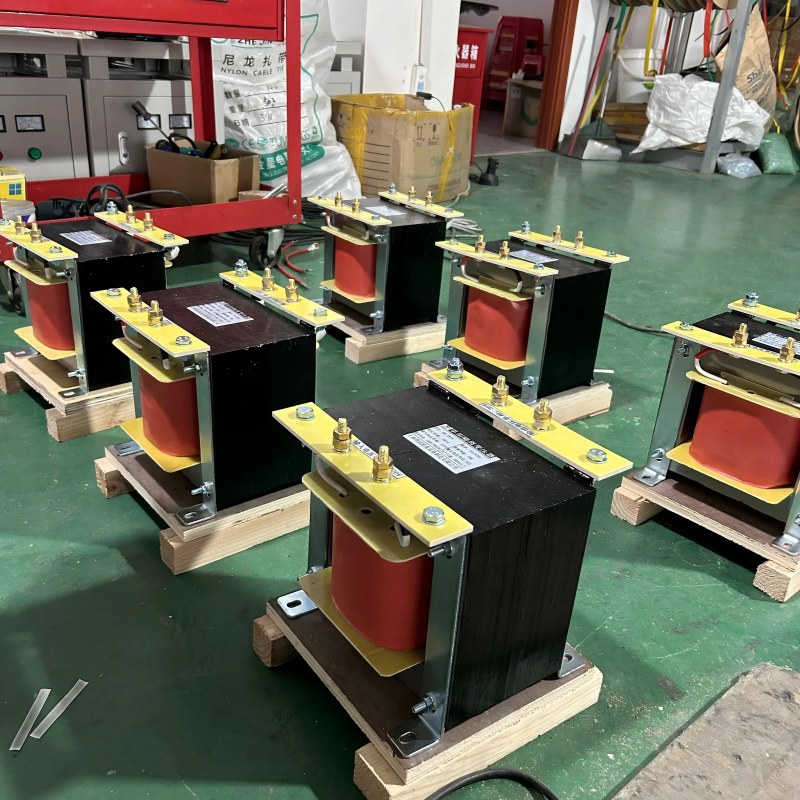
The isolation transformer vs autotransformer question matters because the two devices may look similar in function from a voltage standpoint, but they are fundamentally different in safety behavior.
An autotransformer uses a shared winding. That means the input and output are electrically connected.
An isolation transformer uses separate windings. That means the input and output are galvanically isolated.
Autotransformers are efficient, compact, and cost-effective when voltage adaptation is the main goal. But they do not provide true isolation, and they do not offer the same shock-protection and ground-loop-reduction benefits.
Isolation Transformer vs Autotransformer Comparison Table
| FEATURE | 1:1 ISOLATION TRANSFORMER | AUTOTRANSFORMER |
|---|---|---|
| Electrical separation | Yes | No |
| Voltage ratio | Often same input/output or different depending on design | Can step voltage up/down |
| Shock protection benefit | Higher due to isolated windings | Lower due to shared winding |
| Ground loop reduction | Yes | Limited |
| Noise isolation | Better | Limited |
| Typical use case | Medical, test benches, sensitive electronics | Cost-effective voltage adaptation |
In short, if you only need voltage matching or conversion at low cost, an autotransformer may be enough. If you need a safer electrical boundary, cleaner reference behavior, and reduced conductive coupling, the isolation transformer is the correct tool.
Common Input/Output Ratings: 120V to 120V, 240V to 240V, and 277V to 277V
Three of the most searched and most practical same-voltage models are:
isolation transformer 120V to 120V
isolation transformer 240V to 240V
isolation transformer 277V to 277V
These ratings exist because many applications need the same nominal operating voltage on the load side, but need that voltage delivered through an isolation barrier.
A 120V-to-120V unit is common in North American service benches, audio systems, and medical support equipment. A 240V-to-240V model is often chosen for industrial controls, imported machinery, and specialized process equipment. A 277V-to-277V model is common in commercial lighting and building systems where 277V is standard line-to-neutral voltage derived from 480Y/277V distribution.
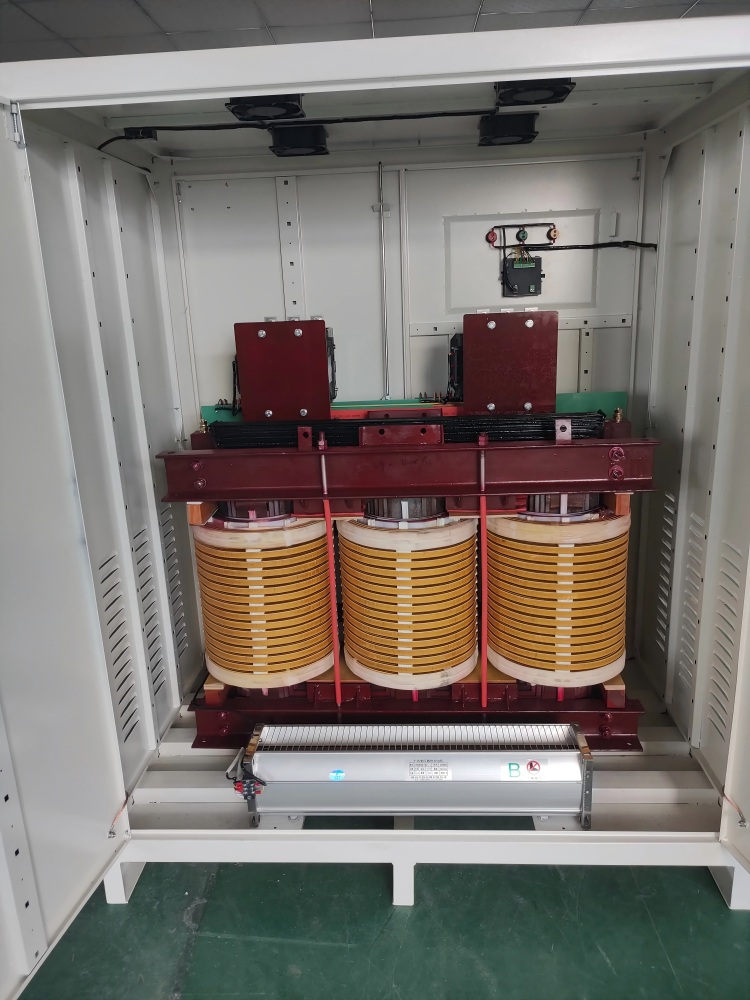
Where 1:1 Isolation Transformers Are Used
The list of single-phase isolation transformer applications is broader than many buyers expect.
These transformers are used whenever the same voltage is required, but the electrical relationship between source and load needs to be improved for safety, noise, or reliability reasons.
Medical and Healthcare Systems
Medical isolation transformer safety is a serious subject, not a marketing phrase. In patient-care areas, leakage current, insulation integrity, and reliability standards are more demanding because patients may be connected to electrical equipment directly or indirectly.
Isolation transformers are used in diagnostic rooms, treatment areas, and supporting medical electrical systems to reduce conductive fault transfer and support safer installation practices.
In these settings, specification details matter: leakage current, shield design, thermal performance, monitoring compatibility, and applicable standards all need careful review.
Industrial Control Panels
Control systems are highly sensitive to noise, especially where variable frequency drives, contactors, solenoids, and switching power supplies share space.
An isolation transformer 240V to 240V is often used ahead of PLC cabinets, HMI power circuits, or auxiliary control subsystems to reduce the coupling of common-mode disturbances and improve signal stability.
Field technicians regularly report fewer unexplained I/O issues when power is isolated and grounding is cleaned up at the same time.
Audio, Video, and Broadcast Systems
Studios and AV racks are classic examples of where galvanic isolation solves real headaches.
Ground loop hum at 50 Hz or 60 Hz, plus harmonics, can creep into signal chains through power and grounding interactions. A properly selected isolation transformer can help reduce audible interference and create a cleaner reference structure.
That does not replace correct audio grounding design, but it often makes the difference between a quiet system and a frustrating one.
Laboratories and Electronics Repair Benches
Isolation transformers are standard tools on professional repair benches for a reason.
When servicing line-powered power supplies, vintage televisions, oscilloscopes, or industrial electronics, an isolated source can reduce direct shock risk during testing and make measurement setups safer when using grounded instruments.
This is one of the clearest real-world examples of why a transformer that does not change voltage can still be indispensable.
Commercial Lighting and Building Systems
In large commercial buildings, 277V circuits are widely used for lighting. There are cases where an isolation transformer 277V to 277V is beneficial for maintenance separation, control of electrical noise, and safer service interface design.
These applications show that same-voltage isolation is not a niche concept. It is part of everyday power design in real buildings.
Medical Isolation Transformer Safety: Why It Matters
Medical environments deserve special attention because the consequences of electrical leakage can be much more severe when a patient is involved.
In ordinary industrial settings, a person may briefly touch equipment housing or wiring and then let go. In a clinical setting, a patient may be connected to monitoring electrodes, imaging devices, infusion systems, or treatment apparatus, creating more sensitive fault scenarios.
That is why medical isolation transformer safety focuses on lower leakage, robust insulation systems, dependable thermal performance, and compliance with medical electrical standards.
Hospitals also value system continuity. In some isolated power systems used in critical care environments, line isolation monitoring helps staff detect the first fault condition without immediate power interruption, supporting both safety and continuity of care.
According to common healthcare electrical design practices based on NEC and IEC frameworks, transformer selection in patient-care spaces must be driven by application risk, not just voltage and kVA. That is where working with an experienced manufacturer or engineering partner becomes essential.
For buyers comparing suppliers, this is a good place to look beyond catalog basics. Companies such as Weisho Electric that focus on transformer manufacturing for real industrial and commercial use cases can provide practical guidance on insulation class, shielding, enclosure style, and application fit rather than simply offering a generic box with a nameplate.
Real-World Examples of 1:1 Isolation Transformer Applications
Abstract theory is useful, but field examples tell the story better.
Here are five scenarios that reflect how same-voltage isolation transformers are used in practice.
Real-World Application Examples Table
| APPLICATION | TYPICAL RATING | PROBLEM SOLVED | PRACTICAL BENEFIT |
|---|---|---|---|
| Hospital diagnostic room | 120V to 120V | Leakage and patient safety concerns | Improved electrical isolation |
| Industrial PLC cabinet | 240V to 240V | Electrical noise and transient coupling | More stable control signals |
| Commercial lighting circuit | 277V to 277V | Isolation for maintenance and noise control | Safer servicing and cleaner power |
| Audio recording studio | 120V to 120V | Ground loop hum | Reduced audible interference |
| Repair bench for SMPS equipment | 120V to 120V | Safer troubleshooting of live circuits | Lower direct shock risk |
Consider a practical industrial example. A packaging line with multiple servo drives may experience intermittent PLC analog input fluctuations. After isolating the control power with a 240V-to-240V transformer and improving cabinet grounding, the noise margin often improves enough to stabilize process control.
In audio work, a studio may hear persistent low-frequency hum when rack equipment is fed from different branch circuits. Moving key signal equipment onto an isolated power feed often reduces the hum dramatically, especially when combined with better cable routing and proper shield practices.
On a repair bench, the difference is even more direct. A technician servicing an off-line switching power supply with grounded test instruments is safer and less likely to create accidental reference faults when the DUT is powered through an isolation transformer.
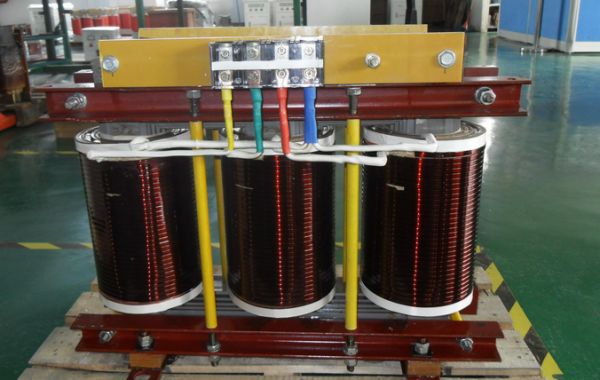
Performance Data: What the Numbers Typically Show
Experienced buyers do not stop at the concept. They want numbers.
While exact values vary by design, quality level, and application class, there are several specification areas that consistently determine whether a transformer is suitable.
Dielectric strength between windings and to core
Efficiency at rated load
Leakage current, especially in medical designs
Temperature rise under continuous operation
Noise attenuation, particularly with electrostatic shielding
kVA capacity and inrush handling
For example, many industrial isolation transformers offer dielectric strength in the 2 kV to 4 kV+ range, while more demanding designs may exceed that depending on standards and test methods. Efficiency is often in the 90% to 98% range, depending on size and loading.
Temperature rise is equally important. Lower temperature rise typically supports longer insulation life and better reliability. In continuous-duty installations, this affects total lifecycle cost more than many buyers expect.
Shielded designs can also offer measurable improvements in high-frequency noise attenuation. The exact figure depends heavily on frequency band and installation method, so reputable manufacturers will specify the performance carefully instead of making vague blanket claims.
Typical 1:1 Isolation Transformer Specification Table
| PARAMETER | TYPICAL RANGE | WHY IT MATTERS |
|---|---|---|
| Input/Output voltage | 120V:120V, 240V:240V, 277V:277V | Matches same-voltage isolation needs |
| Frequency | 50/60 Hz | Ensures compatibility with local mains power |
| Dielectric strength | 2 kV to 4 kV+ | Indicates insulation withstand capability |
| Efficiency | 90% to 98% | Affects energy loss and heat generation |
| Leakage current | Application-dependent, especially low in medical designs | Critical for personnel and patient safety |
| Noise attenuation | Varies by shielding/design | Important for sensitive electronics |
| kVA rating | Fractional to hundreds of kVA | Determines load capacity |
Real-world sizing data also matters. A bench isolation transformer may be rated at a few hundred VA, while a medical or industrial unit may be 1 kVA, 5 kVA, 15 kVA, or far larger. Large facilities can require three-phase isolation systems at much higher ratings, but for this article the focus remains on single-phase 1:1 designs.
As a rule, buyers should treat datasheets as engineering documents, not just sales sheets. If the specification for leakage, shielding, impedance, or insulation class is missing, ask questions before approving the design.

How to Choose the Right 1:1 Isolation Transformer
Choosing correctly is not difficult, but it does require more than matching voltage alone.
Match the Voltage Exactly
Start with the correct same-voltage requirement.
Use an isolation transformer 120V to 120V for 120V systems
Use an isolation transformer 240V to 240V for 240V systems
Use an isolation transformer 277V to 277V for 277V systems
Do not assume “close enough” is good enough. Nominal voltage, frequency, and actual operating conditions should all match the installation.
Size for Load and Inrush
Calculate the continuous load in VA or kVA, then account for startup current.
Motors, transformers, power supplies, and LED drivers can have substantial inrush. If the transformer is undersized, you may see overheating, nuisance tripping, poor voltage regulation, or premature failure.
A good practice is to include safety margin for expansion. Many engineers target headroom rather than running a transformer near its limit every day.
Check Shielding and Noise Requirements
If the load includes sensitive electronics, instrumentation, audio gear, or noisy upstream power, ask whether an electrostatic shield is needed.
This feature can significantly improve common-mode noise rejection. In some applications, it is the difference between a standard isolation transformer and one that truly solves the problem.
Review Safety Standards
Compliance matters.
Depending on the market and application, you may need to review UL, IEC, NEC, CE-related requirements, enclosure ratings, and medical electrical standards. In healthcare or OEM equipment, certification details are often as important as electrical ratings.
For mission-critical procurement, buyers should request test data, insulation class details, and applicable compliance declarations. A trustworthy supplier should be comfortable providing them.
Consider Installation Environment
Where will the transformer be installed?
Inside a control panel
Wall-mounted in a utility area
In a medical equipment cart
In a ventilated electrical room
Near heat, dust, vibration, or moisture
Enclosure type, mounting method, ambient temperature, ventilation clearance, and sound level all affect suitability.
In real procurement work, this is where application support becomes valuable. A manufacturer such as Weisho Electric can help match core design, shielding, enclosure options, and load behavior to the actual installation instead of forcing a generic one-size-fits-all choice.
Limitations of a 1:1 Isolation Transformer
Isolation transformers are extremely useful, but they are not magic.
They add cost, size, weight, heat, and losses. They also do not fix every power quality issue by themselves.
They do not replace surge protective devices
They do not replace UPS backup where ride-through is required
They do not guarantee perfect harmonic filtering
They do not eliminate the need for proper grounding
They do not make unsafe work practices acceptable
In some cases, the right solution is a combination of an isolation transformer, line reactor, EMI filter, surge protection, bonding correction, and better cable segregation.
That is why the best engineering decisions start with the actual failure mode, not just the product label.
FAQ
What is the purpose of a 1:1 isolation transformer?
The main purpose of a 1:1 isolation transformer is to provide electrical isolation while keeping the output voltage approximately equal to the input voltage. It improves safety, reduces conductive fault transfer, helps control ground loops, and can reduce common-mode noise for sensitive equipment.
Does a 1:1 isolation transformer change voltage?
Usually, no. It maintains the same nominal voltage on the output as the input, such as 120V to 120V or 240V to 240V. Under load, there may be a small voltage drop due to internal resistance and core losses, so the output is approximately the same rather than perfectly identical.
Is an isolation transformer safer than an autotransformer?
For applications that require galvanic isolation and reduced fault transfer, yes. An isolation transformer uses separate windings, while an autotransformer shares a winding between input and output. That shared winding means the autotransformer does not provide true electrical isolation.
When should I use an isolation transformer 120V to 120V?
An isolation transformer 120V to 120V is commonly used for service benches, audio systems, medical-support equipment, and sensitive electronics operating on 120V circuits. It is the right choice when the equipment needs the same voltage but also needs isolation for safety or noise reduction.
When is an isolation transformer 240V to 240V the right choice?
An isolation transformer 240V to 240V is a good fit for industrial equipment, control panels, imported machinery, and technical systems where 240V must be isolated without changing voltage. It is especially useful when electrical noise, grounding issues, or maintenance safety are concerns.
Why would someone need an isolation transformer 277V to 277V?
An isolation transformer 277V to 277V is often used in commercial lighting and building systems where 277V circuits need safer isolation, improved maintenance separation, or cleaner power for associated controls and infrastructure. It is practical in facilities built around 480Y/277V distribution.
Can a medical isolation transformer protect patients and staff?
Medical-grade isolation transformers help reduce leakage and support stricter electrical safety requirements in patient-care environments. They are designed for applications where electrical risk is higher because patients may be connected to equipment, but they must still be used within compliant system design and installation practices.
Does a 1:1 isolation transformer reduce electrical noise?
Yes, many designs reduce common-mode noise and improve performance for sensitive equipment. Units with electrostatic shielding are often more effective in this role, although the final result depends on grounding, wiring layout, source quality, and the frequencies involved.
Conclusion: Why a 1:1 Isolation Transformer Is a Safety and Reliability Tool
A 1:1 isolation transformer is easy to misunderstand if you look only at the voltage rating.
At first glance, a 120V-to-120V or 240V-to-240V transformer seems unnecessary. In practice, it is often the exact device needed when the real goal is electrical isolation, cleaner power, lower noise, ground loop reduction, improved maintenance safety, and better protection for people and equipment.
That is why these transformers remain essential in hospitals, industrial cabinets, repair benches, broadcast systems, laboratories, and commercial buildings. They solve problems that voltage conversion alone cannot touch.
If your system already has the right voltage but still struggles with interference, fault concerns, grounding complications, or sensitive-load reliability, the answer may not be a voltage changer. It may be a well-specified isolation transformer.
Compare Ratings and Choose the Right Isolation Transformer for Your Application
Now is the time to evaluate your real requirement: Do you need 120V to 120V, 240V to 240V, or 277V to 277V? What is the true load, the startup inrush, the noise environment, and the safety standard you must meet?
Do not settle for a generic selection when the application is critical. Compare ratings carefully, verify shielding and compliance details, and choose a transformer built for the actual environment.
Request expert guidance today to identify the best same-voltage isolation transformer for your medical, industrial, laboratory, AV, or building application. The right design will do far more than pass power through—it will protect your equipment, improve reliability, and create a safer electrical system from day one.