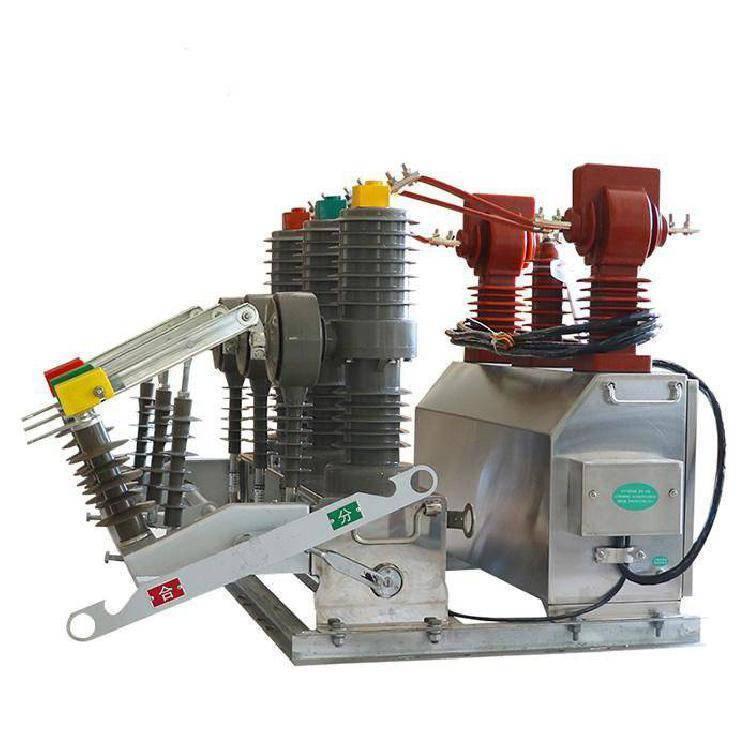
What is an 11kV Vacuum Circuit Breaker?
We consider an 11kV vacuum circuit breaker (VCB) a critical protection device used in medium voltage power distribution systems. Its primary function is to interrupt current flow immediately during fault conditions—such as short circuits or overloads—to prevent damage to expensive equipment like transformers and generators. At Weishoe Electric, our designs focus on the 12kV rating standard, which fully covers and optimizes performance for 11kV grid requirements. Unlike older technologies, these breakers rely on a high-vacuum environment to extinguish electrical arcs, ensuring grid stability and personnel safety.
Understanding Core Vacuum Technology
The “vacuum” in a medium voltage vacuum circuit breaker refers to the environment inside the vacuum interrupter, often called the vacuum bottle. This is the heart of the system. Because a vacuum has exceptional dielectric strength (insulation capability) far superior to air or oil, it allows for a much smaller gap between contacts to withstand high voltage.
When our VCBs operate, the contact separation occurs inside this permanently sealed chamber. The absence of gas molecules means there is almost nothing to sustain an electrical arc, allowing for rapid fault isolation.
Role of the Vacuum Interrupter in Arc Extinction
The process of arc extinction in our units is precise and instantaneous. Here is how we engineer it to work:
1. Contact Separation: When a fault is detected, the contacts pull apart.
2. Metal Vapor Arc: An arc forms briefly due to metal vapor from the contact material.
3. Rapid Diffusion: Because it is a vacuum, the metal vapor expands and diffuses incredibly fast.
4. Current Zero Interruption: At the first current zero crossing, the arc is extinguished because the dielectric strength recovers faster than the rising voltage can restrike the arc.
Key Components: Operating Mechanism and Contacts
Reliability depends on the synergy between the internal components. Our 11kV vacuum circuit breaker specifications highlight two main systems:
The Vacuum Interrupter: Contains the fixed and moving contacts. We use specialized contact materials (often Copper-Chromium) to minimize wear and prevent welding during high-current faults.
The Operating Mechanism: This provides the mechanical energy to open and close the contacts. We typically utilize spring-charged mechanisms or advanced permanent magnetic actuators, ensuring high endurance (rated for 10,000 to 20,000 mechanical operations) and fast response times.
Difference Between Vacuum and Traditional Oil/Air Breakers
We advocate for switching to vacuum technology because it eliminates the environmental and maintenance liabilities associated with older oil or air-blast breakers. Below is a comparison of why eco-friendly breakers are the superior choice for modern infrastructure.
| Feature | Vacuum Circuit Breaker (VCB) | Oil / Air Circuit Breaker |
|---|---|---|
| Arc Quenching Medium | High Vacuum (Sealed) | Oil or Compressed Air |
| Maintenance | Minimal (Sealed for life) | High (Oil replacement, contact cleaning) |
| Fire Hazard | None (Oil-free & SF6-free) | High (Oil is flammable) |
| Service Life | Long (20-30 years) | Shorter (Degrades with use) |
| Size | Compact & Modular | Bulky & Heavy |
| Environmental Impact | Eco-friendly | Risk of oil leaks or SF6 emissions |
By utilizing vacuum technology, we provide a solution that is not only safer but also significantly reduces operational costs over the equipment’s lifecycle.
Key Technical Specifications of 11kV VCBs
When selecting protection for medium-voltage networks, the specific technical parameters define reliability and safety. Our 11kV vacuum circuit breaker specifications are engineered to meet rigorous international standards, ensuring stability for both utility and industrial applications. We design these units to handle the demands of modern grids, exploring the benefits of vacuum circuit breakers through superior arc quenching capabilities and robust mechanical design.
Rated Voltage and Current Parameters
While these units are deployed in 11kV service networks, they are rated for 12kV to provide a necessary safety margin. The continuous current rating determines how much load the breaker can handle during normal operation. We offer flexible configurations to match specific load requirements:
Rated Current 630A: Ideal for standard distribution feeders and smaller industrial loads.
1250A to 1600A: Designed for main incomers and heavier industrial machinery.
Customization: Higher ratings are available depending on the specific switchgear configuration.
Short-Circuit Breaking Capacity and Compliance
The ability to safely interrupt a fault is the most critical function of any VCB. Our breakers feature a short circuit breaking capacity ranging from 20kA to 31.5kA, ensuring that massive fault currents are cleared instantly without damaging downstream equipment.
We adhere strictly to global manufacturing standards. Every unit is an IEC 62271-100 compliant VCB, guaranteeing consistent performance across diverse environments. This compliance also extends to mechanical endurance, with our operating mechanisms rated for 10,000 to 20,000 mechanical operations, translating to a service life of 20–30 years with minimal maintenance.
Technical Data
| Parameter | Specification |
|---|---|
| Rated Voltage | 12kV (Suitable for 11kV Systems) |
| Rated Current | 630A, 1250A, 1600A (Customizable) |
| Rated Frequency | 50/60 Hz |
| Short-Circuit Breaking Current | 20kA, 25kA, 31.5kA |
| Lightning Impulse Withstand Voltage | Up to 75kV |
| Mechanical Life | 10,000 – 20,000 Operations |
| Operating Mechanism | Spring or Permanent Magnetic |
Insulation and Impulse Withstand
To protect against voltage surges and lightning strikes, insulation integrity is non-negotiable. Our vacuum interrupters maintain a high dielectric strength, with a lightning impulse withstand voltage of up to 75kV. This ensures the breaker remains secure even during extreme transient overvoltage events, protecting the substation infrastructure from catastrophic failure.
Indoor vs. Outdoor 11kV VCB Types
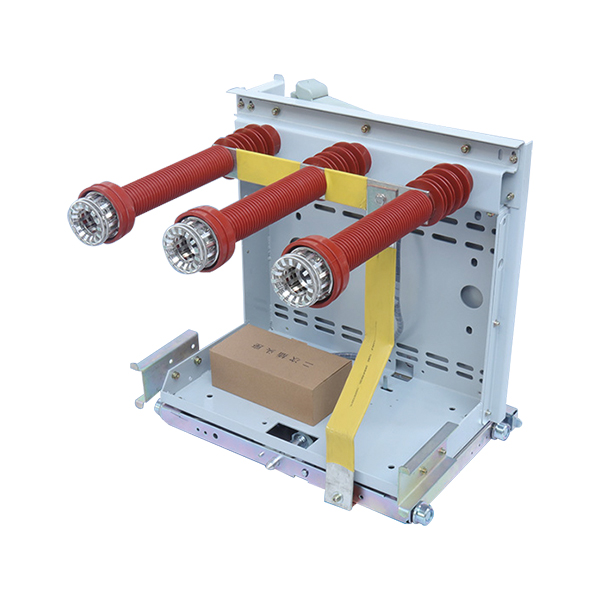
When selecting an 11kV vacuum circuit breaker, the first major decision is determining the operating environment. At Weishoe, we engineer our breakers to perform specifically for either controlled indoor substations or harsh outdoor distribution networks. Understanding the distinction between our 11kv indoor Vacuum Circuit Breaker series and our outdoor units ensures long-term reliability and safety.
Features of Indoor Withdrawable Units (VS1/ZN63)
Our indoor models, primarily the ZN63 (VS1) series, are the industry standard for medium-voltage switchgear. These breakers are designed for high-performance protection within a controlled enclosure.
Modular Design: Available in fixed or withdrawable (handcart) versions. The withdrawable design allows operators to safely rack the breaker out for maintenance without de-energizing the entire busbar.
Switchgear Compatibility: These units are engineered to integrate seamlessly with standard panels. They are the core component for KYN28 (metal-clad withdrawable) and XGN (box-type fixed) switchgear cabinets.
Safety Interlocks: Built-in mechanical interlocks prevent misoperation, ensuring the breaker cannot be moved while in the closed position.
Understanding how these units fit into broader protection schemes is crucial, similar to evaluating solid insulated switchgear vs vacuum circuit breaker configurations for compact substations.
Characteristics of Outdoor Pole-Mounted Breakers (ZW32)
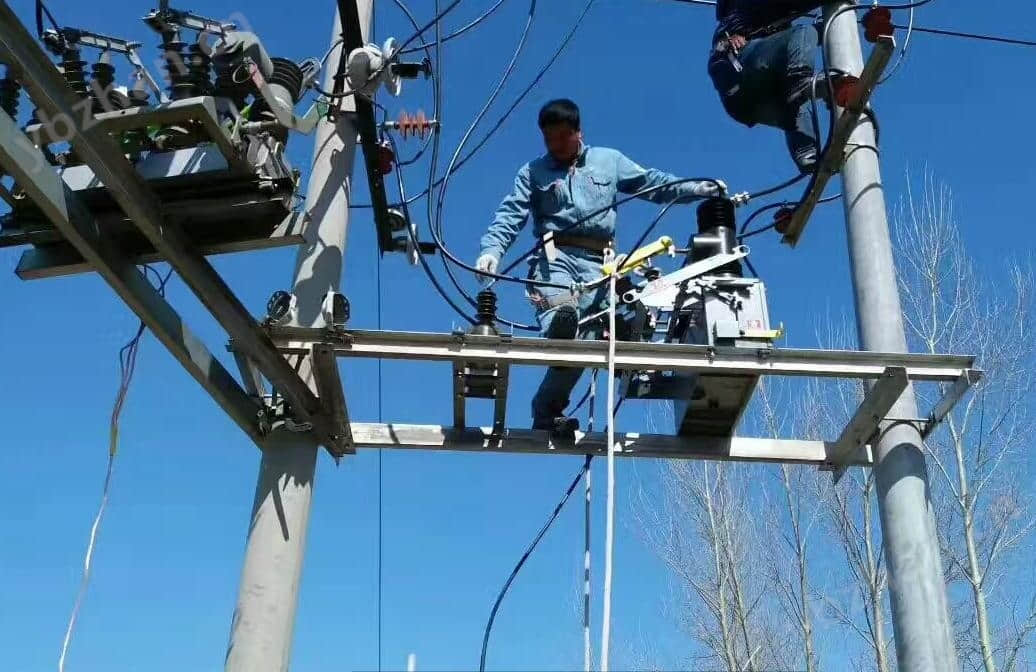
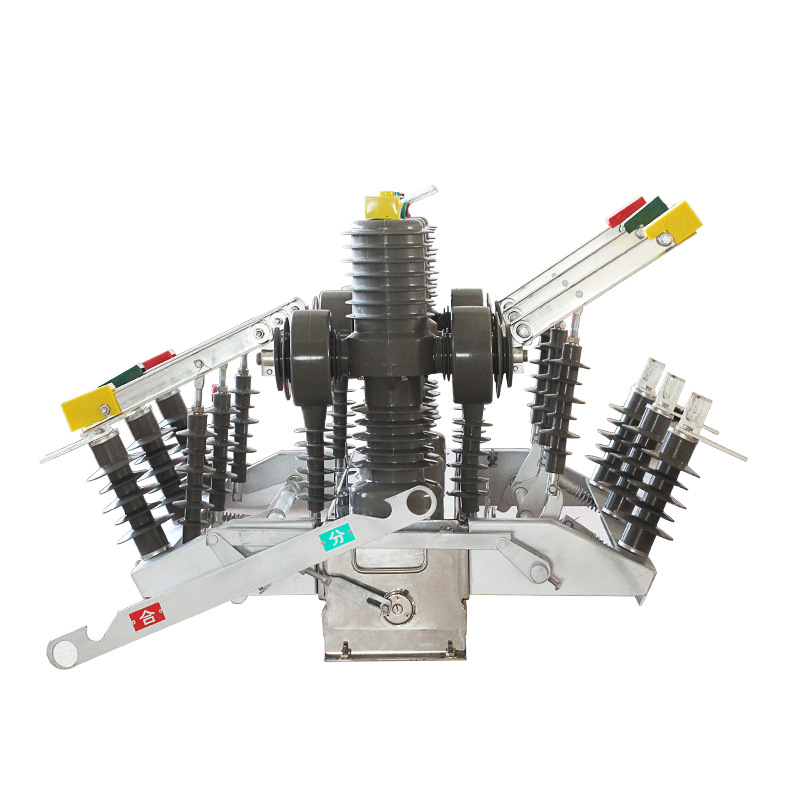
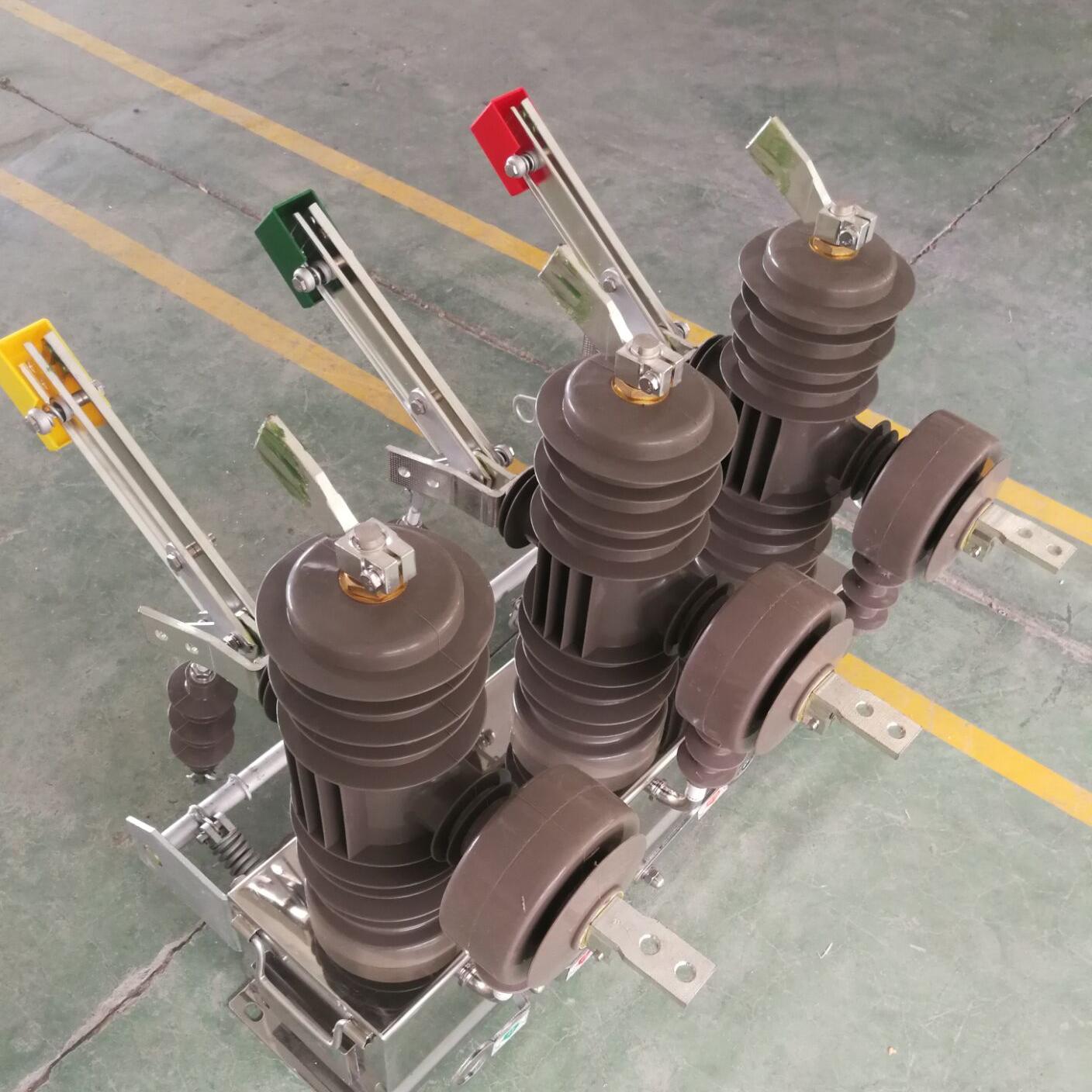
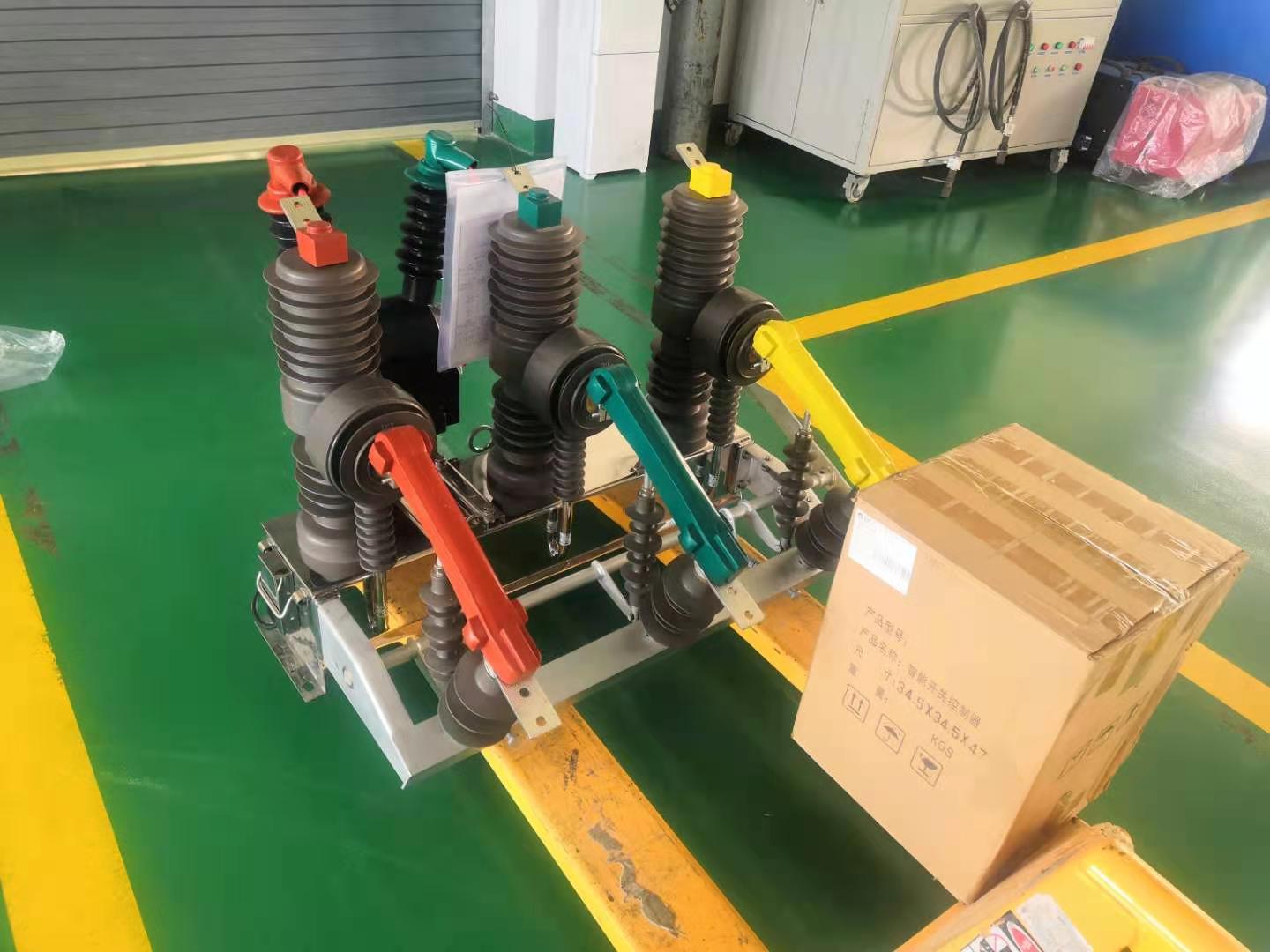
For overhead distribution lines, we supply the 11kv Outdoor Vacuum Circuit Breaker, typically the ZW32 model. These are built to survive where indoor units cannot.
Weatherproof Housing: The external insulation uses silicone rubber or UV-resistant porcelain to withstand rain, dust, and extreme temperatures.
Pole-Mounted Installation: Designed for direct installation on utility poles, often replacing older oil switches or reclosers.
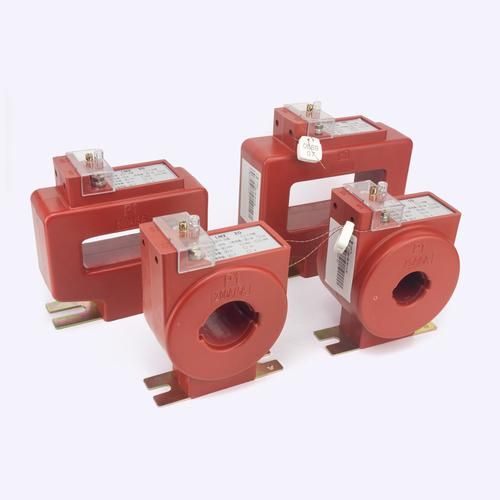
Integrated CTs: Many of our outdoor units come with built-in Current Transformers (CTs) for protection and metering, reducing the need for separate equipment on the pole.
Comparison: VS1 vs. ZW32
To help you choose the right specifications, here is a quick comparison of our two primary 11kV VCB categories:
| Feature | Indoor VCB (VS1/ZN63) | Outdoor VCB (ZW32) |
|---|---|---|
| Primary Application | Substation Switchgear Panels | Overhead Distribution Lines |
| Installation Type | Withdrawable (Truck) or Fixed | Pole-Mounted |
| Enclosure Rating | IP4X (inside cabinet) | IP65 (Weatherproof) |
| Insulation Method | Air + Vacuum (inside panel) | Silicone Rubber / Porcelain |
| Compatible Panel | KYN28, XGN | N/A (Standalone) |
Selecting the Right Type for Environmental Conditions
Choosing between these types depends entirely on your infrastructure layout. If you are designing a compact urban substation or retrofitting an industrial power room, the 11kV VCB panel utilizing a VS1 unit is the correct choice. However, for rural electrification or extending grid reach where building a shelter isn’t feasible, the ZW32 outdoor breaker provides the necessary durability. We always recommend assessing local humidity and pollution levels; for extremely corrosive coastal areas, specific outdoor insulation upgrades may be required to prevent flashovers.
Advantages of Switching to Vacuum Technology
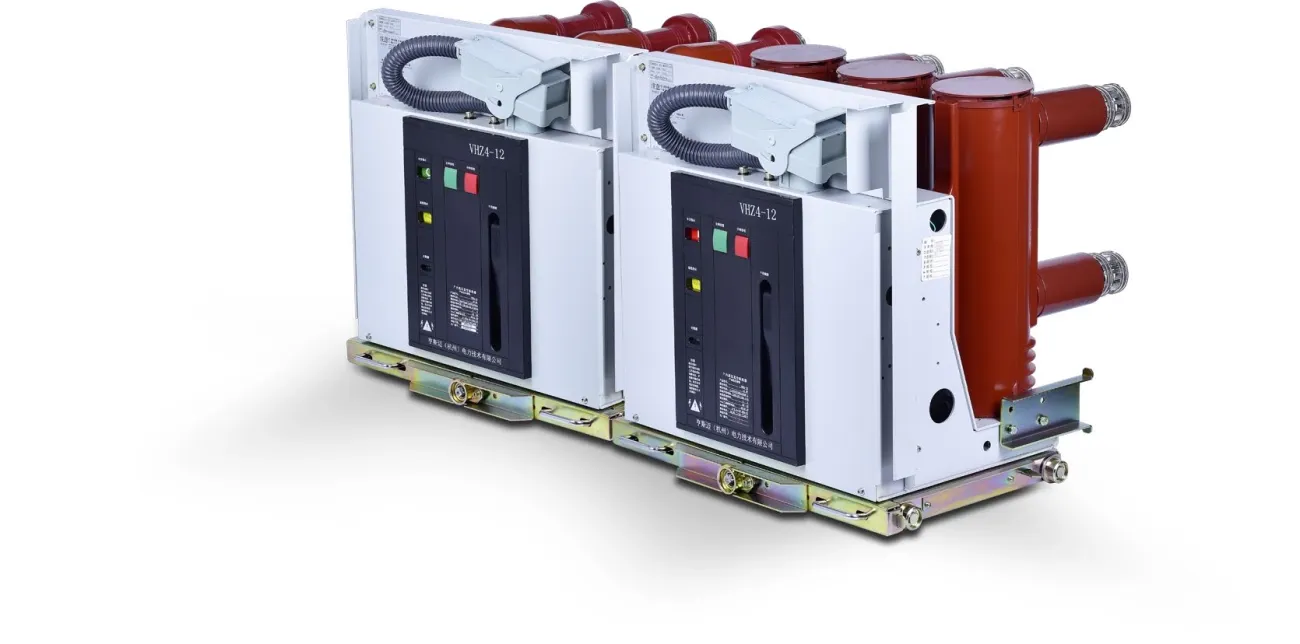
Upgrading to a modern 11kV vacuum circuit breaker offers distinct operational benefits over legacy oil or air-insulated systems. We design our breakers to meet the rigorous demands of utility and industrial grids, focusing on safety, longevity, and environmental responsibility.
Eco-Friendly and Safe Operations
One of the biggest drivers for adopting this technology is environmental compliance. Our eco-friendly breaker designs are 100% SF6-gas and oil-free. This eliminates the risk of hazardous leaks and removes the need for complex gas monitoring systems. When comparing a vacuum circuit breaker vs SF6 alternatives, the vacuum option provides a cleaner, safer solution for personnel and the environment.
Superior Performance and Low Maintenance
The medium voltage vacuum circuit breaker excels in reducing operational costs through its robust engineering:
Rapid Arc Quenching: The vacuum interrupter ensures immediate arc extinction at the first current zero, providing superior fault interruption to protect downstream equipment.
Extended Service Life: Rated for 10,000 to 20,000 mechanical operations, our units offer a lifespan of 20–30 years with minimal wear.
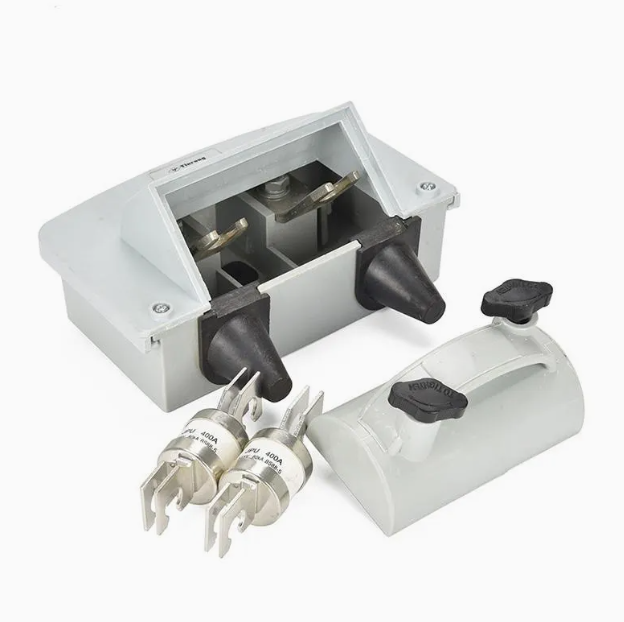
Maintenance-Free Design: The sealed vacuum contacts require no routine maintenance, unlike oil breakers that need frequent changing. For modular switchgear setups, our designs integrate seamlessly with components like the mid-mounted fuse handcart, simplifying system upgrades and servicing.
High Reliability: These units are perfect for applications requiring frequent switching, ensuring consistent performance without degradation.
Common Applications for 11kV Vacuum Circuit Breakers
We see our 11kV vacuum circuit breakers deployed across diverse sectors where power reliability is non-negotiable. From stabilizing city grids to protecting heavy machinery, the versatility of vacuum technology makes it the standard for medium voltage systems. The robust design and short circuit breaking capacity of our units ensure they perform reliably in the most demanding environments.
Utility Substations and Urban Grids
Municipalities and utility providers rely on our breakers for critical substation protection and distribution networks. Their compact design fits easily into urban infrastructure where space is at a premium, ensuring consistent power delivery to residential and commercial zones. The high mechanical life of these units reduces the need for frequent service trips, which is vital for maintaining grid uptime in densely populated areas.
Industrial Plants and Manufacturing
Heavy industries require equipment that can handle frequent switching and high current loads. Our medium voltage vacuum circuit breakers provide superior arc extinction capabilities, protecting motors, transformers, and capacitor banks in steel mills, mining operations, and chemical plants. Unlike older technologies, vacuum interrupters maintain high insulation levels even after clearing severe faults, minimizing production downtime.
Renewable Energy Integration
As the energy landscape shifts toward green sources, our eco-friendly breakers are becoming essential for solar farms and wind turbines. These applications often involve variable power outputs and frequent switching cycles. Our VCBs are designed to handle these fluctuations without the use of harmful SF6 gas, aligning with the environmental goals of modern renewable projects.
Retrofit Projects and Infrastructure Upgrades
Many facilities are actively upgrading aging infrastructure by replacing obsolete oil or air-blast breakers with modern vacuum technology. Our modular designs simplify this process, allowing for a cost-effective transition without replacing the entire switchboard. If you are planning a system upgrade, understanding how to install a switchgear correctly ensures the seamless integration of new vacuum technology into existing panels, extending the operational life of your facility.
Installation and Maintenance Best Practices
Proper installation and maintenance are critical for ensuring the 20 to 30-year service life of a medium voltage vacuum circuit breaker. At Weishoe Electric, we design our units for minimal intervention, but following a strict protocol ensures safety and reliability. Since our vacuum interrupters are permanently sealed, you don’t need to deal with gas handling or oil testing, making the process much cleaner than legacy systems.
Step-by-Step Installation for Switchgear Panels
Installing an indoor vacuum circuit breaker 11kV unit, specifically withdrawable types like the ZN63 (VS1), requires precision to ensure seamless operation within the 11kV VCB panel.
1. Safety Verification: Ensure the switchgear busbar is de-energized and grounded. Never attempt installation on a live system.
2. Visual Inspection: Before mounting, check the 11kV vacuum interrupter housing for any shipping damage or cracks in the insulation.
3. Alignment and Racking: For withdrawable units, align the chassis rails with the switchgear cubicle. Push the breaker into the “Test” position first, then rack it into the “Service” position using the handle. The interlocks must engage smoothly.
4. Primary and Secondary Connections: Secure the busbar connections to the fixed contacts if using a fixed-mounted unit. Connect the secondary control plug (aviation plug) for the operating mechanism and auxiliary switches.
5. Grounding: Verify that the grounding pad on the breaker frame is solidly connected to the switchgear ground bus.
Understanding the broader context of how these components fit together is vital; you can read more about how vacuum circuit breakers are used in power systems to see the full picture of grid integration.
Routine Visual Checks and Contact Wear
While our VCBs are low maintenance, they are “no maintenance.” Regular visual inspections help catch issues before they cause downtime.
Cleanliness: Check for dust accumulation on the insulating cylinders. In high-humidity areas, dust can lead to tracking. Wipe down insulators with a dry, lint-free cloth.
Contact Wear Monitoring: You cannot see inside the vacuum bottle, but you can measure the contact wear externally. Check the over-travel mark on the operating rod. If the mark exceeds the limit (usually 3mm wear), the 11kV vacuum interrupter needs replacement.
Fasteners: Ensure all bolts on the conducting path and mounting frame are torqued to specification.
Testing Vacuum Integrity and Insulation
To maintain an IEC 62271-100 compliant VCB status, periodic testing is required. Since the vacuum is the sole insulating medium between contacts, its integrity is non-negotiable.
Vacuum Withstand Test (Hi-Pot): Apply a high-voltage AC test (typically 42kV for 1 minute for 12kV-rated units) across the open contacts. If the bottle holds the voltage without discharge, the vacuum is intact.
Insulation Resistance: Use a Megger (5kV) to test insulation between phases and phase-to-ground. This confirms the dielectric strength of the solid insulation frame.
Loop Resistance: Measure the resistance of the main conductive circuit using a micro-ohmmeter. High resistance indicates loose connections or oxidized contacts.
Troubleshooting Operating Mechanism Issues
The operating mechanism—whether spring or permanent magnetic—is the engine of the breaker. Most operational failures stem from the mechanism, not the vacuum bottle.
Failure to Charge: If the spring motor doesn’t charge, check the secondary control voltage and the motor limit switch.
Refusal to Close: If the breaker won’t close, verify the closing coil circuit and ensure the mechanical interlocks (like the earthing switch position) aren’t blocking the operation.
Lubrication: For spring mechanisms, apply high-grade grease to moving parts (cams, gears, and latches) every 3-5 years or after 2,000 operations to prevent seizing.
By adhering to these practices, you ensure your 11kV vacuum circuit breaker specifications are met throughout its lifecycle, providing reliable protection for your facility.
11kV VCB Price and Selection Factors
When budgeting for medium voltage switchgear, looking for a generic 11kV VCB price list often leads to inaccurate estimates. The final cost varies significantly based on technical specifications and project-specific requirements. At Weishoe, we focus on a transparent value model where you pay for the performance you need, ensuring you get the best return on investment for your infrastructure.
Understanding Cost Drivers
The primary factor influencing the 11kV vacuum circuit breaker price is the technical rating. A standard unit with a rated current of 630A will naturally cost less than a heavy-duty 1250A or 1600A model designed for higher load demands. Similarly, increasing the short circuit breaking capacity from 20kA to 31.5kA requires more robust vacuum interrupters and stronger operating mechanisms, which impacts the manufacturing cost.
Customization plays a huge role as well. Fixed-mounted units are generally more affordable than withdrawable truck-type configurations used in metal-clad switchgear. Furthermore, adding essential safety accessories like a grounding handcart or specialized interlocking systems will adjust the final quote.
Evaluating Suppliers and Standards
Price shouldn’t be the only metric when selecting protection equipment. Ensuring your equipment is an IEC 62271-100 compliant VCB is critical for safety and regulatory compliance. We adhere to strict ISO 9001 quality management systems to ensure every unit meets global safety standards. Cheaper alternatives often cut corners on insulation materials or mechanism durability, which inevitably leads to higher long-term maintenance costs and potential safety hazards.
Smart Grid Compatibility
Modern US infrastructure increasingly demands a SCADA-compatible VCB. Integrating smart sensors and digital protection relays allows for real-time remote monitoring via industry-standard protocols like DNP3 or IEC 61850. While these smart features increase the initial investment compared to a basic manual breaker, they drastically reduce downtime by enabling predictive maintenance and rapid fault isolation.
Requesting Accurate Quotes
To get a precise number, we recommend requesting a personalized quote rather than relying on outdated online catalogs. When contacting us, provide the specific 11kV vacuum circuit breaker specifications—including voltage, current, breaking capacity, and environmental conditions—so we can engineer a solution that fits both your budget and technical needs.
Frequently Asked Questions (FAQs)
What is the expected lifespan of an 11kV vacuum interrupter?
We engineer our 11kV vacuum circuit breakers for long-term reliability. Under normal operating conditions, you can expect a service life of 20 to 30 years. The core component—the 11kV vacuum interrupter—is rated for 10,000 to 20,000 mechanical operations. This high endurance makes them ideal for applications requiring frequent switching without the need for constant replacement.
How does a vacuum circuit breaker compare to an SF6 breaker?
The primary distinction in the vacuum circuit breaker vs SF6 debate is environmental impact and maintenance. Our VCBs are 100% SF6-gas and oil-free, eliminating the risk of greenhouse gas leaks and the need for complex gas monitoring systems. While SF6 breakers are effective, vacuum technology offers a “fit and forget” solution that reduces long-term operational costs and supports green energy initiatives.
Can 11kV VCBs be used in high-humidity tropical climates?
Yes, they are highly adaptable. For environments with high humidity or extreme weather, we recommend using our outdoor 11kV vacuum circuit breaker models (such as the ZW32 series). These units feature rugged, weather-resistant enclosures and enhanced external insulation specifically designed to prevent flashovers and corrosion in tropical or coastal regions.
What routine maintenance is required for vacuum breakers?
One of the strongest selling points of our VCBs is the sealed-for-life vacuum interrupter, which requires zero internal maintenance. However, the operating mechanism does need periodic attention to ensure reliable tripping and closing. We suggest performing visual inspections and lubrication of moving parts every few years. For a comprehensive walkthrough on keeping your system in top shape, review our vacuum circuit breaker maintenance guide.