Choosing between a voltage regulator and an isolation transformer sounds simple until real equipment starts failing, tripping, drifting, or producing noisy readings.
In practice, many buyers use the wrong device because both products sit in the same power chain, both are associated with equipment protection, and both are often discussed under the broad label of power conditioning for sensitive equipment.
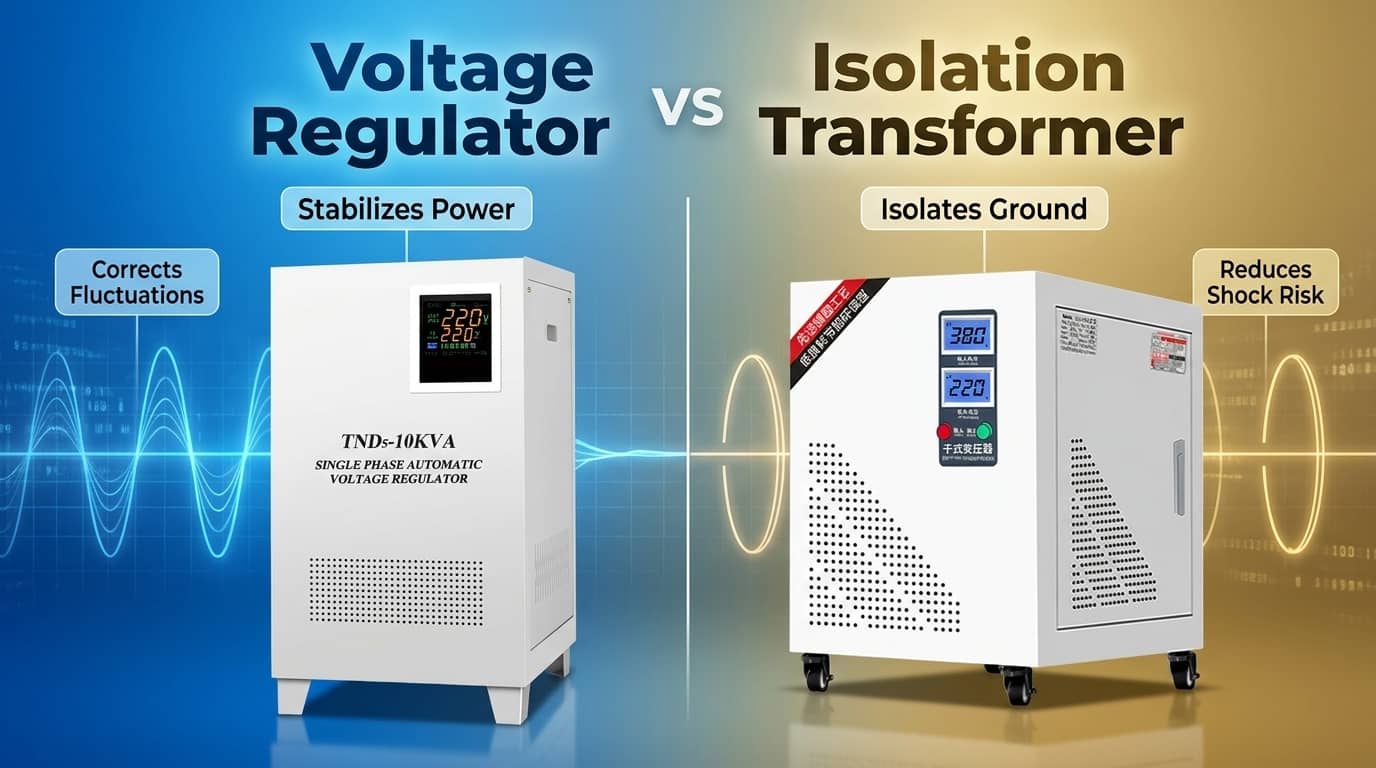
Here is the critical distinction from the start: a voltage regulator is mainly used to stabilize output voltage, while an isolation transformer is mainly used for electrical isolation, breaking ground loops, and improving safety. It is not primarily a voltage stabilizer.
If you remember only one line from this article, remember this one: voltage instability calls for a regulator; electrical isolation and ground-loop problems call for an isolation transformer.
Voltage Regulator vs Isolation Transformer at a Glance
A voltage regulator, also called an automatic voltage regulator, keeps the output voltage close to a target value even when the incoming mains voltage rises or falls within its designed correction range.
An isolation transformer physically separates the primary winding and secondary winding, so there is no direct electrical continuity between input and output. Its main role is to provide electrical isolation and break ground loops.
This is the core answer to the search intent behind automatic voltage regulator vs isolation transformer: one corrects voltage fluctuation, the other interrupts conductive paths and common-mode noise.
| Device | Main Function | What It Solves Best | What It Does Not Primarily Solve |
|---|---|---|---|
| Voltage Regulator | Stabilizes output voltage | Overvoltage, undervoltage, brownouts, input fluctuation | Electrical isolation, ground loop interruption, shock isolation |
| Isolation Transformer | Provides electrical isolation | Ground loop noise, common-mode interference, safer maintenance | Automatic voltage stabilization |
Why People Confuse a Voltage Regulator and an Isolation Transformer
The confusion is understandable. Both devices are installed between the utility supply and the load. Both are marketed as protective equipment. Both can be used in industrial, laboratory, medical, and testing environments.
But they solve different electrical problems.
Voltage regulators address voltage fluctuations.
Isolation transformers address electrical isolation, ground path issues, and common-mode noise.
In the field, buyers often say, “I need cleaner power,” but “cleaner” can mean at least three different things:
The voltage is too low or too high.
The grounding path is unsafe or noisy.
The equipment needs both stable voltage and isolation.
This is why the phrase voltage stabilization and electrical isolation matter so much. They are not interchangeable functions.
What Is a Voltage Regulator?
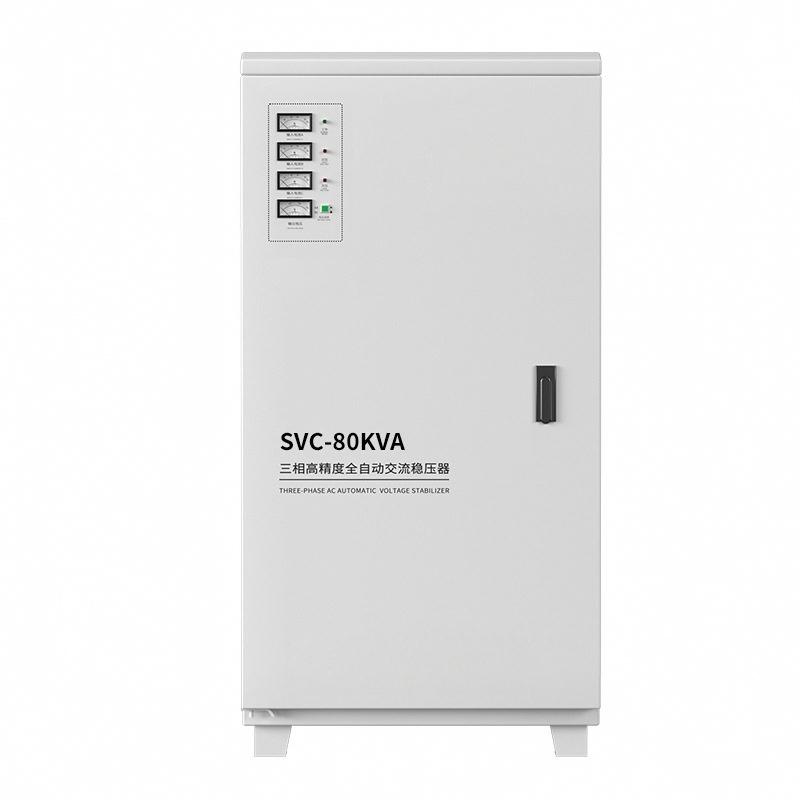
A voltage regulator is a device designed to automatically maintain a stable output voltage when the input voltage changes.
If the utility supply drops, the regulator boosts. If the utility supply rises, the regulator reduces. The goal is to keep the load close to its rated operating voltage.
This is especially important in rural grids, construction sites, temporary power systems, old factory lines, and remote facilities where the incoming voltage may vary significantly over the day.
Core Function of a Voltage Regulator
The main job of a voltage regulator is simple and essential: keep the output near the rated voltage to protect equipment from overvoltage and undervoltage.
For example, if a machine is designed for 220V and the supply swings between 180V and 250V, a properly sized regulator can maintain output near the target value, provided the input remains within the regulator’s correction range.
That matters because both low voltage and high voltage can damage equipment, though in different ways.
Undervoltage can cause motors to overheat, relays to chatter, contactors to drop out, and control electronics to reboot.
Overvoltage can stress capacitors, power supplies, insulation, and semiconductor components.
In field service reports from unstable distribution areas, voltage variation of more than 10% is not unusual. On a nominal 220V system, that means anything below 198V or above 242V may already be problematic for some loads.
What a Voltage Regulator Does Not Do
A voltage regulator is not mainly an electrical isolation device.
In most common designs, it does not isolate the mains ground, does not break the primary-secondary conductive relationship in the way an isolation transformer does, and does not by itself prevent electric shock, eliminate leakage risk, or fully block electrical noise.
This point is often missed in purchasing decisions. If the actual problem is leakage concern, grounding noise, or a dangerous service bench, a regulator alone is the wrong answer.
It is also not a complete substitute for:
surge protective devices
leakage protection
EMI filtering
UPS backup
Common Types of Voltage Regulators
The most common industrial categories include the following:
Servo voltage regulators – use a servo motor and control circuit to adjust output. These are common for wide fluctuation environments and medium to high capacities.
Static or contactless regulators – use electronic switching rather than mechanical brush movement, often preferred where faster response or lower maintenance is needed.
Induction voltage regulators – used in certain heavy-duty industrial applications where robust continuous regulation is required.
Servo designs remain popular because they balance cost and performance well in workshops, manufacturing lines, and utility-challenged locations.
What Is an Isolation Transformer?
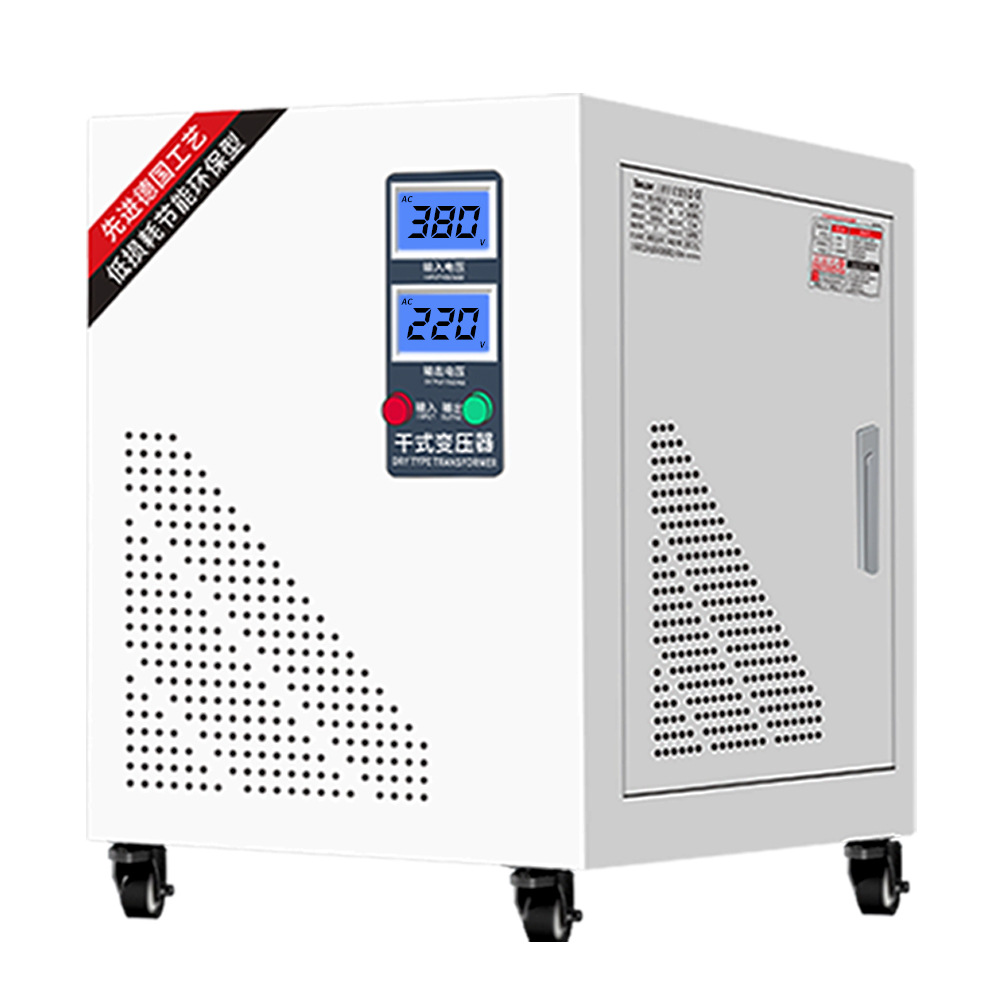
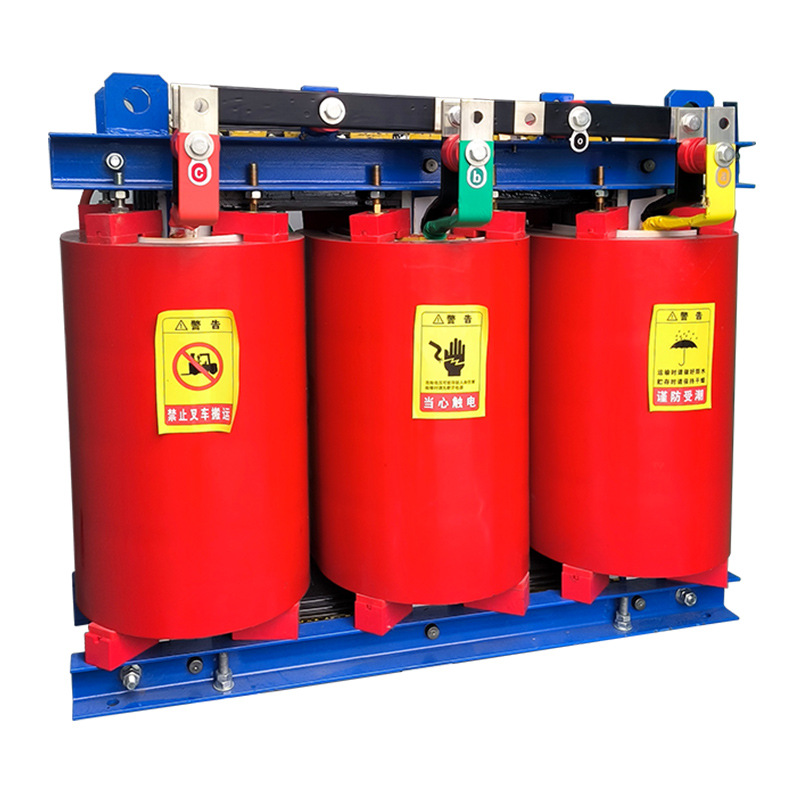
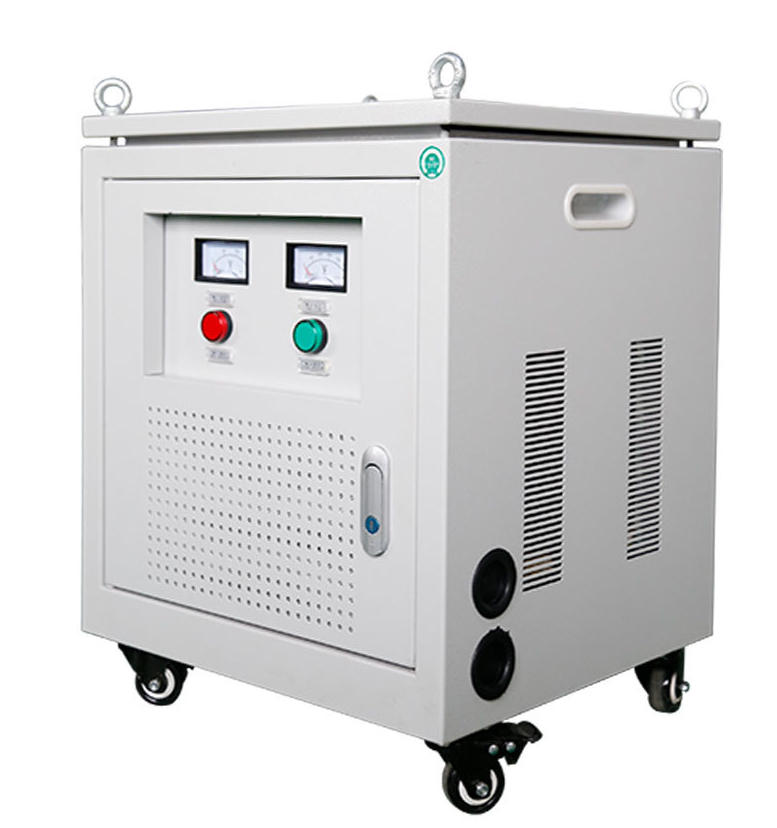
An isolation transformer is a transformer in which the primary winding and secondary winding are physically separated. There is magnetic coupling, but no direct electrical connection between input and output.
That separation is the entire point of the device.
Because the secondary side is isolated from the primary side, the transformer can interrupt ground-loop paths, reduce common-mode interference, and improve electrical safety in maintenance and sensitive instrumentation environments.
Core Function of an Isolation Transformer
The main job of an isolation transformer is to provide electrical isolation.
More specifically, it is used to:
cut the ground loop path
reduce common-mode noise
improve safety during maintenance and troubleshooting
separate the load electrically from the supply source
On the secondary side, there is no inherent reference to earth until a deliberate grounding scheme is applied. In many applications, single-point grounding on the secondary side is part of the safe installation strategy.
In bench servicing, this can reduce the risk associated with accidental contact involving grounded test equipment and live mains-referenced circuits.
What an Isolation Transformer Does Not Do
An isolation transformer does not inherently regulate voltage.
This is the most important misconception to correct. If the input is 180V, the output of a 1:1 isolation transformer will generally be about 180V, minus normal transformer losses. If the input is 250V, the output will generally be about 250V.
In other words, it isolates; it does not stabilize.
It may slightly alter the voltage depending on transformer ratio and load conditions, but that is not automatic voltage correction. Buyers should never choose a standard isolation transformer expecting it to solve brownouts or overvoltage conditions.
Typical Use Cases for Isolation Transformers
Isolation transformers are commonly used where when to use an isolation transformer is really a question of safety, grounding, and signal integrity.
Medical systems where safety and interference control are critical
Maintenance benches for safer troubleshooting
Precision instruments affected by grounding noise
Laboratory analyzers needing better noise immunity
Anti-interference applications where common-mode noise affects performance
In meter testing environments, isolation transformers are also frequently used in withstand voltage and insulation-related test setups.
Automatic Voltage Regulator vs Isolation Transformer: Side-by-Side Comparison
For quick decision-making, the comparison below directly answers the query: automatic voltage regulator vs isolation transformer.
Quick Comparison Table
| Feature | Voltage Regulator | Isolation Transformer |
|---|---|---|
| Primary purpose | Stabilize output voltage | Provide electrical isolation and safety |
| Can it regulate voltage? | Yes, this is the core function | No, not by itself |
| Electrical isolation | Usually no | Yes, primary and secondary are isolated |
| Ground loop interruption | No | Yes |
| Output behavior | Automatically held near target voltage | Changes with input voltage based on ratio |
| Best for | Areas with unstable utility voltage | Sensitive equipment, shock protection, noise reduction |
Voltage Stabilization and Electrical Isolation Differences
The difference is easiest to understand by looking at the type of electrical problem each device addresses.
Voltage Fluctuation Problem
In remote sites, workshops, farms, temporary installations, and construction areas, the supply voltage may move enough to disrupt operations or damage loads.
A realistic example on a nominal 220V supply is a daily swing between 190V and 250V. That is a variation of roughly -13.6% to +13.6%.
Many devices do not tolerate this well.
Motors may draw more current at low voltage.
Control power supplies may drop out.
PLC cabinets may restart during brownouts.
Heating systems may underperform.
That is a voltage problem, so the correct solution is usually a voltage regulator.
Ground Noise and Leakage Problem
In labs, repair benches, instrumentation systems, and medical environments, the bigger danger may not be voltage swing at all.
Instead, the issue may be:
common-mode interference
ground loop noise
unsafe grounding paths
mains-referenced shock risk during servicing
That is an isolation problem, so the correct solution is usually an isolation transformer.
These are the real voltage stabilization and electrical isolation differences: one corrects amplitude variation, the other interrupts unwanted conductive relationships.
When to Use a Voltage Regulator
Use a voltage regulator when the main problem is unstable voltage.
Best for Low or High Grid Voltage
A classic use case is a rural or edge-of-grid facility where the supply can swing from 180V to 250V, but the connected equipment still needs about 220V to operate reliably.
In that environment, an automatic voltage regulator can continuously correct the output so the load sees a far more usable supply.
This is common in:
rural workshops
construction projects
telecom shelters
small factories on weak utility lines
Best for Equipment Sensitive to Voltage Swings
Some equipment is especially vulnerable to voltage instability even when it appears rugged from the outside.
Compressors may overheat or fail to start under low voltage.
Office electronics may reboot or suffer power supply stress.
Test rigs may produce inconsistent results.
Production equipment may shut down unexpectedly, causing downtime and scrap.
For many industrial users, downtime costs far more than the regulator itself. If a packaging line loses one hour per week because of voltage sag, the financial impact can quickly exceed the hardware cost within months.
Real-World Example
A construction site powering a control cabinet from a temporary feeder experienced repeated brownouts during concrete pump startup and welding activity.
Input voltage was measured between 187V and 236V over multiple shifts. The PLC and HMI frequently reset below roughly 195V.
After installing a properly sized servo voltage regulator, the control cabinet input was held close to nominal output across normal fluctuation periods, and nuisance restarts stopped.
The regulator did not provide electrical isolation. It solved the voltage problem, which was exactly what was needed.
When to Use an Isolation Transformer
Use an isolation transformer when the main issue is electrical isolation, safety, or ground-related noise.
Best for Shock Protection and Safer Maintenance
One of the most common examples is a service bench.
During troubleshooting of mains-powered equipment, a direct connection to the utility supply can create dangerous situations, especially when grounded oscilloscopes or other test instruments are involved. An isolation transformer reduces the direct conductive relationship to mains and makes bench work safer when correctly applied.
This is why trained technicians often insist on an isolation transformer for service operations involving line-powered devices.
Best for Sensitive Equipment with Ground Loop Noise
Some equipment fails not because the voltage is wrong, but because the reference environment is noisy.
Medical devices can be sensitive to leakage and interference concerns.
Lab analyzers may show unstable readings.
Oscilloscopes and measurement systems can be affected by grounding relationships.
Precision instruments may drift or become erratic when common-mode noise is present.
In these applications, the goal is not to hold output at a fixed voltage. The goal is to create a cleaner and safer electrical boundary.
Real-World Example
A precision measurement instrument in a testing lab showed intermittent reading drift whenever adjacent equipment on the same branch circuit was energized.
Voltage at the outlet remained acceptable, around 219V to 223V, so a regulator was not the logical first fix.
After an isolation transformer was added, the instrument’s susceptibility to ground-related noise decreased significantly and the readings stabilized. The voltage itself remained essentially unchanged.
This is exactly what an isolation transformer is supposed to do.
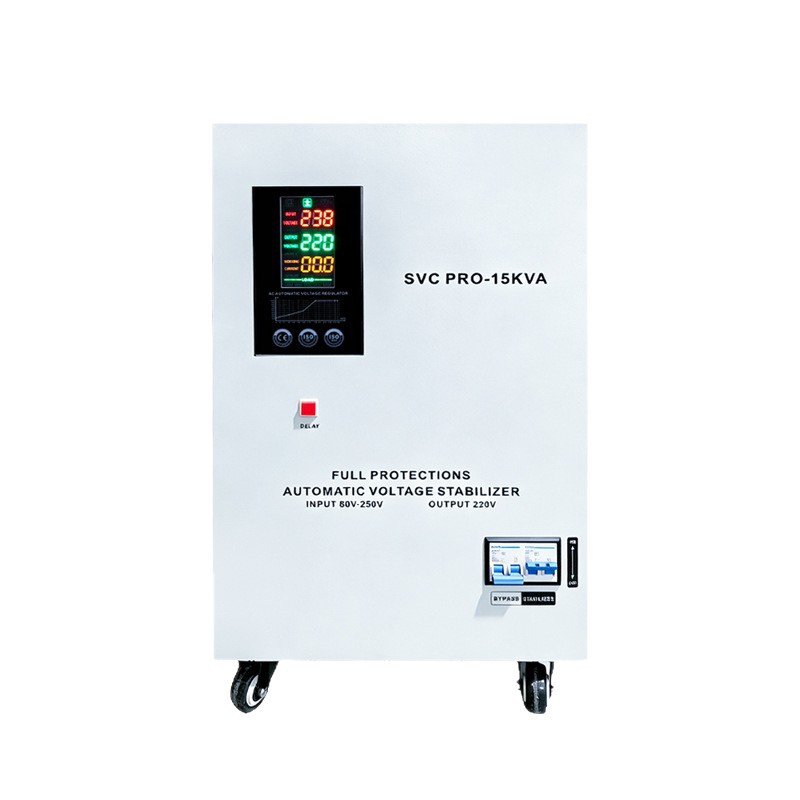
Real-World Data and Practical Performance Examples
Practical selection should always start with the dominant failure mode, not with product familiarity.
The following scenarios reflect common field conditions seen in industrial distribution, testing labs, service benches, and instrumentation rooms.
Example Scenarios Table
| Scenario | Main Power Problem | Better Choice | Why |
|---|---|---|---|
| Rural workshop with frequent 190V–250V swings | Voltage fluctuation | Voltage regulator | Keeps output near rated voltage |
| Medical instrument room with noise and grounding concerns | Common-mode noise and safety | Isolation transformer | Breaks ground loop and isolates circuits |
| Meter testing lab doing insulation/withstand tests | Electrical isolation requirement | Isolation transformer | Used for dielectric and insulation-related testing |
| Voltage variation compliance testing | Controlled voltage change needed | Voltage regulator | Supports voltage fluctuation testing |
| CNC machine in unstable industrial supply | Brownout/overvoltage | Voltage regulator | Prevents shutdown and component stress |
| Electronics repair bench | Safety during servicing | Isolation transformer | Reduces direct conductive path to mains |
Typical Output Behavior Table
| Input Voltage | Voltage Regulator Output | Isolation Transformer Output* |
|---|---|---|
| 180V | Approximately rated output if within regulation range | Approximately 180V |
| 220V | Approximately rated output | Approximately 220V |
| 250V | Approximately rated output if within regulation range | Approximately 250V |
*For a 1:1 isolation transformer, output generally tracks input and is not stabilized.
These performance differences are the practical reason the two devices should never be treated as substitutes.
Power Conditioning for Sensitive Equipment: Which Device Is Enough?
The phrase power conditioning for sensitive equipment is broad, and that broadness causes specification mistakes.
Before selecting hardware, ask three direct questions:
1. Is the actual issue unstable voltage?
2. Is the actual issue electrical isolation or ground noise?
3. Do both problems exist at the same time?
If the Problem Is Only Voltage Fluctuation
Choose a voltage regulator.
This is the correct answer when the supply sags, surges within normal utility variation, or causes equipment shutdown because the operating voltage drifts outside acceptable limits.
If the Problem Is Only Electrical Isolation
Choose an isolation transformer.
This is the correct answer when the problem involves shock protection strategy, ground loop interruption, common-mode noise reduction, or safer troubleshooting conditions.
If the Problem Is Both
Use an isolation voltage regulator.
This combined design includes transformer-based isolation and voltage regulation in one system. In demanding applications, this is often the most complete answer.
Manufacturers such as Weisho Electric commonly support selection in these mixed-condition projects, especially where customers need both stable voltage and isolated power for test systems, industrial controls, or specialized equipment rooms.
Isolation Voltage Regulator: When You Need Both Functions
Some applications cannot compromise. They need stable output voltage and isolation between primary and secondary.
That is where an isolation voltage regulator becomes relevant.
Best Combined Use Cases
Typical combined-demand environments include:
high-end test benches
critical industrial controls
medical support systems
sensitive automation lines
For example, a test bench may require a tightly controlled input voltage for repeatable results, while also needing electrical isolation to prevent ground-coupled noise from corrupting measurements.
Trade-Offs to Mention
There is no free advantage in power engineering.
Combined units usually involve:
higher cost
larger footprint
greater weight
more complex sizing and installation criteria
That said, when both problems exist, buying two incomplete solutions or the wrong single-function device often costs more in the long run. In such cases, a properly engineered combined solution from an experienced supplier like Weisho Electric can simplify integration and improve reliability.
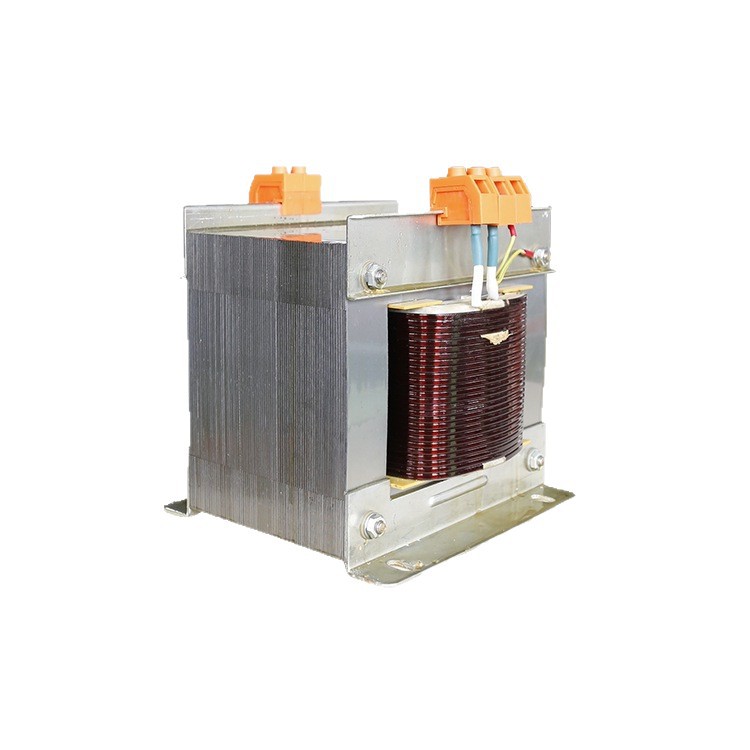
Surge Protection and Voltage Fluctuation Solutions: What These Devices Cannot Replace
Another frequent purchasing mistake is assuming that either device is a universal cure for all power problems.
They are not.
Understanding surge protection and voltage fluctuation solutions means knowing where each product stops being effective.
Voltage Regulator Limits
A voltage regulator is not the same as:
a dedicated surge protection device
a leakage protection device
a full EMI filter
a UPS battery backup system
It can correct ongoing voltage variation, but it is not designed to absorb every lightning impulse, switching transient, or safety fault on its own.
Isolation Transformer Limits
An isolation transformer is not designed to correct low- or high-voltage conditions on its own.
If the utility line drops to 180V, a standard 1:1 isolation transformer will still deliver about the same voltage to the load. The load may still malfunction if it requires a stable 220V supply.
What Else May Be Needed
Depending on the site, a complete protection strategy may also include:
SPD for lightning and transient overvoltage
UPS for ride-through and backup power
circuit breaker for overcurrent protection
leakage protection for fault-current safety
EMI filters for additional interference control
The best systems use the right layers together instead of expecting one device to do every job.
How to Choose Between a Voltage Regulator and an Isolation Transformer
The fastest way to choose correctly is to identify the dominant symptom first.
Decision Table
| If your main issue is... | Choose... | Main reason |
|---|---|---|
| Utility voltage goes too high or too low | Voltage regulator | Stabilizes output automatically |
| Ground loop noise affects readings | Isolation transformer | Breaks conductive noise path |
| Maintenance safety is the priority | Isolation transformer | Provides electrical isolation |
| Equipment trips during brownouts | Voltage regulator | Maintains usable voltage |
| You need both stable voltage and isolation | Isolation voltage regulator | Combines both functions |
Also check these practical specification points before ordering:
nominal input voltage and actual measured site range
single-phase or three-phase configuration
load type: resistive, inductive, motor-driven, electronic, mixed
starting current and inrush current
required regulation accuracy
grounding arrangement
ambient temperature, ventilation, and installation space
whether isolation, regulation, or both are required
These details matter because a correctly chosen unit performs quietly for years, while an incorrectly chosen one becomes a permanent source of complaints.
FAQ
Is a voltage regulator the same as an isolation transformer?
No. A voltage regulator stabilizes voltage, while an isolation transformer isolates the primary and secondary circuits for safety and noise control. They solve different electrical problems.
Can an isolation transformer regulate voltage?
No. A standard isolation transformer does not stabilize voltage. Its output generally follows the input according to the transformer ratio, so it should not be selected as a substitute for an automatic voltage regulator.
Can a voltage regulator provide electrical isolation?
Usually no. Its main purpose is voltage stabilization rather than separating the input and output electrically. If you need ground loop interruption or safer maintenance conditions, an isolation transformer is the more appropriate choice.
When should I use an isolation transformer?
Use it when you need shock protection strategy, ground loop interruption, common-mode noise reduction, or safer bench maintenance conditions. It is also common in medical, laboratory, and precision measurement environments.
When should I use a voltage regulator?
Use it when your equipment is exposed to unstable mains voltage, brownouts, overvoltage, or frequent input fluctuations. It is especially suitable in locations where the grid voltage regularly drifts outside the safe operating range of the load.
What is an isolation voltage regulator?
It is a combined device that provides both stable output voltage and transformer-based electrical isolation. It is used when the application requires both voltage correction and isolation in the same power path.
Which is better for sensitive equipment?
It depends on the real problem. Choose a regulator for unstable voltage, an isolation transformer for noise or grounding issues, or a combined unit when both conditions exist. “Sensitive equipment” is not a complete specification by itself.
Does either device replace surge protection?
No. Dedicated surge protective devices are still needed for lightning, switching surges, and transient overvoltage events. Neither a regulator nor an isolation transformer should automatically be treated as full surge protection.
Conclusion: Choose Based on the Real Power Problem
The most expensive mistake in power selection is not buying the costly unit. It is buying the wrong one.
A voltage regulator solves voltage instability. Its main role is to automatically keep output voltage stable when the input rises or falls.
An isolation transformer solves electrical isolation, ground-loop-related safety issues, and common-mode noise problems. Its main role is not voltage stabilization.
So if your equipment suffers from low voltage, high voltage, brownouts, or unstable grid conditions, choose a regulator. If your problem is grounding noise, safer maintenance, anti-interference performance, or electrical separation, choose an isolation transformer.
If both problems exist, consider an isolation voltage regulator rather than forcing one single-function device to do a job it was never meant to do.
CTA
Need help selecting the right solution for your equipment or test setup?
Contact us today for a tailored recommendation on voltage regulators, isolation transformers, or combined isolation voltage regulator systems.
Share your input voltage range, load type, capacity, and application environment, and we will help you match the right product to the real power problem before you buy.
Get in touch now to protect your equipment, improve power reliability, and choose the right system with confidence.