I. Introduction
1.1 Core Definition and Function: What is a Porcelain Insulator?
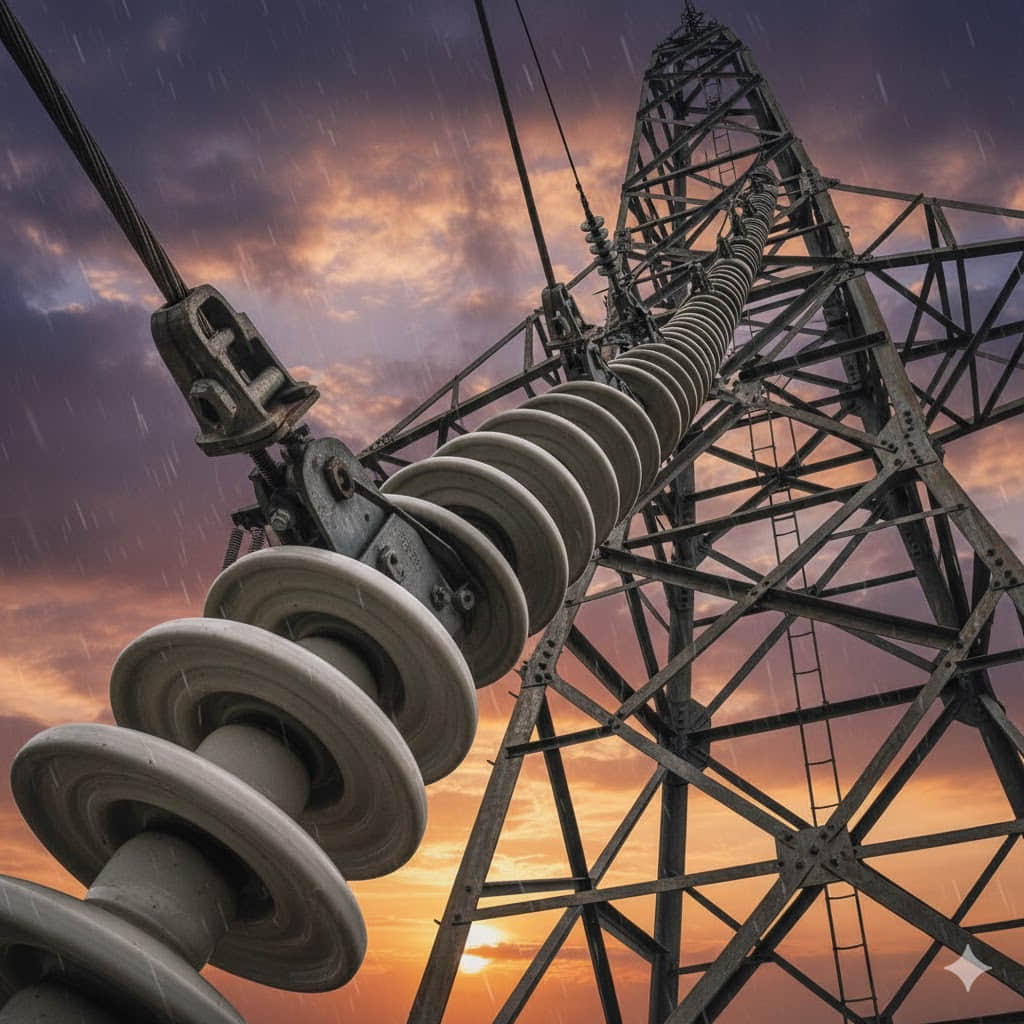
A porcelain insulator is fundamentally a ceramic electrical component, carefully formulated and fabricated from a blend of natural minerals, including clay, feldspar, and quartz, which are then fired at intensely high temperatures. Its essential purpose is to establish a reliably strong electrical isolation barrier between energized power conductors and grounded support structures such as steel towers, while simultaneously bearing the considerable mechanical weight of the conductor itself.
Within the extensive framework of power transmission and distribution networks, the insulator's primary function is to maintain an impermeable electrical shield. It meticulously guides the flow of high-voltage energy along its intended path and effectively prevents any current leakage to the ground.
This dual functionality, which merges robust physical support with impenetrable electrical defense, cements the porcelain insulator's status as an indispensable component for the safe and efficient operation of global power infrastructure. Without this critical, effective isolation provided by insulators, high-voltage electricity would instantly short-circuit to the earth, inevitably leading to a catastrophic and systemic grid failure.
1.2 Historical Significance and Contemporary Relevance
The historical trajectory of the porcelain insulator is inextricably linked to the very evolution of the modern electric power grid. Its necessity became paramount in the late 19th century as high-voltage alternating current (AC) power transmission emerged as the dominant technology.
This development drove the urgent need for a natural, exceptionally durable, and mass-producible insulating material. While glass was initially employed for lower voltage applications, the rapidly escalating voltage requirements and the demands for superior mechanical strength soon led to the preeminence of ceramic materials (electrical porcelain), which quickly established their leading position.
Through relentless and precise refinement of both the raw material composition and the high-temperature firing protocols, modern porcelain insulators are now engineered to proficiently meet the rigorous demands of present-day ultra-high-voltage (UHV) transmission and extreme mechanical tension applications. This type of insulator is highly valued for its exceptionally long service life, its extraordinary resistance to environmental degradation, and its cost-effective reliance on readily available raw minerals.
Consequently, in numerous critical substation installations and long-haul transmission projects where the highest levels of reliability are non-negotiable, porcelain insulators remain the preferred choice for engineers. This strongly affirms their foundational role in the current global energy infrastructure.
Key Takeaways
Core Functionality: Porcelain insulators are essential for both mechanical support and electrical isolation, establishing a physical and electrical safeguard for high-voltage transmission lines.
Material Strengths: Manufactured from high-temperature fired electrical porcelain—a blend of clay, quartz, and feldspar—they are characterized by exceptionally high compressive strength, minimal water absorption, and an ultra-long service lifespan (often exceeding 50 years).
Engineering Challenge: The most significant operational challenge is contamination flashover, a risk mitigated by meticulously optimizing the specific creepage distance (e.g., deeper shed design) or by applying water-repellent silicone coatings.
Inspection Difficulty: Internal electrical failure, resulting in a "zero-value insulator," is often visually undetectable, mandating the use of advanced, non-destructive testing methodologies such as ultrasonic detection and Partial Discharge (PD) testing.
Industry Standing: Despite the emergence and growth of composite materials, porcelain maintains its primary position in Ultra-High Voltage (UHV) and critical substation applications due to its inherent mechanical rigidity, structural stability, and non-flammable characteristics.
II. Materials, Manufacturing, and Structure
2.1 Basic Material Composition and Characteristics
The essential material used in porcelain insulators is a finely controlled industrial ceramic, frequently referred to within the industry as "electrical porcelain" or "electro-ceramic." This material's superior and predictable performance is a direct result of its precisely balanced ternary formula, involving three primary raw components.
Clay: Typically a high-purity kaolin clay, it provides the essential plasticity required for easy shaping before firing, while also contributing crucial aluminosilicate compounds to the final ceramic matrix.
Quartz: This component provides a high-purity source of silicon dioxide (SiO2), serving as the foundational element for the formation of the glassy phase. It crucially ensures the final ceramic body achieves both high dielectric strength and a low coefficient of thermal expansion.
Feldspar: Functioning primarily as a fluxing agent, feldspar effectively lowers the required melting temperature during the intense firing process. This facilitates the creation of a highly dense, glass-like phase that significantly minimizes the material's overall porosity and susceptibility to moisture absorption.
This rigorously controlled formulation is what endows the final fired product with its necessary core advantages. These notably include extremely high dielectric strength, outstanding compressive strength and hardness, and an exceptionally low water absorption rate (crucial for maintaining insulation integrity in humid conditions). These combined characteristics ensure the porcelain insulator's remarkable performance across both mechanical loading and electrical isolation requirements.
2.2 Core Manufacturing Process: Firing and Glazing
The production of a porcelain insulator is a time-consuming process that can be accurately described as a complex form of industrial artistry. This revolves around three highly controlled and critical stages.
Forming and Drying: After the raw materials are thoroughly mixed, the ceramic body, often shaped with external features like sheds (or skirts), is formed using specialized methods such as slip casting, extrusion, or isostatic pressing. This forming stage must be immediately followed by a slow, meticulous drying process to rigorously prevent the rapid and uneven evaporation of moisture.
Uneven evaporation could otherwise introduce microscopic, structurally compromising micro-cracks within the body. Maintaining the integrity during this initial drying phase is the foundational step for guaranteeing final product quality and yield.
High-Temperature Firing: This phase is arguably the most crucial step, where the insulator blank is subjected to intensely high temperatures, generally ranging from 1200 degrees Celsius to 1400 degrees Celsius, within a dedicated tunnel kiln. During this intense thermal exposure, the feldspar component melts, effectively binding the remaining quartz particles and clay residuals together to forge a robust, composite glass-crystalline mixed-phase material.
This precise melting and subsequent re-crystallization is the fundamental physical reaction responsible for giving the electro-ceramic body its characteristic extremely high density and superior strength attributes. Therefore, the precise control of the firing duration and the temperature curve is paramount for quality control.
Glazing Treatment: Following the high-temperature firing, the insulator's exterior surface is routinely coated with a very thin, specialized layer of silicate glaze, which is then bonded to the ceramic through a secondary firing process. The application of this glaze serves multiple critical functions: primarily, it establishes a smooth, uniform surface that dramatically reduces the material's capacity to retain surface contaminants.
Secondly, it effectively seals any residual, minuscule pores on the ceramic body's surface, thereby further minimizing its inherent moisture absorption. Finally, certain specialized semi-conducting glazes may be intentionally applied to high-voltage bushings to actively equalize the electric potential along the surface, optimizing the voltage distribution.
Note: The glazing process is not applied for mere aesthetic appeal. Its core engineering utility is the sealing of micro-pores and the creation of a super-smooth surface, which together form the basis of the porcelain insulator's inherent resistance to moisture ingress and its self-cleaning efficiency.
2.3 Key Structural Components
A porcelain insulator that is prepared for operational use is not simply a monolithic ceramic block. It is instead an intricately engineered, multi-material composite structure composed of the electro-ceramic body, metal hardware, and a specialized bonding agent.
Ceramic Shell (Insulator Body): This section constitutes the insulator's primary mass. The distinctive "sheds" (or skirts) are intricately designed to maximize the electrical creepage distance, which is essential for maintaining proper insulation, particularly under severe weather or highly polluted environmental conditions.
Simultaneously, the internal structure of this ceramic shell is structurally engineered to reliably endure immense longitudinal compressive or tensile forces. The specific dimensions and geometry of the shell are customized based on the required insulation class and the environmental severity of the installation site.
Metal Fittings (Hardware): These typically consist of the steel cap and the steel pin (or foot). The steel cap is most often manufactured from tough cast iron or forged steel, designed to allow individual insulator units to be securely connected in series using a specialized ball-and-socket joint.
These metal components are the primary elements responsible for carrying the insulator's specified mechanical and electrical load (M&EL) rating, such as 120 kN or 210 kN. Ensuring these metal fittings are properly treated for corrosion resistance (e.g., hot-dip galvanizing) is also critically important for long-term reliability.
Cementitious Compound (Bonding Agent): This component generally uses a high-strength Portland cement or a specialized epoxy resin. Its vital role is to securely and permanently bond the ceramic body to the metal fittings.
The binder's performance must remain stable against continuous exposure to thermal expansion and contraction cycles, along with long-term mechanical vibration. This ensures the lasting integrity of the interface's electrical and mechanical stability; ultimately, the quality and integrity of this bonding interface directly influence the operational lifespan of the entire insulator unit.
2.4 Quantifiable Standards for Electrical Performance
As essential metrics in electrical engineering, the electrical properties of the ceramic material must be quantified using precise parameters. These directly determine its suitability for high-voltage system deployment.
Volume Resistivity: High-quality electrical porcelain must exhibit an exceptionally high volume resistivity, which is typically required to be significantly greater than 10 to the power of 13 ohm-meters. This extremely high resistance value is a guarantee that the leakage current flowing through the main body of the insulator is minimal, thereby preventing internal power losses and detrimental heating effects.
This parameter is fundamental to evaluating the material's intrinsic insulating capacity.
Relative Permittivity (epsilon_r): The relative permittivity of porcelain generally remains stable, falling within the range of 5 to 7. This value is a crucial parameter used by engineers for calculating the resulting electric field distribution and overall capacitive effects during the design of insulators intended for high-frequency applications or High-Voltage Direct Current (HVDC) transmission systems.
A stable and relatively low permittivity is beneficial for achieving a uniform electric field distribution across the surface in demanding high-voltage environments.
Dielectric Loss Tangent (tan delta): This specific metric is used to quantify the internal electrical energy dissipation within the insulating material, which is transformed into heat. Porcelain insulators must be engineered to have an extremely low value for this tangent.
This ensures that the internal losses and self-heating caused by dielectric polarization and electrical conductivity remain negligible, even when subjected to prolonged AC voltage stress; this minimization of loss ensures the insulator's own energy consumption is effectively minimized.
This short film visually demonstrates the main types and structural details of ceramic insulators, which aids in understanding the disc-type, pin-type insulators, and the composition of the porcelain body and metal fittings mentioned in the article.
III. Core Functions and Performance Characteristics
3.1 Function One: Robust Mechanical Support
Resistance to High Mechanical Loads: Porcelain insulators are meticulously designed and manufactured to withstand an array of severe static and dynamic mechanical loads. They are required to reliably handle everything from the substantial dead weight of the power conductors and the immense initial tensile forces applied during line installation, to any uneven dynamic tensions that may occur during regular operation, effectively managing these stresses due to the ceramic material's high inherent compressive strength.
The specified mechanical and electrical load (M&EL) rating of the insulator is a non-negotiable, rigid criterion that must be satisfied during the initial selection phase for any transmission line project.
Reliable Structural Stability: The ceramic material fundamentally exhibits virtually zero plastic deformation and an extremely low rate of thermal creep over time. This crucial characteristic implies that the length and angular orientation of the insulator string will maintain high consistency, even after decades of continuous exposure to mechanical stress.
Such inherent stability is absolutely vital for maintaining the correct conductor sag and the essential clearance distances required for long-span transmission lines. Structural stability directly underpins the operational safety and reliability of the entire line.
3.2 Function Two: Superior Electrical Isolation
High Dielectric Strength: The dielectric strength of porcelain, which generally exceeds 10 kV per millimeter, is substantially greater than that of air. This enables the insulator to safely isolate hundreds of thousands of volts within a relatively compact physical structure.
This intrinsic material property serves as the primary basis for its role as an electrical barrier, meticulously preventing the conductor voltage from flashing over or breaking down to the grounded metallic support tower.
Resistance to Transient Overvoltages: These insulators are highly effective at withstanding sudden, high-energy voltage spikes caused by external events like lightning strikes or internal system operations such as switching events, quantified by ratings like the Lightning Impulse Withstand Voltage (LIWV). These transient ratings directly measure the insulator's ability to resist high-voltage peaks originating from natural phenomena or internal electrical operations.
Engineers must stringently ensure that the insulator's withstand level surpasses the maximum statistical overvoltage likely to occur in the system, thereby guaranteeing the long-term safety of the line.
3.3 Extreme Environmental Durability
Porcelain insulators are constructed from naturally inert, inorganic materials, which grants them an unparalleled degree of environmental adaptability and extended durability.
Resistance to Chemical Attack and UV Radiation: The ceramic glaze surface is essentially a glass compound, offering formidable resistance to virtually all environmental contaminants, including acid rain, industrial effluence, and salt mist. Unlike organic composite materials, porcelain exhibits complete immunity to Ultraviolet (UV) radiation degradation, thus eliminating the aging issues associated with photo-degradation.
Thermal Stability and Longevity: Ceramic is capable of tolerating an extremely broad temperature range, from intensely cold to extremely hot conditions, without any significant compromise to its performance characteristics. This exceptional thermal stability underwrites its long expected service life of well over 50 years.
This positioning makes it one of the most cost-effective insulation solutions over its entire life cycle.
Tip: In environments characterized by extreme temperature fluctuations or at very high altitudes, the porcelain insulator's low coefficient of thermal expansion stands out as a critical advantage, as it maximally prevents the internal cracking that might otherwise result from severe thermal stress.
3.4 Mechanical Properties: Impact Strength and Seismic Resistance
For critical equipment utilized in transmission lines and substations, merely meeting the necessary static tensile load requirements is often insufficient for long-term reliability.
Impact Strength and Brittleness: While porcelain boasts exceptionally high compressive strength, its impact strength remains comparatively low. Consequently, the shed skirts are susceptible to localized shattering during the installation process or if subjected to instantaneous shock loads, such as from flying debris or ballistic impacts during operation.
Engineers must therefore implement specialized measures for isolation or physical protection during the design and maintenance phases. However, this high material hardness also provides the necessary structural rigidity, which entirely prevents the permanent bending or distortion that can sometimes affect composite alternatives.
Seismic Design Considerations: In regions prone to frequent seismic activity, especially for post insulators and bushings situated within substations, meticulous seismic design is absolutely paramount. The porcelain structure must be engineered to possess ample transverse shear strength and bending strength to effectively absorb the substantial lateral acceleration forces generated by seismic waves.
Modern ceramic insulators designed for high seismic resistance typically incorporate optimized geometries and advanced bonding techniques to decisively prevent brittle failure during an earthquake. The seismic performance of these insulators is a key safety determinant for the entire substation facility.
IV. Classification, Specifications, and Applications
4.1 Major Types and Applications of Porcelain Insulators
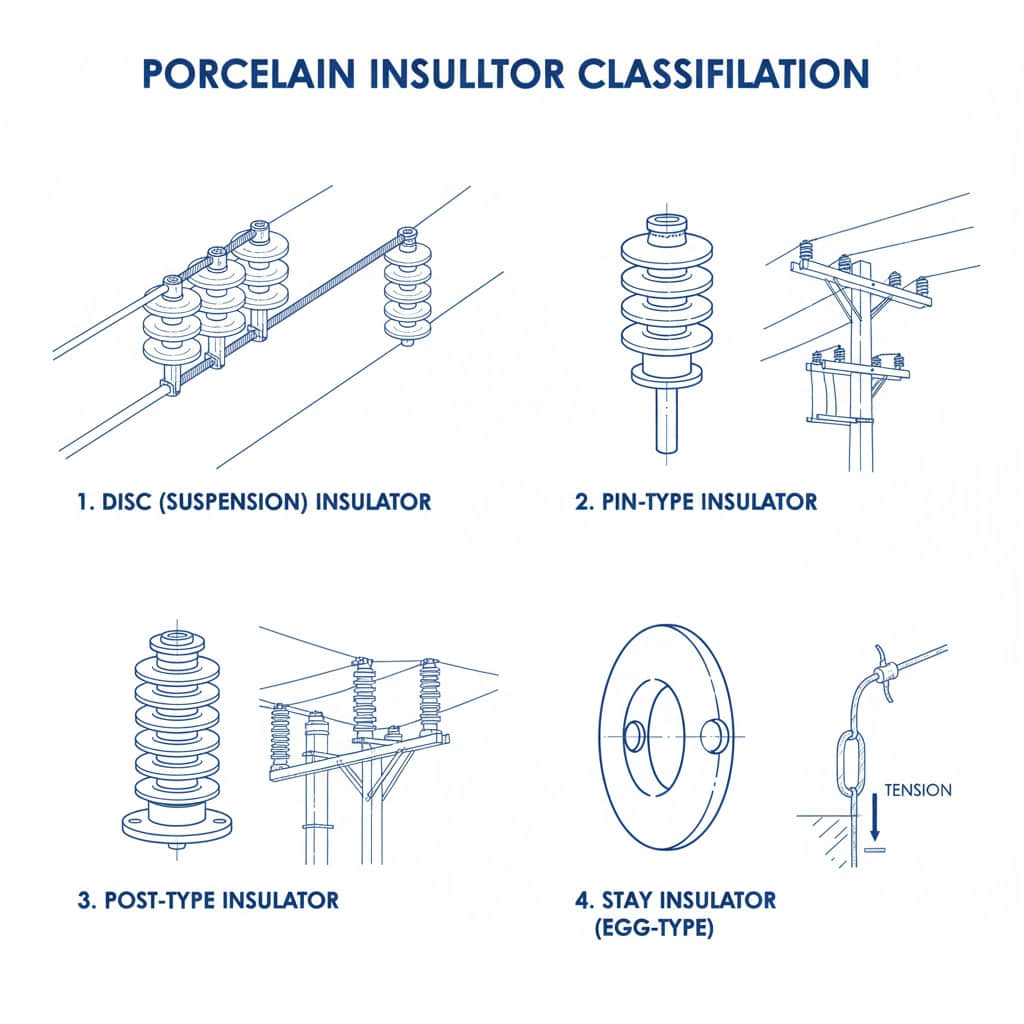
Disc Insulators: Characterized by their distinct disc shape, these units are designed to be mechanically strung together in series. They can be configured as standard or specialized anti-fog/anti-contamination types.
They are primarily used in High Voltage (HV) to Ultra-High Voltage (UHV) applications for the suspension and dead-ending of conductors on major transmission lines, especially where they span large obstacles.
Pin-Type Insulators: These consist of a single ceramic body rigidly mounted on a steel pin; the design is highly compact and relatively small. They are commonly employed in Low Voltage (LV) to Medium Voltage (MV, typically less than 33 kV) distribution lines.
Their primary use is for the horizontal mounting and support of conductors on utility poles in urban and suburban environments.
Post-Type Insulators: Featuring a robust cylindrical or stacked column structure, often composed of multiple stacked sections, they are specifically engineered for high resistance to bending and torsional stresses. Their application ranges from Medium Voltage (MV) to High Voltage (HV) systems.
They provide essential rigid support and isolation for outdoor switchgear, busbars, and disconnect switches within substation yards.
Stay Insulators: Often referred to by their distinctive "egg" or "banana" shape, these units are incorporated into the tension support wires (guy wires) that stabilize utility poles. They are typically used in Low/Medium Voltage applications.
Their function is to insulate the tension-bearing stay wires from ground potential, thereby ensuring electrical safety.
Hollow Bushings: Defined by their central hollow core, these specialized components allow energized conductors or transformer leads to safely pass through them. They are utilized in Medium Voltage to Ultra-High Voltage (UHV) systems.
They form the external casing and primary isolation for devices like transformers, circuit breakers, and capacitance-graded bushings.
4.2 Transmission Line Applications: Suspension and Tension Strings
Within the backbone infrastructure of the electric power grid, the porcelain disc suspension insulator remains the undisputed workhorse component.
Suspension Strings: These strings consist of insulator discs hung vertically, designed to support the conductor's dead weight and primarily endure tensile stress. Given their inherent modularity, they can be freely stacked to accommodate voltage levels ranging from 110 kV up to 1000 kV AC or higher.
During the design phase, engineers must meticulously calculate the exact number of discs needed to satisfy the required electrical flashover distance and the essential creepage distance.
Tension (Dead-end) Strings: These strings feature insulator discs mounted horizontally or at an angle, specifically utilized at the termination points, sharp corners, or long-span intervals of the line. They are required to withstand the conductor's immense horizontal tension.
Tension insulators typically employ double or parallel strings to meet significantly higher Mechanical and Electrical Load (M&EL) requirements, thus ensuring the overall mechanical stability and safety factor of the line. Their application at angle towers is especially critical for structural integrity.
4.3 Substation Applications: Bushings and Hollow Composites
Substations represent another vital area for porcelain insulator application, where the required forms are often more intricate and structurally complex.
Post Insulators: In substation environments, these insulators function primarily as rigid, vertical supports, used to elevate busbars or provide support for equipment like disconnect switches. In contrast to the suspension strings used on transmission lines, post insulators place a much greater emphasis on high bending strength and stiffness to ensure the precise positioning of equipment under both operational and short-circuit electromagnetic forces.
Their multi-sectional design makes them suitable for extremely high mounting heights.
Wall Bushings: These represent some of the most structurally sophisticated ceramic components found in any substation. The wall bushing’s primary function is to allow high-voltage leads to safely penetrate the grounded metallic enclosure of a transformer tank or switchgear assembly.
The ceramic body provides the external isolation, while the internal cavity may be filled with insulating oil or Sulfur Hexafluoride (SF6) gas as the main internal dielectric medium. Engineers must consider the isolation requirements of both the internal and external environments simultaneously, along with the precise coordination between the solid insulation and the internal oil-gas interfaces.
The Rise of Hollow Composite Bushings and the Porcelain Trade-off: While traditional designs heavily relied on porcelain, the utilization of hollow composite bushings (which typically feature a fiber-wound core and a silicone rubber housing) is increasingly replacing ceramic in modern Gas-Insulated Switchgear (GIS) and new transformer models.
Nevertheless, in applications demanding extremely high mechanical rigidity and robust resistance to internal fault explosions, high-strength porcelain hollow bushings remain the reliable choice for many critical assets, owing to porcelain's inherent compressive strength, non-flammability, and fire-resistant properties. The superior thermal and anti-aging performance of porcelain bushings continues to provide an advantage in severe ultra-high-voltage applications.
V. Maintenance, Failure Modes, and Comparative Analysis
5.1 Maintenance Challenge: Contamination Flashover Risk
Contamination flashover represents the single most significant threat faced by porcelain insulators, particularly in environments classified as high-pollution areas, such as coastal zones, heavy industrial regions, and desert landscapes.
Mechanism of Formation: The ceramic glaze surface is naturally hydrophilic (water-attracting). When a layer of soluble contaminants (like salt or industrial dust) accumulates on the surface, the presence of fog or light rain causes the formation of a continuous, electrically conductive water film.
As the resultant leakage current flows, generating heat (expressed in pure text as: I-squared-R loss), the water film begins to evaporate, leading to the creation of dry bands along the surface.
Flashover Event: The voltage potential becomes intensely concentrated across these newly formed dry band regions, causing the localized breakdown of the air and the formation of small electrical arcs. These micro-arcs rapidly escalate and link together, ultimately forming a single, continuous full flashover path spanning the entire insulator surface, short-circuiting the conductor to the ground structure and causing a line trip.
Contamination flashover is a leading cause of unplanned power outages across the grid.
Proactive Mitigation: Beyond the critical selection of large-shed, deeply-ribbed anti-contamination insulators, utility maintenance departments commonly employ proactive measures to manage this risk. These include the application of Room-Temperature Vulcanizing (RTV) silicone rubber coatings (to impart extreme hydrophobicity) or through periodic live-line water washing.
The cost and frequency of these mitigation strategies must be rigorously evaluated based on a detailed economic and reliability assessment.
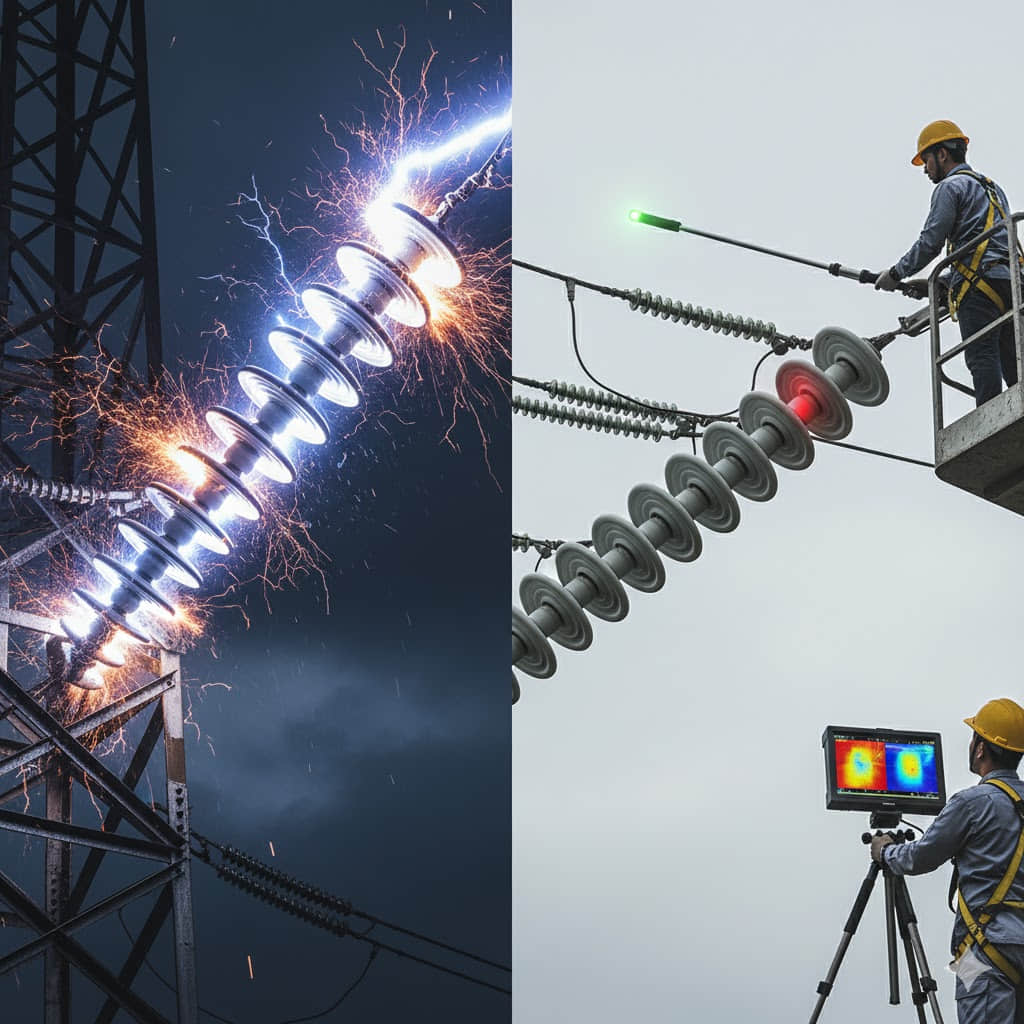
Visual Supplement: Insulator Failure Detection
5.2 Failure Modes and Field Inspection
The failure modes characteristic of porcelain insulators are often insidious and difficult to detect, presenting a unique challenge to utility operation and maintenance teams.
Internal Puncture: Prolonged exposure to high electrical stress or sudden transient overvoltages can lead to the internal breakdown of the electro-ceramic body, creating a permanent, conductive path through the material. This specific fault is technically termed a "zero-value insulator," indicating that the unit itself has completely lost its intended insulating capacity, although its external physical appearance may remain entirely intact.
A zero-value insulator significantly increases the electrical stress across the remaining healthy insulators in the string, accelerating their eventual failure.
Mechanical Damage: This category includes the fragmentation of the shed skirts (typically resulting from external impact) or the long-term fatigue of the cementitious bonding interface, which ultimately leads to loosening of the metal fittings. Loose metal connections cause an increase in resistance and localized heat generation (I-squared-R loss) at the connection point, accelerating the fault progression.
Furthermore, connecting Slack directly compromises the uniform potential distribution across the entire insulator string.
Detection Difficulty: Unlike the clear self-shattering warning provided by toughened glass insulators, a failed zero-value porcelain insulator is often visually indistinguishable from a healthy one. Field inspection absolutely requires the use of specialized live-line testing equipment (such as high-voltage insulation resistance meters) to accurately measure the voltage distribution across the individual insulator disc.
A unit showing a voltage drop near zero is immediately identified as a failed zero-value insulator, which must be tagged and scheduled for replacement.
Note: The inherent danger of a zero-value insulator lies in its stealth nature; it does not typically cause an immediate line trip. However, its presence significantly accelerates the electrical stress aging of the other healthy units within the string, making a costly, cascading failure much more likely.
5.3 Porcelain vs. Glass vs. Composite Materials
| Feature | Porcelain Insulators | Glass Insulators | Composite Insulators |
| Primary Material | Electrical Ceramic (Clay, Quartz, Feldspar) | Toughened Glass | Silicone Rubber or EPDM Housing, Fiberglass Rod Core |
| Failure Indication | Highly concealed, requires instrumented testing | Highly visible, shatters immediately upon electrical puncture (self-shattering) | A highly concealed, internal core rod may fracture |
| Mechanical Advantage | High compressive strength, excellent rigidity, and creep resistance | High residual mechanical strength (retains most strength after failure) | Extremely high tensile strength, lightweight |
| Hydrophobicity/Anti-Contamination | Hydrophilic, requires glazing or coating for improvement | Hydrophilic, but the smooth surface is easily cleaned by rain | Extremely hydrophobic, excellent anti-contamination performance |
| Weight | Heaviest (higher transportation and installation costs) | Medium weight | Lightest (lowest installation costs) |
| Expected Lifespan | Very long (over 50 years), fully UV-resistant | Very long (over 50 years), fully UV-resistant | Shorter relative life (under 30 years), susceptible to UV and corona aging |
5.4 Professional Calculation: Creepage Distance and SA Value
As a primary basis for insulator selection, engineers must precisely design the insulator's creepage distance based on the actual operating environment of the transmission line.
Specific Creepage Distance: This is the key quantifiable metric for anti-contamination design, defined as the shortest distance along the insulator surface between the conductor and the grounded hardware (in millimeters), divided by the system's highest operating voltage (in kilovolts). The required unit is precisely millimeters per kilovolt.
Different contamination severity levels (ranging from very light to extremely heavy) mandate a corresponding minimum specific creepage distance standard. For instance, in an extremely heavy pollution zone, the required specific creepage distance can exceed 45 millimeters per kilovolt.
Application of the Contamination Level (SA Value): The International Electrotechnical Commission (IEC) standard classifies environmental pollution severity into SA levels, ranging from SA 1 (lightest) to SA 5 (most severe, e.g., heavy salt spray or intense industrial pollution). Engineers are required to consult the relevant standards (such as IEC 60815) based on the site-specific SA evaluation to determine the necessary insulator geometry and shed depth.
A high pollution insulator may, for example, require a creepage distance 50% to 100% longer than one used in a low pollution area.
Tip: In the design phase, selecting an insulator with an inherently sufficient specific creepage distance is significantly more cost-effective and contributes more to long-term reliability than relying on expensive post-installation measures like live-line washing or RTV coating application.
5.5 Failure Analysis: The Detection Challenge of Micro-cracks
Structural imperfections within the porcelain insulator are a major source of hidden threats, and their detection relies on highly specialized, non-destructive testing methodologies.
Sub-glaze Micro-cracks: These defects originate either during the manufacturing process, such as during rapid cooling, or they can develop over the long-term operational life due to cumulative thermal stress, typically residing just beneath the protective glaze layer. The presence of micro-cracks significantly reduces the local dielectric strength of the ceramic, and under constant electric field stress, they will gradually propagate, eventually culminating in internal puncture.
Since they are covered by the glaze, conventional visual inspection is completely ineffective for their detection.
Partial Discharge (PD): PD refers to minute electrical breakdowns occurring within internal voids, air gaps at the ceramic-to-metal bonding interface, or other structural discontinuities. It slowly erodes the surrounding material. A specific challenge for porcelain insulators is that their high-density composition tends to attenuate the electrical signals produced by PD.
The resulting ultrasonic or electromagnetic waves decay rapidly, making them difficult to capture from a distance.
Advanced Detection Techniques: To address these complex challenges, professional maintenance teams utilize sophisticated tools. These include Ultrasonic Detection, which captures the acoustic signals generated by PD or crack propagation, often requiring close-range or contact-based measurements.
They also use High-Frequency Partial Discharge (HFPD) Testing, which detects internal discharge pulses at specific frequencies, proving particularly effective for substation bushings as the signals can sometimes penetrate the metallic enclosures. Additionally, Thermal Imaging (Infrared) identifies abnormal temperature increases (I-squared-R loss) caused by internal defects or severely loose connections; the deployment of these complex techniques is what ultimately differentiates professional engineering maintenance from routine visual patrol.
VI. Conclusion and Future Outlook
Visual Supplement: Future of Insulators

6.1 Summary: A Guarantee of Reliability, Strength, and Longevity
Porcelain insulators fulfill the critical dual mandate of providing high-strength mechanical support and outstanding electrical isolation within modern power systems. This positions them as the undisputed foundation of grid reliability.
The specialized electro-ceramic material ensures unparalleled compressive rigidity, chemical inertness, and thermal stability, resulting in a product with an extremely long operational lifespan and inherently high reliability.
Although composite materials offer advantages in weight and visual failure indication, porcelain insulators remain the most trusted choice in Ultra-High Voltage (UHV) transmission and for critical substation equipment where mechanical load and long-term durability are paramount requirements. Their century-long service history stands as the most compelling evidence of their proven reliability.
6.2 Development Trends and Future Prospects
In response to increasing competition from composite insulators and the evolving demands of smart grid technology, the future development of porcelain insulators is strategically focused on several key directions.
Ultra-High Voltage (UHV) Design: Continuous engineering efforts are focused on refining ceramic formulations and structural designs to meet the concurrent requirements for higher mechanical strength (e.g., beyond 550 kN) and escalating voltage levels (e.g., 1100 kV AC or 800 kV DC). This progression necessitates the adoption of significantly more advanced firing and specialized bonding technologies.
High-Performance Glazes and Anti-Contamination Technologies: The industry is actively developing innovative coatings, such as semi-conducting glazes or nanocomposite hydrophobic glazes, to boost the glaze's anti-flashover performance and enhance its self-cleaning properties. This material innovation is intended to reduce the reliance on costly RTV silicone coatings, simultaneously improving the anti-contamination capability without compromising porcelain’s inherent strengths.
Smart Grid Integration: The undeniable future of utility maintenance lies in non-destructive online monitoring capabilities. This trend mandates the seamless embedding of minute Partial Discharge sensors, temperature sensors, and vibration sensors directly within the insulator's metal fittings or cementitious bonding layers.
Such integration will empower maintenance teams with real-time data to monitor for hidden defects like micro-cracks and internal air-gap discharges, thereby facilitating a crucial transition from reactive inspection to Predictive Maintenance (PdM) strategies. This dramatically improves both grid reliability and asset management efficiency; the porcelain insulator is strategically evolving from a passive component into a sophisticated, smart sensing device.
VII. FAQ
* Frequently Asked Questions (FAQ)
Q1: If a porcelain insulator is punctured, how is it determined to be failed (a zero-value insulator)?
A1: Unlike glass, which self-shatters upon electrical puncture, a failed porcelain insulator, which has developed an internal conductive path, usually retains its normal appearance. Field crews must use specialized live-line testing tools, such as high-voltage resistance meters or zero-value detectors, to measure the voltage potential across the insulator disc.
If the measured voltage drop is close to zero, the disc has lost its insulating capability, must be noted and scheduled for immediate replacement.
Q2: Why is the mechanical strength of substation post insulators focused on bending strength rather than tensile strength?
A2: Disc insulators on transmission lines primarily endure the tensile forces from the conductor weight. Conversely, substation post insulators are rigid supports for busbars and switchgear, bearing the equipment weight (compressive force) plus the immense lateral bending moments and torsional forces generated by short-circuit electromagnetic forces and wind loading.
The design goal for a post insulator is therefore to maximize its cantilever strength and torsional rigidity, ensuring the device maintains precise physical alignment during operation.
Q3: Compared to composite insulators, is the cost of detecting defects in porcelain insulators higher?
A3: Yes, this is generally the case. While aging in composite insulators may manifest visually, core defects in porcelain, such as sub-glaze micro-cracks or internal Partial Discharge (PD), are deeply hidden.
Detecting these flaws requires reliance on expensive, specialized tools, including ultrasonic detectors, thermal imaging, or HFPD monitors, which have significantly higher operational and analytical costs than simple visual inspection.
Q4: How do the failure modes of porcelain insulators differ between Direct Current (DC) and Alternating Current (AC) systems?
A4: In AC systems, failures are typically caused by bulk dielectric breakdown or surface contamination flashover. In DC systems, because the electric field is unidirectional, the insulator surface is highly susceptible to charge accumulation, leading to a severely non-uniform field distribution.
DC failures are therefore more frequently associated with localized discharge events caused by accumulated surface charge, electrochemical corrosion, and the complex problem of ion migration under contaminated conditions.
Q5: What are the main trade-offs when choosing between porcelain and composite insulator strings for a major transmission line project?
A5: The core trade-offs are:
Mechanical Load: For projects requiring extreme mechanical rigidity, such as those crossing very wide spans or those in heavy ice loading regions, Porcelain is typically preferred.
Weight and Installation: For projects where transportation is difficult or where tower weight is a sensitive constraint, Composites are the primary choice.
Longevity and Fire Safety: Projects demanding the longest possible life cycle (over 50 years) and inherent non-flammability will confidently choose Porcelain.
Your Grid Reliability Demands Non-Comprising Insulation Assurance.
As a specialist engineering consulting group dedicated to high-voltage transmission assets, we possess a profound understanding of the critical reliability required for porcelain insulators operating in the harshest environments. Our service offering extends significantly beyond simple product procurement; we are exclusively focused on comprehensive Asset Life Cycle Management and risk mitigation.
We provide the following essential professional services:
Contamination Risk Assessment and SA Level Determination: We meticulously calculate the precise specific creepage distance required for your lines based on geographical and environmental data. This guides you toward the most reliable and cost-effective anti-contamination insulator selection.
Non-Destructive PD and Zero-Value Testing: Leveraging state-of-the-art ultrasonic and HFPD testing, we help your O&M teams accurately pinpoint hidden zero-value insulators and internal micro-cracks, actively preventing catastrophic line failures.
Seismic and Mechanical Rigidity Consulting: We design customized high-cantilever-strength porcelain post insulator solutions for seismically active or heavy ice-loading regions, guaranteeing the absolute structural safety of your most critical substation equipment.
HVDC Insulator Optimization: We provide specialized insulator selection and string length calculation services for your direct current transmission projects, effectively addressing the complex design challenges associated with DC electric field distribution.
Smart Monitoring System Integration: We engineer and deploy integrated online monitoring sensor packages specifically designed for porcelain insulators, facilitating your transition from reactive inspection to highly efficient Predictive Maintenance (PdM) strategies.
Contact us today to leverage our engineering rigor and expertise, ensuring the enduring security and performance of your electrical assets.