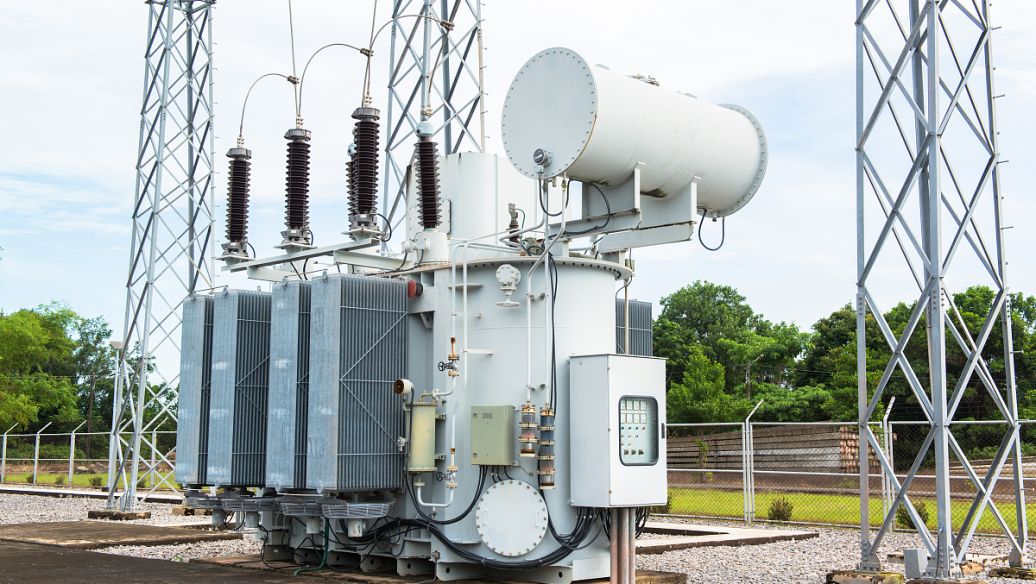
A 3-phase transformer is one of those pieces of electrical equipment that rarely gets attention until a plant expansion, a data center retrofit, or a power-quality failure forces the issue.
In practical terms, it is an electrical device that transfers power between three-phase circuits through electromagnetic induction. Its job is simple in theory: change voltage levels safely and efficiently while keeping three-phase power balanced and stable for real loads.
In business reality, however, the right transformer selection can directly affect energy cost, uptime, maintenance burden, equipment life, and project ROI. That is why engineers, facility managers, EPC contractors, and procurement teams treat transformer decisions as capital decisions, not just component purchases.
This guide breaks down the three-phase transformer working principle, the main types of three-phase transformers, common three-phase transformer connections, practical selection criteria, maintenance requirements, and the most important applications of three-phase transformers across industry.
What Is a 3-Phase Transformer?
A three-phase transformer is designed to transfer electrical energy between two three-phase AC systems. It does this without direct electrical contact between primary and secondary circuits.
Instead, it uses magnetic coupling. When alternating current flows through the primary windings, it creates changing magnetic flux in the core, which induces voltage in the secondary windings.
Three-phase transformers may be built as a single integrated three-limb unit or as a bank of three individual single-phase transformers connected. In industrial and commercial projects, the integrated design is usually preferred because it is more compact, generally more economical, and easier to install for standard duty.
They are used to step voltage up for transmission, step voltage down for utilization, provide isolation, stabilize distribution systems, and match source voltage to the requirements of motors, drives, HVAC equipment, process lines, UPS systems, and grid-connected energy assets.
Why 3-Phase Transformers Matter in Commercial and Industrial Power Systems
Most serious commercial and industrial facilities do not run on single-phase power. They run on three-phase systems because the loads are larger, more continuous, and more sensitive to instability.
A factory with large motor groups, a hospital with mission-critical electrical infrastructure, or a hyperscale data center with redundant power paths cannot depend on underbuilt power conversion equipment.
3-phase transformers matter because they solve four business problems at once:
Voltage matching: Utility supply voltage is often not the same as equipment utilization voltage.
Capacity handling: Large facilities need efficient transfer of hundreds or thousands of kVA.
Power quality support: Proper transformer selection helps manage harmonics, inrush, and load balance.
Lifecycle economics: Better efficiency and proper sizing reduce losses and avoid expensive downtime.
Consider a typical manufacturing facility with multiple 75 kW to 250 kW motors. The supply may enter at medium voltage, then be stepped down to a lower distribution voltage for motor control centers and process equipment. If the transformer is undersized, voltage dip during motor starting can trip drives and PLC-controlled lines.
If it is oversized without reason, the project spends more upfront and may carry avoidable no-load losses over decades. That is why transformer specification is not a paperwork exercise. It is a system-level decision.
In real projects, transformer performance touches production throughput, maintenance labor, insurance considerations, safety planning, and even leasing compliance for commercial buildings.
How a 3-Phase Transformer Works
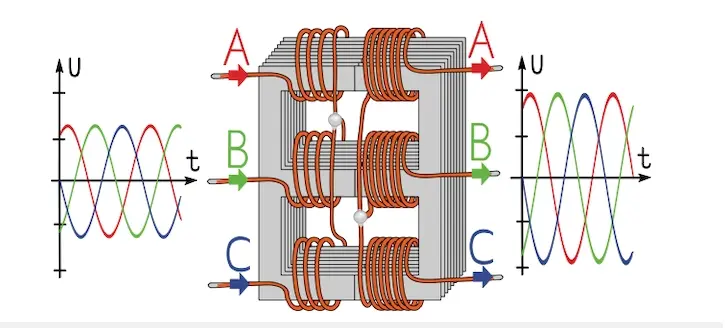
The working principle of a three-phase transformer is based on Faraday’s law of electromagnetic induction. A changing magnetic field induces an electromotive force in a conductor.
Inside a transformer, the three primary windings receive three-phase AC power. These three currents are offset by 120 electrical degrees, producing alternating magnetic flux in the core.
That magnetic flux links to the secondary windings and induces a corresponding three-phase voltage. The ratio between primary and secondary turns determines whether the transformer steps voltage up or down.
In a balanced system, the transformer transfers power smoothly across all three phases. This is why three-phase systems are preferred for large power applications: they deliver continuous power more evenly than single-phase systems.
Core Electromagnetic Induction Principle
At the heart of every transformer is a magnetic core, usually made from laminated silicon steel. Lamination reduces eddy-current losses, which would otherwise convert useful energy into heat.
When AC voltage is applied to the primary winding, magnetizing current flows and creates alternating magnetic flux in the core. Because this flux changes continuously, it cuts across the secondary winding conductors and induces voltage.
The ideal transformer voltage relationship is commonly expressed by the turns ratio:
V1 / V2 = N1 / N2
Where V is voltage, and N is the number of turns. If the primary has more turns than the secondary, the transformer is step-down. If the secondary has more turns, it is step-up.
In actual industrial service, the process also includes copper losses, core losses, leakage reactance, stray losses, and temperature effects. That is why nameplate ratings and test reports matter more than theory alone.
How Three Phases Improve Efficiency
Three-phase power is efficient because it delivers power more continuously over time. The combined output of the three phases produces less pulsation than single-phase systems.
For rotating machines, this is a major advantage. Motors on three-phase power start more reliably, run more smoothly, and provide better torque characteristics.
There is also a conductor-efficiency benefit. For the same transmitted power, a three-phase system generally uses less conductor material than an equivalent single-phase setup.
That is why factories, large office towers, airports, cold storage facilities, wastewater plants, and utility networks rely on three-phase infrastructure. It is not just about bigger power. It is about more economical and stable power.
3-Phase Transformer Construction
Understanding three-phase transformer construction is essential for engineers and buyers because construction details directly affect cooling, losses, service life, maintenance access, and installation constraints.
A typical three-phase transformer includes the following major elements:
Magnetic core
Primary and secondary windings
Insulation system
Tank or enclosure
Cooling arrangement
Tap changer
Bushings or terminals
Protection and monitoring devices
In oil-filled units, the active part is immersed in insulating liquid that provides both dielectric strength and heat removal. In dry-type units, air and cast-resin or VPI insulation systems are used instead.
Core-Type vs Shell-Type Construction
Core-type construction places the windings around the core limbs. This is common in power and distribution transformers because it provides a practical balance between manufacturability, cooling, and insulation design.
Shell-type construction surrounds more of the winding with core material. It can provide better mechanical strength and short-circuit performance, which is useful in some high-stress applications.
In the field, core-type transformers are more widely seen in mainstream industrial and utility distribution installations. Shell-type designs appear where mechanical robustness, special duty, or compact magnetic design is required.
The choice is not about one being universally better. It depends on fault duty, design tradition, manufacturer specialization, and project conditions.
Key Components Inside a 3-Phase Transformer
Windings are typically copper or aluminum conductors insulated and arranged to achieve the required voltage ratio and impedance characteristics.
The laminated core channels magnetic flux efficiently and minimizes hysteresis and eddy-current losses.
The oil tank in liquid-filled transformers encloses the active parts and the insulating fluid. It must handle thermal expansion, environmental sealing, and mechanical protection.
Radiators increase cooling surface area. Larger units may use forced-air or forced-oil cooling to raise load capability.
The conservator in traditional oil-filled designs accommodates fluid expansion and contraction while helping limit moisture ingress.
Tap changers adjust winding ratio to maintain output voltage within an acceptable range when supply conditions vary. Off-circuit tap changers are common on smaller units, while on-load tap changers are used in systems that require regulation under energized conditions.
Bushings provide insulated passage for conductors entering or leaving the transformer.
Protection devices may include temperature indicators, pressure relief devices, Buchholz relays in certain oil-filled designs, oil level gauges, sudden pressure relays, and monitoring sensors.
Types of 3-Phase Transformers
When people search for the types of three-phase transformers or even use variants like types of three phase transformer, they are usually trying to classify transformers in a way that helps them buy, specify, or compare options.
The most practical classification framework is by function, application, and cooling method.
Step-Up and Step-Down 3-Phase Transformers
Step-up transformers increase voltage from the primary side to the secondary side. They are widely used in generation and renewable energy systems where voltage must be raised for efficient transmission.
For example, a solar plant inverter output may be transformed from a lower AC voltage to a medium-voltage collection system before grid interconnection.
Step-down transformers reduce voltage to a usable level for facility loads. This is the more common requirement in industrial plants, malls, hospitals, warehouses, and commercial campuses.
A utility may deliver power at medium voltage, while the facility needs lower voltage for MCCs, panelboards, chillers, elevators, and IT loads.
Power, Distribution, and Isolation 3-Phase Transformers
Power transformers are generally used in transmission networks and higher-capacity substations. They are optimized for high efficiency near full load and are critical for bulk power transfer.
Distribution transformers serve end users and local distribution networks. They are designed for good all-day efficiency because load conditions often vary.
Isolation transformers provide galvanic isolation between source and load. They are used where noise reduction, grounding strategy, safety separation, or sensitive equipment protection is needed.
In data centers and semiconductor environments, isolation transformers can be part of a larger power-quality architecture that includes UPS systems and harmonic mitigation planning.
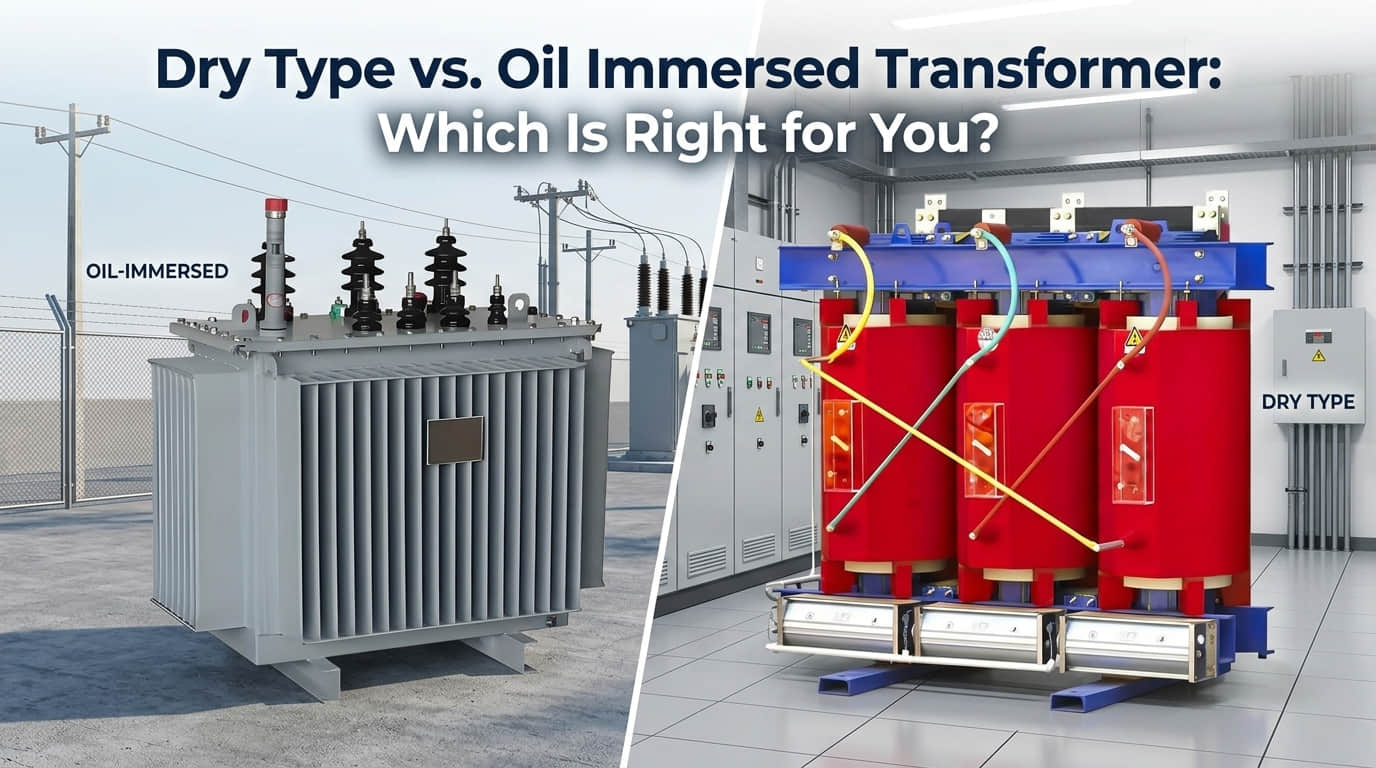
Dry-Type vs Oil-Immersed 3-Phase Transformers
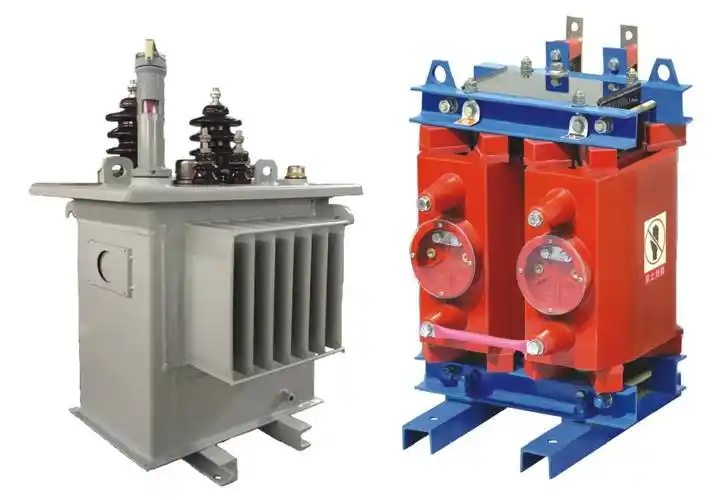
This is one of the most commercially important distinctions.
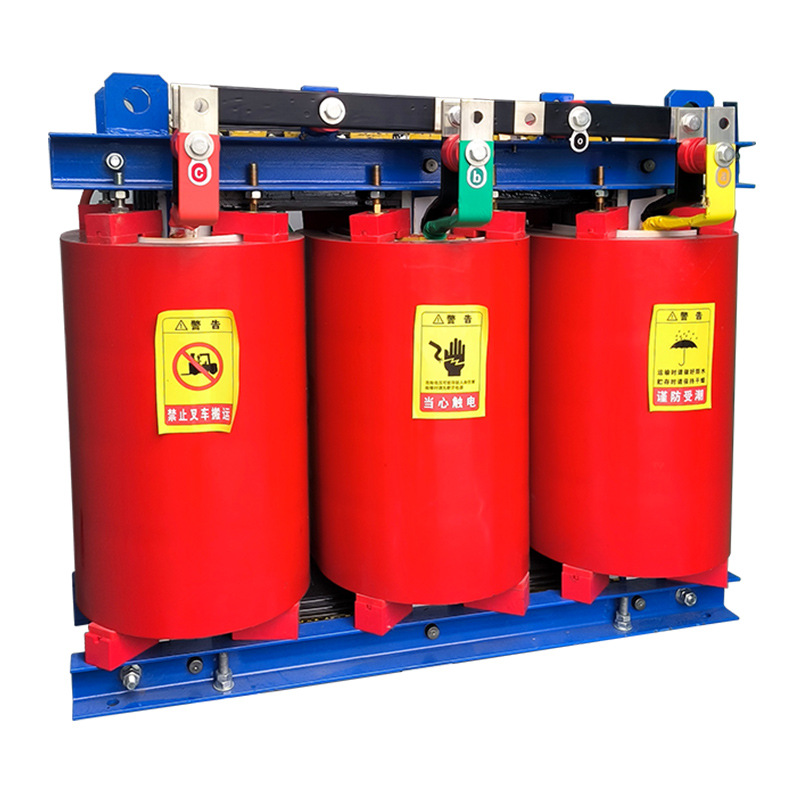
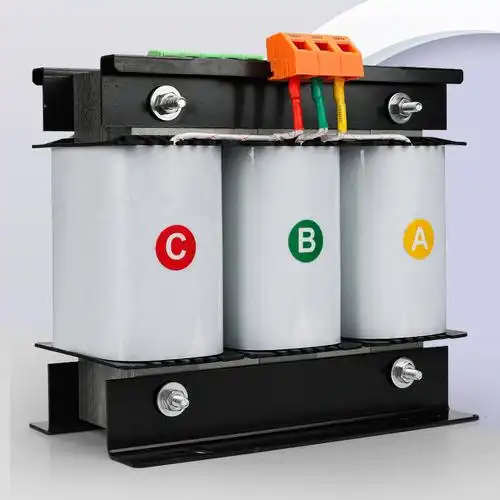
Dry-type transformers are typically used indoors where fire safety, clean installation, and reduced spill risk matter. They are common in office towers, hospitals, schools, airports, and commercial buildings.
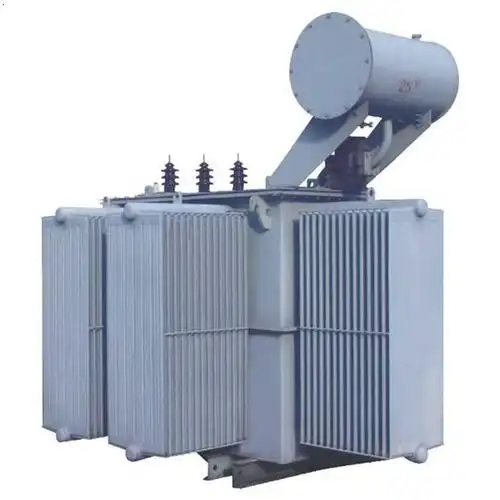
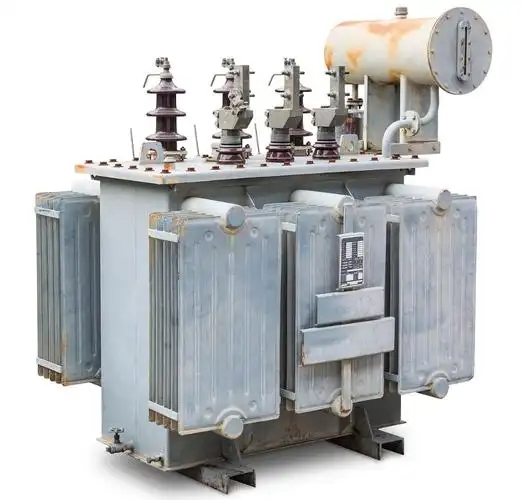
Oil-immersed transformers generally offer better cooling performance and are often favored for outdoor installations, higher capacities, or demanding industrial environments.
Oil-filled units tend to handle overload and heat dissipation more effectively, but they require fluid-related maintenance and environmental risk controls.
Dry-type units usually have lower routine fluid-management burden, but they may run hotter, have different installation constraints, and can become less economical at certain higher ratings.
In real procurement reviews, this decision is rarely made on technology preference alone. It is made on fire code, site access, ventilation, maintenance capability, insurance requirements, and total installed cost.
3-Phase Transformer Connections Explained
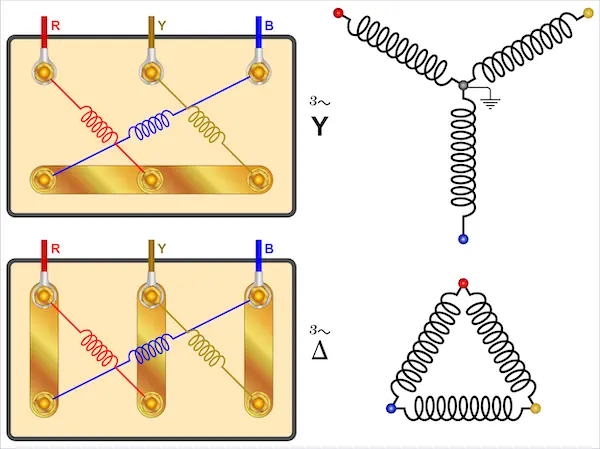
Three-phase transformer connections determine how winding sets are electrically arranged. This affects voltage transformation, grounding behavior, harmonic performance, fault response, and application suitability.
The four most common connection families are Delta-Delta, Delta-Wye, Wye-Wye, and Wye-Delta.
Delta-Delta Connection
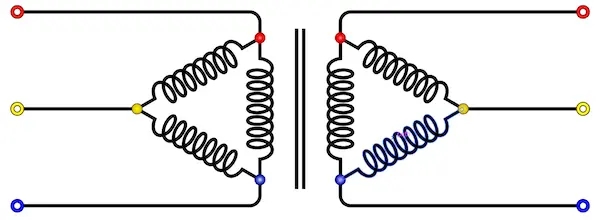
In a Delta-Delta connection, both primary and secondary windings are connected in delta.
This arrangement is often used in industrial environments with significant motor loads. One reason is its tolerance for certain harmonic components and its ability to continue operating in an open-delta condition if one transformer in a bank fails, though at reduced capacity.
Delta-Delta can be useful where no neutral is required and where robustness for heavy three-phase loads is valued.
Delta-Wye Connection
Delta-Wye is among the most common utility and facility distribution transformer connections.
The delta primary helps manage system harmonics and isolates some upstream issues, while the wye secondary provides a neutral point for line-to-neutral loads and grounding.
This is widely used when stepping down medium voltage to low-voltage building or industrial distribution systems. In practical terms, it supports mixed load profiles more easily than a pure delta secondary.
Wye-Wye Connection
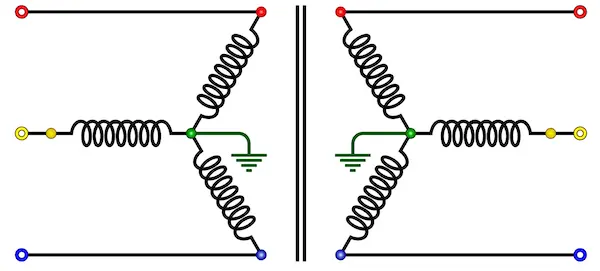
In a Wye-Wye arrangement, both sides are connected in wye.
This can be suitable for grounded systems and some transmission or distribution applications, especially where neutral access is needed on both sides.
However, Wye-Wye configurations require careful design attention because harmonic and unbalance issues can become problematic if the system is not properly grounded or engineered.
Wye-Delta Connection
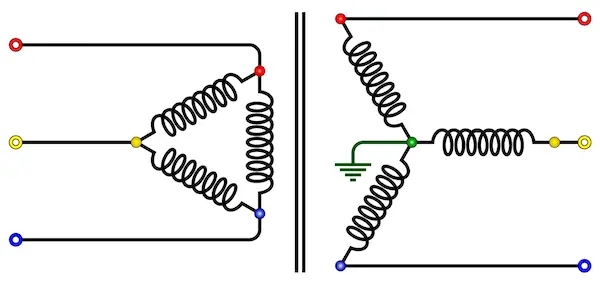
Wye-Delta transformers are often used where the source side benefits from a grounded neutral while the load side serves delta-connected motor systems or industrial conversion equipment.
This arrangement can be useful for certain motor and process loads. It also appears in industrial power conversion schemes where the downstream system does not require a neutral.
As with all connection choices, the best option depends on fault levels, grounding design, harmonic environment, voltage ratio, and load type.
Key Technical Ratings and Selection Criteria
Many buyers search in Chinese for how to choose a three-phase transformer. In project terms, that means translating operating needs into a reliable, code-compliant specification.
Choosing correctly requires more than matching voltage and kVA on a datasheet. It means understanding the load profile, environment, duty cycle, and business risk of failure.
kVA Rating, Voltage, Frequency, and Load Profile
kVA rating is the starting point. It must cover the real operating demand plus appropriate margin for future growth, startup current, duty cycle, and possible overload conditions.
A plant with large motor starts, welders, compressors, or variable-frequency drives should not size the transformer only from average load. Starting current and harmonic distortion matter.
Voltage must match source and load requirements exactly, including primary class, secondary utilization voltage, and tapping range.
Frequency is normally 50 Hz or 60 Hz depending on region. This cannot be treated casually, because flux density and thermal behavior are frequency-dependent.
Load profile matters just as much as nameplate demand. A hospital, for example, has different load behavior from a steel workshop. A data center may operate at high continuity but relatively predictable balance, while a fabrication line may impose intermittent thermal stress.
Efficiency, Impedance, Cooling, and Insulation Class
Efficiency directly affects operating cost. Even small percentage differences matter when a transformer runs 24/7 for 20 to 30 years.
Impedance influences short-circuit current and voltage regulation. Higher impedance can reduce fault current but may worsen voltage drop under load. The right balance depends on system design.
Cooling method affects capacity and temperature rise. Natural air, forced air, oil natural air natural, and oil natural air forced arrangements each have different implications for footprint, maintenance, and overload capability.
Insulation class determines thermal endurance. In higher ambient temperatures or heavy-duty cycles, this becomes especially important.
Experienced buyers ask not only for rated efficiency, but also for load-loss, no-load loss, temperature rise, sound level, and test standards. That is where lifecycle value becomes visible.
Installation Environment and Compliance Standards
Environment often eliminates options before price is even discussed.
Indoor or outdoor location, ambient temperature, dust level, altitude, ventilation, corrosive atmosphere, flood exposure, and seismic requirements all affect the correct transformer design.
For outdoor projects, enclosure protection and anti-corrosion measures are critical. For indoor installations, access clearance, fire separation, and ventilation become central.
Compliance should be verified against applicable IEEE, IEC, and local electrical code requirements. Buyers should also confirm short-circuit withstand capability, routine test documentation, insulation coordination, and installation approvals.
For mission-critical installations, supplier credibility matters. Companies such as Weisho Electric and other established manufacturers are typically evaluated not just on unit price, but on drawings, test records, lead time reliability, after-sales support, and customization ability.
Real-World Applications of 3-Phase Transformers
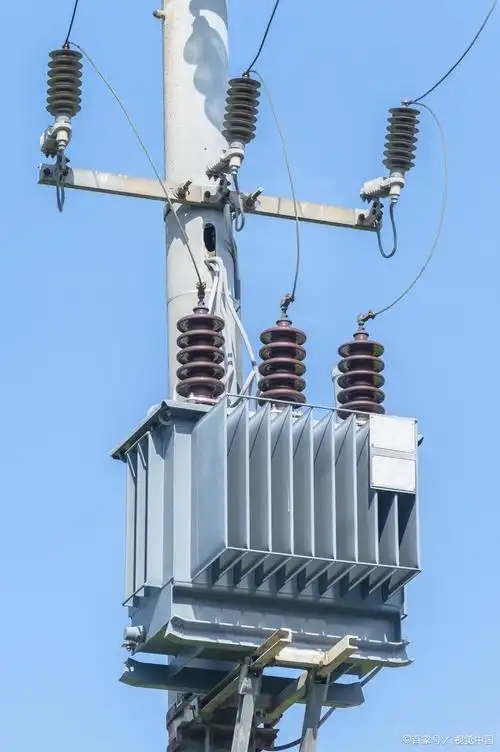
The applications of three-phase transformers span nearly every sector that depends on stable medium- or high-capacity AC power.
Manufacturing Plants and Heavy Equipment
Manufacturing is one of the clearest use cases.
Three-phase transformers supply power to motors, CNC systems, injection molding equipment, welding lines, compressors, conveyors, crushers, mixers, and process machinery. These loads are often inductive, cyclical, and sensitive to voltage dip.
In automotive and metal-processing plants, transformer sizing errors can cause nuisance trips during simultaneous motor starts. In plastics and food processing, poor power quality can disturb automation and temperature-controlled operations.
For heavy industrial sites, oil-immersed units are commonly selected outdoors near substations, while dry-type units may be used indoors near process zones when local conditions permit.
Commercial Buildings and Data Centers
Commercial buildings rely on three-phase transformers more than many owners realize.
Large HVAC systems, chillers, pumps, elevators, lighting panels, tenant distribution boards, and backup power transfer schemes all depend on stable three-phase distribution.
In data centers, transformers often support UPS inputs, PDU systems, cooling infrastructure, and redundancy architecture. Voltage accuracy, thermal performance, and low downtime risk are essential.
A poorly chosen transformer in a data center is not just an electrical issue. It becomes an SLA risk, a thermal management risk, and a reputation risk.
Renewable Energy and Utility Grids
Renewable energy projects are major users of three-phase transformer technology.
In solar farms, transformers step inverter output up to collection or distribution voltage. In wind systems, they adapt turbine output for internal network transfer and grid export.
Utilities use three-phase transformers in substations for voltage transformation, interconnection, and local distribution. Here, efficiency, reliability, and fault performance are non-negotiable.
As grids absorb more distributed generation, transformer selection increasingly includes consideration for harmonics, bidirectional power flow, and thermal cycling.
Real-World Data and Performance Benchmarks
Authoritative evaluation needs more than definitions. It needs benchmarks that engineers and buyers can use.
Transformer efficiencies vary by rating, design standard, and load point, but modern well-designed three-phase units commonly operate in the high 97% to above 99% range depending on type and capacity. Large power transformers can exceed that under optimized conditions, while smaller dry-type units serving building loads may operate somewhat lower.
In practical facilities, however, what matters is not the brochure peak. It is the actual annual loss profile under the facility’s real operating load.
Table: Typical 3-Phase Transformer Ratings by Application
| APPLICATION | TYPICAL PRIMARY VOLTAGE | TYPICAL SECONDARY VOLTAGE | COMMON KVA RANGE | TYPICAL LOAD CHARACTERISTICS |
|---|---|---|---|---|
| Small factory workshop | 11 kV | 400/230 V | 250-1000 kVA | Motors, welders, compressors, mixed process loads |
| Large manufacturing plant | 33 kV or 11 kV | 690 V, 400 V, or 480 V | 1500-5000 kVA | Heavy motor starts, variable process demand, continuous production |
| Hospital | 11 kV | 400/230 V | 500-2500 kVA | Critical loads, HVAC, imaging systems, emergency backup coordination |
| Shopping mall | 11 kV | 400/230 V | 800-3000 kVA | HVAC, lighting, escalators, tenant loads, high daily variation |
| Data center | 11 kV or 33 kV | 415 V or custom low-voltage distribution | 1000-5000+ kVA | Continuous operation, UPS systems, cooling loads, redundancy design |
| Utility substation | 66 kV, 110 kV, or higher | 33 kV, 11 kV, or lower | 5000 kVA to 100 MVA+ | Bulk power transfer, grid stabilization, high fault duty |
These values are representative, not universal. Actual voltage classes and ratings vary by region, utility practice, and project architecture.
Table: Dry-Type vs Oil-Immersed Transformer Comparison
| FACTOR | DRY-TYPE TRANSFORMER | OIL-IMMERSED TRANSFORMER |
|---|---|---|
| Typical installation | Indoor commercial and institutional spaces | Outdoor substations, industrial yards, utility sites |
| Cooling performance | Moderate, depends heavily on ventilation | Generally stronger due to liquid cooling medium |
| Fire risk | Lower liquid-related fire concern | Requires oil fire and spill protection planning |
| Maintenance needs | Cleaning, thermal inspection, terminal checks | Oil testing, leak checks, dielectric monitoring, full routine inspection |
| Typical efficiency at higher ratings | Good, but often lower than liquid-filled at similar duty | Often better at handling heat and sustained heavy load |
| Environmental considerations | No insulating oil spill risk | Requires containment and environmental management |
| Capital cost | Can be favorable indoors at moderate ratings | Often competitive at larger capacities and outdoor duty |
| Best fit | Buildings, hospitals, schools, indoor electrical rooms | Factories, substations, solar farms, utility distribution |
Table: Common Connection Types and Best-Use Scenarios
| CONNECTION TYPE | KEY STRENGTH | TYPICAL USE SCENARIO | OPERATIONAL CONSIDERATION |
|---|---|---|---|
| Delta-Delta | Good for heavy three-phase loads and certain harmonic tolerance | Industrial motor systems, process lines | No neutral on either side |
| Delta-Wye | Provides neutral on secondary and works well for distribution | Utility-to-building or utility-to-facility step-down service | Phase shift must be considered in system design |
| Wye-Wye | Neutral available on both sides | Grounded systems, some transmission/distribution uses | Needs careful harmonic and grounding design |
| Wye-Delta | Useful for grounded source to delta load conversion | Motor loads, industrial conversion schemes | Secondary has no neutral for line-to-neutral loads |
These benchmark tables are the kind of filters engineering teams use early in specification reviews. They do not replace short-circuit studies or thermal calculations, but they prevent many common buying mistakes.
Common Problems, Maintenance, and Service Life
Search intent around three-phase transformer maintenance usually comes from two groups: operators trying to prevent failure, and buyers trying to estimate lifecycle cost.
Both concerns are valid. Transformers are robust, but they are not maintenance-free. Most failures develop gradually through heat, contamination, loose connections, dielectric degradation, or chronic overload.
Overheating, Insulation Aging, and Load Imbalance
Overheating is one of the most common failure drivers. It may result from overload, blocked cooling passages, failed fans, high ambient temperature, harmonics, or poor ventilation.
Insulation aging accelerates with temperature. The general engineering rule is simple: hotter transformers age faster. Repeated thermal stress shortens insulation life and increases the probability of winding failure.
Load imbalance is another frequent issue in commercial and industrial systems. Severe imbalance can overheat one phase, distort voltages, and create hidden stress that is not obvious from total kVA alone.
In facilities with nonlinear loads such as VFDs, UPS systems, rectifiers, and IT power supplies, harmonic currents may add extra heating. This is why application-specific review matters.
Preventive Maintenance Checklist
A disciplined maintenance routine is cheaper than emergency replacement. For most operators, the following checklist is practical and effective:
Visual inspection: Check for leaks, corrosion, discoloration, cracked bushings, and enclosure damage.
Thermal inspection: Use infrared scanning to identify hot spots on terminals, joints, radiators, and winding access points.
Oil testing: For liquid-filled units, perform dielectric strength, moisture, acidity, and dissolved gas analysis as appropriate.
Winding resistance checks: Detect connection degradation and developing internal issues.
Insulation resistance testing: Verify dielectric condition and moisture impact where applicable.
Connection tightening: Re-torque terminals and bus connections to prevent heating from looseness.
Cleaning: Remove dust, debris, and contamination from dry-type units and ventilation passages.
Cooling system inspection: Confirm fan operation, radiator condition, and unobstructed airflow.
Tap changer inspection: Check operation, contact wear, and correct position.
Protection device verification: Test alarms, temperature indicators, pressure relief devices, and monitoring sensors.
High-duty units in dusty plants or corrosive environments may need more frequent inspection than lightly loaded building transformers.
Warning Signs of Transformer Failure
Experienced maintenance teams pay attention to small warning signs because catastrophic failure is usually preceded by evidence.
Unusual noise such as buzzing changes, rattling, or internal vibration
Burning odor or signs of overheated insulation
Unexpected temperature rise under familiar loading conditions
Partial discharge indications in high-voltage equipment
Abnormal voltage variation or regulation issues on the secondary
Oil discoloration or gas alarms in liquid-filled units
Frequent breaker trips without clear downstream fault cause
When these appear, delay is expensive. The cost of planned outage diagnosis is usually small compared with unplanned failure, collateral equipment damage, or production loss.
Cost Factors and ROI in Business Use
Transformer purchasing should be treated as a lifecycle investment decision. The cheapest bid is often not the lowest-cost option over 20 years.
What Drives Initial Purchase Cost
Initial price is shaped by several factors:
Capacity and voltage class
Copper or aluminum winding material
Core steel quality and loss performance
Dry-type or oil-immersed design
Insulation system and temperature rise rating
Tap changer complexity
Enclosure rating and environmental protection
Monitoring, sensors, and protection accessories
Brand reputation and test documentation
In many tenders, two transformers may look similar on capacity and voltage but differ significantly in no-load loss, load loss, sound level, and accessory quality. Over time, those details become operating cost and reliability differences.
How Efficiency Reduces Long-Term Energy Cost
Efficiency is where commercial value becomes measurable.
Suppose a transformer operates continuously in a facility where electricity costs are significant. A modest reduction in total losses can produce meaningful annual savings, especially across multiple units or at high load factors.
For example, if improved design reduces combined losses by even a few kilowatts on a continuously operating transformer, annual energy savings can easily accumulate into thousands of dollars depending on tariff levels and operating hours.
That is before considering the bigger financial impact: avoided downtime. In manufacturing, one transformer-related shutdown can cost more than the price difference between standard and premium equipment.
This is exactly why sophisticated buyers evaluate suppliers such as Weisho Electric on technical documentation, test capability, and long-term support rather than headline price alone.
3-Phase Transformer vs Single-Phase Transformer
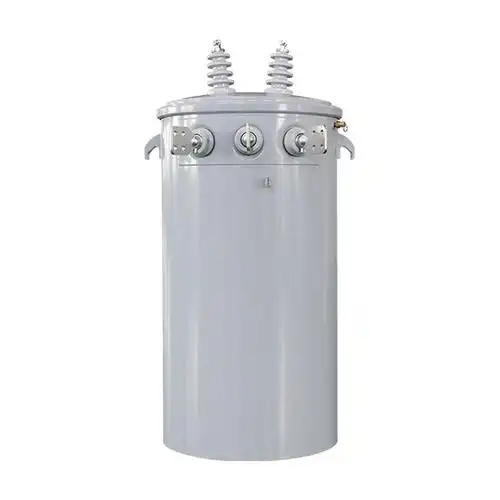
Businesses often ask whether a three-phase transformer is truly necessary or whether a single-phase option can do the job more economically.
The answer depends on power level, load type, and growth plans.
Performance and Capacity Comparison
Three-phase transformers are superior for higher-capacity systems, motor-heavy loads, and scalable industrial distribution. They support smoother power delivery and more efficient operation of large rotating equipment.
Single-phase transformers are simpler and often suitable for smaller, lighter, or isolated loads such as residential service, small retail spaces, or dedicated low-capacity equipment.
For a business running large HVAC systems, elevators, pumps, or production motors, three-phase is usually the right answer. It provides the electrical platform needed for serious commercial load.
Cost and Use-Case Comparison
Single-phase equipment may be cheaper for small applications. It can also be practical when the utility supply or the load itself is single-phase.
But once power demand rises, especially where motors are involved, three-phase systems usually become more economical overall. They reduce conductor requirements, improve motor performance, and scale better as the facility grows.
If expansion is likely, choosing three-phase infrastructure early often prevents expensive rework later.
FAQ
What is a 3-phase transformer used for?
A 3-phase transformer is used to transfer electrical power between three-phase circuits while stepping voltage up or down, providing isolation, and supporting stable distribution. Common uses include industrial plants, commercial buildings, hospitals, data centers, utility distribution networks, solar farms, and wind energy systems.
What is the working principle of a three-phase transformer?
The working principle of a three-phase transformer is electromagnetic induction. Three-phase AC current in the primary windings creates alternating magnetic flux in the core, and that changing flux induces voltage in the secondary windings, transferring balanced three-phase power from one circuit to another.
What are the main types of three-phase transformers?
The main types of three-phase transformers can be grouped by function, cooling method, and application. Common categories include step-up transformers, step-down transformers, power transformers, distribution transformers, isolation transformers, dry-type transformers, and oil-immersed transformers.
What are the most common three-phase transformer connections?
The most common three-phase transformer connections are Delta-Delta, Delta-Wye, Wye-Wye, and Wye-Delta. Delta-Delta is common for industrial loads, Delta-Wye is widely used for utility distribution, Wye-Wye is used in some grounded systems, and Wye-Delta is often used for motor loads and industrial conversion applications.
How do you choose the right three-phase transformer?
Choose the right three-phase transformer by evaluating load demand, kVA rating, primary and secondary voltage, frequency, startup current, harmonic content, installation environment, cooling method, efficiency, impedance, insulation class, and compliance with IEEE, IEC, and local code requirements. The best choice should fit both technical duty and lifecycle cost goals.
How often should a three-phase transformer be maintained?
Maintenance intervals depend on transformer type, duty cycle, and environment. Critical or heavily loaded transformers may need quarterly inspections, while standard installations may follow semiannual or annual routines. Oil-filled transformers often require scheduled oil testing, and all units benefit from periodic thermal scans, cleaning, and connection checks.
What is the difference between dry-type and oil-immersed three-phase transformers?
Dry-type transformers use air and solid insulation systems, making them suitable for indoor applications where reduced fire and spill risk is important. Oil-immersed transformers use insulating liquid for cooling and dielectric strength, making them highly effective for outdoor installations, larger capacities, and demanding industrial service, though they require more fluid-related maintenance and protection planning.
How long does a three-phase transformer last?
A well-designed and properly maintained three-phase transformer can often last 20 to 35 years, and in some cases longer. Actual service life depends on loading, temperature control, insulation health, environmental conditions, maintenance quality, and how well overload and voltage stress are managed over time.
Conclusion and Next Step
A three-phase transformer is far more than a passive voltage conversion device. In commercial and industrial operations, it is a strategic asset that supports safety, uptime, energy efficiency, power quality, and future scalability.
Understanding the three-phase transformer working principle, the major types of three-phase transformers, proper three-phase transformer construction, common three-phase transformer connections, and real selection criteria helps businesses avoid underspecification, overspending, and preventable failures.
If the application is a factory, hospital, mall, renewable energy site, or data center, the right transformer choice should be based on operating conditions, not assumptions. The most reliable projects are the ones that match load profile, environment, compliance requirements, and maintenance strategy from the beginning.
CTA
Do not choose a transformer by price tag alone. Choose it by lifecycle value, operating reliability, and fit for your actual power system.
If you are planning a new project, replacing aging equipment, or comparing dry-type and oil-immersed options, now is the right time to get a professional sizing review.
Request a three-phase transformer consultation today. Compare specifications, validate kVA and voltage requirements, review connection options, and get a quote tailored to your facility, industry, and compliance needs.
Take the next step now: send your load data, single-line diagram, or project parameters and get an expert recommendation before you commit budget or installation time.