Why Choosing the Right Equipment Matters
Choosing the right equipment for your power system can be tricky. As an engineer at Weisho Electric, I know this well. Vacuum contactors and vacuum circuit breakers seem similar, but they serve different purposes. This guide explains the differences in design, function, and use. I want to help you make an informed choice.
This guide highlights the key differences between vacuum contactors and vacuum circuit breakers. It helps you choose the right equipment. We cover function, structure, applications, and maintenance. You’ll find exclusive case studies and selection tips. This helps your power system run safely and efficiently.
Understanding the difference matters.
Choosing a vacuum contactor or a vacuum circuit breaker is like picking the right tool for a job. As a technical expert, I’ve seen how the wrong choice can lead to costly downtime or expensive repairs. Let’s explore what sets them apart.
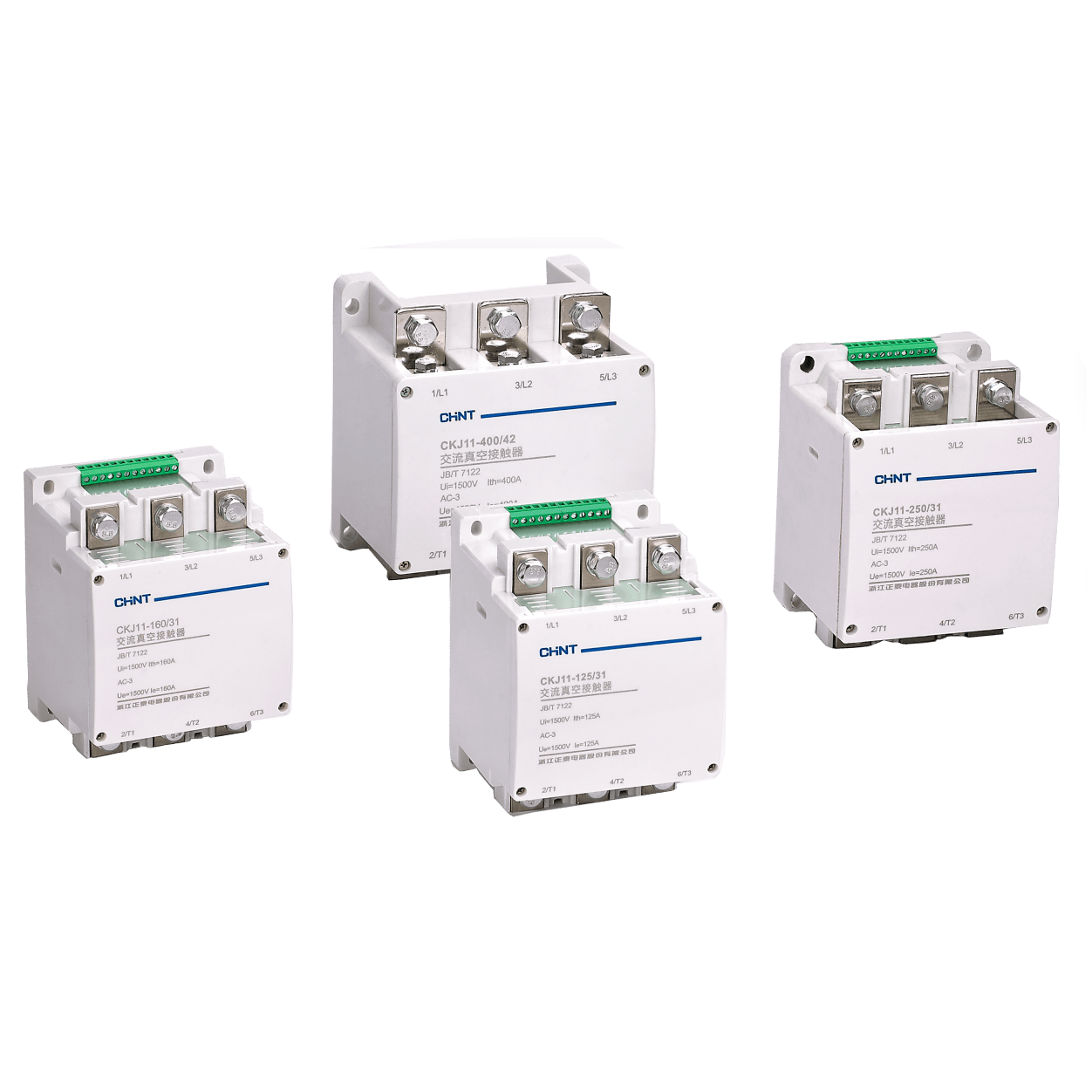
What is a vacuum contactor?
A vacuum contactor switches load currents often. It works in low to medium voltage systems, up to 1,140 V. Here’s what you need to know.
It can handle many tasks. It's perfect for starting and stopping motors. Its compact and lightweight design is also ideal for setups with limited space.
A possible problem is “current chopping.” This can lead to voltage spikes in certain applications. A U.S. chemical plant used ABB vacuum contactors to control motors. This cut maintenance needs by 20%.
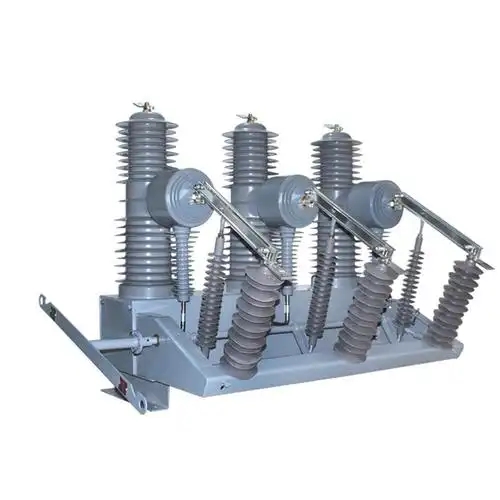
What is a vacuum circuit breaker?
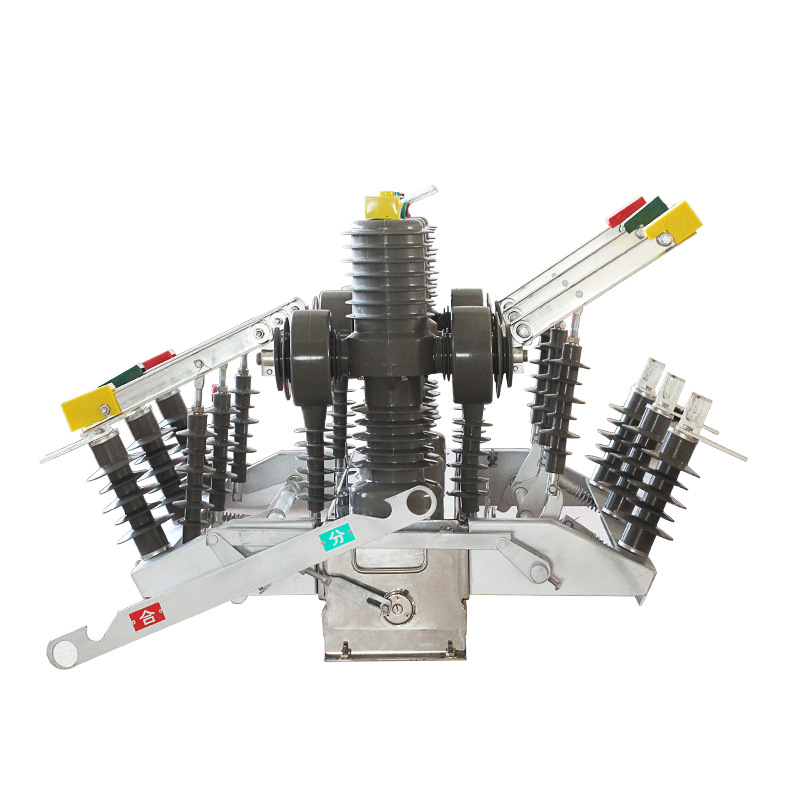
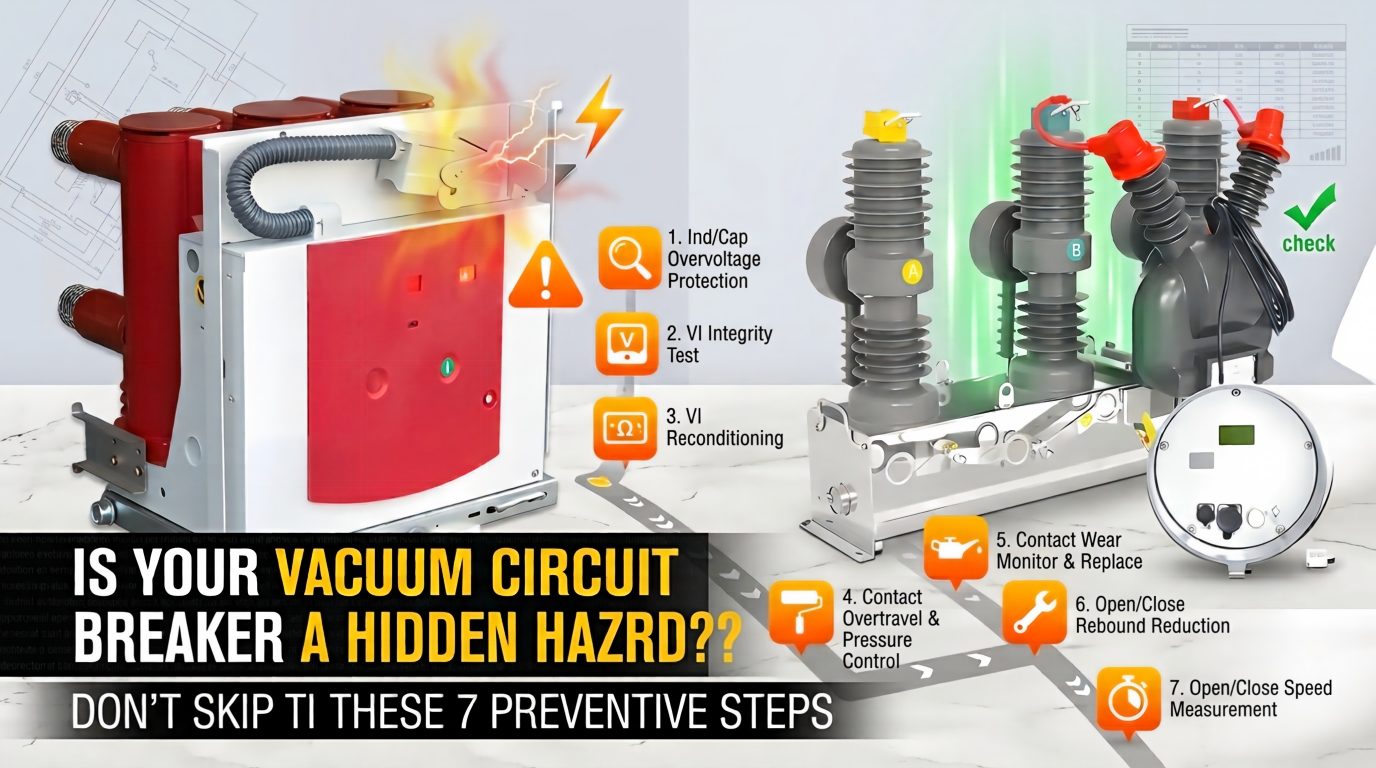
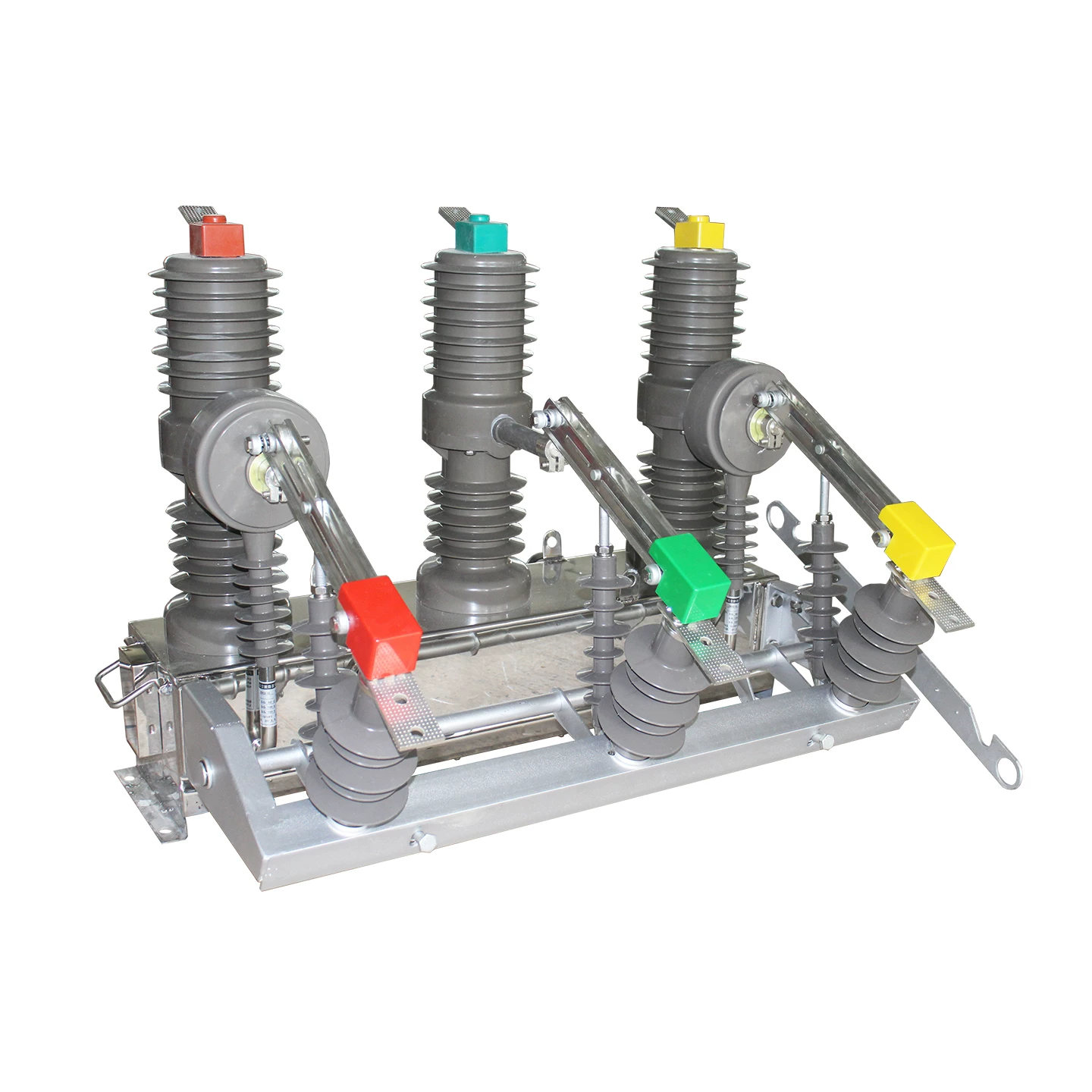
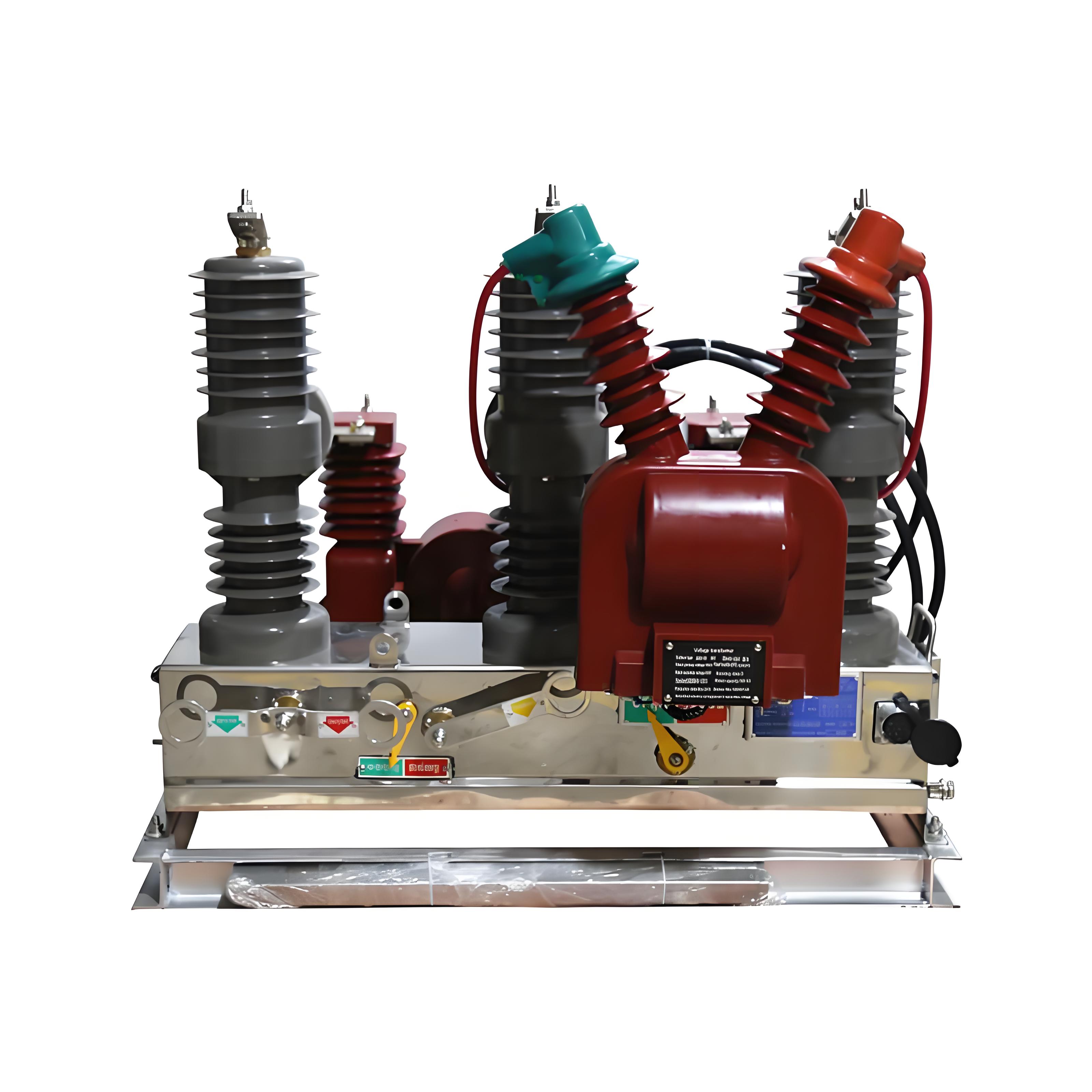
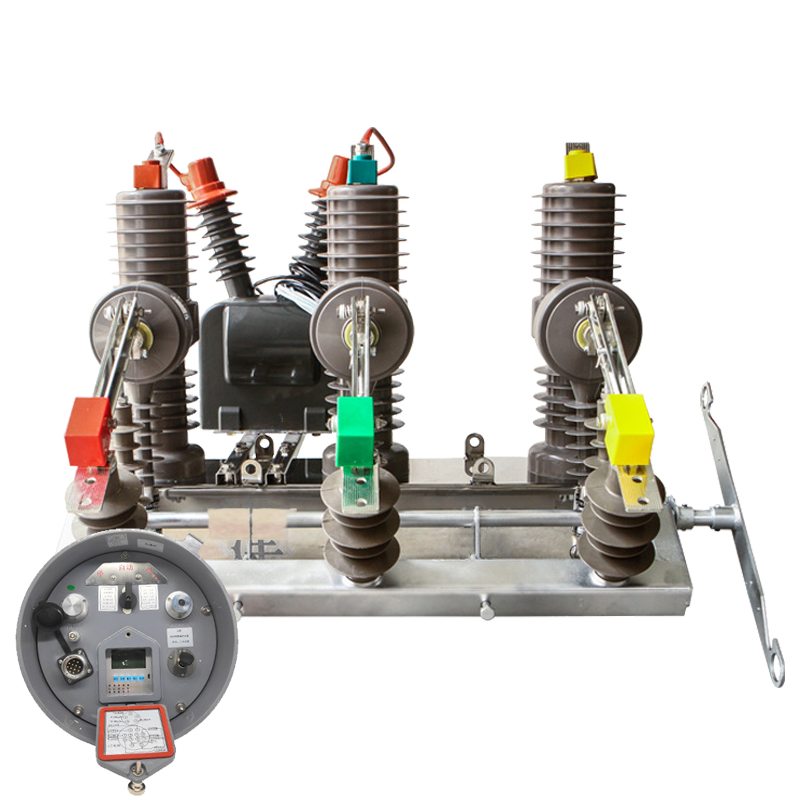
A vacuum circuit breaker is a protective device for medium to high voltage systems (10-40.5 kV). It is designed to interrupt fault currents, such as short circuits.
It has strong protection. This feature automatically cuts off overloads or short circuits. It also uses a vacuum interrupter for superior arc quenching.
These devices are common in grids or substations. Although SF₆ breakers dominate above 110kV. A UK substation used Schneider Electric vacuum circuit breakers. This choice helped prevent outages and saved £50,000 each year.
Function Comparison: Control vs. Protection
Each device has a unique role in a power system. Let’s break it down.
Vacuum Contactor: Built for Control
I think of contractors as the workhorses of frequent operations. They excel at switching load currents for motors, capacitors, or lighting systems.
They are built to handle thousands of on-off cycles without significant wear. But they are not designed to interrupt fault currents like short circuits.
Vacuum Circuit Breaker: Designed for Safety
Circuit breakers are like the guardians of your system. They focus on quick fault interruption to prevent damage and ensure safety.
They are built for occasional, critical operations, not for frequent use.
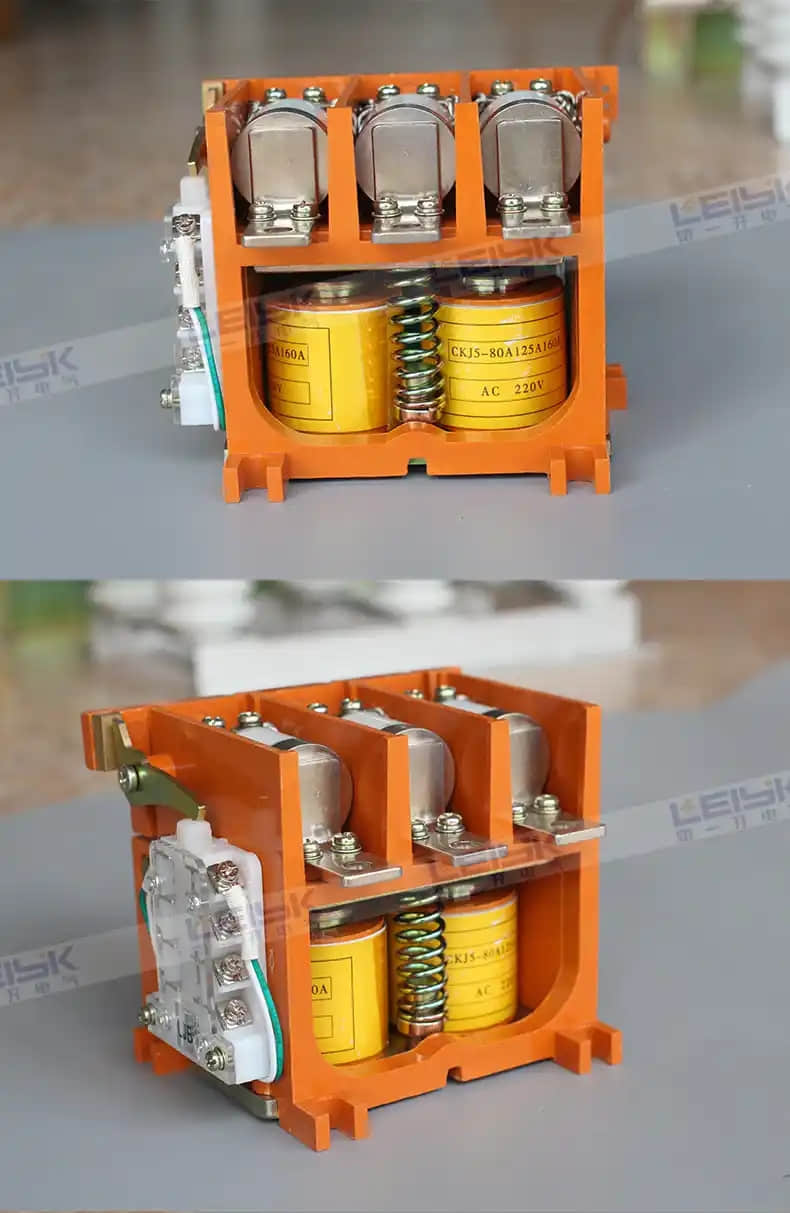
Structural Differences: Simplicity vs. Complexity
The design of these devices reflects their purpose. As an engineer, I look at their build to understand their performance.
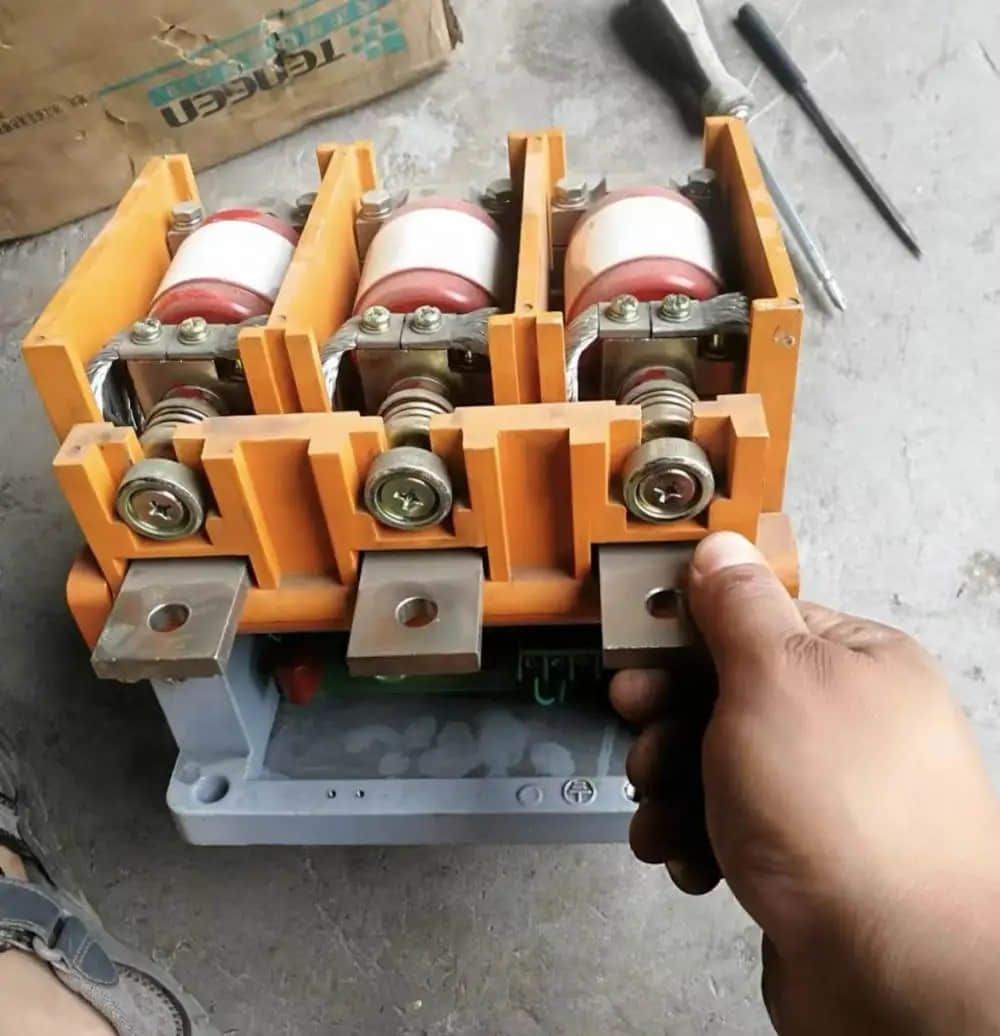
Vacuum Contactor Structure
Contactors are designed for simplicity and durability. They use an electromagnetic or spring system for frequent switching.
This compact design has below it support for a moving contact. This makes them perfect for repetitive industrial tasks, such as motor control.
Vacuum Circuit Breaker Structure
Breakers are more complex to ensure robust protection. Their advanced operating mechanisms include relays and interlocks for precise fault detection.
This complexity supports their role in high-stakes environments, like substations.
Exclusive Case Study: Weisho Electric Solutions
Real-world examples show how important it is to choose the right equipment. We are more than just a manufacturer; we are a solutions provider.
A European solar farm project:
A big solar farm in Spain had to switch capacitor banks often to correct the power factor. The client first used a circuit breaker. But high-frequency operations caused significant wear. This led to high maintenance costs and risks of outages.
The Challenge: The system needed many switching operations each day. A standard breaker couldn't manage that.
The Weisho Electric Solution: We provided a vacuum contactor made for high-frequency switching.
The Result: The new system operated smoothly with a significantly longer mechanical life. The client cut annual maintenance costs by 70%. System efficiency also improved, which helped keep power generation stable.

Weisho Electric Exclusive Research: Industry Failure Report
Our engineering team looked at client feedback and industry data. They created the 2024 Mid-Voltage System Failure Report. A key finding was:
"More than 40% of our clients had unscheduled downtime. This was due to using circuit breakers incorrectly for high-frequency switching tasks." This severely shortened the equipment's lifespan.
This finding highlights the need for proper selection. It also shows that vacuum contactors are essential for certain applications.
FAQ: Common Questions Answered
Here are answers to questions I often hear from engineers and technicians.
Can a vacuum contactor replace a vacuum circuit breaker?
No, contactors lack the fault-interrupting capacity of breakers. Use contactors for control and breakers for protection to avoid system failures.
How do I choose between a contactor and a breaker for motor control?
If your motor needs frequent start-stop cycles, choose a contactor for longevity. For motor fault protection, you must use a breaker. A complete solution often combines both for greatest efficiency and safety.
What equipment is used in GIS switchgear?
GIS switchgear typically uses a vacuum circuit breaker. GIS is often used in important high-voltage tasks. These tasks need fault current interruption.
Conclusion: Make the Right Choice for Your System
I'm Thor, an electrical engineer with 12 years at Weisho Electric Co., Ltd. I’ll explain the main differences between vacuum contactors and vacuum circuit breakers. I hope you feel confident in picking the best power system, just as Siemens did for their factory's motor control.
[Summary Table: Key Differences at a Glance]
Feature: Vacuum Contactor, Vacuum Circuit Breaker Main Function:
Frequent switching of load currents.
Interrupting fault currents (short circuits)
Operating Frequency:
High (great for frequent start-stop)
Low (for rare, critical operations)
Applications:
Motor control: capacitor switching.
Grids, substations, and main circuit protection
Protection:
No short-circuit protection.
Strong fault protection
We are a professional Chinese manufacturer. Our clients are in Europe, the Americas, the Middle East, Belt and Road countries, and worldwide. We understand the needs of diverse markets.
Ready to optimize your system? Start by assessing your voltage and switching needs. For a tailored solution, contact me in person to schedule a free consultation. Let’s power up your system together!
Thor | Electrical Engineer
Tel: 86-0577-62788197
WhatsApp: +86 159 5777 0984
Email: [email protected]