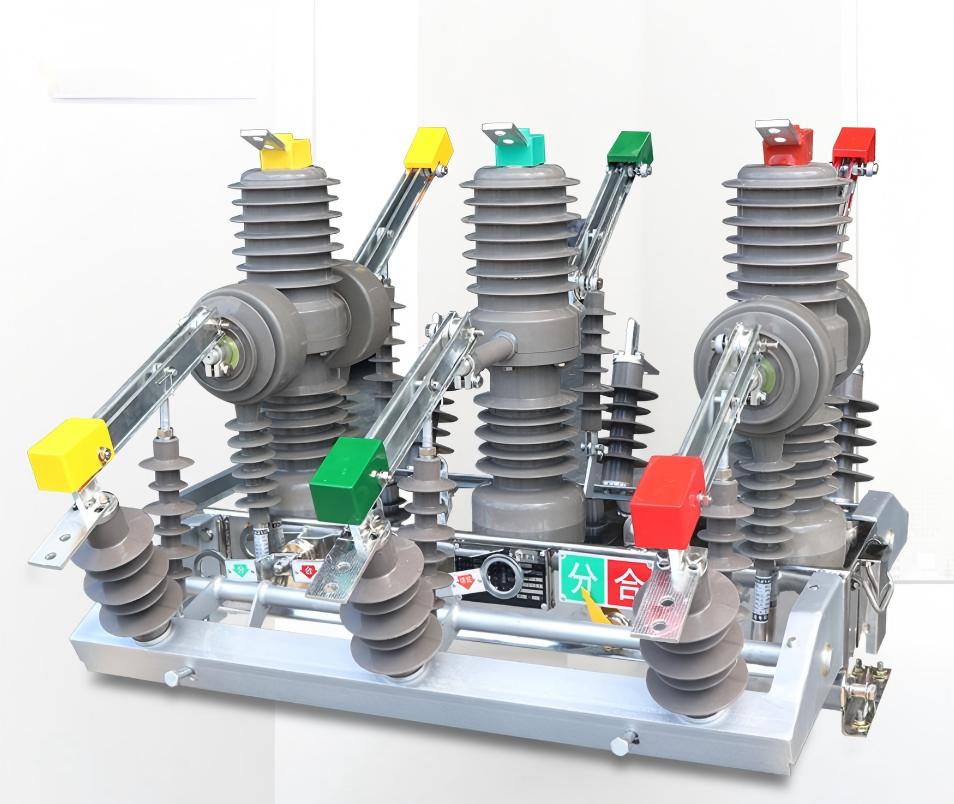
What Is the Best Vacuum Circuit Breaker Mechanism for Medium-Voltage Systems?
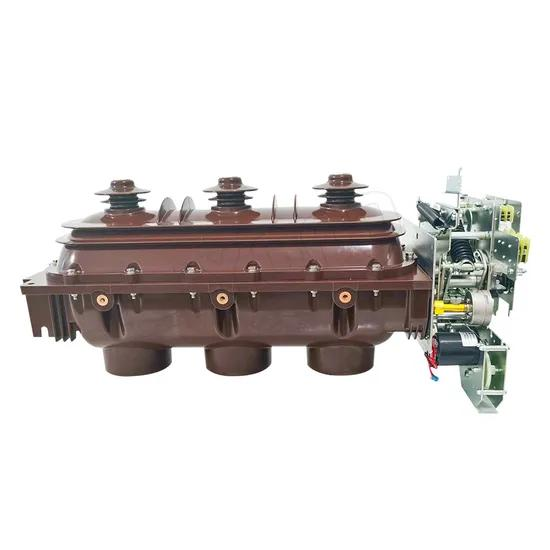
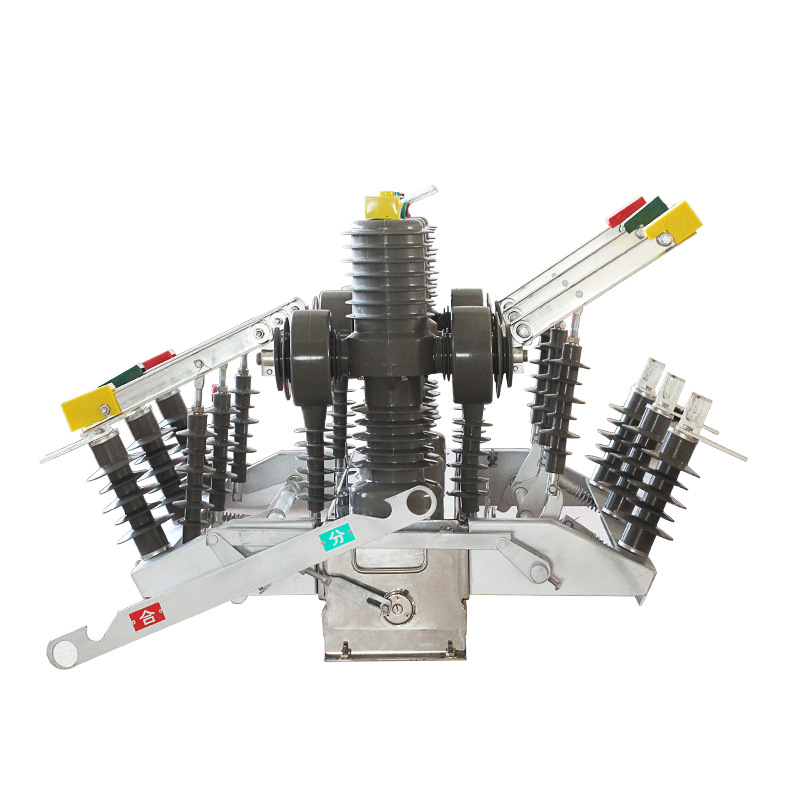
A vacuum circuit breaker is a medium-voltage switching device that interrupts current inside a sealed vacuum interrupter. Because the arc is extinguished in a vacuum, the breaker can deliver strong interruption performance, long electrical life, and compact switchgear integration.
In real projects, however, the interrupter is only half the story. The operating mechanism determines how reliably the breaker opens and closes over thousands of cycles, under vibration, heat, dust, weak control power, and sometimes after months of inactivity.
That is why the debate around vacuum circuit breaker spring-operated vs permanent magnet is not academic. It directly affects trip reliability, maintenance planning, operating consistency, and the total cost of ownership across 10 to 20 years.
If you are evaluating a vacuum ckt breaker for utility feeders, motor control, renewable collection systems, substations, or industrial switchgear, the central question is simple: should you use a spring-charged mechanism or a permanent-magnet actuator?
The short answer is this. Spring-operated mechanisms remain the proven default for many utility and industrial duties because they are familiar, widely supported, and mechanically robust. Permanent-magnet mechanisms are attractive where low maintenance, automation compatibility, and operating consistency matter more than purely traditional design preference.
The best choice depends on operating profile, maintenance access, control power quality, and procurement strategy. This article shows how to choose a vacuum circuit breaker mechanism with the depth expected by engineers, consultants, and asset owners.
Why Choosing the Wrong Vacuum Ckt Breaker Mechanism Causes Costly Problems
Medium-voltage breakers often fail economically before they fail electrically. In other words, the real damage comes from avoidable outages, emergency truck rolls, maintenance labor, and poor fit between mechanism design and switching duty.
A mismatch can create four expensive problems.
Downtime: A breaker selected for low-frequency feeder protection may perform poorly in frequent motor or capacitor switching service.
Maintenance burden: Mechanisms with more wear points can demand periodic adjustment, lubrication, spring inspection, and auxiliary device replacement.
Misoperations: Weak control power, sticky linkages, or aging auxiliary circuits can cause failure to close or trip.
Higher lifecycle cost: Lower purchase price can be erased by field service, spare parts, and production losses.
Consider a real industrial pattern seen across mining, cement, and petrochemical facilities. A breaker that costs 10% less upfront may trigger two unplanned shutdown interventions over ten years. If a single outage hour in a process plant costs $20,000 to $150,000 depending on the line, the “cheap” option becomes the expensive one very quickly.
Utilities see the same effect. On a 15 kV or 24 kV feeder, one close-fail or delayed trip event can lead to customer interruptions, regulatory reporting, and reputational risk. In remote substations, the labor cost of sending a crew to inspect a mechanism may exceed the annual carrying cost difference between mechanism types.
So the mechanism decision should never be based on brochure language alone. It should be based on the actual switching duty, site conditions, and maintenance model.
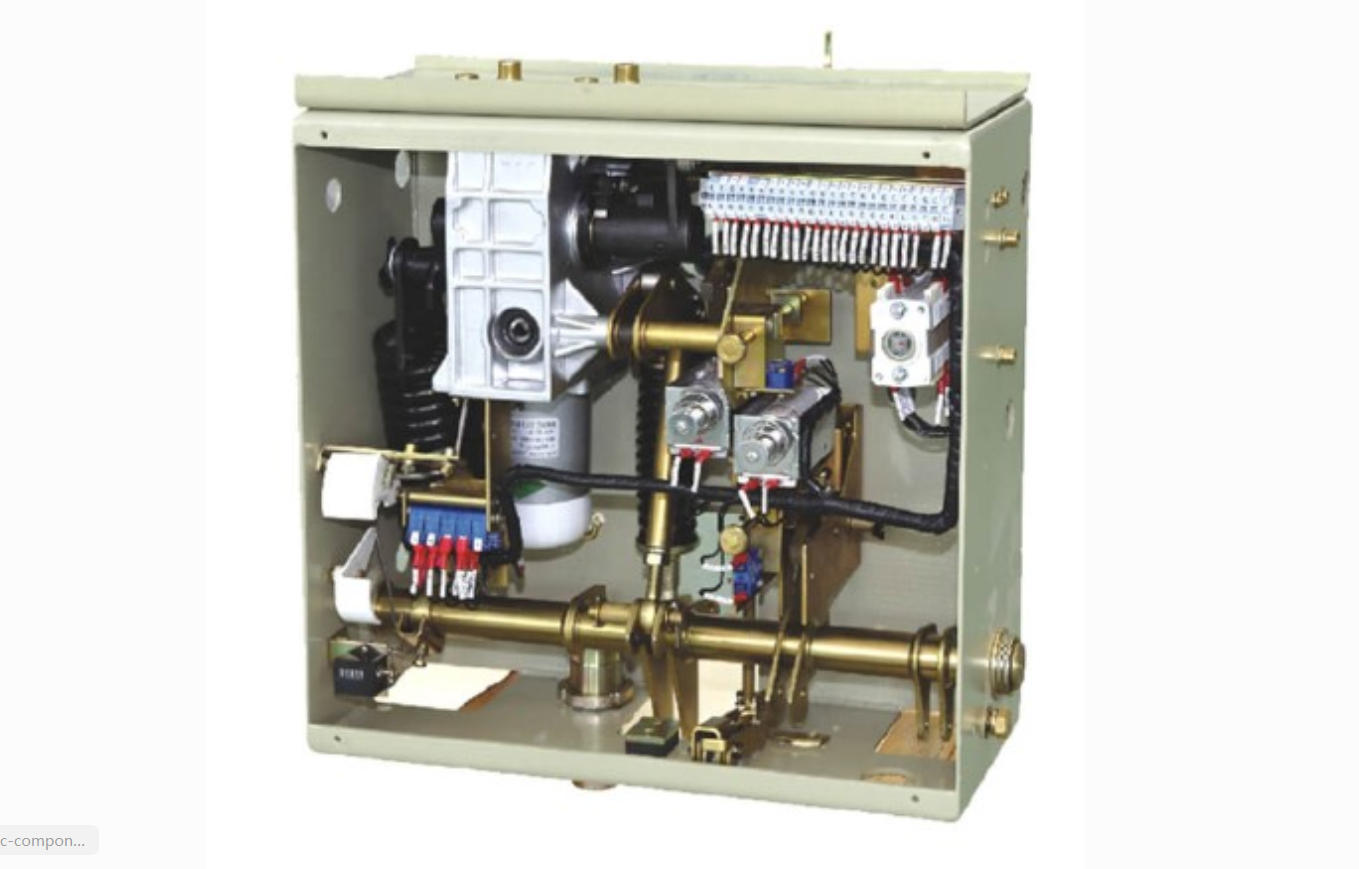
Vacuum Circuit Breaker Spring-Operated vs Permanent Magnet: Key Differences at a Glance
At a high level, a spring-operated mechanism stores mechanical energy in charged springs and releases it through a linkage to open or close the breaker. A permanent-magnet mechanism uses magnetic latching with electronic control to hold and actuate the contacts with fewer moving mechanical parts.
Here is the practical summary.
Spring-operated: mature, widely understood, strong field familiarity, but more mechanical components and periodic mechanical maintenance.
Permanent-magnet: compact, consistent actuation, reduced moving parts, lower mechanical maintenance, but greater dependence on electronic control quality and design integration.
For many buyers, the question is not which mechanism is universally superior. The right question is: which mechanism is superior for this exact duty, this exact site, and this exact maintenance capability?
Table: Spring-Operated vs Permanent-Magnet Vacuum Circuit Breaker Comparison
| Comparison Factor | Spring-Operated Vacuum Circuit Breaker | Permanent-Magnet Vacuum Circuit Breaker |
|---|---|---|
| Mechanism design | Mechanical energy stored in closing/opening springs, released by latch and linkage | Magnetic latching and electronic pulse control with simplified moving structure |
| Energy storage method | Motor charges springs after operation or on command | Electrical pulse energizes actuator; magnetic force maintains state |
| Closing speed | Fast and proven, but dependent on spring condition and linkage adjustment | Very consistent when control electronics and actuator are properly designed |
| Opening consistency | Reliable, though mechanical wear can affect long-term consistency | Typically high consistency due to reduced mechanical complexity |
| Auxiliary components | Charging motor, springs, latches, linkages, auxiliary switches | Electronic controller, coils, magnetic actuator, sensors, fewer mechanical transmission parts |
| Maintenance intervals | Usually more periodic inspection of mechanical parts and lubrication points | Often lower mechanical maintenance, but electronics and control power quality matter more |
| Field familiarity | Very high across utilities and industry | Growing, but varies by region and operator experience |
| Control power dependency | Moderate; spring stores energy once charged | High importance on healthy control circuit and actuator electronics |
| Retrofit suitability | Often strong for legacy switchgear upgrades | Depends heavily on OEM integration and compatibility |
| Lifecycle considerations | Potentially more wear parts and labor over time | Potentially lower routine mechanical service, but electronics must be protected and supported |
| Best-fit applications | Utilities, industrial plants, retrofit programs, conventional substation duty | Automated substations, remote sites, renewable applications, low-maintenance priorities |
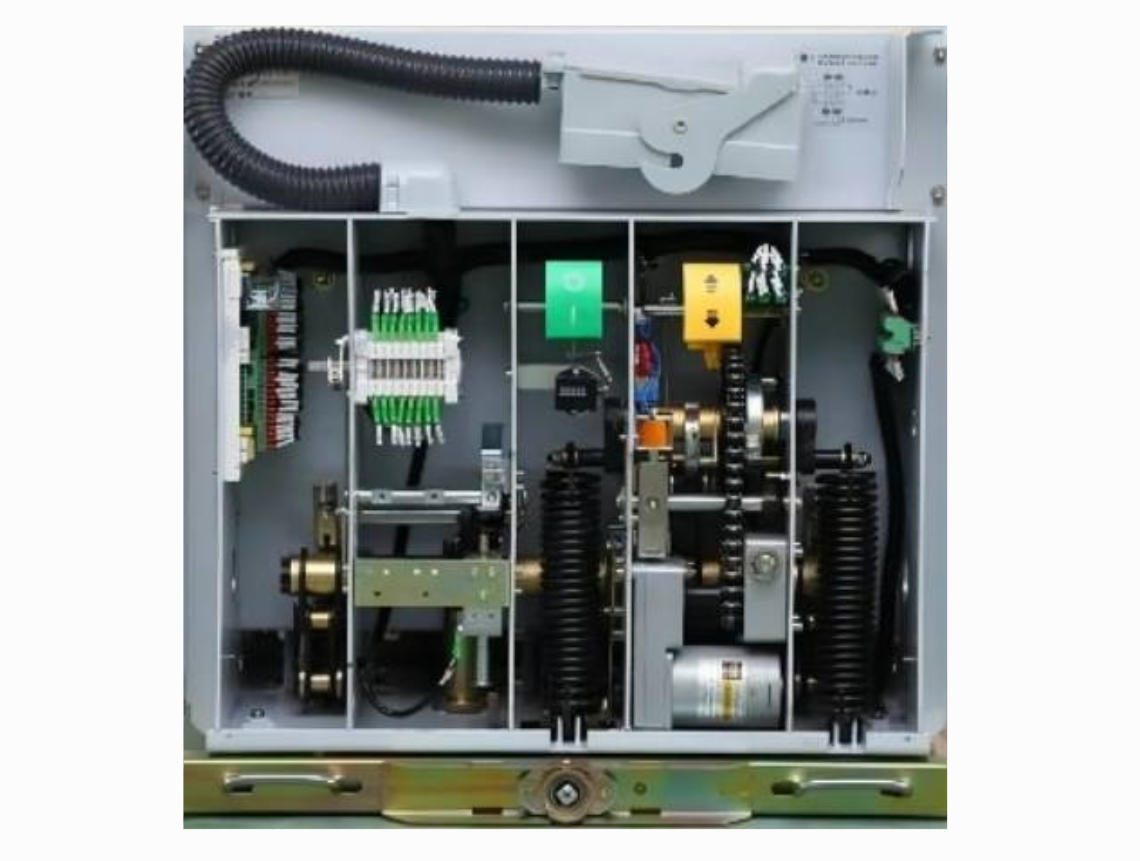
How a Spring Charged Operating Mechanism for Vacuum Circuit Breakers Works
The spring-charged operating mechanism for vacuum circuit breakers is still the benchmark design in many medium-voltage switchgear lines. It stores mechanical energy in a closing spring, typically charged by a motor after each operation or manually during commissioning or emergency handling.
When the breaker receives a close command, the latch releases the stored energy. The mechanism drives the moving contact assembly at the required speed and force so the vacuum interrupter closes correctly.
For opening, a separate tripping action releases the opening mechanism, often supported by dedicated opening springs. This ensures the contacts separate rapidly enough to interrupt current and restore dielectric strength across the gap.
The design has several engineering strengths.
Stored mechanical energy: once charged, the breaker can close even if short-term control power is disturbed.
Established architecture: technicians know how to inspect, adjust, and troubleshoot it.
Broad compatibility: many indoor metal-clad switchgear systems are designed around it.
In practice, this mechanism performs especially well where maintenance teams already stock common spares such as motors, auxiliary switches, trip coils, latching parts, and limit contacts. In facilities with experienced electrical maintenance staff, spring-operated breakers are often preferred because operators trust what they know and can service it quickly.
But that familiarity comes with responsibility. Springs, latches, bearings, pins, and transmission linkages should be inspected on schedule. In high-duty applications, wear and tolerance drift can eventually affect motion timing and operating consistency if maintenance discipline slips.
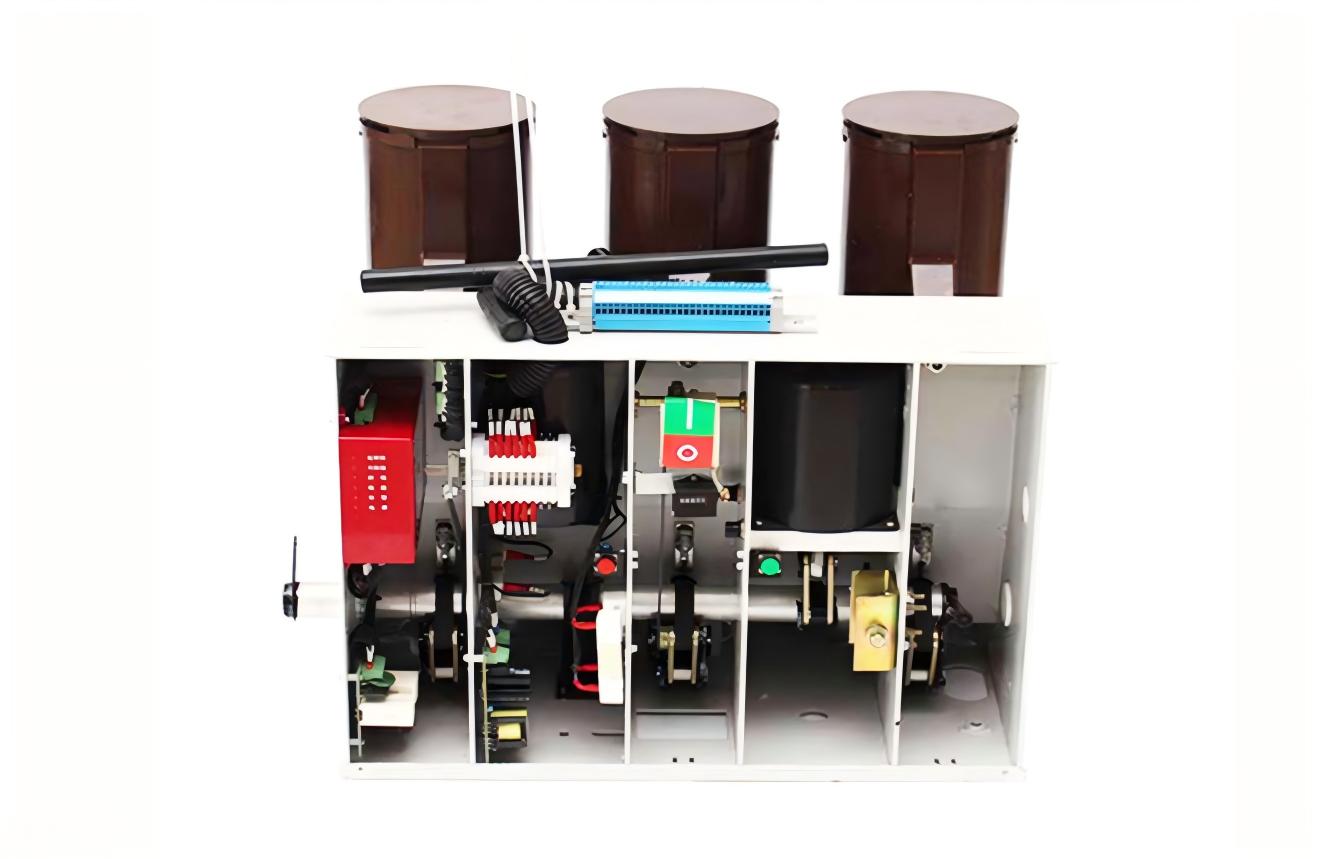
How a Permanent Magnet Actuator Vacuum Circuit Breaker Works
A permanent magnet actuator vacuum circuit breaker replaces much of the conventional spring-linkage complexity with a magnetic actuator and electronic control logic. In simple terms, a pulse energizes the actuator to move the contacts, while permanent magnets hold the breaker stably in the open or closed position.
This is why engineers often cite permanent magnet actuator vacuum circuit breaker advantages in automation-heavy systems. There are fewer mechanical transmission parts to inspect, less dependence on spring charging assemblies, and often a more compact operating structure.
The mechanism typically includes a controller, actuator coil, magnet assembly, and position feedback elements. A close pulse moves the mechanism into the closed state, and the magnetic circuit latches it. An opening pulse releases and transfers it to the open state with designed speed and travel.
The main appeal is not just compactness. It is consistency.
In applications with frequent switching, especially where remote monitoring and low-touch maintenance are priorities, the reduced mechanical complexity can be a real operational advantage. This is one reason permanent-magnet designs are increasingly considered in renewable substations, unattended distribution nodes, and smart grid projects.
That said, no actuator should be romanticized. The design depends more heavily on control electronics, coil health, and power quality. Poorly protected panels, voltage dips, uncontrolled surges, or weak DC systems can undermine the expected benefits.
So the permanent-magnet option is best seen as a high-performance, low-mechanical-maintenance solution that rewards good system integration.
How to Choose a Vacuum Circuit Breaker Mechanism Step by Step
If you want a repeatable method for how to choose a vacuum circuit breaker mechanism, use the following engineering sequence rather than jumping straight to price comparison.
1. Define the electrical duty first
Start with rated voltage, continuous current, interrupting capacity, insulation level, and system grounding method. A mechanism decision only makes sense after the core breaker rating is correct.
2. Map the switching profile
Ask how often the breaker will operate. A feeder breaker that trips a few times per year is not the same as a motor or capacitor switching breaker that may operate frequently under controlled logic.
3. Evaluate control power quality
Stable DC or AC control supply matters for both designs, but especially for electronically coordinated actuation. Sites with weak battery maintenance, voltage instability, or noisy auxiliary supply should examine mechanism sensitivity very carefully.
4. Assess maintenance access
If a substation is urban and fully staffed, periodic mechanical inspection may be routine. If the site is remote, offshore, mountainous, or desert-based, reduced maintenance visits may justify a permanent-magnet solution.
5. Consider operator skill and spare parts strategy
A strong spring-operated fleet can reduce training and spare inventory complexity. On the other hand, standardizing on low-maintenance digitally monitored breakers may reduce labor dependency over time.
6. Compare lifecycle cost, not purchase price alone
Include maintenance labor, inspection frequency, outage exposure, spare components, retrofit cost, and expected service support. This is where many mechanism decisions reverse.
7. Check switchgear integration and OEM support
Mechanism performance depends on complete assembly design, not just the actuator itself. Trip circuits, interlocks, shutters, truck mechanisms, and protection interfaces must all be compatible.
Table: Medium Voltage Vacuum Circuit Breaker Selection Criteria
| Selection Criterion | Why It Matters | What to Verify |
|---|---|---|
| Rated voltage | Must match system insulation and operating class | 7.2 kV, 12 kV, 17.5 kV, 24 kV, 36 kV or project requirement |
| Interrupting capacity | Determines fault clearing capability | Short-circuit breaking current and making current ratings |
| Continuous current | Affects temperature rise and bus integration | 630 A, 1250 A, 2000 A, 3150 A or as specified |
| Operating frequency | Key mechanism selection driver | Infrequent protection duty vs frequent switching duty |
| Mechanical endurance | Indicates expected operating life | Manufacturer test values and duty classification |
| Control voltage | Mechanism reliability depends on healthy control power | 24 VDC, 48 VDC, 110 VDC, 220 VDC, 110 VAC, etc. |
| Ambient conditions | Heat, dust, humidity, altitude and corrosion affect performance | Indoor/outdoor, IP level, anti-condensation measures, altitude derating |
| Integration needs | Automation and communication drive accessory requirements | SCADA, RTU, IEC 61850, status signals, trip supervision |
| Maintenance access | Determines value of lower routine service | Staffed plant vs remote unattended site |
| Spare parts availability | Impacts repair time and asset strategy | Local support, lead times, interchangeable parts |
| Retrofit constraints | Old switchgear may restrict mechanism options | Racking dimensions, interlocks, panel clearances, certification |
| Total ownership cost | Best financial basis for comparison | Purchase, maintenance, downtime risk, support, replacement planning |
These are the real medium voltage vacuum circuit breaker selection criteria that separate a good purchase from a future headache.
When to Choose a Spring-Operated Vacuum Circuit Breaker
Choose a spring-operated vacuum circuit breaker when the project values proven field performance, conventional maintenance methods, and broad service familiarity.
This mechanism is often the strongest fit in the following cases.
Utility distribution feeders: especially where operating duty is moderate and maintenance crews already support spring-mechanism fleets.
Industrial plants: where in-house electricians understand mechanical inspection and prefer visible, familiar mechanism behavior.
Retrofit projects: where the existing switchgear cubicle and interlock scheme were originally designed around spring operation.
Conservative procurement environments: where owners prioritize standardization, proven service history, and easy technician acceptance.
For example, many 11 kV and 13.8 kV indoor switchgear lineups in mature process industries still favor spring-operated breakers because maintenance procedures, spare kits, and operator training are already established. Changing mechanism philosophy can introduce unnecessary retraining and procurement complexity.
Another good use case is a utility substation where the breaker mainly serves protection duty and may operate only occasionally outside testing. In that scenario, the value of a highly familiar and well-supported mechanism can outweigh the benefit of lower moving-part count.
When to Choose a Permanent-Magnet Vacuum Circuit Breaker
Choose a permanent-magnet vacuum ckt breaker when reducing routine mechanical maintenance is a strategic priority and the control system environment is strong enough to support electronic actuation reliably.
This option is especially attractive in these situations.
Automated substations: where remote status, consistent operation, and low-touch service are important.
Renewable energy integration: where wind and solar collector networks may involve distributed, lightly staffed switchgear locations.
Remote sites: where every maintenance visit requires travel time, permits, or difficult logistics.
Frequent switching applications: where operating consistency and reduced mechanical wear are highly valued.
In one common field scenario, a remote renewable collection substation may be two to four hours from the nearest maintenance center. If a design can safely reduce inspection frequency and lower the number of wear-prone mechanical components, the asset owner may recover the higher upfront cost through reduced site visits alone.
Permanent-magnet breakers also appeal to digital substations where users want tighter control integration, compact operating assemblies, and more predictable motion performance over large operation counts.
Real-World Data: Performance, Maintenance, and Lifecycle Cost Examples
To make this practical, let us look at representative field-style examples. These are not theoretical slogans. They reflect common operating economics seen across utility, industrial, and renewable installations.
According to public industry references and manufacturer application guidance across medium-voltage switchgear markets, mechanical endurance ratings for vacuum breakers commonly range from 10,000 to 30,000 operations, with higher-duty specialized designs going beyond that depending on mechanism and application. Actual maintenance interval, however, depends less on the interrupter alone and more on the mechanism, operation count, environment, and OEM guidance.
In industrial motor switching, it is not unusual for a breaker associated with process duty to see hundreds of operations annually. In feeder protection, that same breaker may see only test operations plus occasional fault events. This is exactly why mechanism selection must be duty-based.
Table: Real-World Example Comparison by Application
| Application | Typical Operating Pattern | Primary Concern | Recommended Mechanism | Reason |
|---|---|---|---|---|
| Utility feeder protection | Low to moderate annual operations, fault interruption critical | Proven protection reliability and service familiarity | Spring-operated | Well understood by utility crews and strong fit for conventional protection duty |
| Large motor switching in industry | Moderate to frequent switching depending on process | Consistency, wear management, maintenance planning | Case-dependent; often permanent-magnet for higher switching frequency | Frequent operations can favor reduced mechanical wear and consistent actuation |
| Capacitor bank switching | Repeated controlled operations | Switching performance and timing consistency | Permanent-magnet or high-quality spring-operated design | Mechanism consistency matters, but application-specific switching capability must be verified |
| Remote substation automation | Low manual attendance, remote commands, low maintenance tolerance | Reduced site visits and remote integration | Permanent-magnet | Supports low-maintenance strategy where control infrastructure is robust |
| Retrofit of legacy metal-clad switchgear | Varies by system | Mechanical fit and certification compatibility | Spring-operated | Usually easier to align with existing panel mechanics and interlocks |
| Wind or solar collection systems | Distributed assets, varying switching demand | Accessibility, automation, lifecycle visits | Permanent-magnet | Remote maintenance reduction can outweigh higher initial cost |
Now consider cost over time. A mechanism with a lower initial price can still lose the financial comparison if inspections are more frequent or if a site has expensive maintenance logistics.
Table: Estimated Lifecycle Cost Factors Over 10–20 Years
| Cost Factor | Spring-Operated | Permanent-Magnet | Lifecycle Impact |
|---|---|---|---|
| Inspection frequency | Generally more frequent mechanical checks | Often fewer mechanical interventions | Remote sites may strongly favor permanent-magnet |
| Wear parts | Springs, linkages, latches, motors, auxiliary parts | Fewer moving mechanical parts, but electronics and actuator health matter | Different spare strategy rather than zero-maintenance reality |
| Labor hours | Higher for mechanical inspection and adjustment over time | Potentially lower routine labor | High labor-cost regions may justify higher upfront spend |
| Control system dependency | Moderate | Higher | Poor auxiliary power can erase expected benefits of permanent-magnet |
| Outage risk from neglected maintenance | Can rise if mechanical service is deferred | Can rise if electronics support and power quality are neglected | Discipline matters more than marketing claims |
| Replacement planning | Often easier with broad installed base | Depends on OEM continuity and actuator support | Long-term procurement support should be evaluated early |
| Typical purchase price sensitivity | Often lower upfront | Often higher upfront | Initial CAPEX alone should not drive the decision |
Here is a simple real-world style calculation. Suppose a remote 24 kV site requires one additional maintenance trip every two years for a spring-operated fleet compared with a permanent-magnet alternative. If each visit costs $2,500 to $5,000 including labor, transport, permits, and outage coordination, the 10-year cost difference may reach $12,500 to $25,000 per site. On a multi-site network, the economics become significant.
By contrast, in a staffed industrial plant where technicians are already on site weekly, the financial advantage may shift back toward spring-operated designs because marginal maintenance labor is lower and spare part familiarity is higher.
This is why serious buyers compare application economics, not mechanism buzzwords.
Advantages and Disadvantages of Spring-Operated Vacuum Circuit Breakers
Spring-operated breakers remain popular for good reasons.
Advantages
Proven design history: decades of field acceptance in medium-voltage switchgear.
High technician familiarity: easier troubleshooting for many maintenance teams.
Broad OEM support: common architecture across many switchgear families.
Good retrofit compatibility: often simpler for legacy panel replacement.
Stored energy closing: can be advantageous where temporary control power instability exists after charging.
Disadvantages
More mechanical parts: springs, motors, latches, shafts, and linkages all require attention.
Periodic maintenance need: lubrication, inspection, and adjustment remain important.
Potential wear over time: consistency can drift if service is deferred.
Larger mechanical assembly: can be less compact than magnetic actuator designs.
The key point is not that spring-operated designs are outdated. They are not. They are simply more maintenance-visible, and that can be either a strength or a weakness depending on how your organization manages assets.
Advantages and Disadvantages of Permanent-Magnet Vacuum Circuit Breakers
Permanent-magnet breakers are increasingly chosen where the asset strategy emphasizes reduced intervention and stronger automation alignment.
Advantages
Fewer moving mechanical parts: this can reduce routine mechanical wear concerns.
Consistent actuation: often attractive in frequent switching duty.
Compact mechanism structure: useful in modern switchgear design.
Lower routine mechanical maintenance: especially valuable for remote or unattended sites.
Good fit for automated systems: supports digital control environments well when properly integrated.
Disadvantages
Greater electronic dependence: actuator control quality is critical.
Upfront cost sensitivity: purchase price may be higher.
Support must be verified: actuator and controller lifecycle support can vary by supplier.
Retrofit complexity: not always straightforward in older switchgear platforms.
The best permanent-magnet designs are excellent. The wrong permanent-magnet design in a weak control environment can be frustrating. Integration discipline is everything.
Common Mistakes When Selecting a Vacuum Circuit Breaker
Most bad breaker decisions follow a small number of avoidable mistakes.
Ignoring switching duty: selecting by rated current and fault level only, without considering operation frequency.
Underestimating control power quality: especially dangerous where batteries, chargers, or auxiliary circuits are unreliable.
Overlooking spare parts availability: a good mechanism on paper can become a service problem if support lead times are long.
Choosing by price alone: low CAPEX often hides higher OPEX.
Assuming all vacuum breakers are equivalent: interrupter technology may be similar while mechanism behavior is not.
Neglecting retrofit geometry: panel dimensions, shutters, and interlocks can limit options.
Skipping maintenance strategy review: the breaker should match the people and resources available to maintain it.
I have seen projects where buyers asked only two questions: “What is the fault rating?” and “What is the price?” That is how assets become expensive to own.
Best Practices for Vacuum Circuit Breaker Specification and Procurement
Strong procurement starts with a strong specification. Instead of requesting a generic vacuum ckt breaker, define the duty, mechanism expectations, site conditions, compliance requirements, and maintenance model from the start.
Best practice includes the following steps.
Specify actual operating duty: feeder, transformer, motor, reactor, capacitor, or renewable switching.
Define mechanism preference with justification: spring-operated or permanent-magnet based on lifecycle strategy.
Require type-test and routine-test documentation: aligned with applicable IEC or local standards.
Verify endurance and operating sequences: not just headline ratings.
Review control schematics: trip/close logic, anti-pumping, supervision, and interlocks matter.
Confirm environmental suitability: humidity, altitude, pollution, condensation, and seismic conditions where relevant.
Check manufacturer support model: spare stock, service response time, training, and warranty terms.
This is also where supplier quality matters. A capable manufacturer should be able to discuss mechanism selection in terms of duty cycle, maintenance profile, and switchgear integration rather than simply promoting one design for everything. Companies such as Weisho Electric are typically evaluated not only on breaker ratings, but also on engineering support, documentation discipline, and responsiveness during specification review.
Table: Vacuum Circuit Breaker Procurement Checklist
| Checklist Item | What to Include |
|---|---|
| Rated voltage and insulation level | Nominal voltage, power frequency withstand, lightning impulse where applicable |
| Continuous current and short-circuit ratings | Normal current, breaking current, making current, short-time withstand current |
| Mechanism type | Spring-operated or permanent-magnet, with application rationale |
| Operating duty | Expected annual operations, switching type, load characteristics |
| Mechanical and electrical endurance | Declared tested endurance and maintenance recommendations |
| Control voltage | Trip/close coil voltage, motor supply, auxiliary supply tolerances |
| Standards and certifications | Applicable IEC or regional compliance documents, type-test reports |
| Accessories | Auxiliary contacts, undervoltage release, shunt trip, spring status, position indication |
| Interlocks | Mechanical and electrical interlocking requirements |
| Communication modules | SCADA interface, intelligent controller, status monitoring, communication protocol support |
| Environmental requirements | Temperature range, humidity, altitude, anti-condensation heaters, enclosure details |
| Spare parts package | Recommended commissioning and two-year or five-year spares |
| Documentation | Drawings, wiring diagrams, operation manual, maintenance manual, test certificates |
| Warranty terms | Coverage period, exclusions, service process, replacement commitments |
| Training and support | Commissioning assistance, operator training, maintenance training, remote support availability |
A disciplined specification process reduces the chance of buying a breaker that is electrically acceptable but operationally wrong. If you are comparing suppliers, ask them to explain why they recommend one mechanism over the other for your duty. The quality of that answer tells you a lot.
FAQ
What is the difference between a spring-operated and permanent-magnet vacuum circuit breaker?
A spring-operated breaker stores mechanical energy in charged springs and releases it through a linkage system to open or close the contacts. A permanent-magnet breaker uses magnetic latching and electronic actuation with fewer moving mechanical parts. In practice, spring-operated designs are highly familiar and proven, while permanent-magnet designs often offer lower routine mechanical maintenance and more consistent actuation.
Which vacuum circuit breaker mechanism is more reliable?
Neither mechanism is automatically more reliable in every situation. Spring-operated breakers are extremely reliable when mechanically maintained on schedule and are trusted in many traditional utility and industrial applications. Permanent-magnet breakers can be highly reliable in automated or remote environments, provided the control power, electronics, and integration quality are strong.
Is a permanent-magnet vacuum circuit breaker better for remote substations?
Often yes, especially when the goal is to reduce maintenance visits and support unattended operation. Because permanent-magnet designs generally have fewer moving mechanical parts, they can align well with remote asset strategies. However, the control system must be robust, and supplier support for the actuator and electronics must be confirmed.
Are spring-operated vacuum circuit breakers cheaper than permanent-magnet types?
They are often cheaper in initial purchase price, but that does not automatically make them cheaper to own. Over 10 to 20 years, maintenance labor, inspection frequency, outage exposure, and spare parts can change the economics. In staffed sites, spring-operated may remain the lower-cost choice. In remote or high-labor-cost environments, permanent-magnet may deliver lower lifecycle cost.
What are the most important medium-voltage vacuum circuit breaker selection criteria?
The most important criteria are rated voltage, interrupting capacity, continuous current, switching duty, mechanical endurance, control voltage, ambient conditions, integration requirements, maintenance access, and spare parts strategy. These medium voltage vacuum circuit breaker selection criteria should be reviewed together, not individually.
How often does a vacuum ckt breaker need maintenance?
Maintenance interval depends on mechanism type, operation count, environmental conditions, and manufacturer guidance. Spring-operated breakers usually need more regular mechanical inspection and possible adjustment. Permanent-magnet breakers often reduce routine mechanical maintenance, but their electronics and control circuits still need periodic verification. Always follow the OEM maintenance manual and actual service duty.
Can I retrofit a spring-operated vacuum circuit breaker with a permanent-magnet actuator?
Sometimes, but it is not a universal or simple conversion. Compatibility depends on the original breaker design, switchgear geometry, certification constraints, control wiring, and OEM approval. In many cases, a full breaker replacement or OEM-certified retrofit solution is more realistic than trying to modify a legacy mechanism in the field.
Which is better for frequent switching: spring-operated or permanent-magnet vacuum circuit breaker?
Permanent-magnet designs are often favored for frequent switching because of their actuation consistency and reduced mechanical complexity. That said, some high-quality spring-operated breakers also perform very well in frequent duty when correctly specified. The better choice depends on actual operation count, load type, and the manufacturer’s tested application performance.
Conclusion: Which Vacuum Circuit Breaker Mechanism Should You Choose?
If your project values proven field familiarity, straightforward retrofit compatibility, and conventional maintenance practice, a spring-operated vacuum circuit breaker is usually the safest and most practical choice.
If your project prioritizes low routine mechanical maintenance, remote operation, automation compatibility, and strong switching consistency, a permanent-magnet design may be the better long-term investment.
The right answer depends on three things: operating profile, maintenance model, and total ownership cost. Not brochure language. Not habit. And definitely not price alone.
For serious medium-voltage projects, compare mechanisms using actual duty cycles, site logistics, control power quality, and long-term support. That is how experienced engineers make reliable breaker decisions.
Get Expert Help Choosing the Right Vacuum Circuit Breaker
If you are selecting a breaker for a utility feeder, motor circuit, renewable substation, retrofit lineup, or new medium-voltage switchgear project, now is the time to review the mechanism choice before procurement locks you in.
Share your system voltage, fault level, switching frequency, control voltage, site conditions, and maintenance strategy. A proper comparison can quickly reveal whether spring-operated or permanent-magnet is the smarter fit.
Contact a qualified engineering team for a project-specific recommendation, technical comparison, and procurement review. If you want responsive support on mechanism selection, documentation, and medium-voltage breaker matching, reach out to Weisho Electric today and request an expert consultation.