Say Goodbye to Confusion: Understand Vacuum Circuit Breakers with Pictures – Structure, Types, and Applications Explained!
A. Introduction: Your VCB Questions? Pictures Have the Answers!
Hey there! I'm Thor, an electrical engineer with 12 years of hands-on experience. I'm part of the team at Weishoe Electric.
In any power system, the Vacuum Circuit Breaker (VCB) isn't just a piece of equipment. It’s our silent guardian.
When a short circuit or overload happens, it cuts off the current in milliseconds. This saves your equipment from damage and prevents widespread blackouts.
Are you often scratching your head over questions like:
How do I pick the right VCB model from all the options out there?
Where can these circuit breakers actually be used, and will they fit my specific needs?
Where can I find high-quality, cost-effective, and reliable vacuum circuit breakers?
Don't worry, you're in the right place to get all these questions answered! This article will walk you through different types of VCBs in the clearest, most straightforward way possible.
This whole article is built around pictures. We'll use visuals to identify different types.
We'll dissect component images to truly understand how they work. Then, we’ll match them to real-world application scenes to fit your specific requirements.
Get ready to ditch the dry textbooks and start your easy-to-understand "picture-based learning" journey!
B. VCB Types Explained: Pictures Make it Easy!
(Each type will feature 1-2 key images with clear labels, so you can easily spot the main features.)
1. Indoor Vacuum Circuit Breaker (Like Our VS1 Series)
(1) Product Introduction: What Does It Look Like?
First, take a look at this picture of an indoor vacuum circuit breaker (Figure 1). The first thing you'll notice is its compact and neat design. These VCBs are typically housed snugly inside metal switchgear cabinets.
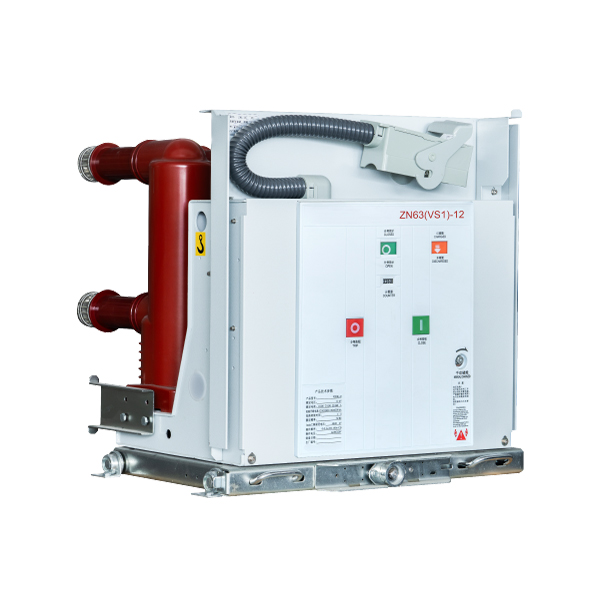
On the front panel, you'll see clear open/close indicators (red for "open," green for "closed"). There’s also a manual operating handle.
Three to four cylindrical insulating bushings extend from the side. They boast smooth surfaces without extra textures, usually made from epoxy resin, which is perfect for dry indoor environments.
The key to recognizing an indoor type lies in these details. It lacks any external rain or sun protection features, and its side nameplate will explicitly state "For Indoor Use."
Because it's enclosed in a cabinet, its cooling vents are cleverly hidden. It relies mainly on the cabinet's ventilation system for heat dissipation.
You'll frequently spot this type of VCB in factory substations and residential community distribution rooms. The image will show you how tightly it connects with busbars and current transformers.
(2) How It Works: What's Its Job?
Most indoor vacuum circuit breakers use a spring-operated mechanism. Let's use this internal dynamic diagram (Figure 2) to understand how it operates.
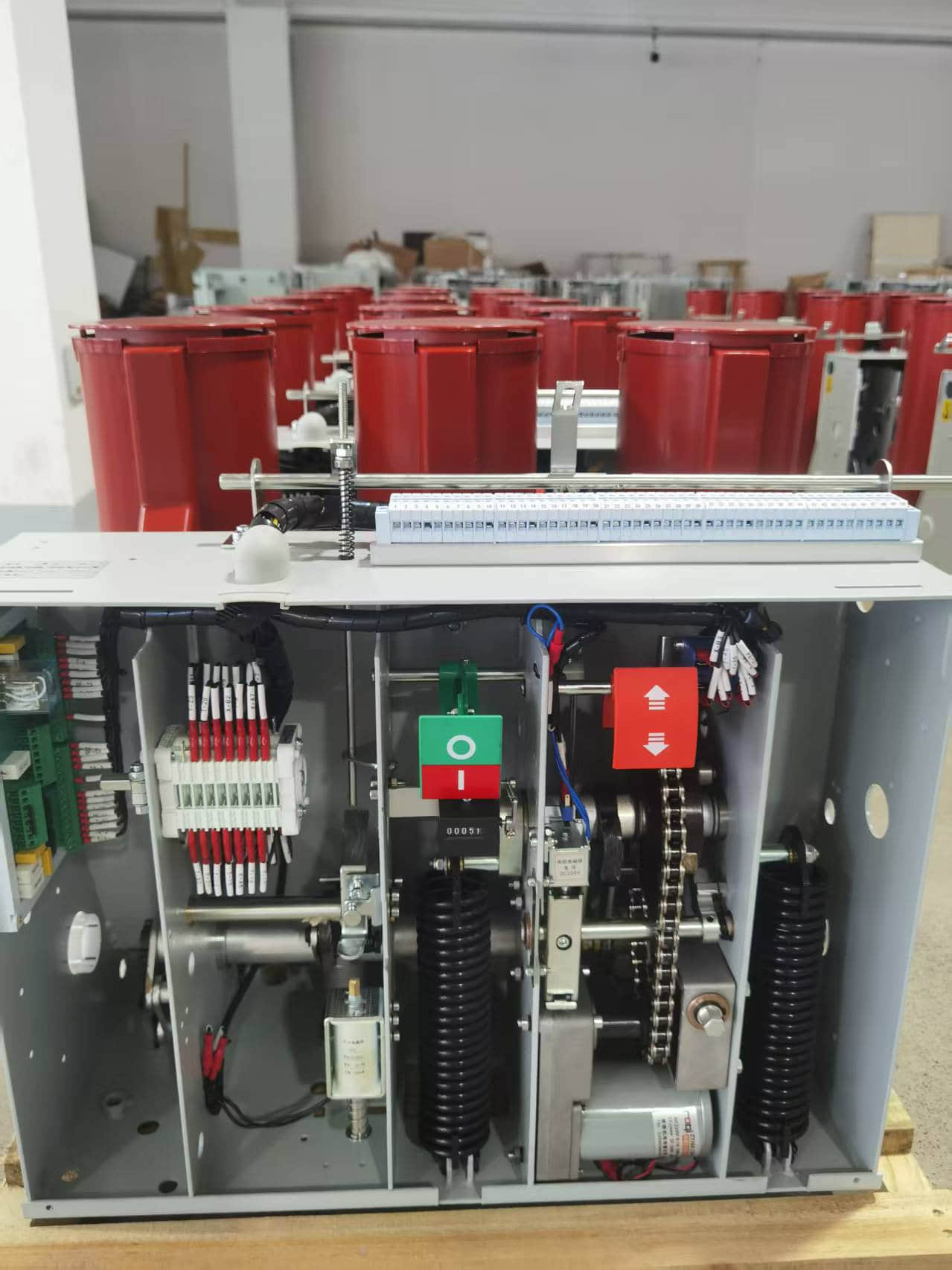
When the VCB is in the closed position, the image shows the energy storage spring compressed. This spring then transmits force through a linkage system to the vacuum interrupter's moving contact, ensuring the moving and stationary contacts are tightly joined, allowing current to flow smoothly.
When opening is needed, the secondary control circuit sends a signal. The spring instantly releases its energy, and the linkage quickly pulls the moving contact apart.
An electric arc forms inside the vacuum interrupter at this moment. But because the interrupter is in a high vacuum state (image indicates vacuum ≤ 10³Pa), the arc loses its conductive medium and extinguishes in a flash, thereby interrupting the circuit.
Once the VCB is open, the spring operating mechanism automatically re-energizes. It gets ready for the next closing operation. The image of the energy storage motor's operation clearly illustrates this process.
(3) Materials: What's Inside?
From the exploded view of an indoor vacuum circuit breaker (Figure 3), you can see the "identity" of each core component—its material. The vacuum interrupter's outer casing is made of 304 stainless steel (image labeled "corrosion-resistant, high-temperature resistant"). This reliably withstands the pressure difference between the internal vacuum and the external atmosphere.
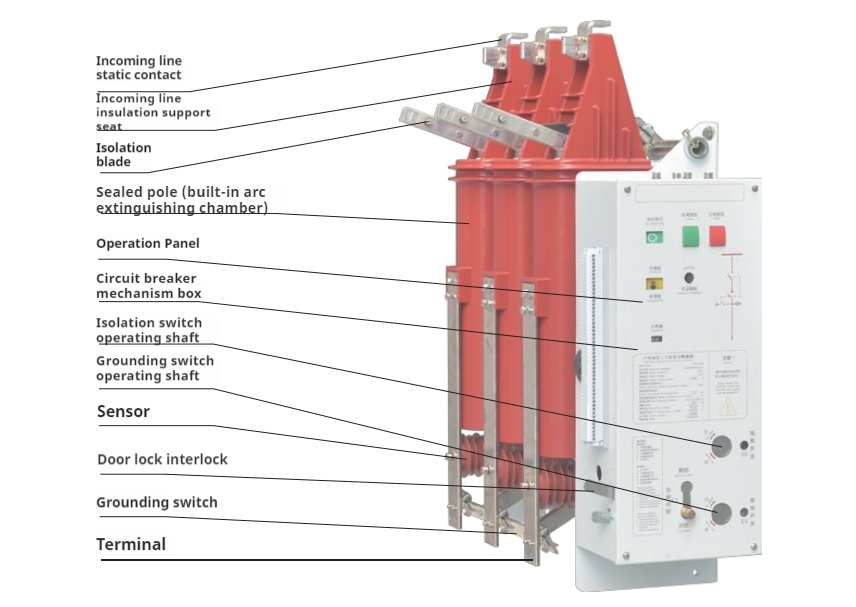
The internal shielding cover is oxygen-free copper (labeled "good electrical and thermal conductivity"). It effectively absorbs arc energy to prevent the outer casing from overheating. The contacts, on the other hand, are copper-tungsten alloy (labeled "80% tungsten content"), relying on tungsten's high melting point (3422°C) to resist arc erosion.
The insulating bushings are made of epoxy resin (image shows "smooth, bubble-free surface"). They're reinforced with glass fiber, boasting an insulation strength of up to 40kV/mm, making them lighter and less prone to breakage than traditional ceramic bushings.
The operating mechanism's spring is a 60Si2Mn alloy spring (image labeled "elastic limit 1200MPa"). This can endure tens of thousands of stretches without fatigue. The linkage uses galvanized steel (labeled "zinc layer thickness 8μm"), offering three times the rust resistance of ordinary steel!
(4) Where Does It "Work"?
Take a look at this picture of a factory substation (Figure 4), where an indoor vacuum circuit breaker (VS1 Series) is installed in a 10kV switchgear cabinet. It’s connected to busbars on the left and outgoing cables on the right.
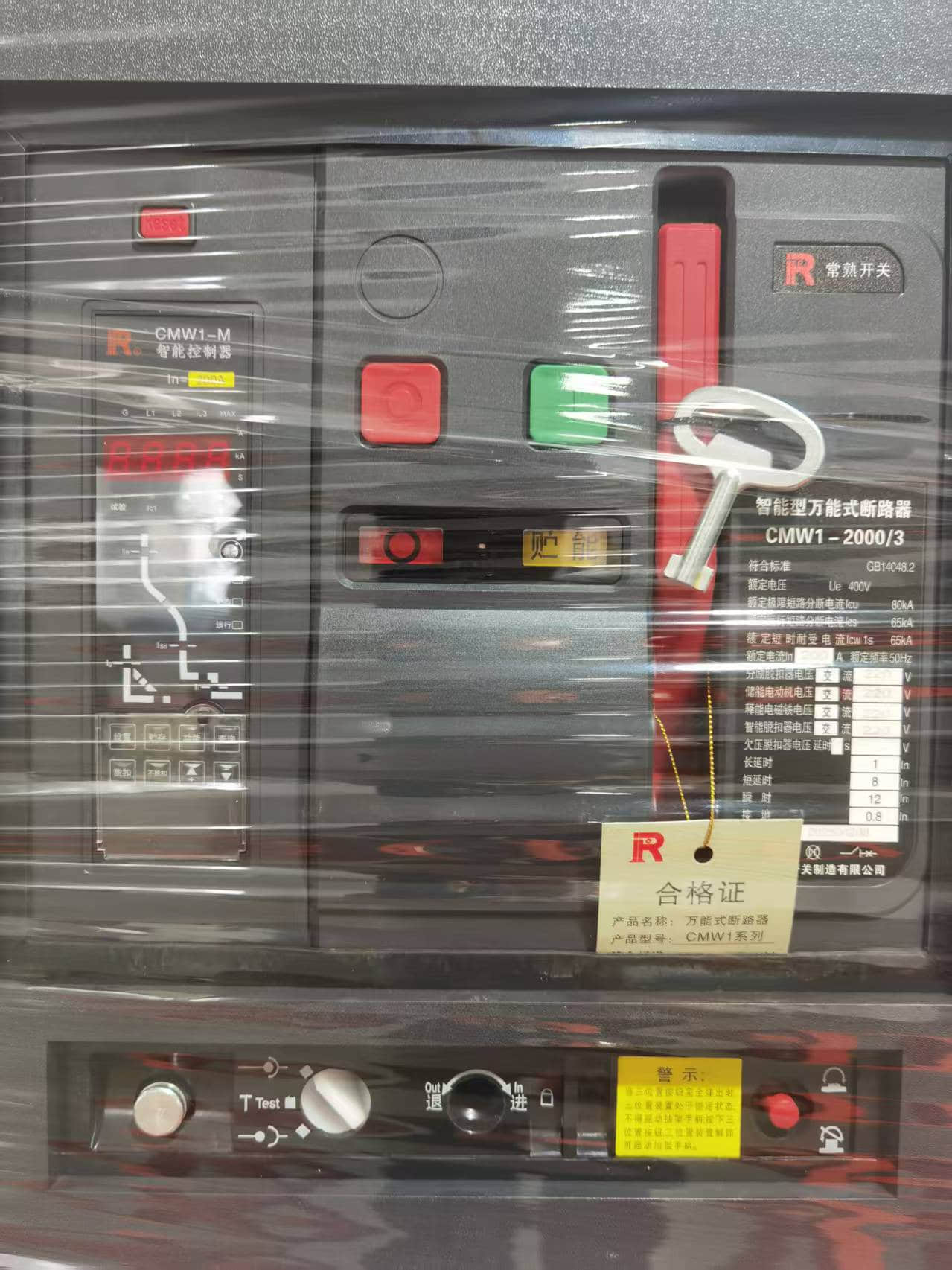
The image highlights its "adaptation features": its compact size (only 600mm wide) makes it ideal for dense arrangements within switchgear cabinets. Its opening time of ≤20ms allows it to quickly interrupt short-circuit currents, protecting valuable equipment like transformers and cables.
In these settings, it primarily serves as a "line control + fault protection" device. From its layout in the image, paired with current transformers and lightning arresters, you can see it's the "central switch" of the entire power distribution system.
You’ll also frequently find it in residential community distribution rooms. It's designed specifically for dry, space-constrained indoor environments.
(5) Pros and Cons: Easy to Understand!
Pros:
Super Compact: As you can see from the pictures and real-world applications, it's space-saving. It’s perfect for the dense installations inside indoor switchgear cabinets, especially in tight factory substations where space is limited.
Fast Breaking Speed: When a fault current strikes, it quickly cuts off power, protecting your other equipment from damage.
Stable Operation: It utilizes a well-proven spring-operating mechanism technology, ensuring high reliability and trustworthiness.
Cons:
Not Weatherproof: This VCB is designed for indoor use only. It lacks any outdoor protection against rain or sun.
If mistakenly used outdoors, it can quickly get damaged by the elements.
Relies on Cabinet Cooling: Its heat dissipation is limited. It mainly depends on the ventilation system of the switchgear cabinet. If the cabinet's ventilation is poor, overheating can become a problem.
(6) Daily Use Tips: Pay Attention to These!
During routine inspections, grab your phone and snap a photo of the insulating bushings. Then compare it to a normal image.
If you find any white powdery traces of creepage or cracks on the surface, you MUST immediately take it out of service! Also, check the grounding bolts, making sure the yellow and green dual-colored wire is tightly connected and the bolts aren't rusty. You can gently tighten them with a wrench if they're loose.
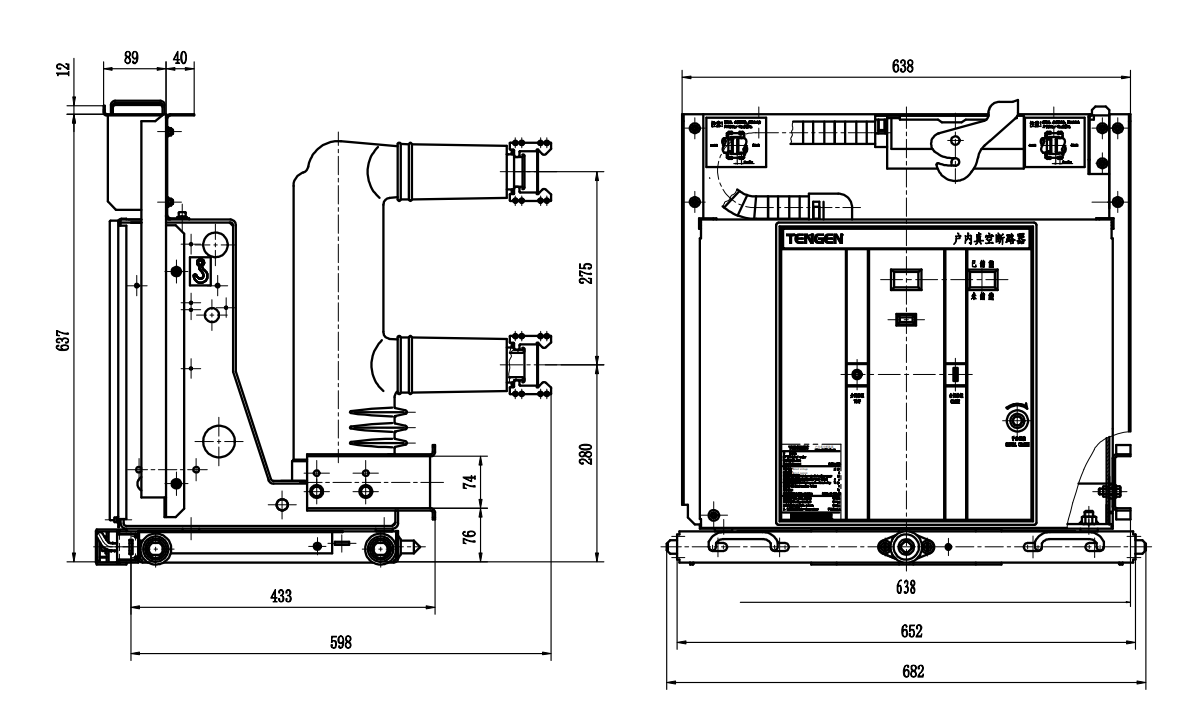
For periodic maintenance, check the vacuum interrupter's shielding cover. It should normally be silver-gray. If it turns dark brown, you'll need to test the vacuum degree with a specialized meter. If the vacuum is ≥ 10²Pa, it's time for a replacement.
The lubrication points on the operating mechanism's linkage pins should be greased every six months with high-temperature lithium-based grease to prevent jamming. When installing, always ensure there's at least 100mm of clearance between the circuit breaker and the cabinet wall for proper heat dissipation.
The installation diagram (Figure 5) clearly shows this requirement. So, be sure not to overlook it and cause overheating.
2. Outdoor Vacuum Circuit Breaker (Like Our ZW32 Series)
(1) Product Introduction: Spot It Instantly!
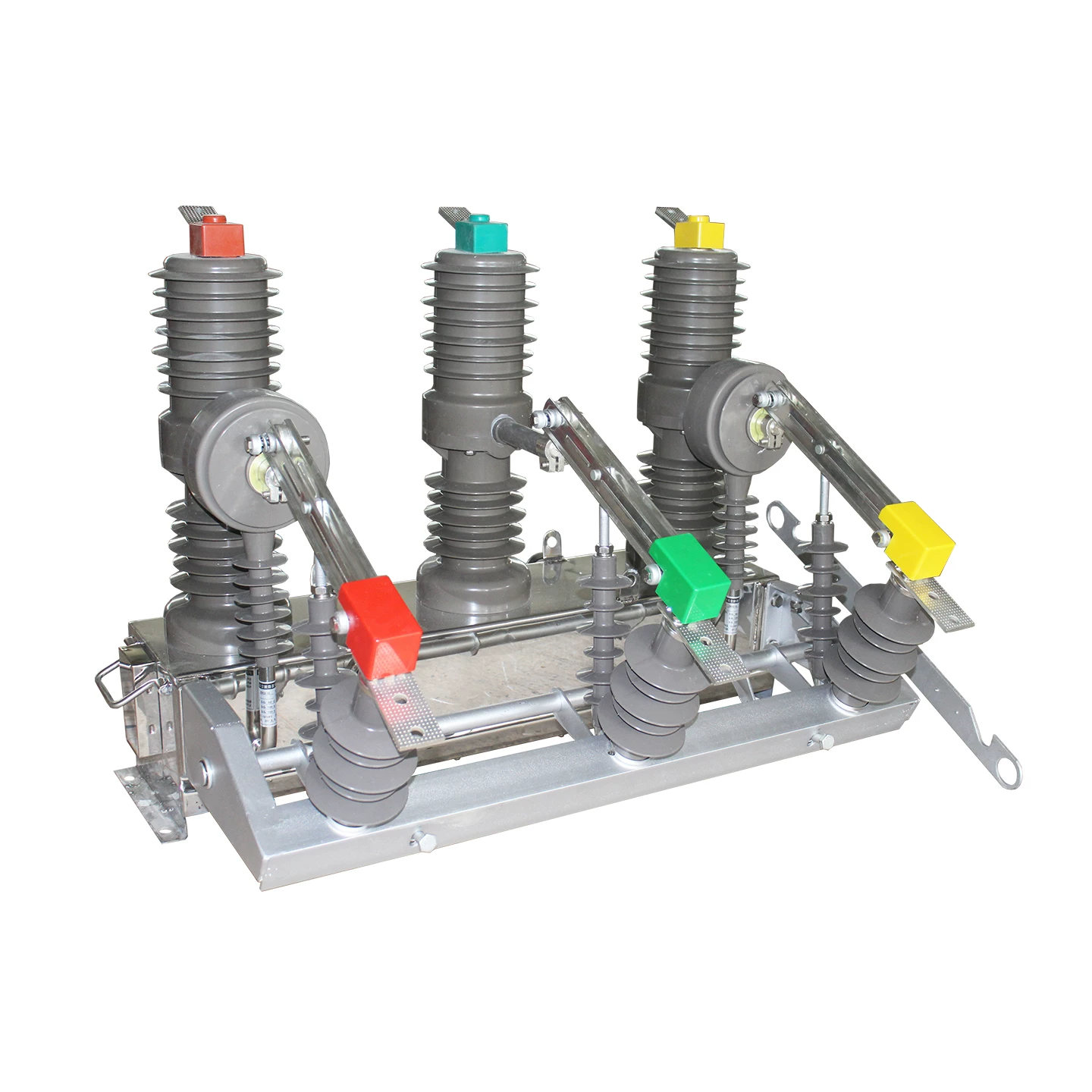
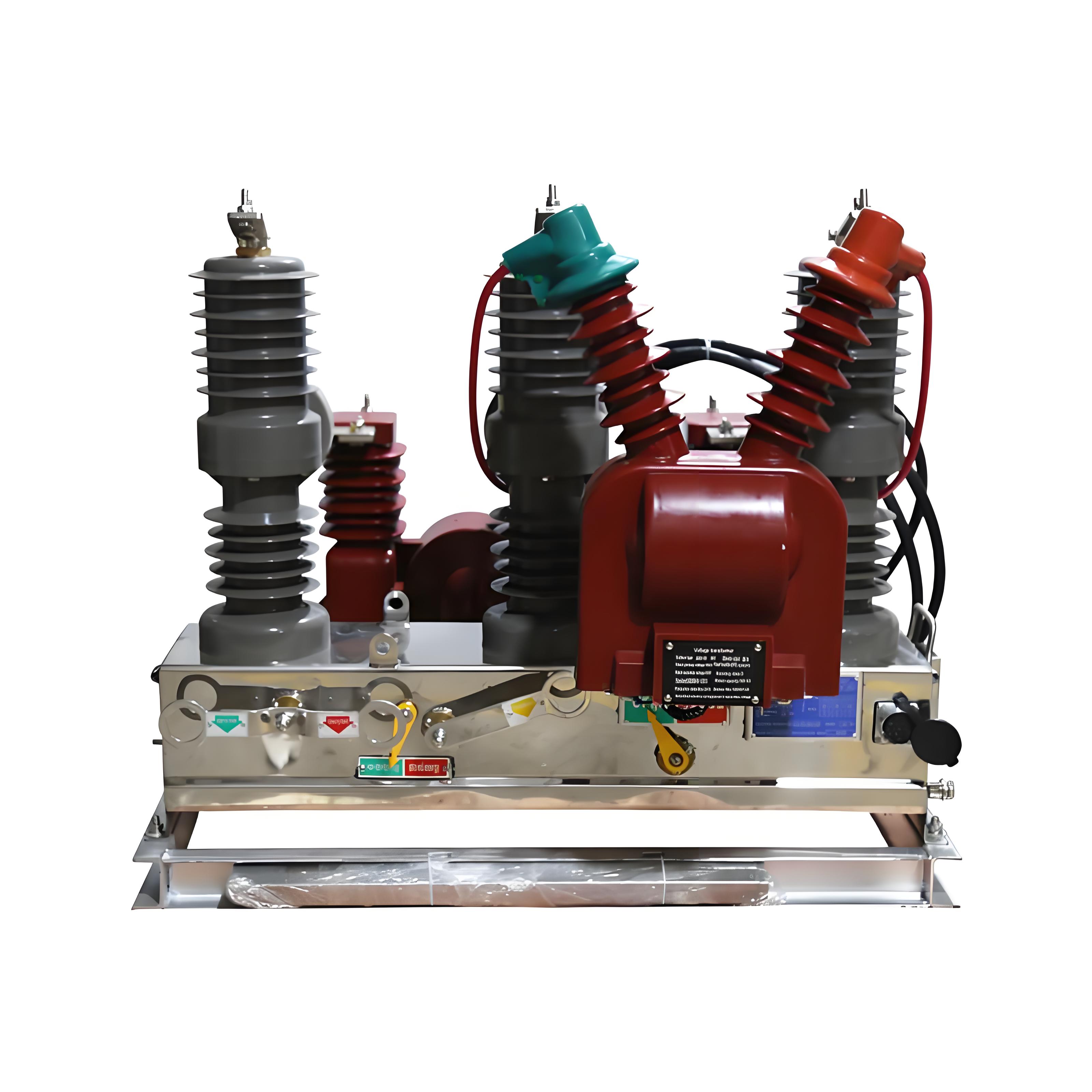
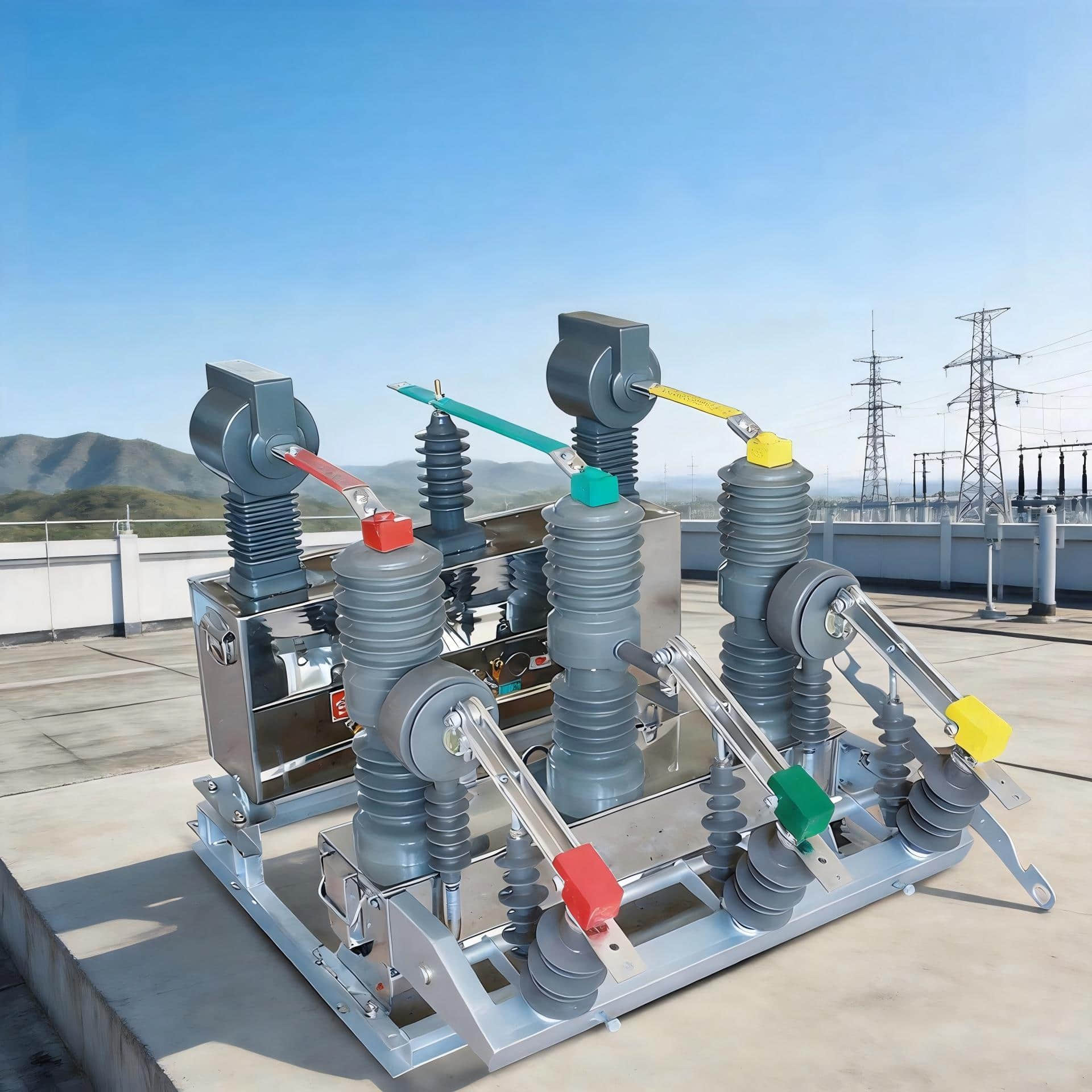
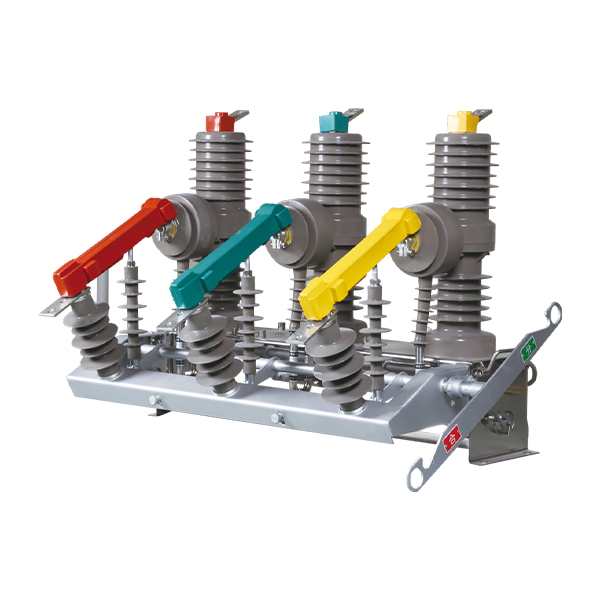
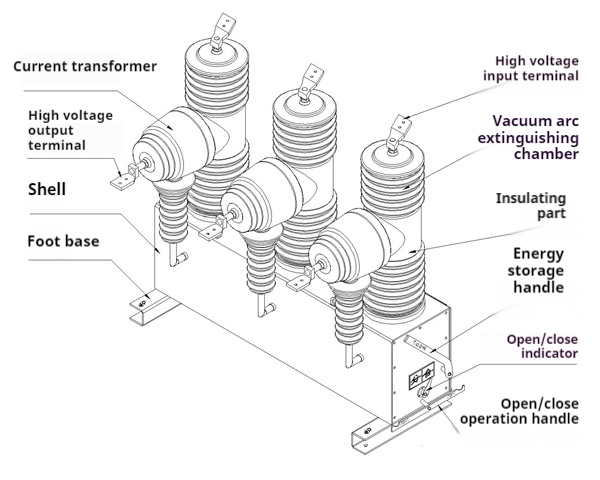
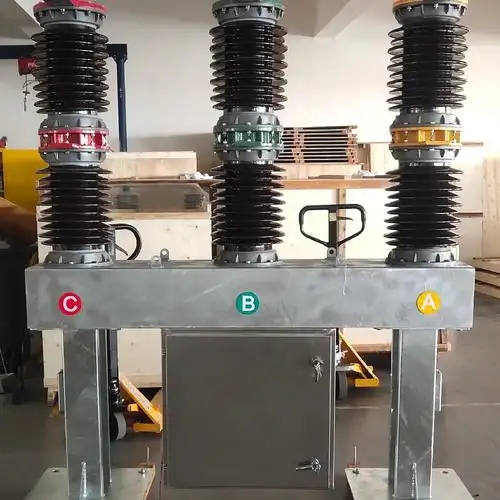
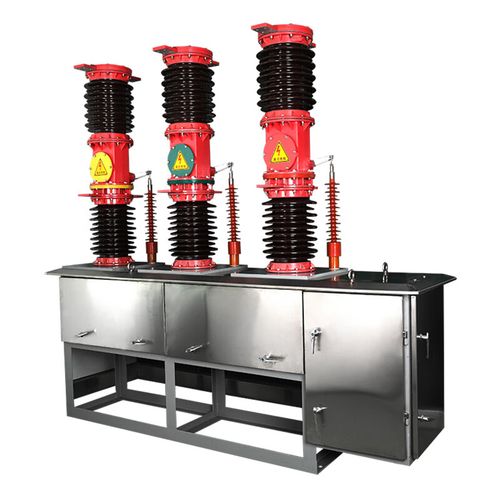
The picture of an outdoor VCB (Figure 6) immediately shows you how it differs from its indoor counterpart. It has a prominent curved rain cover on top (like wearing a "little hat").
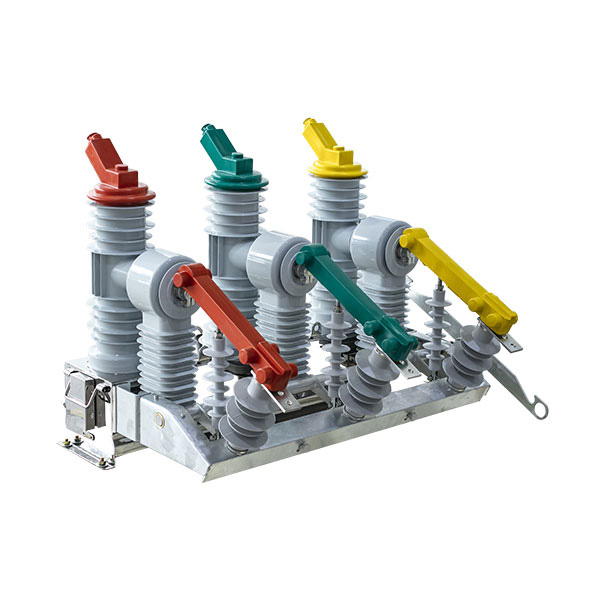
A metal mounting bracket is at the bottom. This is specifically designed for installation on utility poles or concrete platforms.
Its insulating bushings are also longer and sturdier than indoor types, featuring a corrugated surface. This increases creepage distance, making them especially suitable for outdoor, humid, and dusty environments.
You'll notice a few more key points in the image. The outer casing is coated with a dark anti-corrosion paint (often gray or green), and there are fine breathing holes on the side. These balance internal and external air pressure, preventing condensation from temperature differences.
Some models also feature a long manual operating handle on the side for emergency outdoor operations. The prominent "IP65 Protection Rating" on its nameplate is its "identity card."
This means it can withstand heavy rain and dust intrusion. You can even see the details of the sealing strip along the edge of the rain cover in the picture!
(2) How It Works: Steady Even Outdoors!
The working principle of an outdoor vacuum circuit breaker, when it comes to arc extinguishing, is similar to indoor types. Both rely on the vacuum interrupter to extinguish the arc.
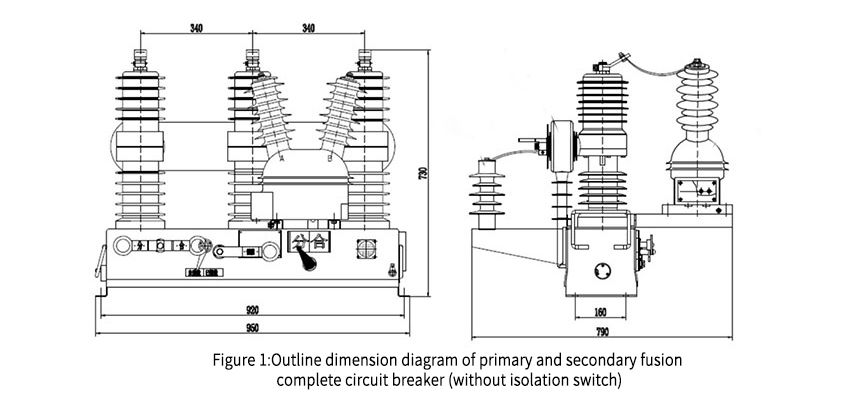
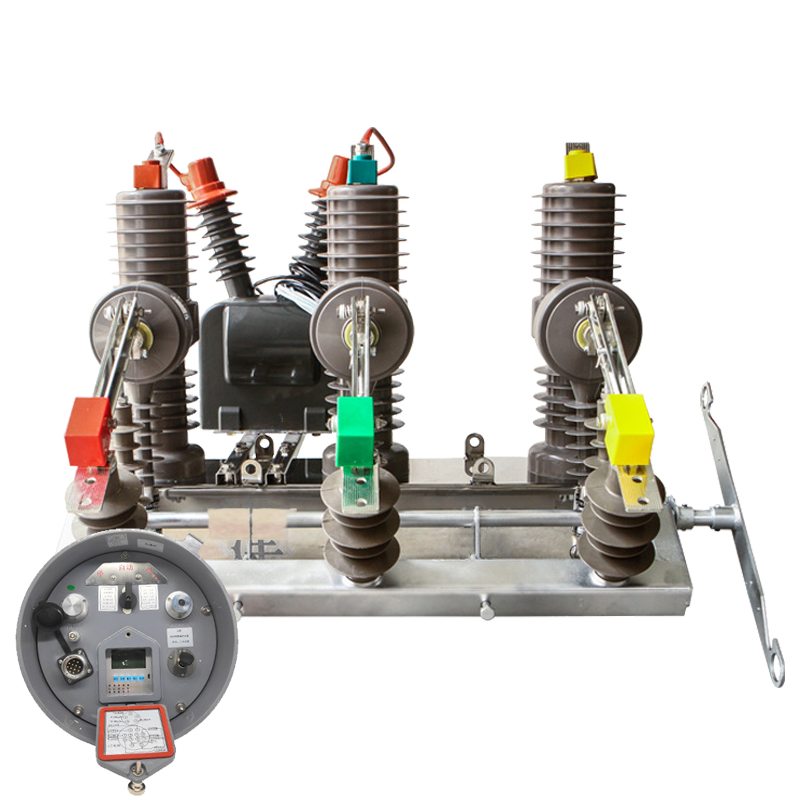
However, considering outdoor usage, its operation and control methods have unique features. As you can see in Figure 7, it typically comes with both manual and electric operation options.
For electric operation, a motor drives the operating mechanism to open and close the circuit. In emergencies, the manual operating handle can be used.
During operation, its internal current transformer continuously monitors line current (the location of the current transformer is visible in the image). Upon detecting faults like short circuits or overloads, it sends a signal to the control unit, which then commands the circuit breaker to open.
Furthermore, the insulating bushings of outdoor vacuum circuit breakers are designed to be exceptionally long (you can directly compare this in the picture). This effectively addresses insulation requirements in complex outdoor environments, ensuring normal operation in all weather conditions.
(3) Materials: Born for the Outdoors!
The material selection for outdoor vacuum circuit breakers fully considers the challenging outdoor environment. From the exploded view (Figure 8), the vacuum interrupter's materials are the same as indoor types: 304 stainless steel casing, oxygen-free copper shielding, and copper-tungsten alloy contacts.
However, the outer casing uses thickened weather-resistant steel (image labeled "UV-resistant, acid and alkali resistant"). It’s coated with a double-layer anti-corrosion finish (epoxy zinc-rich primer and fluorocarbon topcoat), specifically designed to resist outdoor wind, rain, and UV erosion.
The insulating bushings are based on epoxy resin but incorporate an anti-aging agent (image labeled "50% improved weather resistance"). Their corrugated surface design increases creepage distance, adapting to humid outdoor conditions.
The operating mechanism's linkages and brackets use hot-dip galvanizing (labeled "zinc layer thickness 15μm"). This offers stronger rust resistance, as evident from the "rust-free" connections shown in the image.
(4) Where Does It "Work"?
Look at this picture of rural overhead lines (Figure 9), where an outdoor vacuum circuit breaker (ZW32 Series) is securely mounted on a utility pole. Its rain cover gleams in the sun, connected to overhead conductors at the bottom.
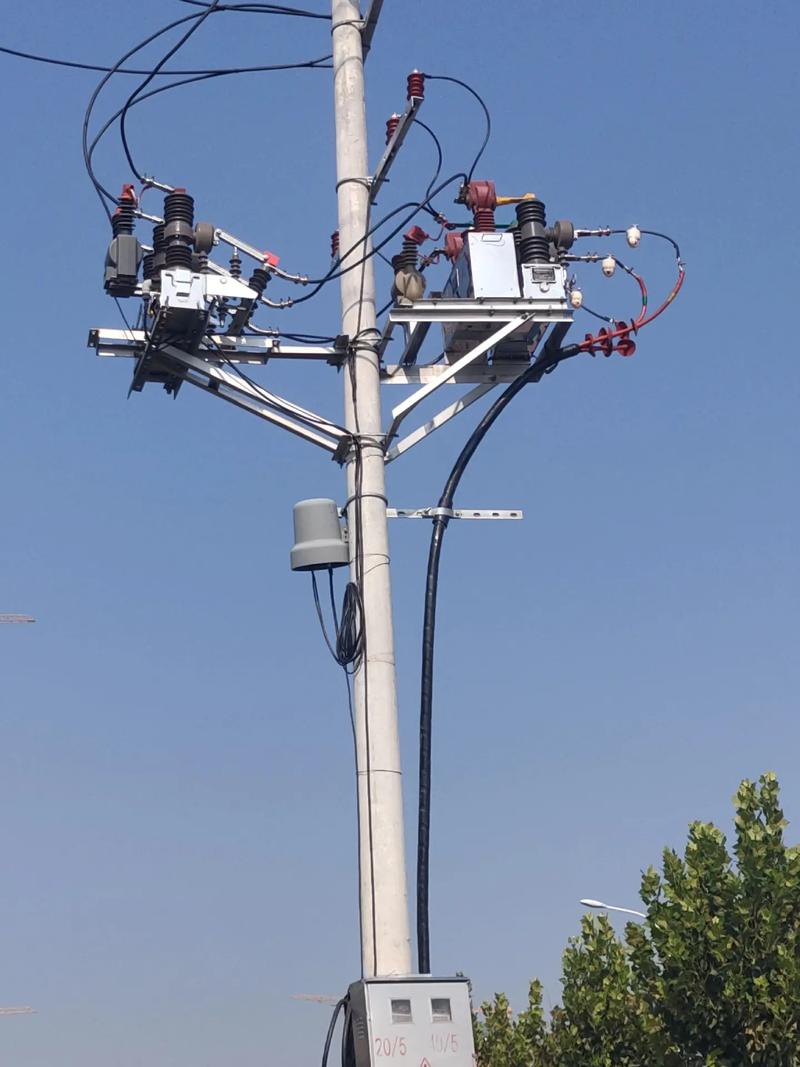
The image labels its "environmental temperature range of -30℃ to +70℃." Its anti-corrosion coating and sealing design are specifically for adapting to the large temperature swings, rain, and snow common in the wild.
In diagrams of suburban lines, you might also see it paired with a "watchdog" controller (with a wireless module attached in the picture). This enables remote opening and closing, which perfectly solves the problem of "difficult manual operation in remote areas."
Furthermore, it's widely used in outdoor substations and the perimeter lines of industrial parks. It reliably performs line control and fault protection in open-air environments.
(5) Pros and Cons: How Does It Perform Outdoors?
Pros:
Robust Outdoor Protection: Its IP65 protection rating means it can withstand heavy rain and dust. This makes it ideal for open-air environment use.
Flexible Operation: With both manual and electric operation options, it can be operated even in emergency outdoor situations.
Reliable Insulation: The insulating bushing design fully considers complex outdoor conditions, ensuring highly dependable insulation performance.
Cons:
Relatively Large Size: Its larger size means it requires more space for installation. This needs to be planned in advance.
Needs Corrosion Monitoring: Due to the complex outdoor environment, the outer casing and components are prone to corrosion. Long-term use requires extra attention to anti-corrosion measures.
(6) Daily Use Tips: Outdoor Maintenance is Key!
For routine inspections, focus on the rain cover. Check for any damage and ensure the edge sealing strip is intact. If damaged, replace it promptly to prevent water intrusion.
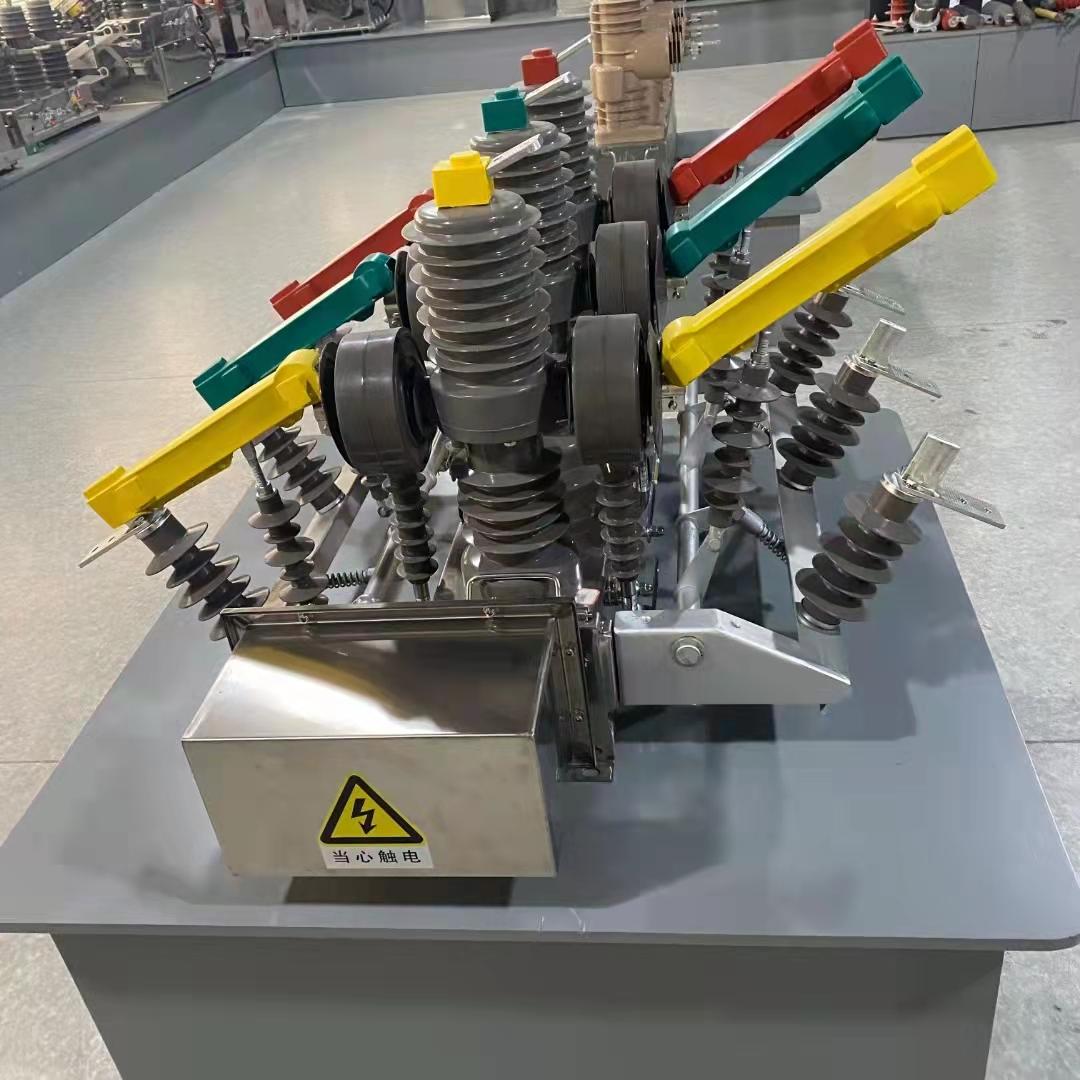
Also, observe the anti-corrosion coating on the outer casing. If you find any peeling, reapply it without delay.
During periodic maintenance, in addition to checking general components like the vacuum interrupter, you must also test the manual operating part of the mechanism. This ensures it works properly in emergencies.
Clean the breathing holes to prevent dust blockage from affecting air pressure balance. When installing, the base should be at least 500mm above ground level. Never install it in a low-lying area to prevent rainwater from submerging the base after a storm (you can see the dangers of water accumulation in the comparison image in Figure 10).
Additionally, it's best to install it with a 5° tilt to prevent water from collecting on top.
3. Permanent Magnetic Vacuum Circuit Breaker
(1) Product Introduction: A Different Structure!
The picture of a permanent magnetic circuit breaker (Figure 11) will give you a "sleek and efficient" impression. Gone are the complex linkages and spring assemblies of traditional VCB operating mechanisms.
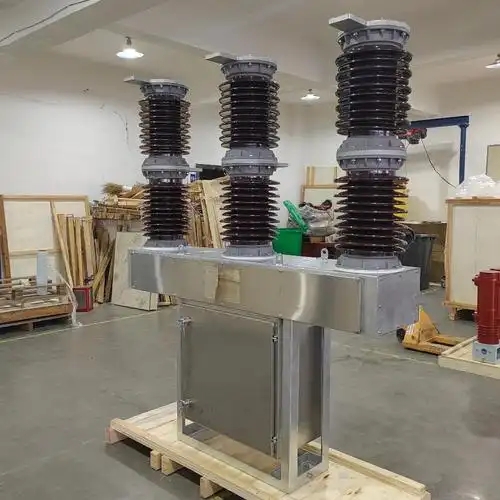
They're replaced by a compact, rectangular mechanism box. The front panel usually has electronic indicator lights showing energy storage, open, and closed states, and the overall structure is much simpler and cleaner.
The key identification point is in its operating mechanism. There's no spring storage handle, and the mechanism box is clearly labeled "Permanent Magnetic Operation."
The connecting control cables are also thinner. This is because they don't need to drive the large currents required by traditional spring mechanisms.
From the exploded view (Figure 12), you can see its internal permanent magnet and coil. This is its core secret: it uses electromagnetic force to drive the contacts, resulting in a faster response speed than traditional spring mechanisms.

The "no redundant parts" design shown in the picture helps you understand its "high reliability" advantage.
(2) How It Works: Magnets Do All the Work!
The core working principle of a permanent magnetic vacuum circuit breaker lies in its permanent magnetic operating mechanism. From the internal structure diagram (Figure 13), you can see key components like the permanent magnet and coil.
In the closed position, the magnetic force generated by the permanent magnet holds the moving contact in place. This is unlike spring operating mechanisms which require continuous power consumption to maintain the state.
When opening is required, a reverse current is fed into the control coil. This generates an opposing magnetic force that cancels out the permanent magnetic force.
Then, with the assistance of a small spring, the moving contact quickly separates, allowing the vacuum interrupter to extinguish the arc. For closing, a forward current is fed into the control coil.
The generated magnetic force combines with the permanent magnet's force to drive the moving contact to close and stay closed. This operation method is intuitively understood from the magnetic field line diagram.
Its faster response speed comes from significantly reduced mechanical component delays.
(3) Materials: Efficient and Reliable!
The materials chosen for permanent magnetic vacuum circuit breakers fully embody "efficiency and reliability." From the exploded view (Figure 14), you'll see the vacuum interrupter still uses high-quality materials like copper-tungsten alloy contacts and oxygen-free copper shielding.
The heart of the permanent magnetic operating mechanism—the permanent magnet—is made of high-performance neodymium iron boron material (image labeled "remanence 1.2T, coercivity 1100kA/m"). This provides a strong and stable magnetic force for long-term retention.
The coil uses enameled copper wire (labeled "conductivity 98%"), with an insulation layer resistant to temperatures up to 155°C. This ensures stability during current switching.
The mechanism casing is made from die-cast aluminum alloy (image labeled "lightweight design, 30% weight reduction"), offering both strength and heat dissipation. The control module's circuit board, meanwhile, features a solder mask process (labeled "moisture-proof, corrosion-proof"), ensuring stable operation of electronic components in various environments.
(4) Where Does It "Work"?
Take a look at this picture of a steel mill workshop (Figure 15), where a permanent magnetic vacuum circuit breaker is connected to the motor control cabinet of a rolling mill. The image indicates "30 operations per hour," and the mechanism's action sounds especially crisp (without the "clunky" noise of traditional spring mechanisms).
This is because the permanent magnetic mechanism has a 30% faster response speed than spring mechanisms. This allows it to precisely match the rolling mill's start-stop rhythm.
Similar scenarios are common near equipment like welding machines and injection molding machines that require frequent starting and stopping. Their core need is "fast response + long lifespan."
Furthermore, permanent magnetic VCBs are often selected for grid-connected cabinets in new energy power stations. Its stable high-frequency operation and low energy consumption characteristics are particularly suitable for the fluctuating nature of solar and wind power generation.
You can see its "integrated installation with inverters" from the image layout.
(5) Pros and Cons: Ideal for High-Frequency Operations!
Pros:
Fast Response Speed: It's 30% faster than traditional spring mechanisms, making it perfect for those high-frequency operation scenarios.
Simple Structure, Fewer Failures: Fewer components mean a lower failure rate, leading to exceptionally high reliability.
Low Energy Consumption: The permanent magnetic operating mechanism doesn't require continuous power to maintain its state, making it very energy-efficient.
Cons:
Potential Magnetic Decay: The magnetic force of permanent magnets can slowly diminish over time. This could potentially affect performance in the very long term.
Environmental Sensitivity: The control module has higher environmental requirements. Humidity and high temperatures can easily affect its normal operation.
Higher Initial Cost: The initial purchase cost is relatively higher compared to other types.
(6) Daily Use Tips: Stability is Key!
During routine inspections, observe the electronic indicator lights on the panel. Ensure the displayed status matches the actual situation.
If any abnormalities occur, promptly check the control module. Pay attention to the equipment's operating environment. Try to avoid excessively humid or high-temperature locations, taking protective measures if necessary.

For periodic maintenance, you'll need to perform performance tests on the permanent magnetic operating mechanism. Check if the magnetic force is normal.
Inspect the control module's circuit board and clean any dust. Replace components promptly if damaged.
You can use professional instruments to measure the magnetic parameters of the permanent magnet. Compare them to the initial parameters to determine if there's significant decay.
When installing, be sure to avoid severe vibration to prevent the permanent magnet's force from being affected (relevant requirements are noted in the transportation and installation tips in Figure 16).
Additionally, ensure the control cables are correctly wired to avoid damaging the control module. After installation, don't forget to perform multiple open/close tests to confirm normal mechanism operation.
C. Frequently Asked Questions (FAQ): Your Quick Answers Here!
Q1: What's the approximate cost of a vacuum circuit breaker?
A1: The price of a vacuum circuit breaker can vary widely. It ranges from a few hundred dollars to tens of thousands of dollars.
This mainly depends on the model (indoor/outdoor/permanent magnetic), voltage level (e.g., 10kV, 35kV), rated current, rated short-circuit breaking current, brand, and any additional features. For an accurate quote, we recommend contacting us directly with your specific requirements.
Q2: How often does a vacuum circuit breaker need maintenance?
A2: Generally, it's recommended to perform routine inspections every six months to a year. A deeper maintenance should be done every 3-5 years.
The exact frequency can depend on the equipment's usage, operating environment (e.g., dusty, humid outdoor conditions might require more frequent checks), and the manufacturer's specific recommendations.
Q3: How do I know if my vacuum circuit breaker needs replacing?
A3: You can typically tell by these key indicators:
The number of open/close operations has reached or is near its end-of-life rating (VCBs have a rated number of operations, like 10,000 cycles).
The vacuum degree has significantly dropped (test with a professional instrument; if below 10⁻²Pa, it needs replacing).
The insulating bushings show obvious cracks, discharge traces, or severe aging.
The operating mechanism is sticking, making unusual noises, or failing to operate correctly.
There are frequent trips that cannot be attributed to line faults.
Q4: Which is better: permanent magnetic or spring-operated?
A4: There's no single "better" option; it's about what's "more suitable" for your specific needs.
Permanent Magnetic: Pros include simpler structure, longer lifespan, faster response, and lower energy consumption, making them ideal for scenarios requiring frequent operations (like industrial automation, new energy grid connections). The cons are slightly higher initial cost and stricter environmental requirements for the control module.
Spring-Operated: This technology is mature, generally lower in cost, widely used, and highly reliable. But its structure is relatively more complex, action speed is slightly slower than permanent magnetic types, and it requires periodic lubrication.
Your choice should depend on your specific application needs, budget, and maintenance conditions.
Q5: What international standards do Weishoe Electric products comply with?
A5: Weishoe Electric products strictly adhere to relevant International Electrotechnical Commission (IEC) standards, such as the IEC 62271 series. We are also ISO 9001 quality management system certified.
We can provide products with CE, UL, and other international certifications based on customer demand. This ensures the global applicability and reliability of our products.
Q6: What parameters do I need to provide when buying a vacuum circuit breaker?
A6: To help us recommend the most accurate model for you, please try to provide the following information:
Rated Voltage (kV)
Rated Current (A)
Rated Short-Circuit Breaking Current (kA)
Installation Environment (indoor/outdoor)
Installation Method (fixed/withdrawable/pole-mounted, etc.)
Special Requirements (e.g., high altitude, extreme cold, corrosive environments)
Expected Operating Frequency (do you need high-frequency operation?)
Need for Smart Features (e.g., remote control, monitoring)

D. Expert Support: Contact Weishoe Electric Today!
Now that you've got a clearer, more visual understanding of vacuum circuit breakers, do you have more questions? Or perhaps you need expert advice on selection or maintenance? We're ready to help!
Upload Site Photos for a Free Professional Assessment: Just snap some pictures of key parts of your equipment (we can guide you on what to photograph), like:
The vacuum interrupter's shielding cover (helps us assess vacuum integrity);
The surface of the insulating bushings (to check for creepage traces);
The operating mechanism's indicators (to confirm equipment status). Upload your photos, and you'll receive a professional assessment report from our engineers within 24 hours!
Weishoe Electric: A Trusted Global Partner: As a dedicated manufacturer from China, with clients across over 80 countries and regions including Europe, the Middle East, and the "Belt and Road" initiative, we truly understand your needs. Whether you require product selection, installation guidance, or daily maintenance consulting, our team of expert technical advisors is here to provide comprehensive, worry-free support every step of the way.
Reach Out to Your Dedicated Electrical Engineer, Thor:
Phone: +86-0577-62788197
WhatsApp: +86 159 5777 0984
Email: [email protected]
We look forward to your inquiry! Let's work together to safeguard your power projects and light up the world.