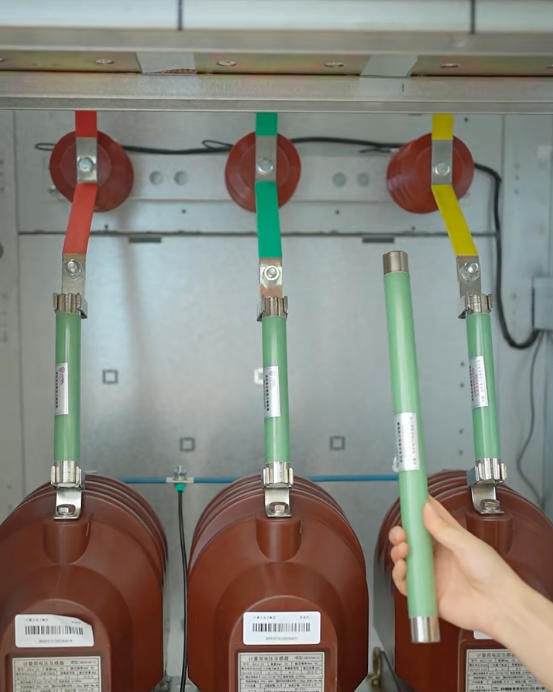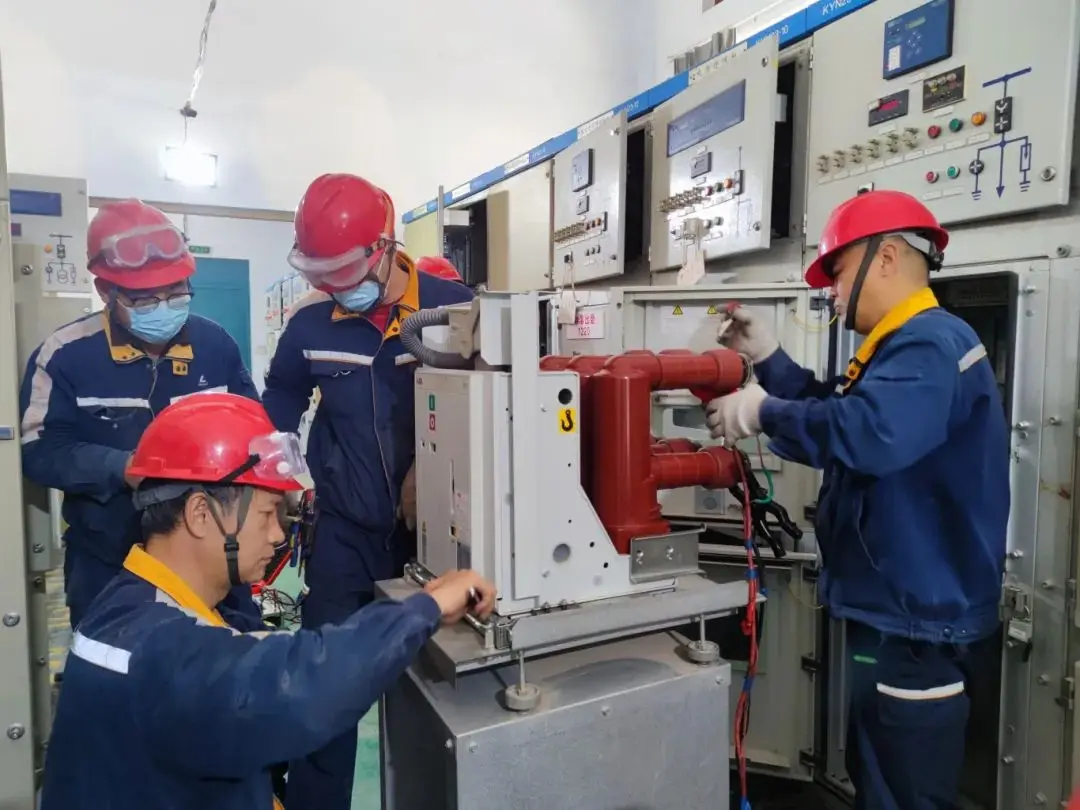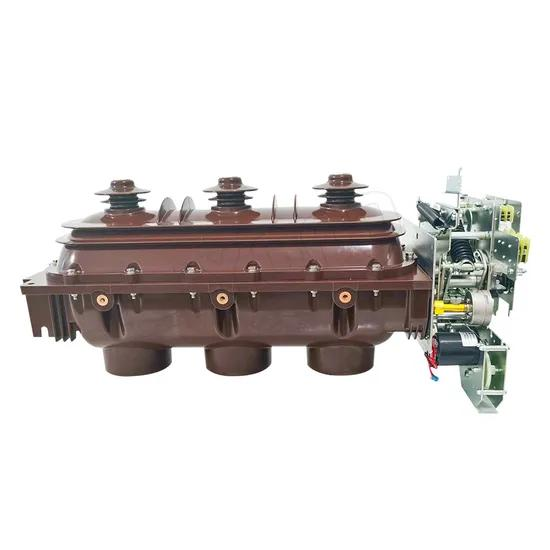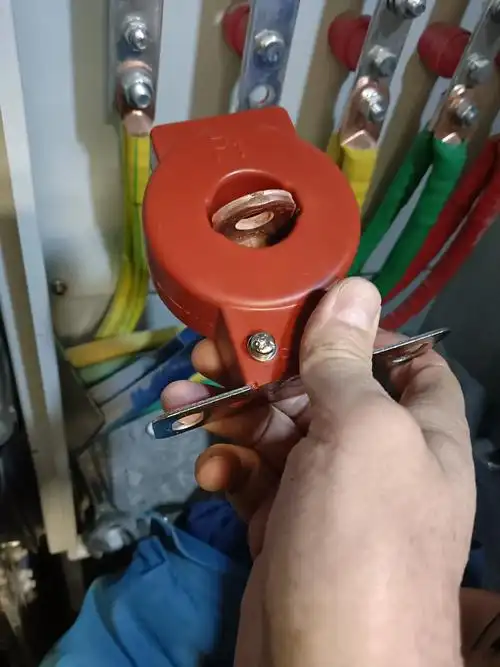
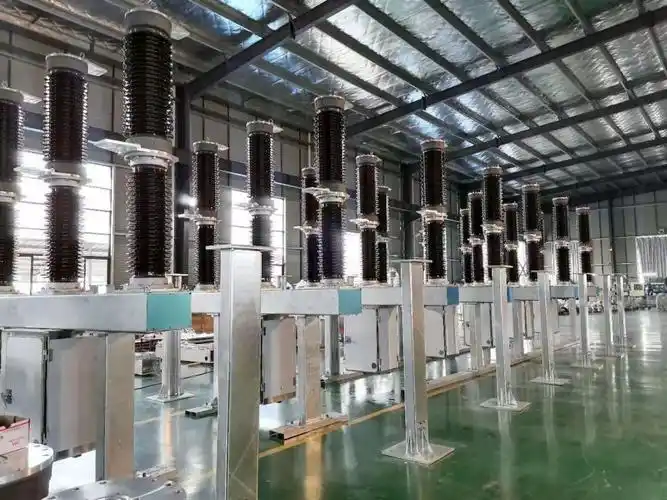
An SF6 circuit breaker is a pole-mounted or substation breaker that uses sulfur hexafluoride gas as both the arc-extinguishing medium and the insulation medium.
In practical power system work, that matters for one simple reason: when the breaker opens under fault current, the arc has to be killed fast and reliably. SF6 does that far more effectively than air, which is why this technology has remained a mainstream choice in medium- and high-voltage networks.
On urban distribution grids, rural feeder lines, industrial substations, and compact switchgear, engineers still rely on SF6 because it combines high breaking capacity, long electrical life, strong insulation performance, and good sealing reliability.
At the same time, experienced maintenance teams know a hard truth: an SF6 breaker is only as reliable as its gas tightness, operating mechanism, secondary circuit, and moisture control.
This guide is written from a field-oriented perspective. It focuses on the faults technicians actually see: low SF6 pressure, SF6 gas leakage troubleshooting, density relay problems, electrical control circuit failures, circuit breaker operating mechanism failure, and SF6 breaker insulation problems caused by excessive moisture.
If you are responsible for switching reliability, outage reduction, or maintenance planning, this article will help you diagnose problems faster and avoid the common mistake of treating every alarm as a simple gas refill issue.
Why SF6 Circuit Breakers Still Dominate Medium- and High-Voltage Protection
The core advantage of an SF6 circuit breaker is that sulfur hexafluoride is an inert gas with an arc-quenching capability that is many times higher than air under comparable conditions.
When contacts separate, SF6 is blown through the arc zone at high speed. This cools the arc rapidly, deionizes the gap, and helps the dielectric strength recover quickly after current interruption.
That is why SF6 breakers are known for strong interrupting performance. They can safely break large short-circuit currents and are particularly effective where system fault levels are high.
The second major advantage is electrical life. In field practice and manufacturer literature, SF6 breakers are often cited as capable of repeated full-duty interruption with much lower contact wear than older breaker technologies.
A representative practical benchmark often referenced is up to 19 full-capacity interruptions at 50 kA, with a cumulative interrupted current around 4200 kA. That is one reason utilities prefer them for networks where fault clearing reliability is non-negotiable.
The third advantage is insulation strength. At roughly 0.3 MPa gas pressure, SF6 can provide excellent insulation margin and pass demanding insulation tests with useful headroom.
The fourth advantage is sealing performance. Well-designed units keep the gas chamber, interrupter, resistor section, and support structures separated and sealed, reducing contamination risks and extending maintenance intervals.
This combination explains why SF6 breakers replaced many oil and compressed-air designs in modern medium- and high-voltage service.
What Makes an SF6 Circuit Breaker Different From Other Breakers
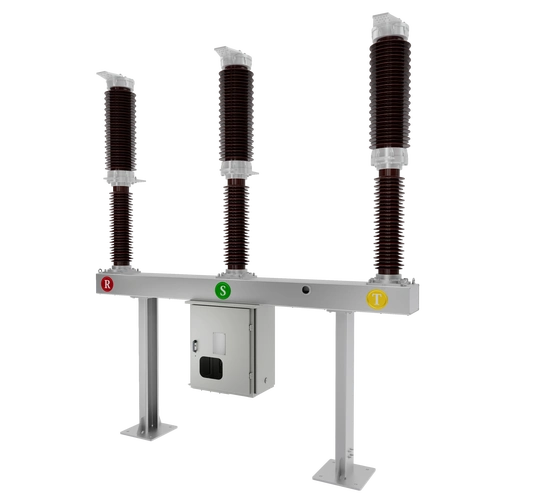
Compared with oil circuit breakers, SF6 breakers avoid oil degradation, fire risk, carbonization, and the heavier maintenance burden associated with oil handling.
Compared with air circuit breakers used in high-voltage interruption, SF6 units deliver much faster arc extinction and significantly stronger dielectric recovery. That directly improves short-circuit breaking reliability.
Compared with compressed-air breakers, SF6 breakers usually offer a simpler sealed interruption chamber and lower dependence on external high-pressure air systems.
From a maintenance standpoint, the difference is not that SF6 breakers are “maintenance-free.” They are not.
The real difference is that their maintenance is more about condition verification than messy medium replacement. Teams spend more time on gas density, leakage rate, moisture analysis, auxiliary contacts, and mechanism timing, and less time on bulk insulating medium cleanup.
| Breaker Type | Arc Extinction Medium | Insulation Performance | Maintenance Characteristic | Typical Reliability Concern |
|---|---|---|---|---|
| SF6 circuit breaker | SF6 gas | Very high | Condition-based gas and mechanism checks | Leakage, moisture, relay/circuit faults |
| Oil circuit breaker | Insulating oil | Good but contamination-sensitive | More frequent medium inspection and servicing | Oil aging, carbonization, fire risk |
| Air breaker | Air | Lower than SF6 in HV interruption use | Higher wear and lower arc suppression performance | Re-ignition and lower interrupting margin |
| Compressed-air breaker | Compressed air | Moderate | Dependent on air system condition | Air supply complexity, sealing issues |
Common SF6 Circuit Breaker Faults at a Glance
In actual utility maintenance records, the most frequent SF6 breaker problems are not mysterious. They cluster around a few repeat categories.
Low gas pressure
SF6 gas leakage
Density relay malfunction
Electrical control circuit faults
Circuit breaker operating mechanism failure
Excess moisture leading to insulation decline
These categories often overlap. For example, a “low pressure alarm” may be a true leak, a temperature-related reading issue, a bad density relay, or a secondary wiring fault.
That is why effective SF6 circuit breaker fault diagnosis always starts with symptoms but never stops there.
SF6 Circuit Breaker Fault Diagnosis: Start With the Symptom
When a breaker fails in service, the fastest diagnostic method is symptom-first troubleshooting.
Instead of starting by disassembling the unit, begin with what the equipment is telling you: alarm signal, pressure trend, indicator light behavior, close/open response, abnormal sound, or insulation test deviation.
This approach helps separate four main paths early:
Gas system causes
Electrical control causes
Mechanical mechanism causes
Insulation or moisture causes
Table: Symptom-to-Cause Quick Diagnosis Matrix
| Visible Symptom | Likely Cause | First Check | Urgency Level |
|---|---|---|---|
| Low gas pressure alarm | Leakage, temperature effect, density relay error | Gauge reading corrected for ambient temperature | High |
| Gas pressure keeps dropping over months | Progressive SF6 leakage | Review refill and density trend records | High |
| Breaker will not close | Control power loss, fuse failure, closing coil fault, lockout | Control voltage and closing circuit continuity | High |
| Breaker closes then trips immediately | Protection trip, latch failure, mechanism defect | Protection record and mechanism hold condition | High |
| No red/green indication | Control circuit open or no DC supply | Fuse, DC source, wiring integrity | Medium to high |
| False gas alarm with normal pressure | Density relay contact fault, moisture ingress in relay | Relay contacts and secondary circuit | Medium |
| Abnormal insulation test or flashover traces | Moisture ingress, decomposition products, contamination | Micro-water test and internal inspection plan | Critical |
| Mechanism not recharging | Stored-energy motor, linkage, spring, limit switch fault | Mechanism box inspection and motor supply | High |
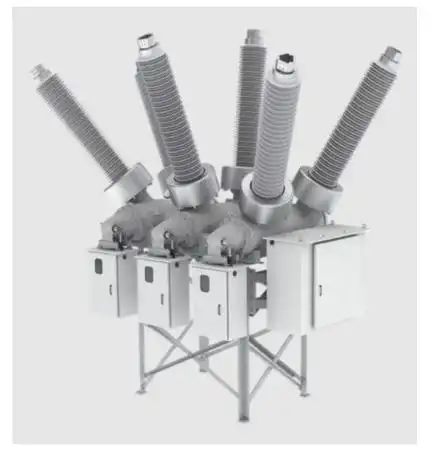
Low SF6 Gas Pressure: Causes, Checks, and Immediate Actions
Low pressure is one of the most common alarms on an SF6 circuit breaker, but it should never be treated casually.
The first step is to read the gas pressure gauge correctly and convert the reading according to the current ambient temperature. SF6 density changes with temperature, so a cold morning reading can look alarming even when there is no real leak.
If the temperature-corrected value is below the alarm setpoint, then the possibility of actual gas loss becomes real. If not, leakage may be ruled out and attention should shift to the density relay, pressure monitoring calibration, or secondary circuit.
A good field routine includes four immediate actions:
1. Record ambient temperature and current pressure reading.
2. Compare with the breaker’s pressure-temperature curve or density reference chart.
3. Check alarm and lockout thresholds.
4. Review historical gas trend data instead of relying on one snapshot.
Technicians with real substation experience know that one isolated low reading is less meaningful than a six-month trend. A slow but repeatable pressure decline is far more important than a single cold-weather alarm.
Table: Typical Low-Pressure Symptoms vs Recommended Checks
| Alarm Status | Pressure Trend | Temperature Condition | Likely Cause | Next Action |
|---|---|---|---|---|
| Alarm active | Stable historically | Sudden temperature drop | Temperature-related density reduction | Correct reading using temperature reference |
| Alarm active | Gradual decline over months | Normal seasonal variation | True gas leakage | Start leak investigation immediately |
| No alarm but gauge low | Unclear | Normal | Gauge issue or relay mismatch | Calibrate gauge and verify relay setting |
| Alarm and lockout | Rapid pressure drop | Any | Major leak or sudden seal failure | Remove from service if required by procedure |
| Alarm active | No real density loss found | Normal | Density relay or secondary circuit fault | Inspect relay contacts and wiring |
SF6 Gas Leakage Troubleshooting
SF6 gas leakage troubleshooting should always begin with records, not guesswork.
Review the last refill date, the amount added, prior alarm history, and the gas density trend. If the gas density is dropping at a rate greater than 0.01 MPa per year, field practice treats that as a threshold where leak investigation becomes mandatory.
That figure matters because small leaks are often ignored until they become operational risks. By the time lockout occurs, the problem has usually been present for months.
Once trend data suggests leakage, use a structured leak search process:
1. Restore gas to rated pressure if operating procedures allow.
2. Observe whether the gauge drops abnormally fast.
3. Use a calibrated leak detector around all accessible joints.
4. Inspect phase by phase and seal point by seal point.
5. If needed, apply a wrap or isolation method locally to narrow the leak path.
Fast leaks are usually easier to locate because the detector response is stronger. Slow leaks require patience, clean surfaces, and a disciplined route around every flange, weld, valve, and instrument connection.
Real-World Example: Pressure Drop Above 0.01 MPa/Year
In one 12 kV pole-mounted breaker maintenance case on a rural feeder, the unit had not triggered lockout, but the gas refill log showed repeated top-ups over three years.
When the trend was plotted, the density drop rate was slightly above 0.01 MPa/year. That was enough to justify a full leak check.
The first visual inspection found nothing obvious. The gauge connector was dry, the mechanism box looked normal, and there was no audible hiss.
Using a portable leak detector, technicians traced elevated SF6 concentration around a flange sealing face near the interrupter section. The leak was small but persistent.
The breaker stayed in service only until a controlled outage window. During maintenance, the flange seal was replaced and the sealing surface was reconditioned. Follow-up trend data over the next 12 months showed stable density.
The lesson is simple: small annual pressure loss is still real failure data. It should not be dismissed as “normal aging” without evidence.
Table: Main SF6 Gas Leakage Points and Corrective Actions
| Main Leakage Point | Typical Problem | Inspection Method | Corrective Action |
|---|---|---|---|
| Weld seams | Crack, pinhole, poor weld integrity | Leak detector and close visual check | Reweld if qualified and permitted |
| Porcelain bushing-to-flange joint | Seal aging or poor fit | Detector around circumference | Replace seal or porcelain assembly as needed |
| Flange sealing face | Surface damage, uneven compression | Detector and surface inspection during outage | Rework sealing face and replace gasket |
| Arc chamber top cover | Top cover seal failure | Detector scan around cover edge | Repair sealing face and replace O-ring |
| Lifting rod seals | Dynamic seal wear | Detector near rod passage | Replace seal set |
| Pipeline joints | Loose fitting or seal degradation | Detector on each joint | Refit joint and replace sealing ring |
| Density relay port | Connector leak or poor sealing | Detector and soap-free approved method if applicable | Reseal interface, replace gasket |
| Pressure gauge connection | Thread or seal leak | Detector around gauge base | Replace seal or temporarily remove faulty gauge if procedure allows |
| Casting porosity | Microporous leakage path | Detector and pressure-hold test | Professional repair or component replacement |
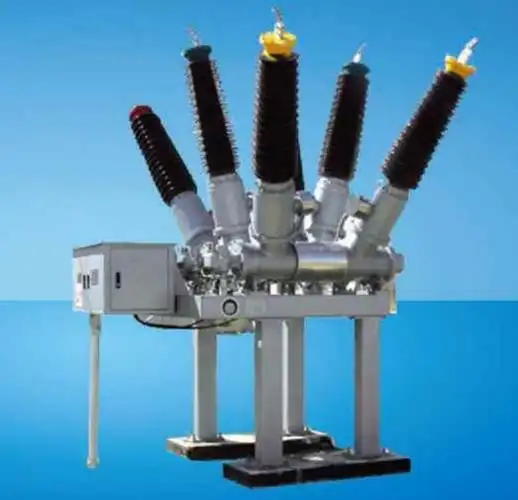
Density Relay and Secondary Circuit Faults
The density relay is supposed to protect the breaker by detecting when gas density falls below alarm or lockout thresholds.
But in field service, the relay itself can become the fault source.
Poor sealing at the relay body or connector can allow moisture ingress. Some relay designs are especially vulnerable when installed in positions exposed to water pooling or repeated condensation.
Once moisture enters, internal contacts may corrode, short, or give unstable signals. The result can be a false low-density alarm, nuisance lockout, or misleading control room indication.
In troubleshooting, inspect both the relay and the entire secondary circuit. A relay contact can be healthy while the wiring terminal, intermediate relay, or signal loop is not.
Practical checks include:
Contact continuity verification
Terminal tightness inspection
Moisture trace or water ingress evidence
Signal logic comparison with actual pressure state
Secondary wiring insulation and connection checks
In some substations, a very practical solution has been to change the installation position of the density relay to reduce water exposure, then seal the connector area with approved sealing compound.
Table: Density Relay Fault Symptoms and Remedies
| Alarm Behavior | Probable Relay Issue | Inspection Point | Corrective Action |
|---|---|---|---|
| Low-density alarm with normal gauge reading | Relay setpoint drift or bad contact | Relay calibration and contact continuity | Recalibrate or replace relay |
| Intermittent gas alarm in humid weather | Moisture ingress in relay body | Relay housing, connector sealing, corrosion traces | Dry/replace relay and reseal connection |
| Lockout signal with no actual gas loss | Secondary circuit short or wrong signal logic | Wiring terminals and interposing relays | Correct wiring and replace damaged parts |
| No alarm despite low gas | Relay contact failure or bypassed circuit | Functional trip/alarm verification | Repair circuit and restore interlock |
Electrical Control Circuit Faults in SF6 Circuit Breakers
Electrical control faults are among the most common reasons an SF6 circuit breaker refuses to close, trips unexpectedly, or shows incorrect indication.
These failures are often misread as major breaker defects when the real cause is a blown fuse, bad auxiliary contact, open trip coil circuit, or missing DC supply.
Good troubleshooting here is methodical. Do not jump directly to coil replacement without proving the control path.
No Red or Green Indicator Light Before Closing
If both red and green indicator lights are off before a close operation, the first suspicion should be an open control circuit or loss of control power.
Typical causes include a blown control fuse, missing DC source, broken wiring, abnormal anti-pumping relay status, failed auxiliary contact, or gas-pressure lockout.
Start by checking the DC control voltage at the breaker terminal block. Then work through fuse condition, relay health, and continuity of the control loop.
Green Light Flashes After Closing Command but Breaker Does Not Close
If the green light flashes, the red light stays off, and an alarm sounds after a close command, the operating handle position and breaker position do not match. In plain language, the command was given, but the breaker did not actually close.
Common causes are a closing circuit fuse failure, poor fuse contact, a closing contactor that failed to pick up, or a closing coil fault.
Measure voltage reaching the closing coil during command. If voltage is present but no action occurs, inspect the coil and mechanical transmission. If voltage is absent, work backward through the closing circuit.
Breaker Closes Then Trips Immediately
This symptom is common and often misunderstood.
One possibility is that the breaker closed onto a faulted feeder and protection operated correctly. In that case, the breaker is not the problem; the system fault is.
The second possibility is a circuit breaker operating mechanism failure. If the latch cannot hold, or if the retention linkage is defective, the breaker may appear to close and then reopen instantly.
Protection records, event logs, and relay targets are critical here. Always determine whether the trip was commanded by protection or caused by inability to remain mechanically latched.
Breaker Is Closed, but Red Light Does Not Turn On
If current is present and the breaker is clearly closed, but the red light does not turn on, then the indication circuit is at fault rather than the main interruption path.
Likely causes include poor auxiliary contact condition, a bad control switch contact, open trip coil path affecting indication logic, a blown fuse, or simply a failed lamp.
Do not underestimate the value of lamp and contact checks. Many wasted troubleshooting hours come from ignoring simple indication faults.
DC Ground Fault in the Trip Circuit
Two-point grounding in the DC trip circuit is a high-priority fault because it can make the breaker trip unpredictably or fail to trip when needed.
Even when the breaker appears normal, a grounded trip circuit undermines reliability and should be traced immediately using insulation resistance checks, sectional isolation, and wiring inspection.
Table: Electrical Fault Symptoms, Causes, and Test Points
| Symptom | Likely Root Cause | Key Test Point | Recommended Action |
|---|---|---|---|
| No red or green light before operation | No control power, open circuit, blown fuse | DC supply and fuse continuity | Restore supply and repair open path |
| Close command issued but breaker does not close | Closing fuse, contactor, or coil fault | Voltage at closing coil during command | Replace failed component and verify command path |
| Breaker closes then trips immediately | Protection trip or latch failure | Protection event record and latch inspection | Clear system fault or repair mechanism |
| Breaker closed but red lamp off | Auxiliary contact or indication circuit fault | Auxiliary contact state and lamp circuit | Repair contact, fuse, or lamp |
| Unexpected trip behavior | Trip circuit grounding or wiring defect | DC insulation and earth fault location | Isolate and remove ground fault |
| False gas lockout signal | Density relay secondary wiring issue | Relay output and logic continuity | Repair wiring and retest interlock |
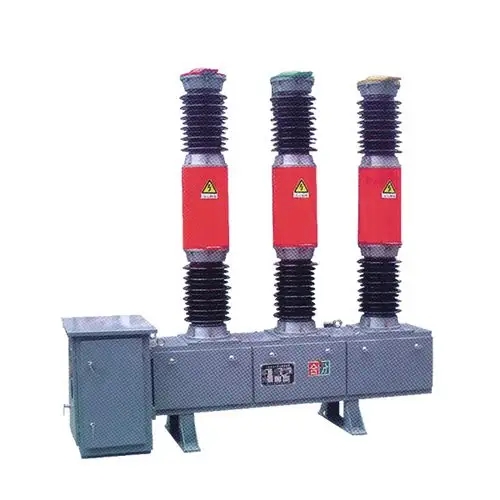
Circuit Breaker Operating Mechanism Failure
The gas system may be perfect, yet the breaker still fails because the mechanism cannot move, latch, recharge, or release correctly.
This is where many technicians separate themselves by experience. Mechanism problems usually reveal themselves through timing irregularity, incomplete motion, abnormal sound, or failure to hold position.
Common mechanism-related issues include:
Linkage wear or misalignment
Latch defects
Stored-energy spring failure
Motor charging failure
Limit switch defects
Closing or tripping coil weakness
Lubrication deterioration
A breaker that closes and immediately reopens may have a mechanical hold problem. A breaker that will not recharge after operation may have a motor supply issue, spring problem, or limit switch failure.
High cycle count units are especially vulnerable to hidden wear in pivot points, pins, and latch surfaces.
Table: Operating Mechanism Failure Modes and Troubleshooting Steps
| Failure Mode | Likely Component | Inspection Method | Repair Action |
|---|---|---|---|
| Breaker will not close | Closing coil, latch, linkage | Check coil actuation and manual mechanism movement | Replace coil or repair latch/linkage |
| Breaker closes but cannot stay closed | Holding latch or retention mechanism | Mechanical latch inspection and timing test | Repair or replace worn latch parts |
| Breaker will not open | Trip coil, release linkage, seized parts | Trip command verification and release path inspection | Repair release mechanism or replace coil |
| Mechanism does not recharge | Charging motor, spring, gearbox, limit switch | Motor supply test and charging sequence inspection | Repair motor circuit or replace damaged mechanism part |
| Slow or uneven operation | Lubrication failure or wear | Stroke/timing measurement and friction point inspection | Clean, relubricate, renew worn parts |
| Abnormal noise during operation | Loose linkage, spring stress, bearing wear | Operational observation during test cycle | Tighten, align, or replace components |
SF6 Breaker Insulation Problems Caused by Excess Moisture
Among all hidden risks in SF6 equipment, moisture is one of the most dangerous because the damage can develop quietly before obvious failure appears.
Excess water inside an SF6 circuit breaker reduces insulation strength, increases condensation risk, harms arc extinction performance, and promotes formation of corrosive decomposition products.
When moisture rises significantly, water can condense on insulation surfaces. That lowers surface withstand capability and increases the risk of flashover.
Under arc action, SF6 can decompose and react with water to form harmful by-products. Field and laboratory references often mention powdery substances such as tungsten trioxide and copper fluoride compounds.
Some of these by-products are strongly hygroscopic. Once deposited on insulation surfaces, they can reduce creepage performance and lower flashover voltage.
More seriously, decomposition with water can also generate corrosive substances such as hydrofluoric acid and sulfur-related acidic compounds. These attack metals and organic insulating materials, shortening service life.
Real-World Example: Moisture Leading to Flashover Risk
A practical field-style scenario illustrates this well.
A medium-voltage outdoor breaker operated normally for years, but periodic gas tests were skipped after a previous maintenance contractor reported “pressure normal.”
Eventually, partial discharge traces were noticed during inspection after unexplained protection operations in wet weather. The breaker did not show a major gas loss alarm.
When a micro-water test was finally performed, the moisture level was found to be significantly elevated. Internal inspection during overhaul revealed contamination deposits on insulating surfaces and early corrosion on metallic parts near the interruption chamber.
The root cause was not a dramatic leak. It was slow moisture ingress through aging seals combined with long-term release of moisture from internal materials.
This is why SF6 breaker insulation problems should never be reduced to dielectric test values alone. Moisture trend data is equally important.
Table: Why Moisture Is Dangerous Inside an SF6 Circuit Breaker
| Effect Area | What Moisture Does | Practical Consequence |
|---|---|---|
| Insulation strength | Reduces dielectric margin | Higher flashover and breakdown risk |
| Surface condition | Promotes condensation and contamination activity | Lower creepage withstand performance |
| Arc extinction | Interferes with gas quality during interruption | Less stable quenching behavior |
| By-product formation | Supports hydrolysis and decomposition reactions | Powder deposits and toxic/corrosive products |
| Metal parts | Accelerates corrosion | Reduced equipment life and sealing reliability |
| Organic insulation | Degrades material condition over time | Premature aging and maintenance escalation |
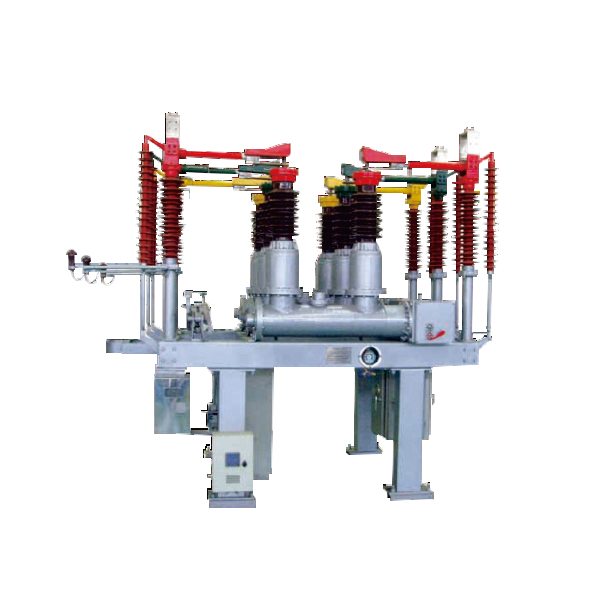
Why SF6 Gas Moisture Content Exceeds Limits
Excess moisture rarely comes from one single source. In real service, it is often the result of weak process control at several stages: storage, filling, assembly, sealing, and long-term operation.
New Gas Fails Moisture Specification
New gas is not automatically dry enough.
If gas cylinders have been stored for more than six months, the gas should be tested before filling. A practical benchmark used in field guidance is that the moisture content should not exceed 64.88 mL/L before use.
Skipping this check can introduce moisture on day one, before the breaker even enters service.
Moisture Introduced During Gas Filling
This is one of the most common avoidable problems.
Undried hoses, wet fittings, incorrect cylinder handling, or excessive exposure to ambient air during filling can all drive moisture into the breaker. A surprisingly small lapse in procedure can undo otherwise good equipment quality.
For example, when cylinders are not handled correctly or the filling line is not dried and evacuated properly, water vapor enters with the gas stream.
Moisture Released From Insulating Materials
Organic insulating materials can slowly release absorbed water over time.
On older breakers, especially those exposed to thermal cycling, this internal release can gradually increase moisture content even if external leakage remains low.
Moisture Carried in by Adsorbents
Adsorbents must be properly activated before installation. If activation time is too short, or if the adsorbent is left exposed to open air for too long during assembly, it can carry moisture into the sealed space instead of removing it.
This failure mode is rarely discussed outside experienced service teams, but it is very real.
Moisture Penetration Through Seals
The vapor pressure difference between outside humid air and the drier internal gas can drive moisture inward through imperfect seals over time.
Even if SF6 itself is not leaking rapidly outward, water vapor may still migrate inward through aged or marginal sealing materials.
Moisture Increase Due to Equipment Leakage
Charging ports, pipe joints, and casting porosity are common entry paths for humid air.
In practice, a small gas leak and a slow moisture rise often go together. The same weak point that lets gas escape can also let moisture enter.
Table: Moisture Sources, Risks, and Corrective Actions
| Moisture Source | Main Risk | Inspection Method | Corrective Action |
|---|---|---|---|
| New gas out of specification | Starts service with poor gas quality | Pre-fill moisture test | Reject or dry-process gas before use |
| Filling process contamination | Immediate internal moisture increase | Audit hoses, fittings, filling procedure | Use dried lines, correct handling, minimize air exposure |
| Insulating material moisture release | Gradual dielectric decline | Trend micro-water data over time | Condition-based overhaul and drying strategy |
| Improper adsorbent preparation | Moisture carried into gas space | Review activation and assembly records | Use properly activated adsorbent |
| Seal permeability | Slow moisture ingress | Seal aging inspection and moisture trend review | Replace degraded seals |
| Leakage at joints or ports | Gas loss plus humid air ingress | Leak test and moisture analysis | Repair leak path and verify gas dryness |
| Casting porosity | Hidden ingress path | Pressure hold and targeted leak detection | Professional repair or component replacement |
Preventive Maintenance for SF6 Circuit Breakers
The best fault repair is the one you never need to perform during an outage.
Preventive maintenance for SF6 circuit breakers is not just a checklist exercise. Done properly, it combines routine inspection with trend analysis and condition-based intervention.
Strong maintenance programs focus on five things:
Gas density trending
Leak detection and seal condition
Moisture testing
Secondary circuit verification
Operating mechanism servicing
Daily and monthly checks catch obvious abnormalities. Annual work confirms electrical and gas-system integrity. Overhaul-level work addresses wear, hidden contamination, and internal condition.
Utilities that reduce unplanned outages usually do one thing better than average performers: they trend data instead of reacting only to alarms.
That is also where reputable manufacturers and service partners add value. Teams working with experienced suppliers such as Weisho Electric often benefit from better documentation discipline, spare parts consistency, and practical maintenance guidance tied to actual breaker design.
Table: Preventive Maintenance Checklist by Interval
| Interval | Inspection Item | Main Purpose |
|---|---|---|
| Daily/shift | Alarm status, pressure indication, visible condition | Catch immediate abnormalities |
| Monthly | Pressure trend review, indicator function, control power check | Identify slow gas loss or control issues |
| Quarterly | Secondary circuit tightening, relay status, mechanism observation | Reduce nuisance trips and operation failures |
| Annual | Micro-water test, leak survey, timing/mechanism test, insulation checks | Verify gas quality and operational reliability |
| Major maintenance/overhaul | Seal renewal, internal inspection, wear measurement, mechanism refurbishment | Restore long-term service reliability |
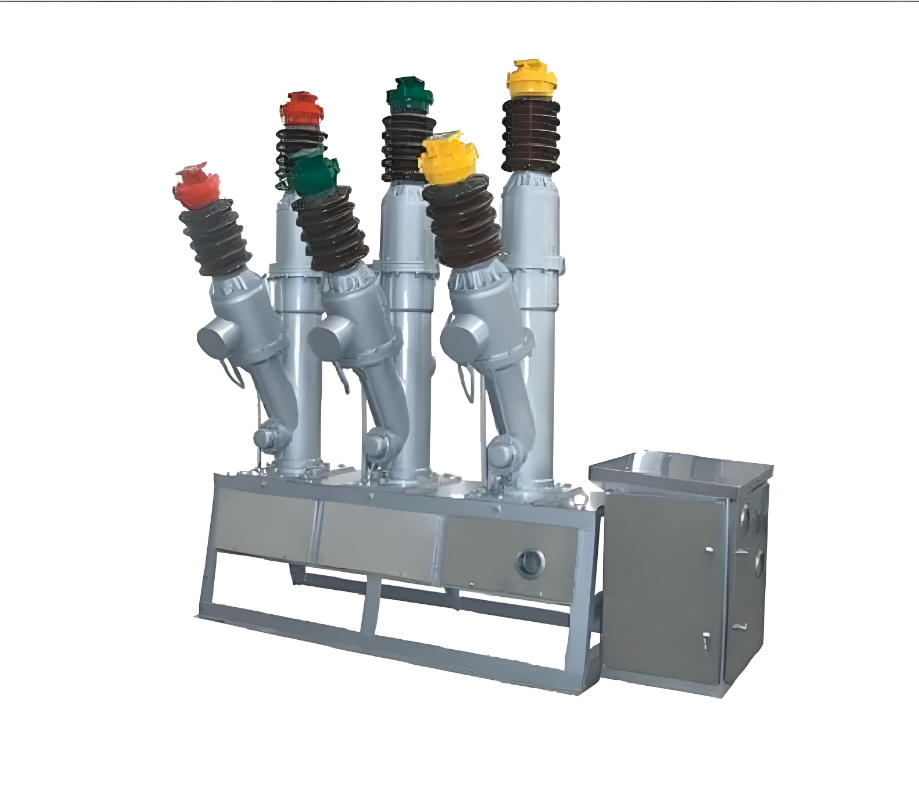
When to Repair, Overhaul, or Call a Specialist
Not every fault justifies a major overhaul. But not every fault is safe for on-site improvisation either.
The correct maintenance level depends on fault severity, manufacturer guidance, site capability, safety risk, and required tools.
A minor seal replacement or control fuse repair may be manageable on site. Internal interrupter work, major gas compartment repair, or deep mechanism rebuilding may require OEM or specialist support.
For many utilities, large-scale overhaul of the breaker body is still best entrusted to the manufacturer or a qualified professional service organization, especially where gas handling quality, timing calibration, and dielectric verification must meet strict standards.
Table: Decision Guide for On-Site Repair vs Factory/Professional Overhaul
| Condition | Fault Severity | Required Tools/Skill | Safety Risk | Recommended Service Level |
|---|---|---|---|---|
| Blown fuse, lamp failure, loose terminal | Low | Basic electrical maintenance tools | Low | On-site repair |
| Minor external leak at accessible joint | Moderate | Leak detection and gas handling tools | Moderate | Qualified on-site maintenance |
| Density relay replacement | Moderate | Relay test skill and sealing work | Moderate | Qualified on-site maintenance |
| Repeated gas loss with unclear source | High | Advanced leak diagnostics | High | Specialist support |
| Internal moisture contamination or flashover evidence | High | Gas recovery, internal inspection, drying process | High | Professional overhaul |
| Major mechanism wear or interrupter repair | High | Precision mechanical and timing tools | High | OEM/professional overhaul |
| Structural weld or casting defect | Critical | Specialized repair process and validation | Critical | Factory/professional overhaul |

Data Snapshot: Typical SF6 Circuit Breaker Performance Advantages
Authoritative maintenance decisions should be tied to operating data, not marketing language.
The reason SF6 breakers are so widely used is not theoretical. Their performance advantages are visible in interruption duty, insulation behavior, and lifecycle economics.
Three representative data points are especially useful in practice:
SF6 arc-extinguishing capability is many times higher than air in practical high-voltage interruption applications.
At about 0.3 MPa, SF6 provides strong insulation performance with meaningful test margin.
In cited practice, an SF6 breaker can achieve 19 full-capacity interruptions at 50 kA, with cumulative interruption current reaching around 4200 kA.
Those figures help explain why many utilities continue to choose this technology for replacement and upgrade projects, especially where compact design and high duty are required.
For buyers evaluating equipment quality, the design details behind these figures matter just as much as the figures themselves. That is why specification review, test records, sealing design, and support capability should be examined carefully when comparing suppliers, including established industrial brands such as Weisho Electric.
Table: Key Performance Data and What It Means in Operation
| Metric | Representative Value | Operational Meaning |
|---|---|---|
| Arc-extinguishing capability | Many times higher than air | Fast interruption and lower re-ignition risk |
| Gas pressure for strong insulation | Around 0.3 MPa | High dielectric strength with practical margin |
| Full-capacity interruption duty | 19 operations at 50 kA | Long electrical life under severe fault duty |
| Cumulative interrupted current | About 4200 kA | Useful durability benchmark for maintenance planning |
| Sealed gas structure | Independent gas compartments in many designs | Better contamination control and maintainability |
FAQ
What is the most common fault in an SF6 circuit breaker?
In real field operation, the most common faults are usually gas pressure loss, SF6 gas leakage, and electrical control circuit problems. Low-pressure alarms are especially common, but they must be separated from false alarms caused by temperature effects or density relay faults.
How do you diagnose low SF6 pressure correctly?
Start with the pressure gauge reading and correct it for ambient temperature. Then compare it with the breaker’s alarm threshold, check the density relay status, review refill history, and confirm whether the pressure trend indicates real gas loss. A one-time reading is not enough; trend data is essential.
How do you find an SF6 gas leak in a circuit breaker?
Review the gas refill and density trend first. If leakage is suspected, use a calibrated leak detector and inspect all likely points joint by joint, including weld seams, flange faces, relay ports, gauge connections, and pipeline fittings. Phase-by-phase isolation and local wrapping methods can help narrow down slow leak points.
What happens if moisture is too high inside an SF6 breaker?
Excess moisture reduces insulation strength, encourages condensation, lowers flashover voltage, and worsens arc-extinguishing performance. It also promotes decomposition reactions that can create toxic or corrosive by-products, which damage insulation surfaces, corrode metal parts, and shorten breaker service life.
Why does an SF6 circuit breaker close and then trip immediately?
This usually happens for one of two reasons: the breaker closed onto a faulted line and protection tripped correctly, or the breaker has a mechanism problem and cannot remain latched. Auxiliary contact issues and abnormal control logic can also contribute, so both protection records and mechanism condition must be checked.
Can an SF6 circuit breaker operate with a faulty density relay?
It may appear able to operate, but doing so is risky. A faulty density relay can create false alarms, unwanted lockouts, or failure to respond to actual low-gas conditions. Whether operation is blocked depends on the interlock design, but the relay fault should always be corrected before normal service is resumed.
How often should SF6 circuit breakers be maintained?
The best approach is condition-based maintenance supported by routine checks, annual testing, and overhaul intervals recommended by the manufacturer. Daily observation, periodic gas trend review, annual moisture and mechanism testing, and major overhaul when condition or standards require it is a practical and reliable strategy.
Need Expert Help With SF6 Circuit Breaker Troubleshooting?
If your team is dealing with SF6 circuit breaker fault diagnosis, recurring low-pressure alarms, SF6 gas leakage troubleshooting, circuit breaker operating mechanism failure, or difficult SF6 breaker insulation problems, waiting usually makes the repair more expensive.
The right support can help you confirm the root cause faster, reduce outage time, and avoid unnecessary part replacement.
Whether you need leak testing, moisture analysis, secondary circuit troubleshooting, preventive maintenance planning, or overhaul consultation, now is the time to act.
Contact our team today to request expert support for your SF6 circuit breaker fleet, schedule a fault assessment, and get a practical maintenance plan tailored to your equipment and site conditions.