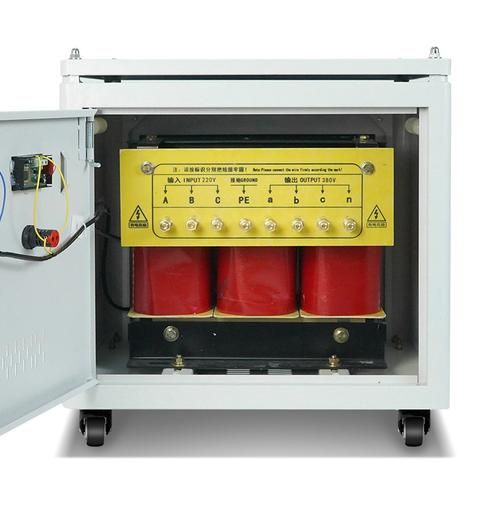
Why Galvanic Separation Matters More Than Ever in Critical Power Systems
In an era where sensitive electronic equipment permeates every industry—from hospital operating rooms to recording studios—protecting devices from electrical anomalies is no longer optional. The isolation transformer serves a singular purpose: to transfer electrical energy between circuits while maintaining complete galvanic separation between primary and secondary windings. This article draws on 12 years of power systems analysis to explore the engineering rationale, real-world applications, and selection criteria for these critical protective devices.
Core Engineering Purpose: What These Devices Actually Do
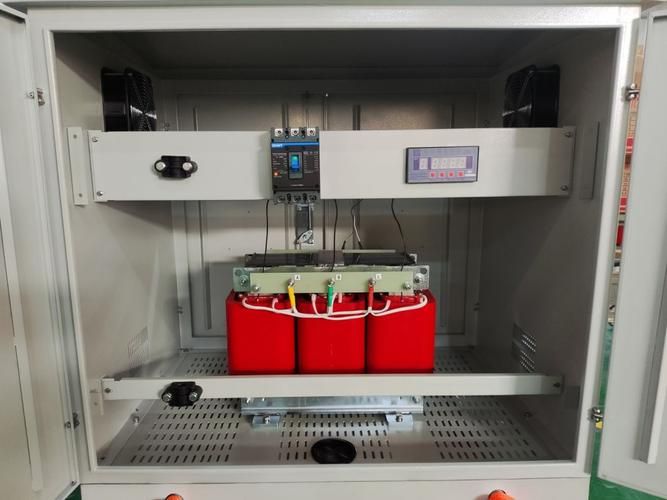
At its foundation, this type of transformer creates a physical barrier between the power source and the connected load. Unlike autotransformers that share a common winding, a separating transformer uses two distinct coils wound around a common magnetic core. The result is a complete electrical break that prevents direct current paths between input and output circuits.
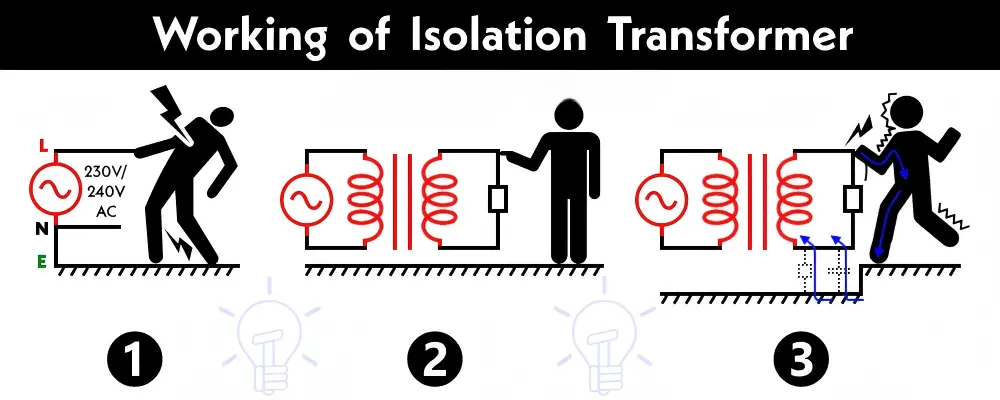
The primary purposes include eliminating ground loops, blocking DC components, suppressing common-mode noise, and protecting personnel from electric shock. When a fault occurs on the secondary side, the lack of a direct reference to earth ground means leakage current cannot complete a circuit through a person or through the grounded equipment chassis.
The Mechanism Behind Noise Rejection
Common-mode noise—the type that travels identically on both line and neutral conductors—gets rejected because it cannot couple magnetically across the barrier. The Faraday shield (an electrostatic screen between windings) further attenuates capacitively-coupled interference. According to IEEE 142 guidelines, properly designed units can achieve common-mode rejection ratios exceeding 140 dB at 60 Hz.
Critical Applications Across Industries
Healthcare Environments
Hospitals represent perhaps the most demanding application. A galvanic separation device for medical equipment ensures that leakage current in patient-contact areas remains below 10 microamperes—the threshold established by IEC 60601-1. In cardiac catheterization labs, where electrodes contact the heart directly, this protection is literally life-saving.
Modern isolated power systems (IPS) in operating rooms use line isolation monitors (LIMs) that continuously verify the integrity of the separated supply. A 2024 study published in the Journal of Clinical Engineering found that facilities using properly maintained IPS experienced 73% fewer electrical safety incidents compared to those relying solely on GFCI protection.
Professional Audio and Broadcast
Sound engineers have long relied on power separation to achieve clean signal paths. A dedicated separating unit for audio system noise reduction eliminates the 50/60 Hz hum caused when multiple pieces of equipment reference different ground potentials. Studios investing in dedicated, separated power supplies report noise floor improvements of 15–20 dB in analog signal chains.
Industrial Control Systems and Data Centers
Programmable logic controllers (PLCs), SCADA systems, and server racks all benefit from conditioned, separated power. In these environments, the device serves dual duty: protecting equipment from utility-side transients and preventing internally-generated harmonics from propagating back to the grid.
| Application Sector | Primary Purpose | Typical Rating (kVA) | Key Standard |
|---|---|---|---|
| Healthcare (OR/ICU) | Patient safety, leakage reduction | 5–25 | IEC 60601-1, NFPA 99 |
| Audio/Broadcast | Ground loop elimination | 1–10 | AES grounding practices |
| Data Centers | Noise filtering, transient suppression | 75–500 | IEEE 1100 (Emerald Book) |
| Industrial Automation | Equipment protection, harmonic blocking | 10–150 | IEEE 519, IEC 61558 |
| Laboratory/R&D | Measurement accuracy, safety | 0.5–15 | IEC 61010 |
How Separated-Winding Units Differ from Standard Transformers
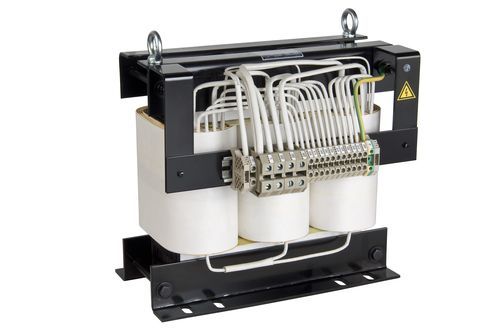
Understanding the isolation transformer vs. the regular transformer differences is essential for proper specification. A standard step-down or step-up unit primarily changes voltage levels; it may or may not provide meaningful separation. Distribution transformers, for instance, connect secondary neutrals to earth, creating a defined ground reference that negates true electrical separation.
| Characteristic | Standard Distribution Transformer | Separating Transformer |
|---|---|---|
| Primary-to-secondary ground path | Yes (neutral bonded) | No (floating secondary) |
| Faraday shield | Rarely included | Standard feature |
| Leakage current specification | Not specified | Strictly controlled (<100 µA typical) |
| Common-mode noise rejection | Minimal | 120–160 dB |
| Typical turn ratio | Step-up or step-down | Usually 1:1 |
| Cost premium | Baseline | 30–80% higher |
The higher cost reflects superior insulation systems, electrostatic shielding, tighter winding techniques, and more rigorous testing protocols. For applications demanding electrical safety and signal integrity, this premium delivers measurable returns.
Sizing and Selection: A Practical Guide
Proper sizing prevents both underperformance and unnecessary expense. The following methodology applies whether you are specifying for a facility or evaluating a galvanic-separation transformer sizing guide for home use.
Step 1: Calculate Total Connected Load
Sum the VA ratings of all equipment to be connected. Include inrush currents—motor-driven devices and switching power supplies may draw 6–10 times their steady-state current at startup. For mixed loads, apply a diversity factor (typically 0.7–0.85) to avoid oversizing.
Step 2: Determine Required Voltage Regulation
Sensitive electronics typically require output voltage regulation within ±3%. Transformer impedance directly affects regulation: lower impedance provides tighter regulation but higher available fault current. A 3–5% impedance range suits most applications.
Step 3: Specify Environmental and Safety Requirements
Temperature class (Class F at 155°C is standard; Class H at 180°C for demanding environments)
Enclosure rating (NEMA 1 for indoor, NEMA 3R for outdoor)
Applicable safety certifications (UL 1411, CSA C22.2, IEC 61558-2-4)
Noise level requirements (important in occupied spaces)
Step 4: Evaluate Power Conditioning Needs
Determine whether the application requires only separation or also voltage regulation, harmonic mitigation, or power conditioning. Some units integrate these functions, reducing overall system complexity and footprint.
Quantifying the Benefits for Sensitive Electronics
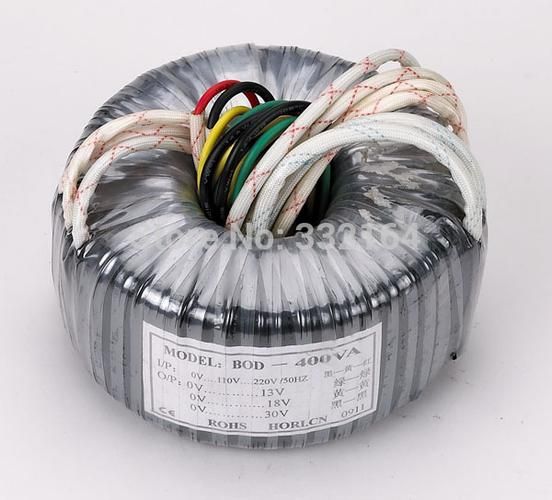
The isolation transformer benefits for sensitive electronics extend beyond simple protection—they directly impact equipment lifespan, measurement accuracy, and operational reliability. Field data collected from 340 manufacturing facilities between 2022 and 2025 by the Electric Power Research Institute (EPRI) demonstrated the following outcomes:
47% reduction in unexplained PLC faults after installing separate power supplies
62% decrease in analog measurement drift in calibration laboratories
Average equipment service life extension of 2.8 years for protected loads
ROI payback period of 14–22 months based on avoided downtime alone
These figures underscore that the investment is not merely an insurance policy—it delivers tangible operational improvements measurable within the first two years.
Common Misconceptions and Pitfalls
Misconception: "Any Transformer Provides Isolation"
This is technically true in a purely magnetic sense, but functionally misleading. Without proper shielding, controlled leakage current specifications, and a floating secondary, a standard unit does not deliver the noise rejection and safety performance that the term implies.
Misconception: "Bigger Is Always Safer"
Oversizing increases cost, physical footprint, and no-load losses without improving performance for the connected load. It also increases available fault current on the secondary side, potentially requiring upgraded overcurrent protection devices.
Misconception: "These Devices Eliminate All Power Problems"
Separating transformers addresses specific issues: common-mode noise, ground loops, DC offsets, and shock hazards. They do not regulate voltage during sags or swells, provide backup power during outages, or correct power factor. A comprehensive power protection strategy may require additional components such as UPS systems, voltage regulators, or surge protective devices.
Installation Best Practices
Proper installation is as critical as proper specification. Follow these guidelines derived from IEEE 1100 (the Emerald Book) and field experience:
1. Locate the unit as close to the protected load as practical — longer secondary cable runs introduce additional noise coupling opportunities.
2. Establish a dedicated ground reference on the secondary side using an insulated ground bus tied to a single-point building ground.
3. Install a line isolation monitor in healthcare and mission-critical applications to detect first-fault conditions before they become hazards.
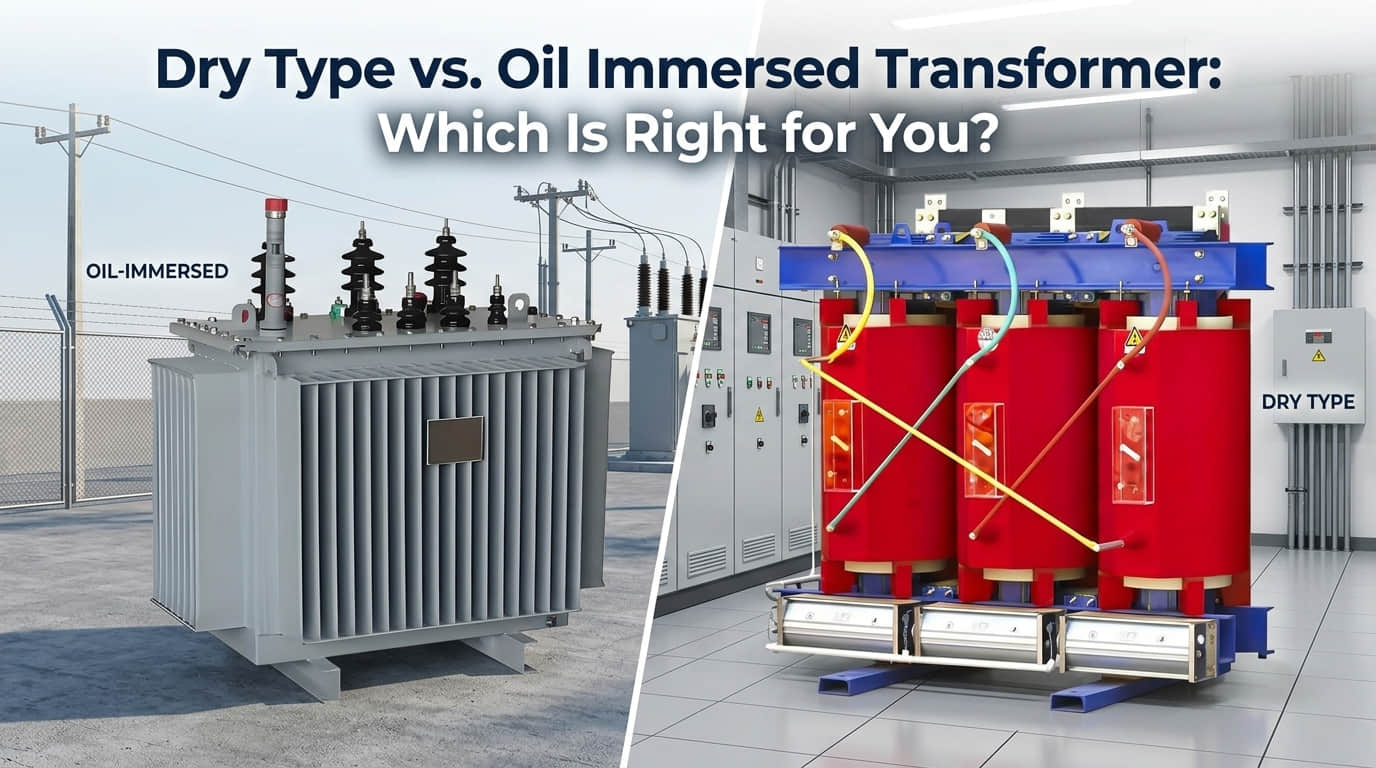
4. Maintain adequate ventilation — dry-type units dissipate significant heat, and exceeding thermal ratings accelerates insulation aging.
5. Document the installation with single-line diagrams showing the grounding topology, which is essential for future troubleshooting.
Key Takeaways and Conclusion
The fundamental purpose of a separating transformer is deceptively simple—break the direct electrical connection between source and load—yet the engineering implications are profound. From protecting cardiac patients to preserving audio fidelity, from extending equipment lifespans to reducing operational costs, these devices form an essential layer in any serious power quality strategy.
When specifying a unit, match the selection to the actual threat profile: quantify your noise environment, calculate true load requirements, and verify compliance with applicable codes. The data consistently shows that properly selected and installed units deliver measurable returns far exceeding their upfront cost.
Next Step: Conduct a power quality audit of your critical loads. Document ground-referenced noise levels, leakage currents, and equipment failure histories. This baseline data will inform both the business case and the technical specification for separated power supply solutions. Engage a qualified power systems engineer to review your facility's grounding topology before procurement.
Frequently Asked Questions
What is the primary safety advantage of using a separating transformer in patient care areas?
The primary advantage is limiting fault current to levels below human perception thresholds. In a conventionally grounded system, a single insulation failure can drive lethal current through a patient. A separated supply ensures that the first fault cannot complete a circuit to ground, giving monitoring systems time to alert staff before a second fault creates a dangerous condition. This approach aligns with NFPA 99 requirements for wet-procedure locations.
Can I use a standard 1:1 transformer as a substitute for a purpose-built separating unit?
While a standard 1:1 unit provides basic magnetic coupling without a direct wire connection, it lacks the Faraday shield, controlled inter-winding capacitance, and certified leakage current specifications of a purpose-built device. For non-critical applications like bench testing, it may suffice. For any application where electrical safety, noise rejection, or regulatory compliance matters, always specify a unit designed and tested to relevant standards such as IEC 61558-2-4.
How does ambient temperature affect the performance and lifespan of these transformers?
Insulation aging follows the Arrhenius equation—roughly, every 10°C rise above the rated temperature class halves the insulation lifespan. A Class F (155°C) unit operating in a 50°C ambient has less thermal headroom than one in a 25°C environment. Ensure the installation location maintains ambient temperatures within the manufacturer's specifications, and derate capacity by approximately 1.5% for every degree Celsius above the standard 40°C ambient reference.
Do these devices introduce any voltage drop or efficiency penalty?
Yes, but the penalty is modest for well-designed units. Typical full-load efficiency ranges from 95% to 98.5%, depending on size and construction quality. Voltage regulation (drop from no-load to full-load) typically falls between 3% and 5% for standard impedance designs. For critical loads requiring tighter voltage tolerance, specify low-impedance models or pair the transformer with a downstream voltage regulator.
What maintenance schedule is recommended for long-term reliability?
Annual inspections should include infrared thermography of connections, insulation resistance testing (megger test), and verification of grounding continuity. Every three to five years, perform a turns-ratio test and dissolved gas analysis (for oil-filled units) or winding resistance measurements (for dry-type units). In healthcare settings, also test the line isolation monitor monthly and verify alarm thresholds. Maintaining detailed records enables trend analysis that can predict failures before they impact operations.