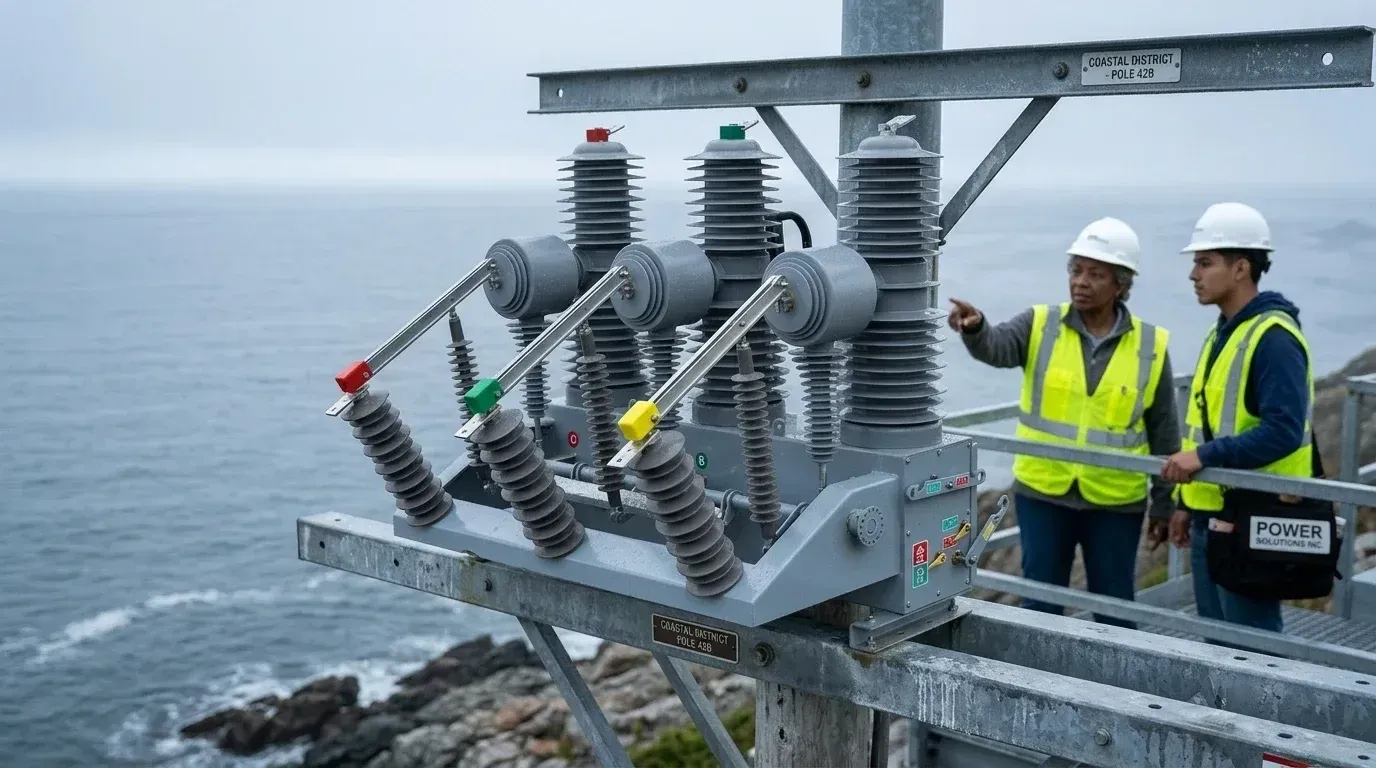
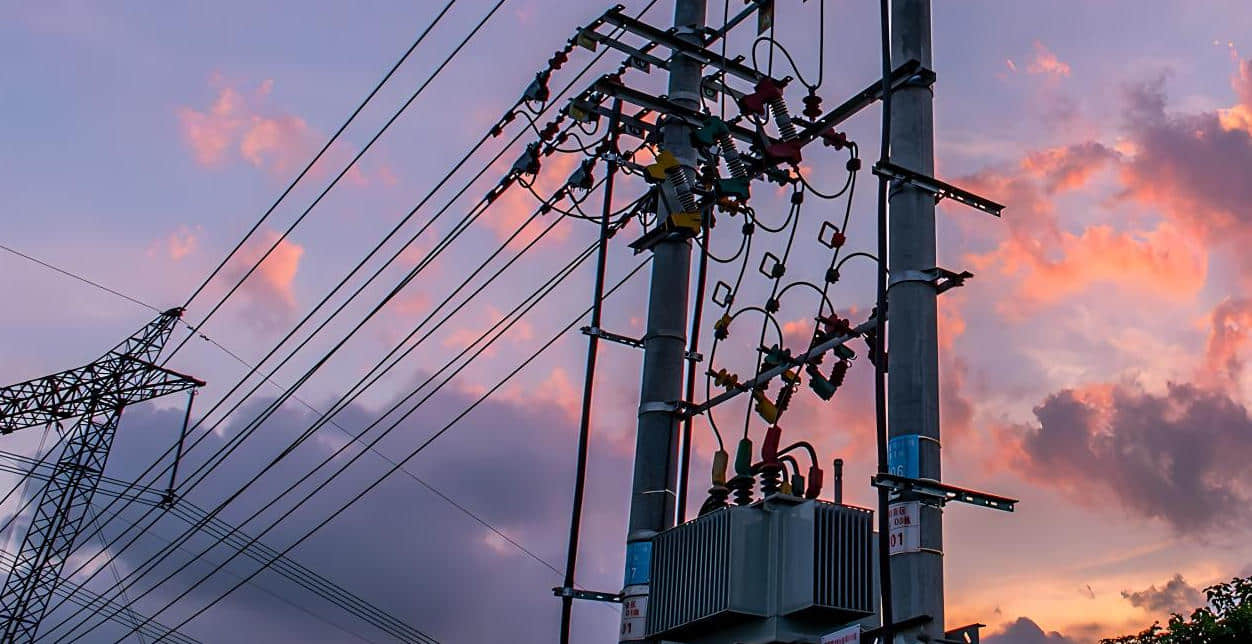
Match the cutout to the feeder's voltage, BIL, load current, and fault level first. Then specify the insulator, creepage and copper parts for Gulf heat, sand and salt air. A cutout that passes every rating check can still fail within a few summers if its housing tracks or its contacts run hot. So expulsion fuse cutout selection here covers ratings, insulator, creepage, copper grade, link type and spares.
What Ratings Matter for a Drop Out Fuse Cutout on 11kV and 33kV Distribution Lines?
For a drop out fuse cutout on 11kV and 33kV distribution lines, four ratings decide the shortlist: voltage class, basic impulse insulation level (BIL), continuous current and interrupting rating. Each must equal or exceed what the feeder can impose at the installation point. The interrupting rating is the one most often undersized, because fault levels rise as networks grow.
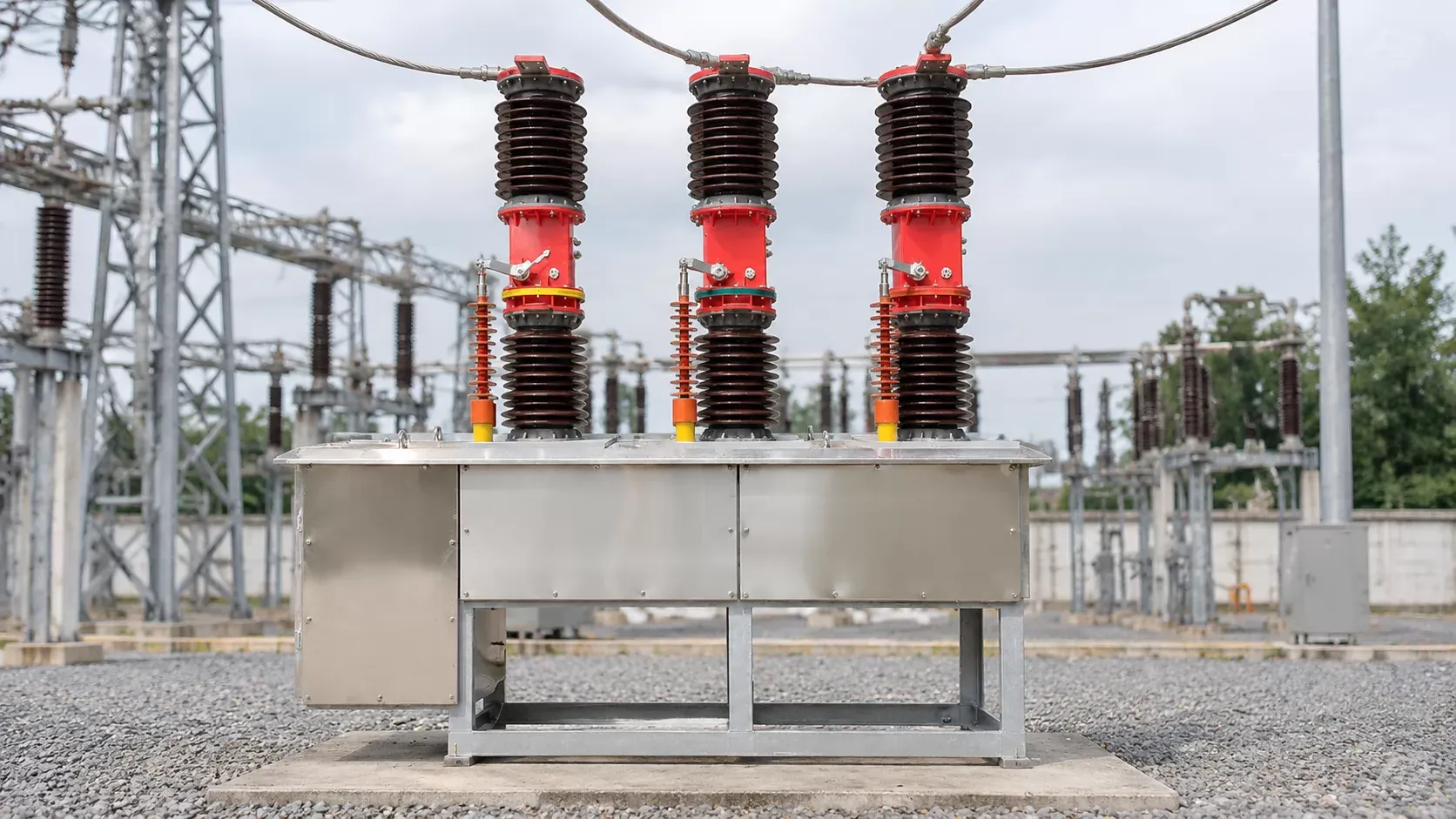
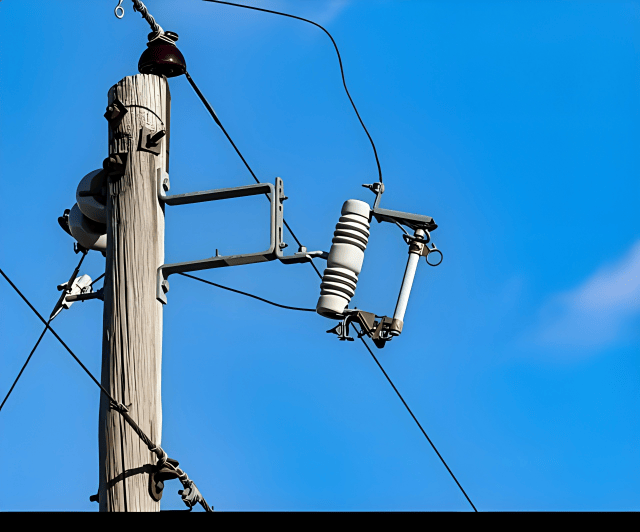
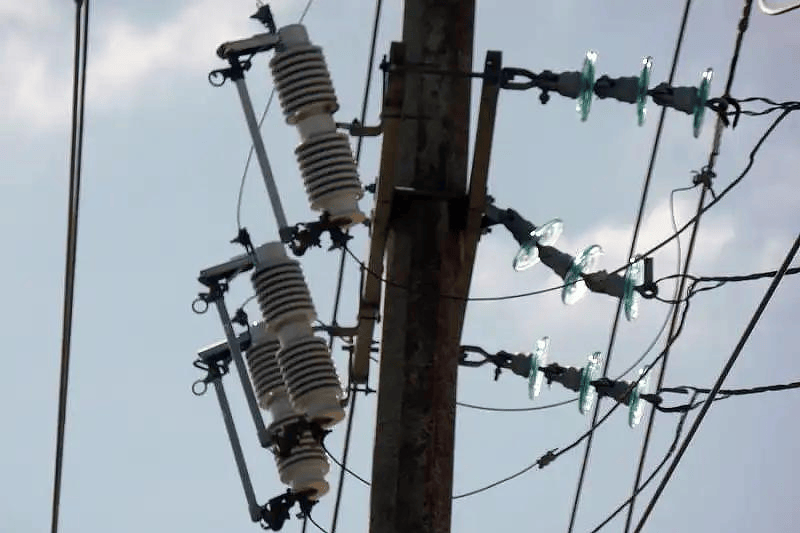
An expulsion fuse cutout is a pole-mounted protective device in which a fuse link inside a fibre-lined tube melts on overcurrent. The arc produces gases that blast out of the tube and help clear the fault, and the tube then swings down to leave a visible open gap. Because it combines protection with a visible isolation point, line crews use it as both a fuse and a disconnect.
Voltage class and BIL
The voltage rating has to cover the highest system voltage, not the nominal one. An 11 kV network has a highest voltage for equipment of 12 kV under IEC practice, and a 33 kV network sits at 36 kV. Cutouts are usually sold in classes that align with these, or in the IEEE classes of 15 kV, 27 kV and 38 kV.
BIL is the peak lightning impulse voltage the insulation must withstand without flashover. IEC 60071-1 lists standard lightning impulse withstand levels of 60 kV or 75 kV for 12 kV equipment and 145 kV or 170 kV for 36 kV equipment. Many utilities specify the higher value, or go above it for 11 kV feeders on long overhead runs exposed to lightning. Check the figure on the type-test report, not the brochure.
Continuous current and interrupting rating
Distribution cutouts are typically offered at 100 A or 200 A continuous. The 100 A body covers most pole-mounted transformers and small laterals. Choose 200 A when the tap feeds a large load block or when you want headroom for heat, which matters in the Gulf because hot contacts eat into the margin quickly.
The interrupting rating is the highest fault current the cutout can clear safely. Ask your protection engineers for the maximum three-phase and single-phase fault current at each installation point, including planned network reinforcement. Then pick a rating above it, and confirm whether the figure quoted is symmetrical or asymmetrical, because suppliers sometimes quote the more flattering one.
How 33 kV differs from 11 kV
At 11 kV the choice is wide and the devices are compact. At 33 kV you will find fewer models, longer and heavier insulators, larger crossarm hardware, and interrupting ratings that are often lower than the 11 kV versions from the same maker. Some utilities limit 33 kV cutouts to small transformers and spur lines and use other switchgear for heavier duties. If your 33 kV fault levels are high, confirm early that a cutout is still the right device before you compare materials.
Insulator Material and Creepage for Coastal and Sandy Sites
The polymer vs porcelain fuse cutout for coastal and sandy areas question comes after the ratings are settled, not before. Many Middle East utilities still write porcelain into their specifications and decline silicone rubber, while others accept polymer on certain feeders. Both positions can be defended, and the decision depends on how the insulator ages in a specific environment.
When porcelain is the safer pick
Porcelain is a glazed ceramic body that does not age under ultraviolet light or prolonged heat. Its glazed surface also stands up well to wind-blown sand. Silicone rubber and other polymer housings rely on surface hydrophobicity, and in strong sun, high heat and abrasive dust that surface can chalk, erode and eventually track. Tracking means carbonised conductive paths that lead to flashover. Utilities that expect cutouts to stay in service for decades with little attention often accept porcelain's weight and fragility for that reason.
When polymer earns its place
Polymer housings are lighter and do not shatter when a crate is dropped or a stone is thrown. On polluted coastal or industrial sites where washing is impractical, a hydrophobic surface can resist wet-contamination flashover better than glazed porcelain. On these sites the lower breakage risk and the pollution performance can outweigh concerns about heat ageing, provided the compound has proven test results for UV and tracking.
The comparison below shows why porcelain usually suits inland desert feeders and polymer earns a case mainly where salt fog and wash-free pollution dominate.
| Criterion | Porcelain | Silicone rubber (polymer) |
|---|---|---|
| UV and heat ageing | No material ageing | Surface can degrade over years |
| Sand abrasion | Hard glaze resists well | Surface erosion possible |
| Breakage in transit or vandalism | Can chip or shatter | Does not shatter |
| Wet pollution, no washing | Relies on creepage and washing | Hydrophobic surface helps |
| Weight per unit | Heavier | Lighter |
| Suited to | Hot, dusty inland feeders | Salt-fog sites without washing |
Creepage distance and pollution class
Creepage distance is the shortest path along the insulator surface between the live end and the earthed end. IEC TS 60815 grades sites by site pollution severity (SPS) from class a (very light) to class e (very heavy) and links each class to a minimum specific creepage. Many Gulf coastal and industrial-dust sites are classed heavy or very heavy. Utilities in the region often write about 31 mm per kV of highest system voltage into tenders, which works out to roughly 370 mm at 12 kV and about 1,120 mm at 36 kV. Use your own utility's figure if it differs, and apply it to porcelain and polymer alike.
Copper Content Decides Contact Life More Than the Insulator Does
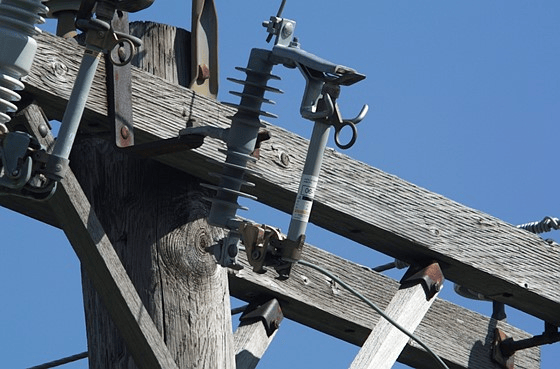
The insulator gets most of the attention in tender meetings. On many Gulf feeders, though, the fault that takes a cutout out of service is a hot or loose contact rather than a cracked insulator. Current flows through the upper contact, the fuse tube fittings, the trunnion and the rear hook, and every joint along that path generates heat in proportion to its resistance. Copper content, wall thickness and contact pressure set that resistance.
Utilities and distributors that buy for the region commonly fix the metal parts by composition and thickness, not by a general "copper alloy" description. A typical requirement looks like the table below, and it is the table to put in your RFQ if your own specification is silent.
| Parameter | Requirement |
|---|---|
| Copper content of nuts (%) | 93 |
| Copper content of cast copper parts (%) | 59 |
| Minimum wall thickness of castings (mm) | 2 |
| Rear hook thickness (mm) | 3 |
| Upper contact assembly thickness (mm) | 2.5 |
Read the 2 mm figure as a floor for every casting, with the rear hook and upper contact held to heavier sections because they carry the most mechanical and thermal load.
Why red copper on some current paths
A 59% copper casting is a brass. It has the strength and castability for hooks, hinges and brackets, but its electrical conductivity is roughly a quarter of pure copper's. Red copper (pure copper, sometimes listed as C11000 or T2) is close to 100% IACS conductivity and stays softer, so a spring-loaded contact seats more fully against it. That is why many specifications call for red copper on the contact strips and flexible current paths and accept brass where the job is mainly mechanical. The higher copper content in nuts serves a similar purpose: a nut on the current path that resists corrosion and keeps its clamping force under heat cycling keeps the joint resistance low.
Thickness matters for two reasons. A heavier section carries current with less temperature rise, and it resists the slow deformation that loosens joints after years of daily heating and cooling. Thin castings also crack more easily when a lineman closes the tube with a hot stick.
Proving the alloy
Ask for a material test report covering each copper part, and then check it. (Colour alone cannot confirm the alloy: a plated or polished brass part can pass for red copper, and a 59% casting looks much like a 62% one.) Spot-check copper content on samples with a handheld XRF analyser or an optical emission spectrometer, and repeat the check on random pieces from the production lot. Measure wall thickness with a caliper at the thinnest point, not at the boss.
Desert Heat, Derating and Contact Temperature Rise
IEC and IEEE cutout ratings are generally based on usual service conditions with an ambient temperature not above 40 °C. Summer shade temperatures across much of the Gulf exceed that, and a metal contact in direct sun on a dark pole runs well above shade air temperature. The temperature-rise limit in the standards is measured above ambient, so every extra degree of ambient comes off the margin before any current flows.
This is the practical meaning of high temperature fuse cutout performance. A contact that just meets its temperature-rise limit at 40 °C can reach a total temperature at which springs relax, surfaces oxidise faster and the fuse link itself sees extra heating. Since the link's melting characteristic depends on its own temperature, a hot cutout can also cause nuisance operations on peak-load afternoons.
Three factors set the outcome, and they interact. Copper grade sets the bulk resistance of each part. Contact pressure sets the resistance at each joint, which is usually the larger share. Spring tension holds that pressure over time. A stainless or tempered spring steel that keeps its force at elevated temperature matters as much as the copper. A high-conductivity contact with a weak spring will still run hot once the spring relaxes.
Utilities handle the shortfall in several ways. Some specify the 200 A body for loads a temperate network would serve with 100 A. Others ask for temperature-rise tests at the rated current with a stated ambient correction, or require the supplier to declare a derating factor for 50 °C ambient. Whichever route you take, get the basis of the declared figure in writing, and ask what spring material is used and whether its force was measured after heat ageing.
T-Type Links Usually Suit Transformer and Lateral Protection Better
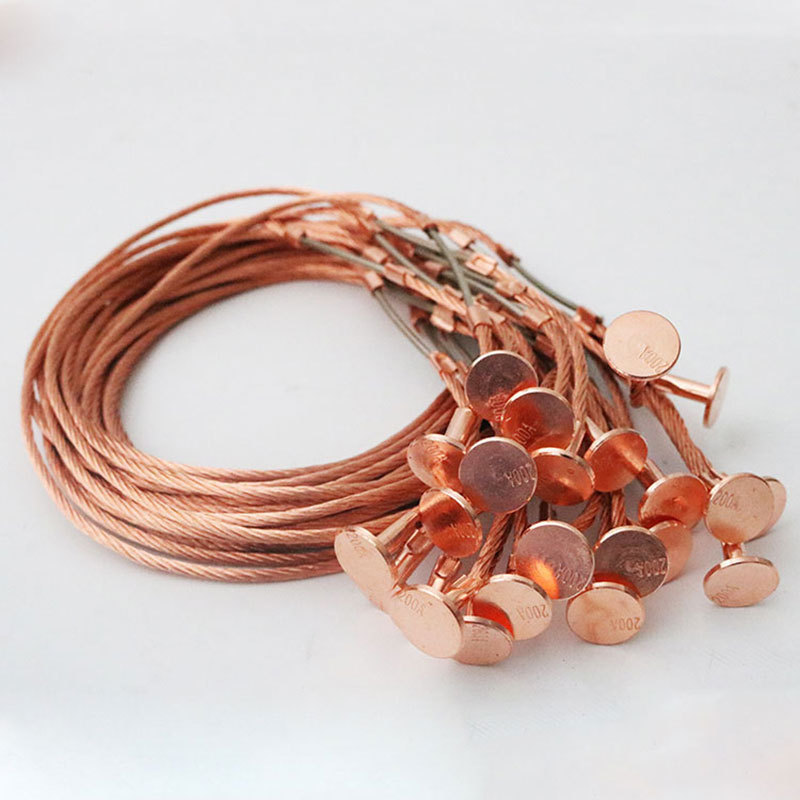
Fuse links for expulsion cutouts come in speed classes defined in IEEE C37.42. The speed ratio is the melting current at 0.1 s divided by the melting current at 300 s (600 s for links above 100 A). K links are fast, with a speed ratio of about 6 to 8. T links are slow, at about 10 to 13. Both carry the same continuous rating for a given number, but the T link takes much longer to melt on short, high currents.
That slower response is what transformer and lateral protection needs. When a distribution transformer is energised, its magnetising inrush can briefly reach many times rated current, with a common planning figure of around 12 times for 0.1 s. After an outage, cold-load pickup adds a sustained surge as air conditioners, compressors and pumps restart together. That surge is severe on Gulf feeders in summer. A K link sized close to the transformer rating may melt on either event. A T link of the same rating usually rides through it while still clearing a genuine fault.
Coordination with upstream reclosers follows the same logic. In a fuse-saving scheme, the recloser's fast curve must trip before the link starts to melt, so that temporary faults clear without blowing the fuse. The recloser's slow curve must then let the link clear permanent faults first. The flatter high-current end of a T link usually leaves more room between the recloser fast curve and the link's minimum melting curve, though at very high fault levels the margin can disappear for either link type. Plot the curves for your actual fault currents rather than relying on a general rule.
K links still have a place, for example where fast clearing protects a small conductor or where sectionalising between fuses in series needs tighter steps. For pole-mounted transformers, T is the usual default.
Fuse Cutout Specifications for Middle East Utilities
Fuse cutout specifications for Middle East utilities mostly reference IEC standards, with IEEE standards accepted or required by some utilities. Expect a qualified supplier to show compliance with these documents:
IEC 60282-2, high-voltage fuses, expulsion fuses
IEEE C37.41, design tests for high-voltage fuses and accessories
IEEE C37.42, specifications for distribution cutouts and fuse links
IEC 60383-1, ceramic and glass insulators for overhead lines
IEC 62217, polymeric HV insulators, general definitions and test methods
IEC 61109, composite insulators for overhead lines, as referenced for polymer housings
The list tells you what to ask for. The paperwork tells you whether the product actually complies. A type-test report records design tests done once on representative samples: dielectric and BIL withstand, temperature rise, interrupting tests across the fault range, and for polymer, tracking, erosion and UV tests. It should come from an accredited laboratory, name the exact model and ratings, and be recent enough to match the current design. Routine tests are done on every unit or every lot during production, such as visual and dimensional checks, power-frequency withstand on insulators, and mechanical operation. Ask for both, and make sure the model numbers match.
Then check everything against the purchasing utility's own technical specification, which often goes further than the international standards. Creepage, minimum BIL, insulator material, galvanising thickness on steel hardware, copper composition and marking are commonly fixed there. A cutout that is fully IEC-compliant can still be rejected at tender evaluation for missing one of those utility-specific clauses.
How Do You Choose a Fuse Cutout for Hot Desert Climates?
To choose a fuse cutout for hot desert climates, settle the electrical ratings first, then the creepage and insulator, then the copper parts and link type. Ratings are pass-fail and cannot be traded away. The value-for-money trade-offs come later, in materials and accessories. Even there, copper composition and wall thickness are the places where a cheaper offer usually saves its money.
Voltage class and BIL decide the matter most often, because a cutout that falls short is simply excluded. Current and interrupting rating come next: size the body with heat headroom and the interrupting rating above the highest future fault level, and never accept an interrupting figure without the test report behind it. Creepage and insulator material follow. Set creepage from the site pollution class, then choose porcelain or polymer according to whether heat, UV and sand or wash-free salt contamination is the bigger threat. Copper grade and thickness come fourth in order but deserve the closest inspection, since a supplier can meet every rating on paper and still save cost by using thinner castings or lower copper content. Link type and parts interchangeability close the list. Specify T links for transformers and confirm that tubes, links and spare castings are dimensionally compatible with what is already on your poles.
The cost trade-offs that are usually acceptable are cosmetic. Examples include the finish on non-current-carrying steel, packing format, or choosing a 100 A body where loads are genuinely light. Do not cut copper content, contact thickness, spring material, creepage or the interrupting rating. Those determine whether the cutout lasts or comes back as a failure in its third summer.
Rule of thumb: when two offers meet the ratings equally, pay for the one with the heavier, verified copper and the better spring before paying for anything else.
Spare Parts Must Match the Installed Cutouts
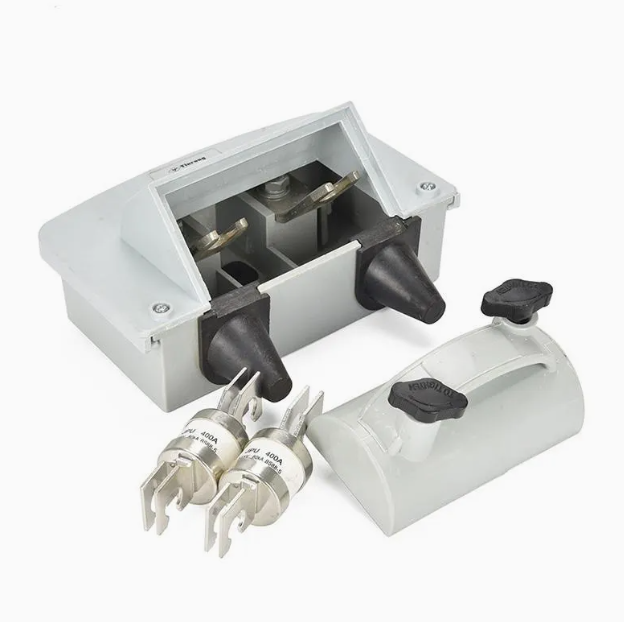
Maintenance crews rarely replace a whole cutout when one part has failed. A burnt nut, a cracked casting or a blown link can be changed on the pole, which costs less than a full unit and avoids a longer outage. That is why many distributors and utility stores buy nuts, cast copper parts and T-type fuse links as separate line items, in quantities based on failure history rather than as a token percentage of the main order.
The risk is mismatch. A replacement casting that is a fraction of a millimetre off in hinge width can leave the fuse tube sitting crooked, which reduces contact pressure and can stop the tube dropping cleanly after a fault. (A quiet warning: a spare made from a lower-copper alloy than the original will run hotter than its neighbours and become the next failure.) Order spares against the same drawing numbers, dimensions and alloy specification as the installed assembly, and apply the same spectrometer and caliper checks you use on complete cutouts. If your installed base uses Weisho Electric cutouts, for example, quote the original model and part references so the castings and nuts are made to the same drawings rather than to a near equivalent.
Fuse links need the same care. Links of the same nominal rating and speed class from different makers may differ in button head, leader length or cable diameter. Check fit in your actual tubes before stocking a new source.
Inspection Sequence From Sample to Shipment
Start inspection with the metal, because alloy and thickness problems are the hardest to see once units are assembled and packed. The sequence below runs in time order. Each stage gives you a document or measurement to keep before releasing the next payment or shipment.
| Stage | What to verify | Evidence to keep |
|---|---|---|
| Sample | Model, ratings, marking, overall fit | Signed sample record |
| Alloy and dimension check | Copper content, wall and contact thickness | Spectrometer readings, caliper log |
| Type-test review | Model match, lab accreditation, ratings tested | Type-test report copy |
| Production | Routine tests, materials match approved sample | Routine test records |
| Pre-shipment inspection | AQL sampling, operation, copper spot-checks | Inspection report with photos |
| Packing | Individual cartons, padding, crate strength | Packing list, crate photos |
Most rejections can be avoided at the second stage. If the copper and thickness pass there, the later checks mainly confirm that production stayed on the approved sample. For porcelain, insist on individual cartons with fitted padding inside sturdy crates, since chipped sheds found at the warehouse are seldom recoverable from the supplier.
A Complete RFQ Makes Expulsion Fuse Cutout Selection Faster
A quotation is only comparable with others if every supplier priced the same thing. Before you send the request, work through these questions:
Have I stated system voltage, BIL, continuous current and the interrupting rating with its basis?
Have I named the insulator material and the minimum creepage in mm?
Have I written copper content and thickness for nuts, castings, rear hook and upper contact, and which parts must be red copper?
Have I specified the fuse link type and ratings, plus a priced spares list for nuts, castings and links?
Have I asked for type-test reports, routine test records and material test reports?
Have I described the packing I expect, especially for porcelain?
Any "no" here usually turns into a quotation that looks cheap only because it omits that item.
Frequently Asked Questions
Is a silicone rubber cutout acceptable on a coastal 11 kV feeder?
Sometimes, if the utility's specification allows it. Silicone rubber handles salt fog without washing well, but you should confirm UV, tracking and erosion test results to IEC 62217. Many utilities in the region still require porcelain, so check the tender before quoting polymer.
How can I verify the copper content claimed on a quotation?
Test it with an XRF or OES spectrometer. Ask for a material test report first, then spot-check samples and random production pieces yourself or through a third-party inspector.
Can T-type fuse links from one maker fit another maker's fuse tube?
Often, but not always. Button head size, leader length and cable diameter vary between makers, so trial-fit links in your actual tubes before mixing sources.
What BIL should I specify for 33 kV distribution cutouts?
Usually 170 kV. IEC 60071-1 lists 145 kV or 170 kV for 36 kV equipment, and many utilities choose the higher level for exposed overhead lines. Follow your utility's own figure if it differs.
Should spare castings and nuts follow the same alloy specification as the original assembly?
Yes. A spare with lower copper content or thinner walls runs hotter and loosens sooner than the original parts, so it becomes the weak point on a cutout that was otherwise sound.
Field Records Will Sharpen the Next Order
Once the first lot is in service, the useful question becomes which parts fail first, and on which feeders. Logging blown links, hot-spot readings and replaced castings by location will show whether your spares mix, link ratings or copper requirements need adjusting for the next order.