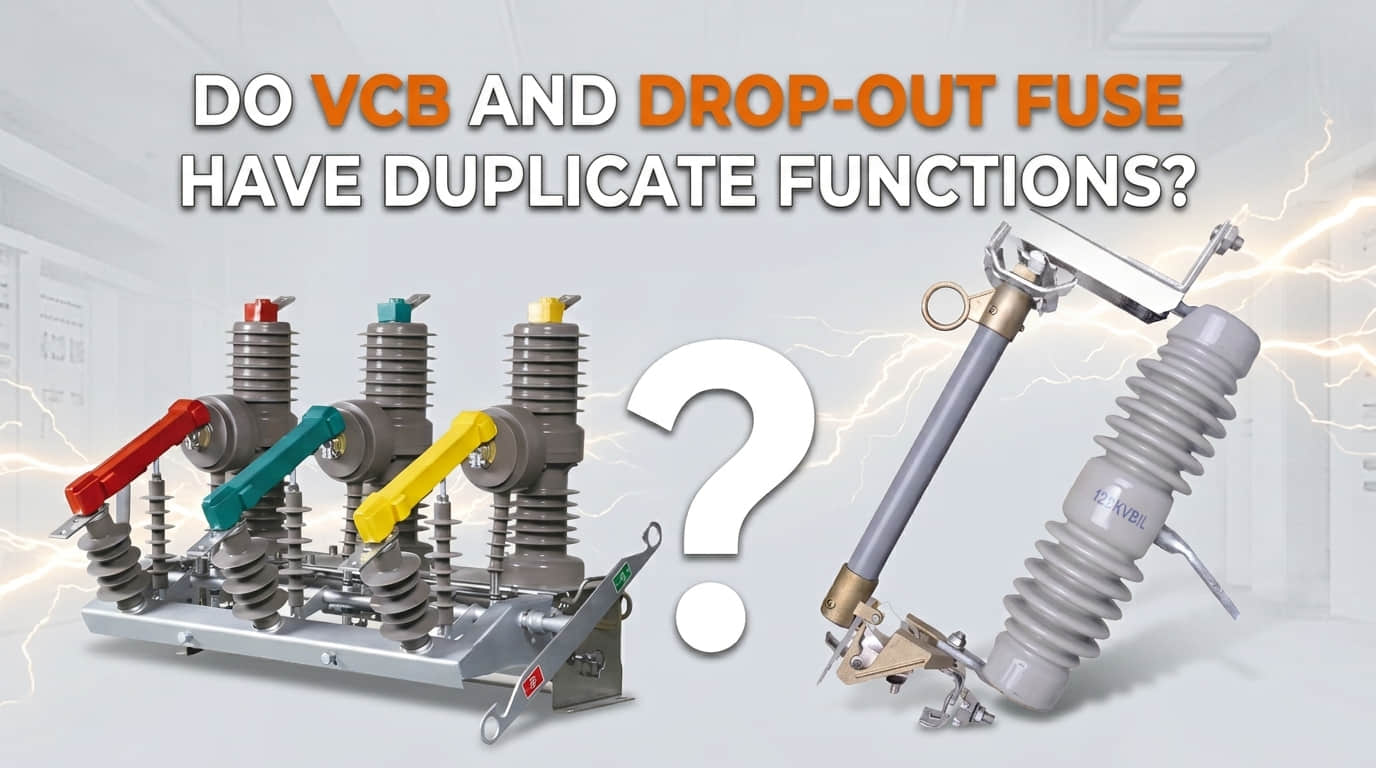
Why This Question Causes Real Protection Problems
On many medium-voltage distribution projects, engineers see both a vacuum circuit breaker and a drop-out fuse on the same line and assume one is redundant. That assumption causes real trouble in the field.
Both devices can clear short-circuit faults, but they do not protect in the same way. If the settings are not coordinated, you can get nuisance fuse operations, breaker trips that should not happen, or a random protection race that leaves operations teams guessing what failed first.
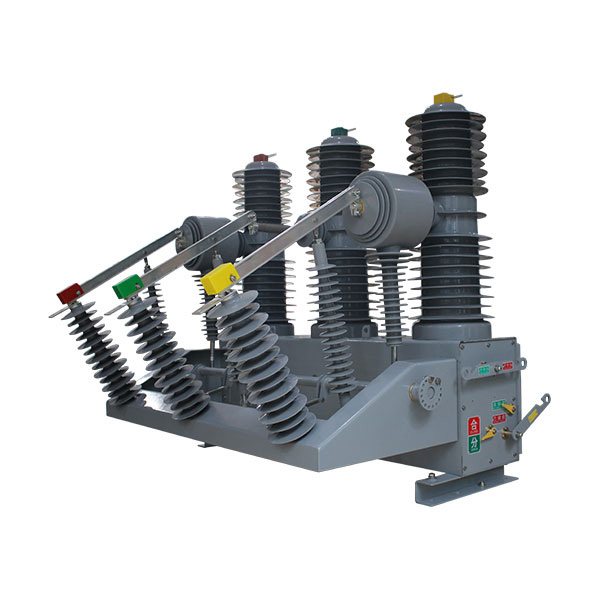
What Is a Vacuum Circuit Breaker (VCB)?
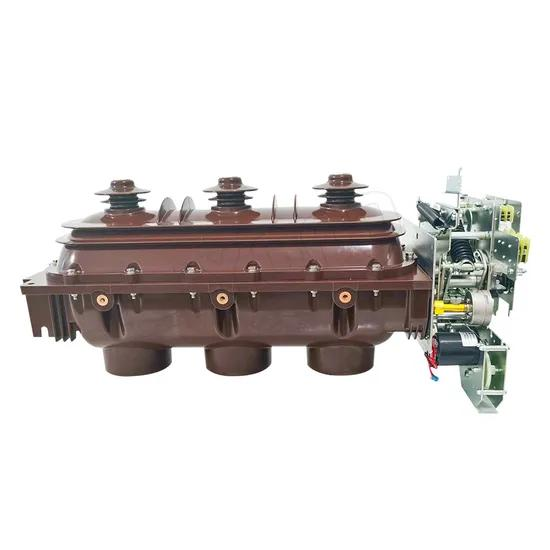
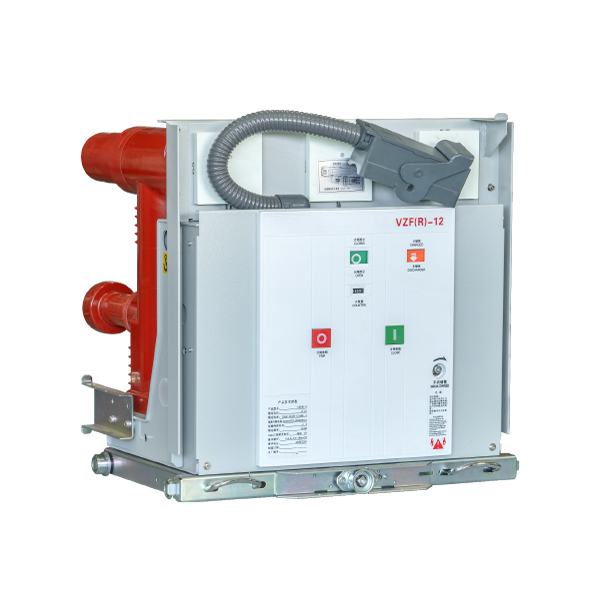
A vacuum circuit breaker, or VCB, is a switchgear device that can make and break current under normal and fault conditions. It can be opened and closed while energized, and in modern distribution systems it is often motor-operated for remote control.
Its real strength is controllable protection. With relay coordination, a VCB can provide overload protection, short-circuit protection, definite-time protection, inverse-time protection, and in many schemes, automatic reclosing after temporary faults.
In practice, this means a VCB can trip for a downstream fault, isolate the problem quickly, and then reclose remotely if the line fault was temporary. No crew needs to replace a blown element just to restore service.
The limitation is equally important. A VCB does not give a visible isolation gap by itself, so for safe maintenance, many systems still need a disconnector or another isolating device.
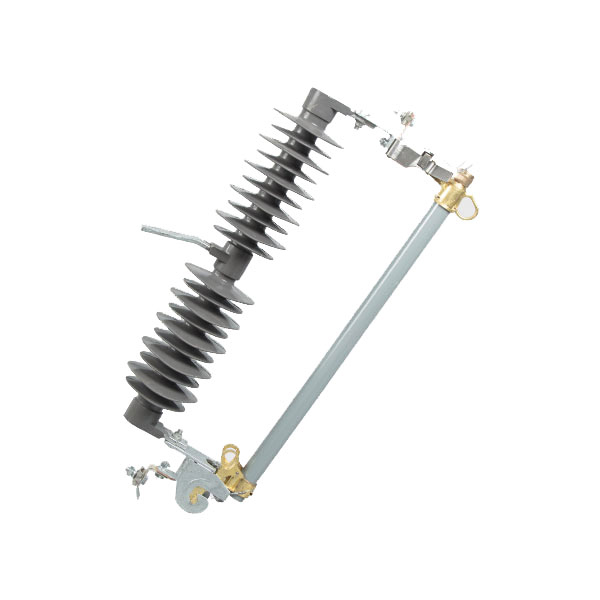
What Is a Drop-Out Fuse?
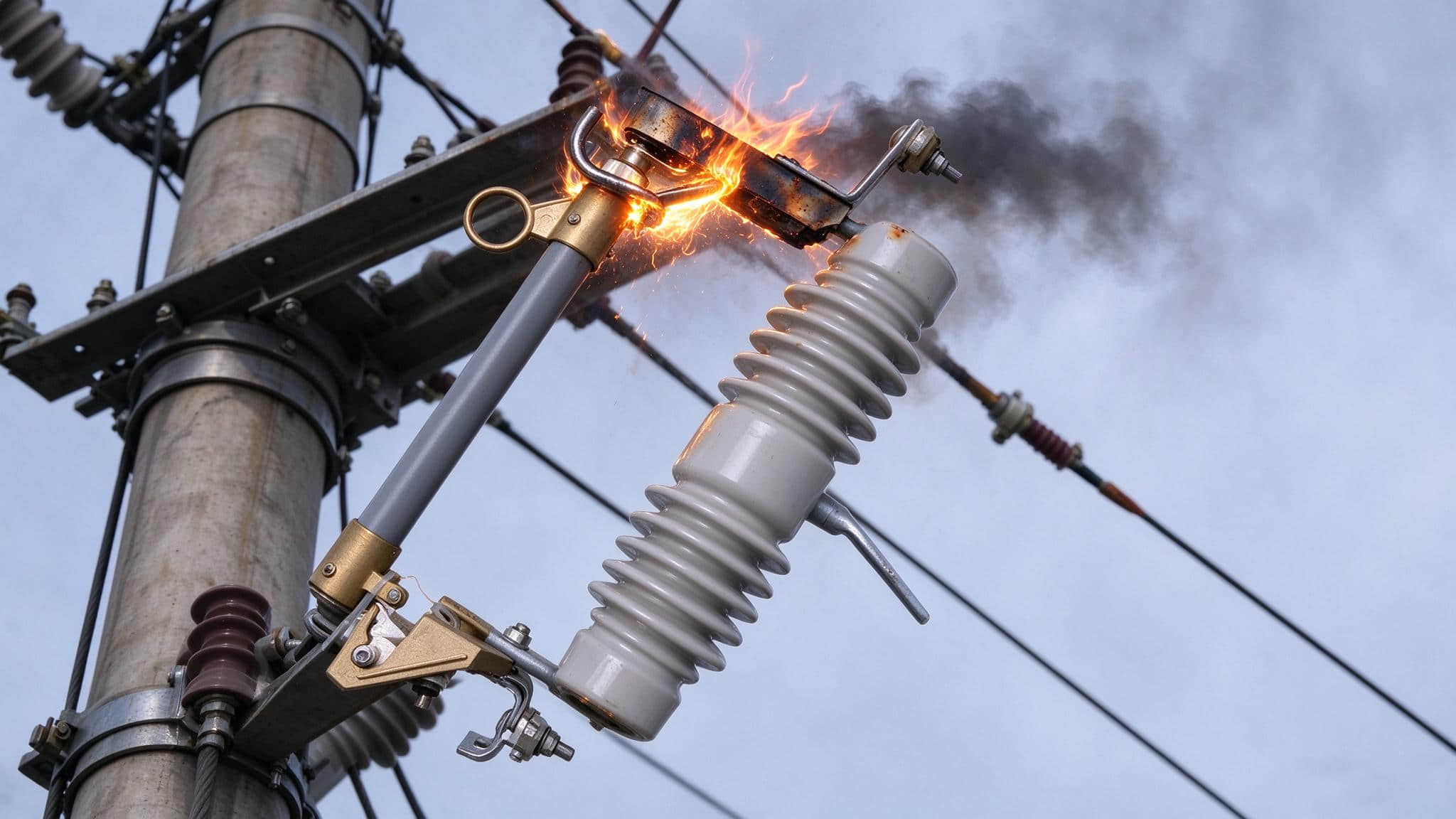
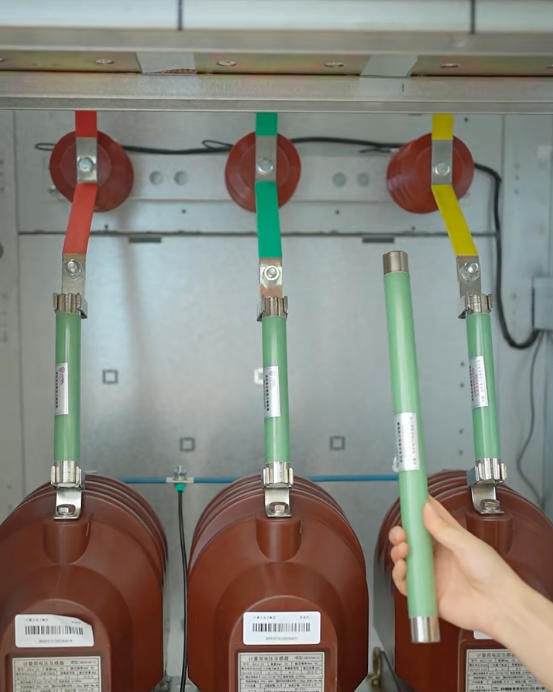
A drop-out fuse is a one-time protective device. When the fuse link melts under fault current, the fuse tube drops open and creates a clear, visible disconnection point.
That visible open point matters in the real world. Line crews can verify isolation by sight, which is one reason drop-out fuses remain common on pole-mounted transformer high-voltage sides.
A drop-out fuse mainly responds to short-circuit faults. Some fuse links have overload-related characteristics, but many practical installations do not rely on them for precise overload protection because their response can be too coarse for selective coordination.
After operation, the fuse cannot be remotely restored. Someone must go to site, inspect the circuit, and replace the fuse link before energization can resume.
Do VCB and Drop-Out Fuse Have Duplicate Functions?
The direct answer is: partly, but not completely.
Their short-circuit protection function overlaps. Both devices can disconnect a faulted section under high fault current.
But their protection position, reset method, maintenance role, and isolation function are different. A VCB is a reusable, controllable protection and switching device. A drop-out fuse is a sacrificial protective element that also provides a visible open point.
So if you are asking about vacuum circuit breaker vs drop-out fuse, the correct engineering answer is not “same function” or “totally different.” It is partial overlap with different protection roles.
Vacuum Circuit Breaker vs Drop-Out Fuse: Core Functional Differences
The easiest way to understand the difference between VCB and dropout fuse is to compare what each device is expected to do during operation, fault clearing, and maintenance.
Switching ability: VCB can switch load current on and off; a drop-out fuse is not intended to act as a routine load-switching device in the same way.
Overload protection: VCB relay protection can be set for overload; many drop-out fuse links are not sufficiently sensitive for dependable overload protection.
Short-circuit protection: Both can clear short-circuit current.
Remote operation: VCB supports remote electric opening and closing; drop-out fuse does not.
Reclosing: VCB can often reclose automatically; drop-out fuse cannot.
Visible isolation: Drop-out fuse provides a visible break after operation; VCB alone does not.
Restoration after operation: VCB can be reset and reclosed; a drop-out fuse requires manual replacement of the fuse link.
Maintenance role: VCB is a protection and control device; drop-out fuse also contributes to isolation visibility and backup protection.
Where VCB and Drop-Out Fuse Functions Overlap
The overlap is mainly in short-circuit interruption. If a downstream transformer or line section develops a fault, both the upstream VCB and the nearby drop-out fuse may “see” the same fault current.
This is where poor coordination becomes expensive. If both devices are effectively set to respond in the same fault range with no grading margin, either one may operate first.
That creates confusion for operators. If the fuse opens first, service restoration takes longer and requires a field visit. If the breaker trips first every time, the fuse may never provide meaningful backup protection.
Where Their Functions Are Not Repetitive
The VCB handles the functions that modern utilities and industrial users care about most for continuity of service: remote switching, overload protection, event-based tripping, and reclosing.
The drop-out fuse brings something a breaker does not: a visible isolation point after operation. It also serves as simple backup fault clearing in schemes where the breaker fails to trip.
That is why the two devices are often installed together rather than treated as either-or choices. In well-designed systems, they are coordinated, not duplicated.
Why Protection Coordination Between VCB and Fuse Matters
VCB and fuse protection coordination is not a paperwork exercise. It directly affects outage duration, selectivity, asset stress, and crew dispatch frequency.
If coordination is poor, you get protection race conditions. One fault may blow a fuse unnecessarily, while another may trip the breaker when the local downstream protective device should have isolated the problem.
Utilities try hard to avoid these outcomes because every unnecessary fuse replacement means more truck rolls, longer restoration time, and more customer complaints. In rural overhead networks, that cost is very real.
Typical Protection Roles in Overhead Distribution Transformer Protection Devices
In overhead distribution transformer protection devices, a common arrangement is a VCB upstream and a drop-out fuse on the transformer high-voltage side. This is widely used on 10 kV, 11 kV, and 13.8 kV systems.
The logic is straightforward: the breaker acts as the primary intelligent protection device, while the fuse acts as backup and provides visible isolation near the transformer.
VCB as Main Protection
The VCB usually carries the main protective burden. It handles overload, short circuit, remote switching, and reclosing logic for temporary faults.
For example, a feeder breaker can trip and reclose after a temporary branch contact or lightning-related flashover. That is impossible with a drop-out fuse because once the fuse element melts, it must be physically replaced.
Drop-Out Fuse as Backup Protection
The drop-out fuse is typically positioned as backup protection. If the breaker fails to clear a severe transformer-side fault, the fuse should melt and drop open.
This backup role is valuable, but only if the time-current curves are checked carefully. Without selectivity, the fuse may operate too early and defeat the point of having a controllable breaker upstream.
Recommended Coordination Principle: Breaker First, Fuse Backup
In most practical designs, the recommended principle is simple: breaker first, fuse backup.
That means the VCB should clear expected overloads, temporary faults, and most downstream short-circuits first. The drop-out fuse should operate only when the breaker fails, or under specific high-current conditions that have been deliberately studied in the coordination review.
This principle aligns with modern service reliability goals. A breaker trip can often be diagnosed and reset remotely, while a blown fuse requires site work and longer outage time.
Not Recommended: Same Protection Range With No Setting Margin
What should be avoided is a scheme where both devices cover the same protection range with no grading margin. In that case, fault clearing becomes non-selective.
Sometimes the fuse opens first. Sometimes the breaker trips first. Sometimes repeated temporary faults consume fuse links that should never have operated.
This is one of the classic failures in switchgear fuse versus circuit breaker functions planning: engineers focus on equipment presence but ignore selectivity.
Real-World Example: 10 kV Distribution Transformer High-Voltage Side Scheme
Consider a practical 10 kV overhead feeder supplying a 400 kVA pole-mounted distribution transformer. Upstream on the feeder, there is a VCB with relay protection. Near the transformer high-voltage bushing, there is a drop-out fuse assembly.
If the transformer experiences an internal high-current fault, both devices can detect the fault current. A properly coordinated design will let the VCB trip first for most fault scenarios, especially if remote restoration and feeder continuity are priorities.
If the breaker fails mechanically or relay protection malfunctions, the drop-out fuse should then act as backup and visibly isolate the failed transformer. This is exactly why many experienced field engineers still prefer the combination.
Manufacturers such as Weisho Electric are often discussed in this context because buyers increasingly want not just components, but coordinated medium-voltage solutions where breaker characteristics, fuse selection, and application guidance are considered together.
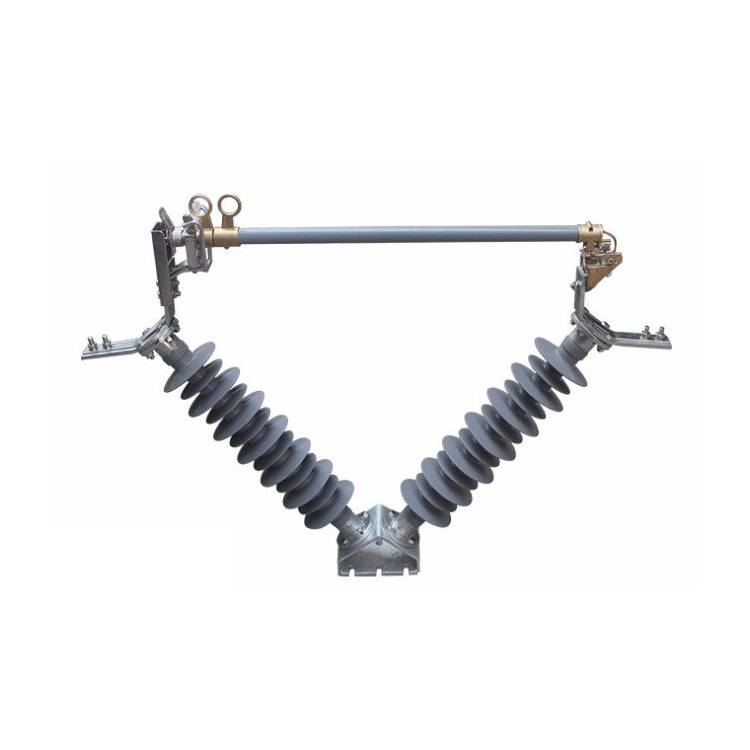
Table: VCB and Drop-Out Fuse Function Comparison
| FUNCTION | VACUUM CIRCUIT BREAKER (VCB) | DROP-OUT FUSE |
|---|---|---|
| Load switching | Yes, can switch load current on/off | Limited; not a substitute for routine controlled switching |
| Overload protection | Yes, relay-based definite-time or inverse-time protection | Depends on fuse-link characteristic; often not precise enough |
| Short-circuit protection | Yes | Yes |
| Automatic reclosing | Yes, commonly available | No |
| Remote operation | Yes | No |
| Visible isolation after operation | No visible open point by itself | Yes, fuse tube drops open visibly |
| Replacement after operation | Normally no hardware replacement needed after trip | Fuse link must be replaced manually |
| Typical role | Main protection and control | Backup protection and visible isolation |
Table: Typical Coordination Logic for Common Fault Scenarios
| SCENARIO | EXPECTED VCB ACTION | EXPECTED DROP-OUT FUSE ACTION | COORDINATION GOAL |
|---|---|---|---|
| Transformer overload | Trip on overload curve | No operation in most cases | Breaker handles overload selectively |
| Temporary line fault | Trip and reclose | No operation | Restore service without field replacement |
| Permanent downstream short circuit | Trip first | Remain intact unless breaker fails or fault current/time exceeds design margin | Selective interruption by breaker |
| Breaker failure | Fails to clear | Operate as backup | Fuse provides last-resort fault clearing and visible isolation |
| Maintenance isolation after fuse operation | Breaker opened upstream as required | Visible dropped fuse tube confirms open point | Safe inspection and repair workflow |
Real-World Data and Industry Examples
Across 10 kV, 11 kV, and 13.8 kV distribution systems, the VCB-plus-fuse arrangement remains common for pole-mounted transformers and branch protection. This is especially true in mixed urban-rural networks where utilities need both remote control and simple visible isolation at the equipment location.
In utility practice, temporary faults form a large share of overhead line disturbances. Lightning, tree contact, wind-driven debris, and animal contact often create faults that disappear quickly. A VCB with reclosing can restore service in seconds, while a fuse operation in the same scenario would turn a transient event into a manual outage.
That is one reason selective coordination is emphasized so strongly. It reduces unnecessary truck rolls and shortens outage duration.
For transformer protection, common fuse-link selections are based on transformer kVA, primary voltage, expected inrush current, and minimum melt curves. Engineers do not just pick a fuse by current rating; they compare its curve against relay settings and transformer withstand limits.
In project discussions, suppliers like Weisho Electric stand out when they can support these decisions with application data instead of just listing catalog ratings. That practical support often makes the difference between a stable design and a nuisance-prone one.
Proof From Operating Characteristics and Time-Current Curves
The engineering proof sits in the time-current curves.
A VCB relay can be set with definite-time or inverse-time characteristics. That gives the protection engineer room to shape operation based on fault level, coordination steps, downstream devices, and service philosophy.
A drop-out fuse follows its melt and clearing curves. Those curves are fixed by the fuse-link design and are less flexible than relay settings.
This difference is crucial. Many drop-out fuses are not especially sensitive in the overload region, so using them as the main overload protective device can leave the transformer exposed to damaging thermal stress before operation occurs.
At the same time, if the fuse minimum melt curve sits too close to the breaker trip curve, the fuse may operate before the breaker under some fault conditions. That is exactly what coordination studies are meant to prevent.
Common Mistakes in VCB and Fuse Protection Coordination
Giving both devices the same pickup zone: This causes non-selective operation.
Ignoring transformer inrush current: An incorrectly selected fuse may respond too close to energization conditions.
Not checking minimum melt and total clearing curves: Rated current alone is not enough.
Assuming the fuse can replace breaker overload protection: In many installations, it cannot do this accurately.
Forgetting breaker reclosing logic: Reclose timing must not conflict with fuse behavior during temporary faults.
Skipping fault level review: Available short-circuit current affects both breaker interrupting duty and fuse clearing behavior.
Neglecting maintenance philosophy: If fast remote restoration matters, the breaker must be prioritized in coordination.
Best-Practice Design Checklist
Review the available fault current at the installation point.
Confirm transformer kVA, primary voltage, impedance, and inrush behavior.
Set the VCB relay for overload and short-circuit protection with selective margins.
Select the drop-out fuse link by actual time-current characteristics, not current rating alone.
Verify that expected temporary faults are cleared by the breaker before the fuse melts.
Check breaker failure scenarios to ensure the fuse still provides backup clearing.
Confirm whether visible isolation is required for local maintenance procedures.
Document the final coordination on the single-line diagram and protection study.
Featured Snippet Answer: Difference Between VCB and Drop-Out Fuse
The difference between VCB and dropout fuse is that a VCB is a reusable switchgear device that can provide overload protection, short-circuit protection, remote switching, and automatic reclosing, while a drop-out fuse is a one-time protective device that mainly clears faults by melting and then provides a visible open point for isolation. Their short-circuit protection partly overlaps, but their roles are not identical, so coordination is required.
FAQ
Do a vacuum circuit breaker and a drop-out fuse do the same job?
No. They share some short-circuit protection function, but they are not functionally identical. A VCB adds controllable switching, overload protection, and reclosing, while a drop-out fuse adds visible isolation and simple backup fault clearing.
Which should trip first, the VCB or the drop-out fuse?
In most coordinated designs, the VCB should clear the fault first. The drop-out fuse is usually set as backup protection and should operate mainly if the breaker fails or if the studied coordination philosophy specifically requires it.
Can a drop-out fuse protect against overload?
It depends on the fuse-link characteristic, but many drop-out fuses are not sensitive enough for reliable overload protection. That is why overload protection is usually assigned to the VCB relay rather than the fuse.
Why is a drop-out fuse still used if a VCB is already installed?
Because it still provides value. It offers backup fault clearing if the breaker fails and creates a visible open point after operation, which is useful for safe inspection and maintenance.
Can a drop-out fuse be remotely reset like a vacuum circuit breaker?
No. After operation, the fuse link has to be replaced manually on site. A VCB, by contrast, can usually be reset and reclosed without replacing the interrupting element.
Is it good practice to give the VCB and fuse the same protection settings?
No. Equal or heavily overlapping settings can cause non-selective operation, random trip order, and maintenance confusion. Proper grading margin is essential.
What is the main advantage of a VCB over a drop-out fuse?
The main advantage is controllability. A VCB supports remote switching, overload protection, event-based tripping, and automatic reclosing without replacing hardware after every operation.
What is the main advantage of a drop-out fuse over a VCB?
The main advantage is visible isolation after operation. A drop-out fuse provides a clear open gap that crews can see, and it also serves as simple backup protection in coordinated schemes.
Conclusion: They Overlap, but They Are Not Duplicates
So, do VCB and drop-out fuses have duplicate functions? Not really. They overlap in short-circuit protection, but they do not occupy the same protection role.
The VCB is the main protection and control device. The drop-out fuse is the backup and visible isolation device. Treating them as identical is where design mistakes begin.
In a sound scheme, the breaker handles overloads, short circuits, remote operation, and reclosing. The fuse remains coordinated in the background, ready to act if the breaker fails and ready to provide a visible open point after severe faults.
CTA: Need Help Selecting VCB and Drop-Out Fuse Settings?
Before finalizing any scheme, review your single-line diagram, available fault level, transformer rating, inrush behavior, relay settings, and time-current curves. That is the only reliable way to confirm selective coordination.
If your project includes a transformer high-voltage-side VCB and drop-out fuse on the same feeder, do not guess. Get the coordination checked by a qualified protection engineer and verify that the breaker clears first while the fuse remains true backup.
Want a safer, cleaner, and more reliable coordinated solution? Contact your protection specialist or speak with a qualified medium-voltage equipment supplier now to review device ratings, fuse-link curves, and relay settings before installation. The cost of checking coordination is small; the cost of getting it wrong is not.