Introduction: Why CBCTs Matter and Common Mistakes
Ground faults and leakage currents in electrical systems are silent threats. They can lead to equipment damage, production halts, and even put lives at risk. Core Balance Current Transformers (CBCTs) are essential tools designed to tackle these challenges head-on. As a seasoned expert from Weisho Electric, I've spent years in the protection systems field and have seen projects falter because of incorrect CBCT choices or poor use. For instance, a 2023 IEEE study showed that 35% of ground fault protection failures come from CBCT selection errors (IEEE Transactions on Industry Applications, Vol. 59, No. 3, 2023, DOI: 10.1109/TIA.2023.3256789).
This guide aims to give you a clear, practical overview of CBCTs. We'll cover what they are, how they differ from standard Current Transformers (CTs), their many uses, tips for picking the right one, and how to avoid common pitfalls. By the end, you'll have a much better grasp of CBCTs, helping you make smart decisions for safer and more reliable electrical systems.
CBCT Basics: How They Work and Key Features
What is a Core Balance Current Transformer?
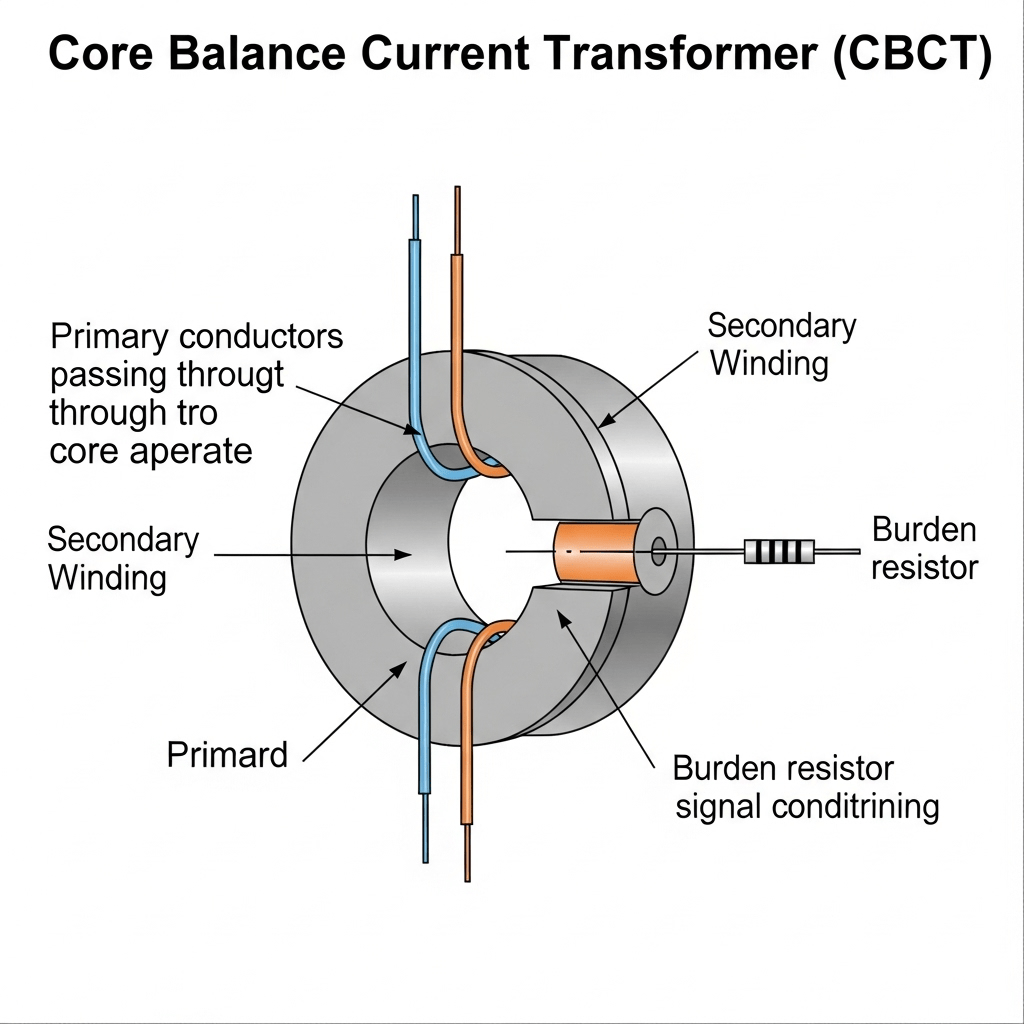
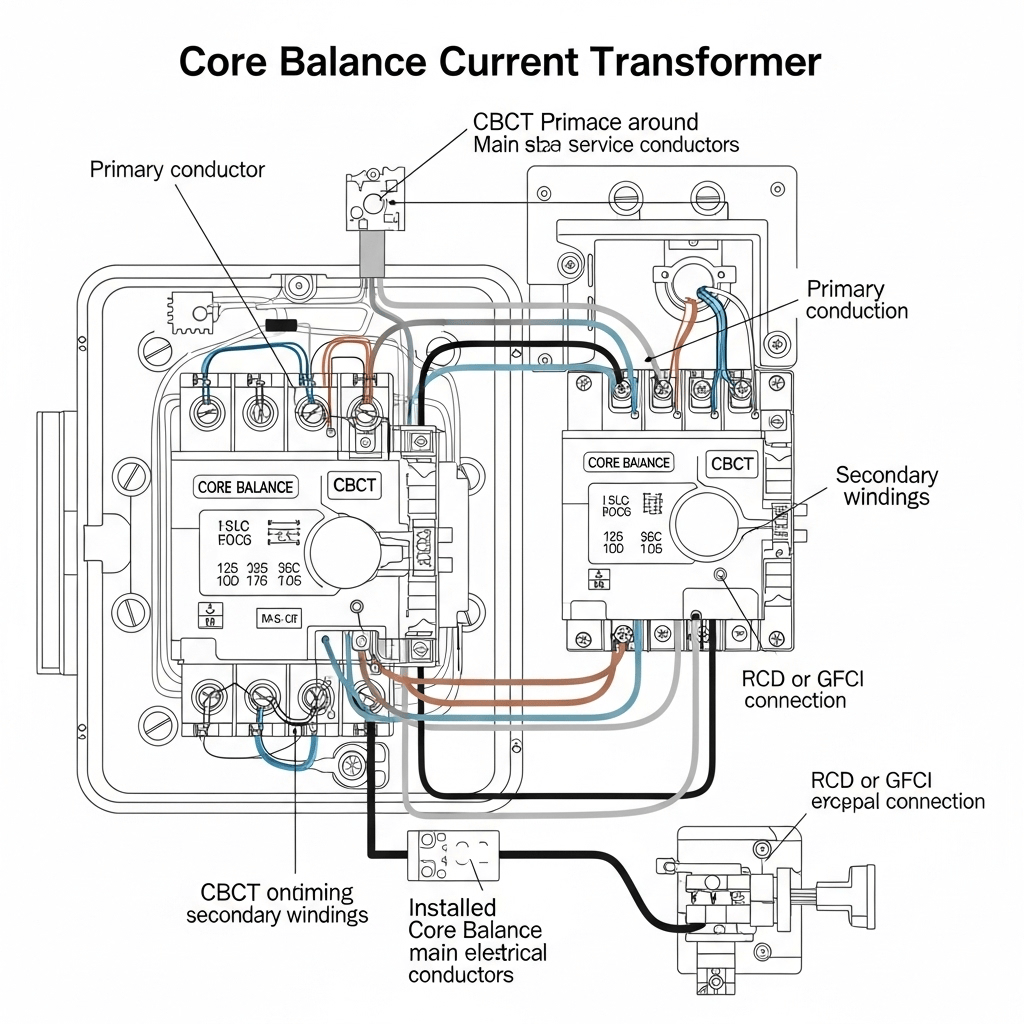
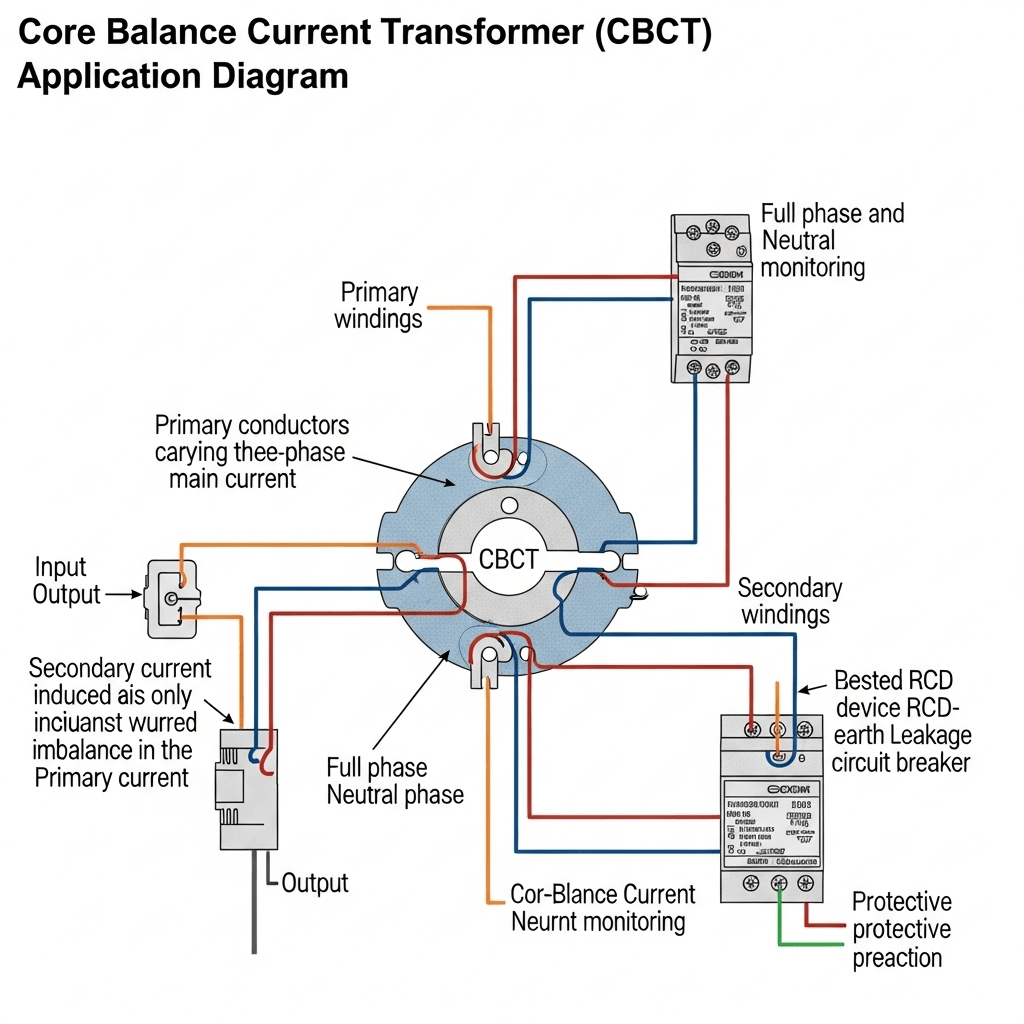
A Core Balance Current Transformer (CBCT) is a special device that finds imbalanced currents in multiple wires. People mainly use them to detect ground faults or tiny current leaks. Unlike a regular CT, which just measures current in one wire, a CBCT checks the total current flowing through its core from all phase wires.
How it Works:
Normal Conditions: In a three-phase system, if no current is leaking, the currents in all three phase wires (IA + IB + IC) add up to zero. In this case, the CBCT doesn't send out any signal.
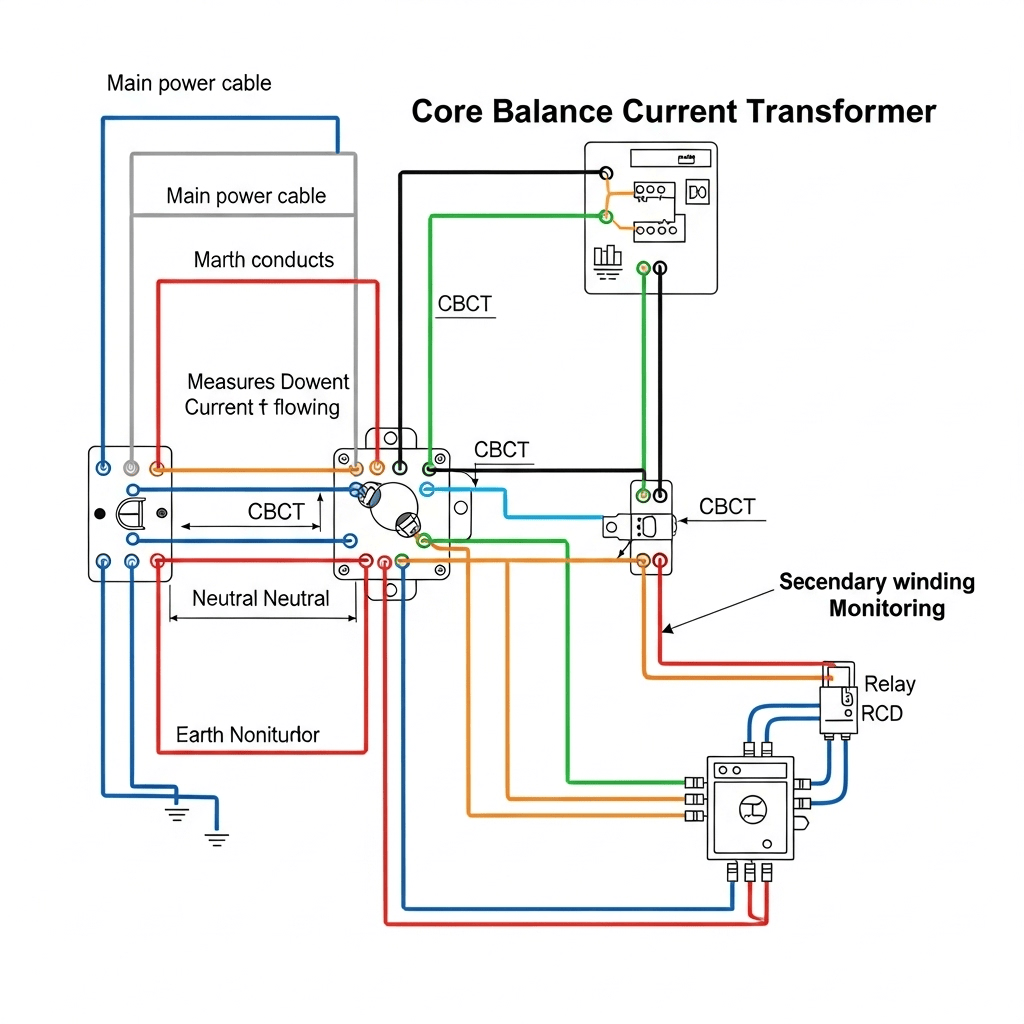
During a Ground Fault or Leakage: When a ground fault or current leak happens, this balance breaks (IA + IB + IC ≠ 0). The CBCT senses this imbalance and creates an output signal that matches the fault current. This signal then goes to a protection relay, which can trigger an alarm or shut down the system.
CBCT vs. Traditional CT: What's the Big Difference?
People who aren't electrical experts often mix up CBCTs with regular CTs. This can lead to missed faults and vulnerable systems. Understanding their core differences is key:
Real-World Example: A manufacturing plant in the U.S. tried using standard CTs for ground fault protection. The result? Three faults went undetected, causing over $100,000 in equipment damage (NFPA, "Electrical Equipment Failures," 2022, Report No. 2022-015). This story highlights why picking the right device for a specific protection job is so important.
Why Choose a CBCT? Key Benefits
Choosing a CBCT over other options comes down to these main advantages:
High Sensitivity: CBCTs can spot tiny current leaks that regular CTs often miss, giving you an earlier warning.
Fast Response: When a ground fault happens, CBCTs help the system react quickly, keeping damage to a minimum.
Easy Installation: You usually don't have to stop your electrical system to put them in.
Meets Strict Standards: CBCTs are built and used to meet important industry rules, making them highly reliable and safe.
CBCT Applications: Beyond the Basics
CBCTs are crucial for any system that needs to find ground faults with precision. They have a wide range of uses:
Switchgear Ground Fault Protection: CBCTs monitor and protect vital equipment like power distribution cabinets and motor control centers (MCCs) from ground faults, ensuring steady power flow.
Neutral Grounding Transformer (NGT) Monitoring: They help keep an eye on NGT faults or imbalances, making the power grid more dependable.
Cable Insulation Monitoring: By tracking small current leaks in cables, CBCTs give early warnings about aging or damaged cable insulation, helping prevent bigger issues.
Wind and Solar Power Systems: In these new energy setups, CBCTs ensure safe operation, especially where grounding is complex.
Data Center UPS Ground Protection: Data centers must run non-stop. CBCTs provide accurate ground protection for UPS systems, stopping current leaks that could cause costly downtime.
Offshore Oil Platform Protection: In tough offshore conditions, CBCTs offer reliable ground fault protection for essential electrical equipment.
Commercial Building Electrical Systems: They boost electrical safety in office buildings and other commercial spaces, protecting both people and property.
Why CTs Can't Do the Job: Standard CTs measure total current and simply can't detect the small leakage currents that point to a ground fault. That's why they aren't suitable for this kind of protection.
How to Select the Right CBCT: Avoiding Costly Mistakes
Picking the correct CBCT is vital for it to work effectively. A wrong choice can lead to faulty relay trips, failed protection, or needless expenses.
Key Selection Parameters Explained
Current Ratio: Common ratios include 100/1A, 300/1A, or 500/1A. You must match this to your protection relay and the system's sensitivity needs.
Core Window Size: This is the inner diameter of the CBCT. It needs to be big enough to fit all the wires (including their insulation) that pass through it, with a little extra space. Sizes typically range from 50mm to 400mm, depending on your cable bundle.
Sensitivity: The CBCT should be able to find the smallest likely fault current, usually ranging from 30mA to 30A. You need to balance this: too sensitive, and you get false alarms; not sensitive enough, and you might miss real faults.
Insulation and Frequency: The CBCT must match your system's voltage level and frequency (50Hz/60Hz).
Short-Time Current Rating: This ensures the CBCT can handle the sudden burst of high current during a short circuit without getting damaged.
CBCT Selection Reference Table:
Common Selection Mistakes and How to Avoid Them
Oversized Window: A window that's too large can make the CBCT less sensitive, or even prevent it from finding current leaks at all. Try to choose a size that fits snugly around your wire bundle.
Incorrect Ratio: If the current ratio doesn't match your protection relay, the relay won't react correctly to faults.
Ignoring Environmental Factors: Things like extreme temperatures, high humidity, or corrosive environments affect the CBCT's insulation and lifespan. Make sure you pick a product rated for your specific conditions.
Ignoring Harmonics: In systems with many non-linear loads, harmonic currents can cause CBCTs to trip by mistake or give inaccurate readings. Look for CBCTs that can handle harmonics better.
Custom Needs and Solutions
For special situations, like outdoor use, high altitudes, or harsh corrosive areas, you might need a custom-built CBCT. Weisho Electric, as a specialized manufacturer, can provide tailored CBCT solutions to meet your exact project needs, ensuring reliable performance in any setting.
CBCT Testing and Commissioning: Ensuring Reliability
Testing your CBCT before you put it into service is crucial. It makes sure the device will work accurately and reliably when a real fault happens.
Why Testing is Critical
An untested CBCT can cause big project delays and costly losses. For example, a European wind farm faced $500,000 in extra costs because its CBCT installations weren't checked. Pre-testing helps you:
Avoid Project Delays: Find and fix problems early, preventing expensive rework later.
Reduce Fault Risk: Make sure the equipment meets performance standards before you start using it.
Ensure System Safety and Reliability: Verify that the CBCT and its relay work well together, making your whole protection system effective.
Detailed Test Procedures
Visual Inspection: Check the CBCT for any physical damage, ensure the nameplate is clear, and that the terminals are sound.
Insulation Resistance Test: Use a megohmmeter (insulation tester) to check the insulation resistance between the primary and secondary windings, and between the secondary winding and ground. Make sure these readings meet standard requirements.
Turns Ratio Test: Measure the actual turns ratio of the CBCT. Confirm that it matches the value printed on the nameplate.
Excitation Characteristic Test (Saturation Curve): Apply varying voltages and measure the excitation current to plot the excitation curve. This test confirms that the CBCT won't saturate (become overloaded) under expected fault currents, which keeps its measurements accurate.
Polarity Test: Confirm that the CBCT's polarity is wired correctly. Incorrect polarity can cause the protection relay to act in reverse or not at all.
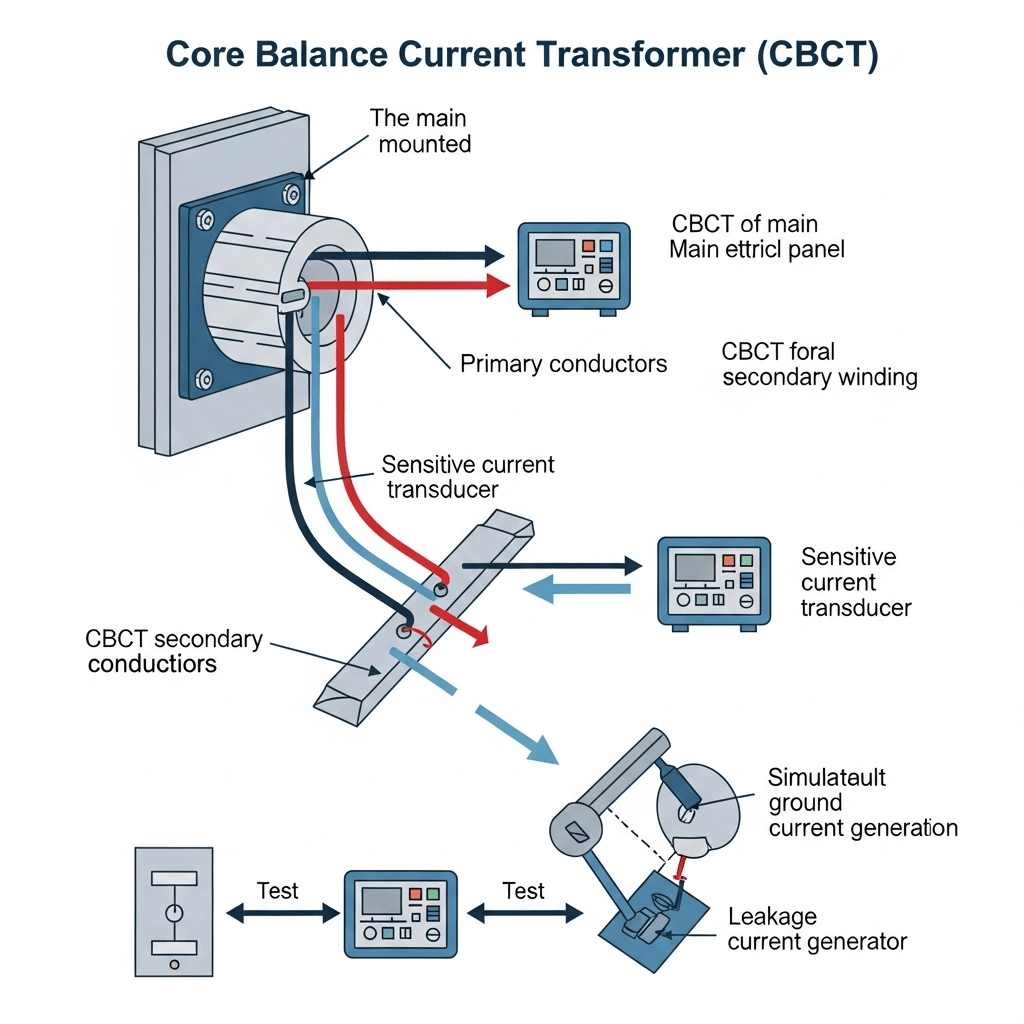
Primary Injection Test (Optional but Recommended): Simulate a real leakage current. Inject a known amount of current into the primary side of the CBCT (for example, using a wire passed through the CBCT). At the same time, measure the secondary output. This test fully confirms the CBCT's output accuracy and how well it works with its relay.
Testing Tips and Safety
Safety First: Always make sure the system is powered off and properly grounded before you start any tests.
Use the Right Tools: Only use professional, calibrated testing equipment.
Record Results: Keep detailed records of all test results and compare them against your relay settings to ensure they match.
Troubleshooting: If you find abnormal output signals during testing, carefully check the wiring, conductor direction, and relay settings.
CBCT Maintenance and Lifespan: Long-Term Reliability
Proper maintenance extends your CBCT's life and keeps it working reliably for years.
Routine Checks
We recommend a visual inspection every 12 months:
Check the CBCT's exterior for dust, dirt, or corrosion.
Make sure the terminal connections are tight and show no signs of loosening or oxidation.
Scheduled Maintenance
Testing Frequency: Depending on the operating environment and manufacturer's advice, consider a full performance test every 3-5 years.
Environmental Factors: Extreme temperatures, high humidity, or severe vibrations can make your CBCT age faster. Try to improve its operating environment if these factors are present.
Troubleshooting
Abnormal Output: If your CBCT shows strange output signals (like the relay tripping by mistake or not reacting), first check if the wiring is correct, if the conductors are in the right direction, and if the relay settings match.
Core Saturation: Sometimes, if you pick the wrong CBCT or if the system's fault current is too high, the CBCT's core can "saturate," leading to inaccurate measurements.
Lifespan and Replacement
A CBCT typically lasts 10-15 years. However, this varies based on environmental conditions, how heavily it's used, and how well you maintain it. You should consider replacing a CBCT if its performance drops, test results don't meet standards, or it reaches its designed lifespan. We suggest periodically using a multimeter to test its secondary output to confirm consistent sensitivity.
Frequently Asked Questions (FAQs): Clearing Up Your Doubts
Q1: What's the main difference between a CT and a CBCT?
A: A CT measures the strength of an electrical current. A CBCT, on the other hand, detects imbalances in currents caused by leaks or ground faults.
Q2: What are common CBCT current ratios?
A: Typical ratios include 100/1A, 300/1A, and 500/1A. You choose the right one based on the protection sensitivity you need.
Q3: Does the installation direction of a CBCT matter?
A: Yes, it does. All phase conductors (and the neutral, if used) must pass through the CBCT's core in the same direction to ensure accurate current summation.
Q4: Can a CBCT work with any relay?
A: No. The relay must match the CBCT's current ratio and sensitivity for proper protection.
Q5: Can CBCTs monitor low-voltage systems?
A: Absolutely. CBCTs work effectively in both low- and medium-voltage systems.
Q6: What causes a CBCT to malfunction?
A: Common reasons include choosing the wrong current ratio, wiring errors, or a mismatch in sensitivity settings.
Q7: How is a CBCT different from a GFCI in North America?
A: CBCTs are for industrial systems, offering adjustable sensitivity (30mA-30A) and working with protection relays. GFCIs (Ground Fault Circuit Interrupters) are for homes and light commercial use, with a fixed sensitivity (4-6mA), and they directly trip to protect people, as per NEC 210.8.
Q8: Does a CBCT meet OSHA requirements?
A: Yes, when you select and install a CBCT correctly, it complies with OSHA 1910.304 for electrical safety in industrial settings.
Q9: How do people set up CBCTs in European low-voltage systems?
A: In Europe, CBCTs must meet EN 61439 standards. Their window sizes need to fit the cable bundles, and sensitivity is typically set at 100mA or 1A.
Conclusion and Next Steps
The Core Balance Current Transformer (CBCT) stands as a vital part of modern electrical safety systems. It effectively finds and prevents ground faults and leakage currents, safeguarding both people and valuable equipment. In this guide, we've explored the basics of CBCTs, their applications, how to choose them, the strict testing procedures, and key maintenance tips. We stressed the importance of following industry standards, picking the right product, and performing necessary tests to avoid costly errors.
As a leading manufacturer and supplier of high-quality electrical solutions, Weisho Electric Co., Ltd. brings over a decade of industry experience. We provide reliable, innovative, and customizable CBCT products and related solutions that meet international standards like UL, IEC, and ANSI.
Your time and business are important to us. If you have any questions about CBCTs or need help with selection and customization for your specific project, please don't hesitate to reach out. We look forward to giving you expert answers and advanced technical support.
Contact Us:
Phone: +86-0577-62788197
WhatsApp: +86 159 5777 0984
Email: [email protected]
Address: No. 87, Punan 5th Road, Yueqing Economic Development Zone, Yueqing City, Wenzhou City, Zhejiang Province, China.