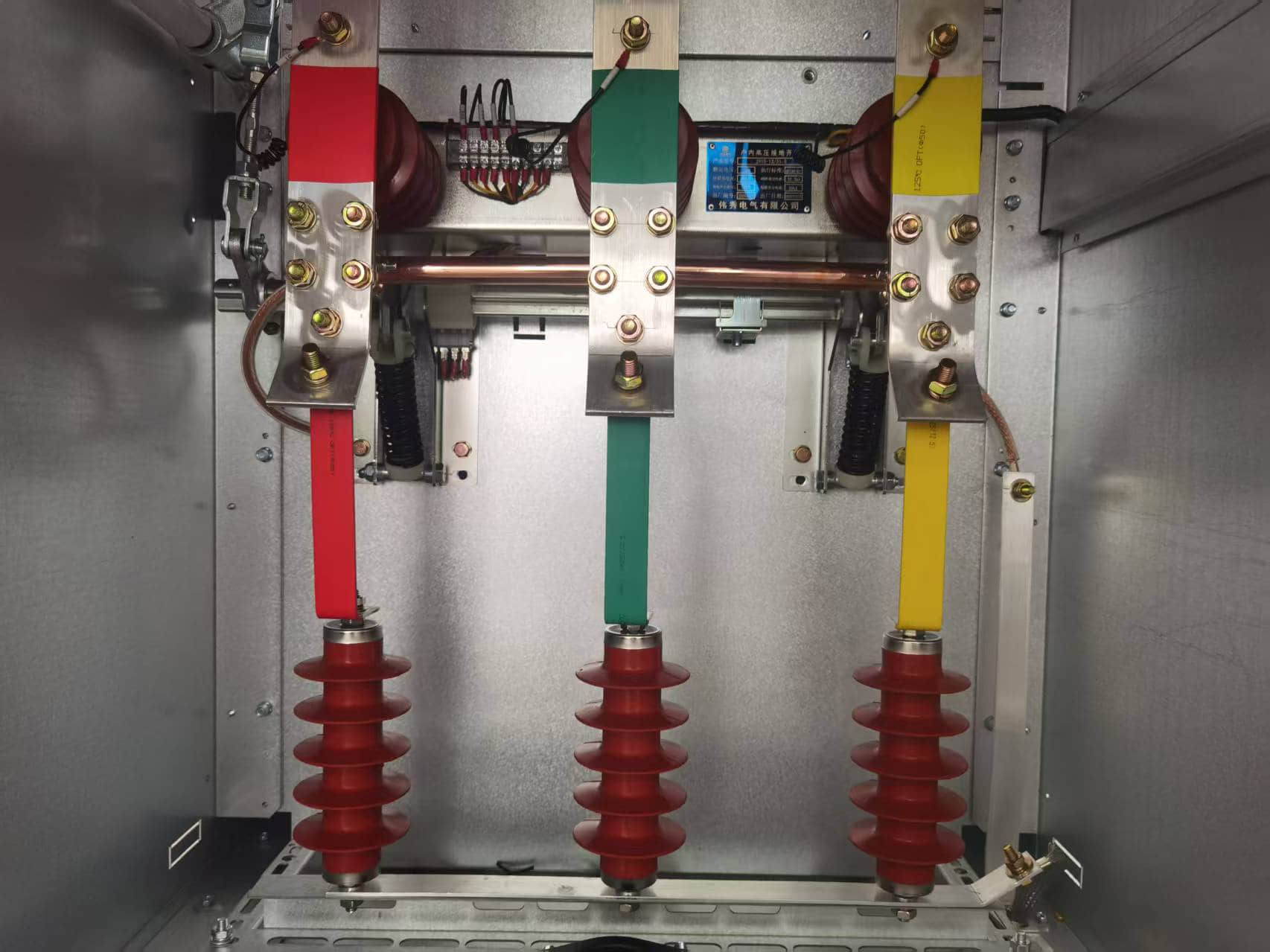

Your single-line diagram calls for a 630A breaker on an 11kV feeder, and three quotes sit on the desk with near-identical headline ratings. The price spread is wide, the datasheets are not written the same way, and the panel is already scheduled. A wrong pick with an 11kV vacuum circuit breaker shows up years later, as a failed fault clear, a mismatched truck, or a spares problem.
An 11kV 630A vacuum circuit breaker is a medium-voltage switching device that carries 630 A continuously and interrupts fault current in a sealed vacuum interrupter. It suits feeders, transformer circuits and moderate-load incomers. Choose it by fault level first, then insulation, installation, mechanism and relay fit.
What Does a 630A Rating Actually Tell You About an 11kV Breaker?
The 630A figure is the rated normal current: what the breaker can carry continuously without exceeding temperature-rise limits, at stated ambient conditions. That is all. It says nothing about whether the device can clear a fault on your network.
Many buyers asking what the rated current of an 11kV VCB means stop at this number, and that is where quotes start to look falsely identical. Two breakers can both carry 630 A and differ sharply in breaking capacity, endurance and insulation level.
The standard reference ambient is usually 40 °C maximum, with altitude up to 1000 m. Install in a hot switchroom, inside a poorly ventilated panel or at high altitude, and the usable continuous current falls below nameplate. Ask for the temperature-rise basis, and check how your panel's busbar and contact arrangement affect it.

Load profile matters too. A feeder running at 70% of 630 A all day is a different duty from one that peaks briefly. Motor starting and transformer inrush add transient stresses that the rated current does not capture.
Treat 630A as the entry ticket. The ratings that decide fit are breaking current, short-time withstand, insulation level and operating duty, and they are covered in the sections that follow.
How to Choose an 11kV Vacuum Circuit Breaker: The Decision Order That Works
The sound approach to how to choose vacuum circuit breaker is to rank criteria by the consequence of getting each one wrong. A wrong fault rating can end in a catastrophic failure. A wrong coil voltage ends in a delayed commissioning day.
1. Fault level. Calculate the prospective short-circuit current at the busbar, add a growth margin, and select the breaking rating above it. This is the one error that cannot be tolerated.
2. System and insulation fit. Confirm rated voltage, power-frequency withstand and lightning impulse level against your network, altitude and pollution class.
3. Installation environment. Decide between an indoor truck in a switchgear panel and an outdoor unit. The choice drives enclosure, insulation and maintenance access.
4. Mechanism and contacts. Compare mechanical and electrical endurance classes against how often you expect to operate the breaker and how many faults it may clear.
5. Protection coordination. Verify trip coil voltage, opening time, reclosing duty and interlocks against the relay scheme.
6. Lifecycle cost. Only now weigh price, spares, service support and any policy on SF6-free designs.
Tip: If two quotes differ by a small amount, the cheaper one rarely wins on lifecycle cost once endurance class and spares terms are compared. Use the first five criteria as pass/fail gates, then compare price.
Short-Circuit Breaking Current: Matching 25 kA or 31.5 kA to Your Fault Level
Select a breaking rating above the calculated prospective fault current at the busbar, and include future grid growth, not just today's value. A utility upgrade, a new generator or an added transformer can raise fault levels well past the original study.
For 12kV-class breakers, 25 kA and 31.5 kA are common standard ratings, with 20 kA and 40 kA also available. If your study shows 22 kA today and the network operator expects reinforcement, a 25 kA unit leaves little room. A 31.5 kA unit gives margin, often for a modest cost difference.
Do not stop at the breaking figure. Check three related values together:
Short-time withstand current, typically rated for 3 s, which the breaker must carry while a downstream protection device clears a fault.
Peak making current, usually about 2.5 times the breaking current at 50 Hz, which is the asymmetrical current the breaker can close onto.
Rated operating sequence, which defines how many fault operations it can perform in succession.
The panel and busbars must be rated to match. A 31.5 kA breaker in a panel type-tested only to 25 kA does not deliver a 31.5 kA installation. The lowest-rated element sets the real limit.
Over-specifying has a cost, but a small one. Under-specifying has a cost measured in equipment loss and safety exposure. Where the study is uncertain, step up one rating.
Rated Voltage and Insulation Level: Why BIL Matters on an 11kV System
Rated voltage and insulation level look like one topic but answer different questions. Rated voltage is the maximum system voltage the device is built for. Insulation level describes how well it survives transient overvoltages from switching and lightning.
A 12kV rated-voltage breaker is the usual class for 11kV networks, because 12 kV is the highest system voltage for equipment in that class under IEC practice. The common insulation levels for 12 kV equipment are 28 kV power-frequency withstand and 75 kV lightning impulse withstand, with a higher 95 kV impulse option for more exposed sites.

BIL, the basic impulse insulation level, is the term North American practice uses for the lightning impulse withstand voltage. IEC documents state the same idea as rated lightning impulse withstand voltage. A datasheet that mentions one and omits the other is not necessarily hiding anything, but you should ask for the figure in the form your specification uses.
Three site conditions push you toward the higher level. Overhead-line connections expose the equipment to surges. Altitude above 1000 m reduces air insulation strength and requires correction. Heavy pollution or humidity raises creepage requirements, which affects bushings and insulators on outdoor units.
If your feeder is cable-connected and the switchroom is clean and dry, the standard level is generally adequate. Where overhead lines feed the board, specify the higher level and confirm surge arrester placement.
Indoor vs Outdoor 11kV Vacuum Breaker: Which Installation Fits Your Site?
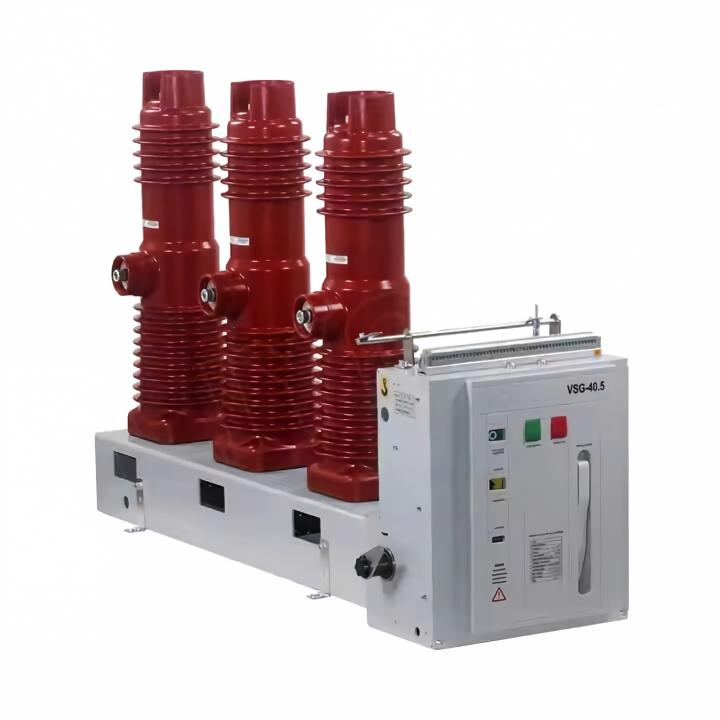
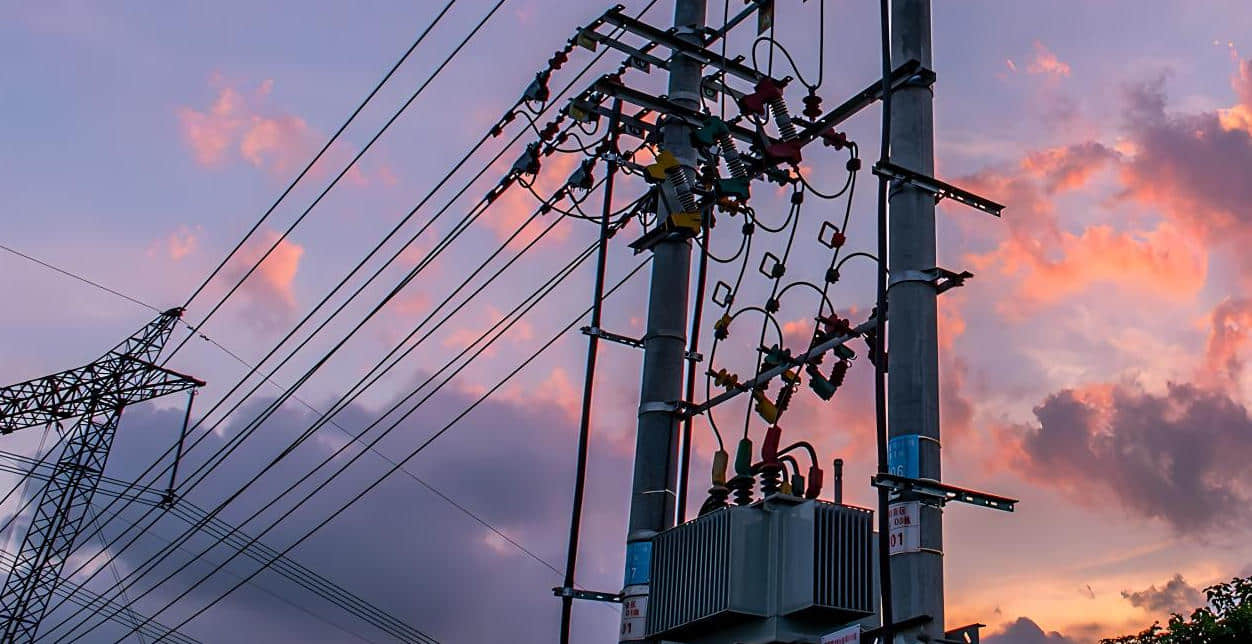
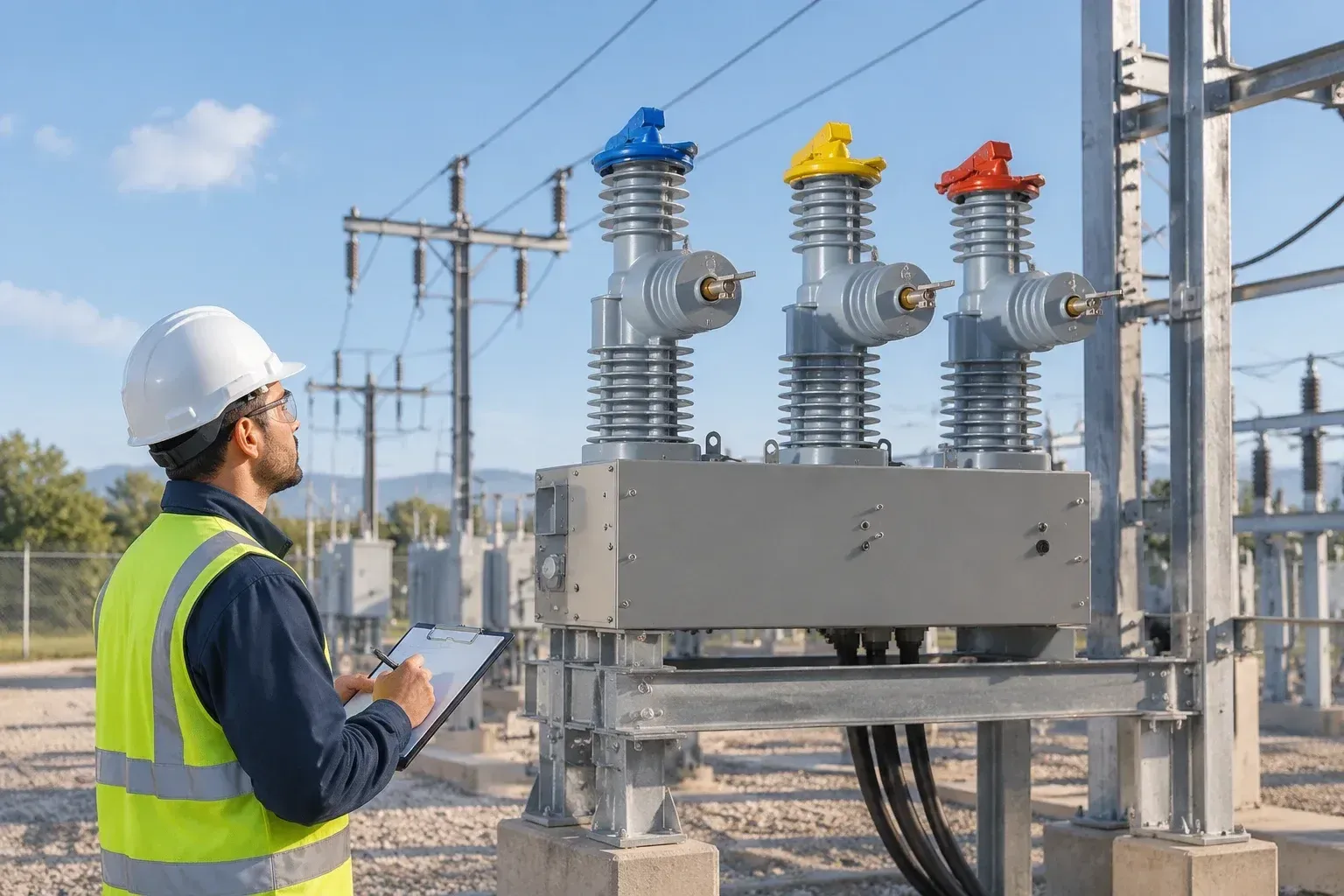
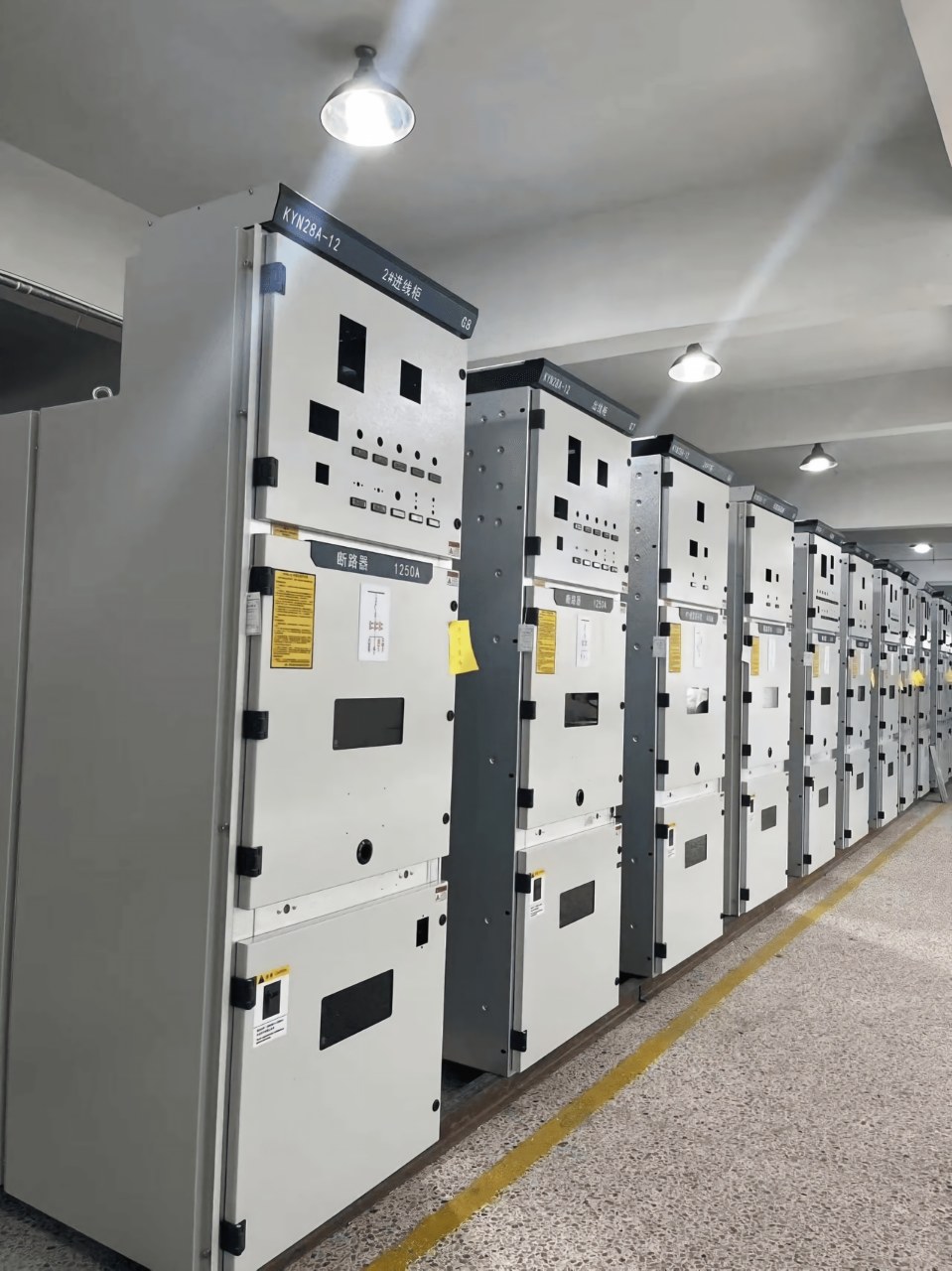
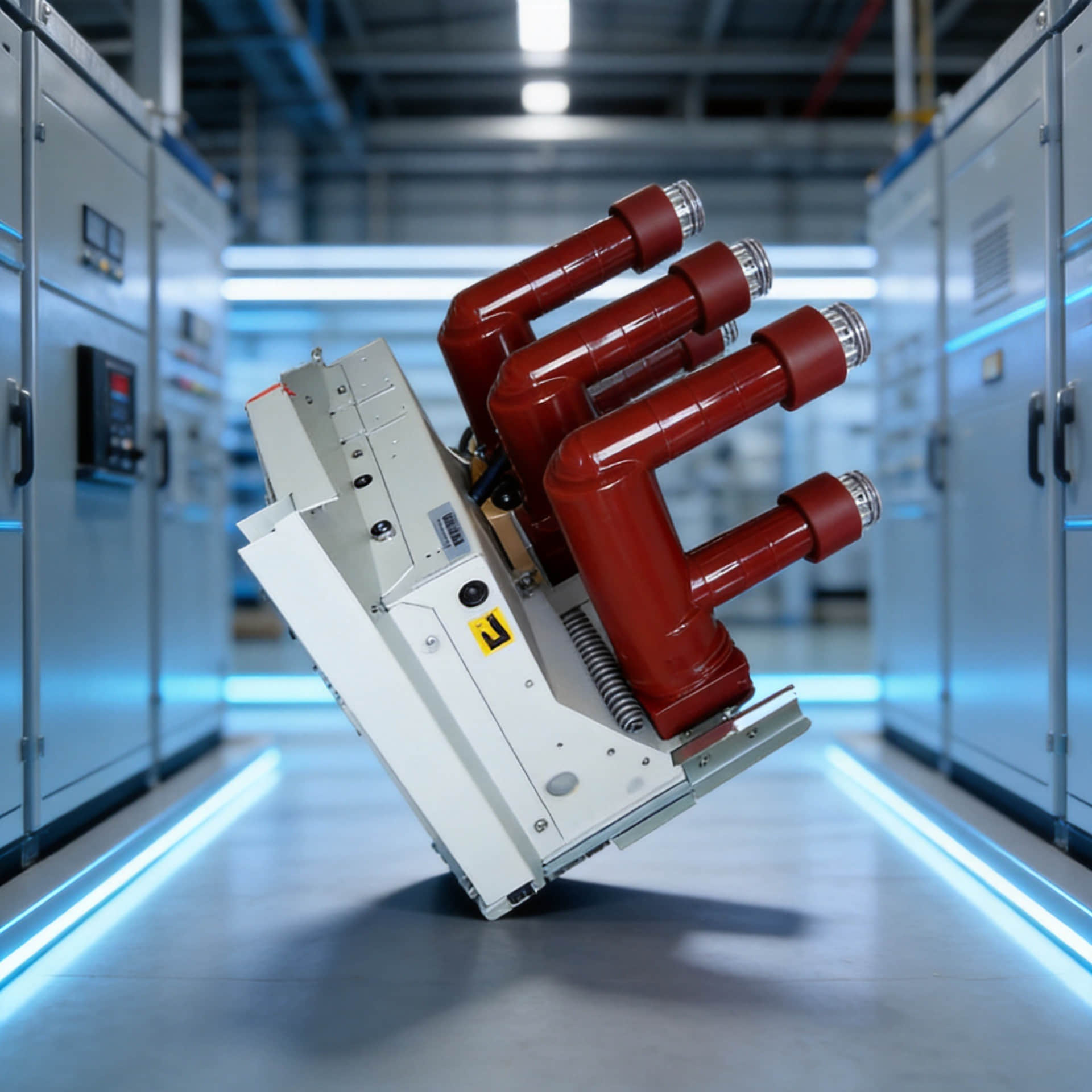
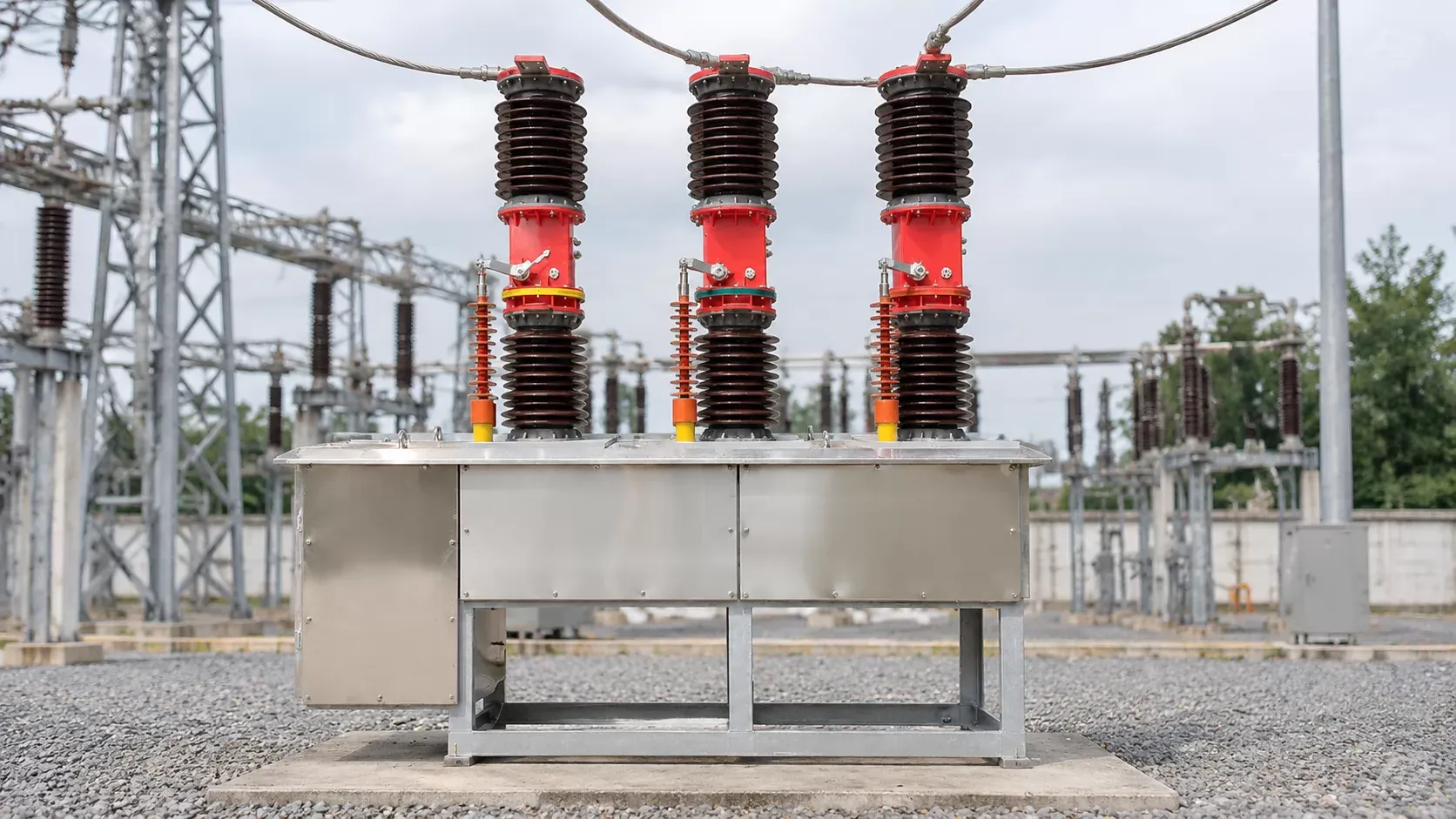
Comparing an indoor vs outdoor 11kV vacuum breaker comes down to whether you have a building and how exposed the line is. Indoor trucks in switchgear panels suit substations and plants with a switchroom. Outdoor pole- or pad-mounted units suit overhead lines and remote sites, with weather, pollution and maintenance trade-offs.

Outdoor units divide further into recloser-style devices, which carry integrated controls and automatic reclosing for line protection, and outdoor circuit breakers installed in a yard.
| Attribute | Indoor panel (VCB truck) | Outdoor recloser-style | Outdoor circuit breaker |
|---|---|---|---|
| Environment | Controlled switchroom | Exposed line or pole | Open yard |
| Footprint | Compact, within panel lineup | Very small, on pole | Larger, needs clearances |
| Maintenance access | Easy, withdrawable truck | Limited, often by lift | Moderate, ground-level |
| Insulation | Air or solid insulation inside panel | Solid or polymer housing | Porcelain or polymer bushings |
| Typical use | Substations, industrial plants | Overhead feeders, rural lines | Utility substations, remote sites |
The takeaway: choose indoor panels wherever a building is available, because withdrawable trucks make maintenance safer and faster.
Go outdoor when a switchroom is impractical or the point of protection sits on the line itself. Budget for pollution-class insulation and a more demanding inspection routine.
Which Mechanism and Contact Technology Last Longest in Service?
The common assumption is that a bigger endurance number on the datasheet means a longer-lived breaker. It does not, unless you know what the number refers to and what it was tested against.
The usual baseline is a spring-operated mechanism with copper-chromium (CuCr) contacts inside the vacuum interrupter. The spring-operated mechanism stores energy in a charged spring, released to close or open the contacts. It is simple, proven and can be recharged by hand if the motor supply fails. CuCr contacts resist welding and erosion, and give low chopping current, which limits switching overvoltages.

IEC 62271-100 defines mechanical endurance classes: M1 for 2000 operations and M2 for 10,000. Electrical endurance is classed E1 or E2, where E2 means the breaker can perform its rated short-circuit operations without maintenance of the interrupter. Both matter, but they measure different things.
Mechanical endurance counts no-load operations. Electrical endurance relates to current interruption, which wears contacts. A feeder breaker that operates twice a year needs less mechanical endurance than one switching a capacitor bank daily.
Magnetic actuator mechanisms exist and offer fewer moving parts, but the installed base and spare availability are narrower. For most distribution duty, a spring mechanism is the lower-risk choice.
Tip: Ask the supplier for the endurance class (M1 or M2, E1 or E2) and for details of the operation counter, including whether it is mechanical and whether it can be read with the truck racked in.
Can the Breaker Work With Your Protection Relays and Auxiliary Supply?
A common commissioning scene: the breaker arrives, the panel is wired, and the first secondary injection test shows the trip coil is 110 V DC while the station battery is 48 V. Or the relay expects a total clearing time that the mechanism cannot deliver. The delay is small in cost terms but large in schedule terms.
Protection relay coordination depends on several breaker attributes. Check each against the scheme before ordering.
First, the auxiliary voltages: trip coil, closing coil and spring-charging motor. Typical options are 24, 48, 110 and 220 V DC, and 110 or 230 V AC for the motor. Specify them from the station supply, not by assumption.
Second, operating times. Opening time is typically in the range of 30 to 60 ms, and the total break time adds arcing time. Selectivity studies use these figures, so take them from the type test report for the exact breaker.
Third, reclosing duty. Overhead feeders often need auto-reclosing, and the rated operating sequence must support it. O-0.3s-CO-3min-CO is a common sequence in IEC practice, and O-CO-CO variants appear in some specifications. Confirm which one the breaker is rated for.
Fourth, interlocking. The truck, earthing switch and panel door interlocks must work together. Also confirm auxiliary contact count, as relays, SCADA and interlocks each consume contacts and spare ones are often short.
Get the relay settings engineer and the breaker supplier to review the same data sheet before the order is placed.
Which Standards and Type Tests Should the Supplier Prove?
The pitfall: a datasheet that states "designed to IEC" without naming the part, edition or test laboratory. It sounds like compliance, but it proves nothing you can check.
The governing standard for the breaker is IEC 62271-100, high-voltage alternating-current circuit-breakers. For the complete panel, look for IEC 62271-200, which covers AC metal-enclosed switchgear and controlgear for rated voltages above 1 kV and up to and including 52 kV. IEC 62271-1 sets the common specifications for high-voltage switchgear. Some markets also reference national standards such as GB/T or ANSI/IEEE C37 series, and your specification should say which applies.
Type tests include dielectric tests, temperature rise, short-circuit making and breaking, short-time withstand, mechanical endurance and, for panels, internal arc classification. They should be carried out by an accredited laboratory, and the report should cover the same breaker type and rating you are buying, not a similar one.
Routine tests are different. They are performed on each unit before shipment and typically include power-frequency withstand, main circuit resistance, mechanical operation checks and auxiliary circuit tests. Ask for the routine test record for your serial number.
Check the report date and the tested configuration. A report for a design that has since changed in interrupter supplier, mechanism or insulation may no longer represent what ships. For solid-insulated or SF6-free designs, confirm the type tests were done on that specific insulation system.
Common Selection Mistakes and a Pre-Order Checklist
Most errors come from three habits: sizing to today's fault level, ignoring truck-panel compatibility, and comparing price without the endurance and spares terms. Any good 630A VCB selection guide should name them, and none is hard to avoid once named.
Truck compatibility deserves emphasis. A breaker truck is built for a particular panel design, with specific dimensions, shutters, interlocks and racking mechanism. A truck that is electrically identical but dimensionally different will not fit, or will fit without the safety interlocks working. When replacing a unit in an existing lineup, confirm the panel manufacturer and model.
Work through this list before issuing the purchase order:
1. Confirm the calculated fault level and a growth margin, then match the breaking current.
2. Verify rated voltage, power-frequency withstand and lightning impulse level against site conditions.
3. Check panel dimensions, truck type and interlocks against the existing or planned lineup.
4. Specify trip coil, closing coil and motor voltages from the station supply.
5. Review the relay interface, auxiliary contacts and reclosing sequence with the protection engineer.
6. Request the mechanical and electrical endurance class in writing.
7. Obtain type test reports from an accredited laboratory and the routine test record for your unit.
8. Agree spares, service support and expected interrupter life before accepting the quote.
9. Ask for an SF6-free, solid-insulation option where site or corporate policy requires it.
If every line is answered in writing, the price comparison becomes meaningful.
FAQ
What is the rated current of an 11kV VCB?
Common ratings are 630 A, 1250 A, 1600 A, 2000 A and above. The rated current is the continuous carrying capacity at stated ambient conditions. Pick it from your load with some margin, then check the breaking rating separately.
Is 630A enough for a main incomer?
Only for smaller boards. A 630A incomer supports roughly 12 MVA at 11 kV, so larger transformers need 1250 A or more. Size from the transformer rating plus planned growth, not from the feeders.
Can a 630A breaker replace an old oil or SF6 unit?
Often yes, but only if the truck fits the panel. Check dimensions, interlocks, coil voltages and fault rating. Retrofit kits exist for many older panel types, so confirm the exact panel model first.
How often does a vacuum interrupter need replacing?
Rarely. Interrupters typically last the life of the breaker under normal duty, often decades. Replacement is driven by fault operations and vacuum integrity, which a high-potential test across open contacts can check.
What is the difference between 25 kA and 31.5 kA versions?
The 31.5 kA version interrupts a higher fault current and withstands greater thermal and mechanical stress. It suits stronger grids or sites expecting growth. Choose it only if the panel and busbars carry the same rating.