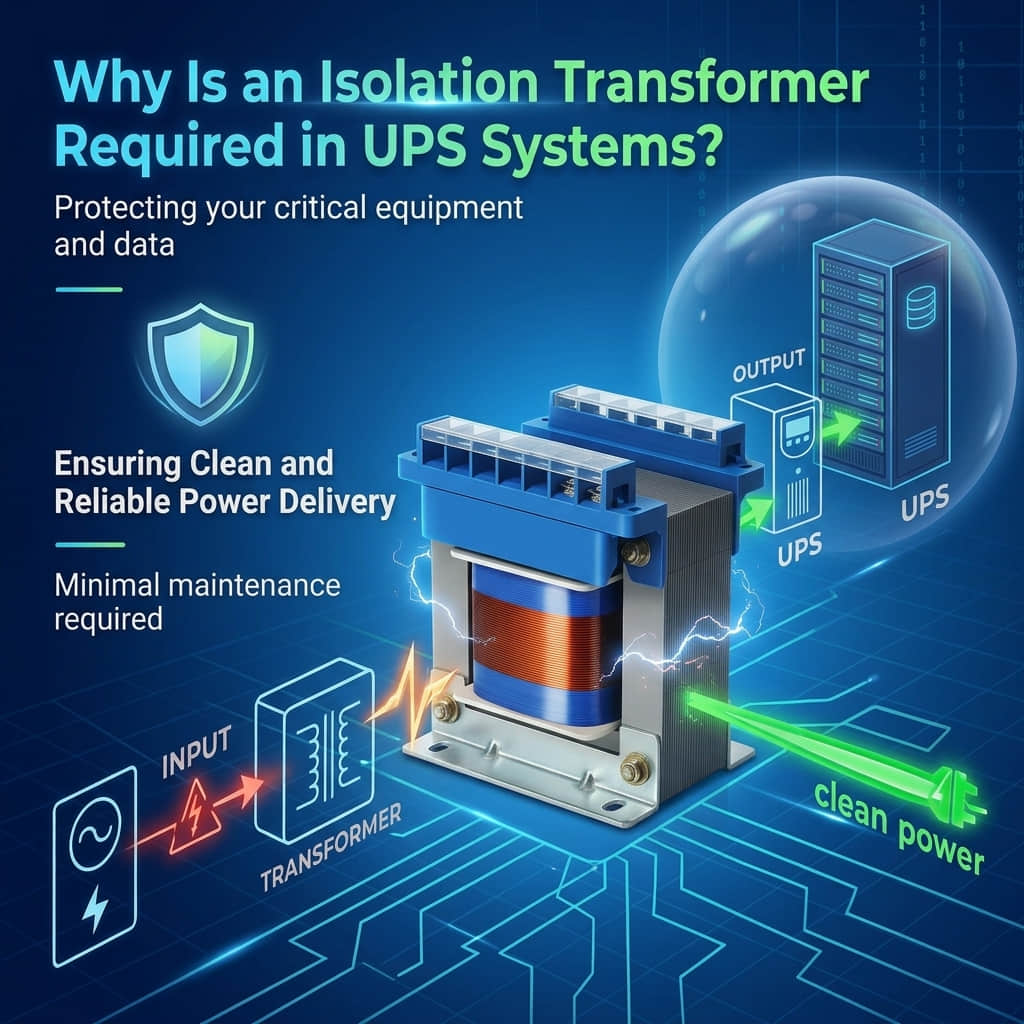
In real projects, the question is rarely whether a UPS can provide backup power. The harder question is whether that power is clean enough, safe enough, and structurally suitable enough for the load connected to it.
That is exactly where the Isolation Transformer becomes critical. In many installations, especially with high-frequency transformerless UPS systems, the UPS can maintain output during an outage but still allow common-mode noise, grounding problems, harmonics, or neutral instability to reach sensitive equipment.
For office printers and standard desktop PCs, that may not matter much. For servers, imaging equipment, PLC panels, test instruments, and imported machines with strict neutral-to-ground limits, it matters a great deal.
This is why engineers still specify isolation transformers in UPS systems for demanding environments. The goal is not nostalgia or overdesign. The goal is predictable electrical behavior under real-world conditions.
What Problem Does an Isolation Transformer Solve in a UPS?
A transformerless high-frequency UPS is efficient and compact, but it does not always provide full electrical separation between the utility side and the load side. In practical terms, this means some disturbances can still couple through the system.
These disturbances include common-mode noise, surge energy, switching transients, grounding potential differences, and harmonic-related interference from upstream equipment such as variable frequency drives, welders, compressors, and unstable utility feeders.
In the field, the symptoms are often misdiagnosed. Engineers may see instrument drift, intermittent communication loss, unexplained PLC alarms, false sensor triggering, data corruption, or imported equipment that simply refuses to boot.
The UPS itself is not necessarily defective. The issue is that backup power and power quality are not always the same thing.
An isolation transformer addresses that gap by breaking the conductive path that allows many of these unwanted disturbances to travel from source to load.
What Is an Isolation Transformer in a UPS System?
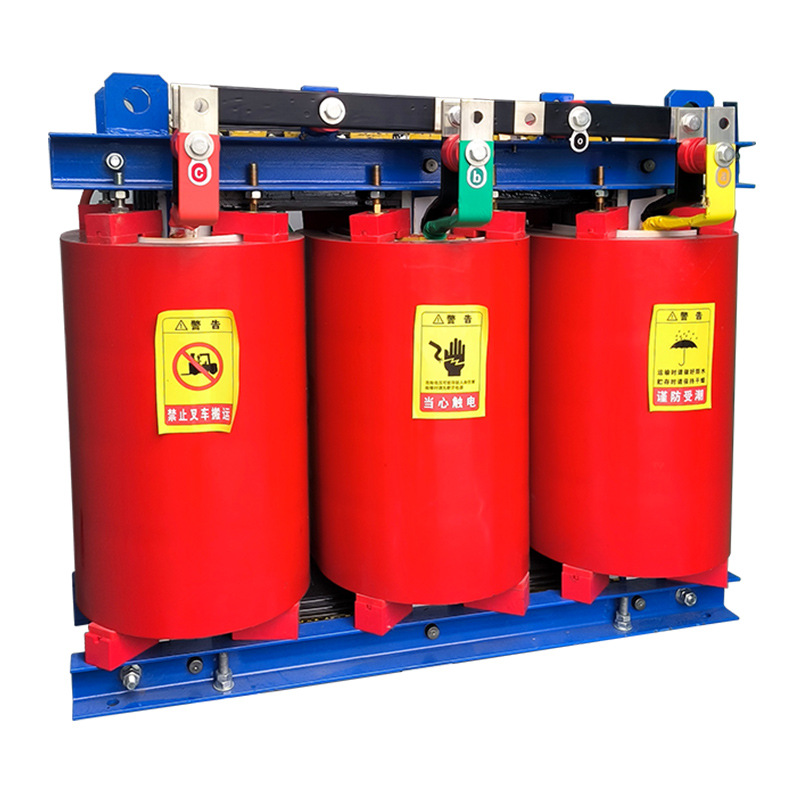
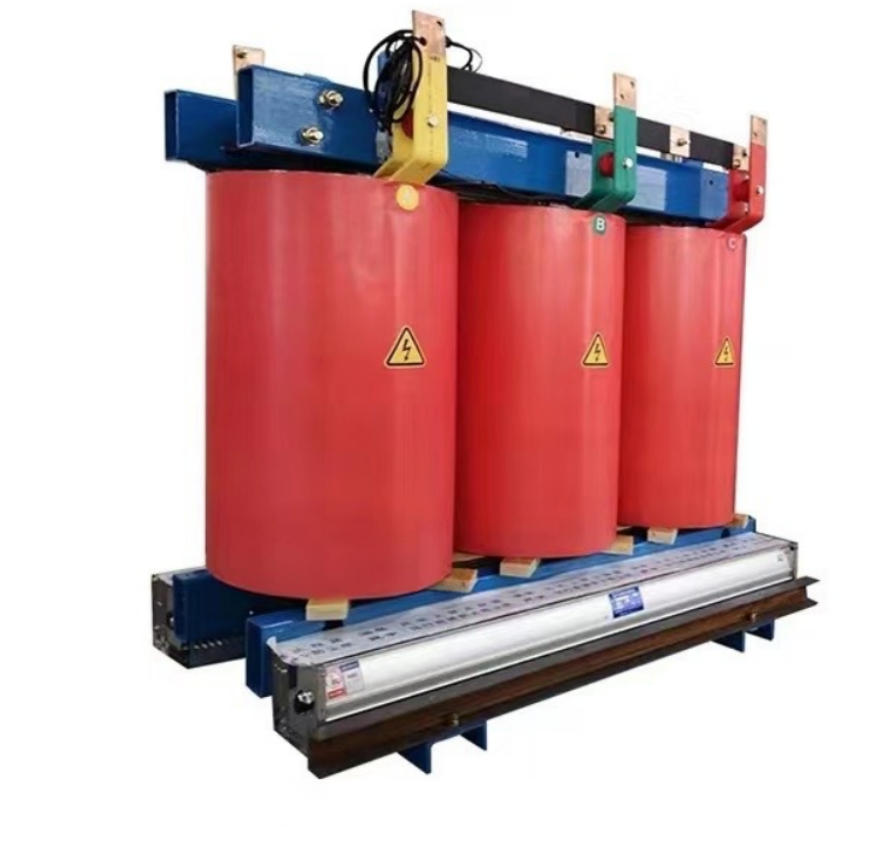
An Isolation Transformer is a transformer in which the primary winding and secondary winding are electrically separated. Power is transferred magnetically rather than through a direct conductive connection.
This is the basis of galvanic isolation in UPS systems. The utility-side circuit and the load-side circuit are not electrically continuous, which changes how noise, faults, leakage currents, and grounding references behave.
That separation is not theoretical. It has direct consequences for system performance.
It interrupts many common-mode interference paths.
It helps eliminate ground-loop circulation.
It allows a new neutral point to be created on the secondary side.
It can step voltage up or down to match the load.
It adds useful impedance that improves short-circuit and surge behavior.
In a well-designed UPS output scheme, the transformer becomes more than an accessory. It becomes the electrical boundary that defines a cleaner, safer, independently derived source for sensitive loads.
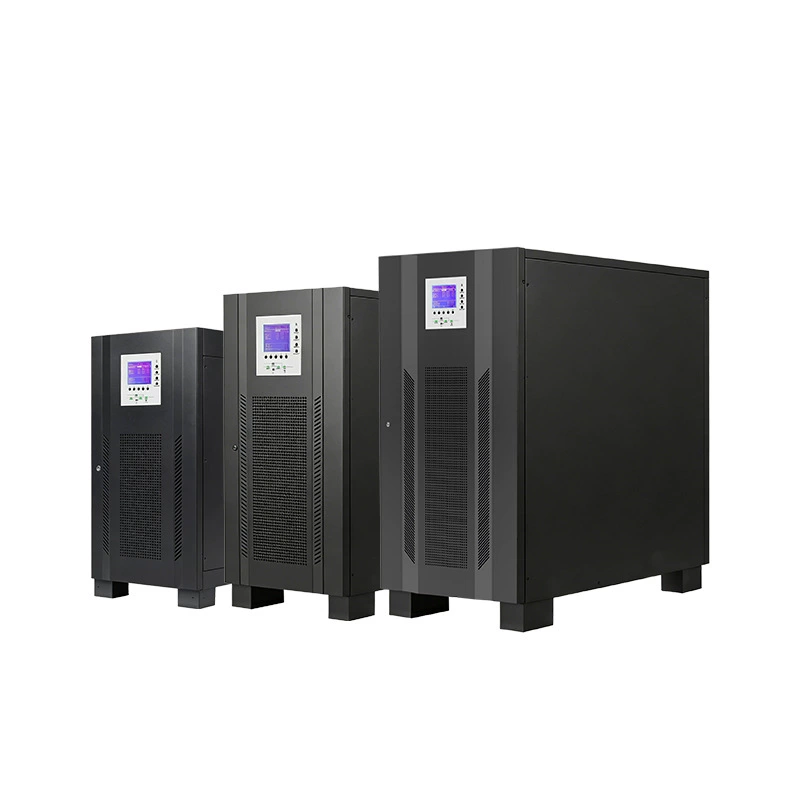
Why Is an Isolation Transformer Required in UPS Systems? Key Benefits
There are six core reasons isolation transformers are commonly used with UPS systems in industrial, medical, server room, and poor-grid environments.
Electrical isolation to block common-mode noise and ground-loop interference.
Lower neutral-to-ground voltage for precision equipment with strict startup requirements.
Improved personnel and equipment safety by containing faults and limiting reverse backfeed effects.
Neutral creation and grounding architecture through Delta-Wye configurations and TN-S implementation.
Voltage conversion flexibility for mixed domestic and imported equipment.
Better surge, short-circuit, and disturbance tolerance in harsh power environments.
Below, each benefit is explained in the way engineers actually encounter it on site.
Electrical noise reduction in uninterruptible power supply
The most immediate and most misunderstood benefit is electrical noise reduction in uninterruptible power supply systems.
In non-isolated UPS topologies, there can be capacitive coupling between input and output sections. That coupling allows high-frequency noise from the utility side, switching events, nearby drives, and surge activity to appear at the output side.
For ordinary resistive loads, the effect may be negligible. For control electronics and low-level signal devices, it can be disruptive.
Consider a plant with multiple VFDs operating on the same distribution bus as a UPS-fed PLC rack. Even when the UPS output voltage remains within tolerance, high-frequency interference can still propagate through the system and create nuisance trips, analog drift, or communication errors on Modbus and Ethernet-based controls.
An isolation transformer breaks this conductive interference path. Because the primary and secondary are separated, the route for common-mode transmission is dramatically reduced.
This also helps eliminate ground-loop current between different grounding points. Ground loops are notorious in mixed installations where UPS loads, IT racks, building steel, shield drains, and remote panels reference earth at slightly different potentials.
Once a secondary-side neutral is properly established and bonded, the output can become much cleaner and more stable for sensitive loads such as:
Servers and storage systems
Medical analyzers and monitoring devices
PLC and DCS cabinets
Laboratory instruments
Telecom and communication equipment
Imported CNC and test machinery
In many projects, this is the single strongest argument for UPS isolation transformer benefits.
Lower neutral-to-ground voltage for sensitive equipment
One of the most practical reasons to add an isolation transformer is to control neutral-to-ground voltage.
Many high-frequency UPS systems in operation show neutral-to-ground values in the range of 2V to 5V during normal running conditions. That may sound small, but plenty of precision equipment manufacturers do not treat it as small.
Imported laboratory systems, imaging devices, data acquisition platforms, and certain industrial controllers often require neutral-to-ground voltage below 1V, and in stricter cases below 0.5V. If this threshold is exceeded, the result can be startup failure, persistent fault codes, communication instability, or unexplained internal self-test failure.
An isolation transformer allows the secondary side to establish its own grounded neutral point. When designed and bonded correctly, the neutral-to-ground voltage can often be reduced to around 0.1V to 0.5V.
That is not a brochure claim. It is a common field outcome in properly executed installations.
A data room upgrade in Southeast Asia provides a simple example. A rack of imported network security hardware repeatedly logged input reference faults despite acceptable L-N voltage. The measured N-G voltage at the UPS output averaged 3.1V under load. After an output isolation transformer with a bonded secondary neutral was installed, N-G dropped to 0.3V to 0.4V, and the fault logs stopped.
This is why neutral grounding in UPS applications is not just about compliance. It is often about whether the equipment works at all.
Improved personnel and equipment safety
Safety is another major reason isolation is specified, especially where continuity and containment both matter.
When the transformer creates an independently derived output, the secondary side behaves as a separate electrical system. That changes fault behavior in meaningful ways.
If a downstream load develops a single-phase ground fault, the fault current behavior can be more controlled depending on the grounding arrangement and protective design. The fault does not simply mirror upstream utility conditions.
This helps in three ways:
Fault containment: downstream faults are less likely to propagate directly back into the upstream source path.
Shock risk reduction: the separately derived system can be designed for safer and more predictable fault clearing.
Backfeed suppression: load-side failures are less likely to reverse-feed destructive energy into UPS inverter modules.
In mission-critical sites, this matters because an output fault should remain a local event, not become a system-wide event.
Engineers in healthcare and semiconductor facilities often value this highly. A single insulation breakdown on one load should not destabilize an entire UPS bus serving multiple critical loads.
Neutral grounding in UPS applications
Some UPS inverter outputs do not provide a usable neutral conductor in the way the connected load requires. This becomes a direct issue when serving three-phase four-wire loads.
A common solution is a Delta-Wye isolation transformer on the UPS output. The Delta primary and Wye secondary arrangement allows the system designer to derive a new neutral point on the secondary side.
That neutral can then be bonded and configured into a proper TN-S grounding structure, with separated neutral and protective earth conductors downstream.
This is especially important in:
Mixed IT and mechanical loads
Three-phase distribution panels with single-phase branch circuits
Imported machinery requiring a stable neutral reference
Facilities needing local grounding compliance
Without this step, a UPS may still deliver voltage, but not in a form the load expects. That can create asymmetry, nuisance tripping, and compliance concerns.
In actual design reviews, this is one of the first checkpoints. If the downstream load requires a defined neutral and the UPS output topology does not inherently provide one, the isolation transformer stops being optional.
Voltage conversion flexibility
Another advantage is straightforward but often commercially decisive: voltage conversion.
An isolation transformer can be specified to step voltage up or down so the UPS output matches the load requirement. This is extremely useful where a site contains equipment from different regions or standards.
Common examples include:
220V to 208V for North American imported loads
380V or 400V three-phase output for European equipment
415V adaptation for industrial motor control systems
Specialized control voltage schemes in OEM machinery
This flexibility helps one UPS platform support a broader range of applications without redesigning the entire backup architecture.
For EPC contractors and panel builders, this can simplify procurement and reduce project delays. For end users, it avoids the expensive mistake of installing a UPS that technically works but electrically mismatches the load.
Harmonic mitigation with isolation transformer and surge tolerance
An isolation transformer is not a full active harmonic filter, and serious harmonic distortion may still require dedicated correction. But harmonic mitigation with an isolation transformer is still a real and useful effect in many UPS applications.
The transformer winding impedance helps soften the transfer of certain disturbances. It can also help limit short-circuit current magnitude and improve coordination with protective devices.
This means:
Better tolerance of VFD-heavy environments
Reduced transfer of high-frequency distortion to sensitive loads
Improved breaker coordination during downstream faults
Blocking of DC components that should not enter the load side
Stronger resilience against lightning impulses and fast voltage transients
In factories with poor utility quality, this can significantly improve system robustness. It does not make the power perfect, but it often makes it stable enough for equipment that otherwise behaves unpredictably.
That distinction matters in the real world. Plants do not always need textbook waveforms. They need systems that keep running through ugly electrical conditions.
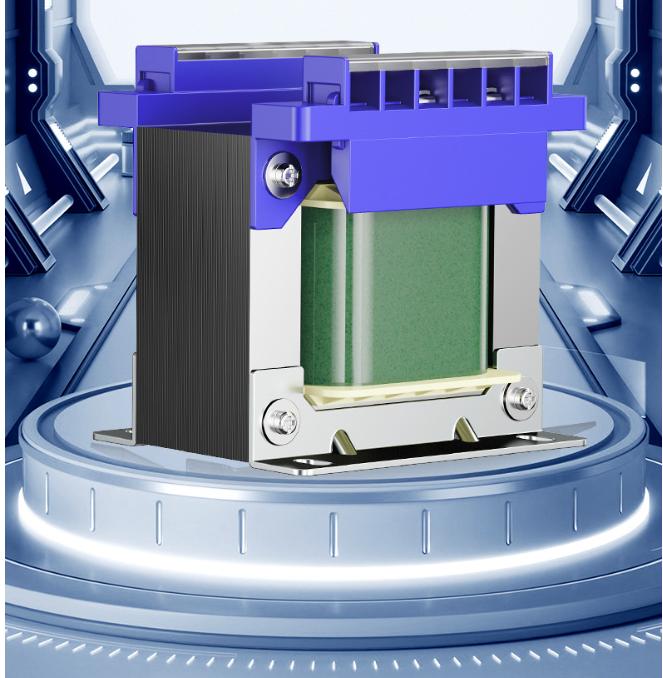
Where Is an Isolation Transformer Most Necessary?
The business case is strongest where the load is sensitive, the grounding requirement is strict, or the incoming grid is electrically dirty.
The most common high-need scenarios include:
Medical equipment: patient monitors, analyzers, imaging support electronics, and clinical lab systems.
Server rooms and data centers: servers, storage arrays, network cores, firewalls, and communication racks.
Industrial control systems: PLC, DCS, SCADA panels, instrumentation loops, and machine controllers.
Laboratories: precision measurement devices, spectrometers, calibration benches, and testing instruments.
Poor-grid factories: sites with voltage spikes, VFD harmonics, welding loads, unstable feeder quality, and frequent surge exposure.
In these environments, the UPS is not only expected to bridge outages. It is expected to provide a stable electrical reference and isolate the load from the ugliness of the upstream power system.
This is where experienced suppliers such as Weisho Electric are often brought into specification discussions, because the transformer has to be matched not only to kVA but also to grounding architecture, load type, and disturbance profile.
When Can a Transformerless UPS Be Enough?
It is important to be balanced here. Not every project needs an isolation transformer.
For standard office loads such as desktop computers, monitors, printers, routers, and general non-precision electronics, a transformerless high-frequency UPS is often entirely sufficient.
In those cases, the priorities are usually:
Higher efficiency
Smaller footprint
Lower weight
Lower upfront cost
If the site has good utility quality, no demanding grounding requirement, and no precision load with strict N-G limits, then a transformerless UPS can be the right answer.
That does not mean it is better in every dimension. It means it is better aligned with the application.
Isolation Transformer vs Transformerless UPS: Quick Comparison
The difference is easiest to understand in side-by-side form.
Table: Isolation Transformer UPS vs Transformerless UPS
| CRITERION | UPS WITH ISOLATION TRANSFORMER | TRANSFORMERLESS UPS |
|---|---|---|
| Electrical isolation | Full galvanic isolation between primary and secondary | No true output isolation in typical designs |
| Common-mode noise control | Strong reduction of transferred common-mode noise and ground-loop effects | More vulnerable to coupled noise and grounding-related disturbance |
| Neutral creation | Can create secondary neutral, especially with Delta-Wye configuration | May not provide independently derived neutral structure |
| N-G voltage control | Can often reduce neutral-to-ground voltage to 0.1-0.5V | Often operates around 2-5V depending on topology and site conditions |
| Safety and fault containment | Better fault separation and reduced reverse backfeed risk | Less separation between upstream and downstream electrical events |
| Short-circuit tolerance | Transformer impedance helps limit fault current and improve protection coordination | Less inherent impedance contribution |
| Surge and transient resilience | Better resistance to spikes, lightning impulses, and DC component transfer | Good in many cases, but less robust in harsh grids |
| Efficiency | Typically slightly lower full-system efficiency, often around 93-94% | Typically higher efficiency |
| Size and weight | Larger and heavier | Smaller and lighter |
| Recommended applications | Medical, industrial, server rooms, labs, poor-grid environments | Office, commercial, non-precision loads in stable power environments |
Real-World Data: Typical Electrical Performance Improvements
Below is a practical view of what engineers often measure before and after adding an output isolation transformer to a UPS system. Values vary by topology, site grounding, load profile, cable length, and upstream disturbance level, but these ranges are realistic.
Table: Before vs After Adding an Isolation Transformer
| PARAMETER | BEFORE ISOLATION TRANSFORMER | AFTER ISOLATION TRANSFORMER | TYPICAL PRACTICAL IMPACT |
|---|---|---|---|
| Neutral-to-ground voltage | 2.0V-5.0V | 0.1V-0.5V | Improved startup compatibility for precision and imported equipment |
| Common-mode noise level | High or unstable in noisy electrical environments | Reduced significantly due to galvanic separation | Lower communication errors and less analog drift |
| Nuisance alarms | Frequent in PLC, lab, and medical loads | Often reduced sharply after grounding is stabilized | Higher uptime and less maintenance chasing false faults |
| Fault propagation risk | Higher direct upstream-downstream coupling | Better separation through independently derived output | Improved fault containment |
| Surge tolerance | Moderate, topology-dependent | Improved due to transformer impedance and isolation effect | Better survival in unstable or lightning-prone grids |
| Precision equipment compatibility | Sometimes poor with sensitive N-G or noise requirements | Much better when neutral is bonded properly | Fewer startup failures and unexplained lockouts |
These numbers align with what commissioning teams often report in field retrofits. In one industrial control retrofit, a UPS-fed PLC system showed N-G values between 2.8V and 3.6V and suffered roughly 8 to 12 nuisance control alarms per week. After isolation and a corrected secondary bonding strategy, measured N-G stayed below 0.4V and nuisance alarms dropped to near zero.
Real-World Use Cases and Examples
The strongest case for isolation transformers is always made by actual site behavior. Here are three concise examples based on common field scenarios.
Data center example
A mid-sized server room was experiencing repeated communication errors on storage and firewall equipment. UPS output voltage looked normal, so the first assumption was firmware instability.
However, power quality measurements showed neutral-to-ground voltage averaging around 3V at the rack PDU level, with intermittent common-mode disturbance correlated to nearby HVAC drive switching.
An output Isolation Transformer was added, with a correctly bonded secondary neutral. After the modification, N-G voltage stabilized at approximately 0.3V, communication errors disappeared, and the site stopped replacing perfectly healthy network hardware.
This kind of result is why experienced integrators do not stop at line voltage readings alone.
Medical equipment example
A private clinic running UPS-backed monitoring and imaging support equipment had recurring false alarms and unexplained interference alerts. The devices were operational, but calibration drift and alarm instability created unacceptable clinical risk.
Testing indicated leakage-related interference and poor reference stability on the supply side. Galvanic isolation was added between the UPS and the medical load bus.
After isolation, false alarms fell dramatically, leakage-related interference events were reduced, and the system passed operational verification more consistently.
In healthcare environments, even intermittent electrical instability is too expensive to ignore. The cost is not just equipment downtime. It is workflow disruption and patient risk.
Industrial PLC example
A factory with several large VFD-driven process lines reported repeated PLC mis-trips on a UPS-backed control panel. The trips tended to occur during heavy motor acceleration or nearby switching events.
The UPS itself remained online. Battery systems were healthy. Yet control reliability remained poor.
The issue was traced to a mix of harmonic-related disturbance and ground-loop noise entering the control circuits. After isolating the UPS-fed control branch with a properly rated transformer, PLC nuisance trips dropped substantially.
The plant did not achieve laboratory-grade power quality. It achieved something more important: stable production.
For applications like these, manufacturers and solution providers with strong application knowledge, including Weisho Electric, are valued because transformer selection has to consider far more than nameplate voltage.
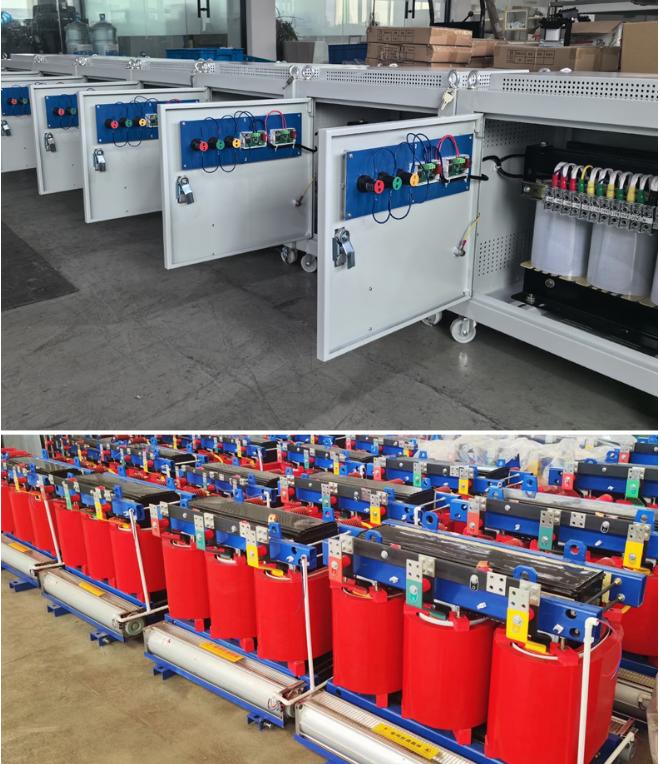
How to Choose the Right Isolation Transformer for a UPS
Selecting the right transformer is not difficult, but it does require discipline. The wrong kVA, wrong vector group, or wrong grounding assumption can create a very expensive near-solution.
A practical buyer-focused framework includes the following checks.
Check load type and criticality
Start with the load, not the transformer.
Ask whether the connected equipment is office-grade, server-grade, industrial control, laboratory, or medical. The more sensitive the load is to noise, grounding, and reference stability, the stronger the case for isolation.
Also consider failure consequences. If a disturbance causes a momentary office PC reboot, that is inconvenient. If it causes a PLC line stop or a medical device fault, that is unacceptable.
Confirm voltage and phase requirements
Verify the input and output voltage carefully. Do not rely on assumptions based on regional standards alone.
Check:
Single-phase or three-phase
Required line-to-line and line-to-neutral voltages
Whether step-up or step-down conversion is needed
Whether the load requires three-phase four-wire output
This is especially important for imported equipment. A nominally small mismatch can become a persistent commissioning problem.
Define grounding and neutral strategy
This is one of the most important steps and one of the most frequently overlooked.
Determine whether the project needs a separately derived neutral on the transformer secondary. If yes, define how that neutral will be bonded and how the downstream protective earth will be arranged.
If a TN-S structure is required, the transformer configuration and panel design must support it from the beginning.
A transformer alone does not solve grounding problems unless the grounding strategy around it is correctly engineered.
Review environment and disturbance level
Now evaluate site conditions honestly.
Ask the following:
Are there many VFDs, welders, compressors, or nonlinear loads nearby?
Is the site exposed to lightning or repeated switching surges?
Is utility quality known to be poor or unstable?
Are there long cable runs that increase potential differences and noise pickup?
Has the site already experienced unexplained equipment alarms or startup issues?
If the answer to several of these is yes, the case for isolation becomes much stronger.
Common Trade-Offs of Using an Isolation Transformer with UPS
A good engineering article should not pretend there are no downsides. There are.
The main trade-offs are:
Larger size and more installation space required
Higher weight, which may affect floor loading and transport
Higher cost compared with transformerless configurations
More heat and additional thermal considerations
Slightly lower total efficiency, often around 93-94% for the full system
For many office applications, these disadvantages outweigh the benefits. For critical environments, they usually do not.
The right decision is not “always add a transformer” or “never add a transformer.” The right decision is to match the topology to the electrical risk profile of the load.
FAQ
Does every UPS need an isolation transformer?
No. An isolation transformer is not mandatory for every UPS. It depends on the sensitivity of the load, the site grounding requirements, and the quality of the incoming power. For standard office loads in stable electrical environments, a transformerless UPS is often enough. For industrial control, medical, lab, server, and poor-grid applications, isolation is often strongly recommended.
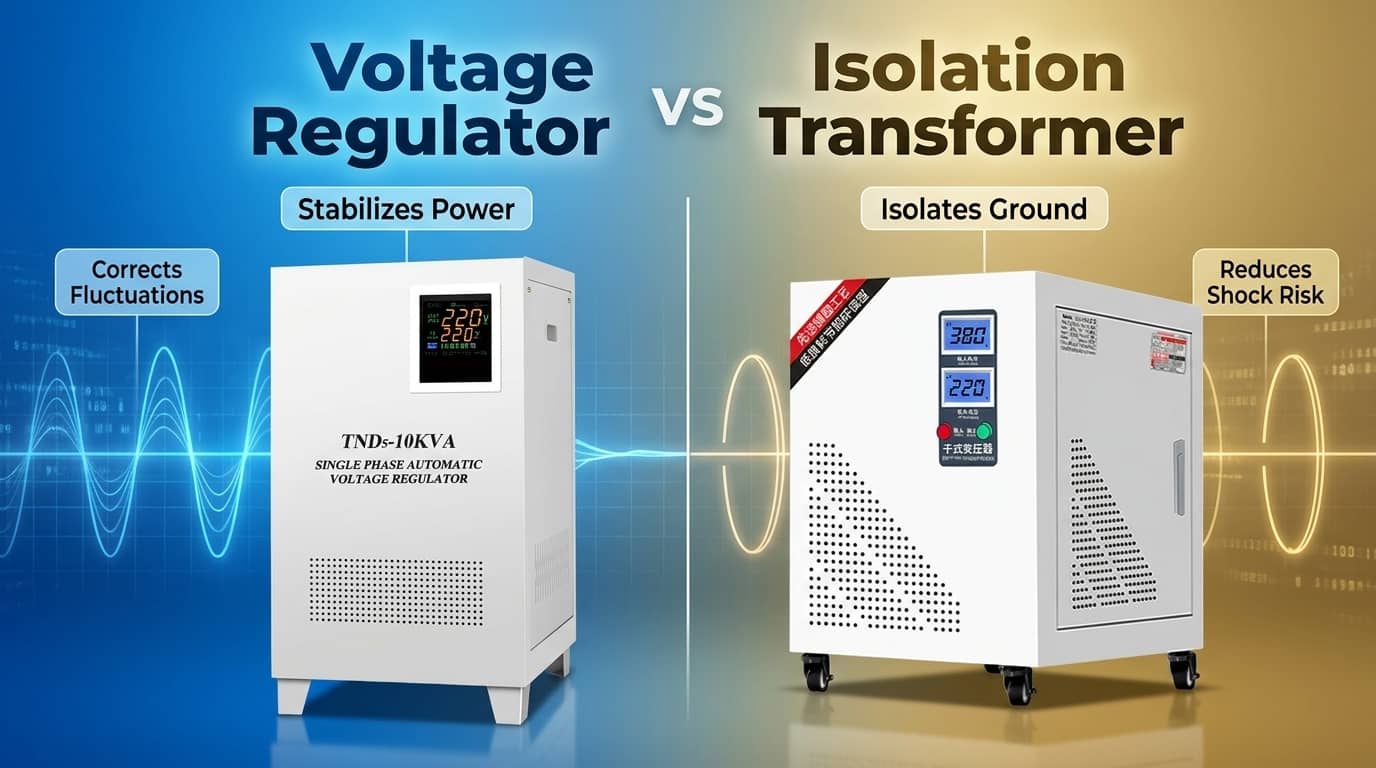
What is the difference between galvanic isolation and simple voltage regulation?
Voltage regulation corrects or stabilizes the voltage level. Galvanic isolation in UPS systems does something different: it breaks the direct conductive path between source and load. That means it can reduce transferred noise, interrupt ground-loop paths, and improve fault containment in ways that voltage regulation alone cannot.
Can an isolation transformer reduce neutral-to-ground voltage?
Yes. When the transformer secondary is designed as an independently derived source, and the neutral is bonded correctly, neutral-to-ground voltage can often drop from roughly 2-5V to around 0.1-0.5V. This is a common reason precision and imported equipment become more stable after isolation is added.
Is an isolation transformer useful for harmonic mitigation?
Yes, but with an important qualification. It is not a complete harmonic filter. However, harmonic mitigation with an isolation transformer is still useful because the transformer impedance helps reduce transferred disturbance, improve tolerance to nonlinear load environments, and increase system robustness where VFD-related noise is present.
How does an isolation transformer improve UPS safety?
It improves safety by creating an independently derived output, limiting direct fault spread between upstream and downstream circuits, reducing reverse backfeed impact on the UPS inverter, and allowing a cleaner and more controlled grounding structure. This supports better personnel protection and equipment fault containment.
What are the downsides of an isolation transformer in a UPS system?
The main downsides are a larger footprint, more weight, added heat, lower full-system efficiency, and higher project cost. These trade-offs are real, which is why isolation should be specified where its electrical benefits are truly needed.
Can a Delta-Wye isolation transformer create a neutral for UPS output?
Yes. This is one of the most common uses of a Delta-Wye transformer in UPS output design. It allows a neutral to be derived on the secondary side and supports three-phase four-wire loads as well as TN-S grounding arrangements when properly engineered.
Conclusion: Is an Isolation Transformer Worth It for Your UPS?
Yes—an isolation transformer is strongly recommended for precision, industrial, medical, server-room, and poor-grid applications, while it remains optional for basic office loads where efficiency, footprint, and cost are the main priorities.
CTA: Need Help Selecting the Right UPS Isolation Transformer?
If you are choosing a UPS for a real project, do not stop at backup time and kVA rating. Review your load type, grounding scheme, voltage requirements, neutral strategy, and site power quality before making the final specification.
A properly selected Isolation Transformer can solve problems that no battery upgrade or software reset will ever fix.
If you are dealing with sensitive equipment, nuisance alarms, unstable neutral-to-ground voltage, harmonic-heavy environments, or the need for a derived neutral, now is the time to assess the correct transformer configuration.
Talk to a qualified UPS and transformer specialist today, define the real electrical risks on your site, and choose a solution that protects uptime, safety, and equipment integrity from day one.