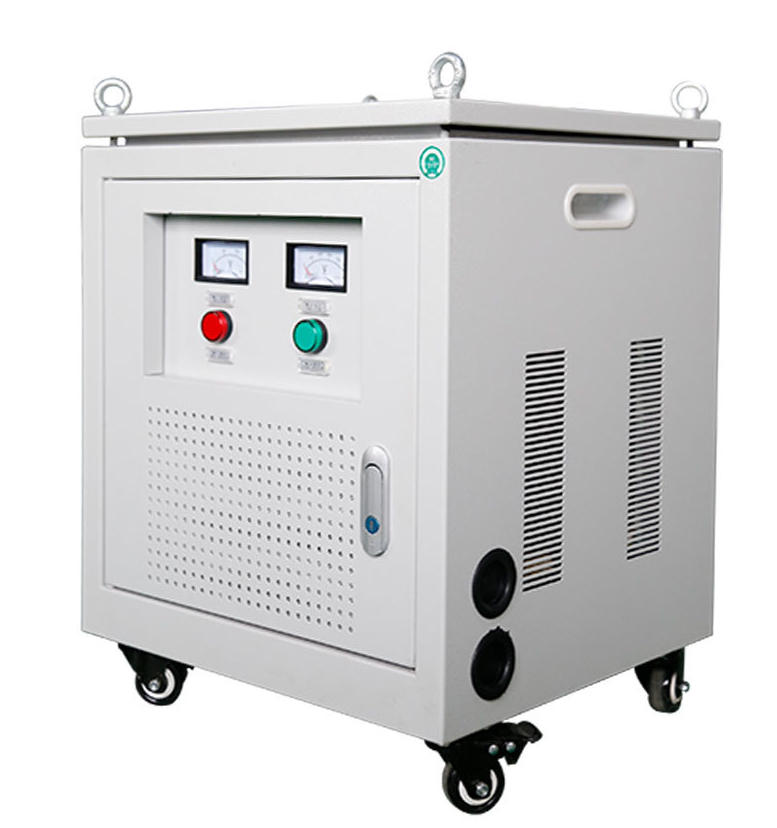
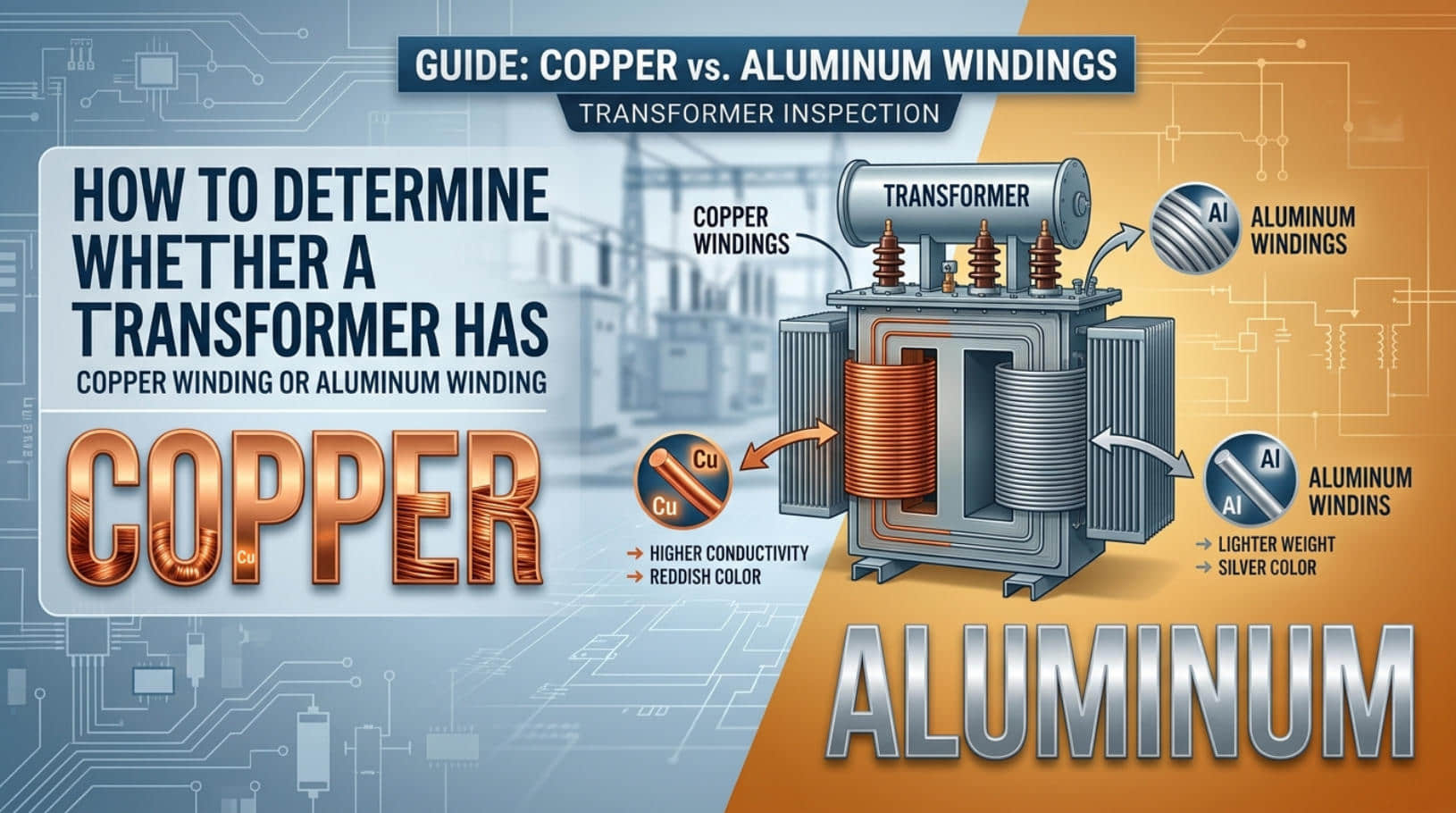
In fieldwork, this question comes up more often than many buyers expect: is the transformer wound with copper or aluminum?
The answer matters for purchasing, maintenance, repair strategy, scrap value, and performance expectations. It also matters because many people still try to judge winding material by appearance alone, which is risky and often wrong.
If you want the most reliable path, keep it simple: check the nameplate and technical documents first. After that, use weight and size only as indirect clues, use DC resistance testing as a practical site method, and use teardown inspection only when the unit is already opened for repair.
Quick Answer: How to Identify Copper or Aluminum Transformer Windings
The fastest and most reliable judgment path is this:
1. Read the nameplate for markings such as Copper winding, Cu, Aluminum winding, or Al.
2. Check the order sheet, type test report, technical specification, factory datasheet, or service record.
3. Use weight and enclosure size only as a reference. At the same capacity and voltage class, aluminum-wound transformers are often 15% to 30% lighter overall and may have a larger body.
4. Run a DC resistance test. Under similar design assumptions, aluminum windings usually show higher DC resistance than copper windings.
5. Only if the transformer is already disassembled, inspect the conductor cross-section: copper is reddish-purple; aluminum is silver-white and more prone to white oxidation.
This is the practical answer to both how to identify copper windings in a transformer and transformer winding material identification methods in real field conditions.
Why Transformer Winding Material Identification Matters
Winding material is not a cosmetic detail. It directly affects how the transformer is designed and how it behaves in service.
Copper and aluminum have different conductivity, density, mechanical behavior, and oxidation characteristics. Because of that, two transformers with the same kVA and voltage class can differ in weight, coil volume, losses, impedance, and terminal connection behavior.
From a buyer’s perspective, correct material identification helps prevent specification mismatch. A purchaser may assume copper because the unit looks heavy, only to discover later that accessories or core design distorted the comparison.
From a maintenance perspective, conductor material affects connection reliability and repair handling. Aluminum requires careful attention to oxide films, joint preparation, and compatible termination methods.
From an asset management perspective, winding material also affects replacement value, logistics, and performance benchmarking. If you are comparing losses, impedance, or expected operating temperature rise, you need to know what the winding actually is.
In real procurement reviews, I have seen three common scenarios:
A used transformer was advertised as copper-wound, but the type test documents showed Al.
A field team judged a unit by size and got it wrong because the core design was unusually compact.
A resistance reading was taken at the wrong temperature, producing a false conclusion about conductor material.
That is why any authoritative answer to aluminum vs copper transformer winding difference must begin with documentary evidence first, not guesswork.
Check the Nameplate and Technical Documents First
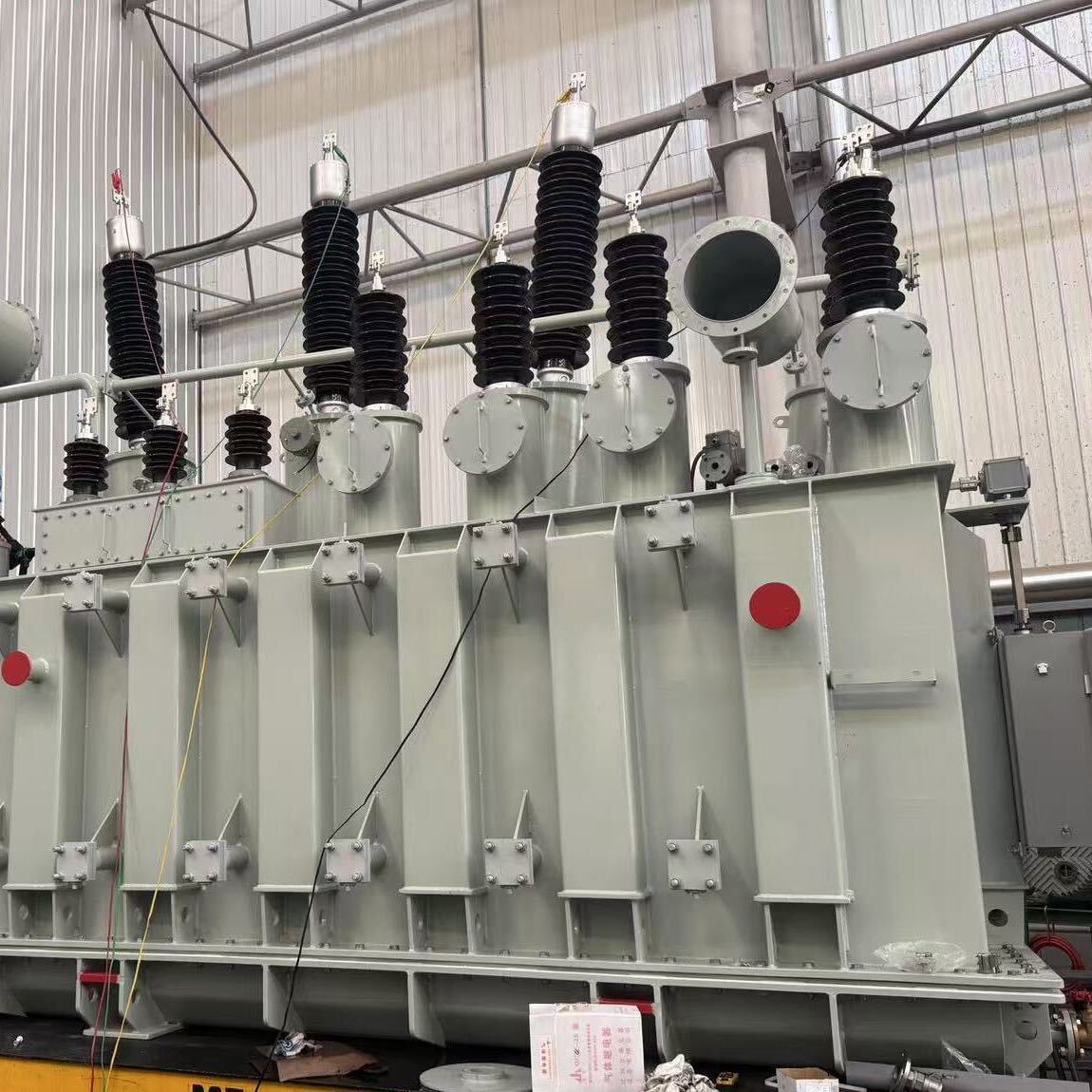
If you need the highest-confidence answer, start with the manufacturer’s own information. This is always the first priority.
The nameplate, purchase records, factory datasheet, and type test report are the most reliable sources because they reflect the original design specification. In most professional settings, these documents settle the question before any testing is needed.
Nameplate Markings to Look For
Look closely for direct wording or abbreviations. Common labels include:
Copper winding
Cu
Copper
Aluminum winding
Al
Aluminum
Some manufacturers print the winding material clearly. Others include it in a model code, bill of materials reference, or remarks section.
If the nameplate is weathered or repainted, do not assume missing text means copper. Go to the technical file next.
Technical Documents That Confirm Winding Material
Several documents can confirm winding material with high confidence:
Purchase order
Factory datasheet
Type test report
Technical specification sheet
Quality certificate
Service and repair records
Internal BOM or design release document
In actual industrial projects, the type test report and procurement specification are often the cleanest sources. They usually state conductor material explicitly because it affects compliance, thermal performance, and guaranteed losses.
If you are dealing with a replacement, insist on matching not just kVA and voltage, but also the winding material if your technical standard requires it. Manufacturers such as Weisho Electric typically advise customers to verify nameplate and technical file data before comparing field clues.
Featured Snippet Table: Common Transformer Winding Material Labels
| Label on Nameplate or Document | Meaning | Confidence Level |
|---|---|---|
| Cu | Copper winding | Very high |
| Copper winding | Transformer uses copper conductor | Very high |
| Copper | Usually indicates copper winding, but confirm context | High |
| Al | Aluminum winding | Very high |
| Aluminum winding | Transformer uses aluminum conductor | Very high |
| Aluminum | Usually indicates aluminum winding, but confirm context | High |
| Model code with material suffix | Depends on manufacturer coding system | Medium to high |
| No material listed | Cannot conclude anything | Low |
Compare Weight and Size for an Indirect Judgment
After documents, the next practical clue is physical comparison. But this is only an indirect judgment, never the final proof.
For the same capacity and voltage class, aluminum-wound transformers are commonly lighter overall and often slightly larger in coil and enclosure volume. The reason is straightforward: aluminum has lower density and lower conductivity than copper, so more conductor volume is often needed to achieve the target electrical performance.
This means a transformer can be lighter but bulkier. That combination is one of the classic signs of aluminum winding in transformer designs.
Typical Weight Difference Between Copper and Aluminum Winding Transformers
In many market comparisons for similar distribution transformers, aluminum-wound units are often about 15% to 30% lighter than copper-wound units of the same rating and voltage class. This is a useful real-world range, not a universal law.
For example, in common oil-immersed distribution transformer comparisons at the same kVA and HV/LV level, a copper-wound unit may weigh several hundred kilograms more than its aluminum-wound counterpart. In dry-type units, the difference can also be visible, although enclosure and cooling structure may narrow or widen the gap.
One field purchasing team compared two nominally similar 1000 kVA transformers. The copper design weighed about 2,850 kg, while the aluminum version from another supplier was around 2,280 kg. That is roughly a 20% reduction, which fits the practical range above.
Still, this clue can mislead you if one unit has heavier bushings, a different tank, thicker steel, a different core grade, or extra accessories.
Why Aluminum-Wound Transformers Are Often Larger
Aluminum has lower electrical conductivity than copper. To carry similar current with acceptable temperature rise and losses, the conductor cross-sectional area is usually increased.
That increased conductor volume often makes the coil physically larger. Once the coil grows, the window space, insulation arrangement, and sometimes the overall enclosure size may also grow.
This is why many aluminum-wound transformers look slightly less compact than copper-wound units at the same rating. The coil body tends to be larger, and the tank or casing may reflect that.
But here is the caution that experienced engineers never ignore: core design can interfere with this clue. A highly optimized core-and-coil arrangement may make a copper unit look larger than another supplier’s aluminum unit. So size is informative, not decisive.
Data Table: Copper vs Aluminum Transformer Weight and Size Clues
| Comparison Item | Copper Winding Transformer | Aluminum Winding Transformer | Reliability of This Clue |
|---|---|---|---|
| Overall weight at same kVA and voltage class | Usually heavier | Usually 15% to 30% lighter | Medium |
| Coil compactness | More compact | Usually larger conductor volume | Medium |
| Enclosure or tank size | Often smaller | Often slightly larger | Low to medium |
| Visual impression | Denser, compact build | Bulkier coil geometry possible | Low |
| Final proof value | Not sufficient alone | Not sufficient alone | Low |

Use DC Resistance Testing as a Practical On-Site Method
If the documents are unclear and the transformer is not being opened, DC resistance testing is the most practical field method.
This is where many technicians ask a variation of how to test transformer winding conductivity. In practice, you do not directly identify material by a simple conductivity meter on an assembled transformer. What you actually do is measure winding DC resistance and compare it with known reference data.
Under similar design conditions, aluminum windings generally show higher DC resistance than copper windings. That is because aluminum has higher resistivity.
How to Test Transformer Winding Conductivity and DC Resistance
Use a proper winding resistance tester or a high-quality micro-ohmmeter suitable for transformer work. A standard handheld multimeter is often too limited for low-resistance accuracy on power transformer windings.
Safe field steps should include:
1. De-energize and isolate the transformer fully.
2. Lock out and tag out according to site safety rules.
3. Discharge stored energy and confirm zero voltage.
4. Measure ambient and winding temperature, or at least record oil/top-coil temperature if applicable.
5. Test each winding phase-to-phase or line terminal pair according to the test plan.
6. Wait for stable readings. Inductive circuits need time to settle.
7. Correct resistance to a reference temperature, commonly 20 degrees C or 75 degrees C depending on the document standard.
8. Compare the corrected value with the nameplate data, factory test report, or known design benchmark.
This is one of the most useful transformer winding material identification methods available without destructive inspection.
In service practice, technicians often look at the LV winding first because the resistance values are easier to compare meaningfully. However, all comparisons must be made carefully and on a like-for-like basis.
How to Interpret Higher Resistance Readings
If your measured and temperature-corrected DC resistance is noticeably higher than expected for a comparable copper-wound unit, aluminum winding becomes more likely.
But resistivity alone is not the whole story. Winding geometry, tap position, conductor length, strand arrangement, and design losses all affect final resistance.
So the correct interpretation is this: higher resistance supports an aluminum conclusion, but does not prove it by itself. Use it together with documents and physical clues.
Temperature correction is critical. Copper and aluminum both change resistance with temperature. A winding measured hot can appear “wrong” if you compare it directly to a factory cold-test value.
One site team once flagged a transformer as likely aluminum because the measured resistance seemed too high. After temperature correction, the value aligned closely with the copper factory record. The original conclusion was simply based on a warm winding.
Data Table: Example DC Resistance Differences Between Copper and Aluminum Windings
The values below are illustrative examples for similar rating assumptions, not universal standards. Actual transformer design differences can change the final numbers.
| Assumed Transformer Rating | Winding Compared | Example Copper DC Resistance at Reference Temperature | Example Aluminum DC Resistance at Reference Temperature | What It Suggests |
|---|---|---|---|---|
| 500 kVA, similar voltage class and design target | LV winding | 0.012 ohm | 0.016 ohm | Aluminum trends higher |
| 1000 kVA, similar voltage class and design target | LV winding | 0.0065 ohm | 0.0084 ohm | Aluminum trends higher |
| 1600 kVA, similar voltage class and design target | LV winding | 0.0041 ohm | 0.0053 ohm | Aluminum trends higher |
| 2000 kVA, similar voltage class and design target | HV winding | 1.82 ohm | 2.28 ohm | Aluminum trends higher |
These examples reflect the broader aluminum vs copper transformer winding difference in electrical resistance. But again, they are not substitutes for manufacturer data.

Perform a Teardown Check Only During Repair or Disassembly
If the transformer is already opened for repair, rewind evaluation, or failure analysis, conductor appearance can give a direct answer.
This is a highly reliable method, but it is also destructive or at least invasive. It should not be done just to satisfy curiosity on a healthy unit.
What Copper Looks Like Inside a Transformer
Copper conductor cross-sections typically appear reddish-purple or red-brown, depending on oxidation and varnish residue. Copper also feels relatively soft and ductile in handling.
In a repair shop, freshly cut copper conductor is usually obvious. Even when aged, it tends to keep a warm metallic tone beneath surface discoloration.
What Aluminum Looks Like Inside a Transformer
Aluminum conductor cross-sections typically appear silver-white. It is softer in feel and more prone to developing a pale, chalky, or white oxide appearance over time.
This oxide behavior is one of the classic signs of aluminum winding in a transformer. In real maintenance cases, that silver-white cut surface with white oxidation is often the final visual confirmation.
Table: Visual Signs of Copper vs Aluminum Winding Material
| Inspection Feature | Copper Winding | Aluminum Winding | Limitation |
|---|---|---|---|
| Fresh conductor cross-section color | Reddish-purple | Silver-white | Requires access to conductor |
| Surface oxidation appearance | Darker tarnish, brownish tones | White or pale oxide film | Can be affected by varnish or contamination |
| Mechanical feel | Soft, ductile | Softer, easy to mark | Subjective without experience |
| Reliability | High if clearly exposed | High if clearly exposed | Usually destructive or maintenance-only |
Copper vs Aluminum Transformer Winding Difference at a Glance
When people ask about material identification, they often also want the broader engineering difference. Here is the practical summary relevant to field judgment.
Table: Aluminum vs Copper Transformer Winding Difference
| Property | Copper Winding | Aluminum Winding | Field Identification Relevance |
|---|---|---|---|
| Electrical conductivity | Higher | Lower | Copper tends to show lower DC resistance |
| Resistivity | Lower | Higher | Aluminum tends to measure higher resistance |
| Density/weight | Higher | Lower | Copper units often weigh more |
| Required conductor volume | Smaller for similar current target | Larger for similar current target | Aluminum coils may be bulkier |
| Coil compactness | More compact | Less compact | Visual clue only |
| Oxidation behavior | Tarnishes darker | More prone to white oxidation | Useful during teardown |
| Appearance at cut section | Reddish-purple | Silver-white | Strong visual confirmation |
| Need for document confirmation | Essential | Essential | Always highest priority |
Step-by-Step Decision Flow to Identify Transformer Winding Material
A practical workflow prevents mistakes. The best technicians do not jump straight to weight guesses or resistance assumptions.
Best-Practice Identification Workflow
1. Start with the nameplate. If it states Cu, Copper winding, Al, or Aluminum winding, that is your primary answer.
2. Verify with technical documents. Check purchase order, datasheet, type test report, or service file.
3. Observe weight and dimensions. A lighter yet larger unit at the same rating may suggest aluminum, but only as supporting evidence.
4. Measure DC resistance. Correct for temperature and compare with factory values or known references.
5. Confirm visually only if disassembled. Reddish-purple means copper; silver-white with white oxidation tendency means aluminum.
Strong evidence includes nameplate text, certified technical documents, and exposed conductor appearance.
Medium evidence includes temperature-corrected DC resistance comparison.
Weak evidence includes body size, tank size, and total shipping weight when used alone.
Real-World Examples of Transformer Winding Material Identification
Field-style examples make the process much clearer than theory alone.
Example 1: Nameplate Clearly Shows Cu Winding
A plant received a 1250 kVA replacement transformer from a secondary supplier. The maintenance manager wanted to verify whether it matched the original copper specification.
The answer was immediate. The nameplate included the marking Cu winding in the remarks field, and the factory datasheet repeated Conductor material: Copper.
No further inference was needed. This is exactly why documents come first.
Example 2: Same kVA Unit Is Lighter and Larger, Then Resistance Tests Higher
A contractor compared two 800 kVA transformers of the same voltage class from different sources. One unit was noticeably lighter during unloading, but the tank body was slightly larger.
That alone was not enough to conclude anything. The team then measured winding resistance, corrected the readings to the reference temperature, and found the LV resistance was materially higher than the copper benchmark from a similar design.
Later, the supplier’s technical sheet confirmed Al. This is a classic multi-clue case: lighter overall weight, larger coil volume tendency, and higher resistance all pointed in the same direction.
Example 3: Repair Teardown Confirms Silver-White Oxidized Conductor
A failed distribution transformer arrived at a repair facility with no readable nameplate. The owner believed it was copper because the unit was older and fairly large.
Once the damaged winding was exposed, the conductor cross-section was clearly silver-white, and several areas showed white oxide. That visual evidence confirmed aluminum.
The initial assumption based on age and size was wrong. Teardown settled the issue immediately.
Common Mistakes When Identifying Copper or Aluminum Windings
Most wrong conclusions come from relying on one clue in isolation. Experienced engineers avoid that trap.
Mistake 1: Treating Weight as Final Proof
Total transformer weight includes much more than the conductor. Core steel, tank thickness, cooling arrangement, tap changer design, bushings, base frame, and accessories can all change the result.
A heavier unit is not automatically copper. A lighter unit is not automatically aluminum.
Mistake 2: Ignoring Temperature Correction in Resistance Tests
This is one of the most common field errors. DC resistance changes strongly with temperature.
If the winding is warm and you compare the raw reading to a cold factory value, you can misclassify the material. Always record temperature and correct the measurement before drawing conclusions.
Mistake 3: Assuming All Larger Transformers Use Copper
Capacity alone does not determine conductor material. The actual choice depends on design targets, market price, procurement strategy, efficiency requirements, and manufacturer preference.
Large transformers can be aluminum-wound. Small transformers can be copper-wound. There is no safe shortcut here.
Reference Tables for Fast Field Identification
Table: Identification Method vs Accuracy vs Risk
| Method | Accuracy | Risk | Best Use Case |
|---|---|---|---|
| Nameplate check | Very high | Very low | First step on any transformer |
| Technical document review | Very high | Very low | Procurement, audit, acceptance, replacement |
| Weight and size observation | Low to medium | Very low | Quick indirect screening only |
| DC resistance test | Medium to high | Low if safely performed | Useful on-site non-destructive support method |
| Teardown inspection | High | High or destructive | Repair shop, failure analysis, already-opened unit |
Table: Signs of Aluminum Winding in a Transformer
| Possible Sign | Why It Suggests Aluminum | Strength of Evidence |
|---|---|---|
| Marked Al or Aluminum winding | Direct manufacturer statement | Very strong |
| Larger coil volume | More conductor volume often required | Medium |
| Lower total weight at same rating | Aluminum density is lower | Medium |
| Higher DC resistance | Aluminum resistivity is higher | Medium to strong |
| Silver-white conductor | Characteristic exposed appearance | Strong |
| White oxidation tendency | Common aluminum oxide appearance | Strong |
Table: How to Identify Copper Winding in a Transformer
| Possible Sign | Why It Suggests Copper | Strength of Evidence |
|---|---|---|
| Marked Cu or Copper winding | Direct manufacturer statement | Very strong |
| Higher unit weight at same rating | Copper density is higher | Medium |
| More compact coil | Higher conductivity allows smaller conductor volume | Medium |
| Lower DC resistance | Copper resistivity is lower | Medium to strong |
| Reddish conductor cross-section | Characteristic copper appearance | Strong |
FAQ
How can I tell if a transformer has copper winding without opening it?
The best non-destructive method is to check the nameplate and factory technical documents first. If those are unclear, use a properly corrected DC resistance comparison and treat weight or size only as supporting clues, not final proof.
Is transformer weight enough to identify copper or aluminum winding?
No. Weight is only an indirect clue. Core design, tank thickness, cooling parts, and accessories can significantly change total mass, so weight alone cannot prove whether the winding is copper or aluminum.
What is the difference between aluminum and copper transformer winding?
Copper has higher conductivity, lower resistivity, and higher density, so its coils are usually more compact and the transformer is often heavier. Aluminum has lower density and higher resistivity, so the transformer is often lighter overall but may need larger conductor volume and may show more white oxidation when exposed.
Can a multimeter identify transformer winding material?
Not directly. A meter can help measure resistance, but how to test transformer winding conductivity in a useful way really means comparing accurate DC resistance readings with factory data and correcting for temperature. A simple multimeter alone is usually not enough for high-confidence identification on power transformers.
What are the signs of aluminum winding in a transformer?
Typical signs include Al marking on the nameplate, lower total weight at the same rating, larger coil volume or enclosure, higher DC resistance under similar design conditions, and a silver-white conductor appearance with white oxidation if the winding is exposed.
Which method is the most reliable for transformer winding material identification?
The most reliable method is always the nameplate and factory technical documents. They should be your first reference. Teardown confirmation is also highly reliable, but only when the transformer is already disassembled for maintenance or repair.
Conclusion and Next Step
If you need a trustworthy answer, do not start with guesswork. Start with the nameplate, order sheet, type test report, and technical specification.
Those sources have the highest authority. After that, use field evidence in the right order: weight and size as reference only, DC resistance testing as the main on-site support method, and teardown inspection only when the unit is already open.
The final rule is simple: never rely on one indirect clue alone. A larger tank does not prove aluminum. A heavier unit does not prove copper. A higher resistance reading does not prove aluminum unless temperature and design context are handled correctly.
For buyers, plant engineers, and repair teams, the safest process is document confirmation first and field verification second. That is how real professionals reduce mistakes, avoid specification disputes, and make better replacement decisions.
If you are comparing suppliers or evaluating a replacement transformer, it is wise to review the nameplate and test data before purchase. Many industrial customers working with Weisho Electric do exactly that to avoid confusion between copper and aluminum winding options.
CTA: Need Help Identifying Transformer Winding Material?
If you are unsure whether your transformer is copper-wound or aluminum-wound, do not guess before you buy, repair, or replace it.
Gather three things now: a clear photo of the nameplate, any available factory or test documents, and your measured DC resistance readings with test temperature. If the unit is already opened, include close-up photos of the conductor cross-section and terminals.
Then have an expert review the full evidence together. That is the fastest way to avoid wrong orders, mismatched replacements, and costly field mistakes.
Before making your next transformer decision, compare your data carefully and seek professional guidance. A correct identification today can save you major costs, delay, and reliability problems tomorrow.